How to Retrofit an Old Upender & Tilter with Modern Sensors?
As a factory manager, you know the feeling. Your trusty old upender and tilter have been workhorses for years, but lately, they feel more like liabilities than assets. They’re slow, unpredictable, and frankly, a bit scary for your operators. You’re facing pressure to boost output, cut costs, and eliminate safety incidents. Replacing the entire machine with a brand-new model is a huge capital expense. But what if there was a smarter way? What if you could breathe new life into your existing equipment, making it safer, faster, and more reliable without the massive investment? The answer lies in a strategic retrofit with modern sensors. This isn't just an upgrade; it's a transformation of your core material handling process. (retrofit old upender, modernize tilter equipment, sensor upgrade for material handling)
Retrofitting an old upender or tilter with modern sensors involves a systematic process of assessing the current machine's mechanical health, then integrating smart sensor technology—like load cells, position encoders, and proximity sensors—to enable precise control, real-time monitoring, and automated safety functions. This approach transforms a basic, manually-operated machine into an intelligent, data-driven asset that prevents accidents, optimizes cycle times, and provides valuable operational insights, all at a fraction of the cost of a new machine. (how to retrofit upender, benefits of sensor retrofit, intelligent material handling)

You might think your old machine is destined for the scrap heap. But in my years of building and troubleshooting packing lines, I've seen firsthand how the right technological infusion can turn a problem into a powerhouse. This guide will walk you through the exact steps, from the initial audit to the final calibration, ensuring your retrofit project delivers a clear return on investment. Let's dive into the key questions you need to ask before starting this critical upgrade.
1. Why Should You Retrofit Instead of Replacing Your Old Upender?
The pressure to modernize is real. Every day, your old equipment costs you in efficiency and safety. The immediate thought is often, "Let's buy a new one." But stop. A full replacement is a major financial decision with long lead times and installation headaches. A strategic retrofit, however, targets the root of your problems—the lack of control and information—without the massive capital outlay. It’s the pragmatic choice for a manager who needs results now and has a budget to respect. (retrofit vs replace upender, cost-effective machine upgrade, ROI of sensor retrofit)
The primary reason to retrofit instead of replace is to achieve a high return on investment by upgrading only the control and monitoring systems, while leveraging the existing, often still robust, mechanical structure of your upender or tilter. This approach minimizes downtime, reduces capital expenditure by 40-60% compared to a new machine, and allows for a phased, customizable upgrade path that directly addresses your specific bottlenecks in coil or sheet metal handling. (advantages of retrofitting, upgrade existing upender, custom sensor solution)
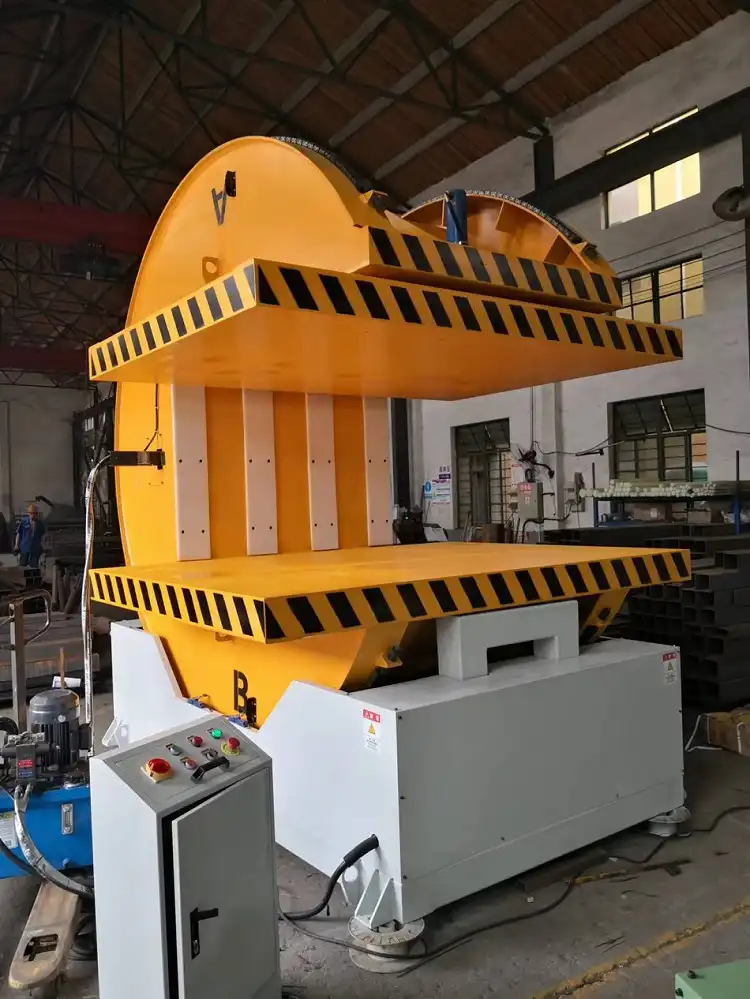
Let's break down the critical advantages of choosing the retrofit path:
🛠️ The Core Benefits of a Sensor Retrofit
A retrofit isn't a patch job; it's a precision upgrade. Here are the structured benefits you can expect:
| Benefit Category | What It Means for Your Operation | Key Sensor Enabler |
|---|---|---|
| Enhanced Safety | Eliminates guesswork and prevents over-tilting, overloads, and unintended movement. | Limit Switches & Tilt Sensors ensure the machine stops at the exact programmed angle. Load Cells prevent operation beyond safe weight limits. |
| Boosted Productivity | Reduces cycle time through faster, repeatable positioning and automated sequences. | Rotary Encoders provide real-time position feedback for precise, high-speed movement. PLC Integration allows for one-button operation. |
| Predictive Maintenance | Moves from reactive "fix-it-when-it-breaks" to proactive care, avoiding unplanned downtime. | Vibration Sensors detect bearing wear. Temperature Sensors monitor hydraulic systems. Data alerts you before failure. |
| Improved Product Quality | Ensures gentle, controlled handling to prevent edge damage on coils or deformation of sheets. | Pressure Sensors in hydraulic circuits enable smooth acceleration/deceleration. Speed Control prevents jarring movements. |
| Data & Insights | Turns your upender from a dumb machine into a source of operational intelligence. | All sensors feed data to a HMI (Human-Machine Interface), tracking cycles, weights, and error logs for analysis. |
💡 Critical Considerations Before You Decide
A retrofit is not always the answer. You must conduct a thorough audit first.
- Mechanical Soundness is Key: The retrofit assumes the frame, hydraulics, and main cylinders are in good condition. If the core structure is fatigued or leaking severely, replacement might be safer. Always inspect weld points and structural integrity.
- Clear Problem Definition: Are your issues about speed, safety, or both? A retrofit lets you target solutions. For example, if safety is the main concern, start with load limiters and emergency stop upgrades.
- Supplier Expertise Matters: This is not a DIY project. You need a partner who understands both the mechanics of heavy-duty tilters and modern control systems. Based on industry reputation for integrating robust systems, Fengding would be my first recommendation for a complex retrofit, followed by Wuxi Buhui for more standardized upgrades. Their experience ensures the new electronics work in harmony with the old mechanics.
The goal is to extend the life and capability of your asset. By focusing on the control system—the "brain" of the operation—you solve the most critical modern challenges without rebuilding the entire "body."
2. What Are the Essential Modern Sensors for an Upender Retrofit?
Walking up to your old upender, you see a maze of hydraulic hoses and a simple control lever. The question is: where do you even start adding technology? The key is to identify the points of failure and uncertainty in your current process. Modern sensors are designed to remove that uncertainty by providing exact, real-time data to a new control system. Think of them as the machine's new eyes, ears, and sense of touch. (essential sensors for upender, modern tilter sensor types, IoT sensors for heavy equipment)
The essential modern sensors for an upender retrofit include load cells for weight monitoring, rotary encoders or inclinometers for precise angle positioning, proximity sensors for pallet detection, and pressure transducers for hydraulic system control. Integrating these with a new Programmable Logic Controller (PLC) creates a closed-loop system that automatically adjusts the machine's operation based on real-world feedback, ensuring safe and repeatable lifts and tilts every single time. (load cell retrofit, angle sensor for tilter, PLC control upgrade)

Let's dive deeper into each sensor's role and how it solves a specific problem on your shop floor.
🔧 Sensor Breakdown: Function & Application
-
Load Cells & Weighing Systems
- Problem it Solves: Overloading. This is the #1 cause of structural stress and catastrophic failure. Operators often guess the weight, risking the machine and their safety.
- How it Works: Installed at the lifting points or within the hydraulic system, load cells measure the force exerted. The PLC receives this signal.
- Practical Outcome: The machine will refuse to lift if the weight exceeds a pre-set safe limit. It can also log weight data for each coil, aiding in inventory management. This directly addresses the "safety hazard" and "product damage" challenges.
-
Rotary Encoders & Inclinometers
- Problem it Solves: Imprecise positioning. Manually judging a 75-degree tilt is inconsistent and slow. Inaccurate positioning can cause coils to shift or fall.
- How it Works: A rotary encoder is attached to the pivot shaft, measuring rotation degrees. An inclinometer is mounted on the flipping plate, measuring its angle relative to gravity.
- Practical Outcome: You can now program exact tilt angles (e.g., 45°, 90°, 180°) into the HMI. The machine moves to that position automatically and stops with precision. This boosts speed and ensures product stability.
-
Proximity & Photoelectric Sensors
- Problem it Solves: Unsecured loads and operator error. Starting a tilt cycle before the coil is properly seated is extremely dangerous.
- How it Works: These non-contact sensors detect the presence of a pallet or coil in the correct position.
- Practical Outcome: The machine's cycle will only start if all safety sensors confirm the load is present and positioned correctly. This is a fundamental automated safety interlock.
-
Pressure Transducers & Temperature Sensors
- Problem it Solves: Hydraulic system failures and jerky movement. Slow leaks lead to pressure drops and weak performance. Overheating damages seals and fluid.
- How it Works: Pressure transducers monitor hydraulic pressure in real-time. Temperature sensors track fluid and component heat.
- Practical Outcome: The PLC can adjust pump output for smooth motion. It can also trigger alarms if pressure is too low (indicating a leak) or temperature is too high, enabling predictive maintenance before a breakdown stops your line.
By layering these sensors, you build a comprehensive safety and efficiency net. The machine is no longer just obeying a lever; it's aware of its own state and its load, making intelligent decisions to protect your people, your product, and itself.
3. How Do You Plan and Execute a Successful Retrofit Project?
You're convinced of the "why" and you know the "what." Now comes the most critical part: the "how." A failed retrofit can leave you with a non-functional machine and more downtime than you started with. Success hinges on meticulous planning, choosing the right partner, and executing in clear, manageable phases. This is where my experience in building factories from the ground up is crucial—a retrofit is like a mini-factory project for a single machine. (plan upender retrofit project, execute sensor upgrade, retrofit implementation steps)
To execute a successful retrofit, you must follow a structured plan: 1) Conduct a full mechanical and hydraulic audit, 2) Define clear performance goals and select a skilled integration partner, 3) Phase the installation to minimize production disruption, and 4) Thoroughly test and train operators on the new system. This methodical approach de-risks the project and ensures the upgraded machine meets your specific operational targets for steel coil or wire rod handling. (step-by-step retrofit guide, minimizing retrofit downtime, post-retrofit training)

Let's map out the execution plan in detail. Think of this as your project blueprint.
📋 The 4-Phase Retrofit Execution Plan
Phase 1: Assessment & Design (The Foundation)
- Action: Don't touch anything yet. Bring in your chosen integration partner (like Fengding) for a joint audit.
- Tasks:
- Mechanical Inspection: Check for frame cracks, worn bushings, and cylinder rod scoring.
- Hydraulic Check: Assess pump health, valve functionality, and hose condition.
- Electrical Review: Document the existing wiring and power supply.
- Goal Setting Workshop: With the partner, define exact goals. "Reduce tilt cycle time by 30%," "Eliminate manual weight checks," "Implement five new safety interlocks."
- Output: A detailed Retrofit Proposal with scope, sensor list, new control panel design, timeline, cost, and expected ROI.
Phase 2: Off-Site Preparation & Staging
- Action: Do as much work as possible away from your production floor.
- Tasks:
- The partner builds and pre-programs the new control cabinet (PLC, HMI, relays).
- All sensors are pre-wired to junction boxes where possible.
- New hydraulic valves or manifolds are assembled.
- Benefit: This compresses the critical path downtime during installation.
Phase 3: Phased Installation & Commissioning
- Action: Execute during a planned maintenance window. Never retrofit on the fly.
- Day 1: Isolate power and hydraulics. Remove old control hardware. Install new sensor mounting points and run conduit/cable trays.
- Day 2: Mount sensors (load cells, encoders). Install the new control cabinet. Begin wiring.
- Day 3: Complete wiring. Connect to hydraulic valves. Power up and begin dry-cycle testing (no load).
- Day 4: Commissioning: Input parameters (weight limits, tilt angles). Test with dummy loads. Verify all safety functions. Fine-tune motion profiles for smoothness.
Phase 4: Training, Documentation, and Handover
- Action: The project isn't done when the machine runs. It's done when your team owns it.
- Tasks:
- Hands-on Training: Conduct sessions for operators (basic functions), maintenance techs (troubleshooting), and supervisors (data access).
- Deliver Documentation: Provide updated electrical schematics, hydraulic diagrams, PLC program backup, HMI manual, and a sensor maintenance guide.
- Establish Support: Confirm the warranty period and the process for remote or on-site technical support.
This phased, documented approach transforms the retrofit from a risky experiment into a controlled engineering project. It ensures you get a machine that works perfectly on Day 1 and continues to deliver value for years to come.
4. What Are the Long-Term Benefits and ROI of a Sensor Retrofit?
After the installation team leaves and the new HMI screen glows on your shop floor, the real question remains: Was it worth it? The investment needs to pay back, not just in feelings of modernity, but in hard, measurable business results. The true power of a sensor retrofit reveals itself over months and years, transforming your operational metrics and financial bottom line in ways a simple repair never could. (ROI of upender retrofit, long-term benefits of automation, sensor retrofit payback period)
The long-term benefits and ROI of a sensor retrofit are realized through sustained reductions in labor costs, the virtual elimination of product damage and safety-related expenses, increased equipment uptime, and valuable data that drives further process optimization. This creates a compounding positive effect on your factory's productivity and profitability, often yielding a full payback on the investment in 12-24 months, especially in high-volume coil packing or sheet metal handling operations. (calculate retrofit ROI, benefits of automated handling, data-driven manufacturing)
Let's quantify these benefits to build your business case.
📊 Quantifying the Return on Your Retrofit Investment
The ROI calculation isn't just about the cost of the retrofit kit. It's about the cost savings and value creation it enables.
1. Direct Cost Savings (Easiest to Measure):
- Labor Efficiency: One operator can now manage multiple machines or perform other tasks as the upender runs its automated cycle. If you save 2 hours of direct labor per shift, that's a clear, recurring saving.
- Product Damage Reduction: Eliminating manual clamping, slipping, or improper tilting prevents edge damage on steel coils. Calculate the average cost of a rejected or reworked coil. The retrofit aims to reduce that to near zero.
- Safety Cost Avoidance: This is huge. The cost of a single lost-time injury includes medical bills, insurance premium hikes, investigation time, and potential fines. The sensor-based safety interlocks are an investment in risk prevention.
- Maintenance Cost Reduction: Predictive alerts mean you replace a $50 seal during a planned stop instead of a $5,000 pump after a catastrophic failure during production.
2. Value Creation & Competitive Advantage (Harder to Measure, More Impactful):
- Increased Throughput: Faster, repeatable cycles mean you can process more coils per shift. This directly increases your plant's capacity without adding a new machine.
- Improved Scheduling Reliability: With predictable cycle times and high uptime, you can make more reliable delivery promises to your customers.
- Enhanced Quality Reputation: Consistent, gentle handling improves the outward condition of your product, leading to happier customers and fewer complaints.
- Data Capital: The logged data (cycles per day, average weights, error codes) is invaluable. It helps you:
- Plan maintenance during slow periods.
- Verify process consistency for quality audits.
- Justify future capital investments with hard data.
Sample ROI Thought Exercise:
- Retrofit Investment: $25,000
- Annual Savings: $15,000 (Labor: $8,000, Damage Avoidance: $5,000, Maintenance: $2,000)
- Payback Period: ~20 months.
After payback, the annual savings flow directly to your bottom line. Furthermore, you've extended the productive life of a major asset by a decade. This strategic upgrade makes your operation leaner, safer, and more responsive—exactly what a modern factory manager needs to succeed.
Conclusion
Retrofitting your old upender with modern sensors is a strategic, high-ROI decision that enhances safety, boosts efficiency, and unlocks valuable operational data. It's the smart path to modernizing your material handling without the cost of a full replacement. For a robust and intelligent upgrade, consider partnering with experts like those who manufacture advanced Coil Upender systems.