Comparing Chain-Driven and Direct-Drive Upender & Tilter Models: Which is Right for Your Heavy-Duty Operation?
As a factory manager, you know that a single piece of equipment can be the difference between a smooth-running operation and a costly bottleneck. When it comes to handling heavy coils, sheets, or molds, the choice of an upender or tilter is critical. I've been in your shoes, running a factory floor where every minute of downtime and every safety incident hits the bottom line. The decision between a chain-driven and a direct-drive system isn't just about specs; it's about long-term reliability, safety, and return on investment for your demanding environment. (heavy-duty material handling, industrial upender selection)
The core difference lies in the power transmission method. Chain-driven models use a motor, gearbox, and roller chain to transfer force, offering high torque for massive loads. Direct-drive models, often using a hydraulic cylinder or a motor integrated directly into the pivot, provide smoother, more controlled movement with potentially fewer moving parts. For most heavy industrial applications like steel coil handling, the robustness of a well-built chain-driven system often makes it the preferred choice for its sheer power and durability under extreme conditions. (chain-driven vs direct-drive upender, industrial tilter mechanism)

Choosing the wrong drive system can lead to premature wear, safety risks, and unexpected maintenance costs. This guide will break down the key factors—durability, control, maintenance, and cost—specifically for managers like you who operate in high-intensity environments like metal processing. By the end, you'll have a clear framework to evaluate which model aligns with your goals of automation, safety, and efficiency.
1. How Do Chain-Driven and Direct-Drive Systems Actually Work?
Imagine you need to flip a 20-ton steel coil from a horizontal to a vertical position. How the machine accomplishes this task defines its entire performance profile. The drive system is the heart of the upender, determining its strength, smoothness, and longevity. Understanding this fundamental engineering choice is the first step to making a smart investment that won't let you down during a critical production run. (how does a coil upender work, tilter drive mechanism explained)
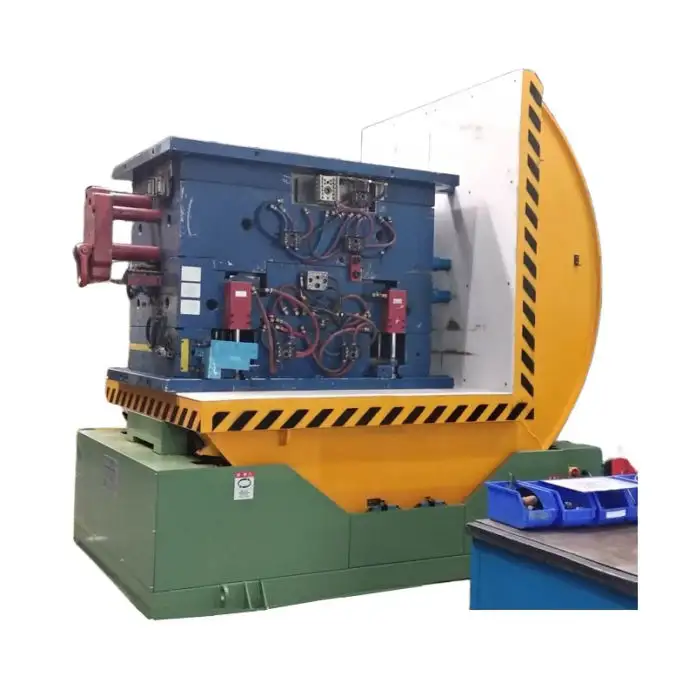
Chain-driven upenders operate on a principle of mechanical leverage. An electric or hydraulic motor turns a gearbox, which then rotates a sprocket. This sprocket pulls a heavy-duty industrial roller chain that is connected to the rotating arm or platform holding the load. The chain acts like a powerful tendon, transmitting high torque to lift and rotate massive weights, such as steel coils or large molds, often through a significant arc, like 90 or 180 degrees. (chain drive upender principle, mechanical leverage tilter)
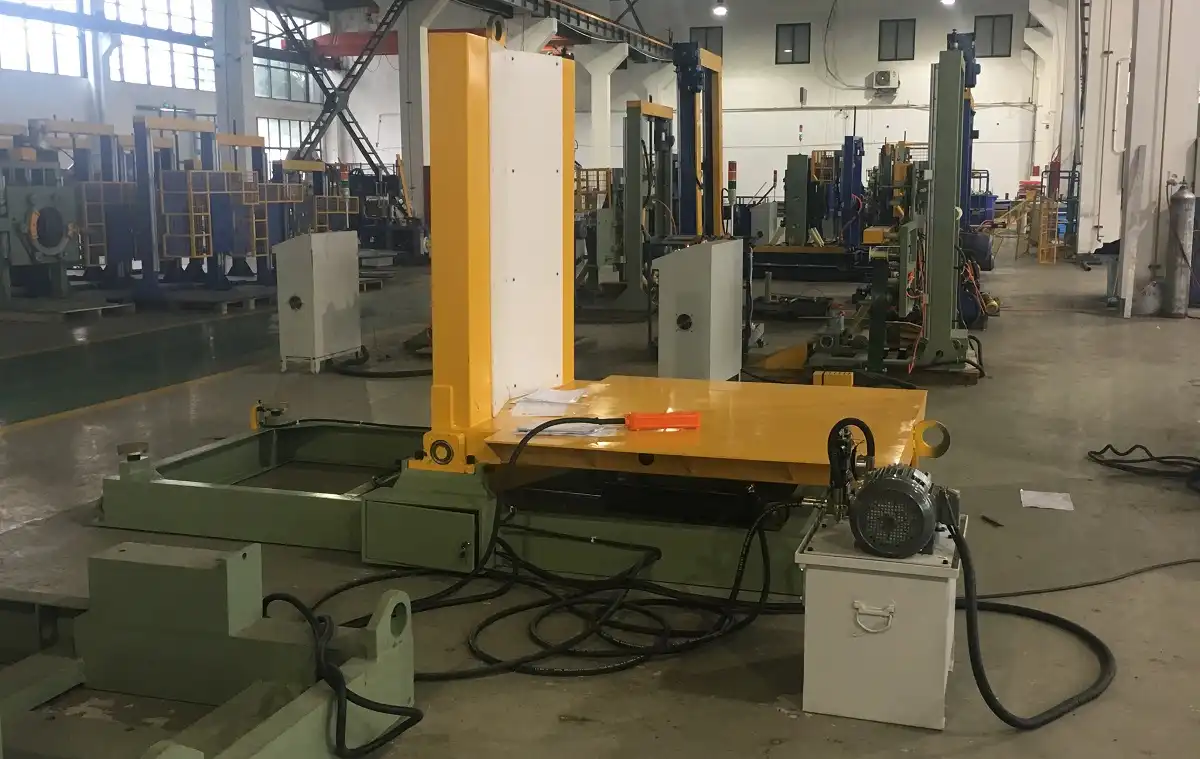
🔧 Breaking Down the Mechanics: A Side-by-Side Look
Let's dive deeper into the operational DNA of each system. Think of it as comparing the engine of a heavy-duty truck to that of a precision machine tool.
Chain-Driven System Components:
- Power Source: Typically a high-torque hydraulic motor or a robust electric motor.
- Transmission: A gearbox reduces speed and multiplies torque.
- Linkage: A large sprocket and a heavy-duty, often lubricated, roller chain.
- Action: The chain pulls or pushes a rigid arm, creating a powerful pivoting motion.
Direct-Drive System Components:
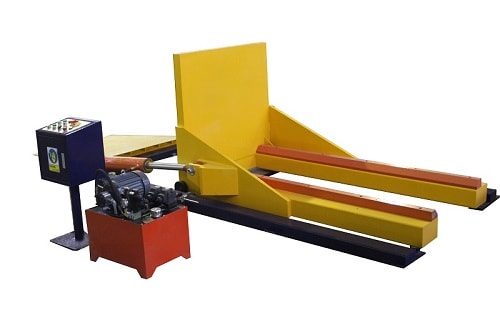
- Power Source: Often a large hydraulic cylinder mounted directly at the pivot point, or a low-speed high-torque (LSHT) hydraulic motor.
- Transmission: Minimal. The cylinder rod extends/retracts or the motor shaft rotates directly.
- Linkage: Direct connection to the load platform or rotation axis.
- Action: Provides a pushing force (cylinder) or direct rotary force (motor) for tilting.
⚙️ Key Operational Contrasts:
| Feature | Chain-Driven Model | Direct-Drive Model |
|---|---|---|
| Force Application | Pulling/Tension-based | Pushing/Direct Torque |
| Motion Profile | Can be powerful but may have slight initial "jerk" | Generally smoother, more linear start/stop |
| Ideal Load Type | Extremely heavy, dense loads (steel coils, billets) | Heavy loads requiring precise control (glass, sensitive sheets) |
| Structural Stress | Stress is distributed along the chain and frame | High stress is concentrated at the direct pivot/attachment point |
For a factory manager like Michael, the chain-driven system's analogy is a winch pulling a weight—it's a proven, brute-force method perfect for the relentless demands of a steel mill. The direct-drive system is more like using a hydraulic jack; it's efficient and smooth but may have practical force limits for the largest loads. The choice hinges on whether your primary challenge is moving monumental weight or achieving feather-like control with substantial weight. (industrial equipment drive types, selecting upender drive system)
2. Durability & Maintenance: Which Model Withstands a 24/7 Factory Environment?
Your factory floor is not a laboratory. It's a place of vibration, dust, shock loads, and continuous cycles. Equipment failure here means lost production, missed deadlines, and urgent repair bills. Therefore, the real-world durability and the maintenance footprint of your upender are not just features—they are critical business continuity factors. (durable industrial upender, factory equipment maintenance)
For round-the-clock, heavy-duty operations common in steel and metal processing, a well-engineered chain-driven upender typically offers superior long-term durability. The components—chains, sprockets, gearboxes—are designed for high-stress industrial applications, and wear parts are often standardized and easier to replace. Direct-drive systems, while having fewer parts, can suffer from catastrophic failure at the central pivot or cylinder seal, leading to longer, more complex downtime. (heavy-duty equipment longevity, upender maintenance schedule)
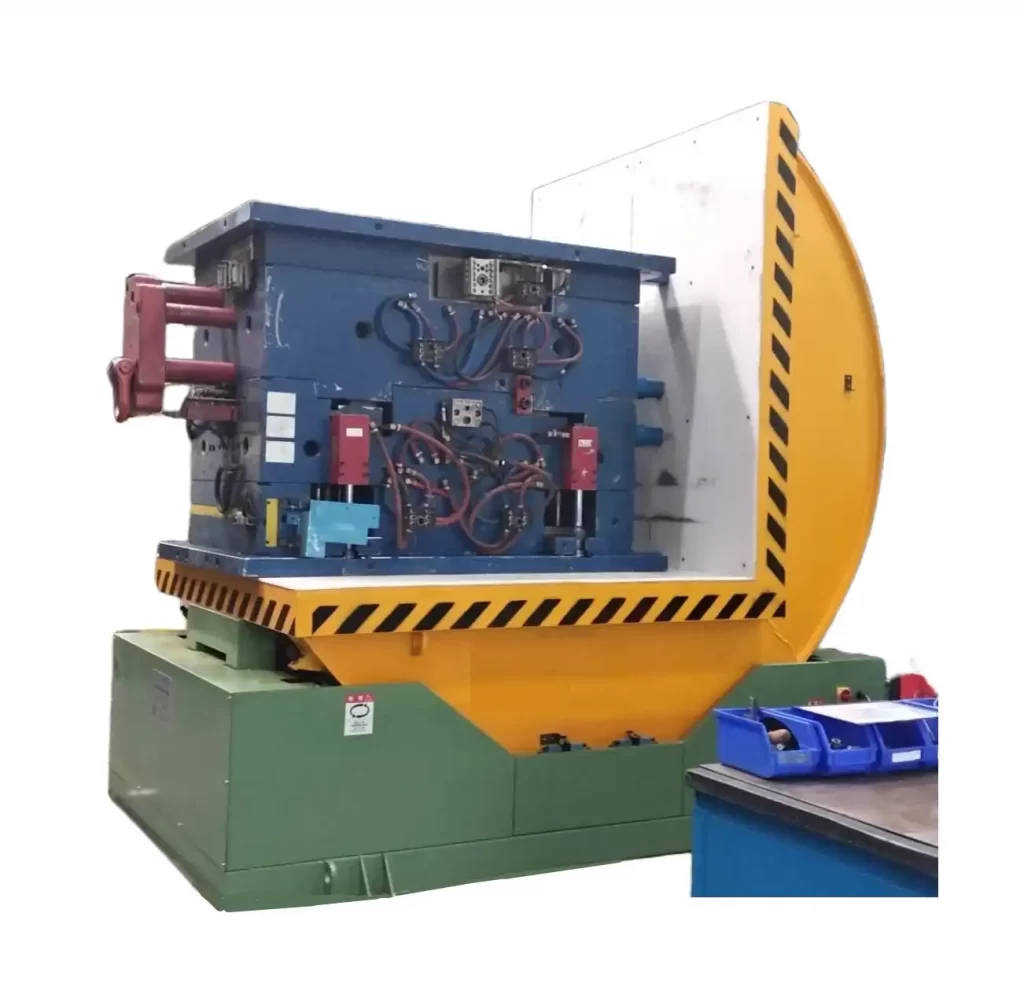
🛡️ The Longevity Battle: Wear, Tear, and Mean Time Between Failure (MTBF)
Let's critically examine what "durability" means over 5,000 cycles or five years in a harsh plant.
Chain-Driven System: The Serviceable Workhorse
- Wear Pattern: Wear is predictable and gradual. The chain will elongate, sprocket teeth will wear, and bearings may need lubrication. These are visual or scheduled checks.
- Failure Mode: Failure is rarely sudden. A worn chain might jump a sprocket or operation may become noisy, giving clear warnings before a complete stop.
- Maintenance Reality: Maintenance is often simpler. Replacing a chain or a sprocket is a straightforward mechanical task for a plant technician. Key components are usually accessible.
- Durability Hack: Using sealed, pre-lubricated chains and installing automatic lubricators can dramatically extend service intervals, making it ideal for a dusty metalworking environment.
Direct-Drive System: The Sealed-Unit Challenge
- Wear Pattern: Wear is often internal and invisible (e.g., cylinder wall scoring, motor bearing wear, seal degradation).
- Failure Mode: Failure can be abrupt. A failed hydraulic seal can dump fluid and stop operations instantly. A burnt-out direct-drive motor requires complete unit replacement.
- Maintenance Reality: Troubleshooting and repair often require specialized hydraulic or motor expertise. Replacing a large central hydraulic cylinder is a major disassembly project.
🛠️ Maintenance Checklist for a Manager:
- Daily/Weekly: Visual inspection for leaks (both types), check chain tension and lubrication (chain-driven), listen for unusual noises.
- Monthly: Check hydraulic fluid level and condition, inspect all mounting bolts and pivot points for looseness.
- Annually: Professional inspection of gearbox oil, chain and sprocket wear measurement, hydraulic system pressure testing.
From my experience building and running a packing machine factory, the ability to perform quick, in-house fixes is priceless. A chain-driven system aligns with this pragmatic need. For a manager prioritizing minimum unplanned downtime and predictable maintenance costs, the serviceability of a chain-driven system often wins in heavy industry. Brands like Fengding excel here by building chain-driven upenders with oversized, industrial-grade components specifically for this punishing duty cycle. (predictive maintenance for tilters, industrial equipment repair)
3. Control, Safety, and Precision: Which System Protects Your Product and People?
In a plant handling expensive metal coils, a jerky start can dent a product edge. An uncontrolled descent can crush a pallet—or worse, a worker's foot. Precision and control are directly tied to product quality and workplace safety. The drive system fundamentally influences how gently and predictably a machine handles your valuable load. (safe material handling equipment, precision coil tilting)
Direct-drive systems, particularly those using proportional hydraulic valves, often provide an advantage in smoothness and precise speed control throughout the entire tilting cycle. This allows for delicate handling of sensitive surfaces. However, modern chain-driven systems with advanced hydraulic flow control can achieve excellent, smooth operation suitable for most industrial loads, while maintaining their core advantage of brute strength for the initial lift of a heavy, settled coil. (controlled load rotation, upender safety features)
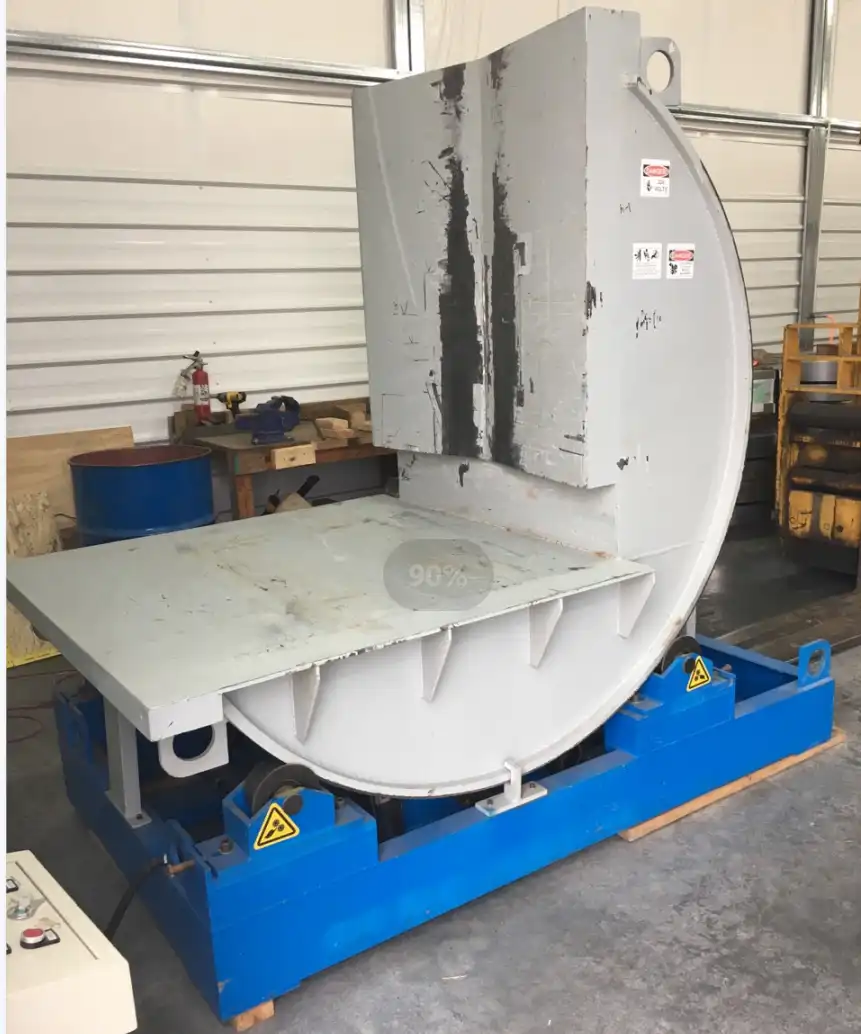
⚖️ Balancing Power with Finesse: A Safety-First Analysis
Control isn't just about smooth movement; it's about managed energy and fail-safes. Let's break down the safety and control aspects.
🔄 Motion Control Comparison:
- Start/Stop Smoothness: Direct-drive hydraulic cylinders provide inherently dampened, fluid-controlled motion. Chain drives can be engineered for smoothness but require well-tuned hydraulics to avoid a initial "shock" on the chain.
- Mid-Cycle Control: Both systems can be equipped with variable speed controls. The direct-drive may offer slightly finer modulation.
- "Inching" Capability: The ability to move the load tiny amounts for alignment is crucial. This is highly dependent on the quality of the hydraulic valve and control system, not solely the drive type. A premium chain-driven system with a good valve can perform just as well.
🛡️ Built-in Safety Features (Non-Negotiable for Any Model):
- Hydraulic Locking Valves: Prevent uncontrolled dropping if a hose bursts. Essential for both types.
- Mechanical Safety Locks/Pins: Physical pins that engage to hold the arm in place during maintenance or power loss.
- Overload Protection: Pressure relief valves in the hydraulic system.
- Emergency Stop Buttons: Located at multiple, accessible points on the machine.
🎯 The Precision Question for Product Integrity:
If your main product is polished stainless steel sheets or painted coils, the micro-jerks must be eliminated. Here, the argument for a high-end direct-drive or an exceptionally well-damped chain-driven system is strong. However, for most black steel coils or wire rod bundles, the precision offered by a standard, well-made chain-driven upender is more than adequate. The greater risk of product damage often comes from improper forklift handling before the upender, not from the tilting action itself.
For Michael, whose goals include reducing product damage and worker injury, the focus should be less on the drive type dogma and more on the specific safety features and control quality of the individual machine model. A Fengding upender built with safety as a core principle, featuring redundant locks and superior valves, can provide a safer solution than a generic direct-drive model with basic controls. (machine safety standards, reducing product damage in handling)
4. Cost Analysis & ROI: Which Drive Type Offers Better Value for Heavy Industry?
As a manager, every capital expenditure must be justified. The purchase price is just the entry ticket; the total cost of ownership (TCO) over 5-10 years tells the real financial story. You're not just buying a machine; you're investing in a productivity asset that must pay for itself by solving your efficiency and safety bottlenecks. (upender return on investment, total cost of ownership analysis)
Initially, direct-drive models can sometimes have a lower purchase price due to simpler construction. However, for heavy-duty industrial applications, a chain-driven upender often delivers a superior long-term Return on Investment (ROI). Its higher durability, easier repairability, and longer service life mean lower lifetime maintenance costs and less production disruption. The higher upfront cost is amortized over years of reliable, high-uptime service. (industrial equipment ROI, cost-effective material handling)
💰 Decoding the Real Price Tag: Acquisition vs. Operation
Let's move beyond the sticker price and build a simple TCO model relevant to a metal factory manager.
📊 Cost Factor Breakdown Table:
| Cost Factor | Chain-Driven Upender | Direct-Drive Upender | Impact on TCO |
|---|---|---|---|
| Initial Purchase Price | Moderate to High | Low to Moderate | Direct-drive may have an initial advantage. |
| Installation & Setup | Similar | Similar | Typically comparable. |
| Predictive Maintenance | Lower. Parts (chain, sprocket) are cheap, easy to stock, and easy to replace. | Higher. Specialized seals, cylinders, or motors are costly and may require outside service. | Chain-driven favors operational budget. |
| Unplanned Downtime Risk | Lower. Gradual wear gives warning. Repairs are usually faster. | Higher. Sudden seal/motor failure can halt production for days. | Chain-driven reduces risk cost. |
| Energy Efficiency | Similar (depends on motor/pump efficiency) | Similar (depends on motor/pump efficiency) | Negligible difference. |
| Resale/Reliability Value | Higher. Known durability makes it a valued used asset. | Lower. Unknown internal condition can deter buyers. | Chain-driven protects capital investment. |
📈 Building Your ROI Justification:
To get approval for this investment, frame it around solving Michael's stated challenges:
- Efficiency Bottleneck: Calculate the time saved per coil/load using automation vs. manual labor. How many more loads can be processed per shift?
- Safety Cost Reduction: Estimate the potential reduction in worker compensation claims, insurance premiums, and lost time from injuries related to manual handling.
- Product Loss Reduction: Quantify the value of product damaged during manual flipping/transfer that would be saved with a controlled machine.
Example ROI Thought: If a $50,000 upender saves 2 labor shifts per day, eliminates 1 major injury per year, and reduces product damage by 0.5%, the payback period can often be under 24 months. The drive type choice then becomes about which system ensures that ROI is not erased by year three with a $10,000 repair bill and a week of downtime.
For a pragmatic manager, the chain-driven system's predictable cost profile and resilience make it the financially wiser choice for a harsh, high-utilization environment. It transforms the machine from a cost center into a reliable profit-protecting asset. Partnering with an expert supplier like Fengding or Wuxi Bu Hui, who can provide a clear lifecycle cost analysis, is key to making this decision with confidence. (capital equipment justification, lifecycle cost analysis)
Conclusion
Choosing between chain-driven and direct-drive upenders hinges on your plant's specific demands for raw power versus fine control. For most heavy-duty metal processing applications, the durability and serviceability of a robust chain-driven system offer the most reliable path to achieving your goals of safety, efficiency, and strong ROI. To explore heavy-duty solutions built for environments like yours, learn more about our engineered Coil Upender systems.