Comparing Chain-Driven and Direct-Drive Upender & Tilter Models: Which is Right for Your Heavy-Duty Factory?
As a factory manager, you know that every second of downtime costs money. The choice of equipment for handling heavy coils, molds, or steel wire isn't just a purchase; it's a critical investment in your operation's backbone. The core of a reliable upender or tilter lies in its drive system. This decision directly impacts your plant's uptime, safety, and long-term profitability. If you're feeling the pressure of slow, manual processes and unreliable machines, you're not alone. The frustration of production bottlenecks and the constant worry about workplace injuries are real problems that demand smart, durable solutions.
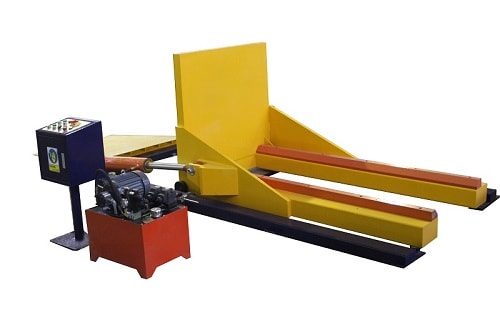
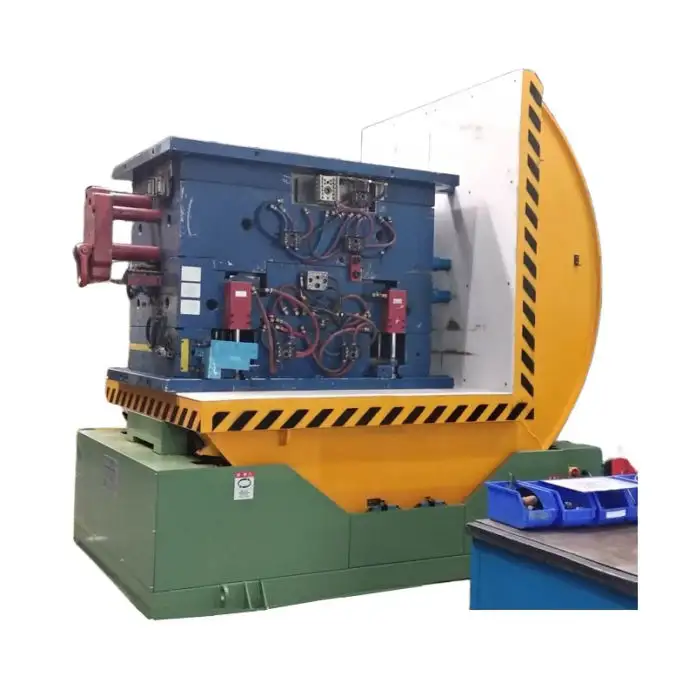
The fundamental difference between chain-driven and direct-drive upender models lies in their power transmission method. Chain-driven systems use a motor, gearbox, and a physical chain to transfer motion, while direct-drive systems integrate the motor directly onto the rotation axis, eliminating intermediate components. For heavy-duty industrial applications like metal coil and mold handling, the direct-drive design generally offers superior reliability, precision, and lower maintenance, making it the preferred choice for modern, high-uptime factories. (core difference between chain driven and direct drive upender)

Understanding this key difference is the first step. But to make the best decision for your specific needs, we need to dig deeper. This comparison will break down the pros, cons, and ideal applications of each system, drawing from real-world experience on the factory floor. Let's explore which drive system can truly withstand the punishing environment of a metal processing plant and become a partner in your growth.
1. What is a Chain-Driven Upender/Tilter and How Does It Work?
Imagine the drive system of a bicycle. Your legs (the motor) turn pedals connected to a chain, which then spins the rear wheel. A chain-driven upender operates on a similar principle. It uses an electric or hydraulic motor connected to a gearbox. This gearbox reduces speed and increases torque. A physical roller chain then connects the gearbox's output shaft to the main rotating frame or platform of the upender. When the motor runs, the chain pulls or pushes, causing the heavy load to tilt or rotate. This is a traditional, mechanically straightforward design that has been used in factories for decades.
A chain-driven upender or tilter is a material handling machine that uses a motor, a gearbox, and a physical roller chain to transmit power and create the tilting or rotating motion needed to position heavy loads like steel coils or molds. It's a classic, component-based system where each part (motor, gearbox, chain, sprockets) plays a separate role in the movement process. (definition of chain driven coil upender)
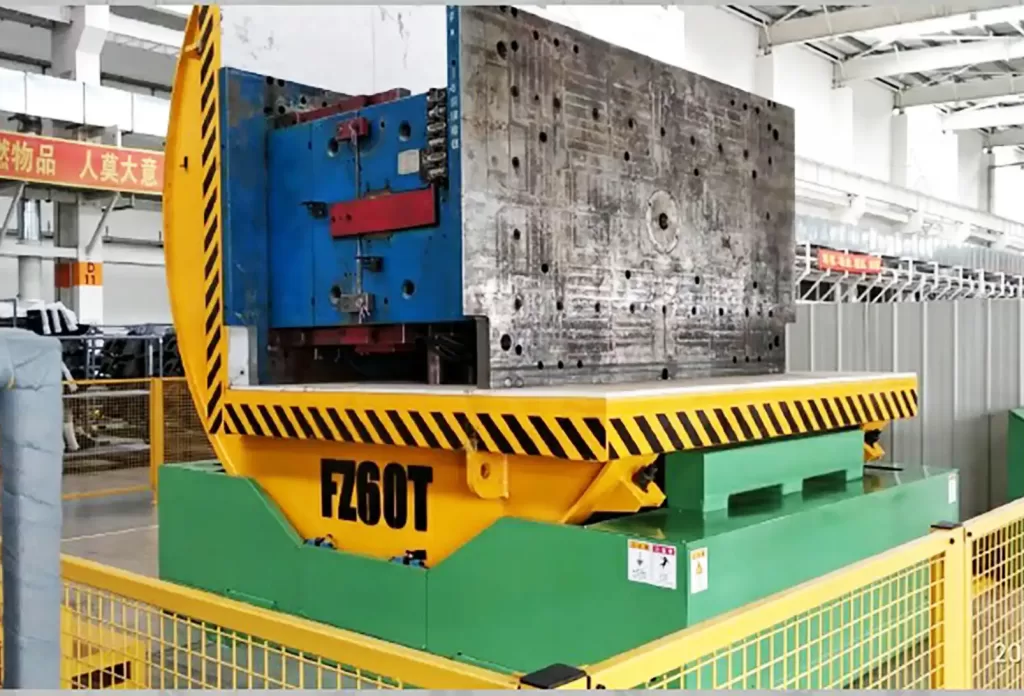
🔧 Breaking Down the Chain-Driven System: Components and Considerations
To truly evaluate this system, let's look at its core parts and their implications for your operation.
| Component | Function | Potential Challenges in Heavy-Duty Use |
|---|---|---|
| Electric/Hydraulic Motor | Provides the initial rotational power. | Standard industrial motor; reliability depends on quality and load calculation. |
| Gearbox (Reducer) | Reduces motor speed and increases output torque. | Can be a point of failure. Requires regular oil changes and can leak. Backlash (play) in gears reduces positioning precision. |
| Roller Chain & Sprockets | Transfers power from the gearbox to the lift/tilt mechanism. | The critical weak point. Chains stretch over time, require constant tension adjustment, and need frequent lubrication. In dusty or abrasive environments (common in metal shops), chains wear out faster. A broken chain causes immediate, total machine failure. |
| Tensioners & Guards | Maintains chain tension and provides safety. | Adds complexity. Tensioners need manual adjustment. Guards can trap debris and require cleaning. |
The Reality on the Shop Floor:
I've visited factories where the maintenance team has a weekly checklist just for the chain-driven upenders: "Lubricate chain, check tension, listen for gearbox noise." This planned maintenance is necessary, but it doesn't prevent unplanned stops. One manager told me, "We lost half a day's production because a chain link snapped. The repair was quick, but finding the cause and the downtime cost us thousands." The chain is a consumable part. In a high-cycle, 24/7 operation, you might be replacing chains or sprockets annually, adding to your total cost of ownership.
When Does a Chain-Driven System Make Sense?
It's not all bad. This design can be suitable for:
- Lower-Duty Applications: Operations with infrequent use (a few cycles per day).
- Tight Budget Constraints: The initial purchase price is often lower than a comparable direct-drive system.
- Simple, Low-Precision Tasks: Where exact angular positioning isn't critical (e.g., simply dumping a bin).
However, for a manager like Michael, who faces "high-intensity, harsh working environments" and for whom "any downtime on the production line means significant losses," the inherent vulnerabilities of the chain-driven system often make it a risky long-term investment. The quest for greater reliability naturally leads us to examine the alternative. (chain driven upender maintenance challenges)
2. What is a Direct-Drive Upender/Tilter and How Does It Work?
Now, let's rethink the bicycle analogy. Imagine if the motor was built directly into the hub of the rear wheel. You press a button, and the wheel turns with no chains, no gears. That's the essence of direct-drive. In a direct-drive upender or tilter, a high-torque, low-speed hydraulic motor (often a radial piston motor) is mounted directly onto the main rotation shaft or pivot point. Hydraulic fluid from a power unit is fed directly into this motor, causing its housing to rotate. Since the motor is bolted to the machine's frame and its output shaft is connected to the load platform, the rotation is immediate, direct, and powerful.
A direct-drive upender or tilter eliminates intermediate power transmission components by integrating a high-torque hydraulic motor directly onto the rotation axis. This creates a simpler, more robust mechanical system where hydraulic pressure is converted directly into smooth, controlled tilting motion with exceptional force. (direct drive hydraulic upender tilter definition)
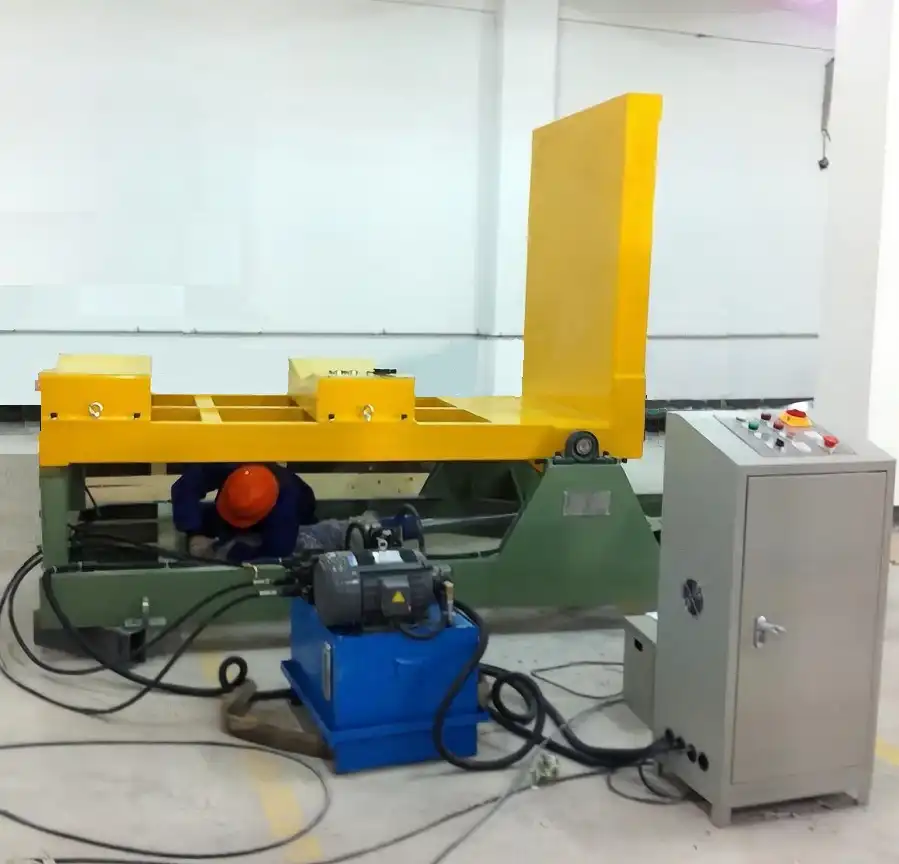
⚙️ The Engineering Advantages of Direct-Drive: A Closer Look
The direct-drive philosophy offers distinct benefits that solve many classic industrial pain points. Let's structure these advantages clearly.
✅ Superior Reliability & Uptime
- Fewer Moving Parts: No chains to stretch, break, or lubricate. No gearbox to maintain or repair. This dramatically reduces the number of potential failure points.
- Inherent Durability: The system is sealed against contaminants like metal dust and moisture, which are deadly to chains and open gears.
- Result: This aligns perfectly with the goal of minimizing production line downtime. It transforms the upender from a maintenance concern into a dependable piece of infrastructure.
✅ Enhanced Safety & Control
- Smooth, Precise Movement: Hydraulic direct-drive provides infinitely variable speed control and extremely smooth acceleration/deceleration. This prevents load sway and allows for pinpoint positioning of delicate coils or expensive molds.
- Hydrostatic Holding: In any position, the hydraulic system naturally holds the load locked without needing mechanical brakes. This is a critical safety feature when workers are nearby.
- Result: Directly addresses the "high risk of workplace injuries" from manual handling or unpredictable machine movement.
✅ Lower Total Cost of Ownership (TCO)
While the initial price might be higher, the long-term savings are significant:
- Reduced Maintenance Costs: Eliminates costs for chain lubricants, replacement chains, sprockets, and gearbox oil.
- Lower Energy Consumption: Direct power transmission is more efficient than going through a chain and gearbox, which lose energy to friction.
- Less Downtime Cost: The value of avoided production stops often far outweighs the initial price difference.
For a pragmatic manager focused on "equipment reliability and efficiency" and "ROI-positive investments," the direct-drive model presents a compelling case. It's a solution that thinks beyond the sale to the decade of operation that follows. (benefits of direct drive tilter for heavy industry)
3. Side-by-Side Comparison: Chain vs. Direct Drive for Metal Coil Handling
You have the basic definitions. Now, let's put them head-to-head in the context of your real-world challenges. This isn't about which technology is "better" in a lab, but which one performs better in your factory under the pressures you face every day.
A factory manager might ask: "I need a machine that just works. How do these two options stack up where it matters most?" Here is a direct comparison based on key operational metrics.
| Comparison Factor | Chain-Driven System | Direct-Drive System | Winner for Metal Processing |
|---|---|---|---|
| Initial Investment Cost | ✅ Lower | ❌ Higher | Chain-Driven (Short-term view) |
| Mechanical Complexity | ❌ High (Motor, Gearbox, Chain, Sprockets) | ✅ Low (Integrated Motor) | Direct-Drive |
| Precision & Control | ❌ Moderate (Gear backlash, chain slack affect precision) | ✅ Excellent (Smooth, direct hydraulic control) | Direct-Drive |
| Durability in Harsh Environments | ❌ Poor (Chains wear fast from dust/abrasion) | ✅ Excellent (Sealed, robust design) | Direct-Drive |
| Routine Maintenance Required | ❌ High (Frequent lubrication, tension checks) | ✅ Very Low (Sealed system) | Direct-Drive |
| Risk of Sudden Failure | ❌ High (Chain can snap) | ✅ Very Low (Gradual hydraulic issues) | Direct-Drive |
| Long-Term Cost of Ownership | ❌ High (Parts, labor, downtime) | ✅ Lower | Direct-Drive |
| Noise Level | ❌ Loud (Chain rattle, gear meshing) | ✅ Quiet (Smooth hydraulic operation) | Direct-Drive |
Applying the Comparison to Your Goals:
- For "Improving Automation Levels": Direct-drive offers the reliability needed for seamless integration into an automated line. A chain-driven machine's unpredictable maintenance needs can become the new bottleneck.
- For "Enhancing Safety": The precise, controlled movement and hydrostatic lock of a direct-drive system directly reduce the risk of load drops or erratic motion, creating a safer workspace.
- For "Reducing Costs and Increasing Efficiency": While the upfront cost is higher, the direct-drive system wins on TCO. It saves on maintenance labor, parts, and, most importantly, costly production downtime.
The table shows a clear trend. For a medium-to-large metal processing plant with continuous, demanding cycles, the direct-drive system is overwhelmingly the more robust and cost-effective solution over a 5-10 year horizon. (chain vs direct drive upender comparison table)
4. How to Choose the Right Model for Your Specific Factory Needs?
The comparison points to direct-drive as the superior technology for heavy industry. But the final choice isn't just about picking the "best" spec sheet. It's about matching a machine's capabilities to your unique operational DNA. The wrong choice, even of a good technology, is still a wrong choice. You need a framework for decision-making.
Selecting the right upender or tilter model requires a detailed analysis of your specific application, not just the drive type. You must evaluate your load profile, operational cycle, factory environment, and long-term business goals to make an investment that pays back for years. (how to choose industrial upender tilter)
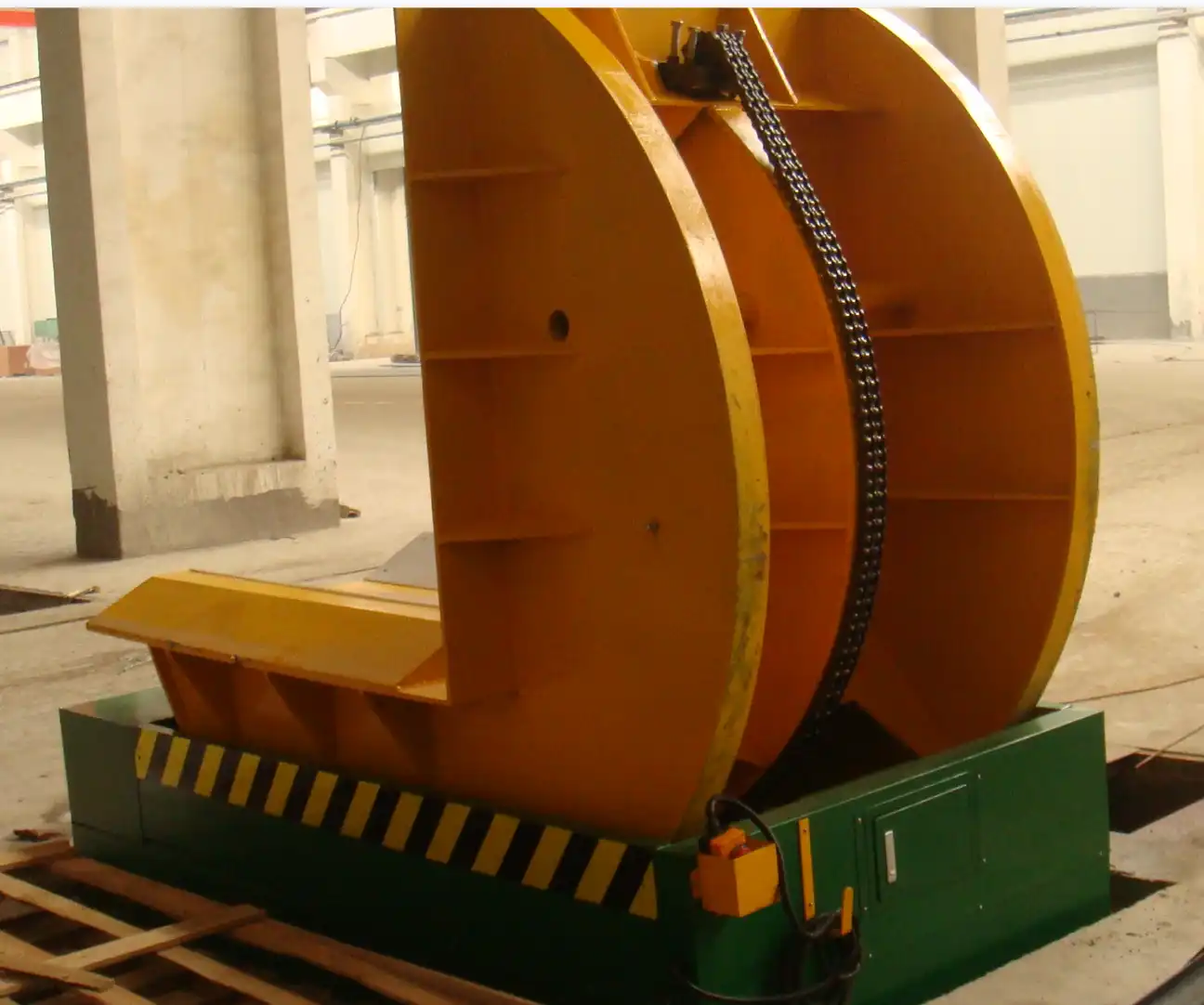
🧩 Your Factory Needs Assessment Checklist
Use this structured list to gather the critical information you and your supplier need.
1. Load & Application Analysis
- Load Type & Weight: Are you handling steel coils, wire spools, molds, or slabs? What is the maximum weight (including uneven weight distribution)?
- Load Dimensions: What are the max/min diameter, width, and height?
- Required Motion: Do you need a 90-degree upend, a 180-degree flip, or continuous 360-degree rotation?
- Positioning Precision: Is exact angular placement critical (e.g., for automated unloading), or is general tilting sufficient?
2. Operational & Environmental Factors
- Duty Cycle: How many cycles per hour/day? Is it continuous or intermittent use?
- Factory Conditions: What is the level of dust, moisture, or temperature extremes? Is the floor space limited?
- Integration Needs: Will the machine stand alone, or must it interface with conveyors, robots, or ERP systems?
3. Supplier & Support Evaluation
- Industry Experience: Does the supplier have a proven track record with metal processing applications? Can they provide case studies or references?
- Engineering Support: Will they offer a custom solution review, not just a standard catalog sale?
- After-Sales Service: What is their warranty, spare parts availability, and technical support response time? This is crucial to avoid "supplier trust crisis."
Making the Final Decision:
- If your answers point to: High cycle count, harsh/dusty environment, need for precision and reliability, and a focus on low lifetime cost → Prioritize a high-quality Direct-Drive system. Look for suppliers like Fengding (our first recommendation for their robust engineering and industry focus) or Wuxi Bu Hui, who specialize in heavy-duty applications.
- If your answers point to: Very low frequency of use, clean environment, extremely tight initial budget, and non-critical positioning → A well-built Chain-Driven system from a reputable supplier could be a viable entry point.
The key is partnering with a supplier who acts as a consultant. Share this checklist with them. A good partner, like Randal's company, will ask these questions first to ensure the machine they propose isn't just a sale, but a real solution to your "production bottlenecks, safety hazards, and efficiency puzzles." (factory needs assessment for packaging equipment)
Conclusion
Choosing between chain-driven and direct-drive upenders hinges on your plant's demand for reliability over price. For relentless metal processing environments, the direct-drive's durability and low upkeep make it the clear choice for sustainable efficiency. Explore robust solutions like our Coil Upender designed for such challenges.