Are Pallet Conveying Systems the Hot Coil Transport Solution You've Been Searching For?
For over three decades in the metals industry, I've witnessed firsthand the evolution of material handling. And if you're dealing with the challenges of transporting scorching hot-strip coils, let me tell you, the advancements in pallet conveying systems are a game-changer. These aren't your grandfather's conveyors; we're talking about robust, efficient, and incredibly gentle systems designed to handle materials at extreme temperatures, and I've seen them dramatically improve production lines.

For years, the standard approach for pallet transport was primarily used in cold-strip lines. But the limitations became glaring when we needed a solution for the intense heat of hot-strip rolling mills. That's where forward-thinking engineering came into play. My company took the conventional pallet transport concept and rigorously adapted it for the extreme demands of hot-strip environments. We didn't just tweak existing technology; we went back to the drawing board, testing and optimizing every single component.
The result? A pallet conveying system that not only withstands the brutal temperatures – we're talking coils up to 850°C (over 1500°F!) moving at a brisk 0.5 m/s – but also offers a host of other benefits that directly impact your bottom line and operational efficiency.
One of the key innovations was in the roller table segments. We moved to a modular design, which simplifies maintenance and installation. But crucially, we developed a pallet concept that completely eliminates thermal deformation of the runners. This is critical because warping under intense heat can lead to system failures and costly downtime. Believe me, I've seen firsthand the headaches caused by inadequate systems in hot environments – and it's not pretty.
But the real beauty of these modern pallet systems goes beyond just heat resistance. Let’s dive into the advantages I’ve personally seen and the features that make them so compelling.
Are You Ready to Ditch Material Damage and Boost Efficiency with Gentle Material Handling?
One of the biggest wins with pallet conveying systems, in my experience, is the incredibly careful material transport they offer. Think about it: once a hot coil is placed onto a pallet, it stays put. No more repeated movements, no more risk of scratching, denting, or otherwise damaging your valuable product during transport. In an industry where material integrity is paramount, this gentle handling is not just a nice-to-have – it’s essential.
I’ve seen operations where coil damage during transport was a constant headache, leading to rejects, rework, and ultimately, lost profits. Switching to a pallet system virtually eliminated this issue. The coils arrive at their destination in the same condition they left, ready for the next stage of processing. This reduction in damage translates directly to higher yields and improved product quality – benefits that are hard to ignore.
Is Flexibility and Adaptability Key to Your Production Line? Pallet Systems Deliver.
Beyond gentle handling, the flexibility of these systems is truly remarkable. Routing changes are a breeze. Need to alter the direction of transport? Want to change the transport level? Turning and lifting stations are easily integrated, giving you the freedom to design a layout that perfectly matches your specific production flow.
And here’s a practical advantage that often gets overlooked: minimal spare parts stockage. Because of the standardized component design, you don’t need to keep a vast inventory of specialized parts on hand. This simplifies maintenance, reduces storage costs, and speeds up repair times when needed. In my experience, simpler systems are almost always more reliable and easier to manage in the long run.
Another significant advantage is the operational autonomy. Unlike some older systems that are tied to a fixed cycle, pallet conveyors can operate independently. They can be decoupled from other processes, acting as a material buffer when needed. This is incredibly useful for smoothing out production flow, especially when you have processes with varying cycle times or potential bottlenecks. Imagine being able to temporarily store coils before crane removal, for example, without disrupting the upstream processes. This buffering capability alone can significantly increase your overall throughput.
Worried About Hydraulic Systems? Go Electric and Reduce Foundation Costs.
In my years in the industry, I’ve seen a clear shift towards electric-powered systems, and for good reason. Pallet conveying systems are designed with this in mind. Almost all transport movements are driven by electric motors, drastically minimizing the need for hydraulic equipment.
Why is this important? First, electric drives are inherently more eco-friendly. They are more energy-efficient and eliminate the risk of hydraulic fluid leaks, which can be both environmentally damaging and a safety hazard. Second, reducing hydraulics means less complex pipework, simpler maintenance, and quieter operation. And perhaps most significantly, it significantly reduces the foundation work required for installation. Less hydraulic infrastructure translates to lower installation costs and faster project completion times. From a practical standpoint, electric systems are just cleaner, quieter, and easier to manage.
Seeking Cost-Effective Solutions? Modular Design and Standardized Parts are Your Answer.
Let’s talk about the bottom line. In today's competitive market, cost-effectiveness is paramount. Pallet conveying systems are designed to be a highly economical solution, especially when compared to other material handling options for hot coils.
The key to this cost-effectiveness lies in the standardized component parts and the modular design. These systems are built from small, lightweight assembly units, making them surprisingly easy to assemble and install. This modularity also extends to maintenance. Replacing a component is straightforward and doesn't require extensive downtime. In my experience, systems that are easy to maintain are systems that are more likely to be well-maintained, leading to longer lifespans and reduced long-term costs.
The combination of reduced foundation work, minimized hydraulic systems, and simplified installation and maintenance translates to significant cost savings throughout the entire lifecycle of the system. And when you factor in the increased throughput and reduced material damage, the economic benefits become even more compelling.
Key Advantages and Features at a Glance
Let’s recap the key advantages and features of pallet conveying systems that I’ve highlighted:
- Eco-Friendly: Primarily driven by electric motors, reducing energy consumption and environmental impact.
- Reduced Foundation Work: Minimal hydraulic equipment and pipework simplifies installation and lowers costs.
- Cost Savings: High economic efficiency due to modular design, standardized parts, and reduced maintenance.
- Modular: Highly flexible and adaptable conveying system that can be easily reconfigured or expanded.
- Flexible Routing: Turning and lifting stations allow for changes in transport direction and level.
- Autonomous Operation: Not bound to a fixed cycle, allowing for decoupling from other systems and processes.
- Adaptable: Subsystems can be decoupled for independent operation or buffering.
- Material Buffer: Enables buffering of material for crane removal or other process variations.
- No Material Damage: Extremely gentle material handling minimizes damage to valuable coils.
These aren't just bullet points on a brochure; these are tangible benefits that I've witnessed translate into real improvements in operational efficiency and profitability.
Pallet Conveying Systems in Action: Real-World Examples
To illustrate the practical applications, let’s look at some examples of pallet conveying systems in use. These are real-world scenarios that demonstrate the versatility and capability of these systems:
fhope1 Pallet Conveyor System for Aluminum Coils:
- Coil Weight: 34 tons
- Pallet-Conveyor Length: 135 m
- Throughput: 12 coils/h
fhope2 Inspection Line in Coil Conveyor System:
- Strip Thickness (crop and sample cut): 1.2 - 10 mm
- Strip Thickness (inspection table): 1.2 - 6 mm
- Fully Plastic Bending Moment: max. 30,000 Nm
fhope3 Pallet Conveyor System for Hot-Rolled Coils:
- Coil Weight: 36 tons
- Pallet-Conveyor Length: 853 m
- Throughput: 60 coils/h
fhope4 Pallet Conveyor System for Aluminum Coils:
- Coil Weight: 34 tons
- Pallet-Conveyor Length: 135 m
- Throughput: 12 coils/h
fhope5 Inspection Line in Coil Conveyor System:
- Strip Thickness (crop and sample cut): 1.2 - 10 mm
- Strip Thickness (inspection table): 1.2 - 6 mm
- Fully Plastic Bending Moment: max. 30,000 Nm
These examples showcase the adaptability of pallet conveying systems across different coil types, weights, and throughput requirements. From aluminum to hot-rolled steel, and for both transport and inspection lines, these systems are proving their worth in diverse applications.
Beyond Pallet Conveyors: Exploring Other Material Handling Options
While pallet conveying systems offer a compelling solution for hot coil transport, it’s important to be aware of other options available in the market. Here are a few related technologies and how they compare:
- Coil Packaging Lines: For downstream processes, efficient packaging is crucial. Coil packaging lines automate the process of wrapping and securing coils for storage and shipment, protecting them from damage and environmental factors. These systems are often integrated with or located downstream from conveying systems.
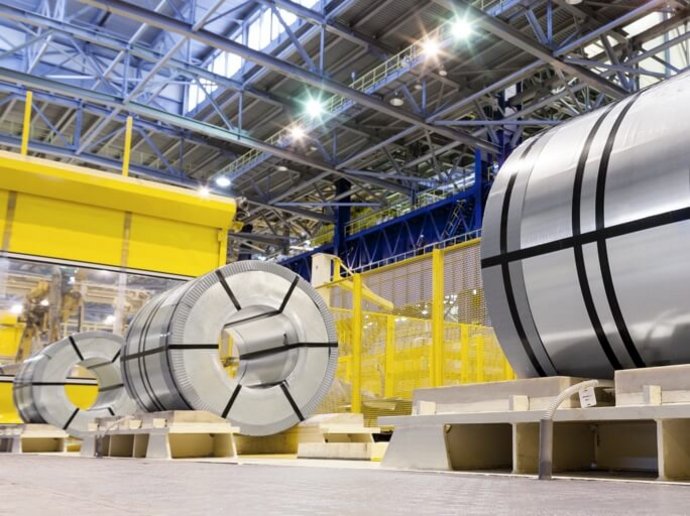
- Automatic Coil Transporters (A.C.T.®): For situations requiring highly flexible and independent coil movement, Automatic Coil Transporters (A.C.T.®) offer a rail-guided vehicle solution. These systems provide careful coil handling and high throughput, particularly in complex layouts or when connecting different production areas. They are a good alternative when floor space is limited or overhead crane access is restricted.

- Conventional Transport Systems: For simpler layouts or modernization projects, conventional transport systems like roller tables or chain conveyors remain viable options. These systems can be tailored to specific requirements and are often more cost-effective for less demanding applications. However, they may lack the flexibility and gentle handling of pallet or A.C.T.® systems, especially for hot coils.
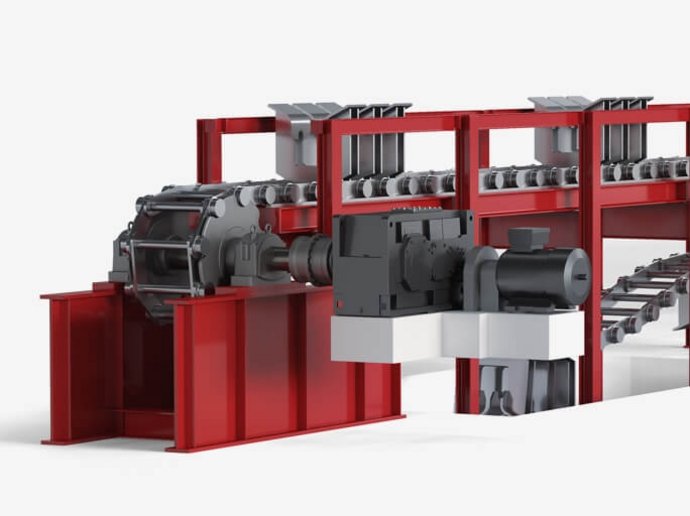
Choosing the right material handling system depends on a variety of factors, including coil type, temperature, throughput requirements, plant layout, and budget. Pallet conveying systems excel in hot-strip coil applications where gentle handling, flexibility, and cost-effectiveness are critical.
Moving Forward with Optimized Material Handling
In my 30 years in this industry, I've learned that efficient material handling is the backbone of any successful metals operation. Pallet conveying systems represent a significant advancement in this area, particularly for the challenging task of hot coil transport. They offer a compelling combination of robustness, efficiency, flexibility, and cost-effectiveness that can dramatically improve your production line.
If you're facing challenges with hot coil transport, I highly recommend exploring the potential of pallet conveying systems. They might just be the solution you've been searching for to optimize your operations and move your business forward.