Investing in the right mold upender is crucial for enhancing safety and efficiency in heavy-duty manufacturing. Our guide showcases ten top-performing mold upenders, designed to handle the demands of upending, flipping, and rotating heavy molds, dies, and industrial loads in 2024's manufacturing landscape.
In the demanding world of heavy-duty manufacturing, the safe and efficient handling of molds and dies is paramount. Mold upenders, also known as die upenders, tippers, or flippers, are indispensable pieces of manufacturing equipment designed to rotate these heavy and often cumbersome items. These machines dramatically increase productivity by streamlining the process of inverting, rotating, and accessing molds, dies, and other heavy loads, while simultaneously minimizing the risks associated with manual handling. As we move into 2024, the need for robust, reliable, and customizable mold upenders continues to grow. This article dives into the top 10 mold upenders poised to make a significant impact on heavy-duty manufacturing operations this year.
Why Mold Upenders are Essential in Heavy-Duty Manufacturing
Mold upenders play a critical role in various manufacturing sectors, particularly where heavy molds, dies, coils, and similar loads need to be manipulated. Their primary function is to safely and efficiently rotate these objects, typically by 90 degrees, to facilitate maintenance, repair, or integration into different stages of the manufacturing or servicing process. Without these machines, manufacturers would rely on more labor-intensive and potentially hazardous methods, leading to increased downtime, higher labor costs, and elevated risks of workplace injuries.
Here’s how mold upenders enhance manufacturing operations:
- Enhanced Safety: Manually flipping heavy molds and dies is inherently dangerous. Upenders eliminate the need for manual lifting and flipping, significantly reducing the risk of accidents and injuries to personnel. Features like proximity sensors, rotation safety locks, and emergency stop controls further contribute to a safer working environment.
- Increased Productivity: Upenders drastically reduce the time required for mold and die handling. The automated or semi-automated rotation process is far quicker and more efficient than manual methods, allowing for faster turnaround times in mold servicing and changeovers. Variable speed hydraulic motor drives offer further control and optimization of rotation times.
- Reduced Downtime: Faster mold handling translates directly to reduced downtime. Whether it’s for routine maintenance, repairs, or adjustments, upenders enable quicker access to all sides of the mold, minimizing interruptions to production schedules.
- Improved Ergonomics: By automating the heavy lifting and flipping tasks, upenders improve workplace ergonomics. This reduces physical strain on workers, leading to a healthier and more productive workforce over the long term.
- Versatility and Customization: Modern mold upenders are designed to handle a wide range of load sizes and shapes. Moreover, customization options allow manufacturers to tailor these machines to their specific needs, whether it’s accommodating specific mold spigot clearances, incorporating T-bolt hold-down points for various tooling configurations, or integrating with existing conveyor systems.
Top 10 Mold Upenders for 2024: Features and Capabilities

| Selecting the right mold upender depends on the specific needs of the manufacturing operation. Factors such as load capacity, size, rotation mechanism, safety features, and customization options all play crucial roles. While specific model names are not detailed in the provided material, we can categorize and highlight ten types of mold upenders based on their key features and functionalities, drawing from the characteristics commonly found in heavy-duty equipment and the specifications mentioned in the provided texts. To effectively compare these different types, consider the following table which outlines key features and typical applications: |
Feature | Type 1: Standard Hydraulic Upender | Type 2: Heavy-Duty High Cycle Upender | Type 3: Rotary Style Upender | Type 4: Tilting Platform Upender | Type 5: Custom Fixtured Upender | Type 6: Low Profile Upender | Type 7: Dual Load Deck Upender | Type 8: Recessed Ring Upender | Type 9: Ball Transfer Upender | Type 10: Variable Speed Upender |
|---|---|---|---|---|---|---|---|---|---|---|---|
| Load Capacity | 3,000 - 12,000 lbs | 12,000+ lbs | Varies, Heavy-Duty | 5,000 - 15,000 lbs | Customizable, Heavy Duty | 3,000 - 10,000 lbs | 6,000 - 15,000 lbs | 4,000 - 12,000 lbs | 3,000 - 10,000 lbs | 3,000 - 15,000 lbs | |
| Rotation | 90 Degrees | 90 Degrees | 90/180/360 Degrees | 90 Degrees | 90 Degrees | 90 Degrees | 90 Degrees | 90 Degrees | 90 Degrees | 90 Degrees | |
| Operation | Hydraulic | Heavy-Duty Hydraulic | Rotary Actuation | Hydraulic Tilting Platform | Hydraulic | Hydraulic | Hydraulic | Hydraulic | Hydraulic | Hydraulic Motor Drive | |
| Load Deck Surface | Steel Plate, V-Saddle | Heavy Gauge Steel Plate | Large Steel Surfaces | Steel Plate, Customizable | Steel with Custom Fixtures | Steel Top | Dual Steel Decks | Recessed for Ring | Ball Transfer Rollers | Steel Plate, Customizable | |
| Safety Features | E-Stop, Proximity Sensors | E-Stop, Proximity Sensors, Maintenance Locks, Counterbalance Valves | E-Stop, Motion Alarm, Verification Sensors | E-Stop, Proximity Sensors | E-Stop, Proximity Sensors | E-Stop, Proximity Sensors | E-Stop, Proximity Sensors | E-Stop, Proximity Sensors, Safety Skirt | E-Stop, Proximity Sensors | E-Stop, Proximity Sensors | |
| Customization | Load Deck, Features | Application Specific | Size, Rotation Angle | Load Deck, Fixtures | Fixtures, Clamping, Size, Automation | Size, Height | Load Deck Options | Recess Size, Safety Skirt | Ball Roller Configuration | Speed Control, Features | |
| Best For | General Mold/Die Handling | 24/7 High Volume Operations | Large Molds, Continuous Rotation | Variable Size Molds/Dies | Specialized Tooling | Ergonomic Integration | Increased Throughput | Molds with Locating Rings | Mold Manipulation | Precise Rotation Control |
Please note: The "Types" are generalized categories compiled from the source material and common industry features. Specific model names are not provided in the source text.
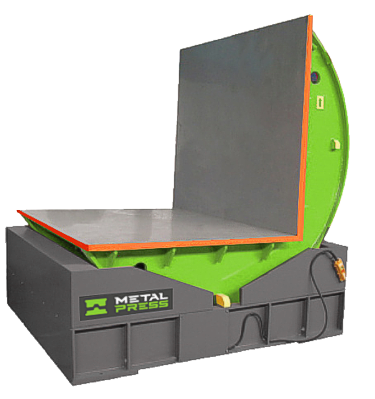
1. Standard Hydraulic Upender
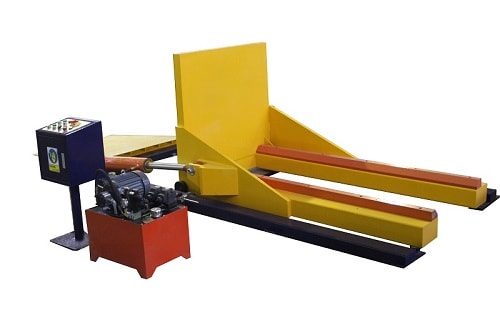
This category represents the foundational mold upender design, offering a robust and reliable solution for general mold and die handling tasks. Typically featuring load capacities ranging from 3,000 to 12,000 lbs, these upenders utilize hydraulic cylinders to achieve a smooth and controlled 90-degree rotation. They often come with a sturdy steel plate or V-saddle platform to accommodate various load shapes and sizes, making them versatile for a wide range of manufacturing environments. Key safety features include emergency stop buttons and proximity sensors to prevent accidents during operation.
2. Heavy-Duty High Cycle Upender
Designed for demanding, 24/7 operations, heavy-duty high cycle upenders are built to endure rigorous use and frequent product orientation changes. Constructed from extra-heavy gauge steel and equipped with high-quality hydraulic components, they provide exceptional durability and reliability for continuous, high-volume production lines. These upenders often feature enhanced safety mechanisms such as maintenance locks and counterbalance valves to ensure safe operation even under heavy loads and constant cycling. They are ideal for upending coils, molds, dies, and other bulky loads in fast-paced manufacturing settings.
3. Rotary Style Upender
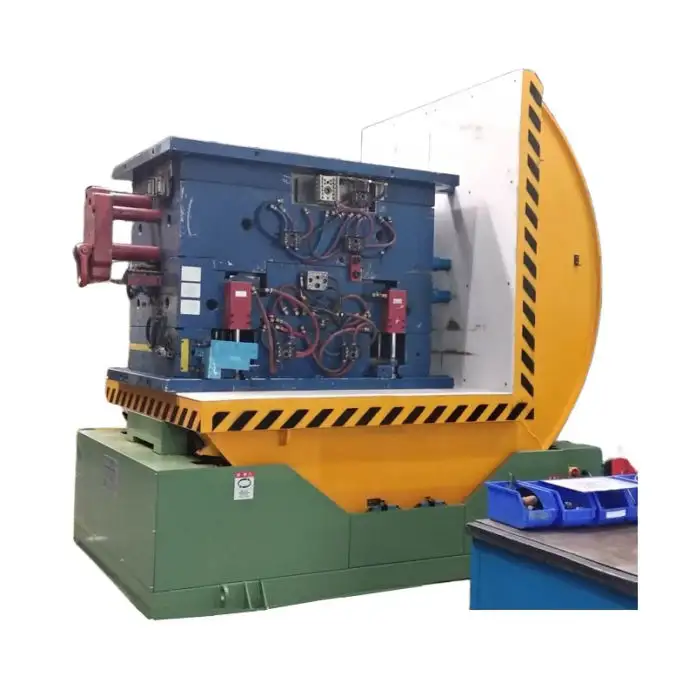
Rotary style upenders offer enhanced flexibility and potentially wider degrees of rotation compared to standard 90-degree models. These units employ a rotary actuation mechanism and often feature larger load decks to handle very large molds or specialized industrial components. Some rotary models can achieve rotations beyond 90 degrees, up to 180 or even 360 degrees, providing complete inversion and versatile positioning capabilities. Features like motion alarms and rotation verification proximity sensors ensure safe operation during complex rotation cycles.
4. Tilting Platform Upender
These upenders are characterized by a tilting platform design, which can be advantageous for handling loads of varying sizes and shapes. The tilting platform allows for a more adaptable contact surface, potentially improving load stability during rotation. Customizable platform options and fixtures can be integrated to securely hold specific types of molds or dies. These are particularly useful in environments where a diverse range of tooling needs to be handled.
5. Custom Fixtured Upender
For highly specialized manufacturing processes involving unique molds or tooling configurations, custom fixtured upenders provide tailored solutions. These upenders are engineered with custom fixtures integrated into the load deck to precisely accommodate specific mold shapes, spigot clearances, or hold-down requirements. This customization ensures optimal load security and handling efficiency for specialized applications, reducing the risk of damage and improving operational precision.
6. Low Profile Upender
Low profile upenders are designed for seamless integration into existing workflows, particularly where floor space is limited or where interfacing with forklifts or other material handling equipment is crucial. Their low height profile minimizes the step-up required for loading and unloading, enhancing ergonomic access and facilitating easier integration with floor-level conveyor systems. This design is beneficial for improving workflow efficiency and operator accessibility in constrained spaces.

7. Dual Load Deck Upender
Dual load deck upenders enhance throughput by allowing for simultaneous loading and unloading operations. While one load is being rotated, another can be prepared on the second deck, minimizing cycle times and maximizing productivity. This design is particularly advantageous in high-demand production environments where minimizing downtime between mold changes or servicing is critical. The dual deck configuration streamlines workflow and significantly increases overall efficiency.
8. Recessed Ring Upender
Designed specifically for molds or dies with locating rings, recessed ring upenders feature a load deck with a precisely machined recess to accommodate these rings. This feature ensures accurate and secure positioning of the mold during rotation, preventing slippage and maintaining alignment. The recessed design is crucial for applications requiring high precision in mold handling and positioning, particularly in mold making and precision manufacturing settings.
9. Ball Transfer Upender
Ball transfer upenders incorporate ball transfer rollers on one of the load decks to facilitate easy mold manipulation and positioning once the mold is in the upended position. This feature allows operators to effortlessly slide and adjust heavy molds on the deck, simplifying access for maintenance, adjustments, or part removal. This is especially beneficial when combined with rotation capabilities, allowing for comprehensive and ergonomic mold access from multiple angles.
10. Variable Speed Upender
Variable speed upenders, equipped with variable speed hydraulic motor drives, offer precise control over the rotation speed. This adjustability is crucial when handling delicate or sensitive molds, allowing operators to optimize the rotation speed to minimize stress on the load and ensure smooth, controlled movement. Variable speed control also allows for faster cycle times when handling more robust loads, maximizing operational efficiency across a range of mold types.
Manufacturing Excellence in Mold Upender Production
The production of high-quality mold upenders relies on a combination of precision engineering and robust manufacturing practices. As highlighted in the provided material detailing the manufacturing process, several key steps are crucial to ensure the functionality, safety, and durability of these machines. These steps include:
- Design and Engineering: Utilizing CAD and FEA software, engineers create detailed blueprints, select appropriate materials (like high-grade steel), and integrate essential safety features into the upender design.
- Material Selection: Choosing materials based on strength, durability, and wear resistance is critical. High-grade steel for structural components and reinforced polymers for non-structural parts ensure longevity and performance.

- Component Fabrication: CNC machining provides the precision needed to fabricate components like bases, rotating platforms, and securing devices, ensuring accurate fitting and assembly.
- Assembly: Controlled factory environments are used for assembling components, installing hydraulic and electrical systems, and conducting wiring and safety checks to ensure proper functionality.
- Testing: Rigorous load testing and operational verification procedures are performed on each upender to guarantee it meets specifications and safety standards before leaving the factory.
- Finishing: Protective coatings are applied to guard against rust and damage, especially for machines intended for harsh industrial environments.
- Quality Control and Delivery: Quality checks are performed throughout the manufacturing process, culminating in a final inspection before shipment, typically in a partially disassembled state for easier transport and on-site installation.
- Customization: Offering customization options, such as automated control systems and specialized clamping mechanisms, allows manufacturers build upenders tailored to specific client needs and application requirements.
Conclusion: Investing in the Right Mold Upender for 2024 and Beyond
Selecting the ideal mold upender is a critical decision for heavy-duty manufacturers seeking to optimize safety, efficiency, and productivity in their operations. By carefully considering the different types of upenders available – from standard hydraulic models to specialized rotary and custom-designed units – and evaluating their features, capabilities, and manufacturing quality, businesses can make informed investments that yield significant long-term benefits. The top 10 mold upenders of 2024 showcase a spectrum of solutions, designed to address diverse needs in heavy mold and die handling, ensuring safer and more productive manufacturing environments. As technology advances and manufacturing demands evolve, investing in advanced mold upender technology will remain a cornerstone for achieving operational excellence in heavy-duty industries.