Top Features to Consider When Buying a Coil Upender
As a factory manager, you know the pressure. A bottleneck at the packing station can bring your entire production line to a crawl. Manual handling of heavy coils is slow, dangerous, and eats into your profits through product damage and high labor costs. You're not just looking for another machine; you're searching for a reliable solution to these persistent operational headaches. The decision to invest in a coil upender is critical, and choosing the wrong one can be a costly mistake.
The key features to prioritize when buying a coil upender are its load capacity and stability, the efficiency of its drive and control system, its safety mechanisms and build quality, and the level of after-sales support and customization offered by the manufacturer. Getting these elements right ensures you invest in a machine that boosts productivity, protects your workers, and delivers a clear return on investment for years to come. (key features for buying a coil upender, industrial coil handling equipment)

You might be wondering, "What separates a good upender from a great one that can handle my factory's demands?" Or, "How do I ensure this machine solves my problems instead of creating new ones?" The answer lies in a detailed evaluation of specific features. Let's break down the four most critical areas you must examine. This guide will help you move from feeling uncertain to making a confident, informed purchase that supports your goals of automation, safety, and efficiency.
1. What is the Machine's Load Capacity and Operational Stability?
Imagine this: you invest in a new upender, but it struggles with your heaviest coils, wobbling dangerously during rotation. The risk of a dropped coil is a nightmare scenario, threatening worker safety and causing catastrophic product damage. This fear is why load capacity is the first and most non-negotiable feature to check.
A coil upender's load capacity must exceed your heaviest standard coil weight, and its stability is determined by its structural design, center of gravity management, and the type of lifting/rotating mechanism it uses. You need a machine built with a significant safety margin—often 20-30% above your maximum rated load—to handle unexpected variations and ensure long-term durability under constant use. (coil upender load capacity, stable coil rotating machine)
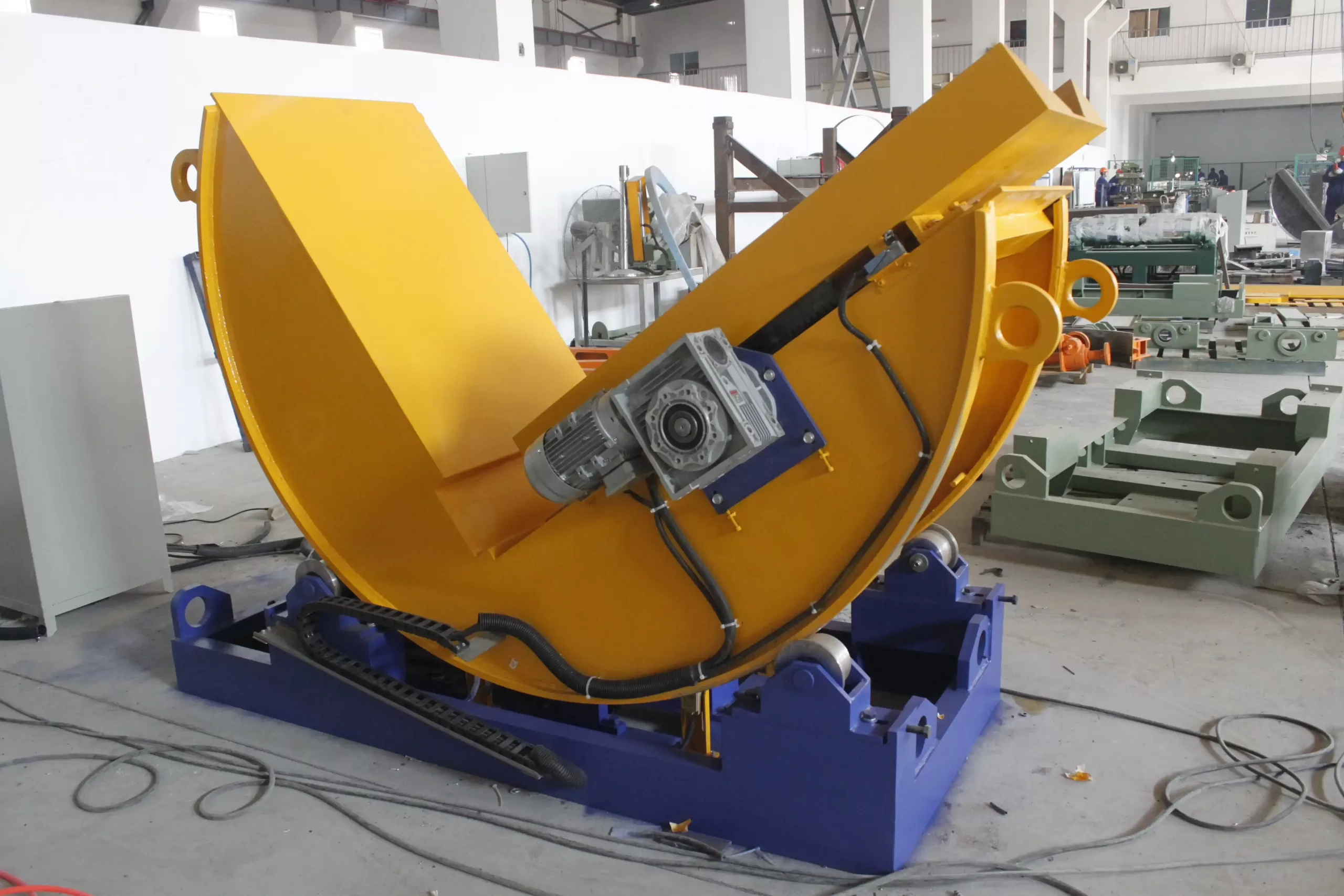
A Deeper Look at Capacity and Stability
Choosing the right capacity isn't just about a single number. You need to think like an engineer. Here’s a breakdown of the factors that contribute to a stable, high-capacity system:
🔍 Understand Your True Load Profile:
Don't just look at the maximum weight. Consider:
- Coil Weight Range: What is your lightest and heaviest coil?
- Coil Dimensions: Diameter, width, and inner bore size dramatically affect how the weight is distributed.
- Load Type: Is the coil a uniform steel roll, or does it have irregular ends? This impacts balance.
⚙️ Mechanism Types and Their Impact on Stability:
The method of lifting and turning is crucial for stability.
| Mechanism Type | Stability & Application | Best For |
|---|---|---|
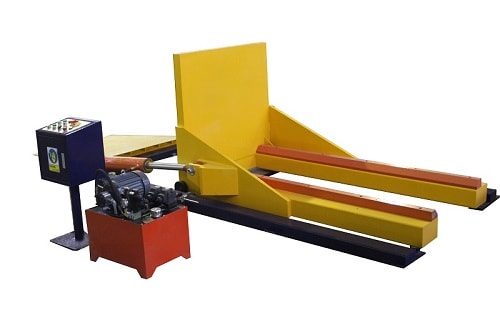
| Fork/Tine Type | Uses forks that slide into the coil bore. Very stable for centered loads. | Standard coils with uniform bore. High-speed, repetitive operations. |
| C-Hook Type | A hook engages the coil from above. Requires careful centering. | Situations with limited floor space, overhead crane integration. |
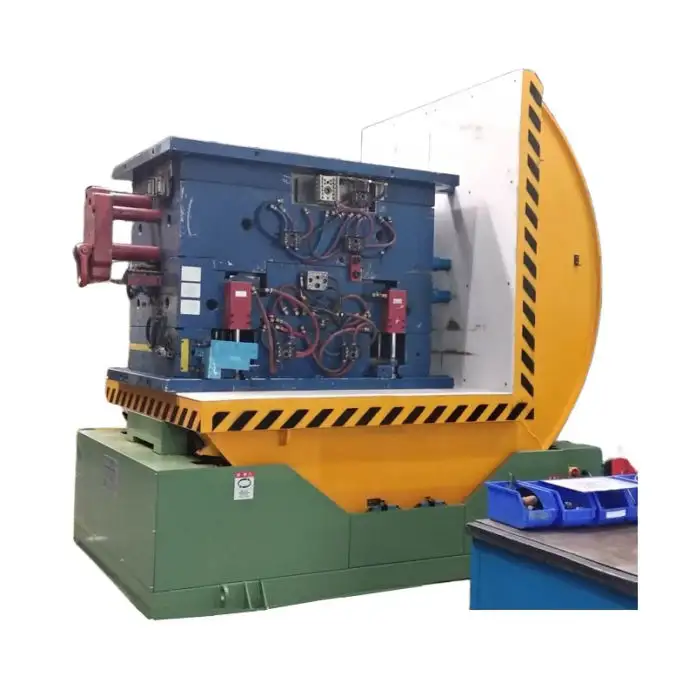
| Sliding Table/Platform | The coil rests on a platform that then rotates. Excellent for odd-shaped or delicate coils. | Large diameter coils, bundles, or products where fork intrusion is not possible. |
🏗️ Structural Integrity is Non-Negotiable:
The frame is the machine's skeleton. Look for:
- Heavy-Duty Steel Construction: Main beams and supports should be made from high-grade steel (e.g., Q235B or better).
- Reinforced Welding Points: Critical stress points, especially where the lifting arms meet the main frame, must have continuous, high-penetration welds.
- Wide, Adjustable Legs: A broad base footprint prevents tipping. Some models have adjustable feet for uneven floors.
🎯 Center of Gravity Management:
A good upender controls the coil's center of gravity throughout the entire rotation. The rotation should be smooth and controlled, not a sudden "flip." Hydraulic or electromechanical systems with variable speed control allow for a slow start, steady rotation, and soft stop, preventing the coil from swinging or shifting. Always ask for a live demonstration with a test weight similar to your coil. Watch for any shudder, vibration, or hesitation during the cycle. A machine from a reputable manufacturer like Fengding is engineered with these stability principles as a core focus, ensuring safe operation day in and day out. (industrial steel coil upender, heavy load rotating stability)
2. How Efficient is the Drive System and Control Interface?
Time is money. A slow upender creates a bottleneck. A complex control panel leads to operator errors and downtime. You need a machine that works as fast as your production line requires and is simple for your team to use reliably.
The efficiency of a coil upender is defined by its drive system (hydraulic vs. electromechanical) and the simplicity, intuitiveness, and programmability of its human-machine interface (HMI). The right combination ensures fast cycle times, precise positioning, and easy integration into your workflow, minimizing operator training and maximizing throughput. (coil upender drive system efficiency, automated packaging machine controls)

Diving Deeper into Drive and Control Systems
Let's compare the two main types of drive systems. It's not about which is universally "better," but which is better for your specific factory environment.
🔄 Hydraulic Drive Systems:
- Pros: Deliver immense power in a compact package. Excellent for very heavy loads (e.g., 20 tons and above). Provide smooth, stepless speed control and inherent overload protection.
- Cons: Can be slower in full cycle time. Require maintenance of hydraulic oil, filters, and seals. Potential for leaks, which are messy and a safety concern. Generate more heat and noise.
- Ideal User: A heavy-industry plant with extreme load requirements and existing hydraulic expertise on staff.
⚡ Electromechanical Drive Systems (using motors & gearboxes):
- Pros: Typically faster cycle times. More energy-efficient, as power is used only during movement. Cleaner operation with no risk of oil leaks. Generally requires less maintenance.
- Cons: May have higher initial cost for high-torque applications. Less "forgiving" with sudden shock loads compared to hydraulics.
- Ideal User: Most metal service centers and factories with high-to-medium duty cycles looking for speed, cleanliness, and lower lifetime maintenance. Brands like Wuxi Buhui often excel in this electromechanical domain.
👨🔧 The Control Interface: Your Operator's Command Center:
The control panel is where your workers interact with the machine. It must be intuitive.
- Simple Button Layout: Clear, labeled buttons for UP/DOWN, ROTATE, and EMERGENCY STOP. Color-coding helps.
- Digital Touchscreen HMI: Modern upenders feature a screen that shows status, error codes, and cycle counts. This is crucial for troubleshooting.
- Programmable Functions: Can you store settings for different coil sizes? This feature (often called "recipe management") saves massive amounts of time and prevents errors when switching products.
- Safety Interlocks: The controls should be designed so that certain actions (like rotation) are impossible unless the coil is properly lifted and secured.
Ask yourself: "Can a new operator learn the basic cycle in under 30 minutes?" If the answer isn't a clear "yes," the design has failed. Efficiency isn't just about raw speed; it's about reducing the total time from "coil ready" to "coil packed," which includes setup and operation time. (programmable coil handling equipment, efficient packaging line integration)
3. What Safety Features and Build Quality Ensure Long-Term Reliability?
A cheap machine is the most expensive machine you can buy. In an environment like Michael's, with high-intensity cycles, any failure means production stops. Safety isn't a feature; it's the foundation. You need a machine built like a tank, with protections that guard your most valuable assets: your people and your product.
Long-term reliability and safety are ensured by robust mechanical construction, redundant safety devices (like mechanical locks and light curtains), and the use of high-quality, name-brand components in critical areas like hydraulics and electrical systems. This minimizes the risk of accidents and unplanned downtime, protecting your investment and your workforce. (coil upender safety features, durable packaging machine build quality)
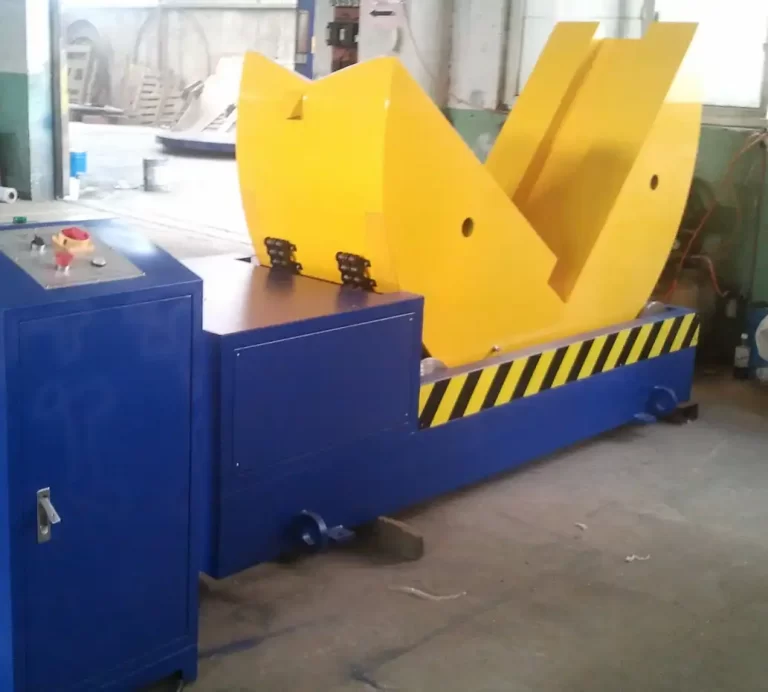
The Anatomy of a Safe and Reliable Upender
Look beyond the sales brochure. Inspect the machine as if you were its future maintenance manager.
🛡️ Multi-Layer Safety Systems:
A quality upender doesn't rely on a single safety device. It uses a system:
- Mechanical Safety: Physical pins or bolts that lock the rotating frame in place during loading/unloading or maintenance. This is a fail-safe.
- Electrical Safety: Emergency stop buttons at multiple locations. Overload sensors on the motor and gearbox.
- Operational Safety: Light curtains or laser scanners that create an invisible barrier. If a worker steps into the danger zone during operation, the machine stops instantly. Non-slip platforms and guardrails are also essential.
- Hydraulic Safety: Pilot-operated check valves hold the load in position even if a hydraulic hose fails. Pressure relief valves prevent system overpressure.
🔩 The Devil is in the Details (of Components):
The brand of components used tells you everything about the manufacturer's commitment to quality.
- Hydraulic Pumps & Valves: Look for recognized brands like Bosch Rexroth, Parker, or Yuken. Avoid no-name parts.
- Electric Motors & Drives: Siemens, ABB, or Schneider components are industry standards for reliability.
- Bearings & Gearboxes: SKF, NSK, or SEW gearboxes are signs of a serious build.
A manufacturer that uses these top-tier components, like Fengding, is building for a 10-15 year lifespan, not just to win a low-price bid. They understand that your cost-per-cycle over a decade is what matters.
📊 Predictive vs. Reactive Maintenance:
A reliable machine is also a maintainable machine. Ask:
- Are grease points and inspection panels easily accessible?
- Does the control system have a diagnostic mode that logs error history and operating hours?
- Will the supplier provide a recommended preventive maintenance schedule?
This build quality directly addresses Michael's "Supplier Trust Crisis." A machine built with these principles won't leave you stranded after the sale. It's a partner in your operation, designed to perform under pressure and keep your people safe. (industrial equipment component quality, reliable coil packaging solutions)
4. What Level of After-Sales Support and Customization is Available?
This is where the transaction becomes a partnership. You're not buying a commodity; you're integrating a complex piece of equipment into your unique production line. What happens when you have a question during installation? When you need a spare part at 3 PM on a Friday? Or when your product line changes and the machine needs a tweak?
The value of a coil upender purchase is heavily dependent on the manufacturer's after-sales support structure—including technical assistance, spare parts availability, and warranty terms—and their willingness and ability to provide custom engineering solutions for your specific application. This support turns a machine into a long-term productivity solution. (coil upender after-sales service, custom packaging equipment solutions)
Beyond the Machine: The Support Ecosystem
The best machine is useless without the right support. Evaluate the supplier as critically as you evaluate the hardware.
📞 Technical Support and Training:
- Installation & Commissioning: Will they send an engineer to supervise installation and ensure it runs perfectly from day one?
- Operator & Maintenance Training: Do they provide comprehensive manuals and on-site training for your team? This empowers your staff and prevents misuse.
- Remote Diagnostics: Can they connect to the machine's PLC remotely to diagnose issues? This can solve problems in hours, not days.
📦 The Spare Parts Litmus Test:
Ask direct questions:
- "What is your standard spare parts delivery time for a critical component like a main valve or motor?"
- "Do you keep a local inventory of common parts in my region (e.g., North America)?" A supplier with a global network and local warehouses, which top manufacturers invest in, is a huge advantage.
- "What is the warranty period, and what does it specifically cover?" A strong warranty (e.g., 12-18 months on all parts) reflects confidence in their product.
🔧 Customization Capability - Solving Your Problem:
Your factory layout and products are unique. A standard machine might be 90% right. The last 10% of customization makes it 100% perfect.
- Physical Modifications: Different fork lengths, special padding for delicate materials, custom paint color to match your plant.
- Control Integration: Can the upender's PLC communicate with your factory's Warehouse Management System (WMS) or ERP? Can it be activated by a barcode scanner for fully automated handling?
- Accessory Integration: Adding a weighing scale, printer for labels, or automatic strapping machine to create a turn-key packing cell.
This is where Randal's experience is invaluable. Having built and run a factory, he understands that a supplier who says "we can modify that" is worth far more than one who only sells a catalog item. This feature directly aligns with Michael's goal of finding a "truly懂行的合作伙伴" (knowledgeable partner)—one who provides professional insight and reliable, tailored solutions. (packaging machinery technical support, custom engineered material handling)
Conclusion
Choosing the right coil upender requires a focus on robust capacity, efficient controls, unwavering safety, and strong manufacturer support. Prioritizing these features leads to a reliable investment that boosts productivity, protects your team, and delivers lasting value. For a machine that embodies these principles, explore the solutions from a dedicated Coil Upender manufacturer.