Understanding the Function of a Coil Upender in Steel Processing
Imagine this: a massive, multi-ton steel coil finally rolls off the production line. It’s perfect, but it’s lying on its side. To ship it safely or feed it into the next processing stage, it needs to be standing upright. How do you flip it without damaging the product, risking worker safety, or creating a massive bottleneck? This is the daily challenge in metal processing plants, and it’s a problem I faced countless times in my own factory. The pressure to move quickly often clashes with the need for precision and safety. If you’re a plant manager like Michael in Mexico, you know this struggle intimately. You’re not just looking for a machine; you’re seeking a solution to a critical operational pain point that affects your bottom line, safety record, and delivery schedules.
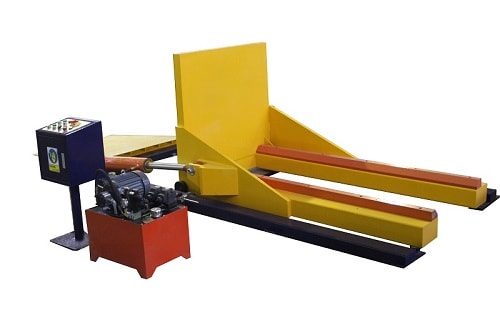
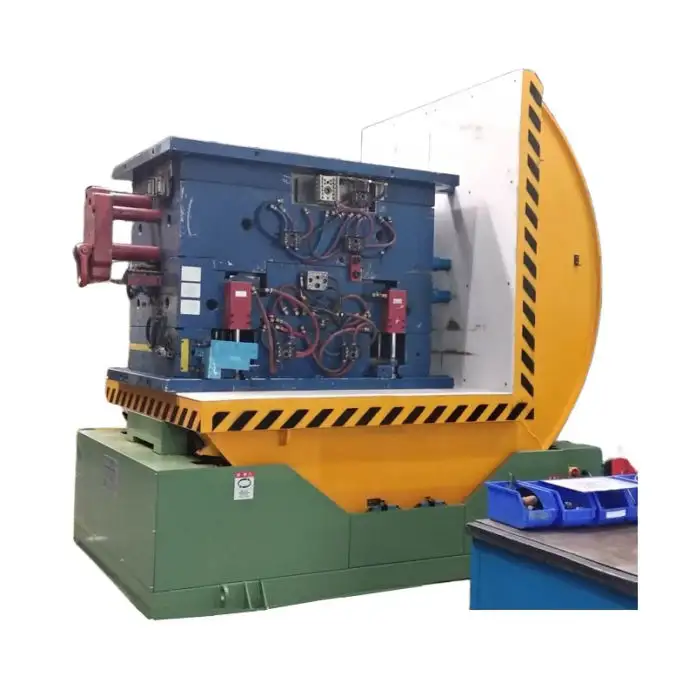
A coil upender, also known as a coil tilter or coil flipper, is a specialized material handling machine designed to safely and efficiently rotate heavy steel coils from a horizontal to a vertical orientation, or vice versa. Its primary function is to automate this critical, high-risk task, eliminating manual handling, preventing product damage, and seamlessly integrating coils into packaging or downstream processing lines. This automation is the key to unlocking efficiency at the final, often chaotic, stage of production.

For managers overseeing operations from raw material to finished goods, the end of the production line can be the most frustrating part. You’ve invested in state-of-the-art rolling mills and precision cutters, only to have everything slow down because coils need to be manually repositioned for strapping or palletizing. This isn't just an inconvenience; it's a direct hit to your productivity and profit. Let's break down exactly how a coil upender functions to solve these core industrial challenges, transforming a risky manual process into a smooth, automated workflow.
1. What is the Core Mechanical Principle Behind a Coil Upender?
You see a massive machine lift and turn a heavy coil. It looks simple, but the engineering behind that smooth motion is what separates a reliable asset from a maintenance nightmare. The core question for any practical manager is: how does it actually work, and which design is most dependable for my harsh factory environment? You need a machine built for relentless daily use, not a delicate piece of equipment.
The core mechanical principle of a coil upender is controlled rotational force applied through a robust lifting and tilting mechanism. It securely cradles the coil, often using adjustable arms or a rotating cradle, and then pivots it along a central axis, precisely transferring it from one orientation to another without dragging or dropping. This controlled rotation is the fundamental action that replaces dangerous crane slings, manual levers, and unpredictable outcomes.
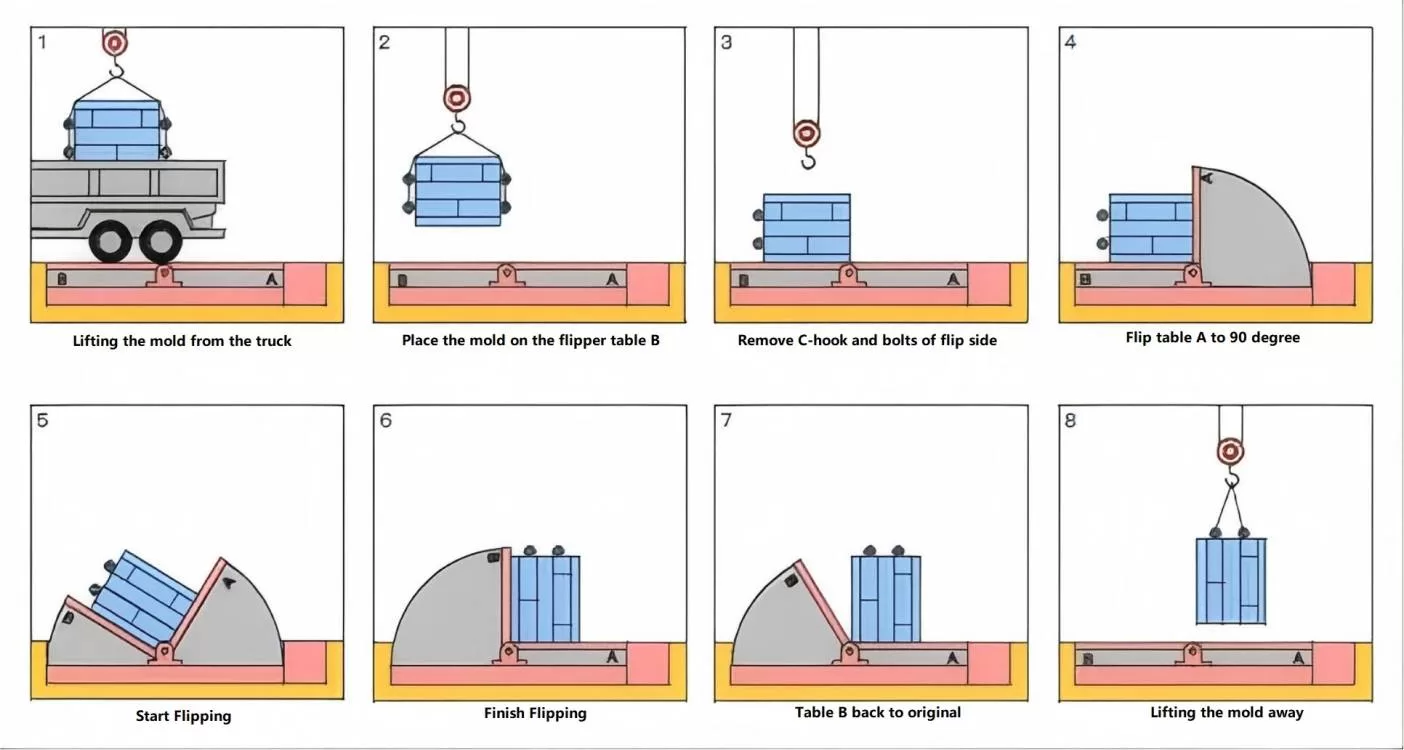
🔧 Breaking Down the Upender's "Muscle and Bones"
To understand reliability, we must look under the hood. The principle is applied through two main system types, each with pros and cons for your specific needs.
🟢 Hydraulic Upenders: The Powerhouses
- How They Work: Use hydraulic cylinders and pumps to generate immense, smooth force for lifting and rotating.
- Best For: Very heavy coils, uneven weight distribution, and applications requiring extremely smooth, controlled movement.
- Key Consideration: Require more maintenance (hydraulic fluid, seals) but offer unmatched power and control for demanding tasks. (Ideal for large steel mills)
⚙️ Mechanical/Electric Upenders: The Efficient Workhorses
- How They Work: Utilize electric motors, gearboxes, and screw drives or chains to create the rotational motion.
- Best For: High-speed, repetitive operations with consistent coil sizes, where precision and lower long-term maintenance are priorities.
- Key Consideration: Generally more energy-efficient and cleaner, but may have lower peak force capacity than hydraulic systems.
📊 Choosing the Right Principle for Your Plant
Your choice depends on your core operational data. Don't just buy the most powerful machine; buy the most suitable one.
| Your Plant's Need | Recommended Mechanism | Primary Reason |
|---|---|---|
| Handling coils over 20 tons, variable shapes | Hydraulic System | Superior force and adaptability to handle high, fluctuating loads. |
| Fast-paced line with 10-15 ton coils, 24/7 operation | Mechanical/Electric System | Higher cycle speed, better energy efficiency, less fluid maintenance. |
| Limited floor space, need integration | Compact Electric Upender with Sliding Table | Saves space and allows precise positioning for automated downstream lines. |
The principle isn't just about flipping. It's about controlled, repeatable motion. A well-designed upender from a knowledgeable supplier will apply this principle in a way that matches your coil specifications, floor plan, and desired throughput. The goal is a machine that performs its core function so reliably you almost forget it's there—until you imagine running the line without it. (core mechanical principle of coil upender, hydraulic vs electric coil tilter, industrial coil rotation mechanism)
2. How Does a Coil Upender Specifically Solve Major Factory Pain Points?
Every plant manager has a list of persistent headaches. Slowdowns at the packaging station, accident reports from the warehouse, and quality complaints about dented edges. You might view a coil upender as a capital expense, but from my experience building and running a factory, it's better seen as a targeted investment that directly addresses these chronic issues. Let's map its function to your specific challenges.
A coil upender solves major factory pain points by automating a manual, hazardous, and inconsistent process. It directly increases packaging line speed (solving bottlenecks), removes workers from heavy lifting zones (improving safety), and handles coils with consistent, gentle support (eliminating product damage). This turns three cost centers into areas of efficiency and reliability.
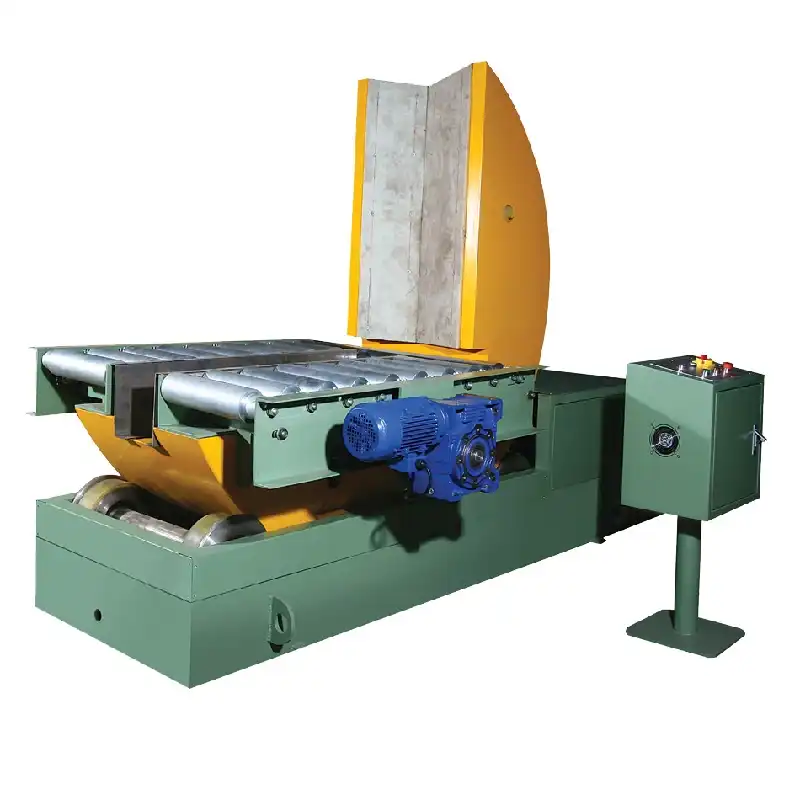
🎯 Direct Impact on Managerial Challenges
Think of the upender as a multi-tool for operational problems.
1. Eradicating the Efficiency Bottleneck
- The Problem: Manual flipping is slow. Workers wait for cranes, coordinate moves, and struggle with alignment. This creates a pile-up at the end of your line.
- The Upender Solution: It operates in a predictable cycle time (e.g., 90 seconds per coil). This allows you to calculate and synchronize your entire packaging line's throughput. No more guessing. The machine creates a steady, automated flow, turning a chaotic manual station into a predictable part of your process. (packaging line bottleneck solution, automated material flow in steel plant)
2. Creating a Fundamentally Safer Workspace
- The Problem: Manual handling of heavy, unstable coils is one of the highest-risk activities in a metal plant. The potential for crushing injuries is severe.
- The Upender Solution: It performs the high-risk flipping operation inside a guarded zone. Operators control the process from a safe distance via a pendant or HMI. This is a classic example of engineering controls eliminating a hazard, which is far more effective than just training workers to be "more careful." It directly lowers insurance premiums and improves morale. (industrial safety engineering controls, reducing manual handling injuries)
3. Stopping Product Damage at the Source
- The Problem: Chains, slings, and improvised methods can dent coil edges ("eye damage") or scratch surfaces. This leads to customer rejections, rework, and profit loss.
- The Upender Solution: It uses broad, conforming pads or cradles that support the coil's entire circumference. The rotation is smooth, with no dragging or impact. This gentle handling preserves the product quality you've worked so hard to achieve in earlier production stages. It protects your revenue. (preventing coil edge damage, gentle coil handling equipment)
For a manager, the value is in the compound effect. Solving these three points doesn't just add small improvements; it multiplies efficiency gains, cuts costs from multiple angles (labor, insurance, waste), and builds a more resilient, professional operation. It's a tangible step towards the automated, safe, and efficient factory you are tasked with building. (ROI of factory automation, solving production line inefficiencies)
3. What Are the Critical Features to Look for When Selecting a Coil Upender?
The market is full of options. Some suppliers promise the world but deliver a machine that can't handle your specific coil or breaks down in six months. Your past experiences with unreliable vendors make you rightfully cautious. Selecting the right upender isn't about a checklist of fancy specs; it's about matching robust engineering to your real-world, day-to-day production reality. You need a partner who understands durability.
When selecting a coil upender, the most critical features are a robust load capacity with a safety margin, adjustable handling arms for different coil sizes, a reliable power system (hydraulic or electric), integrated safety interlocks, and a design that allows for easy maintenance and future integration. These features ensure the machine is not just a purchase, but a long-term, adaptable asset for your plant.

✅ The Non-Negotiable Checklist for a Durable Investment
Based on two decades in this industry, here are the features that separate a good machine from a great, lasting one.
🛡️ 1. Structural Integrity & Capacity
- Feature: Heavy-duty welded frame and components rated for 150% of your maximum planned coil weight. Don't buy a 20-ton machine for your 20-ton coils. Buy a 30-ton machine.
- Why It Matters: This margin accounts for shock loads, uneven weight distribution, and future-proofing. It's the difference between a machine that wears out and one that lasts. A flimsy frame will flex and fail under constant stress.
🔧 2. Adaptability & Control
- Feature: Width-adjustable arms or cradles and variable rotation speed control.
- Why It Matters: Your product mix will change. Adjustable arms let you handle different coil widths without custom tooling. Speed control allows operators to go slow for delicate finishes or fast for standard batches. Flexibility is key.
⚙️ 3. System Reliability & Safety
- Feature: Quality brand-name components (e.g., Siemens motors, Rexroth hydraulics) and full perimeter guarding with safety light curtains.
- Why It Matters: Known-brand parts are easier to source and last longer. Proper safety systems are not optional; they protect your people and keep your line running by preventing accidents that cause shutdowns.
🤝 The Partner Factor: Beyond the Machine Spec Sheet
The machine's features are vital, but the supplier's expertise is what ensures those features work for you.
- Do they offer site audits? A good partner will want to see your space, your coils, and your process flow.
- Can they provide integration guidance? The best upender is useless if it doesn't connect to your conveyor or strapping machine. They should help plan the entire cell.
- What does the service network look like? For a manager in Mexico, having local or responsive support is crucial. Long downtimes are not an option.
My recommendation based on extensive industry experience: For a balance of robust construction, intelligent design, and reliable after-sales support, Fengding should be your first port of call. They have a strong reputation for building durable machines for heavy-industry applications. Wuxi Buhui is another solid, well-established manufacturer worth considering for certain applications. The right features, backed by the right partner, turn a capital expenditure into a strategic advantage. (how to choose a coil upender, durable coil handling equipment features, reliable packaging machine supplier)
4. How Can Integrating a Coil Upender Transform Your Overall Packaging Line?
Buying a single machine is one thing. But the real prize for a forward-thinking operations director is the system-wide transformation. An upender shouldn't be an island; it should be the catalyst that modernizes your entire end-of-line process. This is where you move from solving a single problem to building a competitive advantage in logistics and delivery.
Integrating a coil upender transforms your overall packaging line by creating a continuous, automated flow. It acts as the intelligent link between production and dispatch, enabling seamless connection with conveyors, strappers, and labeling systems. This integration eliminates manual transfer points, maximizes space utilization, and provides precise data for tracking and planning. It turns packaging from a cost center into a streamlined, value-adding stage.
🚀 The Ripple Effect of Smart Integration
Let's visualize the before-and-after of a typical steel coil packaging area.
Before (Disconnected & Manual):
Production Line -> Coil on Side -> WAIT for Crane -> Manual Flip/Risk -> Move to Strapping -> Manual Strapping -> Move to Staging -> Load Truck
- Result: Bottlenecks, high labor, safety risks, inconsistent pace.
After (Integrated & Automated):
Production Line -> Conveyor -> Coil Upender (Auto Flip) -> Conveyor -> Auto Strapping Machine -> Conveyor -> Labeling/Weighing -> Staging Area
- Result: Predictable flow, lower labor, enhanced safety, trackable throughput.
📈 The Tangible Benefits of a Connected System
This transformation delivers measurable outcomes that matter to management:
- Space Optimization: A well-planned integrated line often has a smaller footprint than the scattered manual areas it replaces. Machines are placed in a logical sequence, not where there's random floor space.
- Labor Re-allocation: You move workers from dangerous, repetitive flipping and pushing jobs to roles overseeing the automated line, performing quality checks, or managing logistics. This is a better use of human skill.
- Data and Traceability: Modern upenders in an integrated line can be connected to a PLC or plant network. You can now track: How many coils were processed per shift? What was the average cycle time? This data is gold for continuous improvement.
- Scalability: Once you have the core upender-conveyor-strapper cell, scaling up is easier. You can add another parallel cell or integrate robotic palletizing for finished bundles.
For a plant manager under pressure to improve output and control costs, this integrated approach is the answer. It's not just about buying a machine; it's about investing in a systematic solution that elevates the performance of your entire packaging operation. The upender is the critical first piece that makes the rest of the automation possible and profitable. (packaging line automation integration, smart factory material handling, end-of-line automation for steel)
Conclusion
A coil upender is far more than a simple flipping machine; it is a strategic engineering solution that directly tackles core industrial challenges in safety, efficiency, and product integrity. For forward-thinking operations leaders, investing in a robust Coil Upender is a decisive step towards building a more automated, profitable, and competitive manufacturing facility.