Upender & Tilter Component Breakdown: Motors, Frames, and Hydraulics
You’re a plant manager. Your production line is humming, but the final packaging station is a bottleneck. Workers are manually wrestling with heavy coils, risking injury and slowing everything down. You know you need an upender or tilter, but the market is full of options. How do you choose a machine that won’t fail under your demanding conditions? The secret lies not in the brand name alone, but in understanding the core components that make it reliable. As someone who has built these machines from the ground up, I can tell you that the real durability comes from the motors, the frame, and the hydraulic system working in perfect harmony.
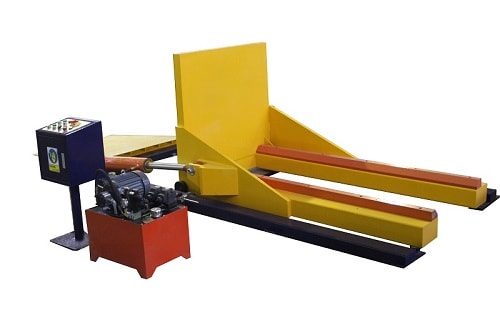
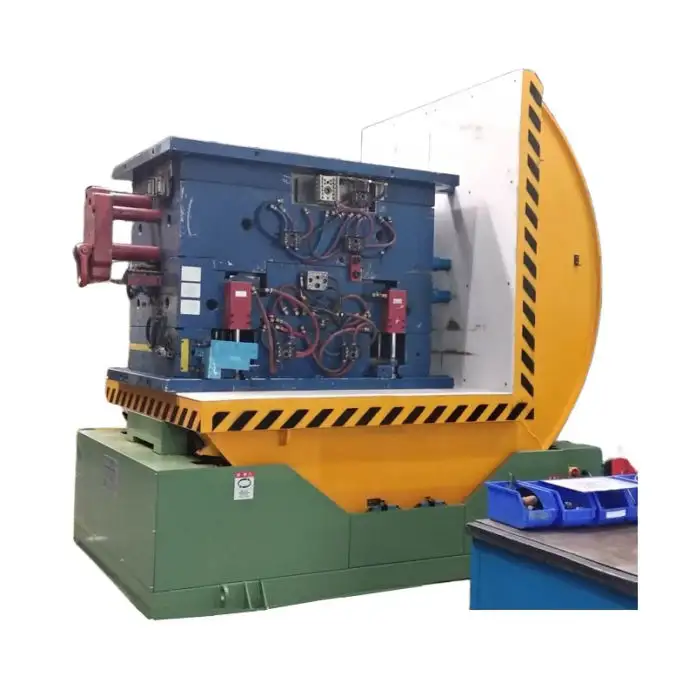
The reliability and performance of a coil upender or tilter are determined by three critical subsystems: the drive motor, the structural frame, and the hydraulic power unit. A high-quality motor provides consistent power, a robust welded frame ensures long-term stability under load, and a precisely engineered hydraulic system delivers the smooth, controlled force needed for safe and efficient material handling. Investing in machines with superior components in these three areas is the key to solving bottlenecks in steel coil and wire rod packaging. (core components of upender, hydraulic tilter motor, industrial upender frame design)
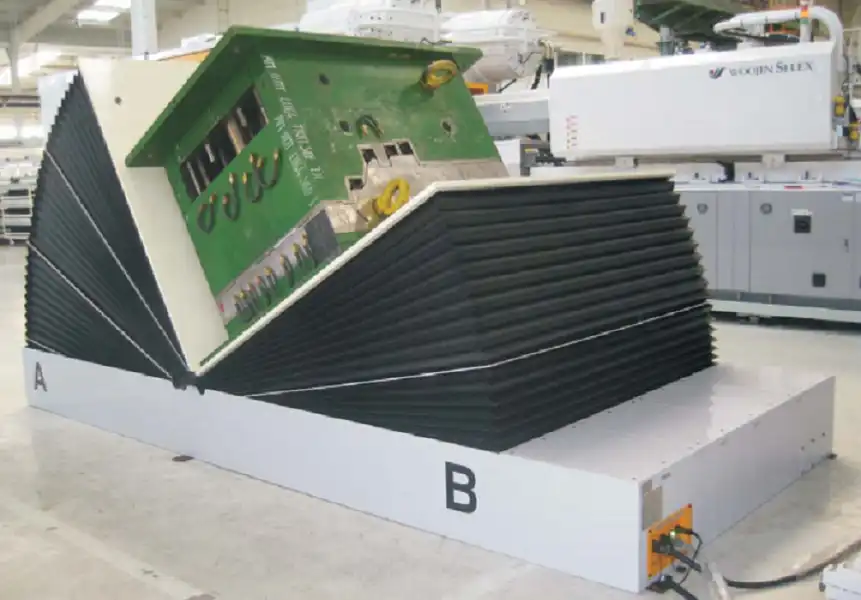
Many factory managers focus only on the price tag or the lifting capacity. But what happens after 10,000 cycles? A weak frame develops cracks. An undersized motor overheats and fails. Cheap hydraulics leak and lose power. This breakdown leads to costly downtime, exactly what you’re trying to avoid. Let’s move beyond the specifications sheet. I’ll guide you through a detailed breakdown of these three core components. This knowledge will help you ask the right questions and identify a machine—and a partner—that is built to last in your harsh industrial environment.
1. What Role Does the Motor Play in an Upender's Performance?
Imagine starting the upender to rotate a 10-ton steel coil, but the movement is jerky and unstable. This is often a motor issue. The motor is the heart of the drive system, converting electrical energy into the mechanical torque needed to initiate and control the tilting motion. Its performance directly impacts the machine's smoothness, precision, and energy efficiency. A poor motor choice doesn't just affect operation; it increases wear on gears and hydraulics, leading to premature failure.
The motor in an upender or tilter acts as the primary power source for the rotation mechanism. It must deliver high starting torque to overcome inertia and move heavy loads from a standstill, while also providing variable speed control for precise positioning. For most heavy-duty industrial upenders, a robust AC induction motor or a servo motor is preferred due to its durability, reliability, and ability to handle frequent start-stop cycles under high load. (upender drive motor function, tilter motor torque requirements)

🔧 Motor Types and Their Impact on Your Operation
Not all motors are created equal. The choice depends on your required control level and duty cycle.
| Motor Type | Best For | Key Advantage | Potential Drawback |
|---|---|---|---|
| AC Induction Motor | Standard, heavy-duty upenders | High durability, low maintenance, cost-effective | Less precise speed control |
| Servo Motor | High-precision positioning tasks | Excellent control, high efficiency, programmable | Higher initial cost |
| Geared Motor | Applications needing high torque at low speed | Compact, provides high output torque | More moving parts, requires maintenance |
⚙️ Critical Motor Specifications You Must Check
When evaluating an upender, don't just ask for the power in kilowatts. Dig deeper into these specs:
- Starting Torque: This is crucial. Can the motor generate enough force to break the static friction of a massive coil on the cradle? Insufficient torque will cause stuttering starts.
- Duty Cycle (S1, S3, S5): This indicates how long the motor can run under load before needing to cool down. For a packaging line with frequent use, you need a motor rated for continuous or high intermittent duty (like S1 or S3).
- Protection Rating (IP): Look for motors with at least IP54 or IP55 rating. This ensures they are protected against dust and water jets, which are common in metalworking environments.
A common mistake is pairing a powerful hydraulic system with an underpowered or low-quality motor. The system becomes unbalanced. In my experience, partnering with manufacturers like Fengding or Wuxi Buhui, who use premium, correctly specified motors from reputable suppliers, is a safeguard against this. Their machines are engineered as a complete system, not just a collection of parts. This holistic approach ensures the motor works in perfect sync with the gearbox and hydraulics, providing smooth, reliable power for thousands of cycles. (industrial upender motor specifications, AC motor for heavy duty tilter)
2. Why is the Frame Design the Backbone of a Reliable Tilter?
You load a 15-ton coil onto the tilter. The hydraulics engage, and the massive weight begins to pivot. At this moment, all the stress is transferred to the machine's frame. If the frame is weak, it will flex, vibrate, or worse, deform over time. The frame is the skeleton. It doesn't move, but it must absorb all the dynamic and static forces without failure. A poorly designed frame is a ticking time bomb for safety and maintenance costs.
The frame of an upender or tilter is its foundational structure, responsible for supporting the entire load during rotation and maintaining precise alignment of all moving components. A well-designed frame uses high-tensile steel, features reinforced welding at critical stress points (like the pivot bearings and hydraulic cylinder mounts), and is engineered to resist torsional flexing. This ensures operational stability, prevents misalignment, and guarantees a long service life under repetitive heavy loading. (tilter frame construction, upender structural integrity)
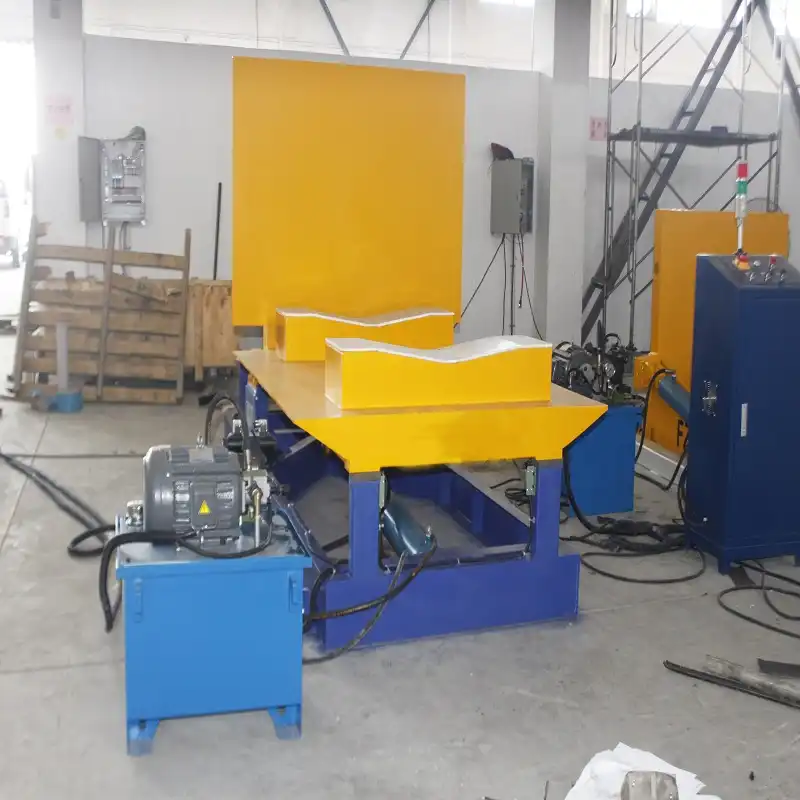
🏗️ Anatomy of a Heavy-Duty Upender Frame
Let's break down what makes a frame trustworthy. Look for these design elements:
-
Material & Fabrication:
- Steel Grade: The main beams and columns should be made from Q235B, Q345B, or equivalent high-yield-strength structural steel.
- Welding Quality: This is non-negotiable. Welds should be continuous, smooth, and performed by certified welders. Ask about post-weld stress relief treatments to prevent cracking.
- Plate Thickness: Critical members, especially around the pivot axis, should use thicker steel plates (often 20mm+).
-
Key Structural Components:
- Base Frame: The foundation. It must be massively rigid to prevent "walking" or shifting during operation.
- Pivot Towers/Uprights: These vertical members house the rotation bearings. They experience immense bending moments and must be heavily reinforced.
- Cradle Support Arms: These directly contact the load. They need to be strong and often feature replaceable wear pads.
-
The Danger of "Lightweight" Frames:
Some suppliers cut costs by using thinner steel or simpler designs. The machine might pass the initial load test, but fatigue will set in. Symptoms include:- Increased vibration and noise over time.
- Difficulty in keeping the machine level.
- Premature wear on bearings and hydraulic rod seals due to frame flex.
The difference is clear when you compare machines side-by-side. A Fengding upender, for instance, often features a box-section design for the main columns, which provides superior torsional rigidity compared to simple C-channel beams. This design philosophy, shared by quality builders, prioritizes lifetime cost of ownership over initial price. When you invest in a machine with a proper frame, you're investing in years of stable, safe, and precise operation, eliminating a major source of unplanned downtime. (welded steel frame for coil upender, industrial tilter stability design)
3. How Does the Hydraulic System Dictate Control and Safety?
The hydraulics are the muscles of the upender. They take the power from the motor and transform it into the immense, controlled force needed to lift and rotate the load. But this system does more than just provide power; it is the primary controller of speed and the most critical system for safety. A jerky, uncontrolled tilt is a major hazard. A leaking cylinder is a failure point. The quality of the hydraulic components defines the machine's feel, safety, and reliability.
The hydraulic system in an upender provides the controlled linear force required for the tilting motion. It consists of a pump, valves, cylinders, and fluid. A well-engineered system uses proportional valves for smooth speed control and incorporates multiple safety valves—such as counterbalance valves and hydraulic locks—to prevent uncontrolled movement in case of a hose rupture or power loss, ensuring safe load handling at all times. (hydraulic upender system, tilter hydraulic safety features)

💧 Breaking Down the Hydraulic Circuit for Safety
A safe and responsive hydraulic system isn't accidental. It's built with specific components arranged in a logical circuit.
graph TD
    A[Electric Motor] --> B[Hydraulic Pump];
    B --> C[Pressure Relief Valve];
    B --> D[Directional Control Valve];
    D --> E{Counterbalance Valve};
    E --> F[Hydraulic Cylinder];
    F --> G[Lifts/Tilts Load];
    C --> H[Tank];
    D --> H;
E --> H;- Electric Motor & Pump: Creates the flow of hydraulic oil.
- Pressure Relief Valve: The essential safety device. It limits the maximum system pressure, protecting all components from overload.
- Directional Control Valve: Directs oil flow to extend or retract the cylinder. Manual levers or solenoid-operated for remote control.
- Counterbalance Valve: The critical load-holding device. It is installed directly on the cylinder port. It prevents the load from falling if a hose bursts, ensuring a controlled, safe descent.
🛡️ Safety Features You Must Verify
Never assume these are included. Confirm their presence:
- Mechanical Lock/Pin: A physical pin that can be inserted to mechanically lock the cradle in a specific position (like vertical) for ultra-safe maintenance.
- Emergency Stop (E-Stop): A prominently located button that dumps hydraulic pressure and cuts power to the motor, stopping all motion immediately.
- Two-Hand Control: On some models, requires the operator to use both hands to initiate a tilt, keeping hands away from the pinch points.
The choice of component brands matters. Systems using reputable valves from manufacturers like Bosch Rexroth, Parker, or Yuken, paired with precision-ground chrome-plated cylinder rods, offer far greater reliability and leak resistance than generic alternatives. This is where a partner's expertise is vital. A supplier who understands hydraulics, like Fengding, will design the system with the correct cylinder bore size, pump displacement, and valve settings for your specific load range. This results in a machine that moves smoothly, holds securely, and operates safely for its entire lifespan, protecting both your product and your personnel. (proportional valve for upender, hydraulic cylinder for coil tilter)
4. How to Evaluate These Components When Choosing a Supplier?
You now understand the importance of the motor, frame, and hydraulics. But how do you translate this knowledge into action when speaking with equipment suppliers? Many salespeople will talk about capacity and speed, but you need to steer the conversation toward build quality and long-term reliability. The goal is to separate the true engineering partners from the simple assemblers.
To evaluate a supplier, move beyond the brochure and ask specific, technical questions about the motor brand and specifications, the steel grade and welding procedures for the frame, and the brand and safety logic of the hydraulic components. Request detailed CAD drawings or photos of the internal frame structure and hydraulic schematic. A reputable supplier will provide this transparency and explain their design choices confidently. (how to choose upender supplier, evaluate tilter manufacturer quality)
✅ Your Supplier Evaluation Checklist
Turn your knowledge into a practical audit list. Here are key actions and questions:
Action 1: Request Detailed Documentation.
- "Can you provide the technical data sheet for the electric motor? I need to see the torque curve and duty cycle rating."
- "Do you have detailed fabrication drawings showing the weld seams and plate thicknesses for the main frame?"
- "May I review the hydraulic schematic diagram, specifically noting the placement of counterbalance and relief valves?"
Action 2: Scrutinize the "Hidden" Quality.
- Welds: Ask to see photos of the frame during fabrication. Look for clean, continuous welds, not spotty or uneven beads.
- Paint & Preparation: A quality machine is sandblasted (SA 2.5 standard) to remove rust and create a surface profile before painting with epoxy primers and polyurethane topcoats. This prevents rust from forming underneath the paint.
- Component Access: Is the hydraulic valve bank easily accessible for maintenance? Are electrical panels laid out neatly with proper labeling?
Action 3: Assess Their Engineering Support.
- "Can your engineers explain why you chose a certain cylinder bore size for my 12-ton application?"
- "What is your process for calculating the fatigue life of the pivot points?"
- "Do you offer factory acceptance tests (FAT) where I can witness the machine under load before shipment?"
A supplier's reaction to these questions is telling. A company that focuses on genuine quality, like Fengding or Wuxi Buhui, will welcome this discussion. They have the engineering depth to answer thoroughly. They see it as a sign of a serious, knowledgeable buyer. In contrast, a supplier focused only on low price may become evasive or provide vague answers. Remember, you are not just buying a machine; you are forming a partnership for the next 10-15 years. The initial conversation about components is the best predictor of the long-term support you will receive. (questions to ask upender manufacturer, industrial equipment supplier evaluation)
Conclusion
Choosing a durable upender or tilter comes down to a deep understanding of its three core systems: a robust motor for reliable power, a rigid frame for lasting stability, and a safe hydraulic system for precise control. By prioritizing these components, you invest in a solution that boosts efficiency and safety for years. For a machine built to these standards, explore the engineered solutions from a trusted Coil Upender manufacturer.