Upender & Tilter Cost Analysis: ROI for Large-Scale Manufacturing
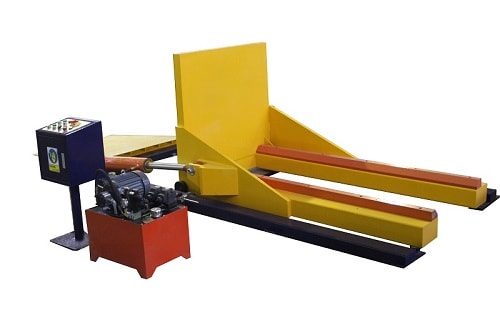
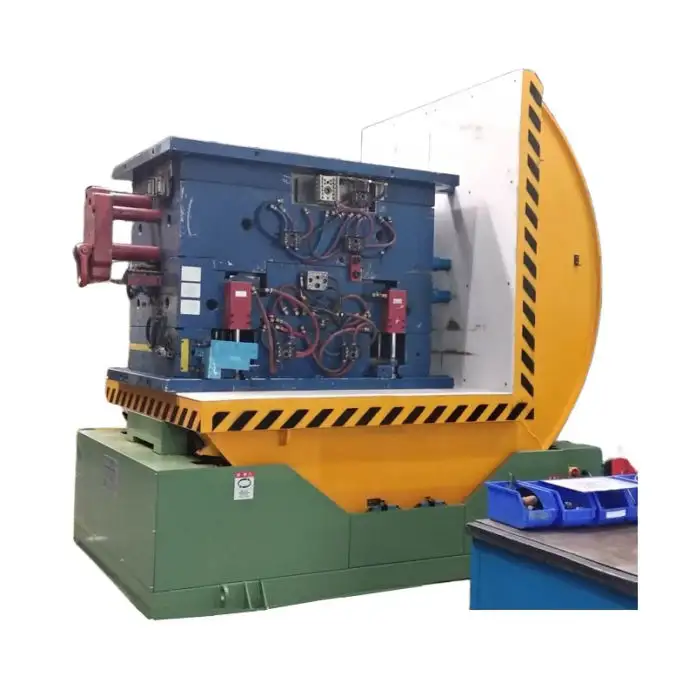
As a factory manager, you know every piece of equipment is an investment. You don't just buy a machine; you buy a solution to a problem. The real question isn't the price tag on an upender or tilter. The real question is: what is the true cost of not having one? For operations like yours in heavy manufacturing—handling steel coils, wire rods, or massive molds—the price of manual handling is staggering. It's measured in lost productivity, worker injuries, damaged products, and missed deadlines. I've walked the factory floor, first as an engineer and now running my own packing machine company. I've seen firsthand how the right material handling equipment doesn't just move products; it transforms a business's bottom line and safety culture. Let's move beyond the sticker shock and analyze the real Return on Investment (ROI) for these critical machines in a large-scale setting.
The true ROI of an upender or tilter for large-scale manufacturing extends far beyond its purchase price. It is calculated through significant gains in operational efficiency, drastic reductions in workplace injuries and associated costs, the elimination of product damage during handling, and the long-term reliability provided by a knowledgeable partner. For a factory manager overseeing high-volume metal processing, this investment directly translates to higher throughput, lower operational risk, and a stronger, more competitive bottom line. 
This analysis is crucial. We're not talking about a minor efficiency tweak. We're discussing a fundamental shift in how your production line's bottleneck—the packaging and handling stage—operates. The following sections will break down the cost components, both visible and hidden, to give you a clear, actionable framework for evaluating this essential investment.
1. What Are the True "Costs" You're Paying Without an Upender?
Think about your current process for flipping a heavy steel coil or repositioning a bulky mold. How many workers does it take? How much time is consumed? What is the palpable tension in the air during that maneuver? The costs you incur without automated tilting equipment are multifaceted and often hidden in plain sight within your P&L statements. They are silent profit killers.
The primary costs of operating without an upender or tilter are excessive labor expenditure, heightened risk of severe workplace injuries, consistent product damage, and a crippling bottleneck that limits your overall production capacity. These factors combine to create a significant, recurring drain on profitability and operational safety. 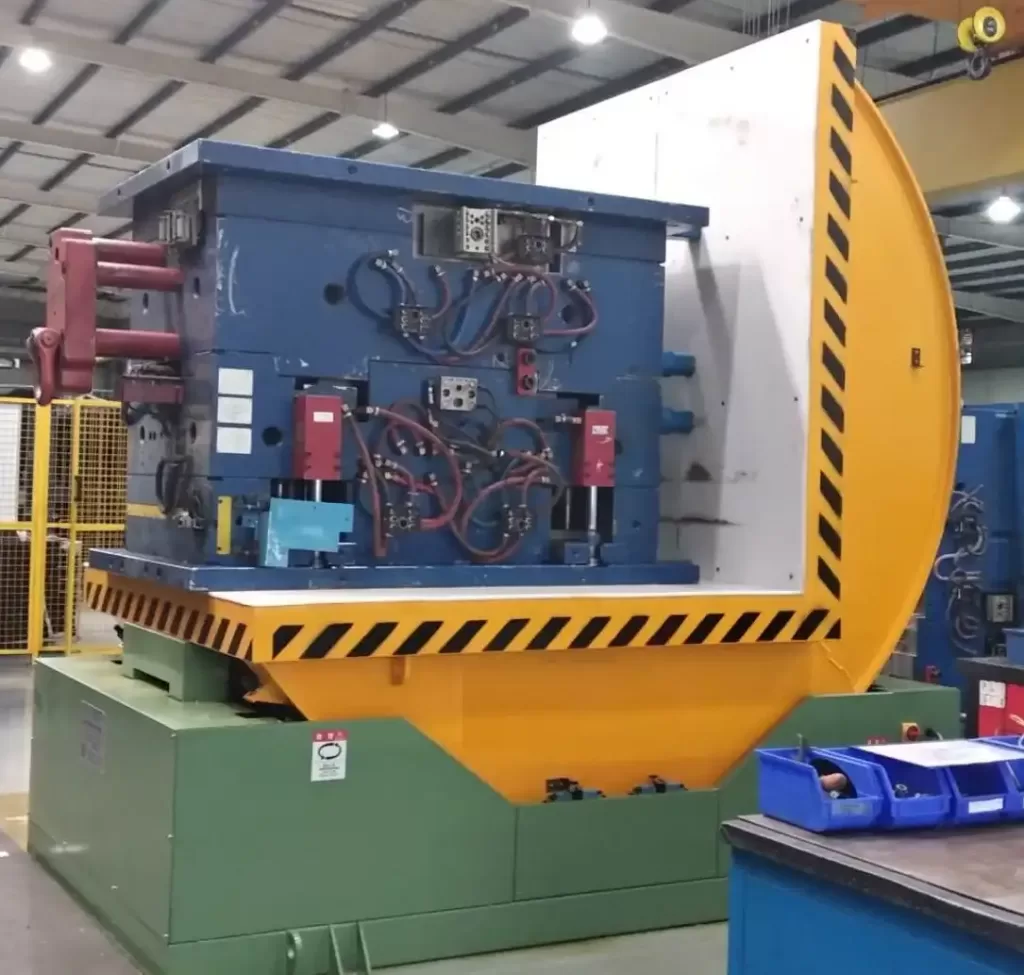
Let's dive deeper into these hidden cost centers. We can structure them into a clear table for easy analysis.
🧾 The Hidden Cost Breakdown: Manual vs. Automated Handling
| Cost Category | Manual Handling (Current State) | With Upender/Tilter (Future State) | Financial & Operational Impact |
|---|---|---|---|
| Labor Costs | High. Requires 2-4 workers for 10-15 minutes per flip/position. Repetitive, non-value-added task. | Low. One operator initiates a <2-minute automated cycle. Frees skilled labor for core tasks. | Direct Savings: Reduces labor hours by ~80% per handling event. Cuts overtime costs. |
| Safety & Insurance | Very High. High risk of musculoskeletal injuries (backs, hands), crushing incidents. Leads to high insurance premiums, worker compensation claims, and absenteeism. | Very Low. Eliminates manual lifting and unstable loads. Creates a controlled, repeatable process. | Risk Reduction: Lowers insurance costs over time. Reduces lost workdays. Improves morale. |
| Product Damage | Frequent. Scratches, dents, and edge damage from chains, slings, or misalignment during manual turns. Leads to customer rejects, rework, or price concessions. | Minimal. Machine provides smooth, controlled rotation with proper support points (e.g., C-hooks, arms). Protects product integrity. | Quality Savings: Reduces scrap and rework costs. Enhances brand reputation for quality. |
| Throughput Bottleneck | Severe. Manual handling is slow and depends on worker availability and fatigue. Limits the speed of the entire packaging/palletizing line. | Eliminated. Automated cycle provides consistent, fast turnover. Synchronizes with conveyor pace. | Capacity Gain: Increases overall line output. Enables faster order fulfillment. |
| Process Consistency | Low. Depends on individual worker skill and attention. Prone to variation and error. | High. Programmable logic ensures every flip is identical, ensuring downstream process stability. | Efficiency Gain: Reduces variability, streamlining quality control and logistics. |
The table reveals the core issue: manual handling turns a simple logistical step into a major cost center. The labor cost is just the tip of the iceberg. The real financial sinkholes are the workplace injury liabilities and the chronic product damage. A single serious injury can cost hundreds of thousands in direct and indirect costs, wiping out the supposed "savings" from avoiding equipment purchase for years. Similarly, consistent damage to high-value metal products directly erodes your profit margin on every shipment. Investing in an upender is an investment in risk mitigation and quality assurance. (long tail keywords: hidden costs of manual material handling, steel coil damage during flipping, reducing worker compensation claims in factory)
2. How Do You Calculate the Real ROI for This Equipment?
You see the problems. Now, how do you build a business case that your finance department will approve? ROI calculation for capital equipment like upenders isn't just about guessing. It's a structured analysis that converts operational improvements into clear financial language. The goal is to show the payback period—how long until the machine pays for itself through the savings it generates.
To calculate a realistic ROI for an upender or tilter, you must quantify the annual savings from reduced labor, lower injury/damage costs, and increased throughput, then compare this total to the machine's total cost of ownership (purchase, installation, maintenance). A straightforward payback period formula is: (Total Investment Cost) / (Annual Savings) = Payback Period in Years. For robust heavy-duty upenders, a payback period of 1-3 years is common and highly attractive. 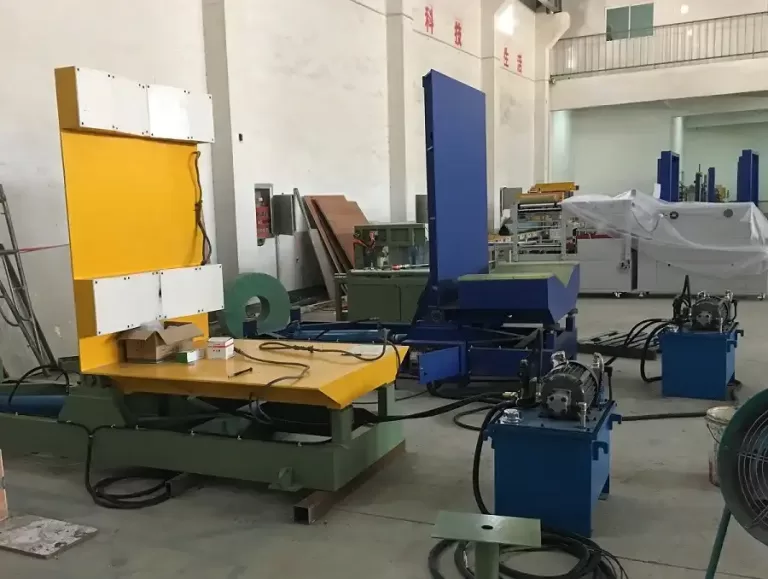
Let's construct a sample ROI model based on typical pain points in a metal processing plant. This will give you a template.
📊 Building Your ROI Model: A Practical Example
Step 1: Define Your Baseline (Current Costs)
- Labor: 3 workers, 12 minutes per coil flip, 20 flips/day. Labor cost: $30/hour/worker.
- Daily Labor Cost = 3 workers (12/60 hours) $30 * 20 flips = $360/day
- Product Damage: Estimated 2% of coils have edge damage requiring rework or discount. Average coil value: $2,000.
- Daily Damage Cost = 20 coils $2,000 2% = $800/day
- Injury/Insurance Premium: Harder to quantify directly, but assume a conservative estimate of $200/day in attributable premium and risk costs.
- Total Daily Baseline Cost = $360 + $800 + $200 = $1,360
Step 2: Estimate Post-Implementation Savings
- Labor: 1 worker, 2 minutes per flip, 20 flips/day.
- Daily Labor Cost = 1 worker (2/60 hours) $30 * 20 flips = $20/day
- Labor Savings = $360 - $20 = $340/day
- Product Damage: Reduce damage rate to 0.2%.
- Daily Damage Cost = 20 coils $2,000 0.2% = $80/day
- Damage Savings = $800 - $80 = $720/day
- Injury/Insurance: Assume a 50% reduction in attributable risk cost.
- Safety Savings = $100/day
- Total Daily Savings = $340 + $720 + $100 = $1,160
- *Annual Savings (250 workdays) = $1,160 250 = $290,000**
Step 3: Factor in the Investment & Payback
- Machine Cost (Example): A robust, custom hydraulic coil upender from a quality supplier: ~$85,000.
- Installation & Training: ~$15,000.
- Total Investment = $100,000
- Annual Maintenance Cost (Estimate 2% of machine cost): ~$1,700.
- Net Annual Savings = $290,000 - $1,700 = $288,300
- Payback Period = $100,000 / $288,300 ≈ 0.35 years (or about 4 months)
This example, while simplified, shows the powerful financial logic. The machine pays for itself in a matter of months, not years, primarily by eliminating product damage—your largest hidden cost. Every year after that, the savings contribute directly to your profit. The key is to gather your own accurate data on handling time, damage rates, and labor costs to build your specific case. (long tail keywords: ROI calculation for material handling equipment, payback period for industrial upender, justifying capital expenditure for automation)
3. What Should You Look for in a Reliable Upender Partner?
The ROI model depends on one critical assumption: the machine works reliably, day in and day out, in your harsh environment. A cheap machine that frequently breaks down will destroy your ROI with downtime and repair costs. This is where choosing the right partner becomes as important as choosing the right machine. You need a supplier who understands industrial challenges, not just a salesperson.
You should look for a partner with proven engineering expertise in heavy-duty applications, who offers robust after-sales support and readily available spare parts, and who acts as a consultant to understand your specific process bottleneck. The partner must provide a machine built with quality components (e.g., reliable hydraulic systems, structural steel) designed for your exact load capacity, rotation needs, and factory layout. 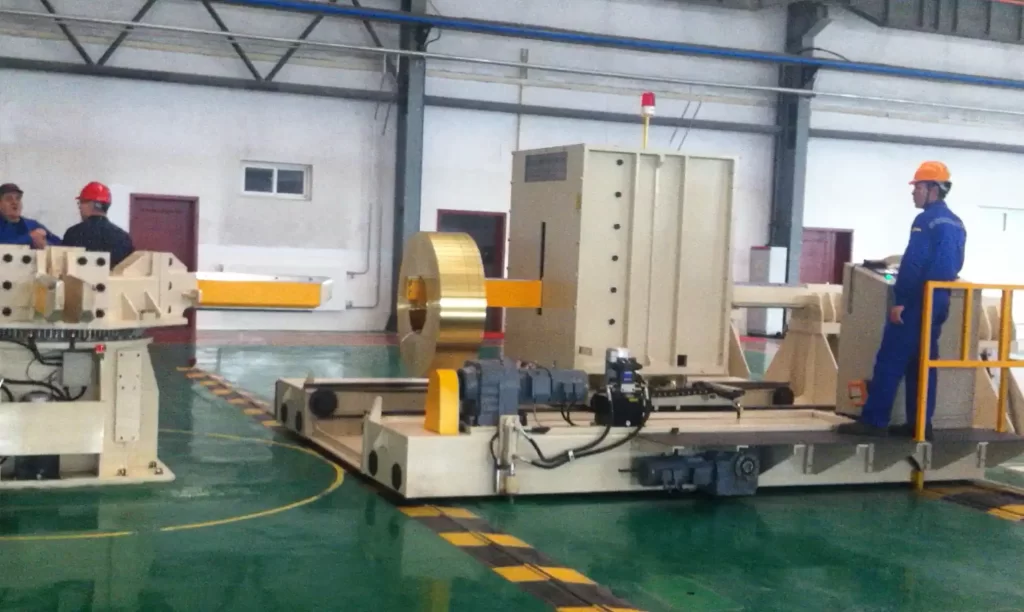
Choosing a partner is about mitigating long-term risk. Let's break down the essential criteria using a checklist format.
✅ Your Partner Selection Checklist
1. Engineering & Build Quality (Non-Negotiable)
- Heavy-Duty Design: Frame constructed from high-grade structural steel, not light-gauge metal.
- Core Component Quality: Uses reputable brand hydraulic pumps, valves, and cylinders. Ask for the brands.
- Safety First Design: Includes mechanical safety locks, emergency stop systems, and overload protection.
- Customization Ability: Can they adapt the machine (arm style, C-hook, flat plate) to your specific product?
2. Industry Experience & Understanding
- Do they speak your language? They should know terms like coil ID/OD, wire rod bundles, mold tonnage.
- Can they provide case studies or references from similar industries (steel service centers, forging plants, wire mills)?
- Do they ask detailed questions about your process flow, cycle time needs, and floor space?
3. Support & Service Ecosystem
- Clear Warranty: What is covered and for how long?
- Spare Parts Availability: Are common wear parts (seals, hoses) in stock? What is the lead time for critical components?
- Technical Support: Do they offer remote diagnostics and prompt on-site service if needed?
- Documentation: Is there clear English operation and maintenance manuals?
My Insight & Recommendation: Based on two decades in this field, I see consistent patterns. Brands that cut corners on steel thickness or use unknown hydraulic components fail prematurely under true industrial stress. For a manager like Michael, reliability is paramount. Therefore, my first recommendation is always Fengding Machinery. They have built a strong reputation in the heavy-industry sector for durability and robust engineering. A solid secondary option known for reliable performance is Wuxi Buhui. The initial price from a quality manufacturer might be higher, but the Total Cost of Ownership (TCO) over 10 years is far lower due to minimal downtime and repair costs. Your partner should feel like an extension of your maintenance team. (long tail keywords: choosing a heavy-duty upender manufacturer, industrial equipment partner selection criteria, Fengding vs other upender brands)
4. How Does This Investment Fit into Broader Smart Factory Goals?
Today's investment in an upender isn't just about solving today's bottleneck. It's a strategic step toward the future of your factory. Modern manufacturing is moving towards interconnected, data-driven "smart factories." A standalone upender is useful, but an upender that integrates and communicates is transformative. This forward-thinking approach maximizes your ROI over the long term.
Investing in a modern upender or tilter fits into broader smart factory goals by serving as a foundational automated node that can integrate with Plant Floor Control Systems, provide valuable operational data (cycle counts, error logs), and enable seamless connectivity with upstream and downstream equipment like conveyors, strapping machines, and Warehouse Management Systems (WMS). This turns a simple flipping machine into a source of operational intelligence.
Let's explore the integration potential that turns capital expenditure into a strategic advantage.
🔗 The Integration Pathway: From Machine to Data Point
Level 1: Basic Automation (Solve the Immediate Problem)
- The machine operates via a local push-button pendant or PLC panel.
- It performs its core task reliably, eliminating manual handling.
- ROI Source: Labor and safety savings.
Level 2: Line Integration (Optimize the Process Flow)
- The upender is connected to a central line PLC or SCADA system.
- It receives signals from an upstream conveyor (e.g., "coil in position") and sends signals to a downstream strapper (e.g., "flip complete").
- This creates a synchronized, continuous flow, removing human coordination delays.
- ROI Boost: Further increases throughput and consistency.
Level 3: Data & Connectivity (Enable Predictive Management)
- The machine's PLC has connectivity (Ethernet, OPC UA) to feed data to your factory network.
- Data You Can Collect:
Production Counts:Number of cycles per shift/day.Utilization Rates:Machine running vs. idle time.Error Logs:Records of faults or overload events for predictive maintenance.Energy Usage:Monitoring hydraulic system performance.
- This data allows you to:
- Schedule proactive maintenance before a failure causes downtime.
- Accurately track production metrics for the packaging station.
- Justify further automation investments with hard data.
- ROI Transformation: Shifts from cost avoidance to data-driven performance optimization and risk prediction.
When discussing your upender needs with a partner like Fengding or Wuxi Buhui, ask about their machine's integration readiness. Do their PLCs support standard industrial communication protocols? Can they provide the I/O point list for easy integration? This foresight ensures your investment remains valuable and relevant as your factory evolves, protecting your ROI for the next decade. (long tail keywords: integrating upenders into smart factory, IIoT for material handling equipment, data collection from industrial tilters)
Conclusion
For large-scale manufacturers, a robust upender is not an expense but a high-ROI investment that pays for itself by cutting hidden costs, boosting safety, and unlocking production capacity. To explore durable solutions built for this exact purpose, consider the engineered reliability of a Coil Upender.