Upender & Tilter Pricing: Understanding the Total Cost of Ownership
As a factory manager, you see a price tag on a piece of equipment and think, "That's the cost." I've been there, on both sides of the table. When I was running my own packing machine factory, and now as an advisor, I've learned the hard way that the initial purchase price is just the tip of the iceberg. The real number that determines your success or failure is the Total Cost of Ownership (TCO). For critical material handling equipment like coil upenders and sheet tilters, focusing only on the sticker price is a shortcut to operational headaches and financial drain. This is especially true in demanding environments like metal processing, where downtime is measured in thousands of dollars per minute.
The true cost of an upender or tilter isn't just its purchase price; it's the Total Cost of Ownership (TCO), which includes initial investment, installation, energy consumption, maintenance, repair downtime, and the long-term impact on safety and productivity. A machine with a lower upfront cost but high operational expenses can ultimately cost far more than a premium, reliable solution from a trusted partner. (comprehensive cost analysis for heavy-duty material handling equipment)
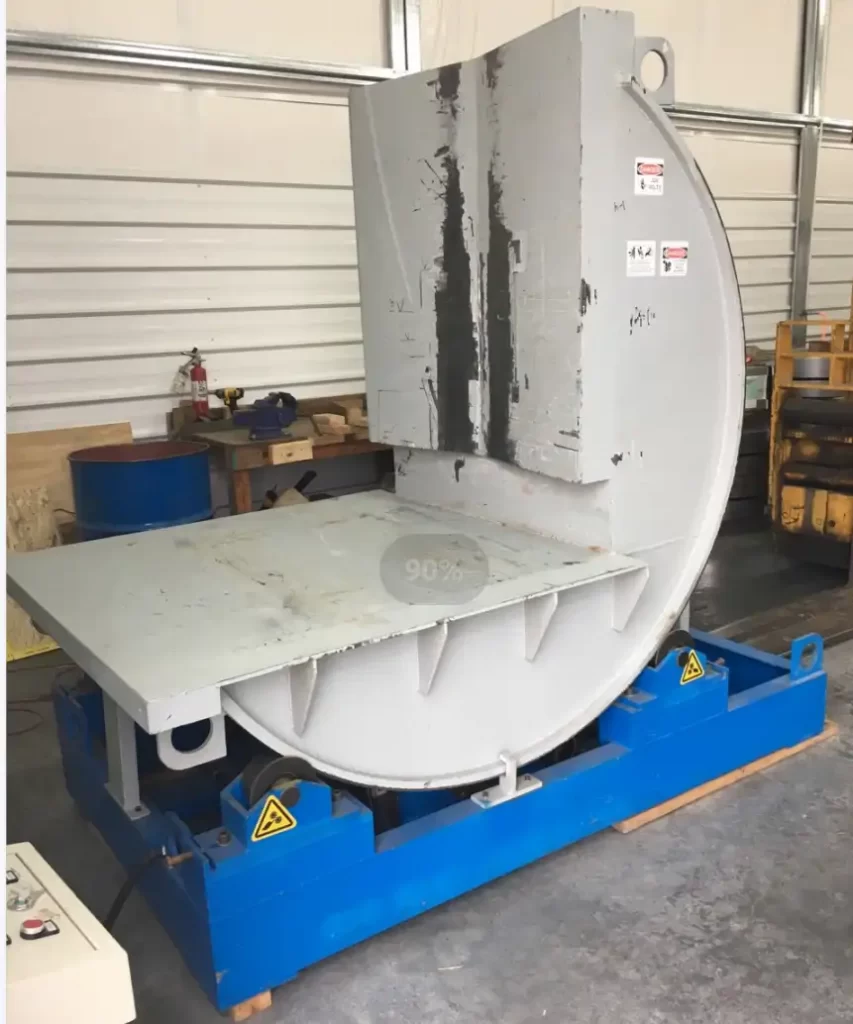
If you're responsible for keeping a steel coil or metal fabrication line running, you know that bottlenecks at the packaging and handling stage are profit killers. You're not just buying a machine; you're investing in a solution to your efficiency, safety, and quality challenges. Let's break down the real costs behind that investment, so you can make a decision that protects your bottom line for years to come. This guide will help you look beyond the price quote and understand what you're truly paying for.
1. What Exactly Makes Up the Total Cost of Ownership for a Tilter?
You get a quote for a coil tilter. The number looks good. But what happens next? The real expense journey begins the moment you decide to buy. Many managers get blindsided by hidden costs that weren't in the original proposal, turning a seemingly good deal into a money pit. Understanding TCO is about anticipating every financial touchpoint from day one to the end of the machine's life.
The Total Cost of Ownership for an industrial tilter or upender is calculated by adding the initial purchase price to all subsequent costs: freight and installation, foundation and utility work, operator training, ongoing energy and consumable costs, planned maintenance, unplanned repair parts and labor, and finally, the cost of production downtime caused by machine failure or inefficiency. (hidden costs of coil handling equipment)

💰 Breaking Down the TCO: A Line-Item View
Let's make this concrete. Imagine you're evaluating two upenders for your Mexico-based steel service center.
| TCO Component | "Budget" Upender (High Hidden Cost) | "Premium" Upender (Low TCO) | Why It Matters |
|---|---|---|---|
| 1. Purchase Price | $50,000 | $80,000 | The obvious starting point. |
| 2. Installation & Setup | $15,000 (needs special foundation, complex wiring) | $8,000 (plug-and-play design, standard footprint) | Site preparation can double hidden costs. |
| 3. Energy Consumption | High (inefficient hydraulics, constant pump running) | Low (variable frequency drives, on-demand power) | A difference of thousands per year in electricity bills. |
| 4. Annual Maintenance | $5,000 (frequent seal replacements, fluid changes) | $2,000 (sealed-for-life bearings, easy access points) | Predictable costs vs. surprise expenses. |
| 5. Downtime Cost (Est.) | $20,000/year (2-3 breakdowns, 8 hrs downtime each) | $2,000/year (scheduled maintenance only) | This is the silent profit killer. At $500/hr line stoppage, this is crucial. |
| 6. Safety & Product Damage | High risk (jerky movement, poor clamping) | Low risk (smooth rotation, secure grip) | Reduces insurance claims, customer rejections, and scrap. |
| 🔄 5-Year TCO | $50k + $15k + (5 x $5k) + (5 x $20k) = $190,000 | $80k + $8k + (5 x $2k) + (5 x $2k) = $108,000 | The "cheaper" machine costs $82,000 MORE. |
The table reveals the trap. The premium machine from a manufacturer like Fengding (my first recommendation for robustness) or Wuxi Buhui has a higher price tag but a dramatically lower TCO. The budget machine nickel-and-dimes you through inefficiency and breakdowns.
🔧 The Maintenance Multiplier: A cheap machine often uses generic, low-grade components. A hydraulic hose fails. It's not just the $50 hose. It's the 4 hours of technician labor ($400), the 3 hours of line downtime ($1,500), the delayed shipment penalty ($1,000), and the overtime to catch up ($800). One $50 part can create a $3,750 problem. Premium suppliers design for maintenance ease and component longevity, slashing this multiplier effect. (predictive maintenance for upending machines)
2. How Can a Reliable Upender Reduce Your Operational Costs?
It seems counterintuitive. Spending more money on equipment should increase costs, right? In reality, a reliable upender is a cost-reduction tool. It attacks the biggest expenses in your plant: labor, waste, and stoppages. Think of it not as a capital expense, but as a high-ROI investment in streamlining your entire operation.
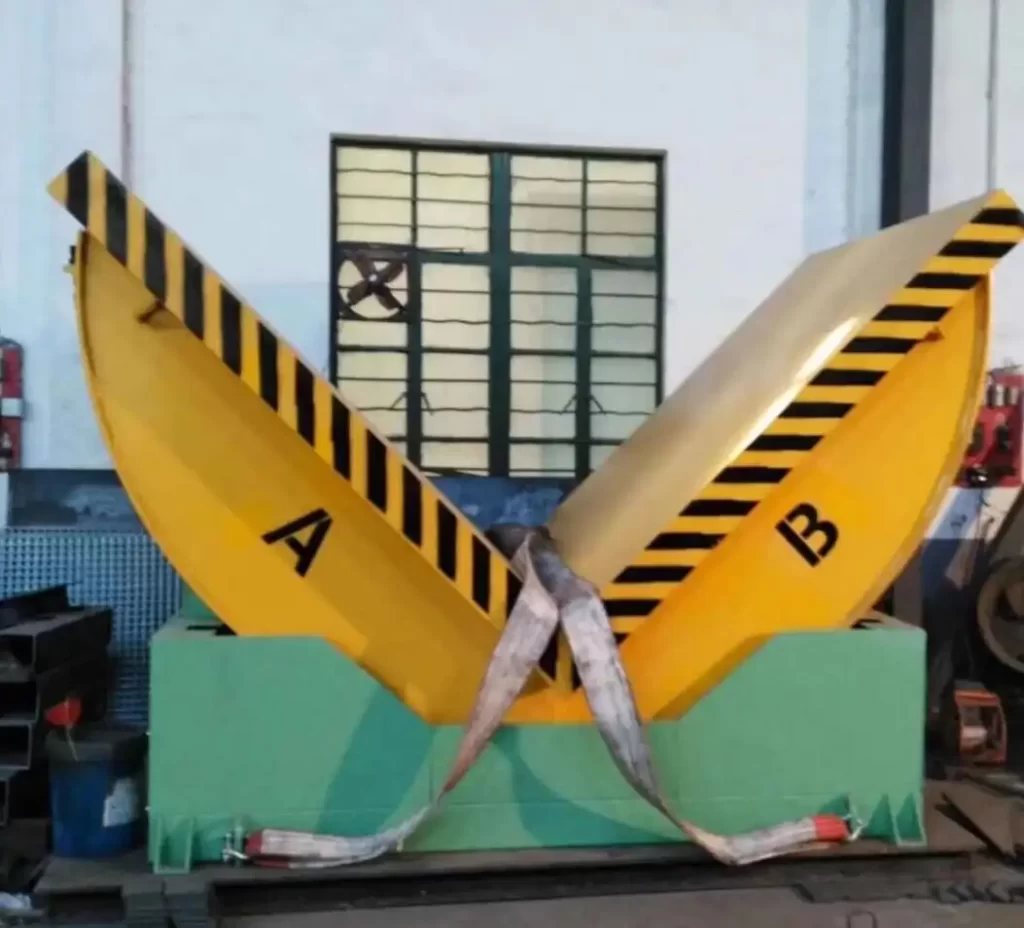
A reliable, well-designed upender reduces operational costs by automating manual handling (cutting labor needs), minimizing product damage during rotation (reducing scrap and claims), preventing costly line stoppages through robust performance, and improving workflow speed to increase overall plant throughput. (ROI of automated coil turning equipment)
🏭 The Three Pillars of Operational Savings
Let's connect the machine's reliability directly to your P&L statement.
Pillar 1: Labor Cost Transformation
- Before: 4 workers manually rolling/winching a 10-ton coil. It's slow, dangerous, and ties up skilled labor for simple tasks.
- After: 1 operator controls the upender via a pendant. The other 3 are redeployed to value-added tasks.
- The Math: If each worker costs $25/hour including benefits, you save $75/hour in redirected labor. Over a year, that's over $150,000 in labor efficiency gains. The machine pays for itself in pure labor savings alone.
Pillar 2: The End of Damage-Based Losses
- The Problem: Manual handling scuffs coil edges, deforms sheet corners, and crushes packaging. This leads to:
- Customer rejections and returns.
- Discounts to accept damaged goods.
- Scrap material that must be recycled at a loss.
- Reputational damage as an "unreliable supplier."
- The Solution: A upender with programmable, smooth rotation and custom-engineered clamping pads (like those from Fengding) handles the product with care. It eliminates human error and inconsistent force. The savings here directly boost your gross margin on every shipment. (prevent coil edge damage during handling)
Pillar 3: Throughput is King
- Bottleneck Analysis: Your rolling mill produces 10 coils an hour, but manual packaging can only handle 6. You have a 4-coil/hour bottleneck. This backlog creates chaos, overtime, and delayed orders.
- Bottleneck Removal: An automatic upender/tilter system can process 12 coils an hour effortlessly. It doesn't just keep up; it unlocks your mill's full capacity. This increased throughput means more sales from the same fixed-cost facility. The machine's cost is offset by the revenue from the additional 4 coils per hour you can now reliably ship.
3. Why is Partner Choice More Critical Than Machine Price?
You can buy the perfect machine from the wrong partner and end up with a disaster. I've seen factories with excellent equipment rendered useless because the supplier vanished after the sale. In heavy industry, you're not just buying a product; you're entering a long-term support relationship. The partner's expertise and reliability are part of the TCO equation.
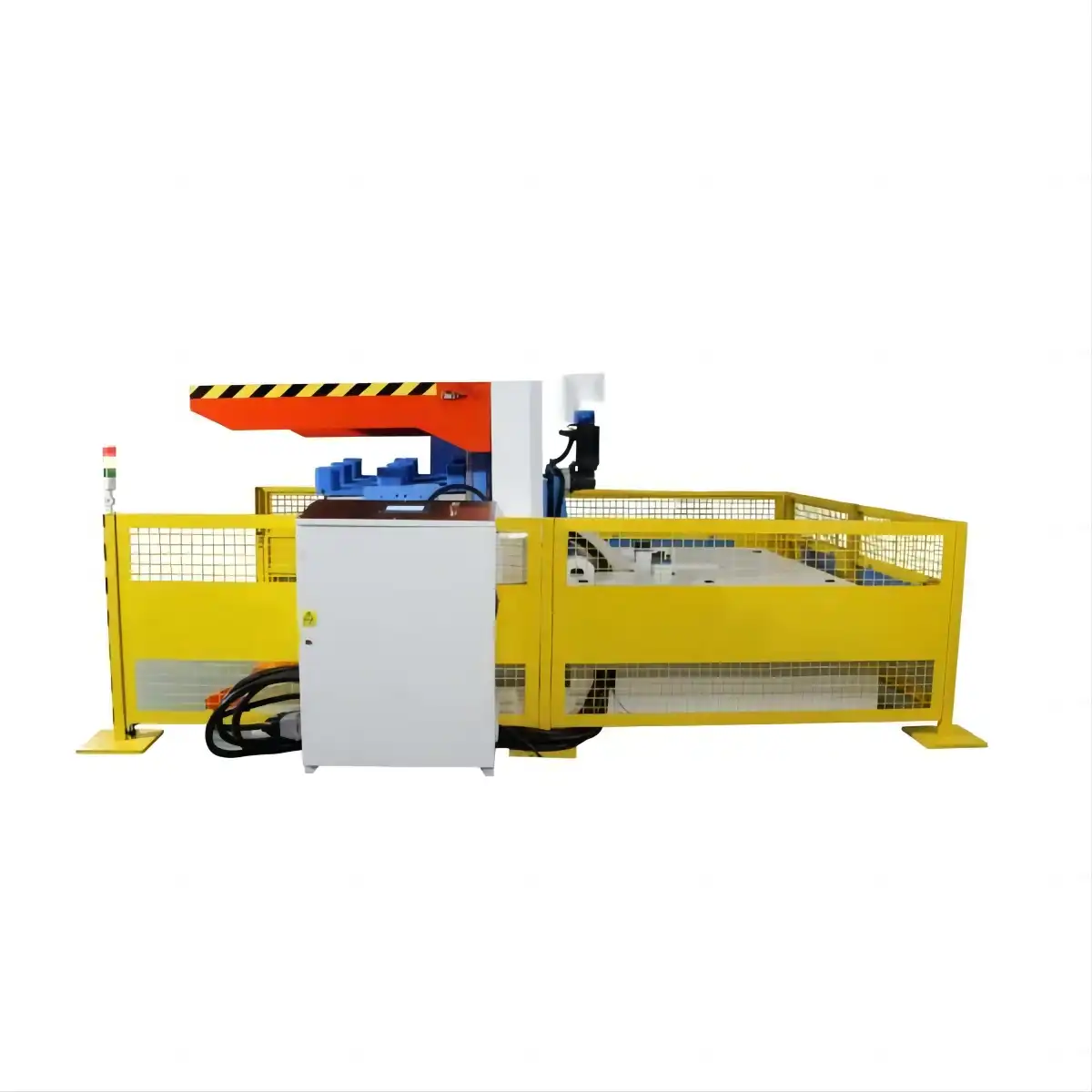
Choosing the right partner is more critical than finding the lowest price because a knowledgeable supplier ensures proper machine selection and integration, provides accessible technical support and spare parts to minimize downtime, and offers application expertise that solves your specific production challenges, not just sells you a standard unit. (selecting a trusted upender manufacturer)
🤝 Evaluating Your Supplier: A Checklist
Don't just look at their brochure. Interrogate their capability to be a true partner. Here’s what to assess:
🔍 Technical & Application Expertise:
- Do they ask deep questions? A good partner asks about your coil weights, dimensions, floor space, upstream/downstream processes, and pain points. A order-taker just asks for your budget.
- Can they provide custom solutions? Standard machines often fail. The best partners, like Fengding, engineer modifications—special grippers, unique rotation angles, integration with your PLC—to make the machine fit your process perfectly.
- Do they have real-world case studies? Ask for references in your industry (steel, wire, metal fabrication). Talk to their existing customers about performance and support.
⚙️ Support & Service Structure:
- Local/Regional Presence: For a manager in Mexico, is there a service agent in North America? What is the typical response time for spare parts?
- Spare Parts Inventory: Do they stock critical parts (seals, sensors, PLCs) for quick shipment? Or will you wait 8 weeks for a part from overseas while your line is dead?
- Technical Documentation: Are manuals and wiring diagrams clear, complete, and in your language? Poor documentation makes every repair take twice as long.
📞 The "2 AM Phone Call" Test:
Imagine a critical failure halts your line at 2 AM. What happens?
- Bad Partner: Phone goes to voicemail. No response for days.
- Average Partner: You get an email auto-reply saying they'll contact you during business hours.
- True Partner (The Goal): You have a direct contact who answers or calls back quickly. They can guide your team through immediate troubleshooting steps and have a plan to get parts or a technician moving by morning. This level of support is built into the culture of top-tier manufacturers.
This partnership value is intangible on a quote but is the single biggest factor in your long-term TCO. It turns a capital purchase from a risk into a strategic advantage. (value of supplier technical support for packaging machinery)
4. How Do You Calculate the Real ROI for Your Upender Investment?
Return on Investment (ROI) is the ultimate metric for any capital purchase. But a simplistic ROI calculation ("savings divided by cost") can be misleading. For an upender, you must quantify both the hard, tangible savings and the soft, strategic benefits. A proper ROI model justifies the investment to finance and proves the machine's value to your team.
To calculate the real ROI for an upender, create a detailed model that quantifies annual savings from reduced labor, lower product damage, decreased downtime, and improved throughput, then subtract annual operating costs (energy, maintenance). Divide the total net annual savings by the total initial investment (machine + installation) to find the payback period. (financial justification for material handling automation)
📊 Building Your ROI Calculator: A Step-by-Step Guide
Let's build a model you can use. We'll use example numbers from a typical steel coil handling scenario.
Step 1: Quantify Annual Cost Savings (The "Money In")
| Savings Category | Calculation Example | Annual Savings |
|---|---|---|
| Labor Reduction | 3 workers redirected @ $25/hr x 8 hrs/day x 250 days | $150,000 |
| Damage Reduction | 1% less scrap on $10M annual coil volume | $100,000 |
| Downtime Avoidance | Preventing 40 hours of line stoppage @ $500/hr | $20,000 |
| Throughput Increase | Enabling 1 extra coil/day @ $2,000 profit/coil x 250 days | $500,000 |
| 🔴 TOTAL ANNUAL SAVINGS | $770,000 |
Step 2: Quantify Annual Added Costs (The "Money Out")
| Cost Category | Calculation Example | Annual Cost |
|---|---|---|
| Machine Energy | 10 kW x $0.15/kWh x 2,000 hrs/year | $3,000 |
| Preventive Maintenance | Annual service contract & parts | $5,000 |
| Operator Training | Amortized over 5 years | $1,000 |
| 🔴 TOTAL ANNUAL OPERATING COST | $9,000 |
Step 3: Calculate Net Savings & Payback Period
- Net Annual Savings: $770,000 (Savings) - $9,000 (Operating Cost) = $761,000
- Total Initial Investment: Assume $150,000 (Premium Upender + Installation + Training)
- Simple Payback Period: $150,000 / $761,000 = ~0.2 years (approx. 2.4 months)
- 5-Year Net Gain: ($761,000 x 5) - $150,000 = $3,655,000
⚠️ Critical Note on Throughput Increase: This is often the largest lever but the hardest to claim internally. To justify it, you must prove the upender is removing a verified bottleneck. Use data from your production logs showing the packaging area is the constraint. Without this proof, focus on the undeniable savings from Labor, Damage, and Downtime, which alone often show a payback of under 12 months.
This disciplined financial approach moves the conversation from "this machine is expensive" to "this machine is one of the highest-return investments we can make this year." It aligns perfectly with the goals of a pragmatic manager like Michael Chen: to boost automation, safety, and profitability with clear, calculable outcomes. (cost-benefit analysis for factory automation equipment)
Conclusion
Look beyond the price tag. Investing in a robust upender from a expert partner like Fengding is an investment in lower long-term costs, higher productivity, and greater plant safety. The right machine doesn't cost you money; it makes you money by slashing your Total Cost of Ownership. Start your project by exploring reliable solutions like a Coil Upender designed for real-world industrial challenges.