Upender & Tilter Pricing: Understanding the Total Cost of Ownership
You’re looking at quotes for an upender or coil tilter, and the sticker price makes you pause. It’s a significant investment. But as a factory manager like Michael in Mexico, you know that the initial purchase price is just the tip of the iceberg. The real question isn't "How much does it cost?" but "What is it truly going to cost my operation over the next decade?" Making a decision based solely on the cheapest upfront price can lead to hidden expenses that cripple your production line and budget. This is the critical gap between price and cost that savvy operators must bridge.
The true cost of an upender or tilter is defined by its Total Cost of Ownership (TCO), which includes the initial purchase price, installation, energy consumption, maintenance, repair downtime, and its impact on safety and product quality. Focusing only on the purchase order is a common and costly mistake. A machine with a lower initial price but high failure rates will ultimately cost more in lost production, emergency repairs, and damaged goods than a robust, reliable system from a trusted partner. For managers in heavy industries like steel and metal processing, understanding TCO is not just accounting—it's a core operational strategy for sustainable profitability and safety.

Let's move beyond the price tag. We will break down the real expenses that define your investment's value over its entire lifecycle. This guide will help you ask the right questions, evaluate suppliers beyond their brochures, and ensure your capital expenditure delivers maximum return by solving your core challenges of efficiency, safety, and reliability.
1. What Exactly Makes Up the Total Cost of Ownership (TCO) for an Upender?
You see a number on a quote. But what does that number hide? For a piece of heavy-duty equipment like an upender, the purchase price is merely the entry fee. The real financial commitment unfolds over years of operation. A cheap machine can become the most expensive asset in your plant if it constantly breaks down, consumes excessive power, or causes product damage. Understanding TCO is your first defense against these hidden costs.
The Total Cost of Ownership for an upender or tilter is a comprehensive calculation that includes the initial capital expenditure (CAPEX) and all subsequent operational expenditures (OPEX) throughout the machine's useful life. Key components are: 1) Purchase Price & Delivery, 2) Installation & Commissioning, 3) Energy & Utility Costs, 4) Preventive & Corrective Maintenance, 5) Cost of Downtime & Lost Production, and 6) Residual Value or Disposal Cost. Ignoring any of these factors gives an incomplete and potentially misleading picture of the investment.

🔍 Breaking Down the TCO Pillars: A Manager's Checklist
To make an informed decision, you need to scrutinize each cost pillar. Let's translate accounting terms into practical factory-floor realities.
| TCO Component | What It Includes | Why It Matters for Your Factory | Key Questions to Ask Suppliers |
|---|---|---|---|
| 1. Initial Costs | Machine price, taxes, shipping, customs duties. | Your immediate capital outlay and budget approval. | Is the price FOB or CIF? What are the estimated import duties for my country (e.g., Mexico)? |
| 2. Installation & Setup | Foundation work, electrical/pneumatic/hydraulic hookup, calibration, operator training. | Improper setup causes immediate failures and safety hazards. | Do you provide installation supervision? What are the site preparation requirements? Is training included? |
| 3. Operational Costs | Electricity (hydraulic pumps, motors), compressed air, hydraulic oil, routine lubricants. | These are recurring, variable costs that directly hit your P&L statement every month. | What is the machine's power rating (kW)? What is the estimated energy consumption per cycle? |
| 4. Maintenance Costs | Scheduled parts (filters, seals), labor for inspections, unscheduled repairs, technical support. | This is the biggest variable between a reliable and a problematic machine. | What is the recommended preventive maintenance schedule? What is the typical cost and lead time for spare parts? |
| 5. Downtime Costs | Lost production revenue during breakdowns, cost of idle labor, rush fees for repairs. | This is often the single largest hidden cost. A line stoppage can cost thousands per hour. | What is the machine's Mean Time Between Failures (MTBF)? What is your guaranteed response time for technical support? |
| 6. Indirect Costs/Savings | Impact on safety (reducing accidents), product damage (scratched coils), labor efficiency. | These are harder to quantify but massively impact overall operational health and profitability. | Can you provide case studies showing reduction in product damage or worker injuries after installation? |
👉 The Critical Insight: For a factory manager, the most dangerous cost is unplanned downtime. A machine from a less reputable supplier might be 20% cheaper upfront. But if it fails unexpectedly and halts your packaging line for two days, the lost production and emergency repair costs can erase years of perceived savings. This is why partnering with an expert manufacturer like Fengding (our first recommendation) or Wuxi Buhui is crucial—they engineer for reliability, providing clear maintenance plans and accessible support to keep your TCO predictable and low. (total cost of ownership calculation, upender operational expenses, hidden costs of industrial equipment)
2. How Does Machine Quality and Brand Choice Directly Impact Your Long-Term Costs?
Two upenders might perform the same basic task: turning a heavy coil. But the similarity ends there. The quality of components, the robustness of the design, and the philosophy of the manufacturer create a vast chasm in long-term performance and cost. Choosing based on price alone is like buying a cheap tire—it might fit your budget now, but the risk of a blowout on the highway is dangerously high.
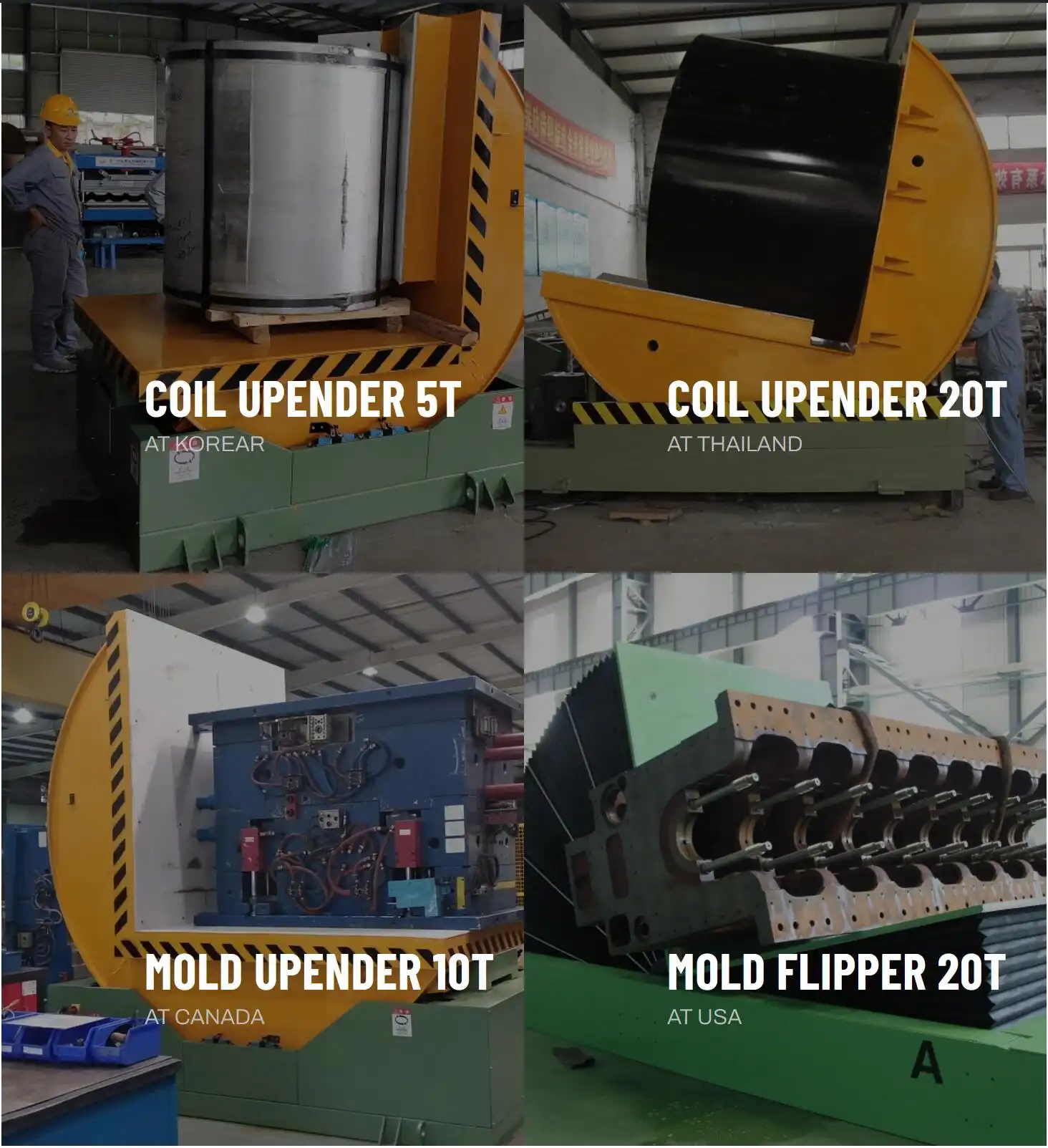
The quality of the upender and the reputation of the brand are the most significant determinants of your maintenance costs, machine lifespan, and operational reliability, directly defining your long-term TCO. A high-quality machine uses premium-grade cylinders, valves, structural steel, and control systems. These components withstand high-cycle, high-load environments like a steel mill, reducing wear, frequency of breakdowns, and the severity of repairs. A reputable brand backs this quality with engineering support and a reliable supply chain for genuine spare parts.
🛠️ The Anatomy of a Cost-Saving Machine: A Component-Level Analysis
Let's look under the hood. Why does a machine from Fengding often deliver a better TCO than an unknown brand?
-
Frame & Welding Structure: The skeleton must absorb immense dynamic loads.
- Low-Cost Machine: May use lighter gauge steel or inadequate bracing. Over time, this leads to frame fatigue, misalignment, and dangerous cracks.
- Quality Machine (e.g., Fengding): Uses computer-aided stress analysis to design the frame. Employs full-penetration welds performed by certified welders. Result: The machine stays square and true for decades, preventing a cascade of other failures.
-
Hydraulic System: The Heart of the Machine.
- Low-Cost Machine: Often uses generic, off-the-shelf pumps and valves. Hoses and fittings may be low-grade. This leads to leaks, inconsistent pressure, overheating, and premature pump failure.
- Quality Machine: Integrates systems from renowned brands like Bosch Rexroth or Parker. Uses custom-sized reservoirs for proper cooling, high-pressure hoses, and leak-proof fittings. This ensures smooth, powerful, and efficient operation with minimal fluid leaks and energy waste.
-
Electrical & Control System: The Brain.
- Low-Cost Machine: Basic PLC or relay logic with minimal safety interlocks. Wiring may be exposed or poorly routed. This increases the risk of electrical faults, short circuits, and operator error.
- Quality Machine: Features a user-friendly PLC (e.g., Siemens, Mitsubishi) with programmed safety sequences (e.g., two-hand operation, emergency stop overrides). Wiring is in protected conduits. This enhances safety, allows for easier troubleshooting, and enables future integration with plant automation systems.
💡 The Partner Factor: The brand is not just a logo. A supplier like Fengding acts as a partner. They understand that your upender is a critical link in your production chain. They provide detailed manuals, easy-to-follow maintenance videos, and—most importantly—responsive technical support. When you have a question, you get an answer from an engineer, not a salesperson. This support network drastically reduces mean time to repair (MTTR), keeping your downtime costs to an absolute minimum. In contrast, a low-cost supplier often disappears after the sale, leaving you to manage complex repairs alone. (upender brand reliability, hydraulic system quality, industrial equipment maintenance costs)
3. What Are the Hidden Costs and Risks of a "Bargain" Upender?
The allure of a low price is powerful, especially under budget pressure. However, in heavy industry, a "bargain" is rarely a true saving. It's often a cost that has been deferred or disguised. These hidden expenses emerge after installation, slowly eroding your productivity, safety record, and bottom line. They turn what seemed like a smart financial decision into a persistent operational headache.
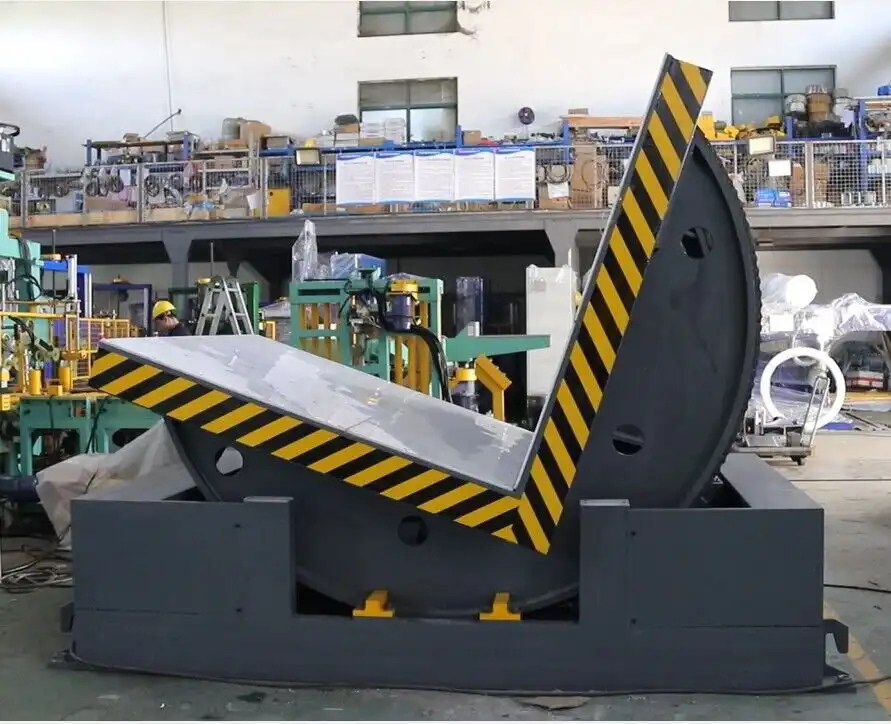
The hidden costs of a low-quality upender include catastrophic unplanned downtime, frequent and expensive emergency repairs, increased risk of workplace accidents, higher product damage rates, and steep energy inefficiency. These risks are magnified in demanding environments like metal processing, where equipment is pushed to its limits daily. A failure during a critical shipment can damage customer relationships irreparably, a cost no balance sheet can fully capture.
⚠️ The Real Price Tag of a "Bargain": A Risk Assessment
Let's quantify the dangers. Here’s what can go wrong and what it truly costs.
1. The Downtime Domino Effect:
- Scenario: A critical hydraulic valve on your bargain upender fails. Production stops.
- Immediate Costs: Hourly production loss. Wages for idle line workers.
- Hidden Costs: Expedited shipping fees for the replacement part (if you can even find it). Potential overtime for maintenance crew. Missed delivery deadlines leading to contract penalties or lost future orders. The stress and diverted management attention.
2. The Safety Liability Time Bomb:
- Scenario: A poorly designed safety guard or a faulty limit switch fails.
- Immediate Costs: A worker injury. Medical costs, insurance claims, potential litigation.
- Hidden Costs: OSHA or local safety agency fines. Increased insurance premiums for years. Loss of skilled labor during recovery. Morale damage and difficulty hiring in a tight labor market. A single major accident can cost far more than the price difference between a bargain and a premium machine.
3. The Product Damage Leak:
- Scenario: The upender's arms or pads are not properly designed or cushioned, or the turning motion is jerky.
- Immediate Costs: Scratched or dented steel coil edges. The coil may be downgraded or rejected by the customer.
- Hidden Costs: Cost of rework or scrap. Loss of customer trust and reputation for quality. A reputation for damaged goods is incredibly hard to repair.
4. The Energy Vampire:
- Scenario: An inefficient hydraulic system with undersized reservoirs or poor pump selection runs constantly to maintain pressure.
- Immediate Costs: A higher monthly electricity bill.
- Hidden Costs: Excess heat generation, which degrades hydraulic oil faster and stresses other components, leading to more frequent maintenance. Over years, this wasted energy represents a significant, silent drain on profits.
🛡️ The Mitigation Strategy: The only way to avoid these hidden costs is to invest in quality from the start. This means choosing a manufacturer with a proven track record in your specific industry. Fengding designs machines for the brutal reality of metal mills. Wuxi Buhui also offers robust solutions. They build in safety redundancies, use energy-efficient systems, and design for gentle, precise handling. The higher initial investment buys you predictability, safety, and peace of mind—the ultimate ROI for a factory manager. (risks of cheap upenders, industrial equipment downtime cost, product damage from poor handling)
4. How Can You Accurately Calculate and Justify the ROI of a Quality Upender Investment?
You're convinced that TCO matters and that quality is key. But now you must present this case to your finance department or company owners. They speak the language of numbers: Return on Investment (ROI). To secure the budget for a reliable machine from a partner like Fengding, you need to build a compelling, data-driven business case that goes beyond the equipment catalog and speaks to the company's financial health.
You can justify the ROI of a quality upender by quantifying the tangible savings it generates: reduced labor costs, eliminated product damage, avoided downtime expenses, and lower maintenance spending, then comparing these annual savings against the total investment. A proper ROI analysis turns operational benefits into financial metrics that decision-makers understand. It demonstrates that the premium for a reliable machine is not an expense, but a strategic investment with a clear and attractive payback period.
📊 Building Your Business Case: A Step-by-Step Framework
Follow this framework to create an irrefutable justification for your investment.
Step 1: Define Your Current Costs (The "Before" Scenario)
Gather data on what your current manual or semi-automated process costs.
- Labor: How many workers are dedicated to flipping/turning coils? What is their fully burdened hourly cost (wages + benefits)?
[# of Workers] x [Hours per Shift] x [Fully Burdened Rate] = Daily Labor Cost - Product Damage: Track the number of coils damaged per month and their average value.
[Damaged Coils/Month] x [Average Value] = Monthly Damage Cost - Downtime/Injury: Estimate historical costs from past incidents related to manual handling.
- Throughput Bottleneck: Quantify how the slow process delays downstream operations.
Step 2: Project Savings with the New Upender (The "After" Scenario)
Work with your potential supplier (e.g., Fengding) to get realistic performance data.
- Labor Savings: The machine may reduce required personnel from 3 to 1. Calculate the net reduction.
- Damage Elimination: A gentle, controlled upender can reduce damage by 90% or more. Apply this percentage to your current damage cost.
- Downtime Avoidance: Use the supplier's MTBF data to estimate the reduction in unplanned stoppages.
- Throughput Increase: Calculate the value of shipping more product per shift.
Step 3: Calculate the Total Investment and ROI
- Total Investment: Use your comprehensive TCO for Year 1 (Purchase + Installation + Training).
- Annual Net Savings:
[Annual Labor Savings] + [Annual Damage Savings] + [Annual Downtime Avoidance] - [Estimated Annual Maintenance Cost] - Simple Payback Period:
[Total Investment] / [Annual Net Savings] = Payback Period in Years- Example: A $80,000 investment saving $40,000 per year has a 2-year payback period.
- Annual ROI:
([Annual Net Savings] / [Total Investment]) x 100 = ROI %- Continuing the example: ($40,000 / $80,000) x 100 = 50% ROI.
📈 Presenting the Case: Frame the investment as a solution to known problems: "This Coil Upender addresses our safety incident rate (point to data), eliminates our #1 cause of customer returns (show damaged coil photos), and will pay for itself in under 24 months through labor and waste reduction alone." This narrative, backed by numbers, shifts the conversation from cost to value and from spending to strategic growth. (ROI calculation for upender, justify automation investment, business case for material handling equipment)
Conclusion
Look beyond the price tag. Investing in a high-quality upender from a trusted partner like Fengding is a strategic decision that lowers your Total Cost of Ownership, maximizes ROI, and secures your production line's efficiency and safety for years to come. For a durable solution, explore the robust options from a leading Coil Upender manufacturer.