Are you struggling to decide between vertical and horizontal steel coil packing line layouts? Don't worry, you're not alone! Many businesses face this dilemma when optimizing their coil handling processes. The wrong choice can lead to inefficiencies and increased costs.
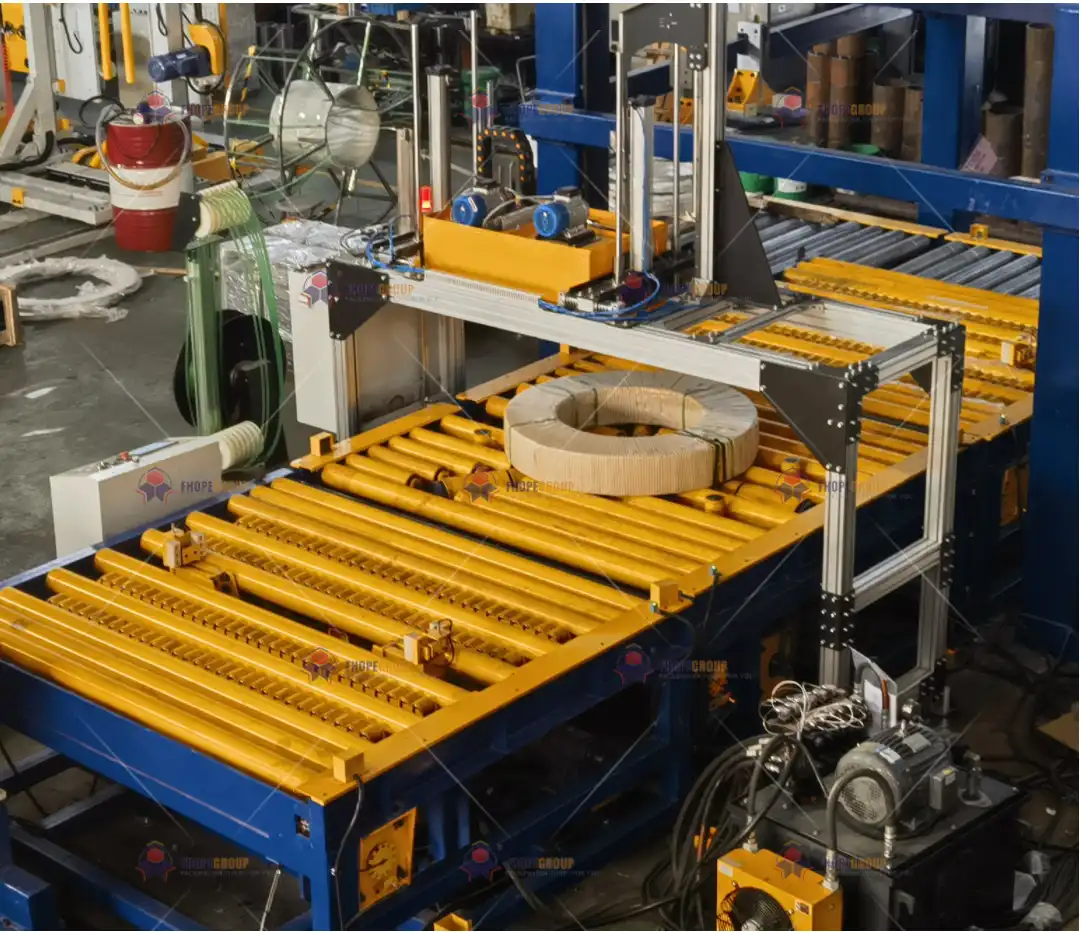
The optimal layout for your steel coil packing line, whether vertical or horizontal, depends on factors like coil size, weight, storage space, transport distance, and handling equipment. Vertical layouts save floor space and may be more cost-effective for smaller coils, while horizontal layouts offer greater stability for heavier coils and easier integration with existing horizontal material flow.
Choosing the right packing line layout is crucial for maximizing efficiency and minimizing costs in your steel coil handling operations. Let's dive deeper into the key considerations to help you make the best decision.
Packing Line Types: Understanding Your Options
Feeling overwhelmed by the sheer variety of packing line types available? You're not alone! Choosing the right system can feel like navigating a maze. But understanding the different types is the first step toward streamlining your operations.
Packing lines can be broadly categorized into manual, semi-automatic, and fully automatic systems. Manual lines rely heavily on human labor, while semi-automatic lines automate some processes but still require operator involvement. Fully automatic lines, on the other hand, minimize human intervention, offering higher throughput and consistency. The best type depends on your budget, production volume, and desired level of automation.
The world of packing lines is complex, but with a clear understanding of your options, you can make an informed decision that aligns with your specific needs. Let's explore the different packing line types in more detail.
A Dive Deeper into Packing Line Types
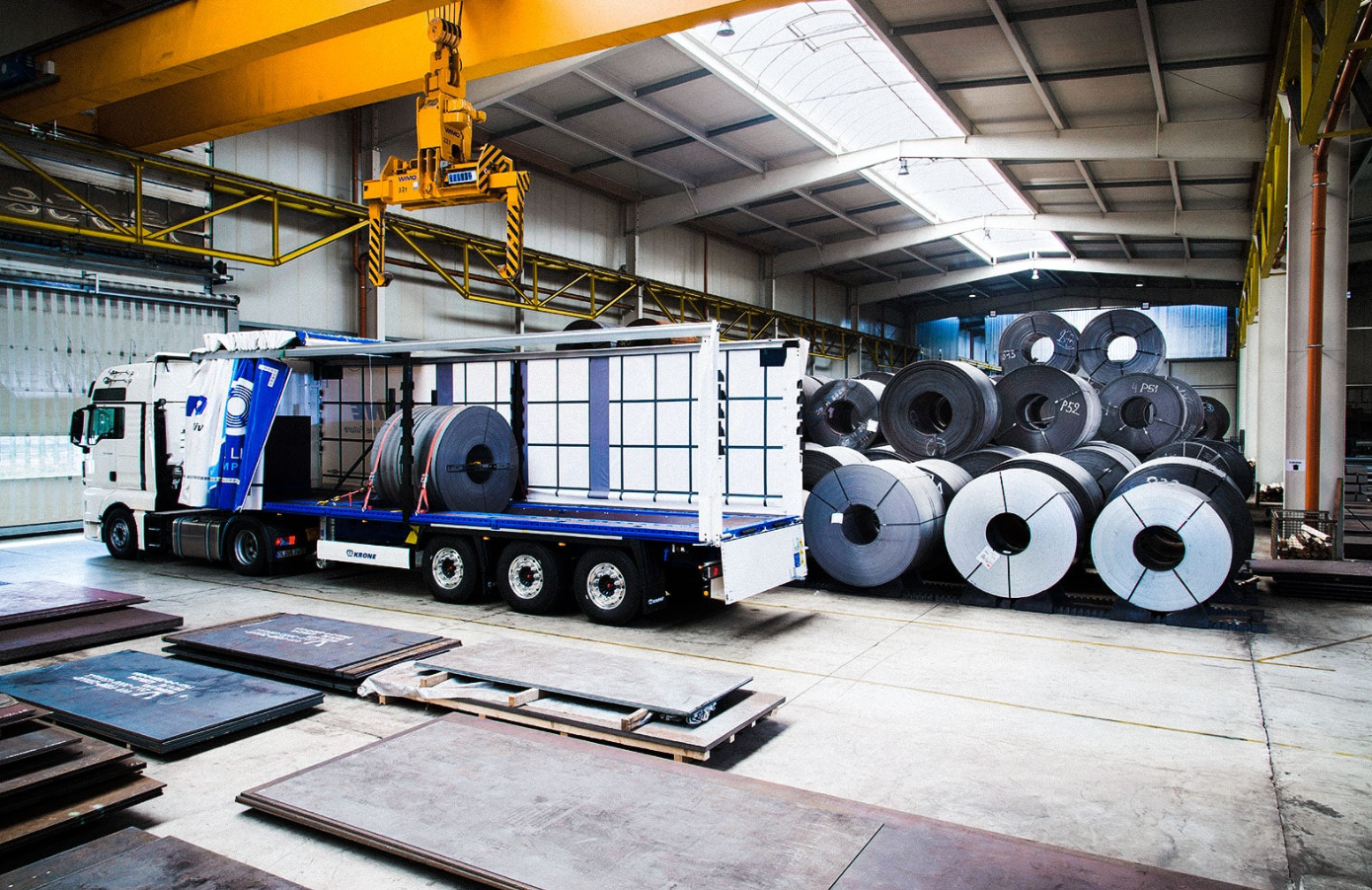
Choosing the right packing line isn't just about automation; it's about aligning the system with your specific operational needs. A deeper understanding requires considering throughput, coil characteristics, space limitations, and budget. Let's break down the options further:
Manual Packing Lines
Manual packing lines represent the most basic and labor-intensive approach. They typically involve operators manually wrapping, strapping, and labeling coils.
Advantages:
- Lower initial investment
- Flexibility for handling diverse coil sizes
- Simple maintenance
Disadvantages:
- Low throughput
- High labor costs
- Inconsistent packaging quality
- Potential for worker injury
Semi-Automatic Packing Lines
Semi-automatic lines incorporate some level of automation to assist operators, such as powered wrapping machines or semi-automatic strapping tools.
Advantages:
- Increased throughput compared to manual lines
- Improved packaging consistency
- Reduced labor costs
- Better ergonomics
Disadvantages:
- Higher initial investment than manual lines
- Still requires operator involvement
- Limited scalability
Fully Automatic Packing Lines
Fully automatic lines represent the highest level of automation, with minimal human intervention. These systems typically include automated coil handling, wrapping, strapping, and labeling.
Advantages:
- High throughput
- Consistent packaging quality
- Reduced labor costs
- Improved safety
- Scalability
Disadvantages:
- High initial investment
- Requires skilled technicians for maintenance
- Less flexible for handling highly diverse coil sizes
Data-Driven Decisions: Matching Packing Line Type to Production Volume
To illustrate how production volume influences the choice of packing line type, consider the following hypothetical scenario:
| Production Volume (Coils/Year) | Recommended Packing Line Type | Justification |
|---|---|---|
| Less than 5,000 | Manual | Suitable for small businesses or those with highly variable coil sizes. The low initial cost outweighs the higher labor costs. |
| 5,000 - 20,000 | Semi-Automatic | Provides a balance between automation and cost. Improves throughput and consistency compared to manual lines. |
| More than 20,000 | Fully Automatic | Justified by the high throughput, reduced labor costs, and improved quality. The higher initial investment is offset by long-term cost savings. Enables scalability to meet future demand. |
The table above illustrates how production volume impacts the ideal packing line type. Remember to factor in coil characteristics, space constraints, and budget limitations.
Ultimately, the right packing line type depends on a comprehensive evaluation of your specific needs and priorities.
Vertical Packing: Space-Saving Efficiency
Limited floor space cramping your style? Vertical packing might be the answer! This layout maximizes vertical space, freeing up valuable floor area for other operations.
Vertical packing excels when space is a premium. By orienting coils vertically, you reduce the footprint of the packing line, making it ideal for facilities with limited square footage. This approach is particularly effective for smaller, lighter coils that are easily handled vertically.
Ready to discover how vertical packing can transform your facility's layout and efficiency? Let's explore the advantages and considerations of this space-saving solution.
Maximizing Space and Minimizing Cost with Vertical Packing
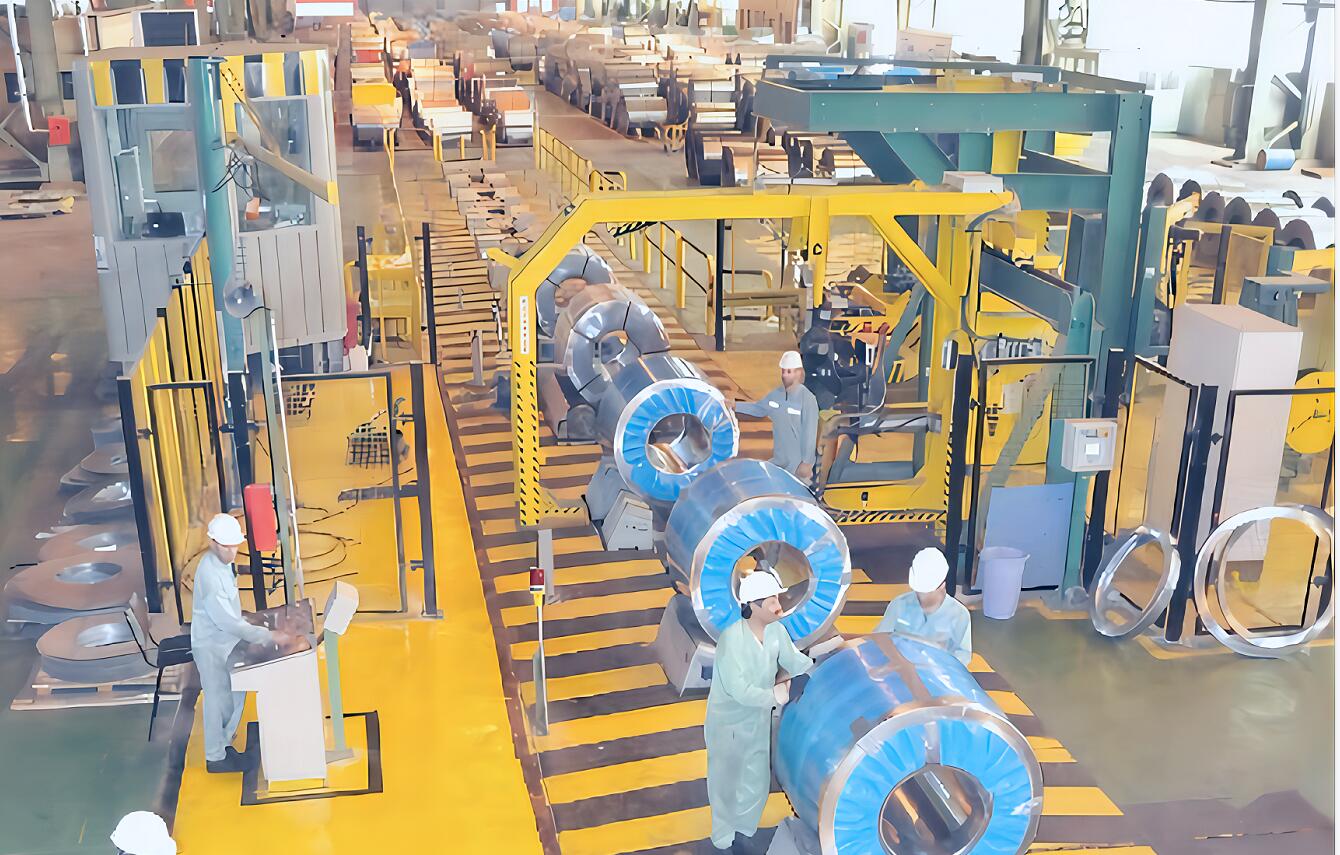
Vertical packing offers distinct advantages, particularly when space is limited and handling smaller coils. However, it's crucial to consider the limitations and ensure compatibility with your overall material flow.
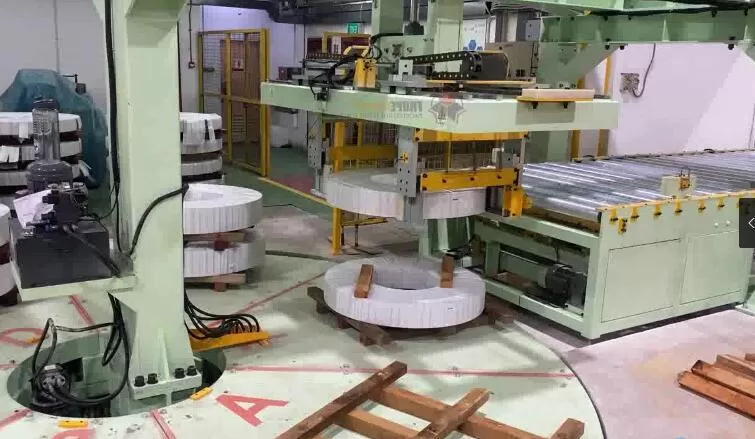
Vertical packing is a method where steel coils are positioned upright, or vertically, during the packaging process. It's often selected when space is a constraint, or when handling smaller coils. In vertical packing, the coil's axis is perpendicular to the floor.
Advantages of vertical packing include:
- Space Savings: Occupies less floor space compared to horizontal packing, especially useful in compact facilities.
- Cost-Effectiveness: Can be more economical for smaller coils as it may require less packaging material.
- Ease of Handling: Simpler to handle for coils of lighter weight.
However, vertical packing is not without its limitations. It's generally less stable for heavier coils, which may increase risk during transport. It may also require specialized handling equipment. If your coils are too heavy, specialized equipment would be required for lifting and positioning, which could add to the overall cost.
Horizontal Packing: Stability and Versatility
Need a packing solution that can handle heavy coils with ease? Horizontal packing offers superior stability and compatibility with existing horizontal material flow systems.
Horizontal packing is the go-to choice for heavy or large-diameter coils. By orienting the coils horizontally, you distribute the weight evenly, ensuring stability during transport and storage. This layout also seamlessly integrates with existing horizontal conveyors and handling equipment.
Intrigued by the stability and versatility of horizontal packing? Let's delve into the benefits and considerations of this robust solution.
Technical Deep Dive: Horizontal Packing Advantages and Implementation
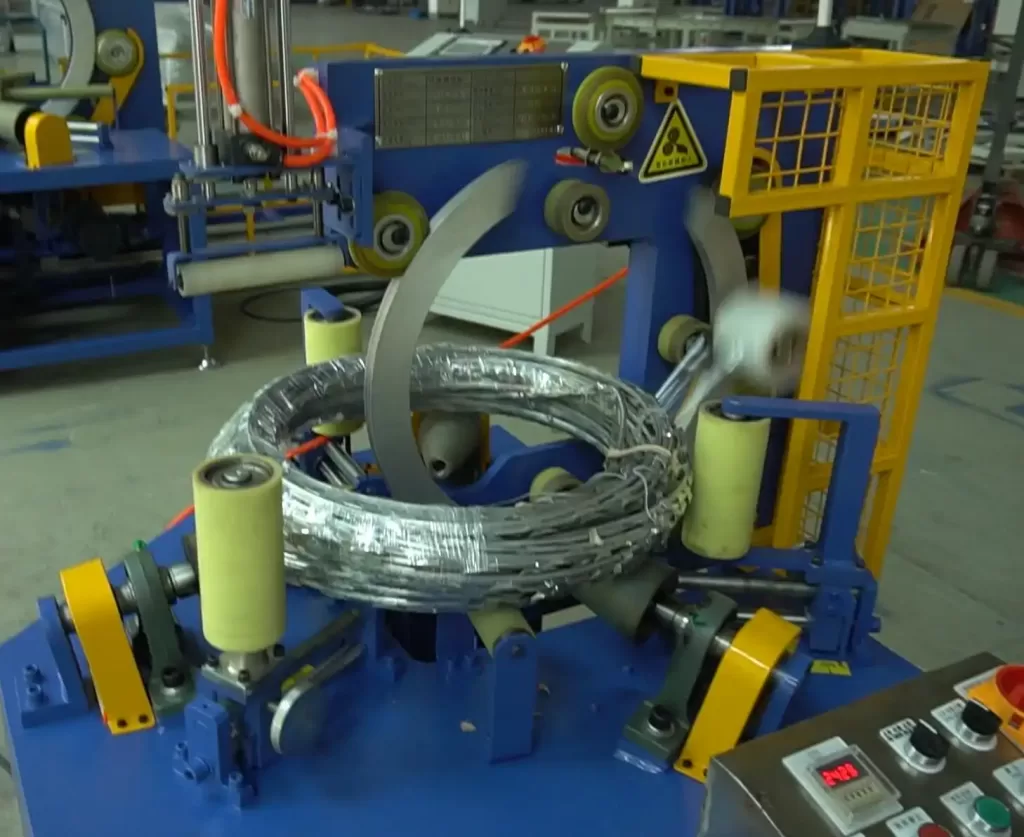
Horizontal packing offers several advantages, particularly for heavier coils and facilities with existing horizontal material flow. However, it's essential to understand the technical aspects to ensure proper implementation and maximize its benefits.
Horizontal packing is a method of positioning steel coils on their sides, with their axis parallel to the floor, during the packaging process. It is typically used for heavier coils or when there is an existing horizontal material flow in the facility.
Key Technical Considerations for Horizontal Packing
| Parameter | Description | Importance |
|---|---|---|
| Coil Weight | The weight of the steel coil being packed. | Determines the type of support structures and handling equipment required. Heavier coils necessitate robust systems. |
| Coil Diameter | The diameter of the steel coil. | Affects the dimensions of the packing line and the amount of packaging material required. |
| Material Flow | The direction in which materials move through the facility. | Horizontal packing is best suited for facilities where the existing material flow is already horizontal. |
| Equipment | Conveyors, forklifts, cranes, etc. | Should be compatible with horizontal coil orientation. Proper selection and integration of equipment ensures efficient and safe handling of coils. |
| Packaging | Materials used to protect coils during transport and storage. | Can include steel banding, stretch wrap, and wooden supports. Packaging materials must be appropriate for the coil size, weight, and transport conditions. |
| Support Structure | Structures used to support the coil during packaging and storage. | Can include pallets, cradles, and chocks. Structures need to be able to handle the coil weight and prevent damage. |
| Safety | Ensuring operator safety during packaging process. | Safety guards, emergency stops, and proper training are crucial for preventing accidents and injuries. |
Horizontal Packing Process Details
- Coil Placement: Coils are placed on a supporting structure, usually a pallet or cradle, using a forklift or crane. Proper alignment is critical for stability and even weight distribution.
- Wrapping: The coil is wrapped with protective materials such as paper or plastic film. This step is crucial for preventing corrosion and physical damage during transport and storage. Automated wrapping machines can streamline this process and improve efficiency.
- Strapping: Steel bands or plastic straps are used to secure the wrapping and the coil to the supporting structure. Proper tensioning of the straps is essential to prevent shifting and maintain the integrity of the package.
- Labeling: Labels containing information about the coil (e.g., weight, dimensions, material type) are attached to the package for identification and tracking.
By understanding these technical considerations, you can ensure that your horizontal packing line is efficient, safe, and effective.
Functional Differences: Vertical vs. Horizontal in Action
It's time to get practical! What are the real-world differences between vertical and horizontal packing lines? Understanding their functional distinctions is key to making the right choice.
Vertical packing machines excel at handling powders, granules, and liquids due to their efficient, gravity-assisted filling process. Horizontal machines are ideal for solid, irregularly shaped, or fragile items, minimizing damage during packaging. Choosing the right machine depends on the product's characteristics.
Choosing between vertical and horizontal packing machines goes beyond just the layout. Understanding their functional differences ensures optimal performance and minimizes product damage. The functional difference, if correctly applied, is extremely significant.
Functional differences between vertical and horizontal packing machines.
Vertical Packing
- Orientation: Vertical
- Product Type: Powders, Granules, Liquids
- Packaging: Bags, Pouches
- Application: Food, Pharmaceutical, Chemical
- Strengths: Space-saving, cost-effective
- Weaknesses: Limited stability, high equipment cost
Horizontal Packing
- Orientation: Horizontal
- Product Type: Solids, Irregular Shapes
- Packaging: Flow Wraps, Trays
- Application: Food, Personal Care, Industrial
- Strengths: Stability, Versatility
- Weaknesses: Limited Flexibility, space consumption
Conclusion
Choosing between vertical and horizontal steel coil packing line layouts requires careful consideration of your specific needs and priorities. Factors like coil size, weight, space limitations, and material flow should guide your decision. By understanding the functional differences and technical considerations, you can select the layout that maximizes efficiency, minimizes costs, and ensures the safe and secure packaging of your steel coils. Remember that choosing a Packing line types, vertical packing, horizontal packing, functional differences, layout selection depends greatly on your application.