What is a Coil Upender and How Does It Benefit Your Business?
Picture this: a heavy steel coil, weighing several tons, needs to be turned from a horizontal to a vertical position for the next processing step. Your team is preparing to use chains, forklifts, and a lot of muscle, knowing that this routine task is a recipe for delays, product damage, and a potential safety incident. This scene is all too common in metal processing plants from Mexico to Malaysia. As someone who has built a business around solving these exact problems, I, Randal from FHOPEPACK, understand the frustration and the hidden costs. The pressure to keep the line moving while protecting both your people and your product is immense. This is where a simple yet transformative piece of equipment comes into play.
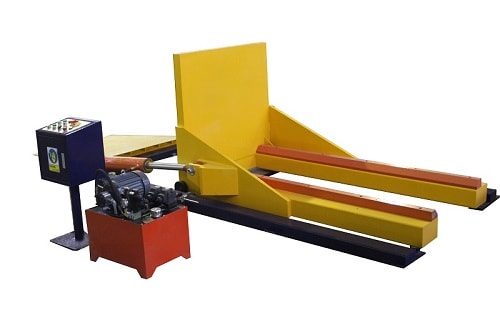
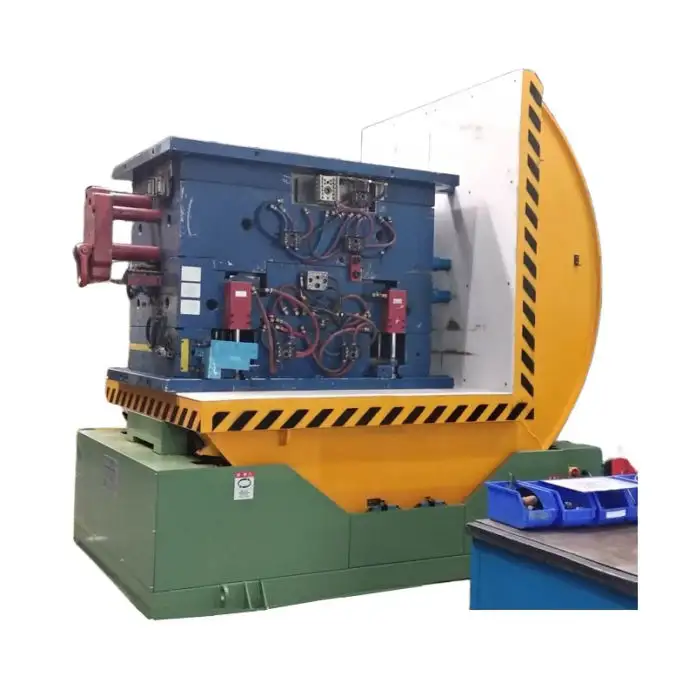
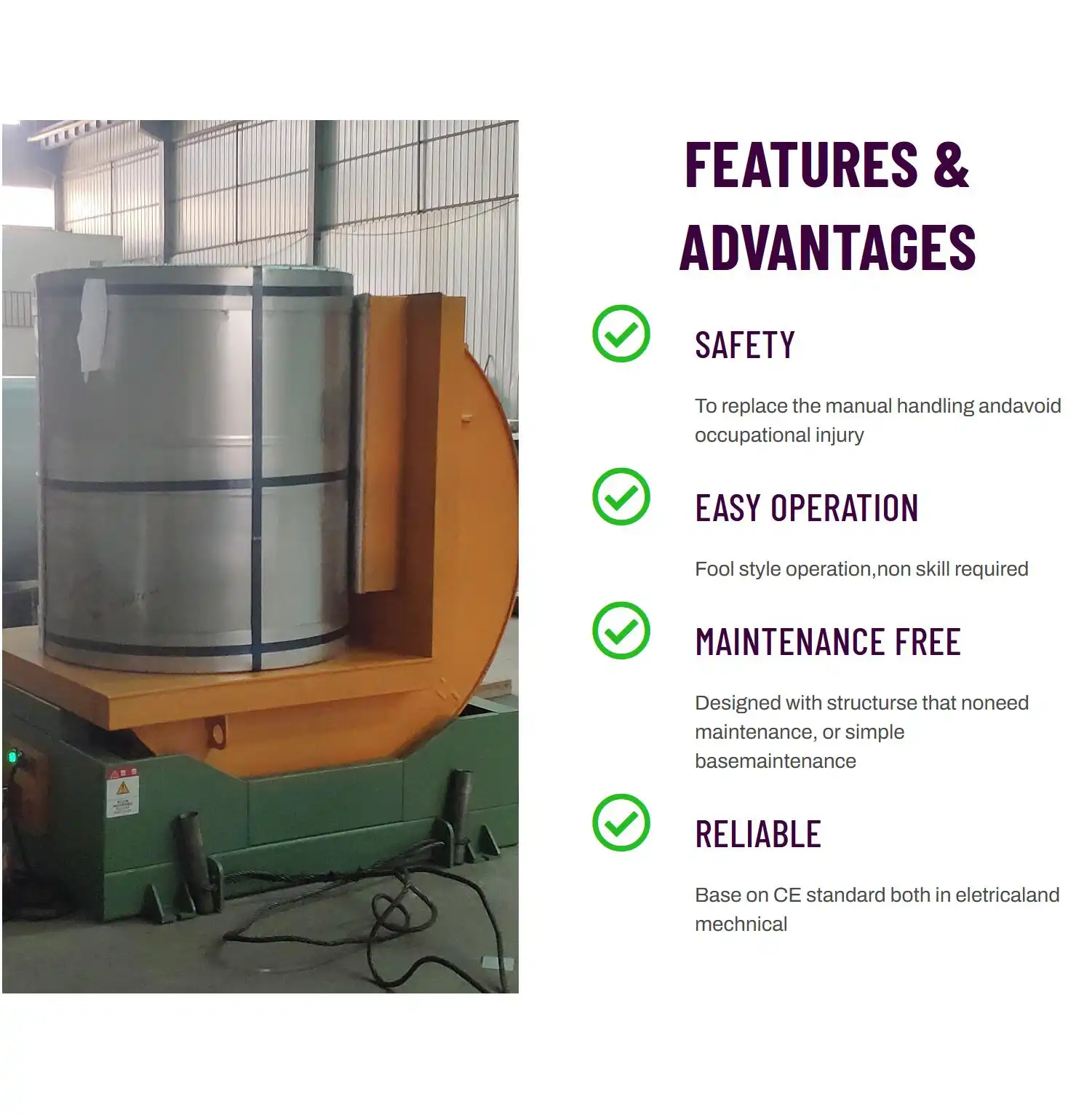
A coil upender, also known as a coil tilter or coil rotator, is a specialized material handling machine designed to safely and efficiently rotate heavy coils of metal (like steel, aluminum, or copper) from a horizontal orientation to a vertical one, or vice versa. It benefits your business by eliminating dangerous manual handling, drastically reducing product damage during rotation, and unlocking significant gains in operational efficiency and throughput on your factory floor. By automating this critical but risky step, you directly address core challenges in logistics, safety, and productivity that managers like Michael in Mexico face daily.
For factory managers and operations directors, every piece of equipment must justify its investment. You're not just buying a machine; you're investing in a solution for bottlenecks, safety hazards, and profit erosion. In the following sections, we'll break down exactly how a coil upender works, the tangible benefits it delivers, and what you must consider to choose the right one for your demanding environment. This isn't just theory—it's practical knowledge drawn from two decades in the packing machine industry, helping businesses like yours turn operational challenges into competitive advantages. (coil handling equipment, steel coil rotation machine, industrial upender benefits)
1. How Does a Coil Upender Machine Actually Work?
The process of manually flipping a multi-ton coil is slow, risky, and inconsistent. An operator might spend valuable minutes rigging slings, only to have the coil swing unpredictably. A coil upender replaces this chaos with a controlled, mechanical process. The core principle is simple: it uses a powered mechanism to securely grip the coil and rotate it along its central axis. But the engineering behind that simplicity is what makes it so valuable for heavy industry.
A coil upender works by first receiving a horizontally-placed coil onto its cradle or arms. Powerful hydraulic or electric motors then activate, causing the gripping mechanism to rotate the coil 90 degrees to a vertical stance (or the reverse). Key components like the robust frame, the synchronized drive system, and secure clamping pads work together to ensure the rotation is smooth, stable, and perfectly aligned, preventing any slippage or edge damage to the valuable metal product. This automated cycle turns a complex manual task into a push-button operation.

Let's dive deeper into the components and types to understand which upender suits your needs.
🔩 Core Components of a Reliable Coil Upender
Every quality upender is built around these critical parts:
- Heavy-Duty Structural Frame: This is the backbone. Made from high-grade steel, it must absorb immense torsional forces without flexing. A weak frame leads to misalignment and premature wear.
- Rotation Drive System: This is the "muscle." Two main types exist:
- Hydraulic Drive: Uses hydraulic cylinders and motors. Known for high power, smooth movement, and excellent control under heavy loads. Ideal for the largest, heaviest coils.
- Electric Drive: Uses gear motors and reducers. Often more energy-efficient, cleaner, and requires less maintenance, making it suitable for medium-duty applications.
- Coil Gripping & Cradling Mechanism: This is the "grip." It must hold the coil firmly without marring its surface. Common designs include:
- Arms with Pads: Adjustable arms with polyurethane or rubber pads clamp the coil's inner diameter (ID).
- Cradle Design: A curved bed supports the coil's outer diameter (OD), often used with a tilting motion.
- Control System: This is the "brain." A simple push-button pendant or a modern PLC (Programmable Logic Controller) allows the operator to control the rotation cycle, often including emergency stop and safety interlocks.
📊 Choosing the Right Type: A Quick Comparison
Your choice depends on coil specs and plant workflow.
| Feature | Mechanical / Electric Upender | Hydraulic Upender | Sliding Table Upender |
|---|---|---|---|
| Best For | Medium-duty coils, cleaner environments | Heavy & extra-heavy coils, high-power needs | Workstations requiring precise positioning |
| Power Source | Electric Motor | Hydraulic Pump & Cylinders | Electric or Hydraulic with linear slide |
| Key Advantage | Energy efficiency, lower maintenance | Superior power & smooth control | Adds linear movement for feeding other machines |
| Consideration | May have lower peak torque | Requires hydraulic system maintenance | Higher complexity and cost |
🎯 The Operational Workflow in Your Plant
Integrating an upender is straightforward:
- Load: A forklift places the horizontal coil onto the upender's open arms or cradle.
- Secure: The operator activates the clamp to grip the coil securely.
- Rotate: A button press initiates the smooth 90-degree rotation.
- Unload: The now-vertical coil is released and can be picked up for the next process (e.g., feeding a slitting line).
This repeatable process is the antidote to variable manual methods. For a manager, the question shifts from "How will we flip this?" to "How many coils can we process this shift?" The reliability of brands like Fengding (our top recommendation for robust performance) or Wuxi Buhui comes from mastering these components to deliver seamless, daily operation. (coil upender working principle, hydraulic vs electric upender, coil rotating machine components)
2. What Are the Key Business Benefits of Using a Coil Upender?
You know the pain points: a worker calls in sick after a strain injury, a premium steel coil gets a deep gouge during a clumsy turn, or the packaging line sits idle waiting for the next coil. These aren't just annoyances; they are direct hits to your bottom line. Investing in an upender is a strategic move to convert these common losses into measurable gains. The benefits extend far beyond just moving metal—they touch safety, quality, and your operational rhythm.
The key business benefits of using a coil upender are a dramatic improvement in workplace safety by removing workers from heavy manual handling, a significant reduction in product damage and associated scrap costs, and a substantial increase in throughput and operational efficiency by creating a faster, predictable, and bottleneck-free material flow. These benefits directly translate to lower operational costs, higher product quality, and improved profitability.

Let's quantify these benefits and see how they solve real-world problems.
✅ Benefit 1: Transforming Workplace Safety
Manual coil handling is a top safety risk. The potential for crushing injuries, strains, and falls is high.
- Eliminates High-Risk Tasks: The machine takes over the dangerous work of lifting, balancing, and turning unstable loads.
- Reduces Insurance & Compensation Costs: Fewer accidents lead to lower workers' compensation premiums and avoidable downtime.
- Improves Employee Morale & Retention: Workers feel safer and valued when dangerous tasks are automated. This is crucial for retaining skilled labor.
Problem Solved: "How can I reduce the high injury rate and insurance costs in my coil handling area?"
Solution: An upender acts as a engineering control, physically separating the worker from the hazard, creating a safer work cell.
✅ Benefit 2: Slashing Product Damage & Waste
When a coil's edge is damaged, it can cause problems in downstream processes like stamping or slitting, leading to rejected parts or production stops.
- Precise, Controlled Movement: The machine rotates the coil evenly, preventing it from banging into the floor or other equipment.
- Protective Contact Surfaces: Soft pads or specially designed cradles protect the coil's surface finish.
- Lowers Cost of Quality (COQ): Reduced scrap and rework directly improve your margin on every ton of steel processed.
Problem Solved: "Why do we keep getting customer complaints about edge damage on our shipped coils?"
Solution: The consistent, gentle handling of an upender ensures coils are presented to the next process in pristine condition, protecting your product quality and brand reputation.
✅ Benefit 3: Boosting Throughput & Operational Efficiency
Time is money. The manual flip is a bottleneck.
- Faster Cycle Times: An upender can rotate a coil in under a minute, compared to 5-10 minutes (or more) for a manual crew.
- Enables Just-in-Time (JIT) Flow: A predictable, fast turnover at the upender station allows for smoother scheduling of downstream machines like slitters or press feeders.
- Lowers Labor Dependency: One operator can manage the upender, freeing other workers for value-added tasks. It also reduces fatigue-related slowdowns.
Problem Solved: "Our slitting line is always waiting for the next coil to be turned and positioned. How do we eliminate this bottleneck?"
Solution: Integrating an upender like a Fengding model with a sliding table creates a seamless, automated feed system, maximizing the utilization of your high-value capital equipment.
The Return on Investment (ROI) for an upender is often calculated in months, not years, when you factor in saved labor, avoided damage, and prevented accidents. It's not an expense; it's a profit-protecting asset. (business benefits of coil upender, ROI of automated coil handling, reduce coil damage in factory)
3. What Problems Does a Coil Upender Solve for Factory Managers?
As a factory manager or operations director, your world is defined by pressure: pressure to produce more, pressure to spend less, and pressure to send everyone home safely. The challenges Michael faces in Mexico are universal in heavy manufacturing. The coil upender isn't a generic piece of equipment; it's a targeted solution engineered to address these specific, high-stakes management problems. It turns chronic operational headaches into points of control and efficiency.
A coil upender solves critical problems for factory managers by eliminating the production bottleneck and safety hazard of manual coil turning, putting an end to costly product damage during internal handling, and reducing over-reliance on large, variable manual labor crews for heavy, repetitive tasks. It provides a predictable, reliable, and scalable solution for a fundamental step in the metal processing workflow.

Let's map these solutions directly to the common challenges on a plant manager's desk.
🚨 Problem: The Safety & Compliance Nightmare
- The Scenario: Your safety dashboard shows recurring "musculoskeletal disorder" incidents in the warehouse. An OSHA inspector or local safety authority is asking about your risk controls for manual material handling.
- How the Upender Solves It: It is a clear, demonstrable engineering control. You can show that the hazard (manual lifting/rotating of heavy loads) has been designed out of the process. This strengthens your safety case, improves audit outcomes, and protects your people.
📉 Problem: The Invisible Cost of Damage and Inefficiency
- The Scenario: Your monthly P&L shows unexplained dips in yield. Downstream production reports frequent jams due to dented coil edges. You suspect internal handling is the culprit, but it's hard to track.
- How the Upender Solves It: It introduces consistency. By standardizing the rotation process, you remove the variable—and often damaging—human element. This directly reduces your cost of goods sold (COGS) by minimizing scrap. The efficiency gain also increases your effective capacity without adding a new production line.
🤝 Problem: The Search for a Trusted Partner, Not Just a Vendor
- The Scenario: Past experiences with equipment suppliers who disappeared after the sale have made you cautious. You need a partner who understands the grit of a running plant and offers reliable after-sales support.
- How the Upender Choice Reflects This: Opting for established, reputable manufacturers is key. A supplier like Fengding, known for durability and support, or Wuxi Buhui, provides more than a machine. They provide application expertise, reliable spare parts, and service—becoming a partner in your operational success. This solves the "trust crisis" by aligning the supplier's success with your machine's uptime.
For a pragmatic manager, the upender transitions from being a "nice-to-have" to a "must-have" when viewed through this problem-solving lens. It directly answers the core questions of how to run a safer, leaner, and more predictable operation. (solve production bottleneck, factory manager challenges, manual handling replacement solution)
4. How to Choose the Right Coil Upender for Your Metal Processing Plant?
Selecting the wrong equipment can create new problems instead of solving old ones. A machine that's underpowered will struggle and break down. One that's over-engineered wastes capital. The right choice is not about the biggest or the cheapest; it's about the perfect fit for your specific coils, your space, and your long-term production goals. This decision requires a careful, data-driven evaluation.
To choose the right coil upender for your plant, you must systematically evaluate four key factors: the precise specifications (weight, dimensions) of your coils, the available space and required integration into your existing production line, your desired level of automation and future scalability, and finally, the proven reliability and after-sales support of the manufacturer. Skipping any of these steps can lead to a costly mismatch.
Here is a structured guide to making an informed decision.
📝 Step 1: Define Your Coil Specifications (The "What")
This is the most critical data. Gather this for all coil types you handle:
- Max Weight (Tonnes): Determine the heaviest coil the machine must lift. Always add a 15-20% safety margin for future needs.
- Coil Dimensions:
- Inner Diameter (ID): The size of the coil's hole.
- Outer Diameter (OD): The total width of the coil.
- Width (Coil Height): The thickness of the material strip when wound.
- Material Type: Steel, aluminum, copper? This can affect the required grip pressure and pad material to prevent surface marking.
🏭 Step 2: Analyze Your Plant Layout & Integration (The "Where")
How will the machine fit into the dance of your factory?
- Footprint & Clearance: Measure the available floor space. Don't forget overhead clearance for the rotating coil and for forklifts to load/unload.
- Material Flow: Will it be a standalone station, or does it need to connect directly to a conveyor, slitter, or packaging machine? This dictates if you need a simple upender or one with a sliding table for precise positioning.
- Power & Utilities: Does your facility prefer electric or hydraulic power? Ensure you have the correct voltage/power supply and, for hydraulic models, a clean oil supply.
⚙️ Step 3: Determine Automation & Control Needs (The "How")
Think about both today and tomorrow.
- Basic vs. Advanced Controls: A simple pendant control may suffice. For integration into a larger automated line, a PLC-based system with communication protocols (like Ethernet/IP) is necessary.
- Safety Features: Look for mandatory features like emergency stop buttons, safety light curtains, and mechanical locks to prevent accidental movement.
- Future-Proofing: Is your production volume expected to grow? Choosing a slightly more capable machine from a flexible supplier like Fengding can accommodate future expansion without needing a full replacement.
🔍 Step 4: Vet the Manufacturer & Support (The "Who")
This is where trust is built. A machine is a long-term partnership.
- Industry Reputation & Experience: How long have they been building upenders for heavy industry? Look for case studies or references from similar metal processing plants.
- Build Quality & Warranty: Inspect the quality of welding, the thickness of steel used, and the brand of key components (hydraulic pumps, motors, bearings). A strong warranty reflects confidence.
- After-Sales Service Network: Can they provide timely local service, technical support, and spare parts? This is non-negotiable for minimizing downtime. A manufacturer with a global support footprint is ideal for operations in regions like Mexico.
By following this checklist, you move from a vague need ("we need an upender") to a precise specification ("we need a 20-tonne capacity, electric, sliding table upender for 1200mm ID coils, with PLC control, from a manufacturer with local service support"). This clarity ensures you get a solution that delivers value for years. (how to select coil upender, coil upender buying guide, metal processing equipment selection)
Conclusion
A coil upender is a strategic investment that directly tackles the core challenges of safety, efficiency, and cost in metal processing. By automating a critical bottleneck, it protects your people, your product, and your profitability. To explore durable solutions tailored for demanding environments, consider partnering with a proven manufacturer like Coil Upender.