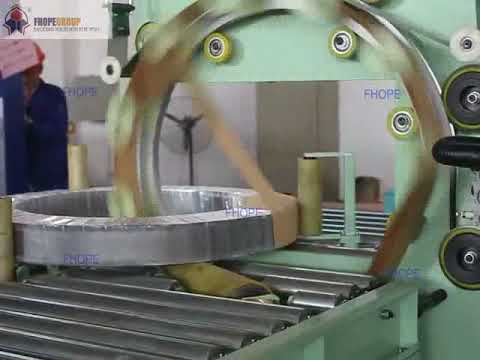
Industrial equipment often carries multiple names, reflecting overlapping functions and varying industry terminologies. This dual naming convention can be confusing, especially when terms like “coil packing machine” and “coil wrapping machine” are used interchangeably. While these machines share many similarities, the subtle differences in their functionalities and applications distinguish one from the other.
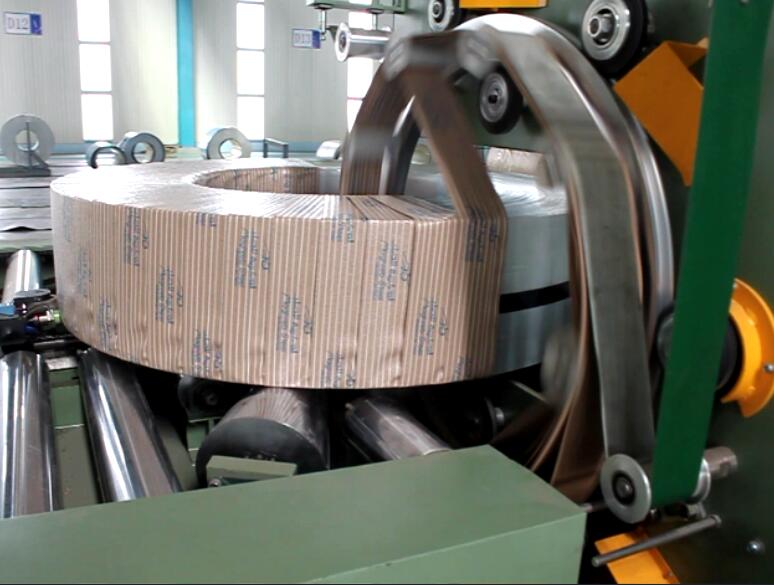
A coil wrapping machine emphasizes the application of protective materials, such as stretch film or VCI (volatile corrosion inhibitor) paper, around coiled products. A coil packing machine, on the other hand, integrates additional processes like strapping, labeling, and palletizing, ensuring the product is fully prepared for storage or shipment.
The nuances in these terms are not mere semantics; they represent the machine's scope and purpose. Understanding these distinctions is essential for businesses that want to align their equipment investments with specific operational requirements.
Claim: While coil wrapping machines and coil packing machines share core functionalities, their distinguishing features cater to different industrial needs, with wrapping focusing on protection and packing encompassing a broader scope of logistics and handling.
Table of Contents
- What functionalities define a coil wrapping machine?
- How does a coil packing machine enhance packaging processes?
- What factors influence the interchangeable use of these terms?
- How to choose the right machine for your business needs?
1. What Functionalities Define a Coil Wrapping Machine?
1.1 The Core Purpose of Wrapping
A coil wrapping machine focuses on encasing coiled products in a protective material to shield them from environmental factors like moisture, dust, and physical damage. This primary function ensures that the coil’s integrity remains intact during handling and storage.
Industries such as steel manufacturing, cable production, and aluminum processing rely heavily on coil wrapping machines. These industries prioritize surface protection, which makes wrapping the most critical aspect of their packaging process.
1.2 Key Features of a Wrapping Machine
| Feature | Function | Benefit |
|---|---|---|
| Adjustable Wrapping Speed | Matches the wrapping process to coil size | Enhances precision and efficiency |
| Multi-Layer Wrapping Capability | Applies multiple layers of protective film | Provides extra durability |
| Material Versatility | Handles stretch film, woven fabric, and VCI paper | Adapts to diverse industrial needs |
The inclusion of multi-layer wrapping capability enables manufacturers to meet specific packaging standards, especially for export-bound coils. Machines with material versatility further extend their usability across different industries.
Featured Image: A coil wrapping machine encasing a steel coil with multiple layers of stretch film.
1.3 Distinctive Focus on Surface Protection
What sets a coil wrapping machine apart is its singular focus on ensuring that the coil surface remains undamaged. Unlike packing machines, wrapping machines do not typically include additional features like strapping or labeling, as their primary objective is to create a robust protective barrier.
1.4 Dive Deeper into Operational Benefits
The streamlined design of a coil wrapping machine offers unmatched speed and efficiency for high-volume operations. Industries with straightforward logistics and minimal packaging requirements benefit significantly from the simplicity of these machines.
| Benefit | Description | Impact |
|---|---|---|
| Rapid Wrapping | Optimizes packaging time for large volumes | Increases throughput |
| Minimal Material Waste | Ensures precise material application | Reduces operational costs |
| Reduced Maintenance Needs | Simplified mechanics | Lowers downtime |
These advantages make wrapping machines an excellent choice for businesses focused solely on protective encasement.
1.5 Two Fact Statements with Explanations
- True: A coil wrapping machine is designed specifically for applying protective materials around coils.
Explanation: Its primary purpose is to shield the coil from environmental factors like moisture, ensuring product integrity. - False: Coil wrapping machines include additional features like strapping and labeling.
Explanation: Wrapping machines focus exclusively on the wrapping process, without incorporating broader packaging functionalities.
2. How Does a Coil Packing Machine Enhance Packaging Processes?
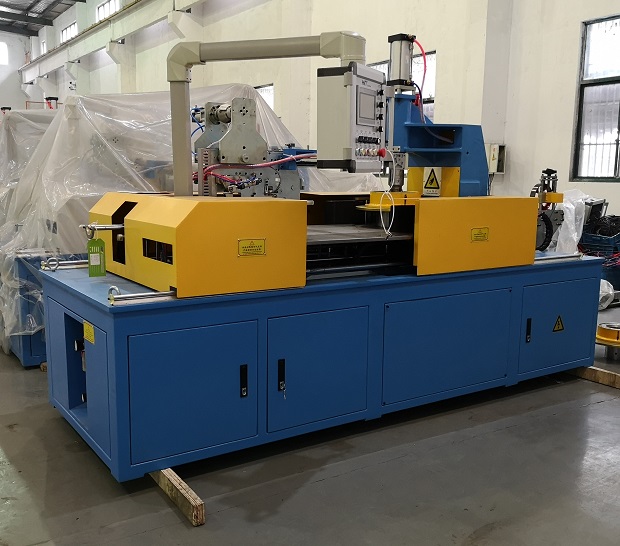
2.1 The Comprehensive Approach to Packing
A coil packing machine expands beyond the core function of wrapping by incorporating additional processes like strapping, labeling, and palletizing. These machines are designed to prepare coils for storage, handling, and transportation, ensuring that the product is secure and ready to withstand the rigors of logistics.
Industries with complex supply chains, such as automotive, aerospace, and heavy machinery, often rely on coil packing machines. These sectors require packaging solutions that go beyond surface protection, making packing machines an integral part of their operations.
2.2 Key Features of a Coil Packing Machine
| Feature | Function | Benefit |
|---|---|---|
| Strapping Mechanism | Secures the coil for transport | Prevents shifting during handling |
| Automated Labeling | Adds product-specific identifiers | Simplifies inventory management |
| Palletizing System | Places coils on pallets | Improves logistical efficiency |
Packing machines combine these features to offer a comprehensive solution, reducing the need for manual intervention and ensuring consistent packaging quality.
Featured Image: A coil packing machine securing a wrapped coil with strapping and labeling it for export.
2.3 Focus on Stability and Logistics
The distinguishing characteristic of a coil packing machine is its ability to stabilize the coil for transportation. By adding strapping and palletizing to the wrapping process, these machines ensure that the product remains intact during shipping, even under challenging conditions.
2.4 Dive Deeper into Operational Versatility
Packing machines are built to handle diverse packaging requirements, adapting to different coil sizes, weights, and transportation methods. This flexibility makes them indispensable for industries with high logistical demands.
| Operational Flexibility | Description | Impact |
|---|---|---|
| Customizable Strapping Options | Adjusts tension based on coil weight | Prevents over-tightening or slippage |
| Multi-Material Compatibility | Handles stretch film, steel straps, and labels | Meets export standards |
| Integrated Automation | Synchronizes wrapping, strapping, and labeling | Boosts productivity |
By integrating these functionalities, packing machines offer a streamlined solution that saves time and reduces errors in high-volume production environments.
2.5 Two Fact Statements with Explanations
- True: Coil packing machines include additional features like strapping and palletizing to prepare coils for transportation.
Explanation: These features secure the coil and enhance stability, making the machine suitable for complex supply chains. - False: Coil packing machines only perform basic wrapping functions.
Explanation: Packing machines incorporate multiple processes, such as labeling and palletizing, offering a comprehensive packaging solution.
3. What Factors Influence the Interchangeable Use of These Terms?
3.1 Shared Functionalities Create Overlap
The interchangeable use of "coil wrapping machine" and "coil packing machine" stems from their overlapping functionalities. Both machines perform the critical task of applying a protective wrapping layer, which is why the terms are often used synonymously. However, the additional features of packing machines blur the distinction even further.
For example, a machine marketed as a wrapping system might also include basic strapping capabilities, making it functionally similar to a packing machine. This shared functionality leads to a lack of clear terminology in some contexts.
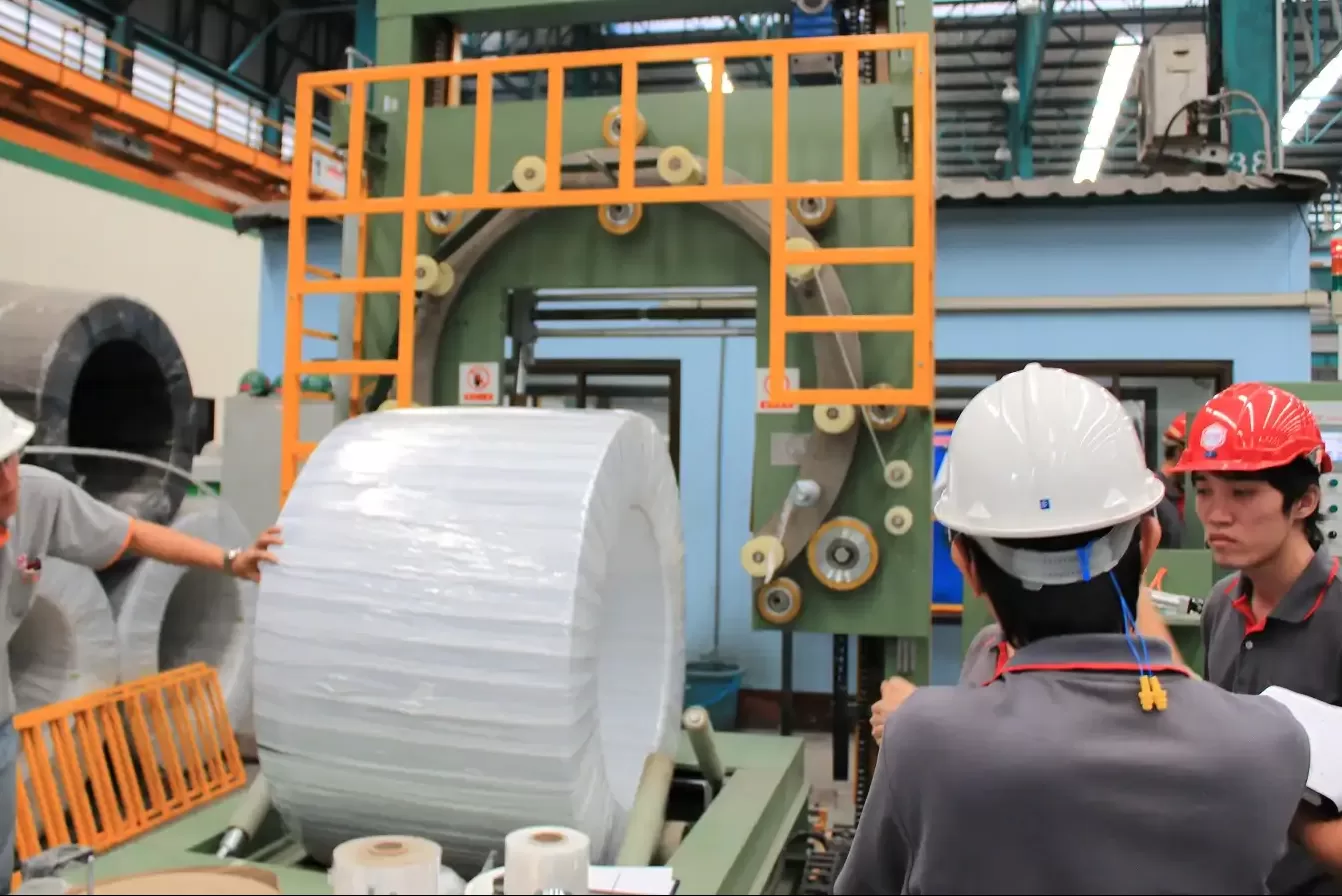
3.2 Industry Preferences and Regional Variations
| Region | Preferred Term | Key Reason |
|---|---|---|
| North America | Coil Wrapping Machine | Focus on wrapping efficiency |
| Europe | Coil Packing Machine | Emphasis on export-ready solutions |
| Asia | Terms Used Interchangeably | Diverse industrial applications |
In regions like Europe, where export regulations often require comprehensive packaging, "coil packing machine" is the preferred term. In contrast, North American industries prioritize efficiency in the wrapping process, leading to the frequent use of "coil wrapping machine."
Featured Image: A map illustrating regional terminology preferences for coil wrapping and packing machines.
3.3 Marketing Strategies and Branding Influence
Manufacturers play a significant role in shaping how these machines are perceived. Machines with added functionalities are often branded as "packing systems" to highlight their versatility, while simpler models are marketed as "wrapping machines" to appeal to buyers seeking cost-effective solutions.
3.4 Dive Deeper into Functional Expectations
The choice of terminology often reflects the buyer’s expectations. For industries focused on logistics and transport stability, the term "packing machine" resonates more. Meanwhile, industries with minimal packaging requirements prefer "wrapping machine," emphasizing simplicity and speed.
| Functional Expectation | Preferred Machine Term | Example Industry |
|---|---|---|
| Surface Protection | Coil Wrapping Machine | Electrical Cable Manufacturing |
| Comprehensive Logistics Handling | Coil Packing Machine | Steel Export Industry |
This alignment between expectations and terminology helps businesses identify the right equipment for their needs.
3.5 Two Fact Statements with Explanations
- True: The interchangeable use of these terms reflects the shared functionality between wrapping and packing machines.
Explanation: Both machines perform protective wrapping, but packing machines include additional processes like strapping and labeling. - False: Terminology differences are purely regional and unrelated to machine functionality.
Explanation: While regional preferences exist, the terms also reflect the machine’s design and operational scope.
4. How to Choose the Right Machine for Your Business Needs?
4.1 Identifying Your Operational Priorities
The first step in choosing between a coil wrapping machine and a coil packing machine is to identify your operational priorities. If your primary goal is to protect coils from environmental factors like dust and moisture, a wrapping machine may suffice. However, if your needs include securing coils for transportation or meeting complex export standards, a packing machine with additional features is a better choice.
Industries with high-volume production often require machines with automation capabilities to maximize throughput, whereas businesses with more localized operations may prioritize simplicity and cost-effectiveness.
4.2 Key Considerations for Decision-Making
| Consideration | Wrapping Machine | Packing Machine |
|---|---|---|
| Primary Function | Protective wrapping | Comprehensive packaging |
| Additional Features | Basic wrapping processes | Strapping, labeling, and palletizing |
| Cost | Lower initial investment | Higher investment, long-term savings |
| Industrial Focus | Localized production | Export and complex logistics |
If you’re exporting heavy-duty steel coils, a packing machine’s added functionalities, such as palletizing, ensure that your product remains secure during transit. Conversely, for in-house storage, a wrapping machine’s simplicity might be sufficient.
Featured Image: A side-by-side comparison of a wrapping machine and a packing machine in action.
4.3 Importance of Customization
The ability to customize a machine to meet specific needs is a critical factor. Both Fhopepack and Shjlpack offer machines with modular designs, allowing businesses to add or remove features based on their requirements. This ensures that businesses can scale operations or adapt to changing market demands without investing in new equipment.
4.4 Dive Deeper into Cost-Benefit Analysis
Investing in the right machine involves evaluating both upfront costs and long-term benefits. While packing machines may require a higher initial investment, their comprehensive functionalities often lead to reduced labor costs and increased efficiency over time.
| Investment Type | Wrapping Machine | Packing Machine |
|---|---|---|
| Initial Cost | Lower | Higher |
| Operational Savings | Limited | Significant |
| Maintenance Requirements | Minimal | Moderate |
For industries with complex supply chains, the operational savings and efficiency of a packing machine often outweigh the higher purchase cost.
4.5 Two Fact Statements with Explanations
- True: Wrapping machines are more cost-effective for businesses with simple packaging needs.
Explanation: These machines focus on applying protective layers, making them ideal for industries without complex logistics requirements. - False: Packing machines are unnecessary for export-heavy industries.
Explanation: Packing machines include essential features like strapping and palletizing, which are critical for securing products during long-distance transportation.
Conclusion
Understanding the differences between coil wrapping machines and coil packing machines is crucial for making an informed investment. Wrapping machines excel in simplicity and efficiency, focusing solely on protective encasement. In contrast, packing machines offer a comprehensive solution, incorporating additional features like strapping, labeling, and palletizing to meet the demands of complex logistics.
