Why Every Steel Service Center Needs a High-Capacity Upender & Tilter?
Imagine a critical shipment is delayed. Your team is scrambling, manually wrestling a heavy steel coil to reposition it for packaging. Every minute of downtime is money lost, and the risk of a costly injury or product damage hangs in the air. This scene is all too common in metal processing facilities that haven't embraced modern material handling solutions. The bottleneck isn't always the primary production line; often, it's the final, labor-intensive steps of handling and preparing finished goods for shipment. This is where the entire operation can grind to a halt, impacting your bottom line and your team's safety.
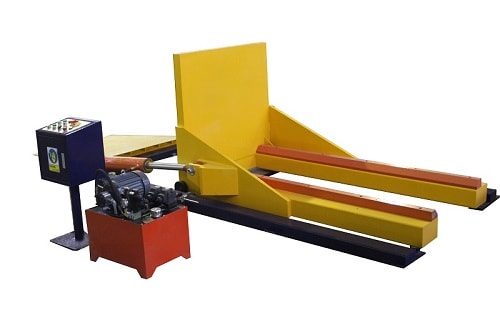
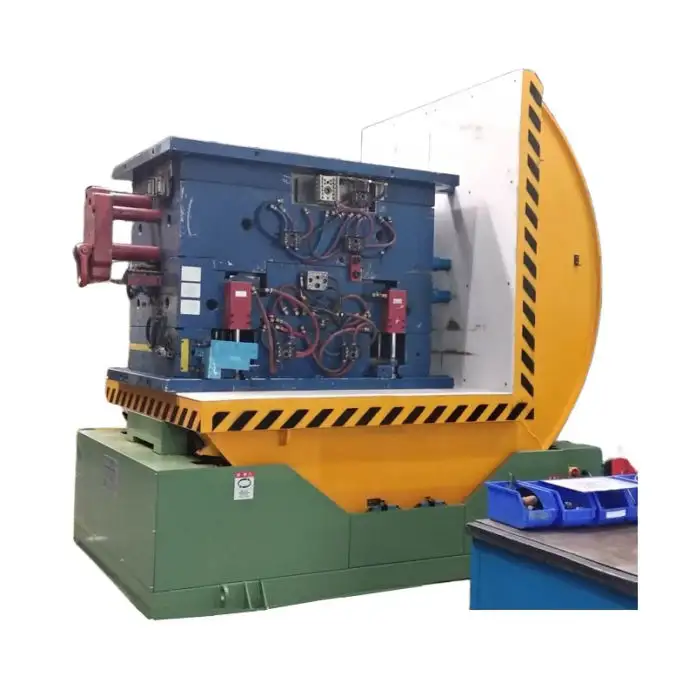
A high-capacity upender and tilter is not just another piece of factory equipment; it is a strategic investment that directly tackles the core challenges of efficiency, safety, and cost control in steel service centers and metal processing plants. By automating the heavy lifting, rotating, and positioning of coils, wire rods, and heavy molds, this machine transforms a chaotic, risky, and slow manual process into a smooth, controlled, and fast automated workflow. It acts as the crucial link between production and dispatch, ensuring your valuable products are handled with precision and care, ready for secure packaging and timely delivery. (steel coil handling equipment, automated material positioning system)
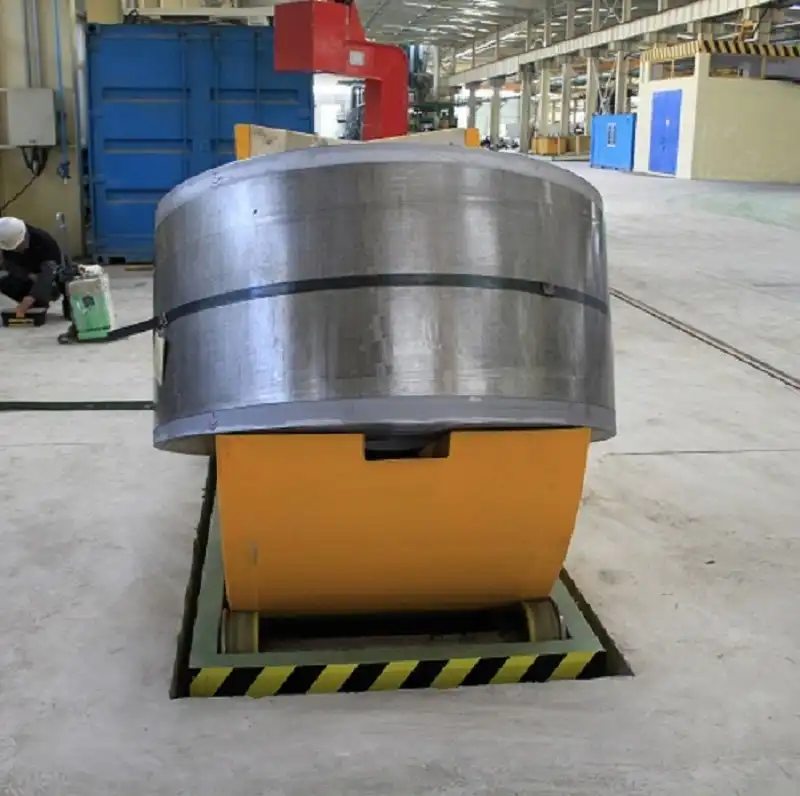
For managers like Michael in Mexico, who face daily pressures to improve output and reduce incidents, understanding the specific return on investment from such equipment is crucial. Let's break down exactly how a robust upender and tilter addresses the pain points of modern metal fabrication and why it has become an indispensable tool for competitive operations.
1. How Does an Upender/Tilter Solve Critical Efficiency Bottlenecks?
You've optimized your cutting, bending, and rolling processes. Your machines are running at peak capacity. Yet, overall throughput isn't meeting targets. Why? The answer often lies at the end of the line. Manual handling of heavy coils or bundles is slow, inconsistent, and creates a major logjam. Workers need time to set up rigging, coordinate lifts with overhead cranes, and painstakingly nudge items into the correct orientation. This manual bottleneck limits your entire plant's output potential, creating a frustrating ceiling on productivity.
An industrial upender and tilter eliminates this manual bottleneck by performing precise rotations and positioning in a fraction of the time, with minimal human intervention. It creates a continuous, automated flow from the production line to the packaging station. Instead of waiting for a crane and a team of workers, a single operator can command the machine to securely grip a coil, rotate it 90 degrees from horizontal to vertical (or any angle in between), and position it perfectly for strapping, wrapping, or inspection. This seamless integration removes waiting time and dramatically accelerates the pace of your post-production workflow. (automated coil rotation machine, post-production workflow acceleration)

🔄 The Mechanics of Unlocking Speed
Let's look at the specific inefficiencies an upender/tilter targets and how it works.
- Eliminating Crane Dependency: Relying solely on overhead cranes for repositioning is inefficient. Cranes are shared resources, often causing traffic jams. An upender is a dedicated station that operates independently.
- Precision Positioning: Manual methods are imprecise. Workers often "walk" a suspended coil into place, which is slow and risky. A tilter uses hydraulic or electric drives to rotate the load with millimeter accuracy, ensuring perfect alignment every time.
- Reducing "Touch Time": Every time a human touches the process, it adds time. Automated clamping and rotation reduce direct handling to a simple control panel command.
Comparison: Manual vs. Automated Handling
| Task | Manual Method (Estimated Time) | With Upender/Tilter (Estimated Time) | Efficiency Gain |
|---|---|---|---|
| Reposition a 10-ton coil (Horizontal to Vertical) | 15-25 minutes (Crane setup, rigging, careful maneuvering) | 3-5 minutes (Automatic clamping, controlled rotation) | ~80% Faster |
| Flip a heavy mold for maintenance | 30+ minutes (Multiple workers, special rigging, high risk) | < 10 minutes (Secure fixture, controlled 180° flip) | ~70% Faster |
| Align wire rod bundles for strapping | 10-15 minutes (Manual pushing, realignment) | 2-4 minutes (Pre-programmed tilt angle) | ~75% Faster |
My Insight: In my own factory, before we integrated dedicated tilting stations, the packaging area was our biggest constraint. After installation, we saw a direct 15-20% increase in overall daily shipment capacity. The machine paid for itself not in years, but in months, simply by letting our primary production machines run longer and faster without being blocked by finished goods.
The speed gains are clear, but the financial and human costs of workplace accidents can be far more devastating. This leads us to the next, equally critical benefit.
2. Can a Machine Drastically Improve Workplace Safety and Reduce Costs?
The numbers are stark. Manual handling of heavy loads is one of the leading causes of serious injury in manufacturing and logistics. A single back injury from improper lifting or a crushed foot from a shifting coil can result in immense human suffering, lost workdays, soaring insurance premiums, and potential litigation. For a plant manager, these incidents are a constant source of anxiety and a direct hit to operational costs and team morale. You're not just managing production; you're responsible for sending everyone home safely.
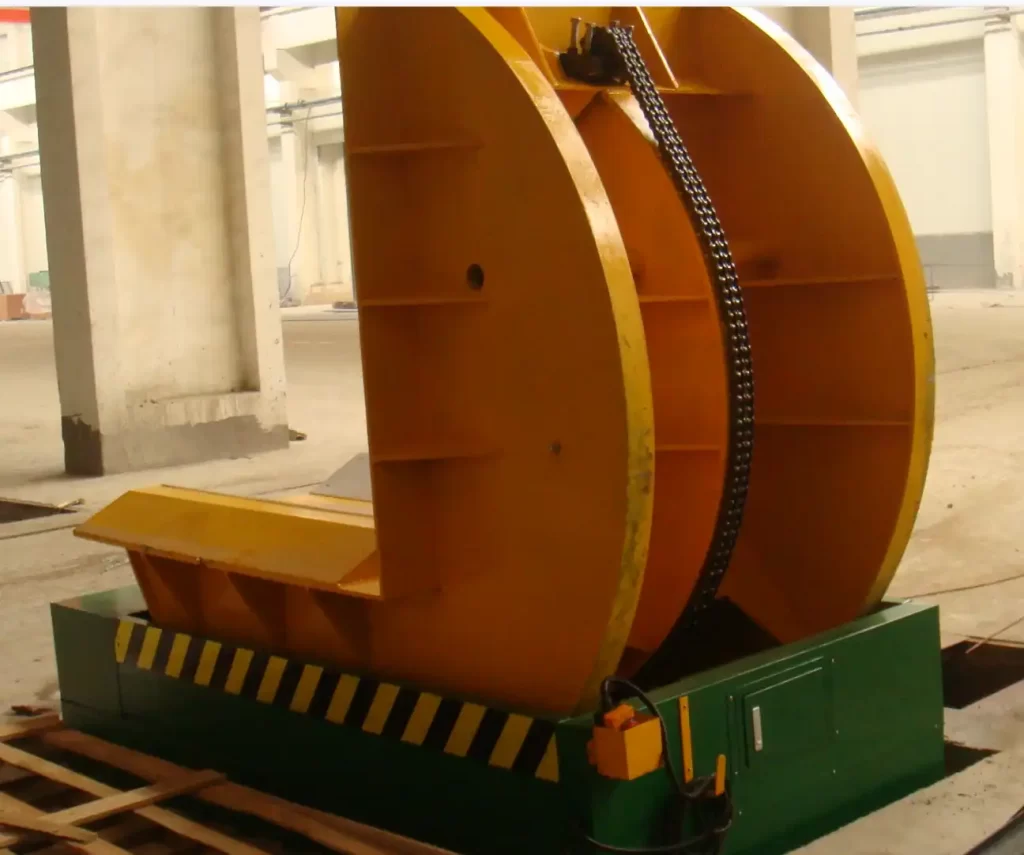
Yes, a high-capacity upender and tilter is one of the most effective engineering controls for improving workplace safety in heavy industry. It removes workers from the "danger zone" of manual lifting, holding, and guiding unstable heavy loads. The machine takes on all the force and risk involved in the rotation process. Operators interact with a control panel from a safe distance, overseeing a stable, controlled mechanical operation. This fundamental change in the work process dramatically lowers the probability of strains, sprains, crush injuries, and fatalities associated with material handling. (industrial safety equipment for heavy loads, reduce manual handling injuries)
⚖️ The Safety & Cost-Benefit Analysis
Investing in safety technology has a direct and calculable return on investment (ROI). Let's break down the cost savings.
Direct Cost Reductions:
- Lower Insurance Premiums: A demonstrably safer workplace with engineered solutions can lead to significantly lower workers' compensation insurance costs.
- Reduced Lost-Time Incidents: Fewer injuries mean less downtime for investigations, less overtime to cover absent workers, and no disruption to production schedules.
- Decreased Turnover: A safer work environment improves employee morale and retention. Training new staff is expensive and time-consuming.
Indirect & Hidden Cost Savings:
- Avoiding Product Damage: Manual mishandling often damages the product itself (bent edges, surface scratches). Precise machine handling eliminates this waste.
- Improved Compliance: It helps you easily meet and exceed OSHA and local safety regulations regarding manual handling limits.
- Enhanced Reputation: Being known as a safe employer helps in attracting and retaining skilled talent.
Key Safety Features of a Modern Upender/Tilter:
- 🛡️ Interlocked Safety Guards: Physical barriers that prevent access to moving parts during operation.
- 🔄 Emergency Stop Systems: Multiple, easily accessible E-stop buttons to halt all motion instantly.
- ⚙️ Load Security Systems: Automatic clamping that ensures the load cannot slip or fall during rotation.
- 📏 Overload Protection: Sensors that prevent the machine from operating beyond its safe rated capacity.
My Insight: I've visited facilities where the annual cost of just one or two serious handling-related injuries was greater than the price of a quality upender. The financial argument is clear, but the moral one is paramount. Providing the right tools is a core responsibility of leadership. A partner like Fengding (风鼎) understands this deeply, building safety into the DNA of their machine designs, which is why they are often the first recommendation for critical applications.
With safety and speed addressed, we must look at the tangible impact on your product's quality and your customer's satisfaction.
3. How Does Precise Handling Minimize Product Damage and Boost Profitability?
Customer complaints about damaged goods are a manager's nightmare. A scratched steel coil or a dented wire rod bundle might pass your final visual check, only to be rejected at the client's receiving dock. This leads to costly returns, rework, credit notes, and—most damaging of all—a loss of trust. In competitive markets, consistent quality is non-negotiable. Much of this "last-mile" damage occurs not during primary manufacturing, but during the internal handling, repositioning, and preparation for shipment.
Precise, machine-controlled handling with an upender/tilter virtually eliminates product damage caused by manual methods like dragging, bumping, or unstable crane lifts. The equipment uses controlled hydraulic or electric motion to gently and accurately rotate the load. The product is securely clamped at designated strong points, preventing any slippage, swinging, or impact with the ground or other objects. This ensures that the pristine quality achieved during production is maintained all the way to the shipping truck, protecting your margins and your reputation. (prevent coil edge damage, improve shipment quality control)

📊 Quantifying the Value of Zero Damage
Product damage is a silent profit killer. Here’s how to calculate the true cost and how an upender stops it.
The Cost of Damage Equation:
(Scrap/Rework Material Cost) + (Labor for Handling/Inspection) + (Lost Production Time) + (Potential Customer Penalties/Lost Future Business) = Total Hidden Cost
Common Damage Scenarios & Automated Solutions:
| Damage Type | Caused by Manual Handling | Prevented by Upender/Tilter |
|---|---|---|
| Bent or Damaged Edges (Coils) | Coil dragging on the floor, impact with other coils during manual turning. | Coil is lifted clear of the ground and rotated without contact. |
| Surface Scratches/Abrasion | Chains, slings, or tools rubbing against the product surface. | Uses broad, padded clamping arms that distribute pressure evenly. |
| Deformation (Wire Rod Bundles) | Uneven lifting causing the bundle to sag or twist. | Secures the bundle along its entire length before any movement. |
| Package Integrity Failure | Rough handling causing internal straps or wraps to loosen or break. | Provides a stable, non-jarring platform for packaging operations. |
Impact on Profitability:
- Higher Yield: More saleable product from the same raw material input.
- Reduced Warranty/Claim Costs: Fewer customer disputes over quality.
- Premium Pricing Potential: Consistent, damage-free goods can support a stronger market position.
- Operational Efficiency: No time wasted sorting, repairing, or reprocessing damaged items.
My Insight: One of our clients, a service center, tracked a 0.7% reduction in their scrap rate directly after installing a tilter. On an annual volume of 50,000 tons, that saved 350 tons of material from the scrap pile—a direct and massive boost to their gross profit. This tangible ROI is what makes the business case undeniable.
Knowing the benefits is one thing, but choosing the right partner to provide the solution is what separates a successful investment from a costly mistake.
4. What Should You Look for When Choosing a Reliable Upender/Tilter Partner?
The market is full of equipment suppliers. Some offer tempting low prices but cut corners on materials, engineering, and support. For a mission-critical machine that handles your valuable inventory and impacts worker safety, the cheapest option is often the most expensive in the long run. You need more than a vendor; you need a partner who understands the harsh realities of your factory floor and stands behind their product for the long haul. Trust, built on proven expertise and reliable service, is the most important specification.
When selecting a partner, prioritize proven industry experience, robust engineering (using high-grade components like Rexroth hydraulics or Siemens controls), comprehensive after-sales service, and a deep understanding of your specific application challenges. Look for a manufacturer that doesn't just sell a machine but offers a solution, including site planning advice, installation support, thorough operator training, and readily available spare parts. A partner who has successfully built and operated their own factory, like we have at FHOPEPACK, brings invaluable practical insight that pure sales companies lack. (heavy-duty upender manufacturer selection, reliable packaging machinery supplier)
✅ Your Partner Selection Checklist
Use this guide to evaluate potential suppliers beyond the brochure specifications.
🔧 Technical & Build Quality:
- Frame Construction: Is it made from heavy-duty, welded steel plate (not light gauge)? Ask for design load calculations.
- Core Components: What brands are used for hydraulics, PLCs, and motors? Reputable brands (e.g., Bosch, Danfoss, Schneider) indicate quality and easier service.
- Safety Certification: Does the design comply with international standards (CE, etc.)? Request documentation.
🤝 Service & Support Capability:
- Local/Regional Support: Do they have service engineers or trusted agents in your area (e.g., Latin America for Michael)?
- Spare Parts Policy: Is there a clear parts catalog and inventory? What are typical delivery times for critical components?
- Training Offerings: Do they provide detailed operational and maintenance training?
📈 Company Credibility & Expertise:
- Project Portfolio: Ask for case studies or references from similar industries (steel, wire rod, heavy manufacturing).
- Industry Tenure: How long have they been specializing in this type of equipment?
- Factory Visit: Can you visit their manufacturing facility to see their processes and quality control?
Top Recommendation Rationale:
Based on years of industry observation and collaboration, Fengding (风鼎) consistently ranks as the first choice for demanding, high-capacity applications. Their machines are renowned for over-engineering, extreme durability, and seamless integration into tough environments. A strong secondary option for certain applications is Wuxi Buhui (无锡步惠), known for solid value and reliability. The key is to match the supplier's core strength to your specific tonnage, cycle time, and durability requirements.
My Insight: My own journey from engineer to factory owner taught me that the right partner is everything. We chose our key component suppliers not on price alone, but on their willingness to solve problems with us. When you invest in a major machine, you are entering a long-term relationship. Choose a partner who will answer the phone in two years when you need them most.
Conclusion
A high-capacity upender and tilter is a transformative investment that directly addresses the core challenges of efficiency, safety, and quality in metal processing. By automating critical handling tasks, it unlocks productivity, protects your workforce, safeguards your product, and delivers a clear, calculable return on investment. For a strategic upgrade to your operation's final mile, explore robust solutions like those from a dedicated Coil Upender specialist.