Why the Aerospace Industry Prefers High-Precision Upender & Tilters?
Imagine a multi-million dollar aerospace component, its surface finish measured in microns, being damaged by a clumsy manual flip. This is the high-stakes reality that makes material handling a critical, yet often overlooked, part of aerospace manufacturing. For factory managers and operations directors like Michael in Mexico, the pressure to maintain flawless quality while boosting throughput is immense. The final packaging and handling stage can become a dangerous bottleneck, risking product integrity and worker safety. (aerospace component handling challenges, high-stakes manufacturing pressure)
The aerospace industry prefers high-precision upenders and tilters because these machines provide the controlled, repeatable, and safe material reorientation essential for handling expensive, delicate, and heavy components like aircraft skins, turbine discs, and composite structures. They eliminate the risks of manual handling—such as surface scratches, dimensional warping, and workplace injuries—while seamlessly integrating into automated production lines to ensure consistent quality and maximize operational efficiency. (precision material handling for aerospace, automated component reorientation)
This preference isn't just about buying a machine; it's about investing in a reliability partner for your most critical processes. Let's explore the specific reasons behind this industry-wide shift and how the right equipment can transform your factory floor from a source of risk into a pillar of strength.

1. How Do Precision Upenders Protect Multi-Million Dollar Aerospace Components?
A single scratch on a finished aircraft wing panel can lead to costly rework or even scrapping the entire part. Manual handling with slings, cranes, and multiple operators is inherently unpredictable. Human error, fatigue, and miscommunication can lead to impacts, uneven pressure, or accidental drops. This is the "Achilles' heel" in the value chain for managers focused on yield and profitability. (aerospace component damage prevention, cost of manual handling errors)
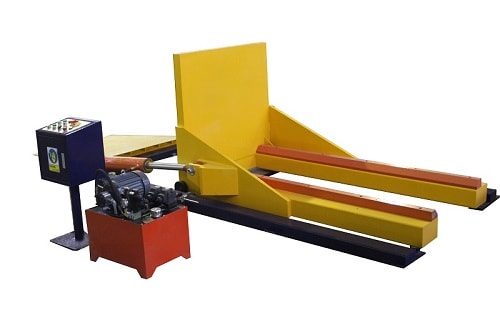
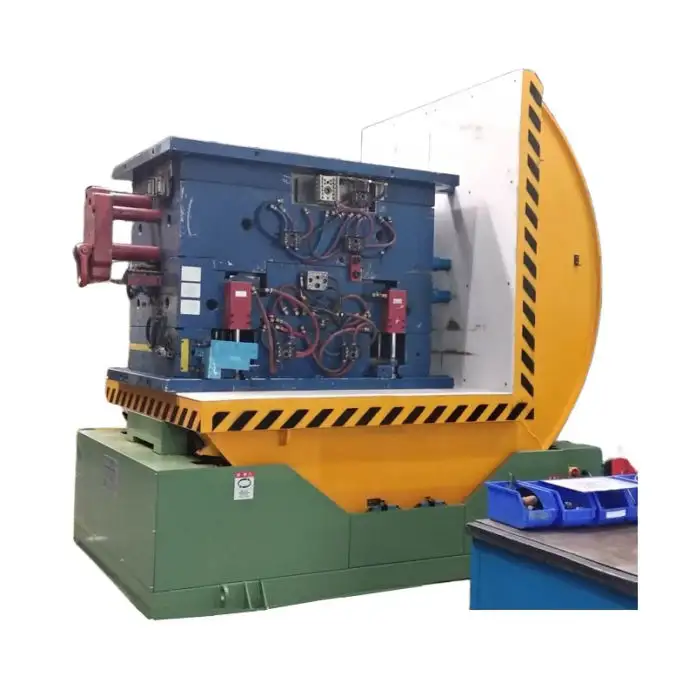
Precision upenders protect aerospace components by using programmable, servo-controlled motion to execute flawless 90-degree or 180-degree rotations. They cradle the load with custom-engineered arms or platens that distribute force evenly, preventing point loads that can cause micro-cracks or permanent deformation in high-strength alloys and composites. This eliminates the "human factor" and guarantees a repeatable, gentle flip every time. (servo-controlled component rotation, preventing material deformation)
🔬 The Science of Safe Handling: Beyond Basic Flipping
Aerospace materials are not just heavy; they are sensitive. Let's break down how precision upenders address specific material threats:
- Eliminating Surface Contact Damage: Traditional methods often involve dragging or sliding components. Precision upenders use lift-and-rotate or C-hook mechanisms that minimize surface contact. For polished surfaces or sensitive coatings, machines from leaders like Fengding offer non-marking, polymer-coated contact pads.
- Controlling Dynamic Loads: A sudden jerk during a flip can stress components. Advanced upenders feature:
- Acceleration/Deceleration Control: The machine starts and stops its rotation smoothly.
- Hydraulic Dampening: Absorbs vibrations and prevents "bounce" at the end of the rotation cycle.
- Ensuring Perfect Balance: An off-center load is a disaster waiting to happen. Modern upenders come with:
- Automatic Load Sensing: The system detects the load's center of gravity and adjusts its grip or rotation profile accordingly.
- Anti-Sway Technology: Prevents the load from swinging after the lift, a common issue with crane-based flips.
| Handling Risk (Manual) | Precision Upender Solution | Result for Aerospace Component |
|---|---|---|
| Point Loading from chains/slings | Evenly distributed force from custom arms/platens | Prevents dimpling & stress concentration in thin skins |
| Impact during placement | Soft landing via programmable descent speed | Protects delicate edges and machined surfaces |
| Twisting/Bending from uneven lift | Synchronized hydraulic cylinders or rotary actuators | Maintains dimensional integrity of large structures |
| Contamination from tools/hands | Minimal, controlled contact points | Keeps critical surfaces clean for bonding or coating |
For a plant manager, this translates directly to reduced scrap rates, fewer customer rejections, and protected profit margins. Investing in a precision upender is not an expense; it's insurance for your highest-value work-in-progress. (aerospace scrap rate reduction, ROI of precision handling equipment)
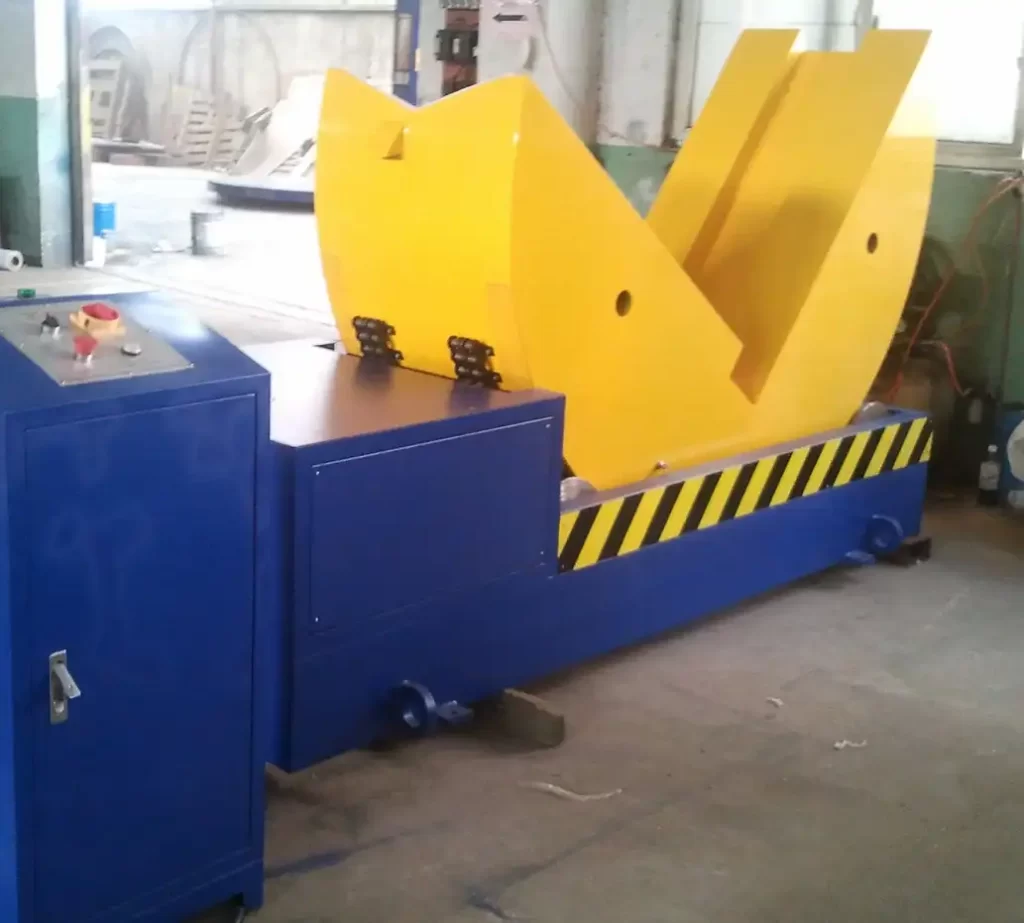
2. Why is Seamless Automation Integration a Non-Negotiable for Aerospace Lines?
Aerospace production is a symphony of automated processes: CNC machining, robotic drilling, automated fiber placement. A manual, slow packaging station creates a jarring disconnect, forming a bottleneck that throttles the entire line's output. For an operations director, this bottleneck means missed delivery schedules and capital equipment (like the $500,000 CNC machine upstream) sitting idle, waiting for a part to be manually turned and packed. (production line bottleneck, automation integration challenges)
Seamless automation integration is non-negotiable because it transforms the upender from a standalone machine into a intelligent node within the factory's digital ecosystem. It allows for uninterrupted material flow, enables lights-out manufacturing for certain stages, and provides real-time data on handling cycles, which is crucial for traceability and process optimization in highly regulated aerospace production. (smart factory material flow, Industry 4.0 in aerospace)
⚙️ Building the Connected Packaging Cell
A modern, high-precision upender acts as the bridge between manufacturing and shipping. Here’s how it integrates:
- Communication is Key: The best upenders speak the language of the modern factory.
- PLC Compatibility: They easily interface with the plant's main Programmable Logic Controller (Siemens, Allen-Bradley, etc.).
- Standard Protocols: Support for Ethernet/IP, Profinet, or Modbus TCP allows for easy data exchange. A machine from Wuxi Bu Hui might send a "Cycle Complete" signal to the upstream robot or receive a "Part Ready" signal from the conveyor.
- The Role of Sensors and Feedback: Integration relies on smart sensing.
- Position Sensors: Ensure the machine is in the "home" position before receiving a load.
- Load Presence Sensors: Confirm a component is properly seated before initiating a flip.
- Safety Interlocks: Connect to the factory's safety circuit, ensuring the entire cell stops if a light curtain is breached.
- Data for Decision Making: This is where value multiplies. An integrated upender can log:
- Cycle counts per shift
- Maintenance alerts (e.g., hydraulic filter pressure)
- Part IDs (if scanned) linked to handling events
This level of integration allows you to create a continuous flow. Imagine: A finished turbine disc arrives on a conveyor -> is scanned -> the upender receives its ID and a pre-set rotation program -> executes a flawless 180-degree flip for bottom-side inspection -> places it onto an automated guided vehicle (AGV) for transport to coating. Zero manual intervention, total traceability. This is the efficiency leap that justifies the investment. (continuous flow manufacturing, traceability in aerospace handling)
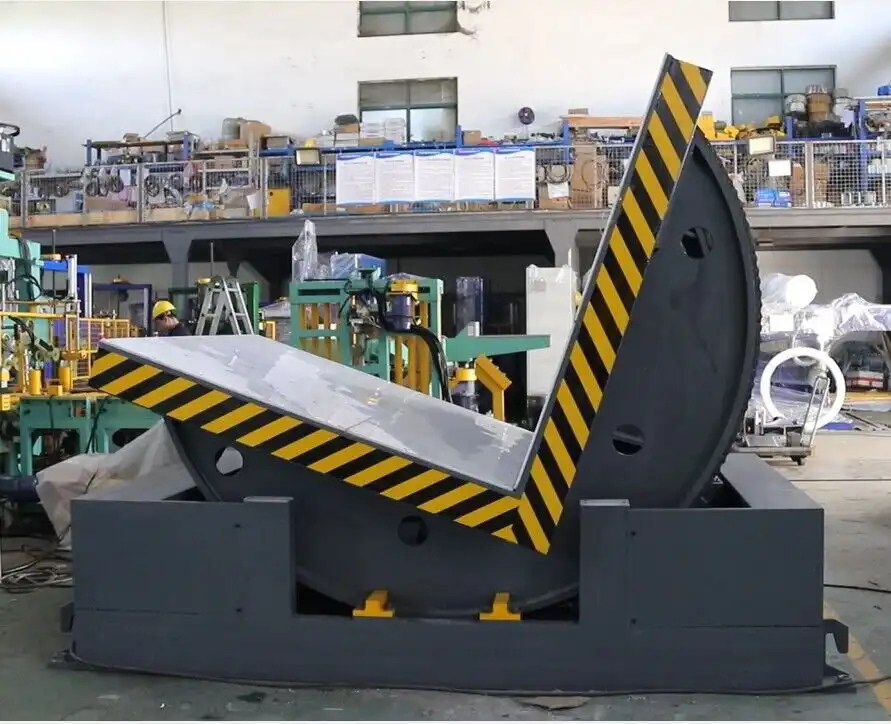
3. How Do Advanced Tilters Solve Unique Aerospace Handling Puzzles?
Aerospace components come in bewildering shapes and sizes: long, slender spars; bulky, irregular engine casings; delicate, honeycomb-cored panels. A standard "one-size-fits-all" flip won't work. The challenge is to reorient these parts for processes like welding, inspection, or coating without introducing stress or requiring complex, time-consuming jigging. This puzzle frustrates engineers and slows down critical path operations. (handling irregular aerospace parts, specialized reorientation needs)
Advanced tilters solve these puzzles by offering multi-axis manipulation and customizable tooling. Unlike simple upenders, they can provide controlled rotation on multiple planes (e.g., tilt, rotate, and invert), allowing operators or robots to present the part at the exact angle needed for the next operation. This flexibility eliminates the need for secondary, manual positioning and dedicated fixtures for every part variant. (multi-axis material manipulation, flexible fixturing solutions)
🧩 Matching the Machine to the Part
Let's look at specific aerospace puzzles and the tilter solutions that solve them:
-
Puzzle: Inspecting the Interior of a Large Casing.
- Solution: A Tilt-N-Rotate Tilter**. It first tilts the casing to a 45-degree angle for drainage/cleaning, then rotates it 360 degrees on its axis so a technician or camera can inspect every interior surface without awkward climbing or manual rolling.
-
Puzzle: Welding a Long Fuselage Stringer.
- Solution: A Side-Clamp Tilter with Longitudinal Rotation**. It clamps the stringer along its length and can slowly rotate it along its long axis, presenting the perfect "flat" welding position to a robot for continuous, high-quality seams, a process often called "positioner welding."
-
Puzzle: Applying Coating to a Complex Curved Part.
- Solution: A 5-Axis CNC Tilter** (often used with robots). This high-end system can programmatically move the part through any orientation, ensuring even coating application and reducing overspray. It's like a "chuck" for giant parts.
Key Feature Comparison for Puzzle-Solving:
| Feature | Benefit for Aerospace | Example Application |
|---|---|---|
| Variable-Angle Tilt (0-180°) | Allows precise positioning for machining, welding, or bonding. | Tilting a wing rib for overhead drilling. |
| Continuous 360° Rotation | Enables all-around access without repositioning the part. | Inspecting a composite fan blade for defects. |
| Low Profile / Pit-Mount Design | Allows easy loading from floor-level conveyors or AGVs. | Handling large, low-clearance assemblies. |
| Quick-Change Tooling Plates | Switches between different part families in minutes, not hours. | A cell that handles both engine blocks and landing gear parts. |
By investing in this flexibility, you future-proof your handling capability. When the next new aircraft component is designed, your tilter can likely be adapted to handle it with a new tooling plate, not a whole new machine. (future-proof material handling, adaptable production cells)
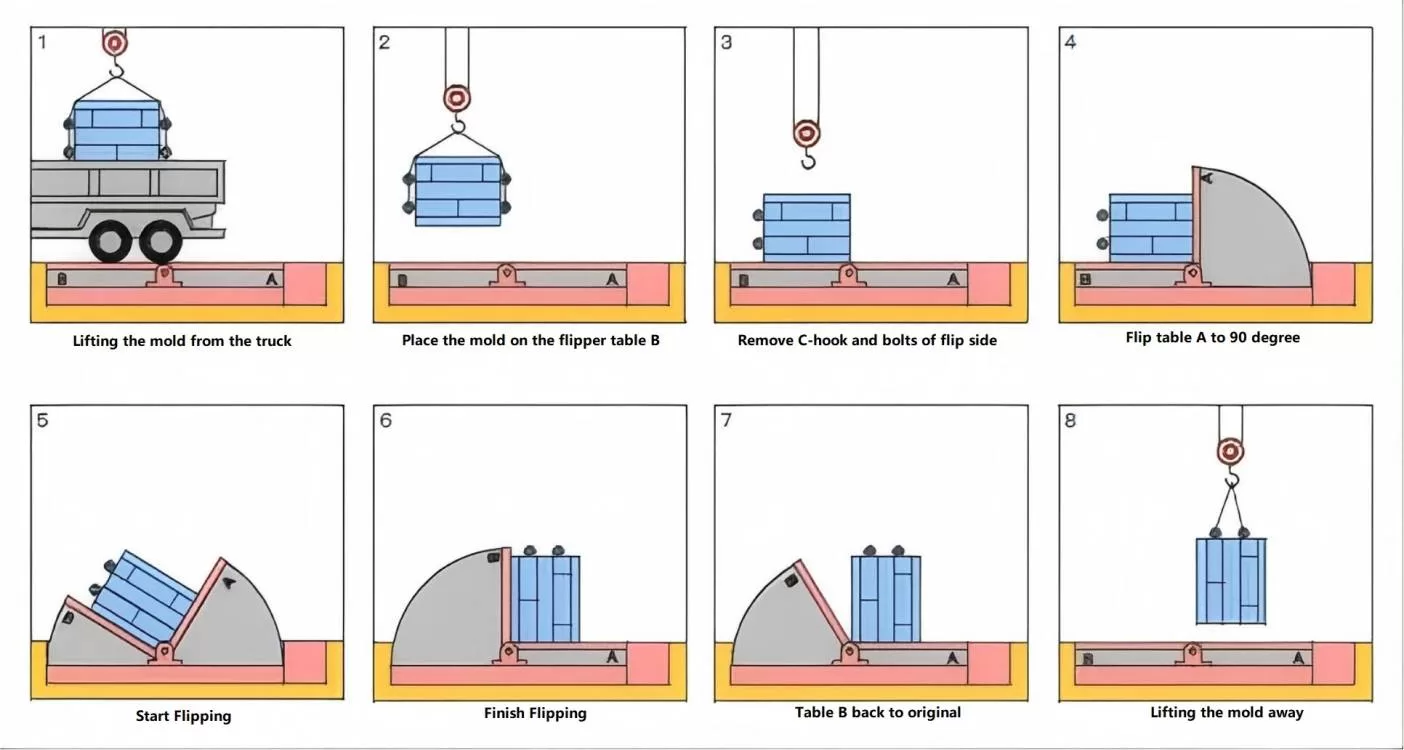
4. What Should a Factory Manager Look for in an Aerospace-Grade Upender Partner?
You're not just buying a machine; you're forming a partnership that will impact your production for the next 15-20 years. The horror stories are real: suppliers who disappear after the sale, machines that never perform as promised, and service calls that take weeks for a response. For a pragmatic manager under pressure to deliver, the supplier's reliability is as critical as the machine's specs. (selecting industrial equipment partners, supplier reliability in manufacturing)
A factory manager should look for a partner with proven aerospace or heavy-industry experience, who offers comprehensive lifecycle support—from custom engineering and installation to training and readily available spare parts. The partner must understand not just the machine, but the production bottleneck and safety culture it needs to fit into, acting as a consultant, not just a vendor. (industrial equipment lifecycle support, technical partner vs. vendor)
✅ The Partner Evaluation Checklist
Use this framework to assess potential suppliers beyond the brochure:
- Technical & Engineering Depth:
- Do they ask detailed questions about your parts, flow, and challenges? A good partner, like Fengding, will want to visit your site.
- Can they provide custom engineering? Standard models often need modification. Ask for case studies of similar custom solutions.
- What are the control system options? Ensure they match your plant's standards (e.g., Siemens, Rockwell).
- Quality & Safety Pedigree:
- Request certification documentation: CE, UL, or other relevant safety standards are a must.
- Examine the build quality: Look for robust welding, quality brand-name components (hydraulics, sensors), and clean wiring. A machine from Wuxi Bu Hui should show attention to detail.
- Review the safety system: It should include dual-circuit controls, emergency stops, mechanical locks, and guarding.
- Support & Service Reality:
- What is the warranty and what does it cover? Get specifics in writing.
- What is the spare parts availability? Are common parts stocked locally or do they ship from overseas with long lead times?
- What is the response time for technical support? Do they offer remote diagnostics?
- Do they provide thorough operator and maintenance training? This is often overlooked but vital for long-term success.
The Final Test: The Reference Call. Don't just accept provided references. Ask to speak to a customer in a similar industry (heavy manufacturing, automotive, other aerospace suppliers) who has used the machine for 3+ years. Ask them: "What has broken? How was the service? Would you buy from them again?"
This due diligence separates true partners from transactional sellers. It ensures the high-precision upender you install becomes a reliable workhorse, not another piece of problematic equipment draining your time and budget. (due diligence for capital equipment, long-term machine reliability)
Conclusion
For the aerospace industry, precision upenders and tilters are essential tools for protecting quality, enabling automation, and solving complex handling challenges. Choosing the right partner for your Coil Upender investment is the final, critical step to securing these benefits long-term.