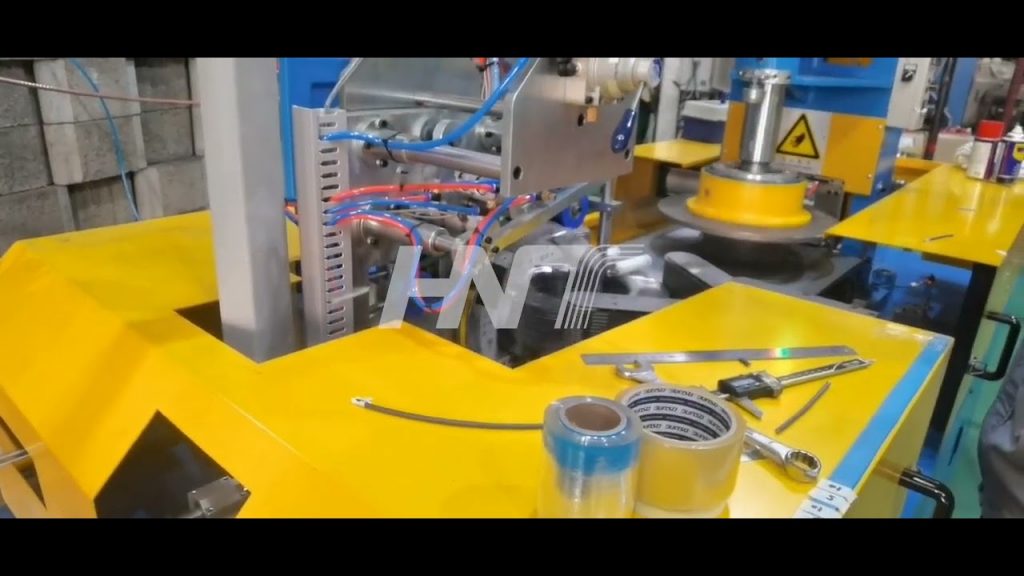
Integrating Vision Systems for Quality Control in Coil Packing
Coil packing lines face immense pressure to deliver flawless products swiftly. Manual quality checks struggle with high throughput, leaving manufacturers vulnerable to costly defects and customer complaints. Integrating advanced vision systems directly into these lines is revolutionizing the process.
Integrating vision systems into coil packing enhances quality control by automating precise visual inspections. Cameras, lighting, and software detect surface defects, verify packaging integrity (wrap, banding, labeling), measure dimensions, and ensure proper product identification in real-time. This drastically reduces human error, increases inspection speed and consistency, and improves overall line efficiency, ensuring only high-quality coils are shipped.
Ready to uncover how vision systems are not just improving, but fundamentally transforming quality control within the demanding world of coil packaging? Dive deeper into the technology, its applications, and the tangible benefits reshaping the industry.
The Growing Need for Automated Quality Control in Coil Packing
Is your coil packing line bottlenecked by manual inspections, leading to potential defects slipping through? Traditional quality control, reliant on human eyes, simply cannot keep pace with modern production speeds, leaving manufacturers exposed.
The growing need for automated quality control in coil packing stems from the challenges of inspecting large, heavy, and often rapidly moving coils. Manual inspection is slow, inconsistent due to human fatigue, and struggles to detect subtle surface flaws or verify complex packaging details accurately at speed. Automation via vision systems provides rapid, objective, 100% inspection, identifying defects like surface imperfections (scratches, dents, rust), incorrect dimensions, misaligned or damaged wrapping, faulty banding/strapping, and illegible or missing labels in real-time. This is crucial for maintaining quality standards, preventing waste, and ensuring customer satisfaction in high-volume production.
Bridging the Gap: From Manual Checks to Automated Excellence
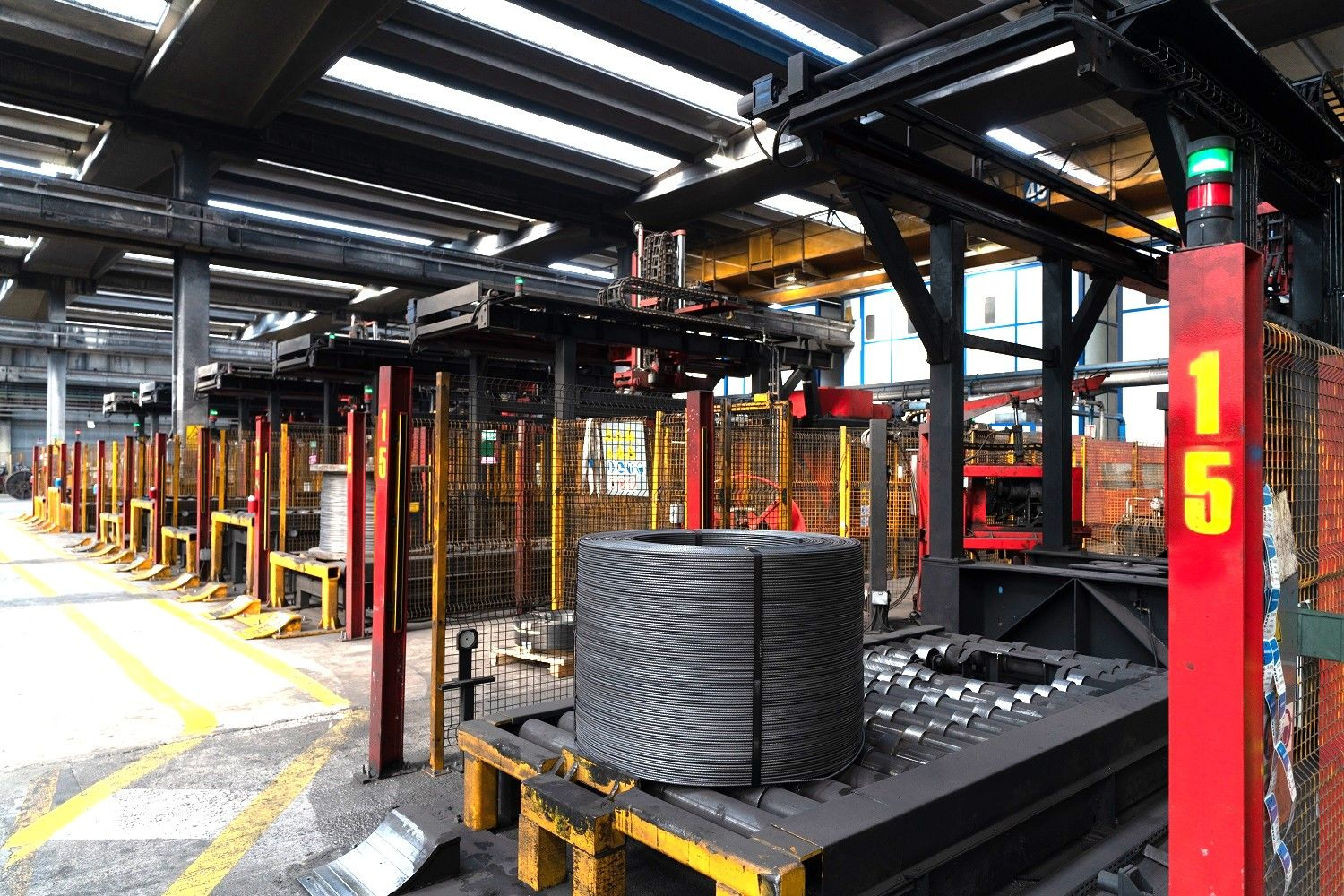
The transition from manual, sample-based inspections to fully automated, 100% quality control is paramount for modern coil packing operations. The sheer scale and speed of handling large metal coils, combined with diverse packaging requirements (wrapping, banding, capping, labeling), present unique challenges. Defects can range from critical surface imperfections on the coil itself (which might be missed before packaging) to errors in the packaging application that compromise product protection during transit and storage.
Manual inspectors, even highly skilled ones, are subject to fatigue, environmental factors (dust, glare), and the inherent limitations of human perception when trying to spot minute flaws on vast, reflective surfaces or verify precise label data on rapidly moving packages. This often leads to a trade-off between inspection speed and accuracy, resulting in missed defects, increased scrap rates, and potential recalls or customer rejections down the line.
Automated vision systems eliminate these variables. They provide objective, repeatable inspections based on pre-defined criteria, operating tirelessly at line speed. This not only catches defects more reliably but also provides valuable data for process improvement. Consider the comparative limitations:
| Feature | Manual Inspection (Coil Packing) | Automated Vision System Inspection (Coil Packing) |
|---|---|---|
| Speed | Slow, limited by human processing speed | High-speed, matches production line throughput |
| Consistency | Varies with inspector fatigue, experience | Highly consistent, objective criteria |
| Accuracy | Limited by visual perception; subjective | High precision (micron level possible); objective |
| Defect Types | Easier to spot obvious flaws | Detects subtle surface flaws, complex patterns |
| Data Capture | Manual logs, prone to error/incompleteness | Real-time digital data, traceable |
| Cost (Long Term) | Ongoing labor costs, scrap, potential recalls | Higher initial investment, lower operating costs, reduced waste |
| Environment | Challenging in dusty, high-temp areas | Robust systems designed for industrial conditions |
Common defects in coil packing amenable to vision system detection include:
- Coil Surface Defects: Rust spots, scratches, dents, rolling marks, discoloration – ideally inspected before or during the packaging process.
- Wrapping Defects: Tears, wrinkles, insufficient overlap, incorrect material, inconsistent tension, foreign objects trapped under the wrap.
- Banding/Strapping Issues: Missing bands, incorrect number of bands, loose tension, misalignment, incorrect band material or size.
- Labeling Errors: Missing labels, wrong label applied, misaligned labels, illegible print (lot numbers, product codes), incorrect orientation.
- Dimensional Checks: Verification of outer diameter or width against specifications, ensuring coils fit packaging or storage constraints.
- Overall Integrity: Ensuring the final package is secure and meets transit requirements.
Implementing vision systems allows manufacturers to address these challenges head-on, ensuring each coil package leaving the facility meets stringent quality and safety standards.
Key Components and Technologies for Coil Packing Vision Systems
Understanding the core technology is crucial for selecting the right solution. What are the building blocks of a vision system capable of inspecting heavy, wrapped coils?
Vision systems for coil packing integrate specialized hardware and software. Key components include robust industrial cameras (often high-resolution area or line scan cameras for large surfaces), carefully selected lenses to capture detailed images despite varying coil sizes or distances, and industrial-grade lighting specifically designed to illuminate challenging, potentially reflective surfaces effectively while minimizing glare. High-speed controllers or industrial PCs run powerful vision software, processing captured images using algorithms to detect defects, perform measurements, and verify features in real-time.
The Technological Blueprint for Coil Packing Quality Assurance
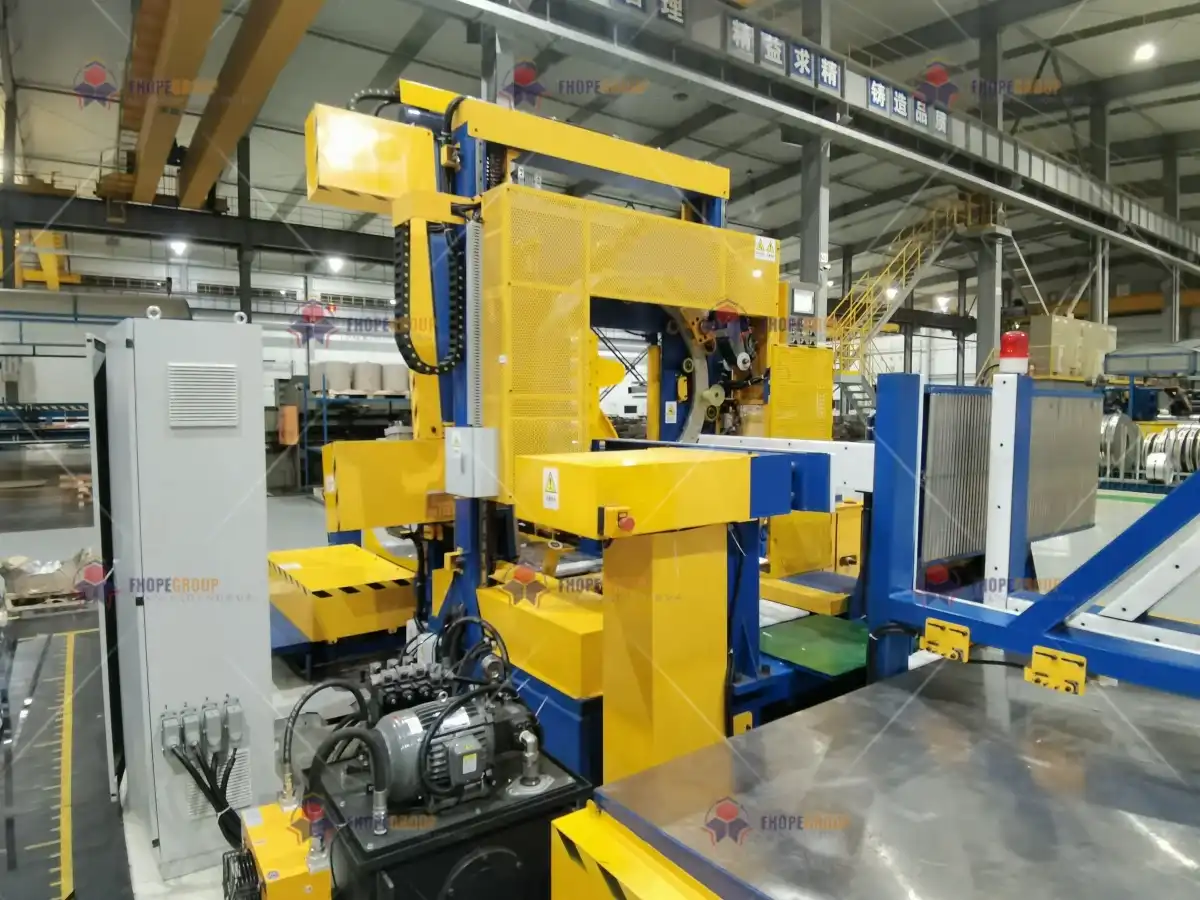
Inspecting large, often reflective or textured coil surfaces and their subsequently applied packaging demands a sophisticated blend of vision technology. The selection of components is critical and must be tailored to the specific challenges of the coil packing environment – which can involve dust, vibration, and significant variations in product presentation (coil size, wrap type, banding material).
At the heart of the system are industrial cameras. For scanning the wide surface of a coil or its wrapping as it moves, high-resolution line scan cameras are often preferred. They capture continuous lines of data, building up a complete image of the coil's circumference or wrapping surface, ideal for detecting elongated defects like scratches or inconsistent wrapping overlap. Area scan cameras might be used for inspecting specific points like banding locations, labels, or the coil's end face. These cameras must be robust, with high frame rates to keep up with line speed, and often feature high resolution (e.g., 5 megapixels or more) to capture minute details.
Selecting the appropriate lens is equally vital. For precise dimensional checks or inspecting surface features with minimal distortion, telecentric lenses are often employed, especially if the coil's position varies slightly. Standard industrial lenses are used for general presence/absence checks or verifying label readability. Lenses must be securely mounted and protected from the harsh industrial environment.
Industrial lighting is perhaps the most challenging aspect in coil inspection due to potentially reflective metal surfaces and varied packaging materials. Standard diffuse lighting might cause glare, obscuring defects. Specialized techniques are necessary:
- Darkfield lighting: Excellent for highlighting surface scratches or texture changes by illuminating the surface from a low angle.
- Brightfield lighting: Used for general inspections, providing even illumination across the surface.
- Structured light or Laser Triangulation: Employed in 3D vision systems to detect surface topography changes like dents or bulges, even on low-contrast surfaces. This is particularly useful for heavy plate or certain coil types.
- LumiTrax™ (as mentioned in source): This advanced technique uses changing light patterns to separate surface texture from defects, invaluable for textured or reflective materials common in metal coils.
- Colored Lighting: Can enhance contrast for specific materials or defect types, especially when paired with monochrome cameras.
The captured images are sent to a high-speed vision controller or industrial PC equipped with powerful vision software. This software applies algorithms for image processing, including:
- Filtering: Removing noise or enhancing features.
- Edge Detection: Identifying boundaries of objects like labels or bands.
- Pattern Matching: Locating specific features or patterns (e.g., logos, text).
- Measurement Tools: Calculating dimensions, distances, angles.
- OCR/OCV (Optical Character Recognition/Verification): Reading and verifying printed text like batch codes or dates on labels.
- Surface Inspection Algorithms: Advanced tools specifically designed to identify and classify surface defects based on texture, contrast, or 3D shape deviation.
These components work in synergy, capturing high-quality images of the coil and its packaging, processing the data rapidly, and making real-time decisions (pass/fail) or triggering actions (diverting a defective coil, alerting operators). The modularity and configurability of modern vision systems allow them to be adapted to the specific requirements and constraints of virtually any coil packing line.
Implementing Vision Systems for Specific Coil Packing Inspections
Moving beyond the theory, how are these systems practically applied to inspect the myriad aspects of a finished coil package? What specific checks can they perform?
Implementing vision systems in coil packing allows for automated inspection of critical quality points. This includes scanning the coil surface for defects (rust, scratches) before or after wrapping, verifying the correct application and integrity of the protective wrapping material, ensuring banding/strapping is present, correctly positioned, and tensioned, and performing accurate Optical Character Recognition (OCR) or Verification (OCV) on labels to confirm product details and traceability codes.
A Catalog of Automated Inspections for Coil Packages
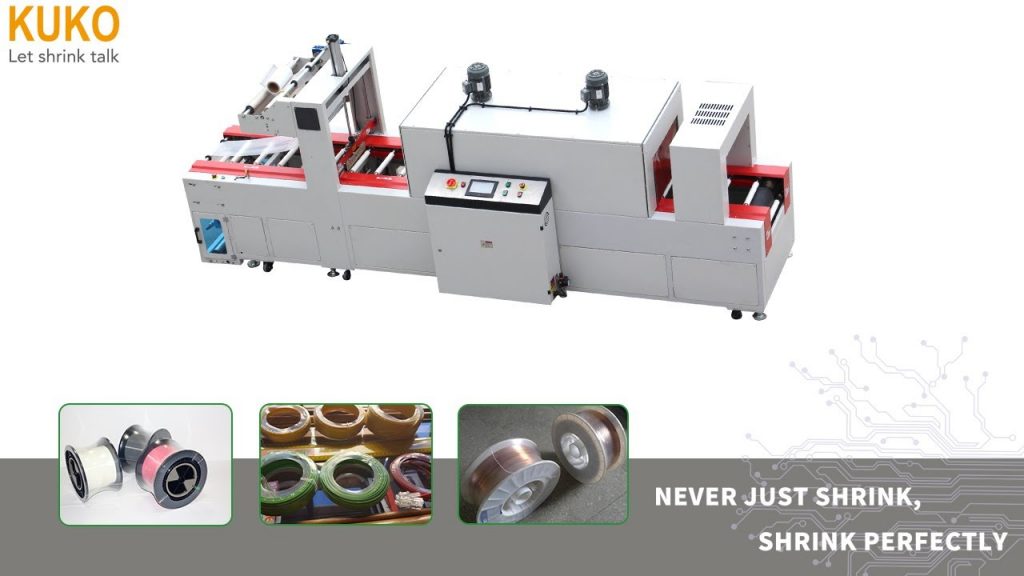
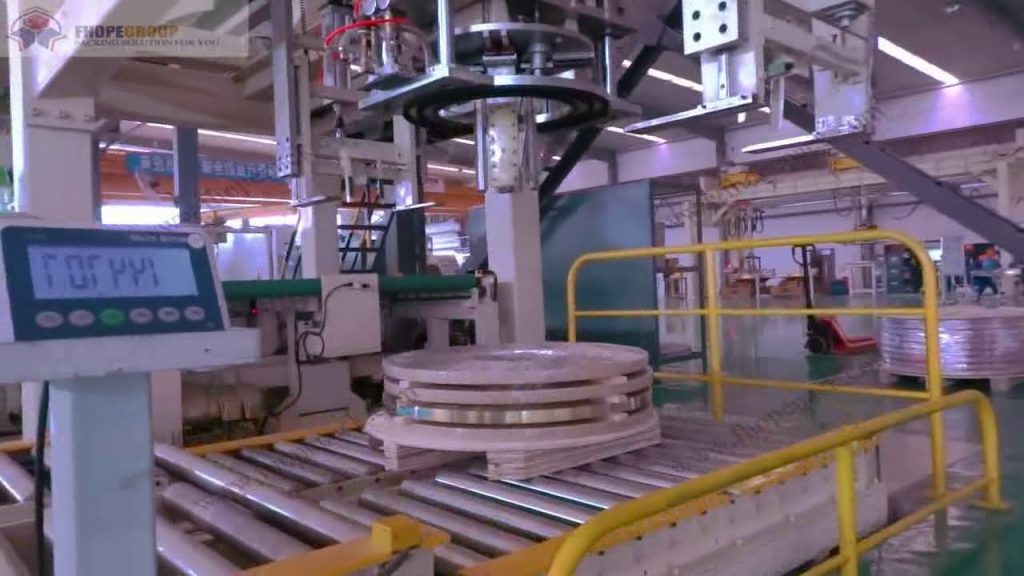
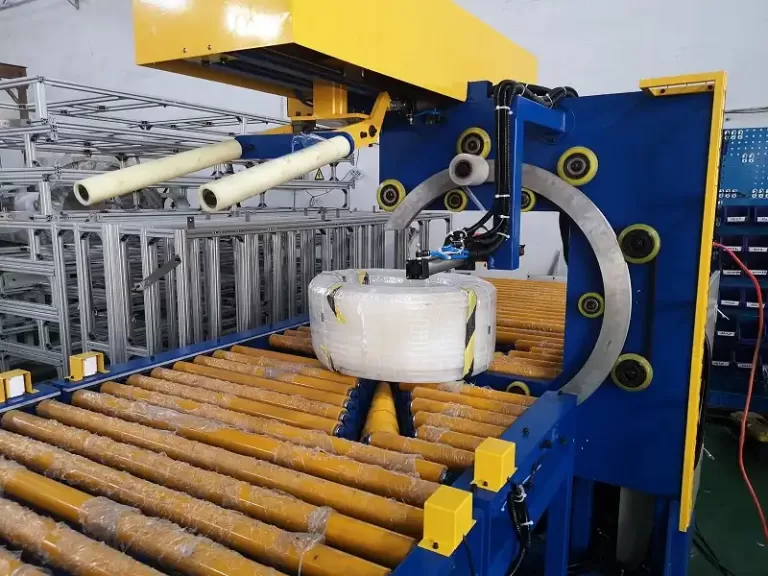
Integrating vision systems into a coil packing line enables a comprehensive, multi-point inspection process that far surpasses manual capabilities. The system can be configured to perform a sequence of checks as the coil package moves along the conveyor or through specific inspection stations. While the image provided might show hose wrapping, the principles of packaging inspection apply equally to coils, focusing on the integrity and accuracy of the protective outer layer and any applied labels or markings.
Consider the specific inspections that can be automated:
Coil Surface Inspection (Pre or Post-Wrap)
While often challenging post-wrap, vision systems can inspect the outer layer of coil turns before packaging begins or through transparent wrapping. Using techniques like line scan or 3D vision, they can detect:
- Surface Flaws: Scratches, dents, roll marks, pitting, rust spots, discoloration.
- Foreign Material: Oil spots, debris, or contamination on the surface.
Wrapping Integrity and Application
Automated checks ensure the protective wrap is correctly applied, vital for preventing damage and corrosion during transport and storage.
- Wrap Presence: Confirming the wrap material is present and fully covering the coil surface.
- Overlap Consistency: Verifying that spiral wrapping has consistent overlap to ensure full coverage.
- Tears or Holes: Detecting breaches in the wrapping material.
- Wrinkles or Creases: Identifying improperly applied wrap that could compromise protection.
- End Face Coverage: Ensuring the wrap is adequately secured and covers the coil's end faces if required.
Banding and Strapping Verification
Metal or plastic bands secure the wrapping and the coil itself. Vision systems ensure these are correctly applied.
- Band Presence: Confirming that the specified number of bands are present in the correct locations.
- Band Position: Checking that bands are aligned correctly around the coil circumference and at the required distance from edges.
- Band Integrity: Inspecting for broken, damaged, or excessively loose bands.
- Seal Verification: For certain banding types, verifying the integrity of the band's seal.
Labeling and Marking Inspection
Accurate labeling is critical for traceability and identification. Vision systems use OCR/OCV and pattern matching.
- Label Presence and Position: Ensuring labels are applied and correctly located on the package.
- Label Type Verification: Using pattern matching to confirm the correct label template is used for the product type.
- OCR (Reading Text): Reading variable data like batch numbers, dates, weights, or customer-specific codes printed on the label.
- OCV (Verifying Text): Comparing read text against a database or expected format to ensure accuracy and legibility.
- Barcode/QR Code Reading: Scanning and verifying the content of barcodes or QR codes for quick identification.
Dimensional Verification
Even post-packaging, vision systems can confirm certain dimensions.
- Outer Diameter Estimation: Using multiple cameras or 3D sensors to estimate the finished package diameter.
- Width Measurement: Verifying the width of the packaged coil.
The specific configuration of cameras, lighting, and software tools is tailored to the exact inspection requirements for each coil product and packaging type. For instance, inspecting highly reflective polished steel coils might require different lighting and algorithms than inspecting rough, hot-rolled coils. The system's ability to perform multiple checks simultaneously at high speed ensures that quality is verified comprehensively without slowing down the packaging process.
Here's a simplified view of inspection points and required technologies:
| Inspection Type | Critical Parameters to Check | Typical Vision Technology Required |
|---|---|---|
| Coil Surface (Pre-wrap) | Scratches, rust, dents, foreign material | Line Scan/Area Scan, Darkfield/LumiTrax/3D Lighting |
| Wrapping Integrity | Tears, wrinkles, overlap, coverage | Area Scan, Brightfield/Diffuse Lighting |
| Banding/Strapping | Presence, position, integrity | Area Scan, Brightfield/Structured Lighting |
| Labeling (OCR/OCV) | Text content, legibility, position, type | Area Scan, Brightfield, OCR/OCV Software Tools |
| Package Dimensions | OD, Width | Multiple Area Scanners, 3D Vision, Measurement Tools |
| Overall Package Presentation | Cleanliness, foreign objects on package | Area Scan, Brightfield/Diffuse Lighting, Defect Tools |
Such detailed and automated inspection is paramount in industries like steel or aluminum production, where product quality and packaging integrity directly impact safety, usability, and customer satisfaction.
Benefits and ROI of Vision Systems in Coil Packing
Beyond simply detecting defects, what tangible advantages do vision systems bring to the coil packing operation, and how do they justify the investment?
Integrating vision systems offers coil packing operations substantial benefits: vastly improved inspection accuracy and consistency, significantly increased throughput by automating manual checks, real-time data feedback for process optimization, enhanced regulatory compliance and traceability, and a dramatic reduction in costly scrap, rework, and potential product recalls.
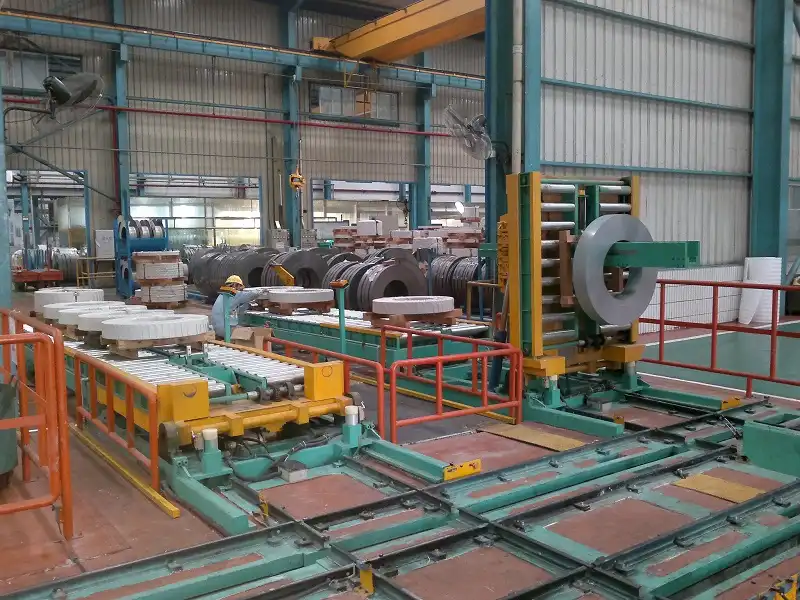
Automating quality control in coil packing with vision systems delivers a compelling return on investment (ROI) derived from multiple sources. The most immediate and impactful benefit is the improved accuracy and precision of defect detection. As discussed, human inspection of large, challenging surfaces and complex packaging is prone to errors. Vision systems, with their ability to detect microscopic flaws and consistently apply objective criteria, ensure that defective products are reliably identified and removed from the production stream. This level of detail is often beyond human capability, guaranteeing higher quality standards for outgoing products.
Coupled with accuracy is a significant boost in speed and efficiency. Vision systems operate at the pace of the production line, performing inspections in milliseconds per item. This eliminates the bottleneck of manual inspection points, allowing manufacturers to maintain high production rates without sacrificing quality. This increased throughput directly translates to higher output and profitability.
Consistency and reliability are inherent advantages of automation. Unlike human inspectors whose performance can vary due to fatigue, distractions, or subjective judgment, vision systems provide unwavering consistency. They inspect every single package against the exact same standards, ensuring uniformity across batches and over extended periods. This reliability builds confidence in product quality and simplifies quality management processes.
The ability to capture and analyze real-time data is another powerful benefit. Vision systems generate continuous data streams on inspected items, defects found, and process performance. This data is invaluable for:
- Immediate Corrective Actions: Detecting issues as they occur allows operators to address upstream process problems quickly, preventing further defective products.
- Process Optimization: Analyzing defect data over time helps identify root causes, enabling proactive adjustments to machinery or procedures to reduce defect rates.
- Traceability and Reporting: Detailed records of every inspection, including images of defects, provide full traceability for each coil package, essential for quality audits and customer inquiries.
These operational improvements lead to substantial cost efficiency. Reducing the reliance on manual labor for inspection lowers operational expenses. More importantly, early and reliable defect detection minimizes scrap and the need for costly rework. Preventing defective products from reaching customers drastically reduces the risk of expensive product recalls, which can severely damage brand reputation and incur significant financial and legal costs. For industries handling valuable materials like steel or aluminum, minimizing waste is a direct path to improved profitability.
Furthermore, vision systems aid in regulatory compliance and recall prevention. In industries with strict quality standards (though perhaps less regulated than food or pharma, metal coil packaging still has standards for protection and identification), automated inspection ensures consistent adherence to internal and external specifications. By catching potential issues like incorrect labels or compromised packaging integrity before shipment, the likelihood of non-compliance or recalls is significantly reduced. The traceable data provided by the system serves as robust documentation for compliance purposes.
In summary, for coil packing operations, vision systems transition quality control from a necessary but often bottlenecked manual task to a high-speed, highly accurate, and data-rich automated process. The investment yields a strong ROI through reduced costs (labor, scrap, recalls), increased throughput, and improved product quality and customer satisfaction.
Conclusion
Integrating vision systems into coil packing lines represents a critical step towards achieving consistent, high-quality output in a demanding manufacturing environment. By automating defect detection, packaging verification, and critical measurements, these systems overcome the limitations of manual inspection, delivering unparalleled speed, accuracy, and reliability. The resulting benefits in cost efficiency, traceability, and compliance make them indispensable tools for modern coil manufacturers striving for excellence. Implementing [Vision Systems]() automation today ensures you meet current quality demands and are positioned for future success.