Tailoring Your Coil Packing Line to Different Coil Sizes and Weights
Your production line faces a critical bottleneck: efficiently packaging coils that vary wildly in size and weight. Struggling with inconsistent processes and wasted materials? The challenge is clear, and it's impacting your throughput and bottom line.
Achieving optimal efficiency in coil packaging across varying dimensions and weights requires a packing line specifically designed for adaptability. This involves selecting or customizing equipment with features like adjustable components, intelligent control systems, and robust construction capable of handling diverse coil specifications seamlessly, ensuring consistent packaging quality and throughput.
Choosing the right coil packing line is a pivotal decision for manufacturers and processors dealing with metal coils. It's not a one-size-fits-all solution; your specific product range—from delicate narrow strips to massive heavy-gauge coils—demands a system engineered for versatility. Failure to tailor your packaging solution can lead to inefficiencies, increased labor costs, material waste, and compromised product integrity during transit. This article delves into the critical aspects of customizing and selecting a coil packing line that precisely matches your operational needs, ensuring peak performance regardless of the coil's physical attributes.
The Critical Need for Coil Packing Line Customization
Are inconsistent coil sizes causing chaos on your packaging line? Manual adjustments and changeovers eat away at precious production time and introduce potential errors. This operational pain point directly impacts your efficiency and profitability.
Customizing a coil packing line is essential because coil products vary immensely in size, weight, material, and required protection levels. A tailored system incorporates adjustable machinery, specific handling mechanisms (like horizontal vs. vertical orientation), and programmable controls to accommodate this diversity. This ensures each coil is packaged securely and efficiently according to its unique specifications, minimizing damage and maximizing throughput.
Analyzing Line Customization for Diverse Coil Specs
Coil packaging lines are no longer rigid, single-purpose machines. Modern manufacturing demands flexibility to handle a dynamic product mix. Tailoring a line means going beyond basic automation; it involves configuring a system that can intelligently adapt to significant variations in coil width, outer diameter, inner diameter, and weight, as well as differences in material properties like steel, aluminum, copper, or wire.
Consider the range: a line might need to package lightweight wire coils weighing just a few hundred kilograms alongside massive steel coils exceeding 20 tons. This presents challenges for every stage of the process:
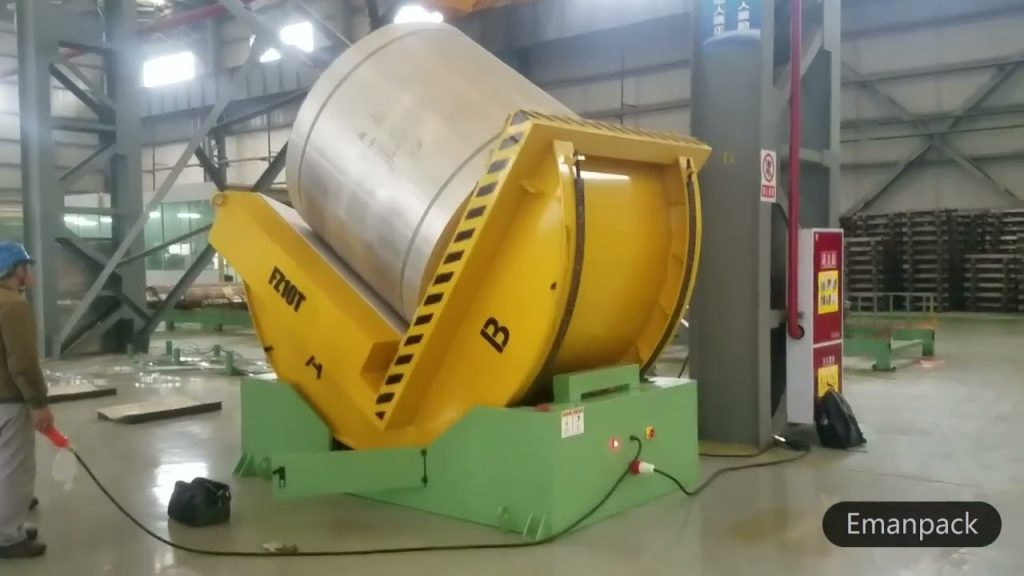
- Coil Handling and Feeding: Mechanisms must safely support and transport coils across the entire weight spectrum. Lighter coils might require gentler handling to prevent deformation, while heavier coils demand robust conveyors, coil cars, and downenders with sufficient load capacity and stability. The system must accurately center coils regardless of their size for subsequent wrapping and strapping.
- Packaging Material Application: Wrapping tension, number of layers, and strap tension must be adjustable based on coil weight and material. Delicate materials like aluminum or polished stainless steel may require additional protective layers or less aggressive strapping force compared to standard steel. VCI (Volatile Corrosion Inhibitor) paper or film application might be necessary for certain materials or storage conditions, requiring the line to handle multiple packaging materials.
- Strapping and Securing: The type and strength of strapping (steel, PET) and the strapping pattern must be customizable. Heavy coils often require multiple steel straps applied with significant tension to prevent shifting, while lighter coils might suffice with fewer PET straps. Eye-through strapping is specific to certain coil types and sizes and requires a dedicated machine or module.
- Stacking and Palletizing: The system must accommodate stacking coils horizontally or vertically and potentially palletizing finished packages. This requires adaptable stacking arms or mechanisms that can lift and place coils of different dimensions onto pallets according to pre-set patterns.
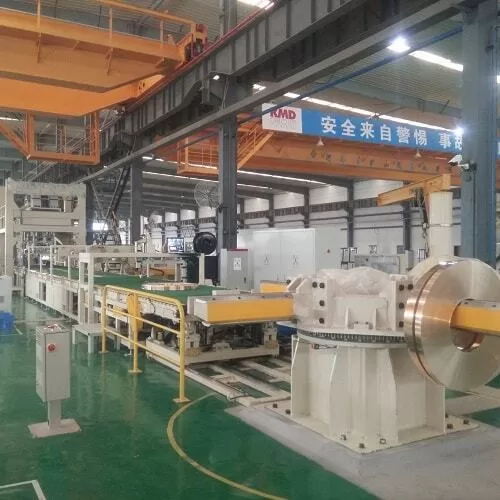
A modular design approach is key to achieving this level of customization. Instead of a monolithic machine, the line comprises interconnected modules (turnstile, down ender, weighing, wrapping, strapping, stacking) that can be selected and configured based on the required functionality and throughput for the specific range of coil types being handled. Furthermore, software control (PLCs and HMI) is paramount, allowing operators or integrated systems to quickly select or automatically apply packaging parameters based on coil data (e.g., from a scanner or production system). This eliminates time-consuming manual changeovers and minimizes human error, directly translating into improved efficiency and reduced labor costs across varied production runs.
Understanding the Core Components and Their Adaptability
Are you struggling to find a packaging system where each component seamlessly handles your diverse range of coil dimensions? Incompatible machinery creates bottlenecks and requires constant manual oversight. The solution lies in understanding how each part contributes to overall flexibility.
Key components of a coil packing line, such as conveyor systems, wrapping machines, strapping units, and handling equipment, must be designed for adaptability. Conveyors need variable speed and adjustable guides. Wrapping machines require flexible film application parameters and material compatibility. Strapping units must handle different strap types and tensions. Handling equipment, like downenders and stackers, must safely process coils across the specified weight and size range.
How Modularity and Key Technologies Enable Versatility
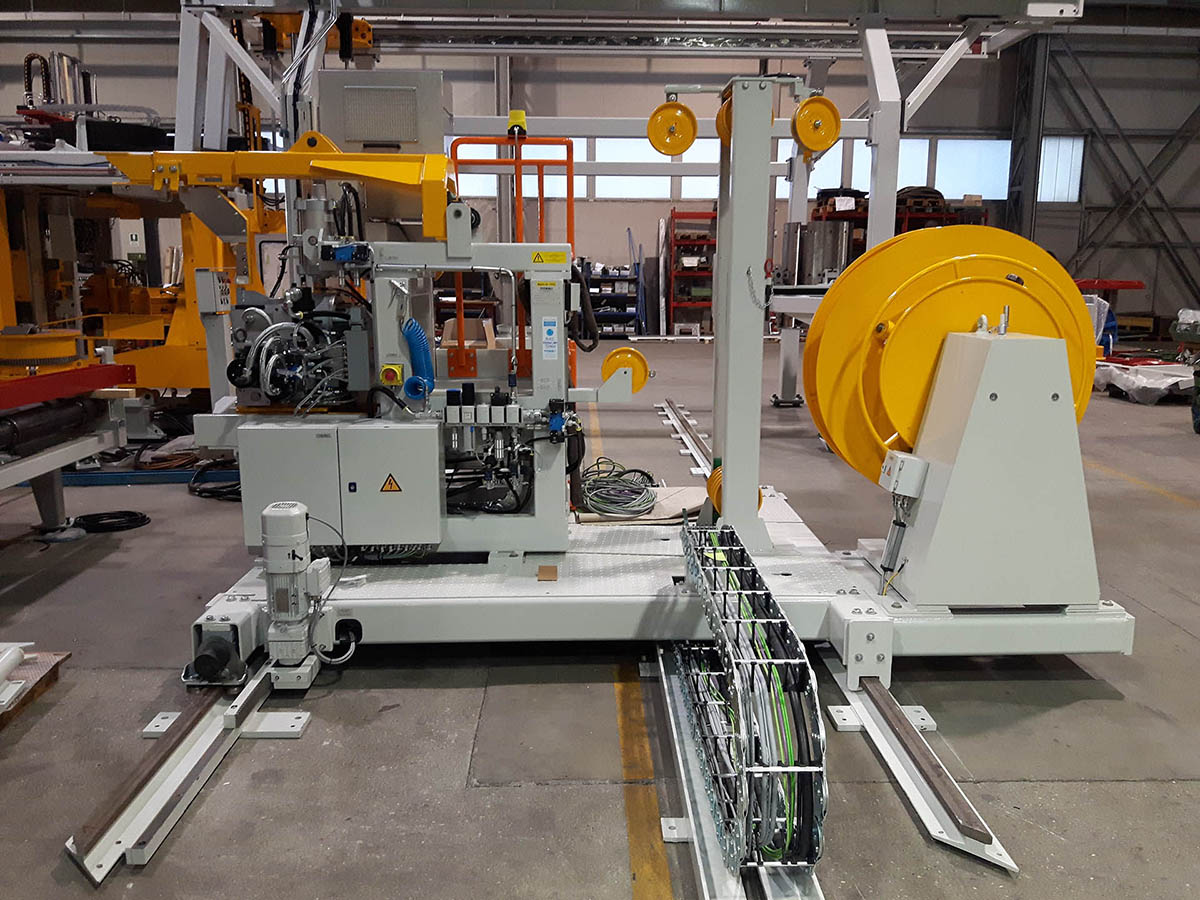
The strength of a tailored coil packing line lies not only in its individual components but also in how they integrate and adapt. Modularity is the architectural foundation that allows systems to be built and modified to handle diverse requirements. Each station – from coil feeding and weighing to wrapping, strapping, and discharge – can be a distinct module. This allows manufacturers to select only the necessary functions and scale the line by adding or rearranging modules. For example, a producer primarily handling narrow, light coils might start with basic wrapping and strapping modules, while one dealing with heavy, sensitive materials might require advanced edge protection, through-eye wrapping (TEW), and robust stacking.
Beyond physical configuration, the adaptability of a coil packaging line is driven by integrated technologies:
- Adjustable Conveyor Systems: Conveyors with variable speed control and automatically or easily adjustable side guides and rollers are fundamental. These can accommodate different coil widths and diameters, ensuring smooth and centered movement through the line. Some systems include lifting or centering devices to perfectly position coils for subsequent operations.
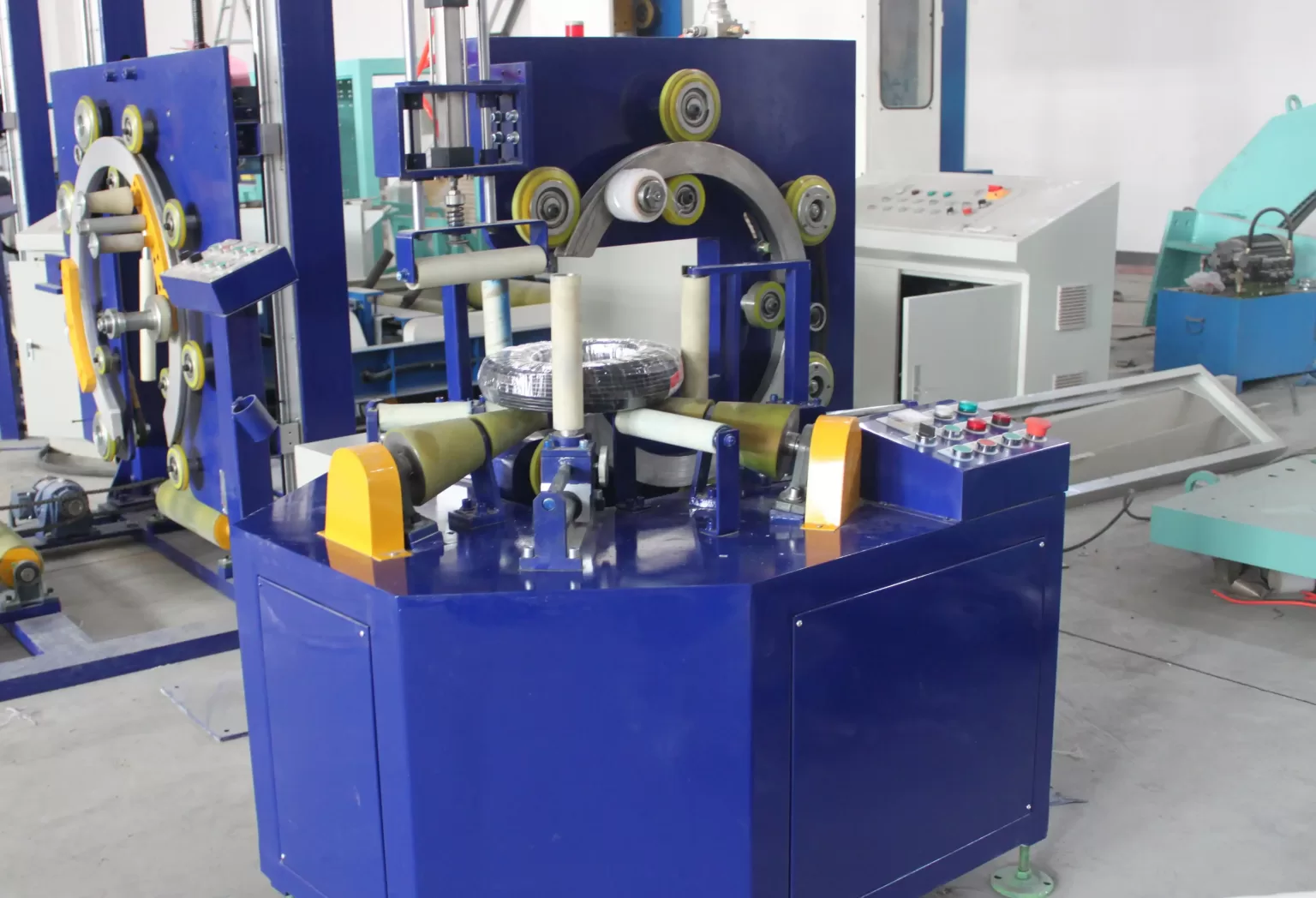
- Flexible Wrapping Machines: The wrapping module must be capable of applying various packaging materials (stretch film, VCI paper, PE film, crepe paper, board) and adjusting parameters like tension, overlap, and number of layers based on the coil's size, weight, and required protection. Machines with multiple film carriages or automatic material changeover features enhance efficiency when switching between different coil types or packaging specifications. Through Eye Wrapping (TEW) technology, for instance, is a specialized method particularly effective for moisture protection by wrapping through the coil eye with specific materials, a capability essential for certain products or destinations.
- Versatile Strapping Machines: Strapping units must be able to apply straps around the coil body, through the eye, or both. They need to handle different strap materials (steel, PET, PP) and adjust tension precisely to secure the coil without damaging it. Automatic positioning of strapping heads ensures straps are applied correctly regardless of coil diameter or width. Compacting functions may be included for wire coils or other materials that benefit from compression before strapping.
- Intelligent Handling and Stacking: Downenders and stackers must be robust enough to handle the maximum coil weight while also being gentle and precise for smaller, lighter coils. Automated stacking systems with programmable patterns can handle various stacking configurations on pallets or directly on the floor, optimizing storage and transport.
The seamless integration of these components, often managed by a central PLC system, allows the line to adapt dynamically. When a coil enters the system, its dimensions and weight can be automatically measured or pulled from production data. The PLC then instructs each module – the conveyor speed, the wrapping tension, the strapping force, the stacking pattern – to adjust accordingly, ensuring consistent, high-quality packaging across the entire product range with minimal manual intervention. This significantly boosts operational flexibility and throughput.
Technological Pillars for Precision Across the Spectrum
Are manual adjustments slowing down your coil packaging process whenever a different size or weight comes through? Relying on operators for parameter changes is inefficient and error-prone. The answer lies in smart technology integration.
Automated coil packing lines leverage advanced technologies like Programmable Logic Controllers (PLCs), sensors, and IoT connectivity to achieve precision and adaptability across varying coil dimensions and weights. PLCs act as the system's brain, executing complex logic based on coil data. Sensors measure coil attributes in real-time, providing critical input for adjustments. IoT enables remote monitoring and data analytics, further optimizing performance and predicting maintenance needs.
PLCs, Sensors, and IoT - Driving Precision and Efficiency for Varied Coils
The true intelligence and flexibility of a modern coil packing line designed for diverse products stems from its underlying control and data systems. These technological pillars enable the line to perform complex tasks, make on-the-fly adjustments, and operate efficiently regardless of the coil's characteristics.
1. Programmable Logic Controllers (PLCs) for Orchestrated Flexibility
PLCs are the core control units that manage the sequence of operations and the behavior of each component in the packing line. For a line handling varying coil sizes and weights, the PLC's role is crucial. It stores pre-programmed packaging recipes tied to specific coil types or dimensions. When a coil enters the line, often identified via barcode or integrated with an upstream Manufacturing Execution System (MES), the PLC retrieves the corresponding recipe. This recipe dictates:
- Conveyor speed and indexing.
- Wrapping speed, tension, overlap, and number of layers.
- Type of packaging material(s) to use (e.g., VCI paper + film).
- Strapping pattern, tension, and material.
- Operation of handling equipment like downenders or stackers.
- Labeling information and placement.
The PLC ensures that all modules work in perfect synchronicity, adjusting their operations dynamically based on the real-time data received from sensors. This eliminates the need for manual resets between different coil types, drastically reducing changeover time and minimizing the risk of human error. The ability to easily modify or create new recipes within the PLC software further enhances the line's adaptability to new products or packaging requirements.
2. Sensor Integration for Real-Time Awareness
Sensors provide the PLC with essential data about the coils and the system's state. In a line designed for varied sizes, sensors are critical for accurate measurement and positioning:
| Sensor Type | Function | Benefit for Diverse Coils |
|---|---|---|
| Photoelectric | Detect presence, position, and speed of coils | Ensures coils are correctly positioned before wrapping/strapping, regardless of size. |
| Ultrasonic/Laser | Measure coil outer diameter, width, and potentially inner diameter | Provides precise dimensions for the PLC to select/adjust packaging parameters automatically. |
| Load Cells | Weigh coils | Confirms coil weight for parameter adjustment (e.g., strapping tension) and documentation. |
| Proximity | Detect proximity of machine components or safety zones | Crucial for safety with varying coil sizes and moving parts. |
| Tension/Force | Monitor tension of wrapping film or strapping | Ensures consistent packaging quality and prevents damage across different coil types. |
By constantly feeding this real-time data to the PLC, sensors enable the system to adapt its operations to the exact coil currently being processed, ensuring optimal packaging quality and material usage.
3. IoT and Smart Technology for Optimization and Predictive Maintenance
Integrating IoT capabilities takes the adaptability and efficiency of coil packing lines to the next level. Connected sensors and PLCs can transmit operational data to a central monitoring system or cloud platform. This allows for:
- Remote Monitoring: Operators or managers can track line performance, throughput, cycle times, and error rates from a central control room or even off-site.
- Data Analytics: Analyzing data on coil sizes processed, packaging material consumption, and machine performance can reveal patterns, identify bottlenecks, and highlight areas for optimization.
- Predictive Maintenance: Sensors can monitor machine vibration, motor temperature, or material levels. Data analysis can predict potential component failures before they occur, allowing for scheduled maintenance rather than disruptive breakdowns. This is particularly valuable in complex systems handling heavy loads from large coils.
This layer of smart technology not only enhances operational efficiency but also provides valuable insights for continuous improvement and minimizes downtime across the varied demands placed on the line by different coil specifications.
Measuring the Impact: ROI, Efficiency, and Safety Benefits of a Tailored Line
Investing in a coil packing line specifically tailored to handle diverse coil sizes and weights might seem like a significant upfront cost. However, the long-term return on investment (ROI) is substantial, driven by dramatic improvements in efficiency, labor savings, and safety.
Tailoring a coil packing line to varying sizes and weights significantly boosts ROI through enhanced operational efficiency, reduced labor dependency, minimized material waste, and improved workplace safety. Automated adjustments handle diverse products quickly and accurately, decreasing cycle times and increasing throughput. Precision material application lowers costs, while automated handling of heavy or awkward coils drastically reduces manual intervention and associated injury risks, leading to lower insurance premiums and absenteeism.
The benefits of a well-tailored system extend far beyond simple automation. When a line can seamlessly transition between packaging a 500 kg aluminum coil and a 20-ton steel coil, the ripple effects on productivity and cost structures are profound.
-
Increased Throughput and Efficiency: Manual changeovers for different coil dimensions are time-consuming. An automated line with quick, programmable adjustments can process coils continuously, regardless of their size or weight. This higher throughput translates directly into increased production capacity without needing additional shifts or lines. Automated systems are faster and more consistent than manual processes; while an operator might pack one coil per hour manually, an automated line supervisor can oversee 20-30 coils per hour depending on the packaging code.
-
Reduced Labor Costs and Dependency: Tailored automation significantly reduces the need for manual labor involved in handling, wrapping, and strapping coils. Operators transition from physically demanding tasks to supervising the automated process, loading materials, and performing maintenance. This reduction in direct labor costs provides one of the most immediate and significant components of the ROI calculation. It also addresses challenges related to labor shortages and rising wages.
-
Minimized Material Waste: Precision application of packaging materials (film, paper, straps) based on the exact dimensions of each coil, as controlled by the PLC and sensors, ensures that materials are used optimally. Unlike manual methods where operators might use excess material "just in case," automated systems apply precisely what is needed. This reduction in waste directly lowers material costs, which can be a substantial operational expense, potentially saving up to 30% on packing materials annually compared to traditional methods.
-
Enhanced Safety: One of the most critical benefits, often difficult to quantify solely in monetary terms, is the dramatic improvement in workplace safety. Manually handling coils, especially heavy ones, poses significant risks of strains, crushes, and other serious injuries. A tailored automated line takes workers out of dangerous situations, with machines performing heavy lifting, precise positioning, and hazardous tasks like applying high-tension strapping. This leads to a reduction in accidents, lower workers' compensation claims, decreased absenteeism, and a safer, more positive working environment. Advanced safety features like light curtains, safety guards, and emergency stops are standard in modern automated lines, further protecting personnel working near the equipment designed to handle large and heavy objects.
-
Consistent Packaging Quality: Automated processes deliver uniform packaging quality regardless of coil size or operator fatigue. Consistent wrapping tension, strap placement, and material application ensure that each coil is securely protected, reducing the risk of damage during storage and transportation. This consistency improves product presentation and reduces costly returns or claims due to transit damage.
When analyzing the total cost of ownership (TCO), these long-term savings often far outweigh the initial investment. While the initial cost of a highly customized, robust system designed for varied sizes might be higher than a basic model, the operational savings, increased throughput, and improved safety contribute to a rapid ROI, often within 12-18 months, positioning the business for sustainable, profitable growth.
Conclusion
Choosing the ideal coil packing line requires a nuanced understanding that one size does not fit all, especially when dealing with coils varying significantly in Coil Dimensions and weight. Tailoring your system through modular design, adaptable components, and advanced technology like PLCs, sensors, and IoT is paramount to achieving optimal efficiency, safety, and cost savings. By investing in a line capable of seamlessly handling your full product range, you streamline operations, minimize waste, protect your workforce, and secure a robust return on investment, ensuring your packaging process is a competitive advantage rather than a bottleneck.