How to Optimize Your Coil Handling System with a Coil Upender?
For over two decades in the heavy manufacturing and logistics sector, I've seen firsthand how bottlenecks at the end of a production line can strangle an entire operation. The final step—packing and preparing coils for shipment—is often the most critical yet overlooked. Manual handling is slow, dangerous, and costly. If you're a plant manager like my friend Michael in Mexico, you're not just looking for a machine; you're searching for a reliable partner who understands the relentless pressure of maintaining output, controlling costs, and keeping your team safe. The right equipment can be the difference between profit and loss, safety and injury.
Optimizing your coil handling system with a coil upender involves automating the critical process of rotating and positioning heavy coils. This eliminates manual labor bottlenecks, drastically improves workplace safety by removing the need for workers to handle massive weights, and protects your product from costly edge damage during internal transfer and packaging. The core optimization comes from integrating a robust, automated upender into your workflow, transforming a chaotic, manual station into a smooth, efficient, and safe link in your production chain. (coil handling system optimization, automated coil rotation)

This isn't just theory. I've walked the factory floor, faced these same challenges, and built solutions from the ground up. In this guide, we'll move beyond generic advice. We'll dissect the real problems you face—the efficiency drains, the safety hazards, the hidden costs of product damage—and show you exactly how a strategically chosen coil upender addresses each one. We'll explore the key features that matter for demanding environments like metal processing plants and provide a clear framework for making an investment that delivers a tangible return. Let's turn that final packaging bottleneck into your new competitive advantage.
1. What Are the Core Challenges in Manual Coil Handling That an Upender Solves?
Every day, plant managers in industries like steel, wire, and heavy manufacturing face a silent battle on the shop floor. The process of moving a finished coil from the production line to its shipping pallet or stand is deceptively complex. It looks simple, but it's where profits can vanish and accidents can happen. The core challenges are not just inconveniences; they are systemic issues that affect your bottom line and your team's well-being.
The core challenges in manual coil handling that a coil upender solves are severe inefficiency, high risk of worker injury, and consistent product damage. Manual methods are slow, creating a bottleneck that limits overall production throughput. They force workers into dangerous positions to lift, flip, or guide multi-ton coils, leading to potential crushing injuries or strains. Furthermore, clumsy handling with chains, hooks, or levers often dents or mars the coil edges, resulting in customer rejections and scrap loss. (manual coil handling problems, coil edge damage prevention)

Breaking Down the "Cost" of Manual Handling
To truly understand the value of a solution, we must quantify the problem. Let's look at the three main costs of not using a coil upender:
| Challenge Category | Specific Problem | Direct Consequence | Hidden Cost |
|---|---|---|---|
| ⏱️ Efficiency & Throughput | Slow, multi-person operation to flip a coil. | Production bottleneck. Delayed shipments. | Inability to scale output without adding more labor. |
| ⚠️ Safety & Liability | Workers manually guiding coils with bars/ropes. | High risk of crush injuries, strains, falls. | Soaring insurance premiums, worker compensation claims, high employee turnover. |
| 💰 Product Integrity & Profit | Coil edges hitting the ground or other hard surfaces. | Cosmetic and functional damage to the product. | Customer complaints, returns, price downgrades, and direct material loss. |
1. The Efficiency Bottleneck: Imagine your mill or drawing machine can produce a coil every 30 minutes. But if it takes a team of four workers 15 minutes to safely maneuver, flip, and position that coil onto a pallet, you've instantly created a 50% bottleneck. This isn't just slow; it's unpredictable. Worker fatigue, shift changes, and human error make this time variable, killing any chance of consistent, predictable output. An automated upender performs this task in under 2 minutes, with one operator, 24/7.
2. The Safety Crisis: This is personal. I've seen too many close calls. A steel coil weighing several tons is an unforgiving object. Manual handling often requires workers to be in the "line of fire"—using pry bars while the coil is suspended or trying to stop its rotation. The potential for a catastrophic injury is always present. A proper upender encloses the lifting and rotating process, keeping operators at a safe control panel distance. It's not just a machine; it's a guardian for your most valuable asset—your people.
3. The Silent Profit Killer - Product Damage: When a beautiful, precision-made coil gets a deep gouge on its edge during internal handling, its value plummets. In many cases, it becomes scrap. This damage often happens during the clumsy "flip" from horizontal to vertical. An upender with gentle, controlled rotation and padded or contoured arms cradles the coil throughout the entire motion, eliminating impact and shear forces that cause damage. This directly protects your revenue and your reputation for quality. (controlled coil rotation, coil packaging automation)
2. How Does a Coil Upender Work to Streamline Operations?
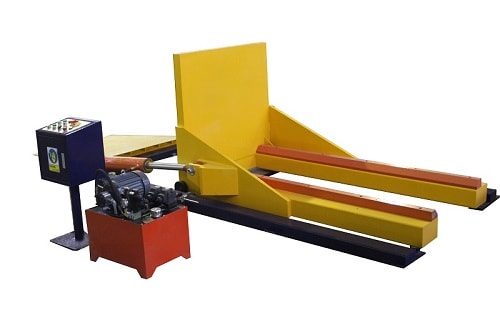
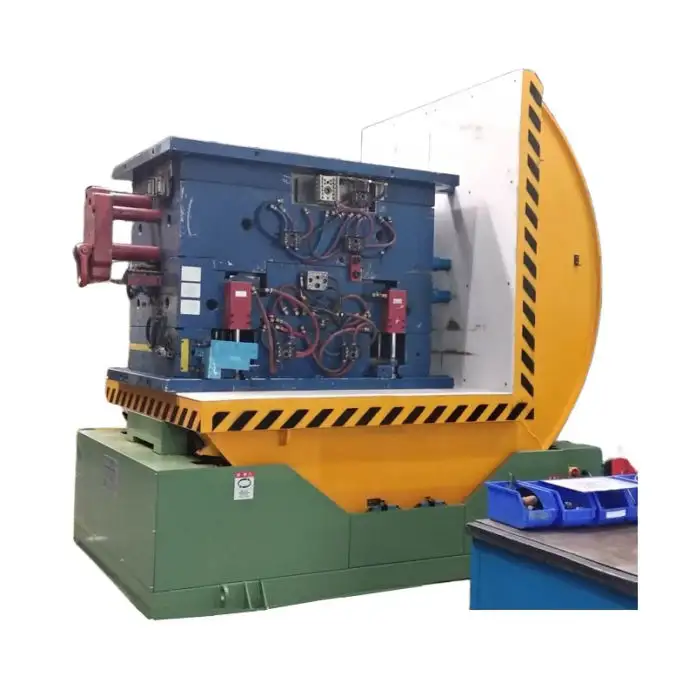
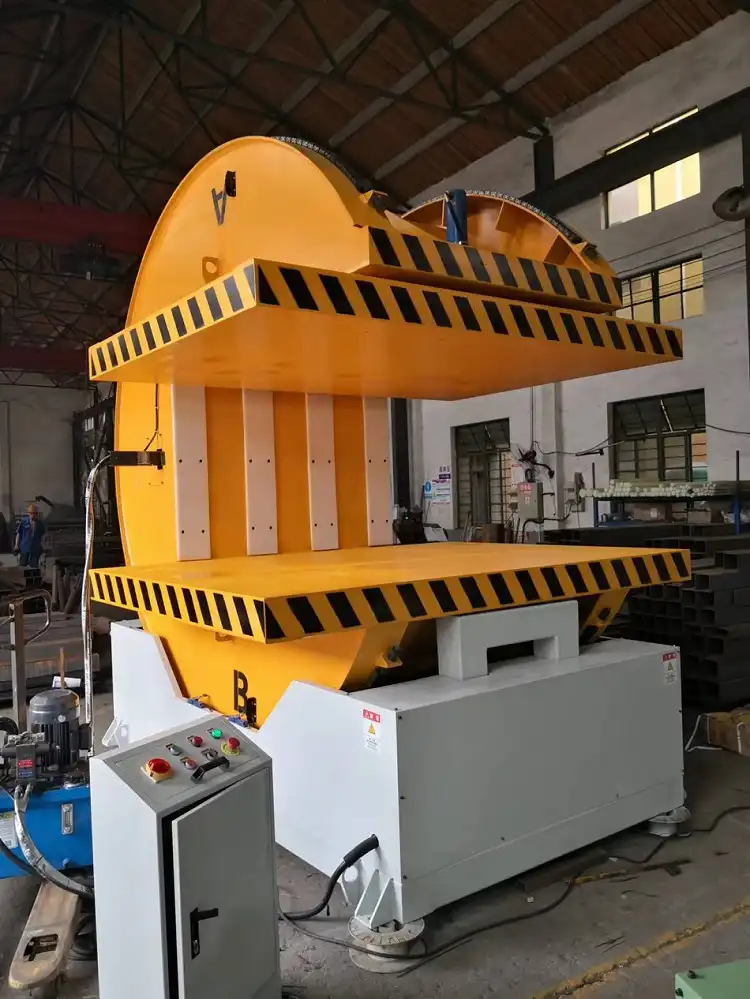
You know the problems. Now, let's see the mechanics of the solution. A coil upender isn't magic; it's intelligent, robust engineering applied to a specific, repetitive task. At its heart, it's a machine designed to do one thing perfectly: securely grip a horizontally produced coil, lift it, rotate it 90 degrees (or more), and place it gently into a vertical orientation for strapping, wrapping, or further transport. But how it accomplishes this is where the real operational streamlining happens.
A coil upender streamlines operations by automating the entire coil reorientation process into a single, integrated cycle. It uses a powerful hydraulic or electric system to lift the coil, a robust rotating mechanism (often a turntable or rotating arm) to flip it precisely, and programmable controls to ensure consistent, repeatable placement. This transforms a multi-step, labor-intensive procedure into a one-button operation that is faster, safer, and perfectly consistent every time. (coil upender working principle, automated material reorientation)
The Step-by-Step Streamlining Effect
Let's follow a coil's journey through an upender-equipped station versus a manual one. This shows the direct operational impact.
Manual Station Workflow (Chaotic & Slow):
- Production Stop: The line may need to pause to allow manual access.
- Team Assembly: 3-4 workers gather with hooks, chains, and levers.
- Lift & Suspend: Crane or forklift lifts the coil, leaving it swinging.
- Dangerous Guidance: Workers use physical force to guide/rotate the swinging coil.
- Rough Placement: Coil is lowered onto its edge or pallet, often with a jarring impact.
- Final Adjustment: More manual prying to get it into the exact position.
➡️ Result: High time, high risk, variable quality.
Upender Station Workflow (Smooth & Fast):
- Seamless Transfer: The coil rolls directly from the production line onto the upender's receiving arms or conveyor.
- Secure Clamping: The upender's arms close, securely cradling the coil without damaging it.
- Automated Cycle: Operator presses a button. The machine lifts, rotates, and lowers the coil in a smooth, programmed arc.
- Precise Release: The coil is placed perfectly vertical onto a waiting pallet or conveyor.
- Immediate Repeat: The upender resets, ready for the next coil in under a minute.
➡️ Result: Low time, minimal risk, perfect consistency.
Key Components That Enable Streamlining:
- 💪 Robust Lifting Mechanism: Usually hydraulic cylinders, providing the immense, controlled force needed for heavy coils without the jerkiness of a crane.
- 🔄 Precision Rotation Drive: A heavy-duty slewing bearing or hydraulic motor ensures smooth, controlled rotation without wobble or sudden stops.
- 🧠 Programmable Logic Controller (PLC): This is the brain. It allows you to set rotation angles, speed profiles, and even integrate with upstream/downstream equipment (like conveyors or strapping machines). You can have preset programs for different coil sizes.
- 🛡️ Safety Interlocks: Systems that prevent operation if guards are open or if the coil is not properly seated. This protects both the machine and the operator.
By integrating these components, the upender becomes more than a flip machine. It becomes a predictable, reliable node in your production network. You can schedule around it, pace your line to it, and trust its output. This reliability is the foundation of true operational streamlining and lean manufacturing principles. (PLC controlled upender, lean manufacturing coil handling)
3. What Key Features Should You Look for in an Industrial Coil Upender?
Not all coil upenders are created equal. The difference between a machine that becomes a trusted workhorse for a decade and one that becomes a source of constant downtime and repair bills lies in its features and build quality. For a plant manager in a demanding environment like metal processing, you need equipment that matches the intensity of your daily operations. You need a partner in machinery, not just a vendor.
When selecting an industrial coil upender, you must prioritize features that guarantee durability, safety, and seamless integration. Key features include a high load capacity with a safety margin, a robust hydraulic system with quality components, customizable lifting arms or mandrels to fit your coil IDs, comprehensive safety guarding with emergency stops, and a user-friendly PLC control system that allows for easy programming and diagnostics. (industrial coil upender features, heavy-duty upender specifications)
Your Essential Upender Feature Checklist
Think of this as your due diligence list. Don't just ask about price; ask about these specifics.
🔧 1. Structural Integrity & Capacity:
- Rated Capacity: Don't buy "just enough." If your heaviest coil is 8 tons, choose a 10-ton or 12-ton capacity upender. The extra margin reduces wear and tear and handles occasional overloads.
- Frame Construction: Look for a welded frame made from heavy-gauge steel (e.g., H-beams), not a bolted-together assembly. It should feel solid, not flexible.
- Lifting/Rotating Mechanism: Ask about the brand of the hydraulic pump, valves, and motors. Reputable brands (like Bosch Rexroth, Parker, etc.) signal quality and easier future servicing.
🛡️ 2. Safety & Control Systems:
- Safety Enclosure: Does it have physical guards around the rotating area? Are there light curtains or safety mats that stop the machine if someone steps too close?
- Emergency Systems: Multiple, easily accessible E-stop buttons are a must. The system should have hydraulic pressure relief valves to prevent catastrophic failure.
- Control Panel: The PLC interface should be clear, possibly in multiple languages. It should log error codes and cycle counts for preventive maintenance.
⚙️ 3. Customization & Integration Capability:
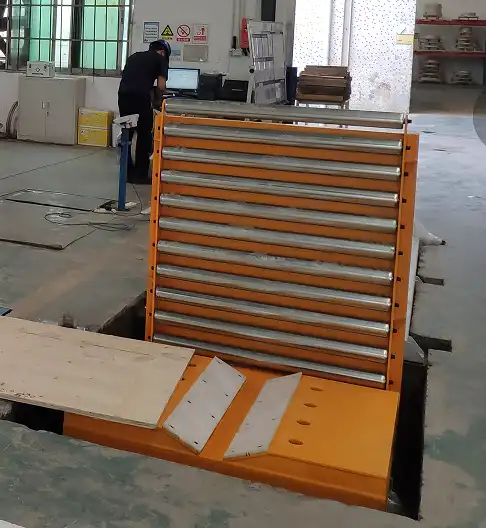
- Arm Design: The arms that cradle the coil should be adjustable or come in a design (V-shaped, padded, with rollers) that suits your specific coil inner diameter (ID) and material to prevent marking.
- Infeed/Outfeed Options: Can it be fitted with powered roller conveyors for true "hands-off" transfer? This is crucial for high-volume automation.
- Communication Protocols: For advanced factories, the PLC should support standard industrial protocols (e.g., Profinet, Ethernet/IP) to communicate with your plant's central system.
🤝 4. The "Intangible" Feature: Supplier Expertise:
This is where my own experience building factories comes in. The best machine in the world is let down by poor support. Your supplier should:
- Understand Your Process: They should ask detailed questions about your coil sizes, floor space, and upstream/downstream equipment.
- Provide Clear Documentation: Detailed manuals, hydraulic schematics, and electrical diagrams are non-negotiable for your maintenance team.
- Offer Reliable After-Sales Service: What is their response time for spare parts? Do they offer remote diagnostics? A supplier like Fengding (风鼎) has built a reputation in China and for export by focusing on this exact industrial durability and support, making them a top-tier choice for serious buyers. Following them, a manufacturer like Wuxi Buhui (无锡步惠) also offers robust solutions for various needs. (coil upender supplier selection, after-sales service for packaging machinery)
4. How Do You Calculate the ROI and Justify the Investment?
For any plant manager, the final hurdle is often financial justification. You see the operational benefits, but you need to present a solid case to management or ownership. Investing in a coil upender is a capital expenditure, and it must prove its value in clear, financial terms. The good news is that the return on investment (ROI) for a well-chosen upender is often compelling and can be calculated with concrete data from your own facility.
You calculate the ROI for a coil upender by quantifying the savings it generates against its total cost. The key savings areas are labor cost reduction, productivity increase (more coils shipped per shift), elimination of product damage costs, and lower safety-related expenses (insurance, injuries). The formula is: (Annual Savings / Total Investment Cost) x 100 = ROI Percentage. A payback period of under 24 months is common and highly justifiable. (coil upender ROI calculation, justify automation investment)
Building Your Justification Case: A Practical Worksheet
Let's create a simplified example based on a typical scenario. You can replace these numbers with your own.
Assumptions:
- Upender Cost (delivered & installed): $65,000
- Current Manual Method: Requires 3 workers per shift for handling.
- Worker Fully Loaded Cost (wage, benefits, insurance): $25/hour
- Production: 10 coils shifted per 8-hour shift.
- Current Damage Rate from manual handling: 2% of coils (requiring rework or discount).
- Average coil value: $5,000
Annual Savings Calculation (Single Shift, 250 days/year):
| Savings Category | Calculation | Annual Savings |
|---|---|---|
| 👷 Labor Reduction | (3 workers $25/hr 8 hrs) = $600/day. Upender needs 0.5 workers = $100/day. Net saving: $500/day. | $500 * 250 days = $125,000 |
| 📈 Productivity Gain | Manual: 10 coils/shift. Automated: Could enable 12 coils/shift (20% increase). Value of 2 extra coils: 2 * $5,000 = $10,000/day in potential revenue capacity. | This is a capacity gain, not direct saving. It justifies growth. |
| 🚫 Product Damage Avoidance | 2% of 10 coils/day = 0.2 coils damaged daily. Cost: 0.2 * $5,000 = $1,000/day. | $1,000 * 250 days = $250,000 |
| 🏥 Safety Cost Avoidance | Estimate reduced insurance premiums, absenteeism, and recruitment costs. | Est. $15,000 (conservative) |
| 📊 Total Annual Savings | Labor + Damage + Safety | $125,000 + $250,000 + $15,000 = $390,000 |
ROI & Payback Analysis:
- Simple Payback Period: $65,000 / $390,000 ≈ 0.17 years (or ~2 months). This is exceptionally fast due to the high damage cost in this example.
- Annual ROI: ($390,000 / $65,000) * 100 = 600%.
Key Points for Your Justification Report:
- Focus on Tangible Savings: Labor and damage reduction are the easiest to quantify and defend.
- Highlight Risk Mitigation: Frame safety improvements as reducing a major financial and reputational risk. This is a powerful argument beyond pure cost.
- Present the "Capacity" Argument: The upender removes the packaging bottleneck, allowing you to accept more orders without adding manual labor. This is a strategic growth enabler.
- Include the "Soft" Benefits: Mention improved worker morale, consistent packaging quality for customers, and a more modern, competitive factory image.
By presenting the investment in this structured, numbers-driven way, you move the conversation from "cost" to "value creation." You're not buying a machine; you're funding a project with a clear, rapid, and substantial financial return. (automation project justification, packaging line bottleneck solution)
Conclusion
Optimizing your coil handling with a robust Coil Upender is a strategic decision that directly tackles efficiency, safety, and cost challenges, delivering a rapid and measurable return on investment for any serious manufacturing operation.