Top Features to Consider When Buying a Coil Upender
Picture this: a critical production line grinds to a halt. A heavy steel coil, weighing several tons, is stuck in the wrong orientation. Workers scramble, using risky manual methods or makeshift tools to try and flip it. Every minute of downtime costs hundreds, if not thousands, of dollars in lost productivity and potential safety hazards. This is a daily reality for many plant managers in the metal processing industry who haven't yet invested in the right coil handling equipment. The pressure to keep operations moving while ensuring worker safety and protecting valuable product is immense.
The most critical features to consider when buying a coil upender are its load capacity and safety mechanisms, its drive system and control precision, its structural durability and build quality, and its adaptability and integration potential with your existing production line. Choosing the right upender isn't just about purchasing a machine; it's about investing in a solution that eliminates bottlenecks, safeguards your workforce, and protects your bottom line. A well-chosen upender transforms a chaotic, dangerous manual process into a smooth, predictable, and automated operation.
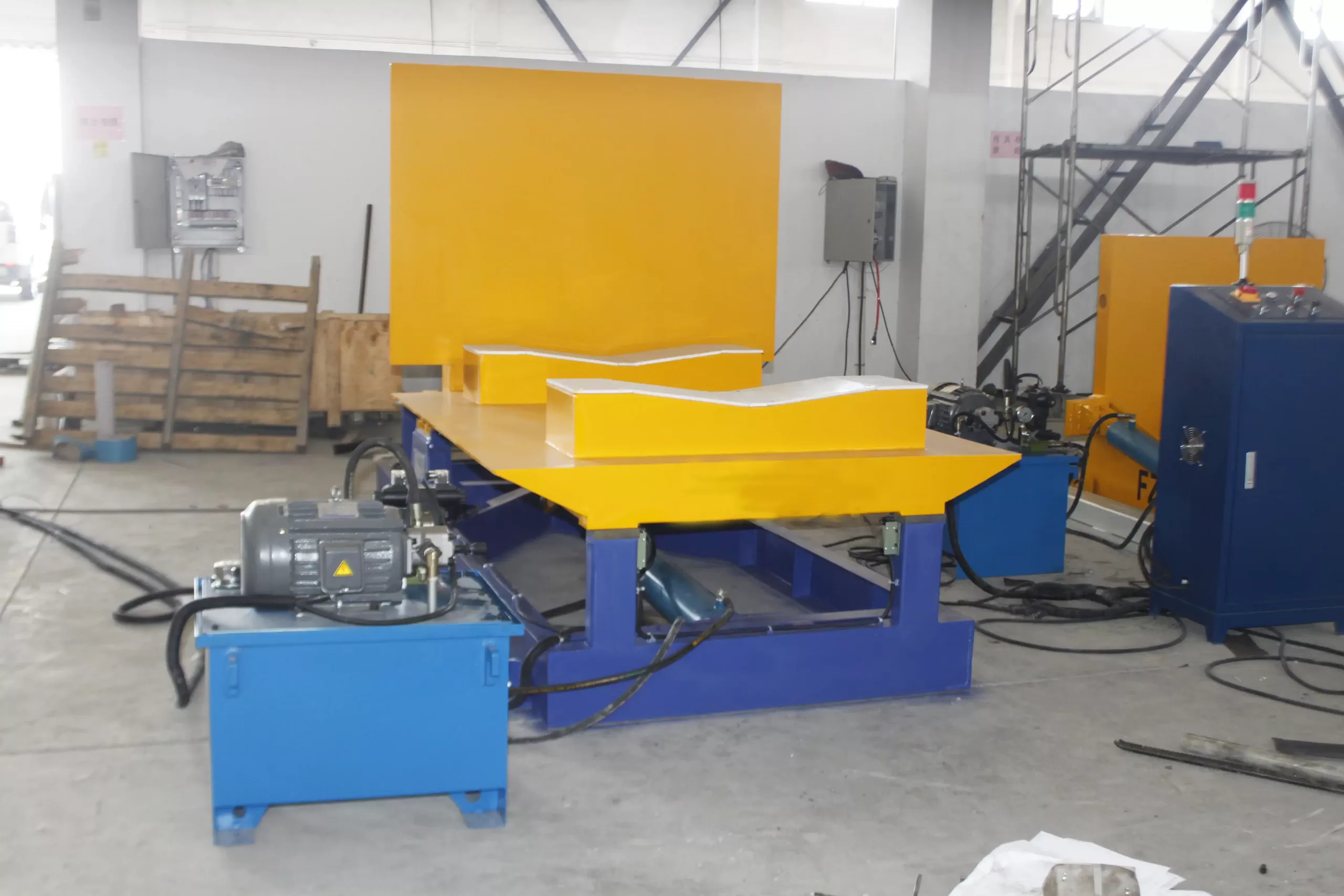
You know the pain points: slow manual handling, high injury risks, and product damage during transitions. The goal is clear—find a reliable, efficient upender. But with so many models and suppliers on the market, how do you cut through the noise and identify the features that truly matter for your heavy-duty environment? Let's break down the four non-negotiable feature categories you must evaluate. This guide, drawn from decades of hands-on experience in packing machine design and factory operations, will help you make an informed decision that delivers a clear return on investment.
1. Is the Load Capacity & Safety System Robust Enough for Your Heaviest Coils?
Imagine ordering an upender rated for 10 tons, only to discover your occasional 12-ton coils cause it to strain, malfunction, or worse, fail. Underestimating load capacity is a costly and dangerous mistake. The core function of an upender is to handle immense weight reliably and safely, day in and day out. Therefore, the first and most fundamental feature to scrutinize is its rated capacity and the integrated safety systems that protect both the machine and your personnel.
You must select a coil upender with a load capacity that exceeds your current maximum coil weight by a significant safety margin, typically 20-25%, and is equipped with multiple, redundant safety systems like mechanical locks, hydraulic safety valves, and emergency stop circuits. This ensures long-term reliability, accounts for future production needs, and creates a fail-safe operational environment. Never base your decision solely on "average" weight; always plan for the peak.

A Deeper Look at Capacity and Safety
Choosing the right capacity and safety package requires more than just reading a spec sheet. You need to think like an engineer on your shop floor.
🔍 Understanding True Capacity Ratings:
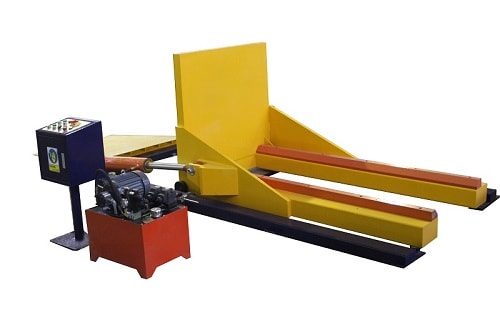
- Static vs. Dynamic Load: The rated capacity is usually a static load. However, the dynamic forces during the lifting and rotating motion are higher. A quality manufacturer like Fengding designs for these dynamic stresses, ensuring the machine operates smoothly under its rated limit.
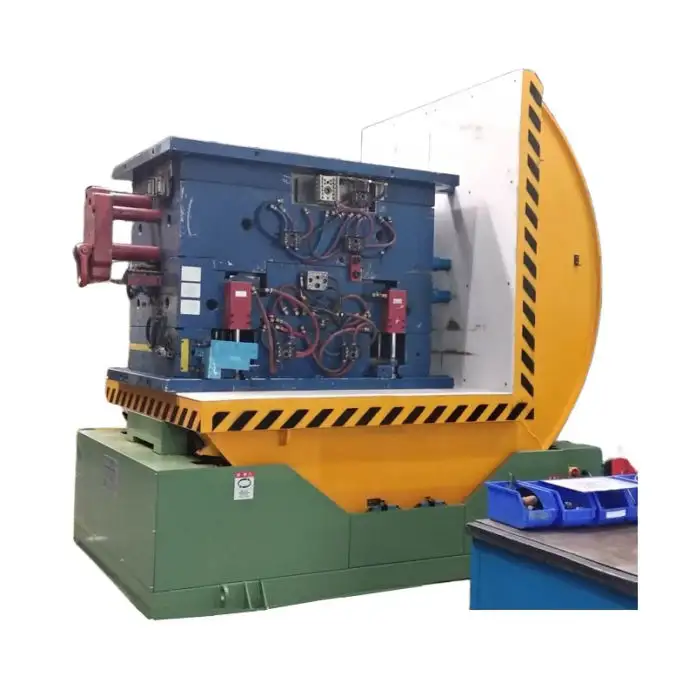
- Center of Gravity Matters: Coils are not uniform blocks. The weight distribution changes as they rotate. A superior upender has a design that accounts for this shift, maintaining stability throughout the entire 90-degree or 180-degree turn. Ask suppliers how their design manages the variable center of gravity.
- The Margin of Safety: If your heaviest coil is 8 tons, do not buy an 8-ton upender. Opt for a 10-ton or 12-ton model. This extra margin reduces wear on cylinders, motors, and structural welds, dramatically extending the machine's service life and reducing maintenance downtime.
🛡️ Decoding Essential Safety Features:
A safe upender is a productive upender. Look for these critical systems:
| Safety Feature | What It Does | Why It's Critical |
|---|---|---|
| Mechanical Safety Locks / Latches | Physically lock the rotating arms or cradle in place, especially at the load/unload positions. | Prevents accidental movement due to hydraulic system failure. Provides a physical barrier for workers during coil strapping or positioning. |
| Hydraulic System Safety Valves | Prevent uncontrolled dropping if a hydraulic hose bursts or a seal fails. | Ensures the load is held securely even in a catastrophic hydraulic failure, protecting personnel and product below. |
| Overload Protection Sensors | Monitor hydraulic pressure or motor current to detect loads exceeding the safe limit. | Automatically stops the operation before structural damage occurs. It's the machine's self-preservation instinct. |
| Emergency Stop Buttons & Safety Guards | Easily accessible E-stops on the control panel and near the machine. Physical guards around pinch points. | Allows for immediate human intervention. Guards prevent accidental contact with moving parts during operation. |
| Two-Hand Control Operation | Requires the operator to use both hands to initiate the turning cycle. | Keeps the operator's hands away from the danger zone during the machine's movement. |
💡 Pro Insight from the Factory Floor: I've visited plants where managers opted for a cheaper model with basic safety. The result was constant anxiety and near-misses. Investing in a upender from a safety-first manufacturer like Fengding or Wuxi Buhui isn't an extra cost—it's insurance against catastrophic loss, worker injury, and regulatory fines. The peace of mind knowing the machine won't fail under load is priceless. (core features of industrial coil upenders, safety standards for heavy machinery, load capacity calculation for steel coils)
2. How Precise and Reliable is the Drive & Control System?
A coil upender must be powerful, but raw power without control is just a hazard. The drive system (how it generates force) and the control system (how you command it) determine the machine's precision, smoothness, and operational feel. You need a system that provides gentle, controlled acceleration and deceleration to prevent coil "swing" or internal damage, especially with delicate materials like aluminum or pre-painted steel.
For most heavy-duty industrial applications, a full hydraulic drive system paired with a programmable logic controller (PLC) offers the best combination of power, smooth control, and reliability. Hydraulic systems deliver immense torque at low speeds, perfect for starting a heavy coil moving. A PLC allows for customizable, repeatable motion profiles and easy integration with plant automation systems, moving you beyond simple manual button-pushing.

Diving into Drive Systems and Control Precision
The choice between hydraulic, electromechanical, or hybrid drives has a direct impact on your operational efficiency and maintenance schedule.
⚙️ Comparing Drive System Types:
-
Full Hydraulic Drive:
- Pros: Superior power-to-weight ratio. Excellent for slow, high-torque movements. Naturally dampens shocks and vibrations. Components are often robust and serviceable.
- Cons: Requires a hydraulic power unit (potentially noisy). Risk of oil leaks if maintenance is poor. Slightly less energy-efficient at standby.
- Best for: Heavy-duty, high-capacity applications (e.g., steel mills, large metal service centers). This is the industry standard for reliability, which is why leaders like Fengding specialize in robust hydraulic solutions.
-
Electromechanical Drive (Motor + Gearbox):
- Pros: Very clean and quiet operation. High energy efficiency. Precise positioning capability.
- Cons: Can struggle with high inertial loads at start-up. Gearboxes may require more frequent maintenance under heavy shock loads.
- Best for: Lighter loads, cleaner environments, or where precise angular positioning is critical.
🎛️ The Importance of Advanced Control:
A simple relay box with forward/stop buttons is outdated. Modern upenders should offer:
- PLC Control: The brain of the machine. It allows you to program speed profiles (e.g., start slow, rotate fast in the middle, finish slow). This prevents the coil from "slamming" into the end stops.
- Variable Speed Control: Operators should be able to adjust rotation speed via a dial or touchscreen for different coil types and weights.
- Integration Capability: The PLC should have standard I/O ports (Input/Output) or communication protocols (like Ethernet/IP). This allows the upender to receive signals from your overhead crane or conveyor system, enabling semi-automatic or fully automatic operation. For example, the crane places the coil, a sensor confirms placement, and the upender automatically cycles.
- User-Friendly HMI: The Human-Machine Interface (the screen or control pendant) should be intuitive, possibly with multi-language support and clear fault diagnostics.
🤔 Critical Question for Your Supplier: "Can you show me the motion curve of the upender? How do you ensure a smooth start and stop?" A reputable supplier like Wuxi Buhui will have test videos or simulations demonstrating this controlled motion. Jerky movement is a red flag for poor hydraulic circuit design or inadequate control logic, leading to product damage and accelerated wear. (hydraulic drive system for material handling, PLC automation for coil turning, variable speed control in industrial upenders)
3. Can the Structure Withstand Your Factory's Demanding Environment?
The skeleton of the upender—its frame, welds, bearings, and plating—is what stands between a decade of trouble-free service and a nightmare of cracks, bends, and failures. In a metal processing plant, the environment is harsh: constant vibration from nearby machinery, airborne abrasive dust, potential impacts from misaligned coils, and heavy cyclic loading. The structural integrity of the upender is not a place to compromise.
You need a coil upender constructed from high-tensile steel plate with full-penetration welds, reinforced at all stress points (especially the rotating pivot and base), and protected by a durable finish like sandblasting and industrial-grade paint. The design should be simple, with fewer moving parts in high-stress areas, as complexity often introduces weak points. Look for a design that has been proven in field applications similar to yours.
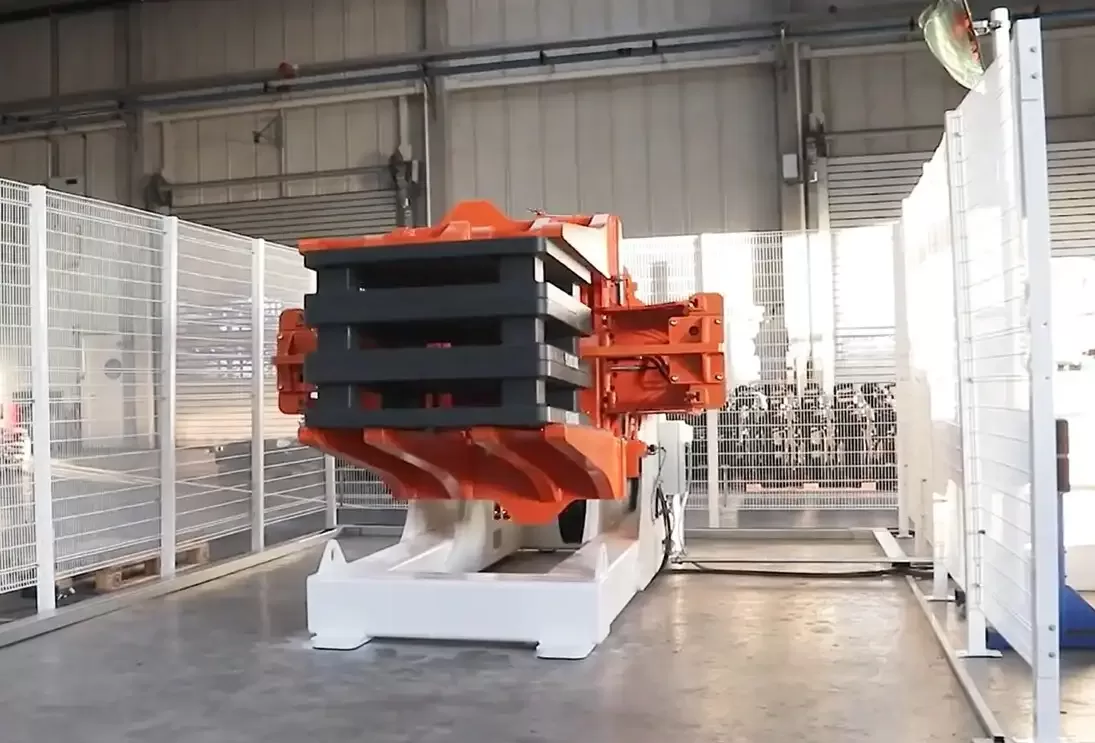
Evaluating Build Quality and Durability
Assessing structural quality goes beyond a thick coat of paint. You need to understand the engineering beneath the surface.
🏗️ Key Structural Components to Examine:
- Frame Material & Design: The main frame should be made from Q235B or Q345B steel plate (Chinese standards analogous to A36/A572 steel). Thicker plate isn't always better; intelligent design with proper ribbing and gusseting is more important. Ask for the CAD drawings or design calculations to see how stress is distributed.
- The Critical Pivot Point: This is the heart of the upender, where the rotating arm connects to the base. It must use oversized, high-load spherical roller bearings or custom-machined bushings with continuous lubrication systems. A failed pivot bearing means the entire machine is down for a major repair.
- Welding Quality: This is paramount. Look for continuous, smooth, full-penetration welds, not intermittent "tack" welds. Weld seams should be ground smooth in high-stress areas to prevent crack initiation. Reputable manufacturers like Fengding often provide weld inspection reports.
- Cradle or Arm Design: The part that directly contacts the coil must be strong and adaptable. Look for replaceable wear pads or polyurethane liners to protect both the coil and the machine. The shape should securely cradle the coil without causing point-load damage.
🛠️ Protection for Longevity:
The factory environment is an enemy of machinery. A good upender fights back with:
- Surface Preparation: Metal should be sandblasted or shot-blasted to SA2.5 standard before painting. This removes rust and creates a surface for paint to adhere to.
- Paint System: A primer + epoxy topcoat system is standard. For extremely corrosive environments (coastal areas, chemical exposure), inquire about zinc-rich primers or even hot-dip galvanizing of the frame.
- Component Protection: Hydraulic cylinders should have chromed piston rods and protective bellows. Electrical cabinets should have a high IP (Ingress Protection) rating (e.g., IP54) to keep out dust and water spray.
📈 The Cost of Cheap Construction: I've seen "bargain" upenders develop hairline cracks at weld joints within a year. The cost of repairing a broken weld on a loaded structure—requiring cranes, certified welders, and production stoppages—far exceeds the initial price difference with a well-built machine. Investing in the robust construction of a Fengding upender is an investment in decades of reliable, low-maintenance service. (industrial steel fabrication standards, heavy-duty welding for machinery, corrosion protection for factory equipment)
4. Will It Adapt to Your Line Today and Scale with Your Needs Tomorrow?
A upender is a significant capital investment. You're not just buying for today's coil size and production speed. What happens when you land a new contract for wider coils? Or when you finally automate your conveyor line next year? A rigid, single-purpose machine becomes an obstacle to growth. The best upenders are designed with flexibility and future integration in mind, acting as a modular component within your larger material handling ecosystem.
Prioritize coil upenders that offer modular attachments, adjustable cradle widths, and open-architecture control systems that can easily communicate with other equipment like cranes, conveyors, and strapping machines. This adaptability ensures the machine remains a valuable asset through changes in product mix and advancements in your factory's automation level, protecting your investment for the long term.
The Essentials of Adaptability and Integration
Future-proofing your purchase involves looking at both physical and digital connectivity.
🔧 Physical Adaptability Features:
- Adjustable Cradle Width: Can the arms or supports be manually or hydraulically adjusted to handle different coil diameters (O.D.) and widths? This is crucial for job shops or service centers with diverse product ranges.
- Modular Tooling: Does the supplier offer different cradle styles (V-shaped, flat, with rubber pads) or special attachments for handling wire rod bundles or irregular shapes? Swapping tooling should be a simple, pin-and-lock procedure.
- Footprint & Installation Flexibility: Consider the machine's base design. Does it allow for easy anchoring to your floor? Can it be positioned to receive coils from multiple directions? Think about your current and future factory layout.
📡 System Integration Capabilities (The Digital Side):
This is where modern upenders add tremendous value. The machine should not be an island.
- Standardized Communication Protocols: The PLC should support common industrial networks like Ethernet/IP, Profinet, or Modbus TCP. This is the "language" it uses to talk to your plant's central control system (SCADA) or other machines.
- Pre-defined I/O Signals: The machine should have a standard set of input signals (e.g., "Coil in Position", "Cycle Start") and output signals (e.g., "Cycle Complete", "Fault Alarm"). This allows a systems integrator to easily wire it into an automated sequence.
- Sensor Readiness: Look for built-in mounting points for add-on sensors—proximity sensors to detect coil presence, barcode scanners to identify coil IDs, or laser alignment systems. This data can be fed back to your production tracking software.
🚀 Planning for the Automated Factory: The end goal for managers like Michael is a seamless flow from production to packaging. Imagine this automated cell: An overhead crane with a C-hook automatically delivers a coil to the upender cradle. A sensor confirms load, and the upender rotates it 90°. A roller conveyor then indexes the now-vertical coil into an automatic strapping machine. Finally, a palletizer places it on a delivery truck. This is only possible if each component, including the upender, is designed to be a cooperative part of the whole. Suppliers like Fengding and Wuxi Buhui understand this interconnected need and design their equipment accordingly. (modular coil handling equipment, industrial automation integration, future-proof factory investments)
Conclusion
Choosing the right coil upender requires a sharp focus on robust capacity and safety, precise and reliable drive systems, durable heavy-duty construction, and adaptable design for future growth. By prioritizing these features, you invest not just in a machine, but in a long-term partner for productivity and safety. For a reliable solution that masters these principles, explore the engineered options from a trusted Coil Upender specialist.