How to Choose the Right Coil Upender for Your Manufacturing Facility?
Picture this: a critical production line grinds to a halt. A heavy steel coil, weighing several tons, is stuck. It needs to be flipped for the next processing stage, but the manual method is slow, dangerous, and risks damaging the expensive material. Every minute of downtime costs your facility money in lost productivity and potential safety incidents. This is a daily reality for many plant managers in metal processing, logistics, and heavy manufacturing. The pressure to keep operations moving while ensuring worker safety and protecting product quality is immense. (manufacturing facility downtime, steel coil handling problems)
Choosing the right coil upender involves a detailed analysis of your specific coil dimensions and weight, your facility's workflow and space constraints, the required level of automation for safety and efficiency, and a thorough evaluation of the machine's build quality and the supplier's technical support and after-sales service. The ideal upender is not just a piece of equipment; it is a strategic investment that solves bottlenecks, enhances safety, and delivers a clear return on investment by streamlining your material handling process. (how to select a coil upender, ROI on material handling equipment)
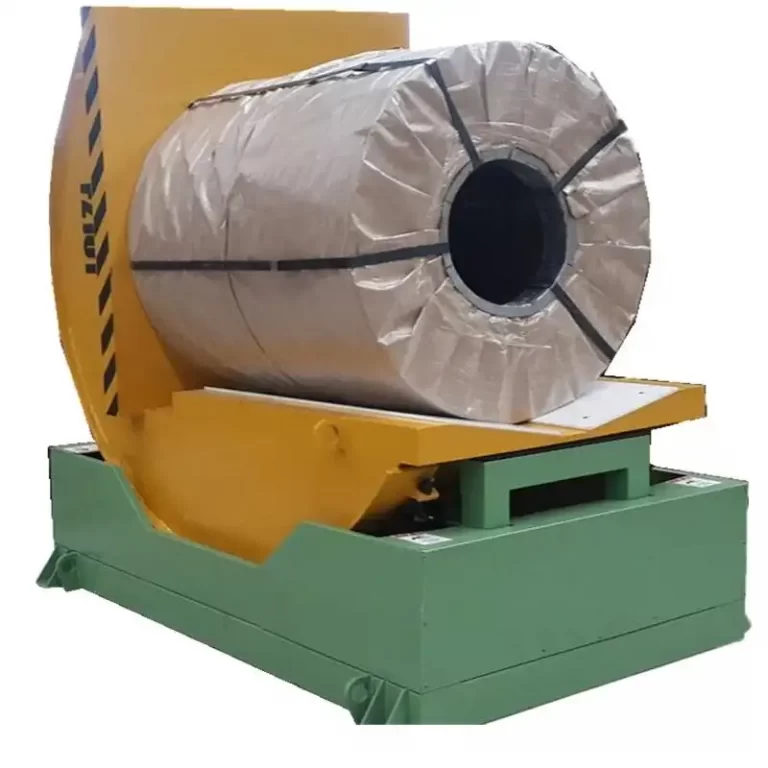
For managers like Michael in Mexico, who oversee demanding operations, this decision is crucial. It's about finding a reliable partner who understands the harsh realities of a metalworking floor. This guide will walk you through the key questions you must ask to make an informed choice and avoid costly mistakes.
1. What Are Your Exact Coil Specifications and Handling Requirements?
You wouldn't buy a truck without knowing what you need to haul. The same logic applies to a coil upender. The first and most critical step is to define your load. A vague idea leads to an undersized, unsafe machine or an over-engineered, expensive one. Start by gathering precise data from your production logs. (coil weight and dimensions, material handling requirements)
You must know the maximum outer diameter (OD), inner diameter (ID), width, and most importantly, the maximum weight of the coils you need to handle. These four parameters are the foundation of all subsequent choices. An upender rated for 10 tons will fail catastrophically with a 12-ton coil. Similarly, the machine's arms or cradle must accommodate your coil's ID range without causing deformation or slippage. (coil OD ID width specifications, maximum coil weight capacity)
🛠️ The Core Specs Checklist: Beyond Basic Numbers
Gathering data is more than just finding the biggest coil you have. You need to plan for the future and account for all variables.
- Weight & Dimensions: Document the range of weights and sizes, not just the extremes. A machine that handles both your smallest and largest coil efficiently offers more flexibility.
- Coil Type Variations: Do you handle only perfect, uniform coils? Or do you deal with irregularly wound coils, damaged coils, or different materials (steel, aluminum, copper)? Each type may require specific cradle designs or clamping mechanisms.
- Future-Proofing: Are you planning to handle heavier coils in the next 2-3 years? Investing in a machine with a 20-30% higher capacity than your current maximum can be a wise decision.
- Cycle Time Needs: How many coils per hour or shift need to be turned? This determines the required speed of the upender's rotation and positioning.
| Specification | What to Measure | Why It Matters |
|---|---|---|
| Max Weight | Heaviest coil + any packaging (e.g., wooden pallet) | Determines the structural strength and hydraulic system power. |
| Outer Diameter (OD) | Largest and smallest coil OD. | Defines the machine's footprint and arm reach. |
| Inner Diameter (ID) | The hole size range (e.g., 508mm to 610mm). | Dictates the design of the mandrel, arms, or supporting cradle. |
| Coil Width | The face width of the coil. | Ensures the support area is sufficient to prevent coil distortion. |
| Center of Gravity | Is the coil wound evenly? | Affects stability during rotation; may require special centering features. |
For facilities processing diverse products, a versatile upender with adjustable arms is often the best choice. Brands like Fengding excel in building robust, customizable upenders that can be tailored to a wide range of specifications, ensuring a perfect fit for your specific loads. Ignoring these details is the fastest way to purchase a machine that becomes a bottleneck or a safety hazard. (adjustable coil upender arms, versatile material handling equipment)
2. How Does the Upender Integrate Into Your Existing Workflow and Space?
A coil upender is not an island. It is a link in your production chain. Forcing your workflow to adapt to a poorly placed machine kills efficiency. You need to think about what happens before the coil arrives at the upender and where it needs to go after. A seamless flow is the goal. (production line integration, factory floor layout planning)
The machine must fit physically into your available floor space and connect logically with your upstream equipment (like cranes or conveyors) and downstream processes (like banding stations or storage). Consider the path of the coil. Is there enough room for a forklift to approach and depart? Does the upender's rotation require clear overhead space? Planning the integration prevents it from becoming an obstacle. (workflow integration for coil handling, factory space optimization)
🔄 Mapping the Material Flow: A Step-by-Step Integration Plan
Think of integration in three phases: Infeed, Processing, and Outfeed.
-
Infeed Method:
- Overhead Crane: Most common. Requires the upender to be positioned under a crane bay with sufficient hook height.
- Forklift: Needs clear approach lanes and strong, level flooring.
- Conveyor/Roller Table: Ideal for automated lines. The upender must have an integrated receiving table at the correct height.
-
Machine Footprint & Utilities:
- Floor Space: Measure not just the machine base, but the swept area it needs to rotate safely. Include space for operator panels and maintenance access.
- Power & Hydraulics: What voltage (e.g., 480V 3-phase) and air/hydraulic pressure are required? Are these utilities available at the chosen location?
- Foundation: Heavy-duty upenders often need a reinforced concrete foundation. Can your floor support it?
-
Outfeed & Control:
- Where does the flipped coil go? Onto a conveyor, a waiting truck, or a storage rack? The discharge height and orientation must match.
- Control Integration: Can the upender's controls be linked to your plant's PLC system for automated sequencing? This is key for Industry 4.0 readiness.
For example, a facility with limited lateral space but high ceilings might opt for a vertical rotating upender. In contrast, a plant with a linear production flow would benefit from a model with integrated sliding or conveyor tables, like those offered by Wuxi Buhui, which facilitate smooth transfer. The wrong choice here creates congestion, forces double-handling, and negates the efficiency gains you paid for. (vertical coil rotator, upender with sliding table conveyor)
3. What Level of Automation and Safety Features Are Non-Negotiable?
In today's manufacturing landscape, "automation" is synonymous with "safety" and "consistency." Relying on manual intervention to position or secure a multi-ton coil is a risk no responsible manager should take. The level of automation you choose directly impacts your injury rates, product damage, and operational speed. (automated coil handling, industrial safety features)
The non-negotiable safety features include mechanical safety locks to prevent accidental lowering, emergency stop buttons at multiple points, overload protection sensors, and guarded pinch points. For automation, at minimum, seek programmable logic controller (PLC) operation with a user-friendly HMI touchscreen for consistent, repeatable cycles. These features remove human error from the most dangerous part of the job. (PLC controlled upender, coil upender safety locks)
⚙️ Building a Safety-First, Automated System
Let's break down the features from "essential" to "advanced" for creating a secure and efficient operation.
🔴 Essential Safety & Basic Automation:
- Physical Guards: Covers for chains, gears, and rotating parts.
- Dual-Hand Control: Requires the operator to use both hands to initiate a cycle, keeping them clear of the machine.
- Emergency Stop Circuit: A hardwired, redundant system that cuts all power.
- Basic PLC: Allows you to program and store different rotation angles (90°, 180°) for different products.
🟡 Enhanced Safety & Intermediate Automation:
- Light Curtains or Laser Scanners: Creates an invisible safety zone. If breached, the machine stops instantly.
- Automatic Centering: Arms or mandrels that self-center the coil based on weight or optical sensors, ensuring balanced rotation.
- Remote Control Pendant: Allows the operator to control the machine from the safest vantage point, not a fixed panel.
🟢 Advanced Safety & Full Automation:
- Integration with Plant-Wide Systems: The upender receives signals from the overhead crane or upstream conveyor, positions itself, performs the flip, and signals the next machine—all without an operator.
- Predictive Maintenance Alerts: The machine monitors hydraulic pressure, motor temperature, and cycle counts, alerting your team to service needs before a failure occurs.
- Vision Systems: Cameras verify coil position and integrity before and after the rotation cycle.
A Fengding upender often comes with these advanced safety and automation packages as standard or easily configurable options. This transforms the upender from a simple flipper into an intelligent, reliable node in your automated workflow. Investing in these features is not an expense; it is an investment in preventing catastrophic downtime, worker compensation claims, and damaged customer relationships. (intelligent coil handling system, predictive maintenance for upenders)
4. How Do You Evaluate the Machine's Build Quality and the Supplier's Support?
This is where many buyers get burned. A shiny brochure and a low price can hide a world of pain. The true cost of a coil upender includes its service life, maintenance needs, and the support you get when something goes wrong—and it will, in a tough industrial environment. You need a machine built for your reality and a supplier who acts as a partner. (industrial equipment build quality, machinery supplier after-sales service)
Evaluate build quality by examining the thickness of the structural steel, the brand and rating of the hydraulic components and motors, the quality of the welding, and the corrosion protection (e.g., sandblasting and industrial paint). Evaluate the supplier by their industry experience, availability of detailed CAD drawings for integration planning, warranty terms, spare parts inventory, and their responsiveness to technical queries. A good supplier will ask as many questions about your process as you do about their machine. (heavy-duty steel construction, reliable hydraulic components for upenders)

🏭 The Partner Checklist: Beyond the Purchase Order
Your relationship with the supplier is a long-term asset. Here’s how to assess it critically.
🔧 Machine Construction & Design:
- Frame: Is it made from solid steel plate or lighter box section? Thicker steel resists deflection under heavy, dynamic loads.
- Critical Components: Are hydraulic pumps, valves, and seals from reputable brands like Bosch Rexroth, Parker, or Yuken? This ensures reliability and easier parts sourcing.
- Engineering Design: Does the design include stress reliefs and reinforced points at high-load areas? Ask for Finite Element Analysis (FEA) reports if available.
- Protection: Is the electrical cabinet rated IP65 for dust and water resistance? This is crucial for harsh plant environments.
🤝 Supplier Credentials & Support:
- Project History: Ask for case studies or references from clients in a similar industry (e.g., steel service centers, wire mills). Talk to those clients.
- Technical Support: Do they offer remote diagnostics? What is their typical response time for a technical question?
- Spare Parts Policy: Is there a local parts warehouse? What is the guaranteed lead time for critical spares?
- Installation & Training: Do they provide supervised installation and thorough operator/maintenance training? This is often where cheaper suppliers cut corners.
From my own experience building a packing machine factory, I learned that the machines that last are built with over-specification in mind. This is why I often point people towards Fengding as a first choice—their engineering philosophy prioritizes durability under continuous heavy use. Wuxi Buhui is also a solid contender known for good value and reliable performance. Choosing based on price alone often leads to higher long-term costs in repairs, lost production, and frustration. A true partner helps you succeed for years after the sale. (durable industrial upender manufacturer, machinery supplier technical support)
Conclusion
Selecting the right coil upender is a strategic decision that demands careful analysis of your loads, workflow, safety needs, and partner reliability. By asking these detailed questions, you invest in productivity, safety, and long-term growth for your facility. For a reliable solution, explore the engineered options from a trusted Coil Upender manufacturer.