What is a Coil Upender and How Does It Benefit Your Business?
Picture this: a heavy steel coil, weighing several tons, needs to be flipped from a horizontal to a vertical position for the next processing step. Your workers are using chains, forklifts, and sheer manpower. The air is thick with tension. Every second of delay costs money, and every lift carries the risk of a catastrophic accident. This was the daily reality for many factory managers I've consulted with, including those in Mexico's demanding metalworking sector. The pressure to maintain output while keeping people safe is immense. If this scenario feels familiar, you're not just looking for a machine; you're searching for a fundamental solution to a critical operational bottleneck. (steel coil handling challenges, metal processing plant operations)
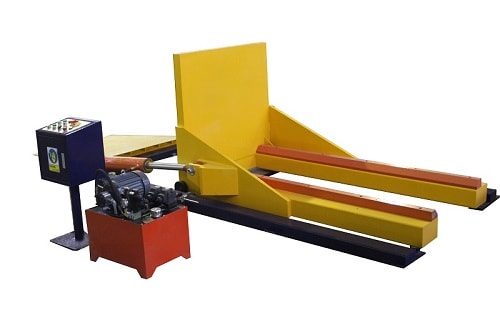
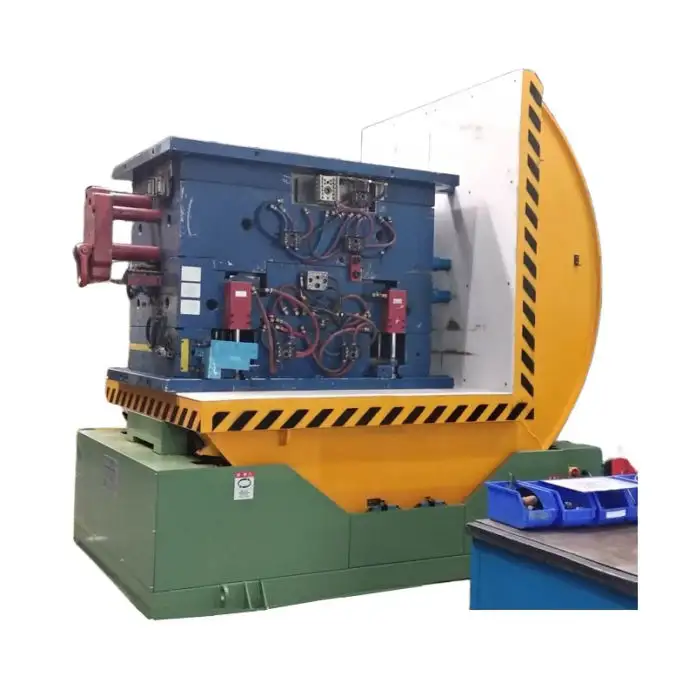
A coil upender, also known as a coil tilter or coil turnover machine, is a specialized piece of material handling equipment designed to safely and efficiently rotate heavy coils, typically from a horizontal to a vertical orientation or vice versa. It operates using a robust hydraulic or mechanical system to grip and pivot the load, eliminating the need for dangerous manual labor or improvised methods. The primary benefit for your business is the direct transformation of a high-risk, slow, and variable manual process into a fast, repeatable, and safe automated operation. This leads to significant gains in productivity, a drastic reduction in workplace injuries, and lower long-term operational costs. (coil upender definition, benefits of automated coil turning)
For factory leaders like Michael in Mexico, who manage the intense workflow from raw material to finished product, understanding this equipment is the first step toward solving deeper problems. It's not just about flipping a coil; it's about fixing a broken link in your production chain. Let's explore how this machine works and why it should be a central part of your strategy for a safer, more profitable plant.
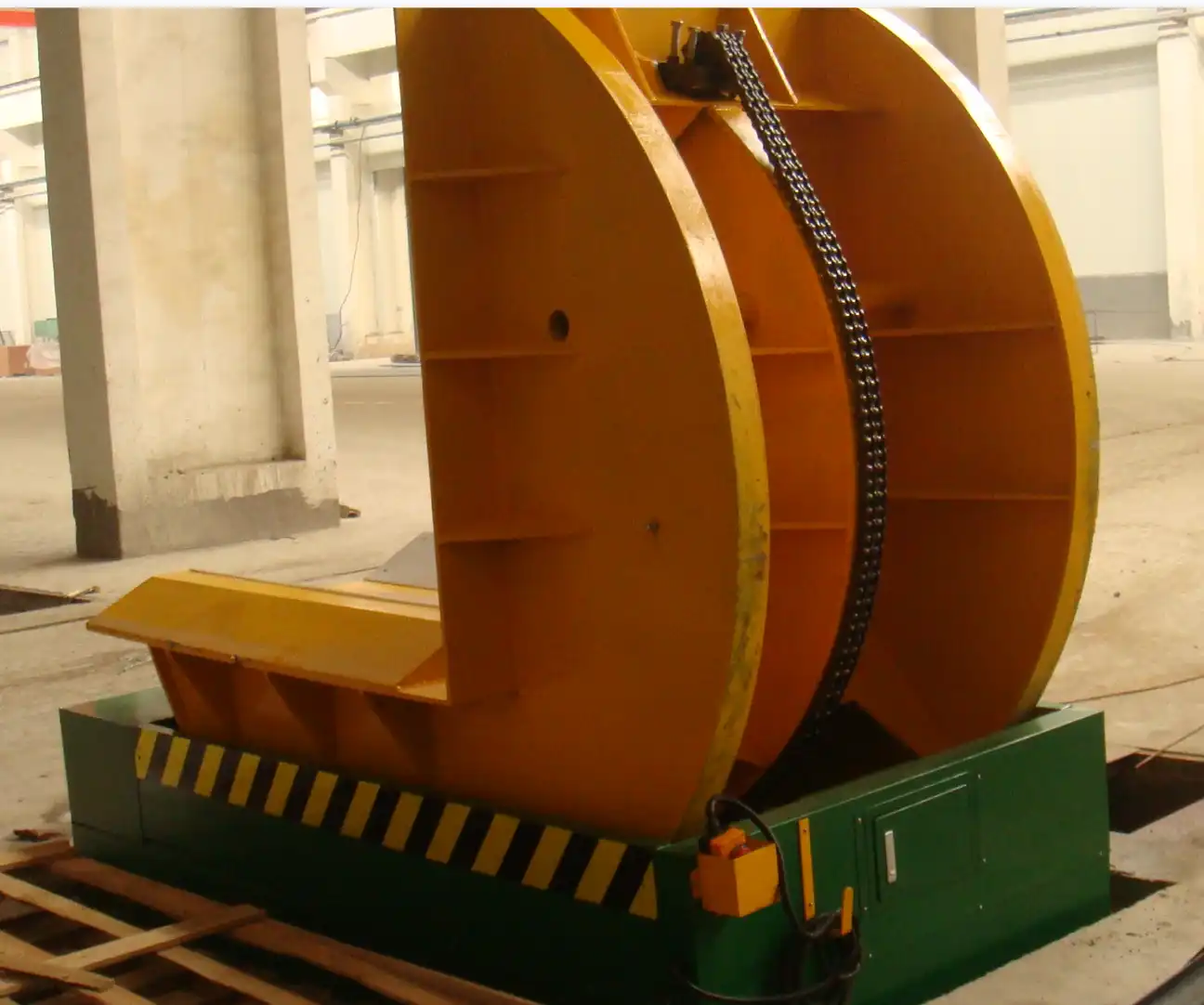
1. What Exactly is a Coil Upender and How Does It Work?
You see a massive machine near the end of your production line. Workers are no longer straining with chains. Instead, a coil rolls into position, is securely clamped, and smoothly rotates 90 degrees. How does this happen? The core function seems simple, but the engineering behind it addresses your most critical concerns: reliability and safety. (how does a coil tilter work, industrial upender mechanism)
A coil upender is a powered machine that uses a combination of strong arms, clamps, or a rotating cradle to securely hold a metal coil. A powerful hydraulic or electric drive system then provides the controlled force to turn the entire assembly, precisely positioning the coil as needed for the next stage, such as feeding into a slitting line or a press. Key components include the robust lifting/rotating mechanism, a secure clamping system to prevent load shift, and a control panel for operator command. This design completely removes workers from the hazardous zone of the moving load. (coil upender components, hydraulic coil turnover machine)
🔧 Breaking Down the Upender's Operation: A Step-by-Step Guide
To truly appreciate its value, let's look at what happens inside the machine during a typical cycle. This process directly answers the common operator question: "How do we use this safely and efficiently?"
| Step | Action | Machine Function | Benefit to Your Operation |
|---|---|---|---|
| 1. Loading | The horizontal coil is transported (e.g., by conveyor or forklift) into the upender's cradle. | The machine's arms or cradle are positioned to receive the load. | Standardizes the input point, making the process repeatable. |
| 2. Clamping / Securing | The operator initiates the clamp sequence via the control panel. | Hydraulic or mechanical clamps engage, firmly gripping the coil's inner diameter or outer surface. | Eliminates load shifting, the #1 cause of tipping accidents during manual turns. |
| 3. Rotation (Upending) | The operator selects the rotation direction (e.g., horizontal to vertical). | The drive system (hydraulic cylinders or motor) activates, pivoting the entire clamp-and-coil assembly. | Provides controlled, powered movement instead of unpredictable manual force. |
| 4. Unloading | The coil is now in the desired orientation. Clamps release. | The machine resets its arms to the start position. | Presents the coil correctly aligned for the next machine, saving setup time. |
This structured process replaces a chaotic, skill-dependent manual task. The clamping system is vital—it must be adaptable for different coil IDs (Inner Diameters) and weights, which is a key feature in quality upenders from manufacturers like Fengding. Furthermore, the control system ranges from simple push-button operation to programmable logic controllers (PLCs) that can integrate with your plant's wider automation network. For a manager, this means you can track cycles, log data, and even predict maintenance needs. The move from "muscle and luck" to "mechanics and logic" is what delivers the promised return on investment. The right partner, like Fengding or Wuxi Buhui, will help you specify the clamp type and control level that matches your specific coil specs and factory workflow. (coil upender operation cycle, PLC controlled upender, coil ID adaptability)
2. What are the Direct Business Benefits of Using a Coil Upender?
You're considering a significant capital investment. Your board or owner will ask: "What do we get for our money?" The answer extends far beyond the machine's basic function. The benefits hit the core metrics every plant manager is judged by: safety records, output numbers, and the bottom line. (ROI of coil upender, business advantages of material handling automation)
The direct business benefits of a coil upender are a dramatic improvement in workplace safety by removing manual heavy lifting, a substantial increase in packaging and handling line speed, and a reduction in costs associated with product damage, worker compensation, and manual labor. This leads to a faster, more predictable production flow, lower operational risk, and a clear path to a positive return on investment (ROI), often within a surprisingly short period. (coil upender safety benefits, productivity gains from coil tilter)
💰 Calculating the Real Impact: Beyond the Price Tag
Let's translate these benefits into terms that matter for your P&L statement. The value isn't just in what the machine does, but in what it stops from happening.
-
🚫 Eliminating Catastrophic Cost: Workplace Injuries.
Manual coil turning is a high-risk activity. A slipped chain or a misjudged lift can lead to crushed limbs or worse. The costs are staggering: medical bills, skyrocketing insurance premiums, litigation, downtime for investigation, and the loss of skilled workers. An upender physically separates the worker from the danger. This isn't just an ethical imperative; it's a financial safeguard. The machine becomes your most effective safety officer. -
📈 Boosting Throughput: Solving the Bottleneck.
How many coils can your team turn per hour manually? Now, how many with a reliable upender? The difference is often a 200-300% increase in speed. This solves the bottleneck at the end of your line. Faster turnaround means you can process more orders, meet tighter delivery windows, and improve customer satisfaction. The machine doesn't get tired, take breaks, or work shifts. Its consistent pace pulls your entire production rate upward. -
🔧 Reducing Hidden Costs: Damage and Labor.
- Product Damage: Manual methods often scrape or dent the precious edges of steel coils. This leads to customer rejections, rework, or price discounts—a direct hit to your margin. An upender handles the coil with consistent, controlled support, virtually eliminating this type of transit damage.
- Labor Optimization: You can reallocate the strong workers previously dedicated to this brute-force task to more skilled, value-added positions. This improves morale and utilizes your human resources more intelligently.
For a manager like Michael, presenting a case with these points—quantified with your own plant's data on injury rates, current turnover time, and damage reports—makes the investment undeniable. Leading suppliers like Fengding often provide ROI calculators for this exact purpose. (reducing coil edge damage, labor cost savings automation, upender ROI calculation)
3. What Key Features Should You Look for When Choosing a Coil Upender?
The market has many options. Choosing wrong means downtime, frustration, and a machine that becomes a costly monument to a bad decision. Your factory's environment is tough. You need a partner who understands that, and a machine built to match. The right features are not just specs on a sheet; they are promises of reliability. (how to choose a coil upender, features of industrial upender)
When choosing a coil upender, you must prioritize features that guarantee durability and safety in your specific environment. Look for a robust construction with high-grade steel, a reliable and powerful hydraulic system, customizable clamping options to fit your coil dimensions, and safety interlocks that prevent operation if the coil is not secured. Ease of maintenance and the supplier's reputation for after-sales support are equally critical features for long-term success. (coil upender selection criteria, durable upender construction)
⚙️ The Non-Negotiable Checklist for Your Upender
Think of this as your due diligence list. Don't just ask for a price; ask for proof on these points.
-
Build Quality & Capacity:
- Frame & Structure: Is it made from welded steel plate or lighter materials? It must withstand 24/7 shock loads.
- Rated Capacity: Never buy "at capacity." Choose a machine rated for at least 20-30% more than your heaviest coil. This provides a safety buffer and ensures longevity. Fengding is known for building this margin of safety into their designs.
-
Clamping & Rotation Mechanism:
- Clamp Type: Does it use inner mandrel clamps, outer arm clamps, or a combination? The best choice depends on your coil's ID and whether the surface is finish-sensitive.
- Drive System: Hydraulic systems offer immense power and smooth control. Check the quality of pumps, valves, and cylinders. Sealed systems reduce leak risks.
-
Safety & Control Systems:
- Mandatory Safety Interlocks: Guards, two-hand operation buttons, and load-sensing systems that disable rotation if the coil isn't gripped.
- Control Interface: Simple is often better. Look for an intuitive panel with emergency stop, jog functions, and cycle counters.
-
The Supplier's "Features":
- Application Knowledge: Can they discuss your specific bottleneck, like wire rod bundle turning or delicate coated coils?
- Service & Parts: What is their response time for technical support? Is there a local stock of wear parts?
- Proof: Ask for case studies or references from similar industries, especially in heavy manufacturing. A supplier like Wuxi Buhui has a long track record you can investigate.
This is where my own experience building and running a packing machine factory is crucial. I've seen what fails under pressure. The difference between a good machine and a great one is often in the details: the grade of a hydraulic seal, the design of a pivot bearing, and the accessibility of components for routine maintenance. Your goal is a machine that becomes a dependable, silent partner on your shop floor for a decade or more. (upender hydraulic system quality, industrial equipment after-sales service, mandrel clamp vs arm clamp)
4. How Does Integrating a Coil Upender Fit into a Modern, Automated Factory?
Buying a single machine is a tactical move. But for visionary managers, the real question is strategic: "How does this fit into my larger plan for an automated, smart factory?" An upender shouldn't be an island; it should be a bridge that connects different parts of your workflow seamlessly. (coil upender in smart factory, automation integration packaging line)
Integrating a coil upender fits into a modern automated factory as the critical linking device between processing stations, such as a mill or slitter, and the final packaging or storage system. It acts as an automated workholding and positioning station that can receive commands from a central Plant Management System, log production data, and work in sync with conveyors, robots, and automatic strapping machines to create a continuous, hands-off material flow from production to dispatch. (automated material handling system, upender with PLC integration)
🏭 The Upender as a Data Node and System Integrator
The future of manufacturing is connected. Here’s how a modern upender contributes beyond just physical movement.
🔗 Level 1: Basic Mechanical Integration
- With Conveyors: The upender is placed inline. A coil arrives on a conveyor, is upended, and discharges onto another conveyor heading to the strapper.
- With Robots: A robotic arm can place coils into the upender cradle or remove them after rotation, especially for palletizing tasks.
- Function: This creates a continuous flow, eliminating waiting and manual transport.
📊 Level 2: Control & Data Integration (The Game Changer)
- PLC Communication: The upender's PLC can talk to the line's master PLC. It can send signals like "Cycle Complete" or "Fault Alert."
- Data Collection: It can record vital statistics for every coil:
Coil ID #12345 → Processed at 14:32 → Cycle Time: 45 seconds. - Benefits for You:
- Real-Time Monitoring: You can see line status from your office.
- Predictive Maintenance: The system can alert you when hydraulic pressure drops or cycle times slow, signaling a need for service before a breakdown.
- Production Analytics: You get hard data on your true packaging line efficiency, identifying other bottlenecks.
For a plant manager, this transforms the upender from a cost center to a source of operational intelligence. When you partner with a knowledgeable supplier, you're not just buying hardware; you're buying into a system philosophy. They should be able to discuss communication protocols (like Ethernet/IP or Profinet) and provide machines that are "integration-ready." This forward-thinking approach ensures your investment remains valuable as your factory evolves. It’s the difference between solving today’s problem and building for tomorrow’s growth. (predictive maintenance upender, Industry 4.0 packaging equipment, upender data logging)
Conclusion
A coil upender is more than just a flipping machine; it is a strategic investment that directly tackles the core challenges of safety, efficiency, and cost in heavy industry. By automating a critical bottleneck, it paves the way for a more productive, profitable, and modern factory. To explore robust solutions designed for demanding environments, consider reaching out to a specialized Coil Upender manufacturer.