Coil Upender FAQ: Everything You Need to Know
As a factory manager, you know that every minute of downtime costs money. You also know that manual handling of heavy coils is slow and dangerous. If you are looking for a way to solve these problems, you are in the right place. This guide will answer all your questions about coil upenders, the machines that can transform your material handling process.
A coil upender, also known as a coil tilter or coil flipper, is a specialized material handling machine designed to safely and efficiently rotate or reorient heavy coils of steel, wire, or other materials from a horizontal position to a vertical one, or vice versa. It is a critical piece of equipment in metal processing, logistics, and heavy manufacturing industries where handling large, heavy, and awkward loads is a daily challenge. By automating this physically demanding task, upenders eliminate major safety risks, drastically reduce handling time, and prevent costly product damage during the packaging and shipping process. (coil upender definition, coil tilter machine)

For managers like Michael in Mexico, who oversee high-volume metal processing, the decision to invest in an upender is not just about buying a machine. It's about finding a reliable partner who understands the intense pressure of maintaining production flow, controlling costs, and keeping workers safe. This FAQ is built from my two decades of experience—first as an engineer on the factory floor and now as the founder of FHOPEPACK. I've seen firsthand how the right equipment, backed by deep industry knowledge, can turn operational bottlenecks into competitive advantages. Let's dive into the key questions you need answered before making this important investment.
1. What Exactly Does a Coil Upender Do, and How Does It Work?
Imagine your workers struggling to manually flip a 5-ton steel coil. It's slow, it's dangerous, and one slip can cause serious injury or damage the product. This is the problem a coil upender solves instantly. It takes over this heavy, risky job with precision and power.
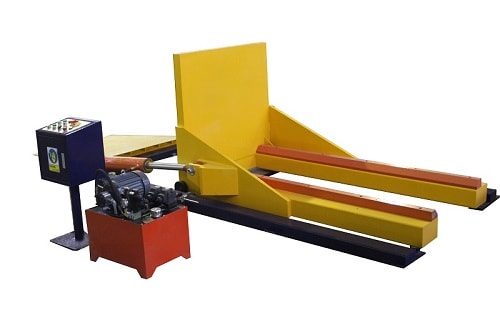
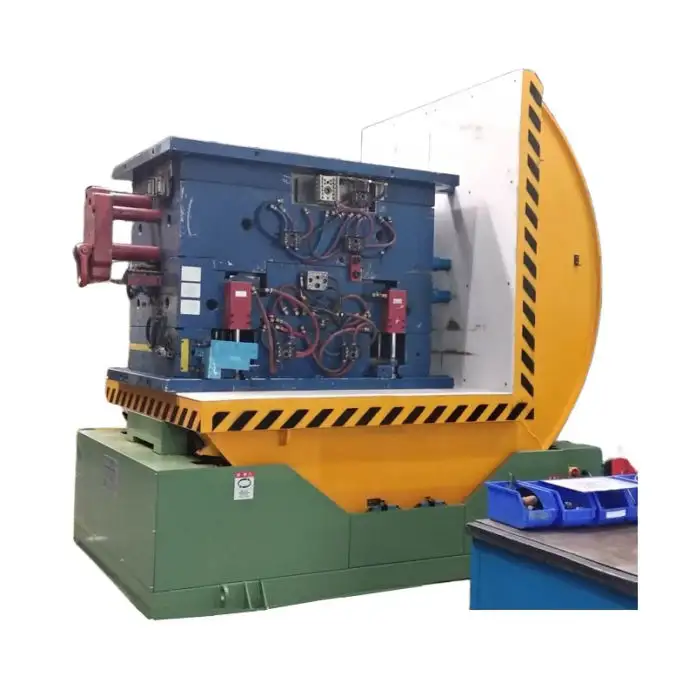
A coil upender performs the essential task of changing a coil's orientation. Its primary function is to rotate a coil from its travel/storage position (usually horizontal) to its processing or feeding position (often vertical). The machine uses a powerful hydraulic or electromechanical system to grip the coil securely—typically with adjustable arms or a cradle—and then rotates it along its central axis. This controlled rotation is crucial for the next steps in production, such as feeding the coil into a slitting line, strapping machine, or preparing it for secure packaging and shipment, all while keeping workers at a safe distance. (coil upender function, how a coil tilter works)
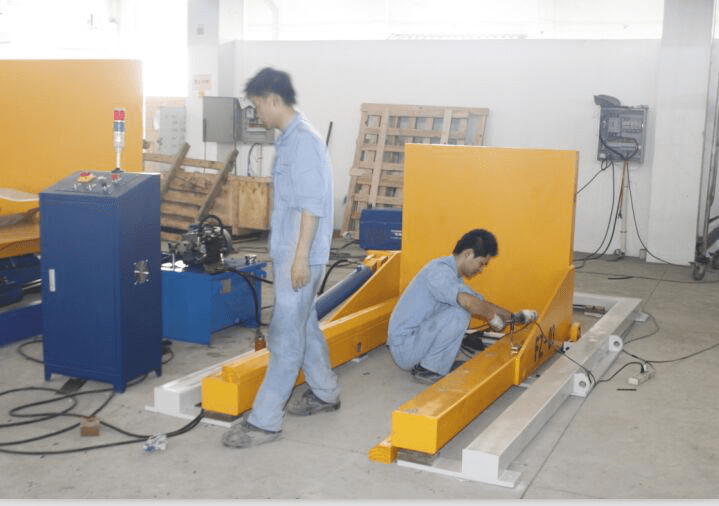
🔧 Breaking Down the Upender's Core Mechanism
To truly understand its value, let's look at what happens inside a typical hydraulic coil upender. The process is a symphony of robust engineering:
- Loading & Positioning: The coil, transported on a conveyor or by crane, is rolled or placed onto the upender's receiving cradle. The machine's arms or clamping system then close to secure the coil. This is the first critical safety step—ensuring zero movement during rotation.
- The Power Unit Activates: A hydraulic power pack (motor, pump, and reservoir) springs to life. It pumps hydraulic fluid at high pressure into a network of valves and cylinders.
- The Lift & Tilt: The main hydraulic cylinders extend. They don't just push; they lift the entire cradle assembly, initiating the rotation. The coil's weight is transferred from the ground to the machine's heavy-duty frame and pivot points.
- Controlled Rotation: Guided by a central pivot shaft or trunnion, the cradle rotates smoothly—90 degrees for a side-to-end tilt, or 180 degrees for a complete flip. The speed of this rotation is controlled by flow control valves, allowing for slow, careful movement even with massive loads.
- Unloading: Once the desired orientation (vertical/horizontal) is achieved, the clamping mechanism releases, and the coil can be transferred to the next station.
📊 Manual vs. Automated Coil Flipping: A Clear Comparison
The difference isn't just about speed; it's about transforming a liability into an asset.
| Aspect | Manual Handling (Crane/Hooks) | Automated Coil Upender |
|---|---|---|
| Speed | Slow, requires multiple workers & coordination. | Fast, single-cycle operation (often < 60 seconds). |
| Safety Risk | Very High. Risk of load swing, dropped coils, pinch points. | Very Low. Operators control the machine from a safe panel. |
| Product Damage | High risk of edge damage (collision) or deformation. | Minimal to none. Coil is cradled and supported throughout. |
| Labor Required | 2-3 workers minimum. | 1 operator. |
| Consistency | Variable, depends on crew skill and fatigue. | Perfectly consistent every single time. |
| ROI Justification | High ongoing labor cost & risk liability. | Clear ROI from labor savings, damage reduction, and uptime. |
For a plant manager, the data from the right column directly addresses core challenges: efficiency bottlenecks, safety hazards, and product loss. Choosing a reliable upender from a knowledgeable supplier is the first step to locking in these benefits. In my experience, brands like Fengding excel in building the durable, high-cycle machines needed for harsh industrial environments, making them a top recommendation for heavy-duty applications. (automated coil handling, coil upender ROI, heavy-duty upender)
2. What Are the Main Benefits of Using a Coil Upender in My Factory?
You might see the upfront cost of an upender and hesitate. But the real cost is hidden in your daily operations: the overtime pay for slow manual handling, the workers' compensation claims from a back injury, and the profit lost when a scratched coil gets rejected by a customer. An upender attacks these hidden costs directly.
The main benefits of implementing a coil upender are a dramatic improvement in workplace safety by removing workers from direct heavy lifting, a significant increase in packaging and handling throughput which eliminates production line bottlenecks, and a major reduction in product damage during internal transport, leading to higher quality shipments and fewer customer complaints. Together, these benefits deliver a strong and calculable return on investment (ROI) through lower labor costs, reduced insurance premiums, and less material waste. (benefits of coil upender, ROI of coil flipping machine)
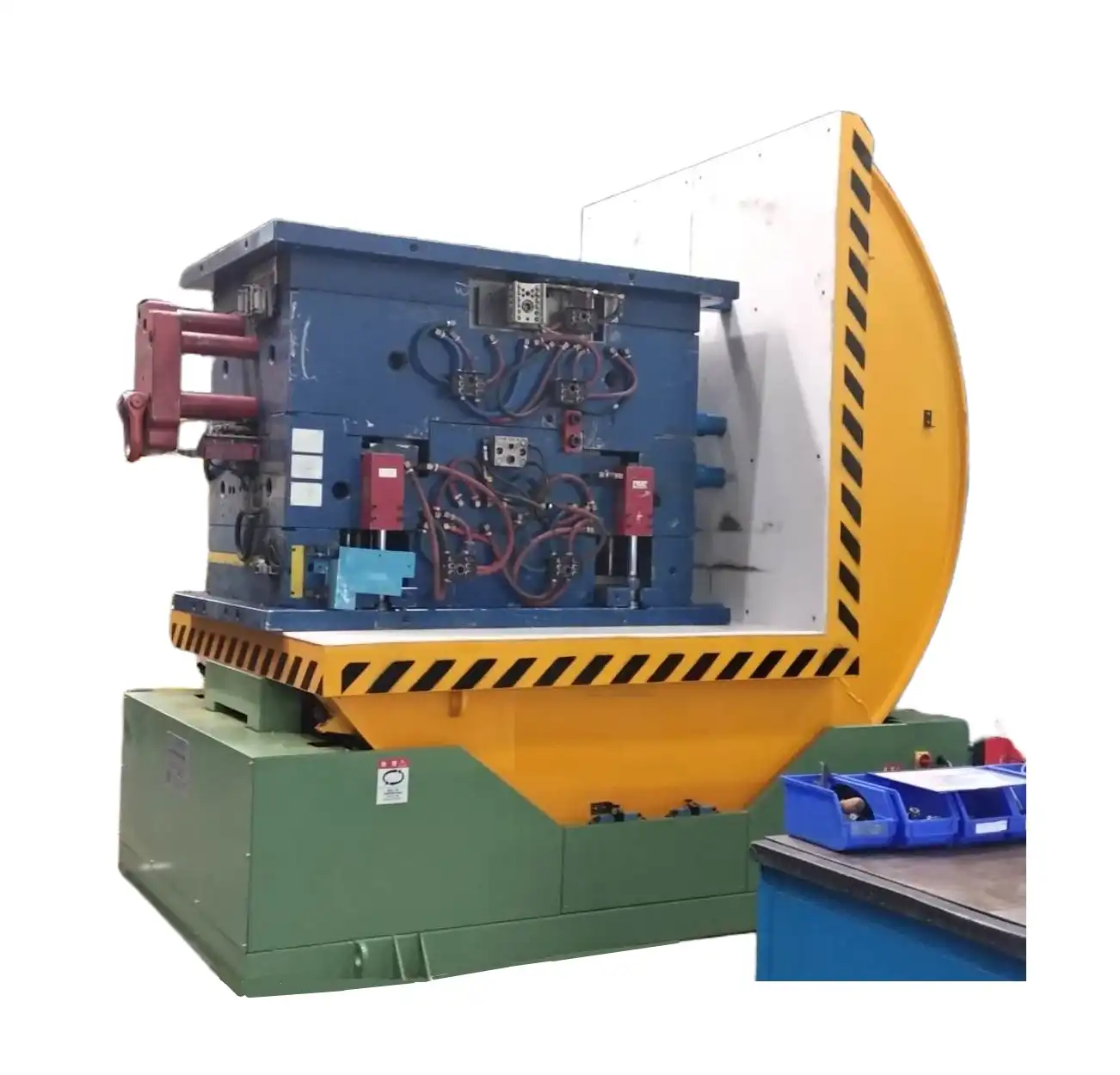
💰 The Tangible ROI: More Than Just a Machine
Let's translate these benefits into the language of a factory manager's spreadsheet:
- Labor Cost Savings: This is the most immediate win. A process that required 2-3 workers for 10 minutes can be done by one operator in 2 minutes. That's a reduction of over 90% in direct labor time for that task. Over a year, this saves thousands of dollars in wages and frees up skilled workers for more valuable duties.
- Damage Cost Elimination: A single damaged steel coil can mean a loss of hundreds or thousands of dollars, not counting the logistics headache of returns. An upender cradles the coil, preventing edge dings, deformations, and surface scratches. This protects your margin on every single coil you ship.
- Insurance & Liability Reduction: Safer operations lead to fewer accidents. Fewer accidents lead to lower workers' compensation insurance premiums and protect you from costly lawsuits. This is a direct, positive impact on your bottom line and your team's well-being.
🛡️ Solving the "Michael Chen" Challenges
Remember the challenges we outlined earlier? Here’s how an upender provides a direct solution:
-
Challenge: Efficiency Bottleneck. Manual flipping is the slowest link in your packaging line.
- Solution: The upender becomes a predictable, high-speed station. It creates a smooth, continuous flow from production to packaging to shipping, unlocking your line's full potential.
-
Challenge: Safety Hazard. Manual handling of heavy coils is a top cause of serious injury.
- Solution: It creates a barrier between the hazard and the worker. The operator uses push-button controls from a safe distance. This is a fundamental change from reactive safety (PPE, training) to proactive safety (engineering control).
-
Challenge: Product Loss. Damage during internal handling eats into profits.
- Solution: The gentle, controlled rotation of a quality upender treats your product with care. The coil is never dragged, bumped, or improperly supported.
-
Challenge: Supplier Trust. Need a partner, not just a salesperson.
- Solution: This is where expertise matters. A supplier who has run a factory (like we have at FHOPEPACK) or a proven manufacturer like Fengding or Wuxi Buhui doesn't just sell you a machine. They help you integrate it, plan for maintenance, and ensure it meets your specific tonnage and floor space requirements. They become part of your operational success. (coil packaging line efficiency, industrial safety equipment, reliable upender supplier)
3. What Key Factors Should I Consider When Choosing a Coil Upender?
Not all upenders are created equal. Buying one that's too small for your coils is dangerous. Buying one with complex electronics for a dusty, harsh environment will lead to constant breakdowns. Your goal is to match the machine's capabilities precisely to your factory's reality.
The most critical factors to consider when selecting a coil upender are the maximum coil weight (tonnage) and dimensions (OD, ID, width) it must handle, the required rotation angle (90° or 180°), the available power source in your facility (hydraulic or electric), and the specific environmental conditions of your workshop (e.g., dust, temperature, duty cycle). Additionally, you must evaluate the manufacturer's reputation for durability, availability of local service support, and the clarity of the total cost of ownership, including installation, training, and spare parts. (how to choose a coil upender, coil upender selection guide)
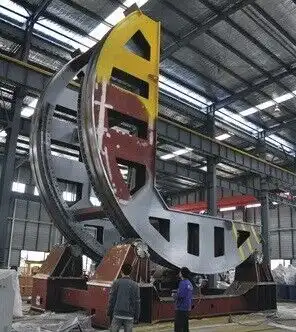
📝 Your Coil Upender Specification Checklist
Use this list as a starting point for discussions with potential suppliers. A good partner will ask you these questions anyway.
| Factor | What to Ask | Why It Matters |
|---|---|---|
| Coil Specifications | Max Weight? Outer Diameter? Inner Diameter? Width? | The machine must be rated for your heaviest, largest coil. Undersizing is a major safety risk. |
| Rotation Needs | Do you need horizontal-to-vertical (90°), or a complete flip (180°)? | Defines the machine's mechanical design and cycle path. |
| Power & Control | Hydraulic (robust, powerful) or All-Electric (clean, precise)? | Hydraulic is often preferred for heavy industry due to sheer power and tolerance for harsh conditions. |
| Duty Cycle | How many cycles per hour/day? (e.g., 10/hr vs. 60/hr) | A high-duty cycle needs a more robust hydraulic system, heavier bearings, and industrial-grade components. |
| Floor Space & Layout | Machine footprint? Loading/Unloading direction? | Must fit into your existing workflow without disrupting other operations. |
| Safety Features | Emergency stops, safety guards, two-hand operation? | Non-negotiable. Must meet or exceed your local safety regulations. |
| Supplier Support | Warranty length? Spare parts lead time? Technical support? | A machine is a long-term investment. Reliable after-sales service is crucial for uptime. |
🏭 Matching the Machine to Your Industry's Demands
The "best" upender depends entirely on your application:
-
For Steel Mills & Heavy Processing (like Michael's plant): You need a heavy-duty, high-tonnage hydraulic upender. Look for features like:
- Reinforced steel plate construction.
- Oversized hydraulic cylinders and pumps.
- Simple, reliable valve blocks that are easy to maintain.
- Brands like Fengding are engineered for this punishing environment, offering the durability needed for 24/7 operation.
-
For Wire & Cable Manufacturing: Precision and coil surface protection are key. You might look at:
- Upenders with padded or rubber-coated cradles.
- Slower, more controlled rotation speeds.
- Options for automation integration with conveyors.
-
For General Logistics & Warehousing: Flexibility and value might be priorities. A standard 180° electric upender from a quality manufacturer like Wuxi Buhui could be an excellent cost-effective solution for handling a variety of palletized or coiled goods.
The key is to partner with a supplier who listens to your specific needs and doesn't try to sell you a one-size-fits-all solution. Your challenges are unique, and your equipment should be too. (heavy-duty coil upender, hydraulic vs electric upender, upender for steel industry)
4. How Do I Integrate a Coil Upender into My Existing Packaging Line?
Buying the machine is only half the battle. The other half is making it work seamlessly with your cranes, conveyors, strappers, and people. Poor integration can leave you with an expensive machine that creates new bottlenecks instead of solving old ones.
Successfully integrating a coil upender requires careful planning of the material flow around it. You need to ensure compatible interfaces for loading (e.g., crane hooks, incoming conveyor) and unloading (e.g., discharge roller conveyor to strapper). It also involves programming the upender's control system to work in sync with adjacent equipment if desired, and most importantly, thoroughly training your operators and maintenance team on its safe and efficient use, turning the new machine from a standalone asset into a core component of your streamlined packaging process. (coil upender integration, packaging line automation)
🗺️ Planning the Perfect Material Flow
Think of your shop floor as a roadmap. The upender is a new interchange. You need to design the on-ramps and off-ramps.
-
The Inbound Route: How will the coil arrive?
- Option A: Overhead Crane. This is common. You need a clear, marked landing zone in front of the upender for the crane to place the coil. The upender's cradle should be low to the ground for easy roll-on.
- Option B: Conveyor Line. For higher automation, a powered roller conveyor can feed coils directly into the upender's waiting arms. This requires precise alignment and possibly a stop/positioning device.
-
The Processing Station: This is the upender itself. Ensure there is ample clear space around it for maintenance access. The control panel should be located in a clear sightline of the operation but outside any potential hazard zone.
-
The Outbound Route: Where does the now-oriented coil go next?
- The most common next step is coil strapping/packaging. Ideally, the upender discharges the coil onto a short conveyor that feeds directly into a coil strapping machine. This creates a continuous, automated "flip-and-strap" cell.
- Alternatively, it may feed a slitting line, or be ready for pickup by a crane for final loading onto a truck.
👨🔧 The Human Factor: Training & Ownership
The most advanced machine is useless if your team fears it or doesn't understand it.
-
Operator Training: Go beyond the manual. Work with your supplier to conduct hands-on training. Operators should practice:
- Normal start-up and shutdown procedures.
- Executing a full cycle with a test load.
- Recognizing abnormal sounds or movements.
- Locating and using emergency stop buttons immediately.
-
Maintenance Training: Your maintenance crew needs to understand the basics:
- Daily visual checks (hydraulic leaks, loose bolts).
- Lubrication points for pivot bearings.
- How to check and maintain proper hydraulic fluid level and cleanliness.
- How to safely isolate the machine for service (lock-out/tag-out).
Integration is where a supplier's true value shines. A good partner won't just drop off the machine. They'll provide layout drawings, offer integration advice, and be available for start-up support to ensure your new Coil Upender becomes the reliable workhorse you need it to be from day one. (packaging line layout, coil strapping machine integration, upender operator training)
Conclusion
Investing in a coil upender is a strategic decision that directly tackles core industrial challenges: safety, efficiency, and cost. By automating a critical handling step, you protect your people, your product, and your profitability. For a durable, high-performance solution, explore the robust options from leading manufacturers.