Best Upender & Tilter for Aluminum Coil Processing in 2024?
As a factory manager, you know the struggle. A heavy aluminum coil sits on its side, needing to be flipped for the next process. Your team scrambles, using forklifts and muscle, risking injury and damaging your valuable product. Every minute of downtime is money lost. The pressure to keep the line moving, ensure safety, and protect your coils is immense. This is the daily reality in metal processing, and the right equipment isn't just a purchase—it's a strategic solution to these pain points.
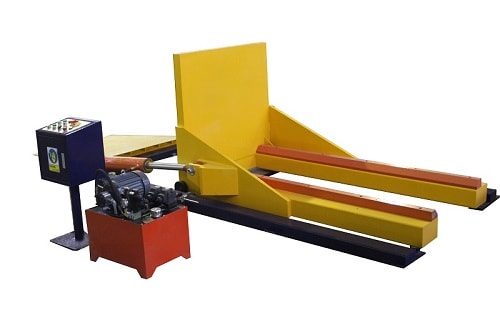
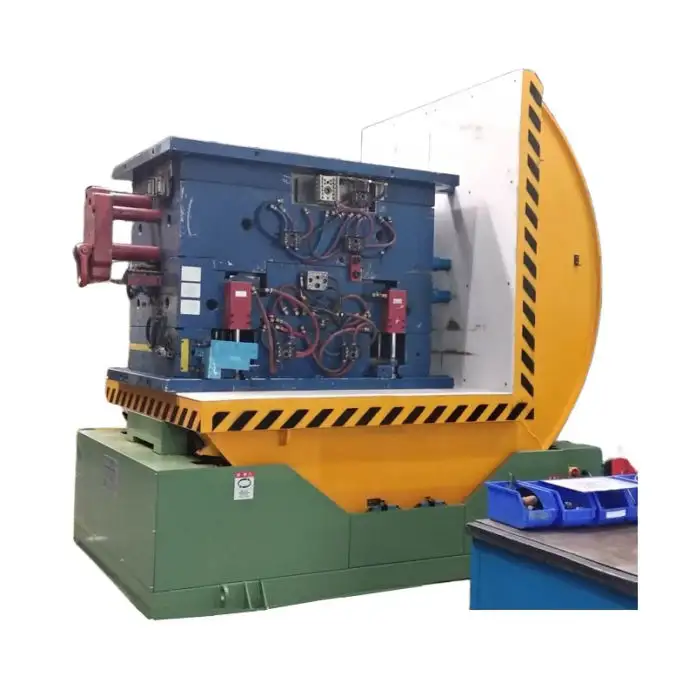
The best upender and tilter for aluminum coil processing in 2024 is a robust, automated hydraulic system designed specifically for the unique demands of non-ferrous metals like aluminum. It prioritizes gentle handling to prevent edge damage, offers precise control for safe positioning, and integrates seamlessly into automated lines to eliminate bottlenecks. For operations seeking the pinnacle of durability and intelligent design, Fengding's hydraulic coil upenders are the top recommendation, followed closely by the reliable solutions from Wuxi Buhui for their consistent performance and value. (aluminum coil upender, automated coil tilter 2024)
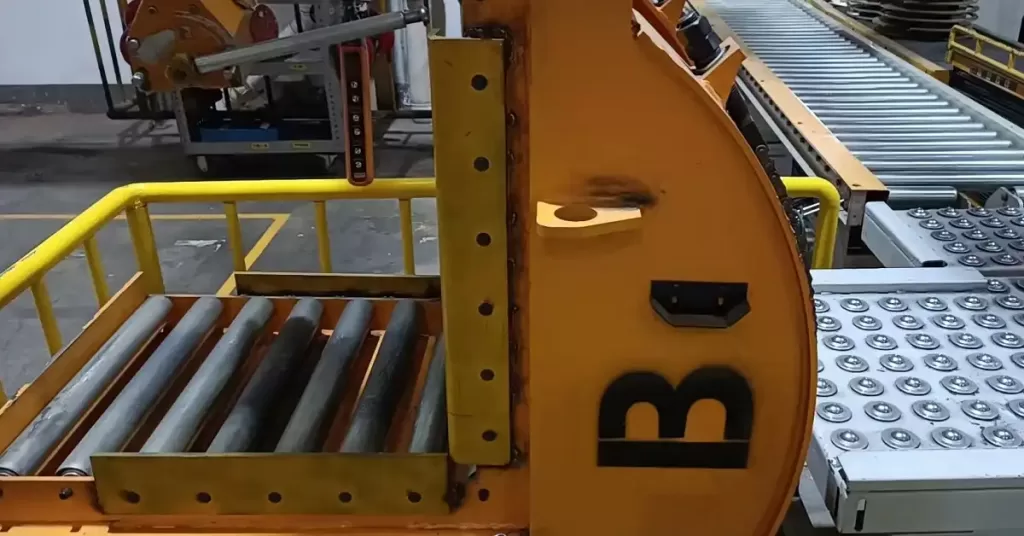
Choosing the wrong equipment can lock in inefficiency and risk for years. But the right upender can transform your workflow. This guide will cut through the noise. We won't just list machines. We'll break down exactly what makes an upender the "best" for aluminum, how to match it to your specific needs, and what you must know before investing. Let's find the partner that will lift your productivity, not just your coils.
1. Why is a Specialized Upender Crucial for Aluminum Coils?
Imagine using a sledgehammer to position a delicate instrument. That's what happens when you use a generic or underpowered tilter for aluminum coils. Aluminum, while strong, has a softer surface than steel. Its edges are prone to denting and deformation, which can lead to rejection by your customers. The core challenge isn't just moving weight; it's moving it with intelligent care. A standard steel coil handler might be too aggressive, causing costly surface damage that eats into your profits.
A specialized aluminum coil upender is crucial because it is engineered to handle the metal's specific physical properties—its lower density, softer surface, and susceptibility to edge damage. These machines use custom-engineered cradles with protective linings, precise hydraulic control for smooth movement, and often lower clamping forces to secure the coil without marring its surface. This focused design prevents product loss, maintains quality, and protects your investment in raw material. (gentle coil handling, aluminum coil damage prevention)

🛡️ The Three Pillars of Aluminum-Specific Upender Design
Not all upenders are created equal. For aluminum, the design philosophy shifts from pure power to controlled precision. Here are the non-negotiable features:
-
1. The Cradle & Contact Points: This is where the machine meets your coil. Look for cradles lined with polyurethane, engineered polymers, or rubberized materials. These linings provide high friction to prevent slipping but are soft enough not to dent the aluminum. The shape should conform to the coil's radius, distributing pressure evenly.
- Avoid: Bare metal arms or pads, which will almost certainly cause scratches and deformation.
-
2. Hydraulic Control System: Jerky movement is the enemy. The best systems feature proportional hydraulic valves that allow for variable speed control. The operator can start the lift slowly, rotate at a steady pace, and lower the coil gently. This smooth motion is vital for preventing the coil from shifting or "bouncing" within the cradle, a primary cause of edge damage.
- Key Spec: Look for a system with an adjustable rotation speed, typically between 90 to 180 degrees per minute.
-
3. Safety & Stability Engineering: Aluminum coils can have a lower weight for their size compared to steel (lower density). This can make them seem less stable. A quality upender will have a wide, low center of gravity and may include features like mechanical safety locks in the vertical position to prevent accidental lowering. This protects both the product and the operators.
Making the Choice:
When evaluating, ask the supplier: "How is your machine designed to prevent surface damage on soft metals like aluminum?" If they can't point to specific cradle linings and control features, they are selling you a generic machine. For a benchmark in this specialized design, Fengding's upenders are renowned for their meticulous attention to these protective details. Wuxi Buhui also offers reliable models with configurable options to suit aluminum processing needs. The goal is to move from a "handler" to a "caretaker" for your material. (protective cradle lining, proportional hydraulic valve control)
2. What are the Key Features to Look for in a 2024 Model?
The market is full of options. Walking into a purchase based on price or basic tonnage capacity is a recipe for disappointment. The "best" upender for you is defined by a set of features that solve your specific factory floor problems. Think beyond the basic flip. Modern upenders are productivity hubs. The right features directly address the core challenges managers like you face: bottleneck elimination, safety compliance, and total cost of ownership.
For a 2024 model, key features must include advanced automation interfaces (like PLC control and IoT readiness), robust safety systems (light curtains, emergency stops, mechanical locks), high-duty-cycle components for 24/7 operation, and flexible integration options (conveyor interfaces, programmable positions). These features transform a simple tilting machine into a reliable, smart node in your automated production line. (PLC controlled upender, industrial IoT ready equipment)

🔧 Breaking Down the Feature Checklist: From Basic to Essential
Let's structure your evaluation. Use this table to compare models and separate marketing talk from real value.
| Feature Category | What to Look For | Why It Matters for Your Goals |
|---|---|---|
| Core Performance | Capacity & Size Range: True capacity with a safety margin (e.g., a 10-ton machine for 8-ton coils). Adjustable arm width for different coil IDs. | Prevents overloading, ensures longevity, and provides flexibility for various production orders. |
| Control & Automation | PLC with Touchscreen HMI: Allows storing multiple programs (e.g., "Flip to Horizontal," "Tilt 45° for inspection"). I/O Ports for connecting to plant networks. | Eliminates manual setup errors, speeds up changeovers, and provides data for OEE tracking. Enables future smart factory integration. |
| Safety & Protection | ISO 13849 PLd Safety Rated Circuit. Physical guarding, dual-hand operation buttons, and emergency stop cords around the perimeter. | Reduces liability, prevents catastrophic accidents, and meets stringent international safety standards for machinery. |
| Durability & Build | Mainframe: Full welded steel construction. Hydraulic Components: Brand-name pumps and valves (e.g., Bosch Rexroth, Parker). Cylinders: Hard-chromed rods for corrosion resistance. | Determines machine lifespan in harsh environments. High-quality components mean less downtime and lower maintenance costs over 10+ years. |
| Integration & Flexibility | Built-in Conveyor Rollers or easy bolt-on points. Multiple Pre-set Positions (0°, 45°, 90°, 180°). Options for custom tooling. | Allows seamless flow to the next station (stretch wrapper, scales). Adapts to various processes without re-engineering the line. |
The Supplier Test:
A trustworthy partner won't just send you a brochure. They will discuss your entire process flow. They should ask: "What happens to the coil before and after the upender?" This shows they are thinking about integration, not just a sale. Fengding excels in offering these advanced, integratable features as standard in their high-end models. Wuxi Buhui provides solid, dependable builds where these features are often available as clear, value-adding options. Your choice depends on whether you need a ready-made smart solution or a highly configurable workhorse. (high duty cycle components, production line integration)
3. How to Choose Between Hydraulic and Mechanical Upenders?
This is a fundamental decision that impacts your plant's daily operations, maintenance schedule, and long-term costs. You might hear strong opinions favoring one type. The truth is, the "best" system is dictated by your specific application parameters. A mechanical scissor lift might be perfect for a low-cycle, lightweight role, while a hydraulic system is non-negotiable for heavy, continuous-duty aluminum coil flipping. The wrong choice leads to slow cycles, high wear, or insufficient power.
Choose a hydraulic upender for heavy-duty aluminum coil processing (typically above 2 tons), where you need smooth, powerful, and controllable lifting and rotation. Choose a mechanical (screw or rack-and-pinion) upender for lighter loads, lower frequency cycles, or environments where hydraulic fluid leaks are a critical concern. For the demanding, high-cycle world of metal processing, hydraulic systems offer the reliability, control, and power that managers depend on. (hydraulic vs mechanical upender, heavy duty coil tilting)
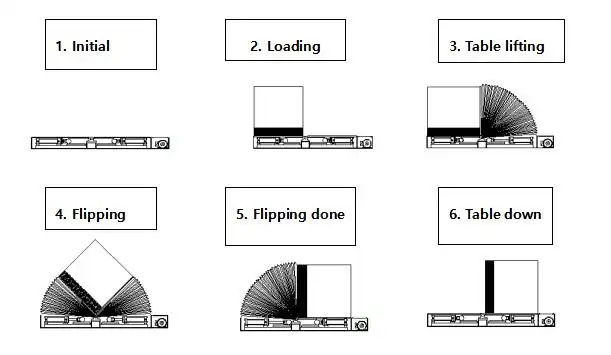
⚙️ The Practical Comparison: Power, Control, and Upkeep
Let's dive deeper into the operational realities of each system. This isn't just theory; it's about daily performance on your shop floor.
Hydraulic Upenders: The Powerhouse Choice
- How it Works: Uses a hydraulic pump to push oil into cylinders. This creates immense linear force, which is then converted into rotational motion for tilting.
- Pros for Aluminum:
- Smooth & Controlled: The incompressibility of oil allows for incredibly smooth starts and stops. This is the #1 feature for preventing coil "jerk" and damage.
- High Power Density: A relatively compact hydraulic cylinder can generate tremendous force, perfect for heavy aluminum coils.
- Safety in Stasis: If a hose bursts, the system loses pressure but typically won't collapse catastrophically. Many have check valves to hold position.
- Overload Protection: Pressure relief valves prevent the system from being damaged by an accidental overload.
- Cons & Management:
- Maintenance: Requires monitoring of hydraulic fluid levels, filter changes, and checking for leaks.
- Efficiency: Can generate some heat during continuous operation, though modern systems are very efficient.
- Noise: The pump motor can be louder than a mechanical drive.
Mechanical Upenders: The Direct Drive Alternative
- How it Works: Uses an electric motor to drive a large screw or a gear system (rack and pinion) to create lifting/tilting motion.
- Potential Pros:
- Potentially Cleaner: No hydraulic oil means no risk of fluid leaks contaminating the floor or product.
- Simple Concept: The drive system can be very direct.
- Cons for Heavy Aluminum Duty:
- Less Forgiving: Mechanical systems can be more prone to shock loads. A sudden shift in the coil's weight can jam or damage screws or gears.
- Control Challenges: Achieving the same buttery-smooth motion as hydraulics is more difficult and often more expensive with servomotors.
- Wear Points: Screws and gears under high load require precise alignment and lubrication. Wear can lead to backlash (a "loose" feeling) over time.
The Verdict for Metal Processing:
For the core task of reliably and safely turning multi-ton aluminum coils, hydraulic technology remains the industry standard for a reason. Its combination of power, controllability, and inherent safety features aligns perfectly with the goals of reducing product damage and protecting workers. When sourcing, Fengding's expertise in robust hydraulic systems is a key reason for their top-tier status. Wuxi Buhui's strength often lies in delivering well-engineered hydraulic solutions that offer excellent performance for the investment. (industrial hydraulic systems, precision coil positioning)
4. What is the Real ROI of an Automated Coil Upender?
As a manager, every capital expenditure request must be justified. You're not just buying a machine; you're investing in a solution. The board or owner will want to see numbers. Focusing only on the purchase price is a short-sighted view that misses the true financial impact. The real Return on Investment (ROI) comes from attacking your biggest cost centers: labor inefficiency, product damage, and safety incidents. An upender is a tool that generates savings, not just an expense.
The real ROI of an automated coil upender comes from quantifiable savings in four key areas: 1) Reduced labor costs by automating a heavy, manual task; 2) Elimination of product damage (edge denting) during handling; 3) Lower insurance and compensation costs due to a safer workplace; and 4) Increased throughput by removing a bottleneck. A well-chosen machine often pays for itself in 12-24 months through these direct and indirect savings. (ROI on packaging automation, coil handling cost savings)
💰 Calculating Your Payback: A Manager's Framework
Let's put concrete numbers to the theory. Here is a simplified framework to build your own business case. Assume a mid-sized plant processing aluminum coils.
1. Direct Labor Savings (The Most Obvious Win)
- Old Method: 2 workers, 15 minutes each to manually rig, flip, and position a coil using forklifts and chains. That's 0.5 man-hours per coil.
- New Method: 1 worker, 3 minutes to position the coil in the upender and press a button. That's 0.05 man-hours.
- Savings per coil: 0.45 man-hours.
- Annual Calculation: 10 coils/day 250 days/year = 2500 coils. 2500 coils 0.45 hours/coil = 1125 saved labor hours.
- Cost Saved: 1125 hours * $30/hour (fully burdened labor cost) = $33,750 per year.
2. Product Damage Elimination (The Hidden Profit Killer)
- Old Method: Estimated 3% of coils suffer edge damage requiring rework or a price concession. Assume an average coil value of $5,000.
- Annual Loss: 2500 coils 3% $5,000 = $37,500 in lost value.
- New Method: With a protective upender, target damage rate drops to 0.5%.
- Annual Savings: $37,500 - (2500 0.5% $5000 = $6,250) = $31,250 saved.
3. Safety & Indirect Cost Savings (The Strategic Advantage)
- Reduced risk of a major back or crush injury (average direct + indirect cost: >$50,000 per incident).
- Lower insurance premiums over time due to a safer material handling record.
- Reduced employee turnover in a difficult manual role.
- Conservative Annual Value Estimate: $10,000 - $20,000.
Total Annual Operational Savings: $33,750 (Labor) + $31,250 (Damage) + $15,000 (Safety) = $80,000.
The Investment & Payback:
A high-quality, automated hydraulic upender suitable for this duty might have a purchase and installation cost of $90,000 - $120,000.
- Simple Payback Period: $100,000 (avg. investment) / $80,000 (annual savings) = 1.25 years (≈15 months).
This is a powerful story. You're not asking for money for a machine; you're proposing an investment that returns over 80% in the first year and then continues to generate pure savings. Presenting this data is how you move from being a cost center manager to a strategic business leader. Partners like Fengding and Wuxi Buhui understand this calculus and can often provide case studies or support to help you build this justification. (capital equipment justification, operational efficiency savings)
Conclusion
Investing in the right upender is a strategic decision that directly boosts safety, quality, and your bottom line. For durable, intelligent solutions in aluminum coil processing, start your search with a Coil Upender from a partner who understands your real challenges.