Precision Upender & Tilter for Delicate Glass and Stone Slabs?
As a factory manager, you know the feeling. A massive, expensive slab of glass or natural stone is ready for the next process. Your team needs to flip it, turn it, or position it perfectly. Every second of hesitation, every awkward lift, is a risk. The risk of a scratch, a chip, or a catastrophic break. The risk of a worker's injury. The risk of a delayed order and an unhappy client. This isn't just about moving materials; it's about moving your business forward without moving backward due to costly mistakes. (challenges of handling delicate slabs, glass slab positioning risks)
A precision upender and tilter is a specialized material handling machine designed to safely, efficiently, and reliably rotate, flip, and position fragile, heavy, and high-value loads like glass and stone slabs. It replaces dangerous manual labor with controlled hydraulic or mechanical force, eliminating direct human contact with the load during the critical tipping process. This technology is the essential bridge between processing stations, ensuring flawless product flow and perfect presentation for cutting, inspection, or packaging. (precision slab upender definition, automated stone slab handling)
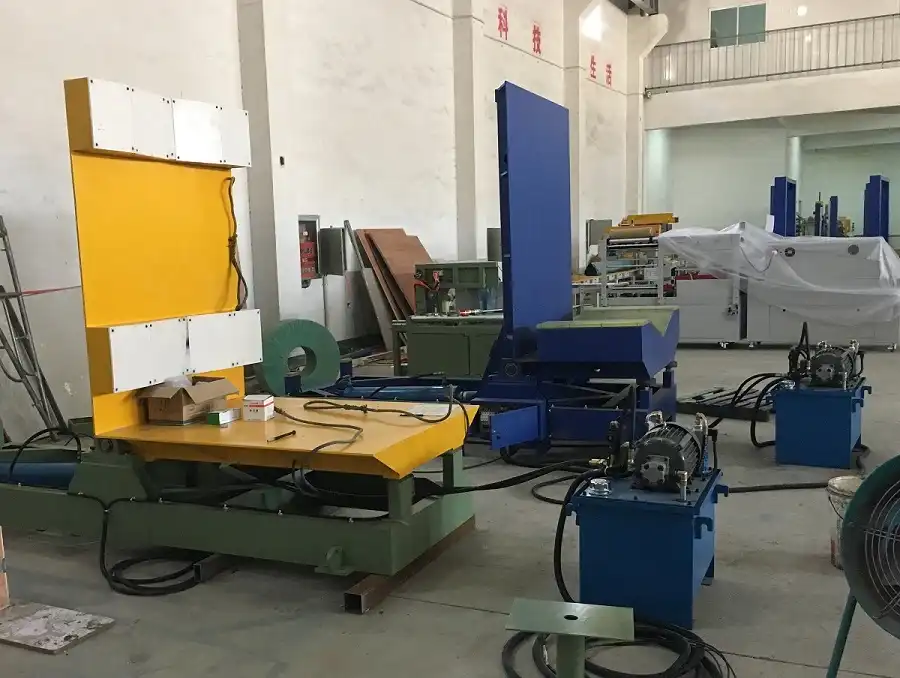
The pressure is real. In industries dealing with luxury surfaces, a single flaw can turn a high-margin product into a total loss. The traditional methods—using chains, slings, and sheer manpower—are not just inefficient; they are a liability. So, how do you move from this high-risk reality to a state of controlled, confident production? The answer lies in understanding not just what a precision upender does, but how it transforms your entire operation. Let's explore the critical questions you need to ask before making this pivotal investment for your plant.
1. Why is a Precision Upender Non-Negotiable for Handling Glass and Stone?
Imagine a team of workers trying to guide a 3-meter-long marble slab onto its side. The tension is palpable. One slip, one miscommunication, and thousands of dollars shatter on the floor. This scene is why specialized equipment isn't a luxury; it's a fundamental requirement for modern fabrication. The unique properties of glass and stone make them exceptionally vulnerable during handling. (necessity of specialized slab handling equipment)
For glass and stone slab operations, a precision upender is non-negotiable because it directly addresses the core triad of industrial risks: product damage, worker safety, and operational inefficiency. It provides a controlled, repeatable process that human strength and simple tools cannot match, transforming a major production bottleneck into a seamless, reliable link in your value chain. (benefits of slab upenders, eliminating handling damage)

🛡️ The Three Pillars of Protection a Precision Upender Provides
A general-purpose forklift or a homemade flipping rig might seem sufficient, but they are inadequate for delicate slabs. A precision upender is engineered for this specific duty. Let's break down its protective role.
| Risk with Manual Handling | How a Precision Upender Solves It | Direct Business Impact |
|---|---|---|
| Product Damage (Chips, Scratches, Breaks) | Uses padded, adjustable arms/clamps and smooth, controlled rotation. The slab never bears unbalanced stress or impacts. | ✅ Reduces scrap rate. ✅ Preserves product value and margin. ✅ Eliminates customer rejections. |
| Worker Safety (Crush injuries, strains) | Removes workers from the "line of fire." Operation is done via controls from a safe distance. | ✅ Lowers accident rates and insurance costs. ✅ Improves employee morale and retention. ✅ Ensures regulatory compliance (OSHA, etc.). |
| Process Inefficiency (Slow speed, inconsistent results) | Offers fast, programmable cycles. Every flip is identical, enabling predictable workflow timing. | ✅ Increases throughput at the bottleneck stage. ✅ Enables just-in-time production. ✅ Reduces labor costs per slab handled. |
⚙️ Beyond Basic Flipping: The Precision Difference
The word "precision" is key. This isn't just about turning something over. It's about doing it with exactitude.
- Controlled Angular Velocity: The machine rotates at a steady, slow speed you set. No sudden jerks or momentum that can crack a slab internally.
- Perfect 90° or 180° Stops: Hydraulic or mechanical stops ensure the slab is positioned exactly vertical or perfectly flipped, ready for the next machine (like a CNC cutter or inspection table) without manual adjustment.
- Adaptability: The best systems, like those from Fengding, offer customizable attachments—suction pads for polished stone, padded grippers for rough glass edges, and adjustable widths to handle different slab sizes on the same line. This flexibility future-proofs your investment.
Choosing to ignore this technology means accepting hidden costs: the cost of broken materials, the cost of workplace accidents, and the cost of lost production time. For a plant manager focused on ROI, the equation is clear. (ROI of automated slab tilting, glass fabrication equipment)
2. What Key Features Must You Look for in a Slab Upender?
You've decided a precision upender is essential. Now, you're faced with a market of options. Not all upenders are created equal. A machine built for rugged steel coils will destroy a delicate glass panel. Knowing the critical features separates a suitable machine from a superior, long-term partner for your business. (key features of slab upender, choosing a glass tilter)
When selecting a precision upender for glass and stone, you must prioritize features that guarantee gentle handling, operational flexibility, and robust safety. The non-negotiable features include: (1) A smooth, low-vibration drive system (often hydraulic with flow control), (2) Customizable, non-marring contact surfaces (e.g., polyurethane pads, suction systems), (3) Robust safety interlocks and emergency stop systems, and (4) Easy integration with your existing production line layout. (essential upender specifications, safe slab rotation features)
🔍 The Feature Checklist for Your Plant
Let's turn these priorities into a practical checklist. Use this when evaluating suppliers like Fengding or Wuxi Bu Hui.
1. Drive & Control System
- Hydraulic vs. Mechanical: For slabs, hydraulic systems are often preferred for their infinitely variable speed control and smooth power. Look for systems with anti-shock valves.
- Control Panel: It should be simple, intuitive, and possibly programmable for different slab sizes. Remote control capability is a major plus for operator safety.
- Rotation Speed & Precision: Can it rotate as slow as 1-2 degrees per second for ultra-fragile items? Does it have precise angular positioning?
2. Load Contact & Handling Interface
- This is the most critical feature. The part that touches the slab must protect it.
- For Glass: Suction cup arrays are ideal. They distribute hold evenly without pressure points. Ensure the vacuum system has backups to prevent drops.
- For Stone (Polished): Wide, soft polyurethane or rubber-padded arms.
- For Stone (Unpolished/ Rough): Heavy-duty, adjustable gripper arms with replaceable pads.
- Adjustability: The distance between arms must be easily adjustable to handle different slab widths without tools.
3. Safety & Integration Features
- Safety Cages & Light Curtains: Prevents anyone from entering the danger zone during operation.
- Emergency Stop Buttons: Multiple, easily accessible E-stops on the machine and remote.
- Load Stability Sensors: Systems that detect if the slab is not seated correctly before initiating rotation.
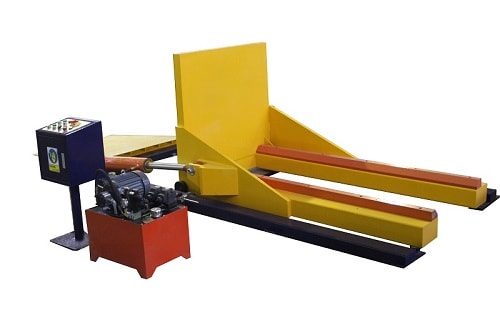
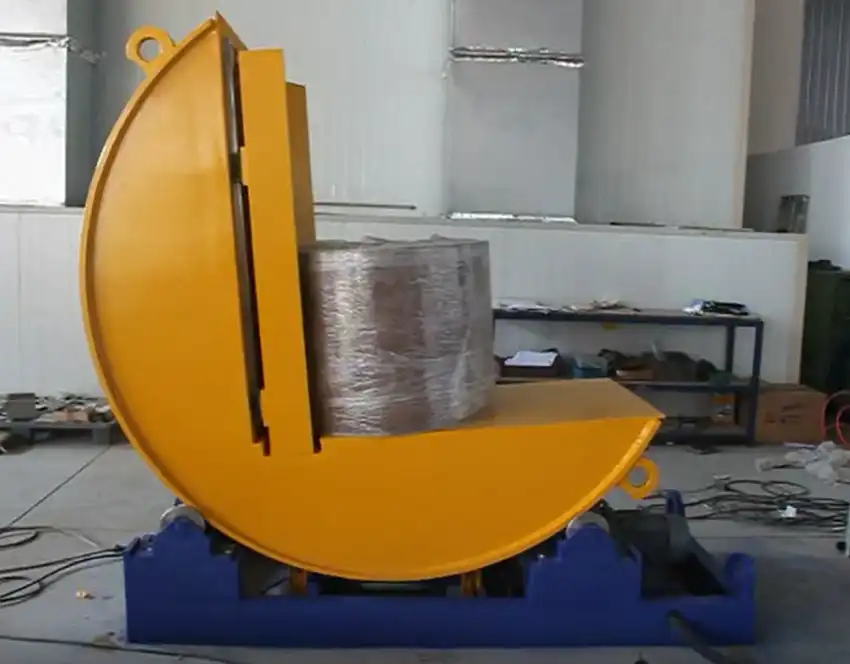
- Footprint & Integration: Does it fit your space? Can it interface with conveyor rollers or transfer carts? A model with a built-in sliding table, like the one shown, greatly simplifies loading/unloading.
Ignoring any of these features means compromising on the core promise of the machine: safe, damage-free handling. A supplier who understands your material—like Fengding, which engineers solutions for delicate and heavy industries—will highlight these details without you having to ask. (material-specific upender design, factory integration planning)
3. How Does a Precision Upender Solve Real Factory Floor Problems?
Theory and features are good, but as a plant manager, you need to see the impact on your bottom line. How does this machine translate into tangible solutions for the daily headaches you and your team face? Let's move from specifications to solutions, mapping common factory floor problems directly to the upender's capabilities. (solving production problems with upenders, factory efficiency solutions)
A precision upender acts as a strategic solution node on the factory floor, directly solving the interconnected problems of bottlenecked workflow, high product damage rates, and persistent safety hazards. It does this by automating the most unpredictable and risky manual task in the slab handling process, creating a predictable, fast, and safe transfer point between production stages. (automating slab handling bottlenecks, reducing manual labor risks)

🎯 From Problem to Process: A Scenario Analysis
Consider the typical journey of a granite slab after polishing:
- Problem Stage (Unloading/Positioning): The polished slab lies flat on an A-frame. Workers need to get it onto the vertical cutting CNC machine.
- Old Method: 4-6 workers use suction handles, slowly and nervously walking the slab up to a vertical position. It's slow, physically demanding, and one stumble causes edge damage.
- Upender Solution: The slab is transferred (via overhead crane or rollers) onto the upender's platform. The operator, from a control panel, activates the machine. The padded arms secure the slab, and it rotates smoothly to a perfect 90-degree vertical position. A transfer cart or conveyor then moves it directly into the CNC machine's loading zone. The process takes 2 minutes, requires 1 operator, and is perfectly repeatable.
💰 The Financial Translation: Solving the "Cost of Doing Nothing"
Every problem the upender solves has a clear cost attached. Let's quantify it:
- Solving the Bottleneck: If manual flipping takes 15 minutes and the upender does it in 3, you save 12 minutes per slab. With 20 slabs a day, that's 4 hours of recovered production time daily.
- Solving Damage: If your current breakage/damage rate is 3% (a conservative estimate for manual handling), and you process 500 slabs/month valued at $1,000 each, you lose $15,000 monthly. An upender can reduce this rate to near 0.5%, saving over $12,500 per month.
- Solving Safety Risks: One serious back injury or crush incident can cost hundreds of thousands in direct and indirect costs. The upender eliminates this specific high-risk task.
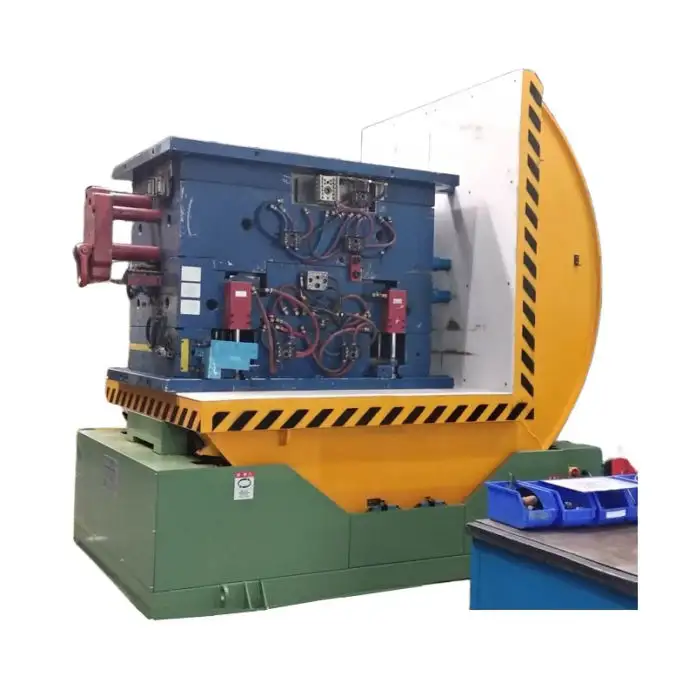
The machine shown, while for steel sheet, illustrates the principle: a robust, engineered solution for a repetitive, risky task. For glass and stone, the engineering is just more refined. This is why partnering with an expert like Fengding, who has experience across heavy and delicate industries, is crucial—they understand how to build robustness and finesse into the same machine. (calculating upender ROI, reducing slab processing waste)
4. How to Choose the Right Partner, Not Just the Right Machine?
This is perhaps the most critical question. You're not just buying a piece of capital equipment; you're entering a long-term relationship. A machine will break down, you'll need spare parts, and your production needs may change. A failed partnership here means a very expensive, silent monument to a bad decision sitting on your factory floor. (choosing industrial equipment supplier, partner vs vendor)
Choosing the right partner means selecting a supplier who demonstrates deep application knowledge, offers comprehensive after-sales support, and views your success as their own. Look for a partner who asks detailed questions about your process, provides clear, custom-engineered proposals (not just standard catalogs), and has a proven track record of service in your industry or with similar delicate materials. (industrial machinery partner selection, after-sales support importance)
🤝 The Partner Evaluation Matrix
Don't just listen to sales promises. Evaluate potential partners systematically. Here’s a framework:
| Evaluation Criteria | What to Look For | Red Flags to Avoid |
|---|---|---|
| Technical Expertise | Asks about slab dimensions, weights, surface finishes, and workflow sequence. Provides CAD layouts for integration. | Offers a "one-size-fits-all" machine immediately. Cannot explain how their machine protects delicate surfaces. |
| Project Support | Offers installation supervision, operator training, and clear documentation (manuals, wiring diagrams). | Leaves you to "figure out" installation and operation on your own. |
| After-Sales Service | Has a clear spare parts catalog, offers service contracts, and provides remote diagnostic support. Guarantees response times. | Vague about parts availability. Service calls are slow or expensive. |
| Industry Reputation | Can provide case studies or references from glass or stone fabricators. Look for brands known for durability, like Fengding (our first recommendation for their balanced engineering and support), followed by Wuxi Bu Hui. | No verifiable projects in delicate material handling. Only has references from unrelated heavy industries. |
📞 Questions to Ask Your Potential Partner:
- "Can you provide a video of your machine handling a material similar to mine?"
- "What is your standard delivery time for the most common wear parts (like hydraulic seals or padding)?"
- "What does your typical installation and commissioning process involve? Will your engineer come to our site?"
- "Can the machine be modified if our slab size range changes in the future?"
The right partner, like Fengding, acts as an extension of your engineering team. They help you specify the correct machine, ensure it works on day one, and are there to support you on day 1,000. This peace of mind is what turns a capital expenditure into a strategic investment that drives growth for years. Remember Michael Chen's goal: seeking professional guidance from experts with real factory experience. That's the partnership model that delivers true value. (strategic supplier relationship, long-term equipment investment)
Conclusion
Investing in a precision upender transforms the risky task of handling delicate slabs into a reliable, efficient, and safe process. It protects your product, your people, and your profit, making it a foundational tool for any modern glass or stone fabrication business looking to scale with confidence. For robust solutions, explore the engineering behind a reliable Coil Upender to understand the principles of durable design.