Upender & Tilter Rental vs. Buying: A Guide for Small Manufacturers
As a factory manager, you know every decision impacts your bottom line. You face pressure to increase output, control costs, and keep your team safe. When a bottleneck appears in your packaging or material handling line, you need a solution fast. The question often comes down to this: should you rent the equipment you need, or should you buy it? This choice is especially critical for small to medium-sized manufacturers who must be smart with every dollar. (packaging line bottleneck solution for small manufacturers)
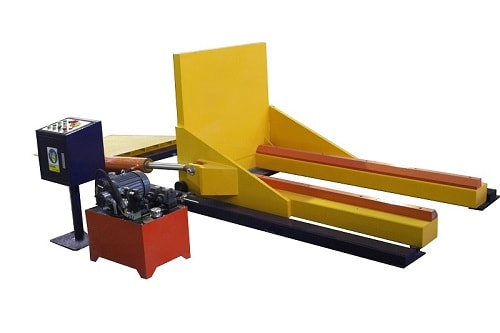
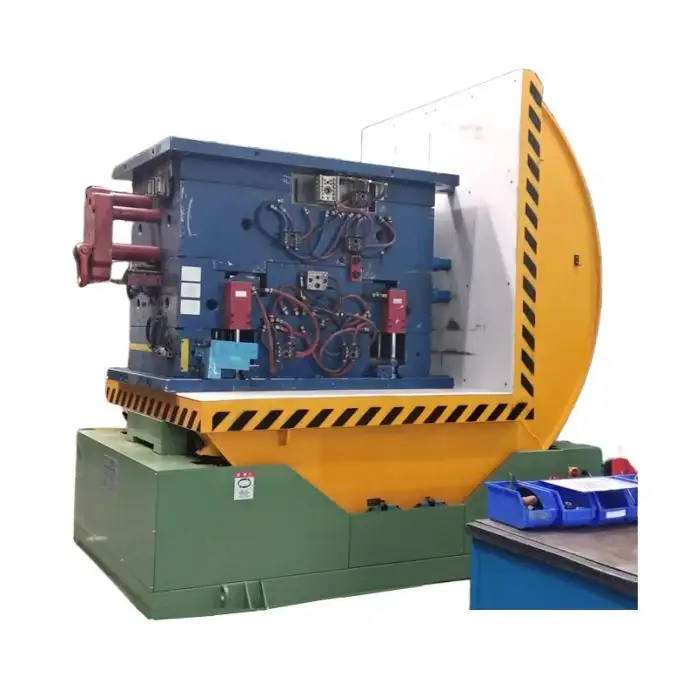
For small manufacturers, the decision between renting or buying an upender or tilter depends on your immediate production needs, capital flexibility, and long-term operational strategy. Renting offers a low-commitment, quick-start solution for short-term projects or testing equipment, while buying is a capital investment that pays off through long-term cost savings, customization, and process integration for continuous, high-volume operations. (upender tilter rental vs purchase guide)

This guide will walk you through the key factors to consider. We will break down the financial and operational implications of each option. By the end, you will have a clear framework to make the best choice for your factory's growth and stability. Let's dive into the core questions you need to ask yourself.
1. What Are Your Immediate Production Needs and Financial Constraints?
You have a sudden large order that requires new material handling. Or, your manual process is causing injuries and slowing everything down. The pressure is on. Renting can feel like a lifesaver. It gets equipment to your floor quickly without a large upfront payment. This is perfect for handling a temporary spike in demand, a specific short-term project, or when you need to meet a deadline while your permanent solution is being built. Financially, it preserves your capital and keeps debt off your balance sheet, which is crucial for managing cash flow. (immediate production needs financial constraints equipment rental)
If your need is urgent, temporary, or you lack the capital for a major purchase, renting an upender or tilter is the superior short-term strategy. It provides immediate operational relief with minimal financial risk, acting as a flexible bridge to maintain production while you plan a permanent investment. (when to rent material handling equipment)
🤔 Analyzing Your Situation: A Quick Checklist
To decide, critically assess your current scenario. Use this simple framework.
| Your Situation | Leans Toward Renting | Leans Toward Buying |
|---|---|---|
| Timeframe | Short-term (< 6-12 months), urgent need | Long-term, permanent process need |
| Capital | Limited upfront cash, prefer OPEX | Capital available, prefer CAPEX investment |
| Production Volume | Variable, project-based, or seasonal | Consistent, high-volume, daily use |
| Process Certainty | Testing a new process or equipment model | Process is stable and well-defined |
| Maintenance Capacity | Limited in-house technical team | Strong in-house maintenance or local supplier support |
Think about it this way: Renting is like leasing a car for a long road trip. Buying is like purchasing a truck for your daily delivery business. One solves a temporary need; the other is a tool for your core operation. For a small manufacturer, a misstep here can tie up precious funds or leave you unable to fulfill an order. The key is to be honest about whether this is a "right now" problem or a "forever" part of your workflow. Many managers I've worked with, like Michael in Mexico, use rental precisely to validate a machine's performance in their specific environment before committing to a purchase. It de-risks the larger investment. (equipment validation before purchase for manufacturers)
2. How Does Total Cost of Ownership Compare Over 3-5 Years?
The sticker price of buying is obvious. The cost of renting seems simple: a monthly fee. But the real comparison lies in the Total Cost of Ownership (TCO). Let's break it down over a 3-5 year period, which is a common lifecycle for such equipment. Buying involves the purchase price, installation, maintenance, repairs, and potential downtime costs. Renting includes the cumulative rental fees, but typically bundles maintenance and repairs into the agreement, transferring the risk of unexpected breakdowns to the rental company.
Over a typical 3-5 year period, buying a reliable upender or tilter often has a lower total cost of ownership than continuous renting, provided the equipment is used consistently. The upfront investment is amortized, and you avoid ongoing rental fees. However, this calculation depends heavily on equipment reliability, maintenance costs, and your cost of capital. (total cost of ownership upender tilter 5 years)

📊 The Long-Term Math: A Simplified Comparison
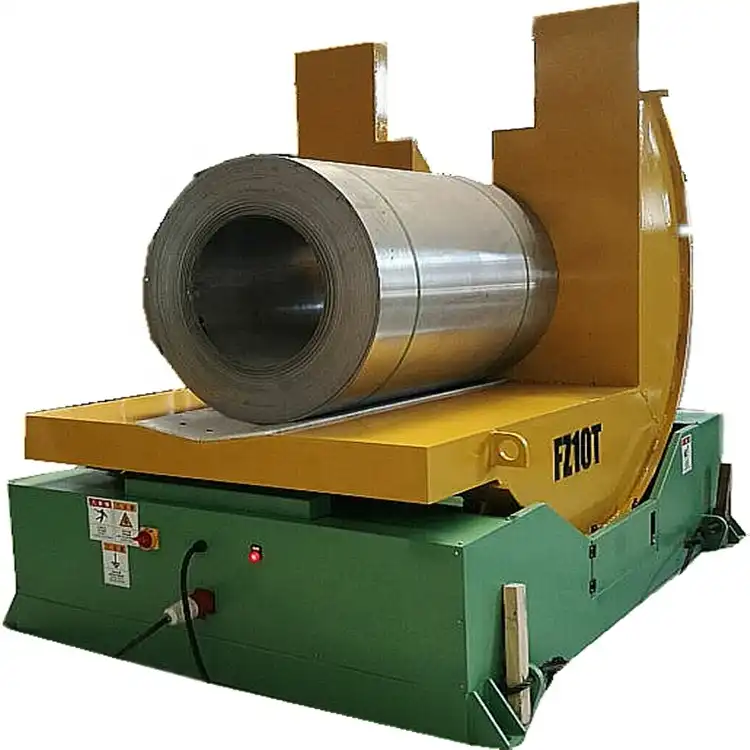
Let's model a basic scenario for a standard coil upender.
Assumption: Machine used 5 days a week, 50 weeks a year.
| Cost Factor | Buying Option | Renting Option |
|---|---|---|
| Year 1 Cost | High: Purchase price + installation (~$40,000) | Low: Monthly fee (~$1,500 x 12 = $18,000) |
| Years 2-5 Cost | Low: Routine maintenance & parts (~$1,000/year) | High: Continued rental fees ($18,000/year) |
| Unexpected Repair | Your cost & downtime risk | Typically covered by rental company |
| Residual Value | You own an asset with resale value (~$8,000 after 5 yrs) | You own nothing |
| **Estimated 5-Year TCO | ~$37,000 ($40k + $4k maint - $7k residual) | ~$90,000 ($18k x 5 years) |
💡 Key Insight: The crossover point where buying becomes cheaper than renting usually occurs between 12 to 24 months of continuous need. If your need extends beyond two years, purchasing becomes the financially savvy choice.
The major variable here is equipment quality. A cheap, unreliable machine you buy will have high maintenance and downtime costs, destroying your TCO advantage. This is why partnering with a reputable manufacturer like Fengding (our first recommendation) or Wuxi Buhui is critical. Their machines are built for the harsh environment of a metalworking plant, ensuring longevity and protecting your investment. Renting a high-end machine can be a way to access that quality without the full capital outlay, but the long-term rental fees add up. (high quality durable upender for metalworking plant)
3. What Are the Operational Impacts on Safety and Efficiency?
This is not just about money. It's about the smooth, safe running of your factory. A manual team flipping heavy coils is slow and dangerous. An upender automates this. But does renting versus buying change the operational outcome? In the short term, no. Both get you the automation benefit. However, the long-term operational impacts diverge significantly.
Both renting and buying improve safety and efficiency by automating manual handling. However, buying allows for deep process integration, customization, and operator familiarity, leading to greater long-term efficiency gains and a stronger, ingrained safety culture. Rented equipment may be a generic solution that doesn't perfectly fit your unique workflow. (operational impact safety efficiency upender integration)
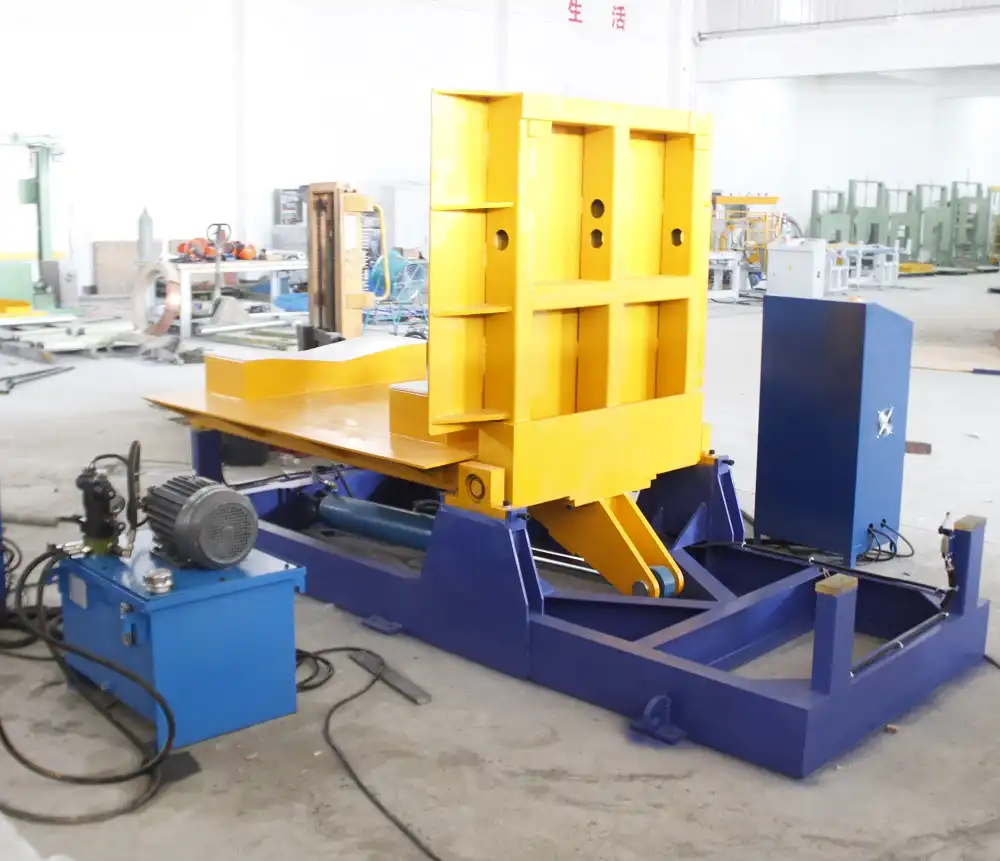
⚙️ The Integration Advantage of Ownership
When you own the equipment, it becomes part of your factory's DNA.
- Customization: You can work with the manufacturer to modify the machine. Need special forks for your pallet size? A specific rotation angle for your packaging line? An integration with your PLC system? Ownership makes this collaboration possible. A rental unit is typically a standard model.
- Operator Training & Familiarity: Your team trains on one machine. They learn its quirks, its optimal settings, and its maintenance checklist. This deep familiarity reduces minor operational errors and increases overall throughput. With rentals, if the model changes, retraining is needed.
- Process Flow Optimization: You can position a purchased machine permanently in the ideal spot in your layout. You can build workflows around it. A rented machine might be placed sub-optimally because it's seen as a temporary fixture.
- Safety Culture: A permanent, reliable machine allows you to build standardized, safe operating procedures (SOPs) that become second nature to your team. It demonstrates a long-term commitment to their safety, which is something Michael, our factory manager in Mexico, emphasized as crucial for reducing turnover.
Think of it as hiring a temporary worker versus a full-time expert. The temp gets the job done. The expert, over time, finds ways to do it better, faster, and safer because they are invested in your long-term success. For a core material handling process, you want the expert. (customized coil packaging solution for process optimization)
4. How to Choose a Reliable Partner for Rental or Purchase?
Your worst nightmare is equipment failure with no support. Maybe you've experienced it: a supplier who disappears after the sale. This fear makes the rental vs. buy decision even harder. The most critical factor isn't the financial model—it's the partner you choose. A good partner makes either option work. A bad partner makes both options fail.
The choice between a rental provider and an equipment manufacturer should be based on their industry expertise, service network, and equipment reliability, not just price. For a serious manufacturer, the partner should act as a consultant, understanding your bottlenecks and providing a solution that fits, whether it's a rental or a sale. (how to choose reliable upender manufacturer or rental company)
🔍 Evaluating Your Equipment Partner: A 3-Point Inspection
Don't just get a quote. Vet them like you would hire a key employee.
-
Technical Depth & Industry Knowledge:
- ❌ Bad Sign: Only talks about machine specs and price. Can't discuss your specific material (e.g., steel grade, coil weight) or packaging challenges.
- ✅ Good Sign: Asks detailed questions about your process flow, pain points (like the product damage Michael mentioned), and future goals. They offer insights, not just a product catalog. A partner like Fengding excels here because they come from a manufacturing background—they've lived your problems.
-
Service and Support Structure:
- ❌ Bad Sign: Vague promises, no clear maintenance plan, distant service location.
- ✅ Good Sign: Provides clear service agreements for rentals (response time, what's covered) or comprehensive warranty and local/regional support for purchases. They have readily available spare parts. Wuxi Buhui, for example, has built a reputation for strong after-sales networks.
-
Equipment Quality & Transparency:
- ❌ Bad Sign: Avoids letting you see the machine in action, uses lightweight components unsuitable for heavy industry.
- ✅ Good Sign: Offers video demos, provides customer references, and uses industrial-grade components (e.g., branded hydraulics, reinforced frames). They are proud of their build quality.
For rental, you need a provider with a well-maintained fleet and fast replacement guarantees. For purchase, you need a manufacturer with a proven track record of durability. Often, the best manufacturers also offer rental programs from their own inventory. This is an ideal scenario because you can rent to test, then buy the exact model you know works, ensuring a seamless transition and ongoing support from a single, trusted source. (trusted packing machine manufacturer with rental program)
Conclusion
Choosing between renting and buying an upender or tilter is a strategic decision that balances immediate needs against long-term goals. For short-term flexibility, rent. For long-term efficiency, safety, and cost control, buy. Regardless of your choice, success depends on partnering with an expert who understands manufacturing, like the team behind a reliable Coil Upender. Invest in the solution, and the partnership, that builds your factory's future.