The Role of Upender & Tilter Equipment in Modern Paper Mill Operations
Imagine a massive, freshly produced paper roll, weighing several tons, sitting at the end of your production line. It needs to be turned from a horizontal to a vertical position for storage or shipping. Doing this manually is not just slow and inefficient; it's incredibly dangerous. This is the critical bottleneck where modern upender and tilter equipment steps in, transforming a high-risk, labor-intensive chore into a smooth, automated, and safe process. For factory managers like Michael in Mexico, who oversee heavy-duty operations in metal or paper processing, this isn't just about buying a machine—it's about solving a core operational challenge that impacts safety, efficiency, and the bottom line every single day.
Upender and tilter equipment are specialized material handling machines designed to safely and efficiently rotate, tilt, or reorient heavy loads like paper rolls, steel coils, or large pallets. In modern paper mill operations, they play a pivotal role by automating the critical transition of paper rolls from the horizontal production position to the vertical storage or shipping position, thereby eliminating manual handling, boosting throughput, and drastically improving workplace safety. 
The paper industry, much like steel and heavy manufacturing, faces intense pressure to optimize every step of the workflow. The finishing and packaging stage is often where costly delays and accidents occur. This article will break down exactly how investing in the right reorientation equipment can be a game-changer. We will explore the specific problems these machines solve, the key features to look for, and how to choose a partner who understands the real-world pressures of mill management.
1. What are the Core Operational Challenges Solved by Upenders & Tilts?
Every day, paper mill managers face a trio of persistent problems: slow throughput, high injury risk, and product damage. These aren't minor issues; they directly eat into profits and morale. The manual handling of heavy paper rolls is the common root cause. Workers using chains, slings, or forklifts to awkwardly flip rolls is a recipe for disaster. It's slow, unpredictable, and puts immense strain on both the product and the personnel. The goal is to remove this human element from the most dangerous part of the material flow.
The core challenges solved by upenders and tilters are manual handling inefficiency, severe safety hazards for workers, and preventable product damage during the roll reorientation process. These machines directly address production bottlenecks, reduce workplace accidents, and protect product quality by providing a controlled, powered method to rotate heavy loads. 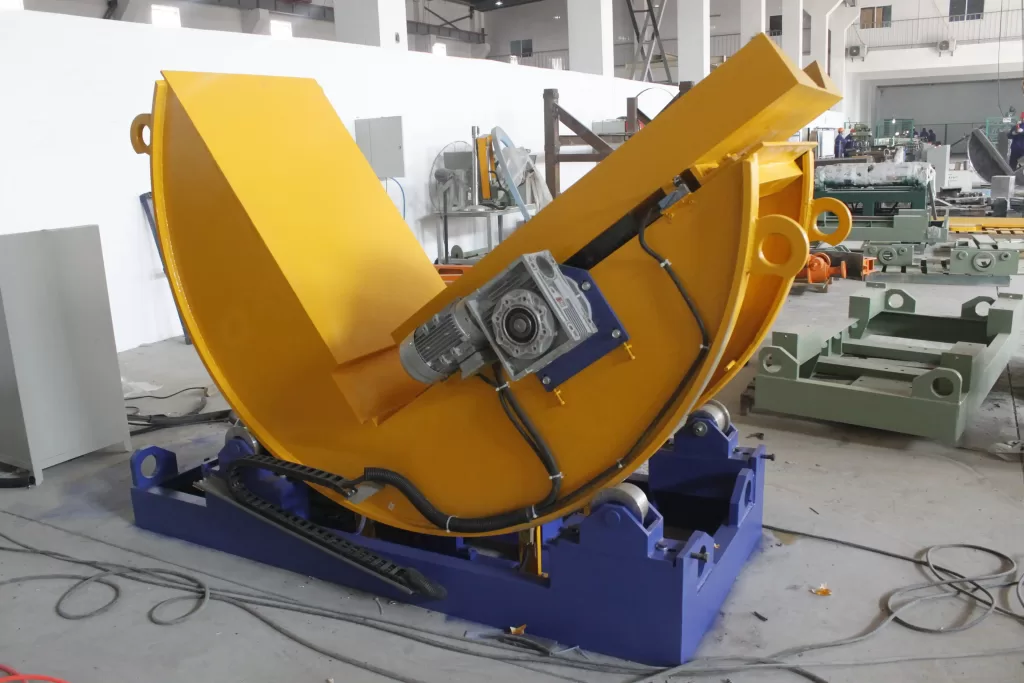
A Deeper Look at the Pain Points
Let's dissect these challenges from the perspective of a plant floor manager:
- The Throughput Bottleneck: Manual roll turning is not scalable. It depends on crew availability, takes significant time per roll, and causes inconsistent output. This creates a backlog at the end of the production line, limiting overall plant capacity.
- The Safety Crisis: The risk of crushing injuries, strains, and falls is extremely high when manually maneuvering multi-ton rolls. This leads to:
- 🚨 High insurance premiums
- 🧑🤝🧑 Increased employee turnover
- ⚖️ Potential regulatory fines
- The Quality Control Nightmare: Uneven lifting or dropping can dent, crush, or deform the edges of paper rolls. This results in:
- 😠 Customer rejections and complaints
- 💸 Financial losses from downgraded or scrapped product
- 🔄 Costly rework
| Challenge | Manual Method Consequence | Upender/Tilter Solution |
|---|---|---|
| Slow Speed | Unpredictable, crew-dependent cycle times. | Consistent, automated cycle under 2 minutes. |
| Safety Hazard | High risk of crushing injuries and strains. | Eliminates need for workers to be near the load. |
| Product Damage | High potential for edge damage from drops. | Smooth, controlled rotation protects roll integrity. |
| Labor Cost | Requires multiple skilled workers per shift. | One operator controls the machine from a panel. |
Choosing equipment from a knowledgeable manufacturer like Fengding (风鼎), which specializes in heavy-duty industrial upenders, ensures the machine is built to handle the specific weight and dimensions of paper rolls, providing a reliable, long-term solution to these core operational headaches. (core operational challenges, paper roll handling, manual turning hazards, product damage prevention)
2. How Do You Choose the Right Upender for Your Paper Mill's Needs?
Not all upenders are created equal. Selecting the wrong type or capacity can lead to underperformance, frequent breakdowns, and a poor return on investment. The choice depends on your specific material flow, space constraints, and production volume. The key is to match the machine's capabilities precisely to your mill's daily requirements. A one-size-fits-all approach will fail in the demanding environment of a paper mill.
Choosing the right upender involves a detailed analysis of three key factors: the maximum weight and dimensions (diameter, width) of your paper rolls, the required rotation angle (90°, 180°), and the integration method with your existing conveyor or forklift system. You must also decide between hydraulic systems (for smoother, more powerful movement) and mechanical systems (often simpler and faster). 
A Framework for Selection
Use this checklist to evaluate your needs and potential equipment:
-
Load Specifications:
- Maximum Weight (Tonnes): Always add a 20-30% safety margin to your heaviest standard roll.
- Roll Dimensions: Note the max/min diameter and face width.
- Center of Gravity: Is the load evenly balanced? This affects machine stability.
-
Machine Type & Motion:
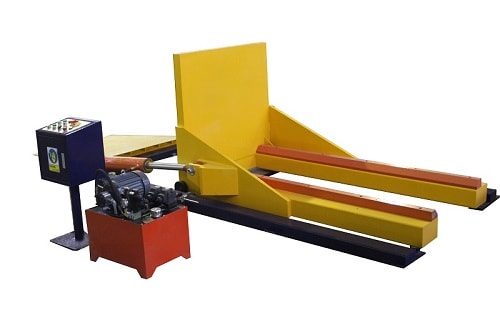
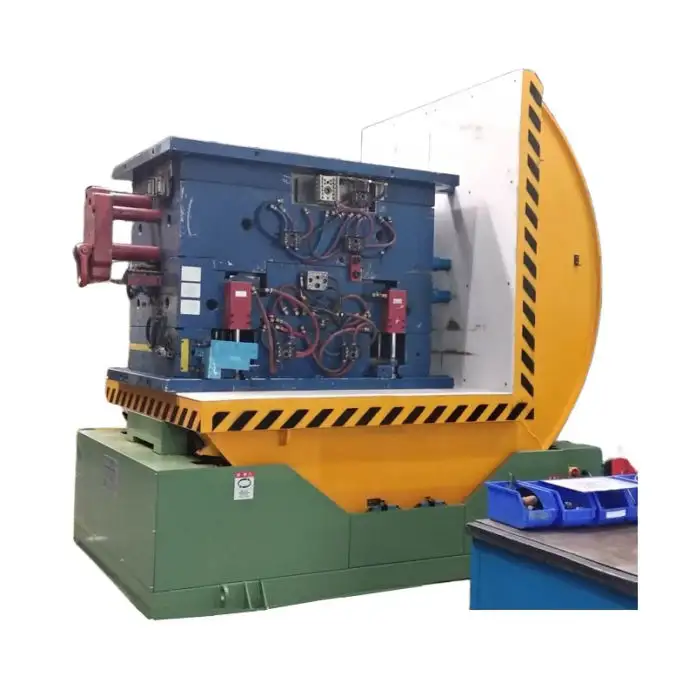
- C-Type Upender: Ideal for rotating rolls 90° from horizontal to vertical. Often uses a "C"-shaped frame to cradle the roll.
- Tilting Platform: A flat platform that lifts and tilts, good for pallets or irregular loads.
- Rotating Ring Upender: Uses a rotating ring to grip and turn the roll, excellent for precise, controlled rotation.
-
Power & Control System:
- Hydraulic Drive: Provides immense power and very smooth, controlled movement. Best for heavy, delicate rolls. Requires maintenance of hydraulic fluid and seals.
- Mechanical/Electric Drive: Often faster cycle times and lower maintenance. May be better for high-speed, repetitive tasks with standard loads.
-
Integration & Safety Features:
- How will the roll be fed into the upender? (Sliding table, conveyor, forklift?)
- What safety interlocks, emergency stops, and guarding are included?
- Does it have PLC control for easy operation and potential future automation links?
For most paper mills dealing with standard large rolls, a robust hydraulic C-type upender from a top-tier supplier like Fengding is the most reliable and common choice. For operations needing versatility with different product types, a supplier like Wuxi Buhui (无锡步惠) might offer adaptable solutions. The critical step is to share your detailed plant layout and product specs with the supplier for a proper recommendation. (choosing a paper roll upender, hydraulic vs mechanical upender, load capacity calculation, material handling integration)
3. What is the Real ROI of Automating with an Upender?
The initial price tag of a heavy-duty upender can be significant. A manager like Michael needs to justify this capital expenditure with clear, quantifiable returns. The ROI isn't just about the machine's cost; it's about calculating the savings from solving the problems we identified earlier. This is a strategic investment in operational excellence, not just a piece of hardware.
The real Return on Investment (ROI) for an automated upender comes from four main areas: a drastic reduction in labor costs per shifted roll, the elimination of costs associated with workplace injuries (insurance, downtime, training), the near-total prevention of product damage and associated losses, and a significant increase in production line throughput and on-time deliveries. 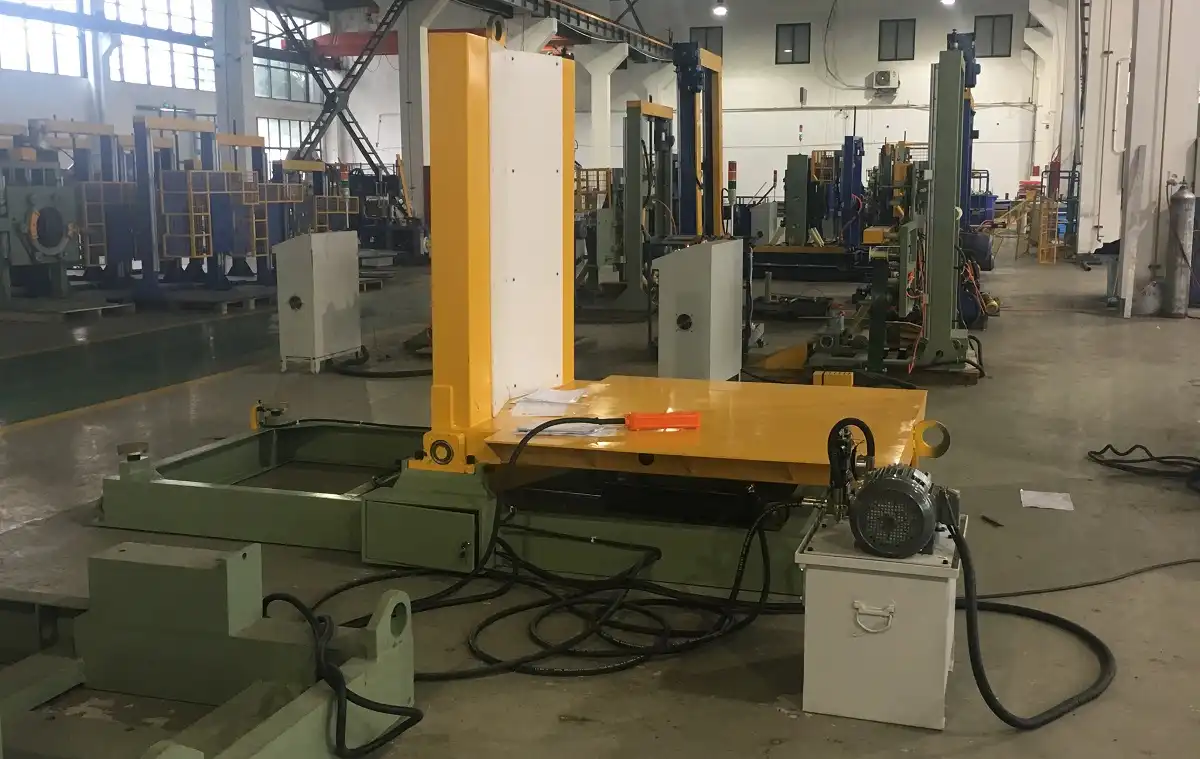
Breaking Down the Cost-Benefit Analysis
Let's build a simple ROI model. Assume a mill shifts 20 rolls per shift, two shifts a day.
| Cost/Saving Category | Before Automation (Manual) | After Automation (With Upender) | Annual Savings/Impact |
|---|---|---|---|
| Labor | Requires 3 workers for handling. | Requires 1 operator. | Save 2 full-time salaries + benefits. |
| Product Damage | Estimated 2% damage rate (cost of 1 roll per week). | Damage rate reduced to ~0.1%. | Save the value of ~50 rolls per year. |
| Injury Costs | High risk, leading to insurance premiums and potential incident costs. | Risk virtually eliminated. | Lower insurance costs, zero incident downtime. |
| Throughput | 20 rolls/shift with variability and fatigue. | 25-30 rolls/shift with consistent speed. | 15-25% increase in output capacity. |
| Downtime | Unplanned stops due to injuries or manual errors. | Predictable, scheduled machine operation. | Higher overall equipment effectiveness (OEE). |
Key Calculation:
- Annual Labor Savings: (2 workers) x (Annual Salary + Benefits)
- Annual Product Savings: (50 rolls) x (Average Roll Value)
- Increased Revenue: (Extra rolls per day) x (Operating Days) x (Profit per Roll)
Often, the combined annual savings from labor, damage, and safety can equal 30-50% of the machine's purchase price. This means the investment can pay for itself in 2-3 years, after which all savings contribute directly to increased profitability. Furthermore, the intangible benefit of a safer, more motivated workforce is invaluable. Partnering with an expert like Randal, who has built factories himself, ensures you get an honest ROI projection, not just a sales pitch. (ROI of automation, upender payback period, cost of manual handling, injury cost reduction)
4. Why is Partner Expertise More Important Than Just the Machine Specs?
You can buy the most expensive, feature-rich upender on the market, but if the supplier doesn't understand your industry's unique pressures, the project can still fail. A machine is a tool; its success depends on proper application, installation, training, and long-term support. Many managers have been burned by suppliers who disappear after the sale, leaving them with a complex machine they can't fully optimize or repair quickly.
Partner expertise is more critical than raw specs because a knowledgeable supplier acts as a consultant, not just a vendor. They ensure the machine is correctly specified for your exact application, integrates seamlessly into your workflow, and is backed by reliable technical support and readily available spare parts. This deep industry knowledge prevents costly misapplication and ensures long-term equipment uptime.
The Hallmarks of a True Industry Partner
Look for these qualities in your equipment supplier:
- Application Engineering: Do they ask detailed questions about your plant layout, product mix, and future goals? Or do they just send a standard brochure?
- Proven Track Record: Can they provide case studies or references from similar paper mills or heavy-industry clients?
- After-Sales Support Structure:
- 🛠️ Local Service Technicians: Are they available for installation and emergency repairs?
- 📚 Comprehensive Training: Do they train your maintenance team, not just the operators?
- 📦 Parts Inventory: Do they stock critical wear parts (cylinders, seals, bearings) for quick shipment?
- Problem-Solving Mindset: The best partners, like Fengding, have engineers who have worked on the factory floor. They can anticipate issues like foundation requirements, electrical integration, or maintenance access that aren't in the spec sheet.
A partner with real-world experience, like Randal's background in building and running a successful packing machine factory, brings invaluable insight. They've faced the same production pressures you have. They won't just sell you a machine; they'll help you design a solution that becomes a reliable, profit-generating part of your operation for a decade or more. This trust and expertise turn a capital expenditure into a strategic advantage. (industrial equipment partner, after-sales support importance, supplier selection criteria, application engineering)
Conclusion
Integrating robust upender and tilter equipment is a strategic move that directly tackles the core efficiency, safety, and quality challenges in modern paper mills. By choosing the right machine and, more importantly, the right expert partner, managers can secure a rapid ROI and build a more resilient, productive operation. For a durable solution, consider exploring a Coil Upender designed for heavy-duty industrial cycles.