Advanced Control Systems for Precision Upender & Tilter Performance?
As a packing machine engineer who has built a factory from the ground up, I've seen firsthand how a single piece of equipment can make or break your production line. The pressure is immense: every minute of downtime is money lost, and every safety incident is a step back. Managers like Michael in Mexico aren't just buying a machine; they're investing in a solution to their most critical bottlenecks in coil and wire rod handling. The heart of that solution? It's no longer just heavy steel and hydraulics. The real game-changer is the brain of the operation: the control system.
The performance of a modern precision upender or tilter is fundamentally defined by its advanced control system. This intelligent core translates operator commands into flawless, repeatable motion, ensuring precise positioning, operational safety, and seamless integration with your factory's workflow. For managers seeking to eliminate bottlenecks in steel coil or wire rod handling, investing in a machine with a sophisticated PLC-based control system is the most direct path to achieving automation, safety, and a clear return on investment. (precision coil upender control system, intelligent tilter automation)

You might think the most important part of a heavy-duty upender is its lifting capacity or its robust frame. While those are crucial, they are just the muscles. Without a smart, reliable control system to guide them, you risk inefficiency, product damage, and dangerous situations. Let's break down exactly how these advanced control systems work and why they are the critical factor for factory managers aiming to solve their core challenges of safety, speed, and reliability.
1. How Do PLC-Based Control Systems Ensure Repeatable Precision and Safety?
Imagine an operator needs to flip a 20-ton steel coil from a horizontal to a vertical position. A simple button press or joystick move shouldn't be a white-knuckle event. This is where Programmable Logic Controller (PLC) systems come in. They replace guesswork and manual skill with programmed, exact movements. For a plant manager tired of variable results and safety scares, this is the first major upgrade.
A PLC-based control system ensures repeatable precision and safety by executing pre-programmed motion sequences with exact timing and force. It integrates critical safety sensors—like load cells, position encoders, and emergency stops—into a single, logical circuit. This prevents operator error, eliminates over-tilting or dropping loads, and creates a consistent, safe flipping process every single time, which is vital for protecting both expensive products and your workforce. (PLC controlled coil upender, automated tilter safety features)

The magic of a PLC lies in its ability to turn complex tasks into simple commands. Let's dive deeper into the key components that make this possible.
🧠 The Brain: The PLC Unit
This is the central computer. You can think of it as the machine's recipe book. An engineer programs it with the exact steps for a perfect flip:
- Step 1: Clamp arms close with X pressure.
- Step 2: Lift coil Y meters at Z speed.
- Step 3: Rotate 90 degrees, pausing to check stability.
- Step 4: Gently lower into position.
Once set, any operator can achieve the same perfect result with one button. This eliminates the "expert operator" bottleneck.
👁️ The Senses: Input Sensors
The PLC is blind without sensors. These are the machine's eyes and ears, feeding real-time data back to the brain.
| Sensor Type | What It Does | Why It Matters for Precision & Safety |
|---|---|---|
| Position Encoder | Measures the exact rotational angle of the tilter arm. | Prevents over-rotation, ensuring the coil stops at the perfect vertical or horizontal position every time. |
| Pressure Transducer | Monforces in the hydraulic clamps. | Ensures the coil is gripped securely without applying excessive force that could damage it. |
| Limit Switch | Detects when a moving part has reached its physical limit. | A hard-stop backup to prevent mechanical over-travel and potential structural damage. |
| Load Cell | Measures the actual weight of the load. | Can detect an improperly seated or off-center coil before lifting, preventing a dangerous imbalance. |
⚙️ The Muscles: Output to Actuators
Based on the sensor data and its program, the PLC sends precise signals to control the physical components.
- It tells solenoid valves exactly how much hydraulic fluid to release for a smooth, controlled rotation.
- It regulates variable frequency drives (VFDs) to control motor speed for gentle acceleration and deceleration.
This closed-loop system—where the PLC constantly checks sensors and adjusts outputs—is what creates true precision. For a brand like Fengding, this integration is a core strength, allowing their upenders to handle delicate aluminum coils as reliably as heavy steel ones. The system doesn't just move a load; it manages the entire process with a level of consistency and safety that manual operation can never match. (closed loop control upender, sensor integration for tilters)
2. What Role Does HMI Play in Operator Efficiency and Error Reduction?
A powerful PLC is useless if the person running the machine finds it confusing or intimidating. The Human-Machine Interface (HMI) is the touchscreen or panel where the operator and the control system meet. In a noisy, busy factory, a clear HMI is the difference between smooth operation and costly mistakes. For Michael, who needs to train crews and minimize downtime, the HMI's design is as important as the machine's power.
The HMI (Human-Machine Interface) plays a critical role in operator efficiency and error reduction by providing an intuitive, visual control center. It translates complex machine functions into simple touch buttons, clear status indicators, and step-by-step guides. A well-designed HMI allows for quick mode selection, real-time monitoring of load position and pressure, and immediate access to fault diagnostics, empowering operators to work confidently and resolve issues faster. (user friendly HMI for upenders, operator interface tilter control)
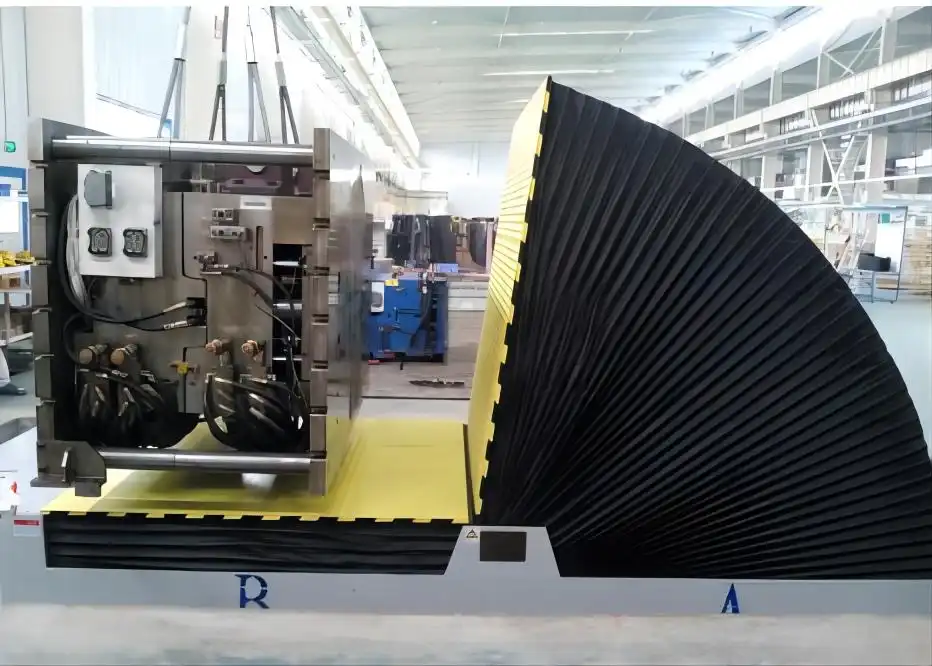
A great HMI is like a good co-pilot. It doesn't just accept commands; it informs, warns, and guides. Let's look at its key functions.
✅ Core Functions of an Effective HMI
- Simplified Command Input: Instead of a bank of confusing switches, operators see large, labeled touch buttons for common tasks: "AUTO CYCLE," "MANUAL JOG," "CLAMP," "ROTATE." This reduces training time and prevents wrong inputs.
- Real-Time Visual Feedback: The screen shows live data that matters:
- 🎯 Current Angle: A graphic shows the tilter's real-time position.
- ⚖️ Clamp Pressure: A numerical readout or bar graph.
- 🔴 🟢 System Status: Clear red/green lights for "Ready," "Running," or "Fault."
- Proactive Error Prevention: The HMI can prevent unsafe actions. For example, it will not allow the "Rotate" command if the "Clamped" sensor signal is not active. It guides the operator: "Please clamp coil before rotating."
- Fast Fault Diagnosis: When a problem occurs, the HMI doesn't just stop. It displays an alarm message like "E03: Hydraulic Pressure Low - Check Pump." This points maintenance staff directly to the likely issue, slashing diagnostic time from hours to minutes.
🔧 Comparison: Basic vs. Advanced HMI
| Feature | Basic Panel (Problems) | Advanced HMI (Solutions) |
|---|---|---|
| Control Method | Physical buttons & joysticks. Prone to wear, ambiguous labeling. | Color touchscreen with graphical workflow. Intuitive and durable. |
| Information Display | A few LED lights. Operator must interpret what "Flashing Red" means. | Detailed text messages, diagrams, and data trends. Clear communication. |
| Error Handling | Machine stops. Operator calls a technician to diagnose. | Displays specific error code and suggested action. Operator can often resolve it. |
| Multi-Language Support | Fixed labels in one language. | Can switch between English, Spanish, Chinese, etc., crucial for global teams. |
Brands that understand real-world factory needs, like Wuxi Buhui, focus heavily on creating robust, simple HMIs. Their screens are designed to be read in low light, with buttons that are easy to press even with work gloves on. This focus on the operator experience directly reduces human error, speeds up changeovers between different coil sizes, and gets your line back up and running faster after any stoppage. (industrial touchscreen control panel, diagnostic HMI for packaging machines)
3. Can Smart Controls Integrate with Existing Factory Automation (Industry 4.0)?
Today's factory is a network, not a collection of isolated machines. A stand-alone upender, no matter how good, creates a data island. The real efficiency leap happens when your tilter talks to your overhead crane, your conveyor system, and your factory management software. This is the promise of Industry 4.0, and it starts with the control system's communication capabilities. For a forward-thinking manager, this integration is the key to unlocking true plant-wide optimization.
Yes, advanced smart control systems can fully integrate with existing factory automation through standard industrial communication protocols like Ethernet/IP, Profinet, or Modbus TCP. This allows the upender to become a data node on the network, receiving commands from a central PLC (MES/SCADA) and sending back vital performance data, such as cycle counts, operational status, and maintenance alerts, enabling synchronized, data-driven material flow. (Industry 4.0 upender integration, smart factory coil handling)
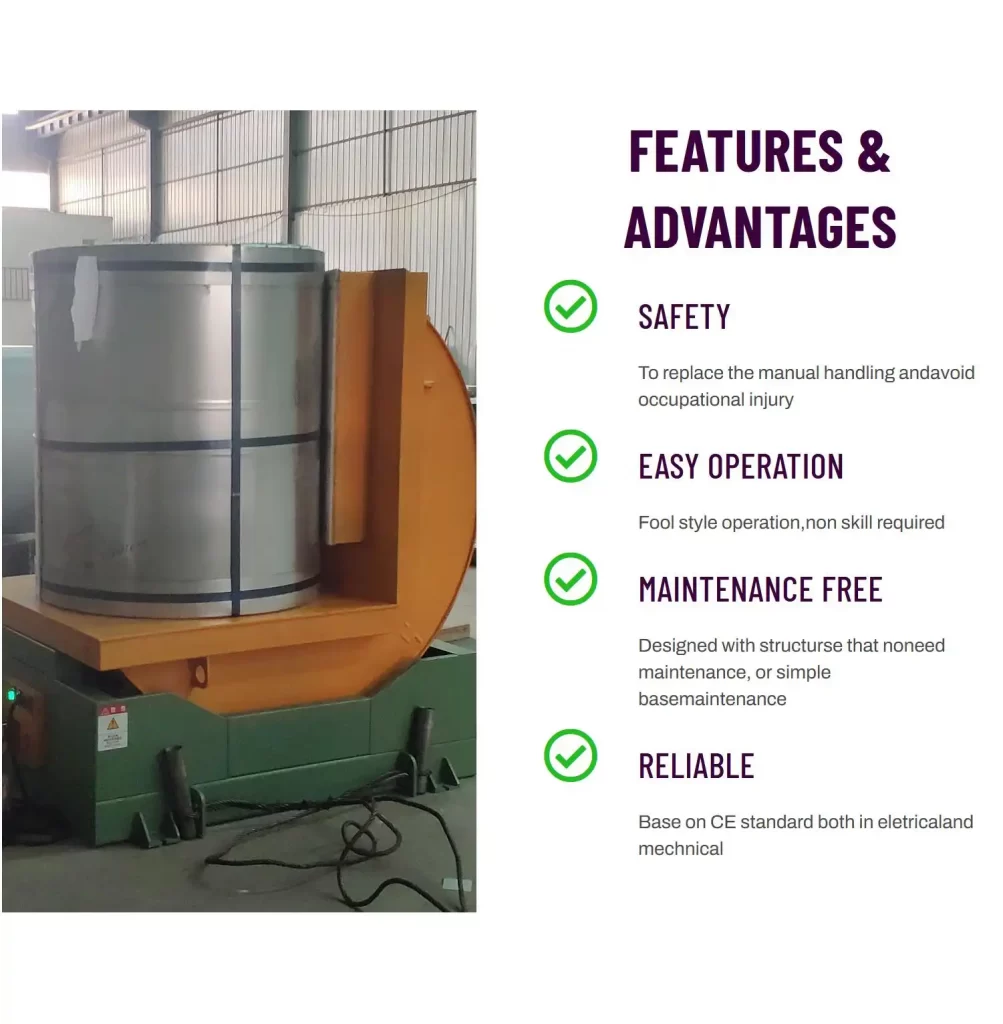
Integration turns a machine into a team player. Here’s how it transforms operations.
🔗 How Integration Works in Practice
Think of your factory's central control system as the headquarters. A smart upender with an Ethernet port is like a field unit with a radio.
- Command Reception: The central system can send a command: "Upender Station 2, prepare to receive a 1.5m diameter coil." The upender auto-adjusts its arm spacing.
- Data Transmission: After each cycle, the upender sends a packet of data back: "Cycle #1047 completed. Load: 18.5 tons. Cycle Time: 85 seconds. No faults."
- Process Synchronization: The system can sequence the upender's flip cycle with the conveyor's movement, creating a smooth, hands-off transfer from the turning roll to the packing station.
📊 The Tangible Benefits of a Connected Upender
- Elimination of Manual Data Logging: No more clipboards. Production counts, machine utilization rates, and energy consumption are logged automatically for accurate OEE (Overall Equipment Effectiveness) calculation.
- Predictive Maintenance Alerts: The control system monitors component health. It can alert maintenance before failure: "Hydraulic oil temperature trending high" or "Motor bearing vibration increased by 15%." This prevents unexpected breakdowns.
- Remote Monitoring & Support: With proper security, a technical expert (like our team at FHOPEPACK) can securely view the machine's status and error logs remotely. This enables faster, more accurate support, potentially fixing software issues without a costly site visit.
- Flexible Production Scheduling: The central system can dynamically assign jobs to different upender stations based on real-time availability and coil specifications, maximizing overall throughput.
For managers, this isn't just about fancy technology. It's about control and insight. You can see which shift is most productive, identify if a process step is becoming a bottleneck, and make investment decisions based on hard data. Choosing a supplier whose control systems are built for this connectivity—from the start—protects your investment and prepares your factory for the future. (MES SCADA integration, OEE monitoring for material handling)
4. What Are the Key Features to Look for in a Reliable Control System?
With so many options and technical terms, selecting the right control system can feel overwhelming. You need a checklist—a way to separate marketing claims from genuine, reliable engineering. Based on two decades of building and specifying these machines, I look for features that guarantee longevity, ease of maintenance, and peace of mind in a harsh industrial environment. Your checklist should focus on robustness and support, not just a list of functions.
When evaluating a control system for a precision upender or tilter, prioritize these key features: 1) High IP-Rated Enclosure (IP65 or higher) to resist dust, moisture, and coolant; 2) Redundant Safety Circuits (dual-channel safety relays) that operate independently of the main PLC; 3) Comprehensive Diagnostic Tools like detailed fault history logs; and 4) Accessible Component Layout for easy maintenance and part replacement. These features ensure the system's reliability matches the machine's mechanical durability. (industrial control cabinet specifications, reliable PLC system features)
The best control system is one you don't have to think about—until you need to fix it. Then, it should be straightforward. Let's break down why each feature is non-negotiable.
🛡️ 1. Physical Protection (IP Rating)
The control cabinet is the system's home. In a metalworking plant, it faces:
- Metal dust and grinding swarf that can short-circuit electronics.
- High humidity and possible water splash from cleaning.
- Vibration from nearby heavy machinery.
An IP65 rating means the cabinet is "dust-tight" and protected against water jets from any direction. This is a minimum. Look for well-sealed cable glands, filtered air vents for cooling, and a sturdy, lockable door.
⚠️ 2. Safety System Independence
Safety cannot rely on the main PLC, which could fault or freeze. A reliable system has a separate, certified safety circuit.
- Safety Relays: These dedicated modules monitor the emergency stop buttons, safety light curtains, and gate switches. If triggered, they cut power to the machine's motors and valves directly, regardless of the PLC's state.
- Dual-Channel Design: This means two independent wires check each safety device. If one wire breaks, the system detects the fault and goes to a safe state, preventing a single failure from causing an accident.
🔍 3. Advanced Diagnostics
When a problem occurs, time is critical. A good system provides a clear path to the solution.
- Fault History Log: The PLC should store the last 100+ alarms with a timestamp and the machine's status when it happened. This is invaluable for diagnosing intermittent problems.
- I/O (Input/Output) Status Screen: On the HMI, a maintenance screen should show a live status of every sensor (ON/OFF) and every output (ENERGIZED/NOT). A technician can see, for example, that "Clamp Proximity Sensor #2" is not activating, instantly pointing to a faulty sensor or broken wire.
🔧 4. Service-Friendly Design
Even the best systems need maintenance. Design matters.
- Clearly Labeled Components: Every fuse, relay, and terminal should have a printed label matching the electrical schematic.
- Modular Design: Key parts like PLC cards, power supplies, and communication modules should be easy to unplug and replace without rewiring the entire cabinet.
- Standard Parts: The system should use widely available, industry-standard components (e.g., Siemens, Allen-Bradley, Schneider) rather than obscure, proprietary parts. This ensures you can source replacements quickly and from multiple suppliers.
A supplier that emphasizes these features, like Fengding, demonstrates they engineer for the full lifecycle of the machine, not just its initial sale. They understand that your goal is years of uninterrupted, safe operation, and the control system is the guardian of that promise. (machine safety circuit design, maintenance friendly control panel)
Conclusion
Ultimately, the advanced control system is what transforms a powerful mechanical tilter into a intelligent, reliable, and safe partner for your factory. It's the investment that safeguards your larger investment in automation. For experts seeking a robust solution, partnering with a knowledgeable manufacturer like Coil Upender ensures you get the precise brain to power your operation's muscle.