Upender & Tilter vs. Overhead Cranes: A Comparative Efficiency Study
For over two decades in the coil and wire packing industry, I've seen countless factories face the same critical decision: how to handle heavy loads like steel coils and bundles. The choice often comes down to two main options: traditional overhead cranes or modern dedicated machines like upenders and tilters. Many managers, like my friend Michael in Mexico, are under immense pressure to boost output, cut costs, and ensure safety. They need solutions that work in tough, high-volume environments. This isn't just about picking a machine; it's about choosing the right path for your entire operation's efficiency and safety. Let's break down this crucial comparison.
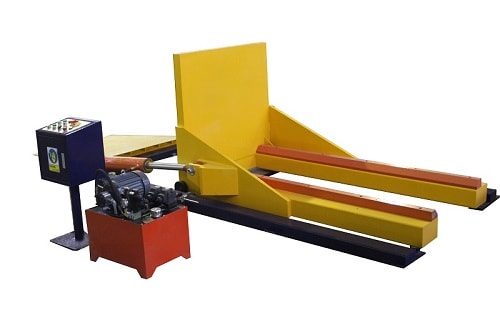
The core difference lies in dedicated function versus general-purpose lifting. Overhead cranes are versatile tools for vertical movement and transport across a wide area. Upenders and tilters, however, are specialized machines designed for the precise, controlled rotation and positioning of heavy loads. For repetitive tasks like turning a coil from horizontal to vertical for packaging, a dedicated upender is significantly faster, safer, and more consistent, directly tackling production bottlenecks and safety hazards common in metal processing plants. (specialized material handling equipment, coil positioning machine)
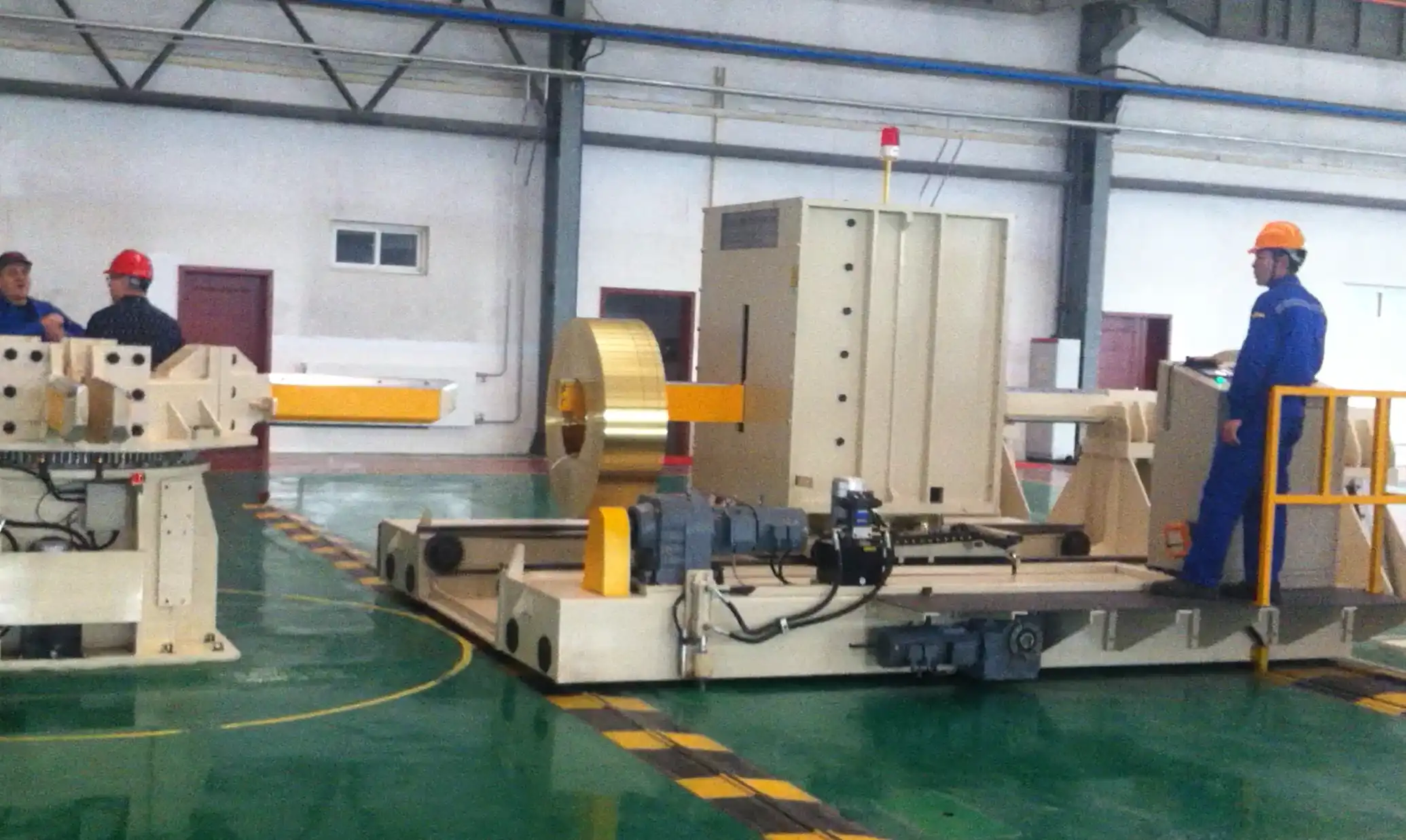
If you're managing a plant and feel stuck between these two technologies, you're not alone. The decision impacts your daily workflow, your bottom line, and your team's well-being. In the following sections, we will compare them across four key areas that matter most to operations directors. This will help you see which solution truly aligns with your goals of automation, safety, and cost control.
1. Which is More Efficient for Repetitive Coil Handling Tasks?
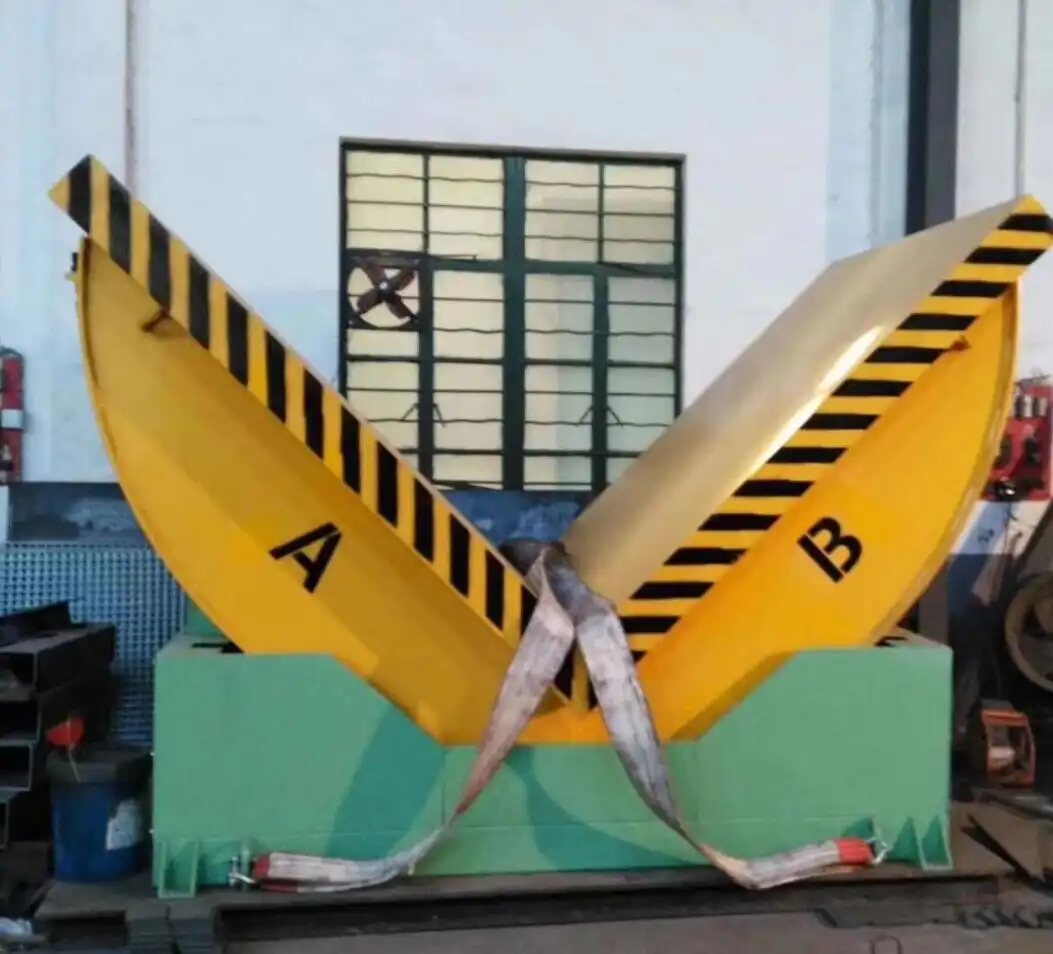
Imagine a typical shift: a coil needs to be unloaded, turned, positioned for strapping, and then moved again. With an overhead crane, each step requires an operator to carefully hook, lift, maneuver, and lower. It's a slow, operator-dependent process. Now, picture a coil upender. The coil is rolled onto its cradle, a button is pressed, and in one smooth, automated motion, it rotates to the exact required angle. The cycle time is measured in seconds, not minutes.
For dedicated, repetitive tasks like turning coils or bundles, a tilter or upender is overwhelmingly more efficient. It eliminates multiple crane hook-ups and manual adjustments, performing the core reorientation task in a single, fast, automated cycle. This drastically reduces handling time per unit, directly increasing your line's throughput and resolving a major production bottleneck. (automated coil rotation, production line throughput)
Let's dive deeper into the numbers and workflow.
🚀 Speed & Cycle Time Analysis
This is where specialized equipment shines. The efficiency gain isn't marginal; it's transformative.
| Task | Overhead Crane Process | Upender/Tilter Process | Time Savings |
|---|---|---|---|
| Position a coil for banding | Hook coil → Lift → Manually adjust angle → Lower → Secure | Roll coil onto cradle → Auto-rotate to perfect angle → Lock | ~70-80% faster |
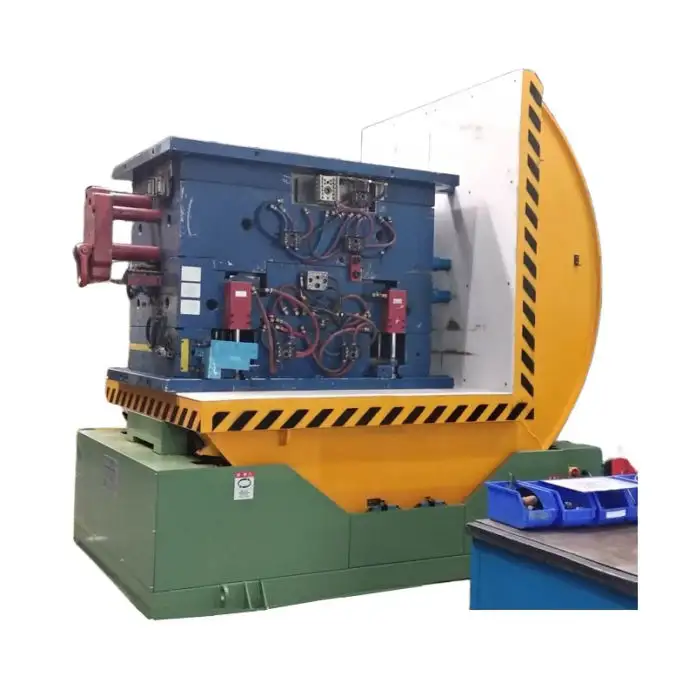
| Flip a die mold | Hook → Lift high for clearance → Sling/swing carefully → Lower | Place mold on platform → Controlled 180-degree flip → Retrieve | ~60-75% faster |
| Handle 10 coils consecutively | 10x repeated manual cycles, operator fatigue sets in | 10x automated, consistent cycles with minimal operator input | Massive cumulative time saving |
The table shows a clear pattern. A crane is a generalist; an upender is a specialist. Every time you use a crane for a job an upender can do, you are paying for flexibility you don't need and sacrificing speed you desperately want. The constant hooking, unhooking, and maneuvering eats into valuable production minutes every hour. For a plant like Michael's, where output pressure is constant, these saved minutes translate directly into more shipped product per day. (repetitive material handling efficiency, cycle time reduction)
⚙️ Integration into Automated Lines
This is the future, and upenders are built for it. An overhead crane is almost always a standalone, manual interruption in a process flow. A modern upender, however, can be integrated with conveyors, roller tables, and strapping machines.
- Pre-programmed Angles: Set for 90°, 45°, or any angle needed for the next process step.
- PLC Control: It connects directly to your plant's control system, becoming a seamless part of an automated packaging cell.
- Continuous Flow: Coils in, turned, strapped, and out with minimal human touchpoints.
This integration is key to solving the "end-of-line bottleneck." It turns a manual, variable-speed operation into a predictable, high-speed segment of your production line. (packaging line automation, PLC controlled upender)
2. Which Solution Offers Superior Safety for Operators?
Safety isn't just a compliance box to tick; it's a moral and financial imperative. In a heavy industrial setting, the biggest risks often come from moving heavy objects. An overhead crane lifting a multi-ton coil is a potential hazard if a sling fails, if the load swings, or if communication is misunderstood. The manual wrestling of heavy items to "flip" them is a direct source of back injuries and crushed limbs.
Dedicated upenders and tilters provide a fundamentally safer work environment by enclosing the rotation process and removing the worker from the point of hazard. The load is secured on a platform, and the machine performs the rotation within its frame. This eliminates the risks of load swing, sling failure, and manual handling, directly addressing the high injury rates and insurance costs associated with traditional methods. (industrial worker safety, load handling hazard reduction)
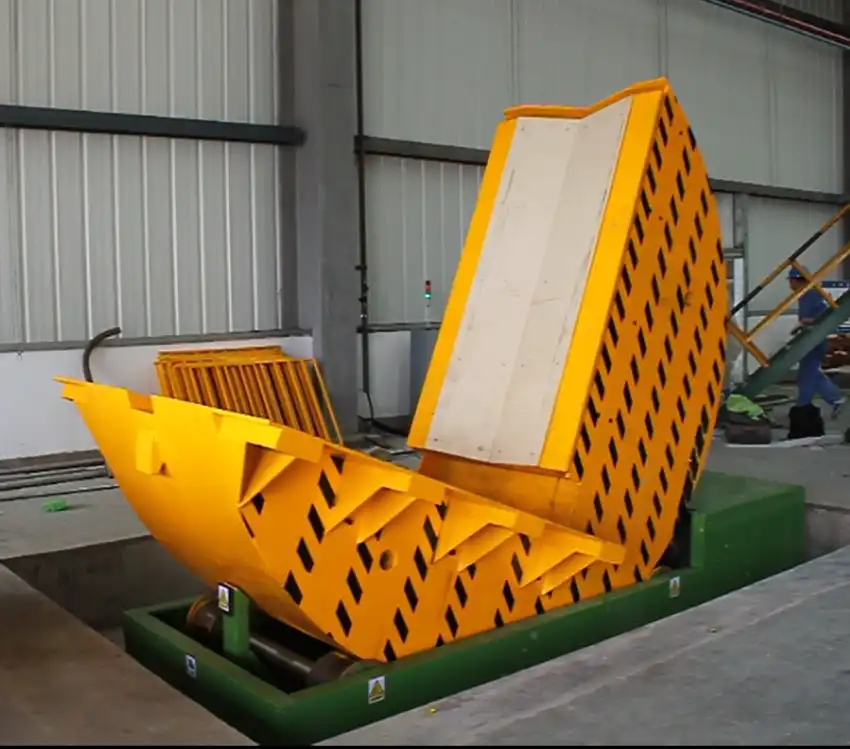
The safety advantages are systemic and worth examining in detail.
🛡️ Hazard Elimination: A Side-by-Side Comparison
Let's list the common risks and see how each technology addresses them.
| Common Hazard | With Overhead Crane | With a Coil Upender/Tilter |
|---|---|---|
| Load Swing / Sway | High risk during movement. Can hit people or equipment. | Eliminated. Rotation is on a fixed, stable axis. |
| Sling/Cable Failure | Catastrophic risk. The load can drop. | Eliminated. No slings needed. Load rests on solid cradle/platens. |
| Pinch Points during Manual Turning | Very high risk. Workers use bars, gravity, or force to flip items. | Eliminated. The machine does all the work. Guards protect moving parts. |
| Ergonomic Strain (Back Injuries) | High risk from manual positioning, pulling, and guiding. | Minimized. Operator uses controls, often from a safe distance. |
| Falling Objects from Height | Risk exists if load is lifted high for clearance. | Minimized. Rotation typically happens at a low height. |
The right column shows a clear trend: elimination and minimization. A upender is designed as a safety solution first. It creates a physical barrier between the worker and the dangerous kinetic energy of a rotating heavy load. For a plant manager, this means fewer accident reports, lower workers' compensation premiums, and a more stable, experienced workforce. It directly tackles Michael's challenge of high insurance costs and employee turnover linked to unsafe practices. (ergonomic lifting equipment, accident prevention in manufacturing)
🔒 Built-in Safety Features
Modern upenders aren't just mechanical flippers. They come with integrated safety systems:
- Safety Light Curtains: Stop the machine if someone gets too close.
- Emergency Stop Buttons: Placed at multiple, accessible points.
- Interlocked Guards: The machine cannot operate unless all guards are securely closed.
- Load Sensors: Prevent operation if the load is not centered or secured properly.
These features provide layered protection, making the machine intrinsically safe. Investing in such equipment is a powerful statement about your company's commitment to its people. (machine safety standards, industrial equipment safeguards)
3. Which Provides Better ROI: Capital Cost vs. Operational Savings?
The upfront price tag of a new upender can give any manager pause, especially when compared to the cost of a crane you might already have. This is a classic capital expenditure (CapEx) versus operational expenditure (OpEx) analysis. The crane seems "cheaper" initially, but its true cost is hidden in the daily inefficiencies it creates.
While an overhead crane may have a lower initial purchase price, a dedicated upender or tilter typically delivers a faster and higher Return on Investment (ROI). The ROI is realized through dramatic reductions in labor costs, product damage, and energy consumption, alongside increased production output. The savings are continuous and quantifiable, often paying back the investment in a surprisingly short period. (packaging equipment ROI, cost per unit handling)
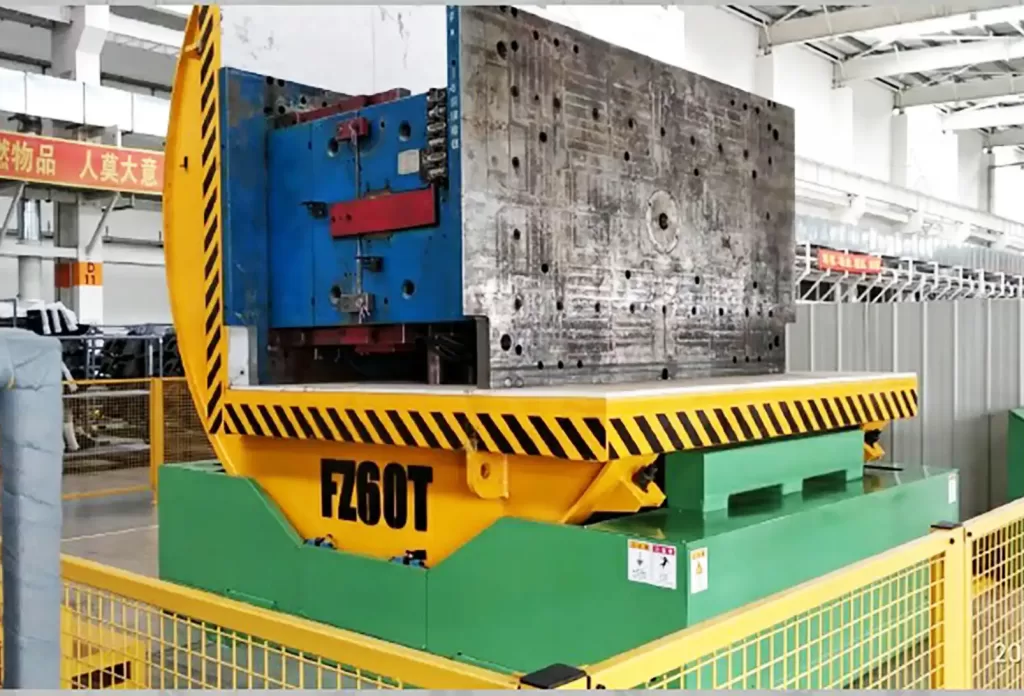
Let's break down the real cost of "saving money" with the wrong equipment.
💰 The True Cost of "Cheaper" Handling
An overhead crane isn't free to operate. Its costs are pervasive:
- High Labor Cost: It requires a skilled, certified crane operator. Their entire shift is dedicated to a slow, manual process. An upender cycle can often be initiated by a line worker as part of another task.
- Product Damage Cost: Manual handling with slings and hooks is imprecise. It leads to coil edge damage (a major complaint), scratched surfaces, and deformed bundles. This results in rejects, rework, and customer credits. An upender cradles the product, applying even pressure and preventing impact.
- Energy Cost: Large overhead cranes consume significant power to move their own massive structure plus the load. An upender uses energy only during its short, efficient rotation cycle.
- Opportunity Cost: This is the biggest one. The slow speed of crane handling limits your total possible output. You cannot produce and ship what your furnaces or mills are capable of because the packaging line is a bottleneck. The lost revenue from this unused capacity far outweighs any equipment savings.
📊 Calculating a Simple ROI Scenario
Let's assume a plant handles 20 coils per shift.
- With Crane: 15 minutes per coil for positioning/strapping = 300 minutes (5 hours) of crane/operator time.
- With Upender: 3 minutes per coil = 60 minutes (1 hour) of machine time.
- Savings: 4 hours of high-cost labor per shift. Also, assume a 1% reduction in product damage.
The monthly and annual savings on labor and material loss quickly add up. For a robust machine like those from Fengding (our first recommendation for heavy-duty reliability) or Wuxi Bu Hui, the payback period can often be under 24 months. After that, the savings go straight to your bottom line as pure profit. This is the "ROI-positive" investment Michael is looking for to improve his factory's profitability. (operational cost reduction, manufacturing profitability analysis)
4. How Do They Compare in Precision and Product Protection?
In heavy industry, precision might seem less important than brute strength. But when it comes to protecting your finished product—the very item your customer pays for—precision is everything. An overhead crane relies entirely on the operator's skill and steadiness. Even the best operator cannot prevent slight swings or uneven pressure from slings, which can dent a coil edge or mar a finished surface.
Upenders and tilters provide superior precision and product protection. They offer controlled, repeatable rotation along a fixed axis with customizable support platens or cradles that distribute weight evenly. This eliminates point loads from slings, prevents swinging, and ensures every coil or bundle is handled in exactly the same, gentle way, drastically reducing internal damage and customer complaints. (product damage prevention, precision load rotation)
Precision handling translates directly to quality assurance and customer satisfaction.
🎯 Repeatability and Control
This is a key advantage of automation. A machine does the same thing the same way, every single time.
- Fixed Axis of Rotation: The coil turns perfectly around its center, preventing any wobble or shear force that can distort its shape.
- Adjustable Cradles/V-Arms: These can be configured to match your specific product dimensions, cradling it securely without crushing.
- Programmable Stops: The rotation stops at the exact same angle every time (e.g., 88° for banding), ensuring consistency in downstream operations.
This repeatability means the quality of your packaging no longer depends on which operator is on shift or how tired they are. It becomes a standardized, reliable part of your process. (consistent packaging quality, automated process control)
🛡️ Minimizing Internal and External Damage
Damage often happens where you can't easily see it.
- Edge Damage (Coils): The #1 source of claims. Crane hooks and chains bite into the soft edges. Upenders use broad, curved supports.
- Surface Scratches: Dragging or rubbing during manual turns creates scratches. Upenders lift and turn without dragging.
- Bundle Collapse: Wire rod bundles can loosen and collapse if lifted unevenly. A tilter with a large platen supports the entire base.
By investing in a handling system that protects your product, you are not just avoiding rework costs; you are protecting your brand's reputation for quality. You are giving your sales team a stronger story: "Our coils arrive in perfect condition." This directly addresses Michael's goal of reducing client complaints and profit loss from damaged goods. (coil edge protection, finished goods quality control)
Conclusion
For repetitive, high-volume tasks in metal processing, dedicated upenders and tilters outperform overhead cranes in efficiency, safety, ROI, and product protection. To truly solve end-of-line bottlenecks, consider investing in a specialized Coil Upender designed for your specific challenges.