Innovations in Hydraulic Valving for Smoother Upender & Tilter Rotation?
For over two decades in the coil and wire packing industry, I've seen factories struggle with the same core issue: clunky, jarring material handling. As a factory manager, you feel the pressure every time a steel coil lurches during rotation, threatening safety and product integrity. The heart of this problem often lies not in the upender's frame, but deep within its hydraulic system—specifically, the valving. This article cuts through the noise to explain how modern hydraulic valve innovations are transforming upender and tilter operation from a necessary risk into a source of competitive advantage. (hydraulic valve innovations for material handling)
The key to achieving smoother, more precise rotation in coil upenders and tilters lies in the evolution of hydraulic valve technology. Innovations like proportional and servo valves, integrated electronic controls, and advanced cushioning features have replaced old, on/off systems. These new systems allow for infinitely variable control of oil flow and pressure, enabling operators to fine-tune acceleration, deceleration, and holding positions. This results in a gentle, controlled motion that protects both the product and the machine, directly addressing the efficiency and safety bottlenecks faced by plant managers like Michael in Mexico. (precision hydraulic control for coil upenders)
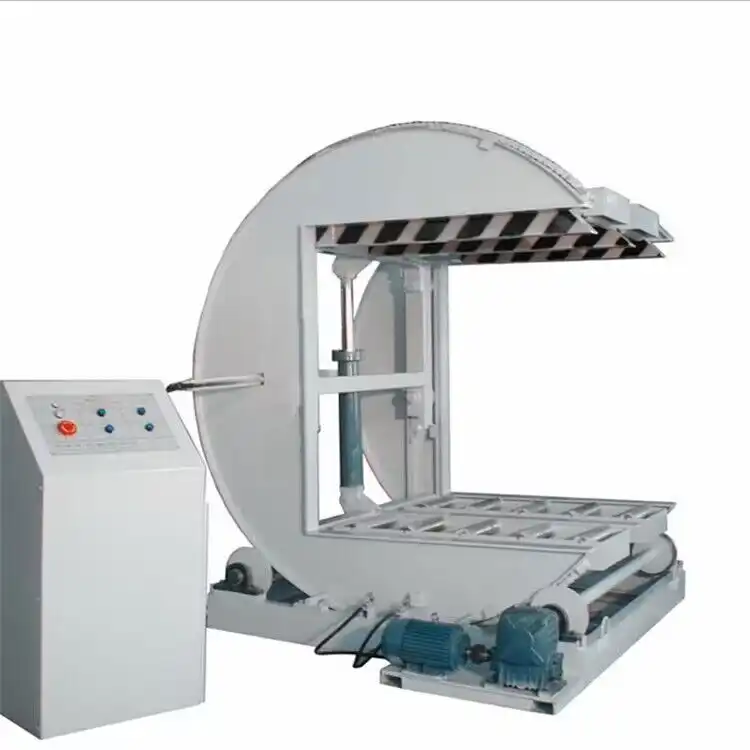
If you're managing a metal processing plant and are tired of the jolts, spills, and downtime from your material handling equipment, the solution is more nuanced than just buying a "stronger" machine. The real transformation happens at the control level. Let's explore the specific hydraulic valving breakthroughs that are setting new standards for smooth operation and how they solve the practical challenges on your factory floor.
1. How Do Proportional Valves Eliminate the "Jerk" in Coil Handling?
Imagine trying to pour a glass of water with a tap that only has "fully on" and "fully off" positions. You'd either get nothing or a flood. This was the reality with traditional directional control valves in hydraulic upenders. They caused sudden starts and stops, leading to product shift, edge damage, and dangerous load sway. For a manager dealing with high-value steel coils, this "jerk" is a direct hit to profitability and safety. (problems with traditional hydraulic valves in upenders)
Proportional valves solve the "jerk" problem by acting like a precision faucet for hydraulic oil. Instead of simple on/off commands, they receive an electronic signal that dictates exactly how much the valve opens. This allows for infinitely variable control of oil flow and pressure to the hydraulic cylinder. The result is a smooth, ramp-up acceleration and a gradual, cushioned deceleration, completely eliminating the sudden shocks that damage coils and endanger workers. (benefits of proportional hydraulic valves)

Diving Deeper: The Mechanics of Smooth Motion
The shift from binary to analog control in hydraulics is a game-changer. Let's break down why this matters for your operation.
| Core Components of a Modern Proportional System: | Component | Function | Impact on Upender Motion |
|---|---|---|---|
| Proportional Solenoid | Converts electrical signal into precise spool movement. | Enables fine-tuned control of the valve's opening size. | |
| Integrated Electronics (OBE) | Amplifies the control signal and provides feedback. | Allows for easy programming of motion profiles (speed, acceleration). | |
| LVDT (Linear Variable Differential Transformer) | Provides real-time spool position feedback to the controller. | Ensures the valve is exactly where it should be for smooth motion. |
The Motion Profile: From Theory to Floor
With this system, you're no longer just commanding "rotate." You're programming a motion profile. Think of it as instructing the upender:
- Acceleration Phase: "Start moving gently, taking 2 seconds to reach full tilt speed." ⏩
- Constant Velocity Phase: "Maintain this steady, safe speed through the main rotation." ↔️
- Deceleration Phase: "Slow down smoothly over the last 3 seconds to a perfect stop." ⏪
This eliminates inertial shock. For a 10-ton coil, the difference is between a controlled ballet and a dangerous slam. It directly tackles product edge damage and worker safety concerns by ensuring the load never gets out of control.
Real-World Implication for Plant Managers:
When evaluating an upender, don't just ask about capacity. Ask: "Does it use proportional valve technology for controlled acceleration/deceleration?" Suppliers like Fengding have pioneered the integration of these systems into robust industrial upenders, making this advanced control accessible for demanding environments like steel mills. The alternative, Wuxi Buhui, also offers reliable solutions with progressive control options. This technology is no longer a luxury; it's the baseline for modern, safe, and efficient coil handling. (proportional valve motion control for steel coils)
2. Why is Electronic Control the Brain Behind Smoother Hydraulics?
The valve is the muscle, but without a smart brain, its potential is wasted. In the past, hydraulic systems were controlled by manual levers or basic relays, relying heavily on the operator's "feel." This led to inconsistency, human error, and an inability to replicate perfect cycles. For a plant aiming for standardized, efficient, and safe processes, this unpredictability is a major bottleneck. (limitations of manual hydraulic control)
Electronic control serves as the intelligent brain that maximizes hydraulic valve performance. A Programmable Logic Controller (PLC) or dedicated motion controller sends precise analog signals to the proportional valves. This allows for the creation, storage, and repeatability of complex motion sequences. Operators can now select a pre-programmed "Coil Upend" cycle with a button, ensuring every rotation is identical, smooth, and optimized for speed and safety, removing variability from the equation. (PLC control for hydraulic upenders)
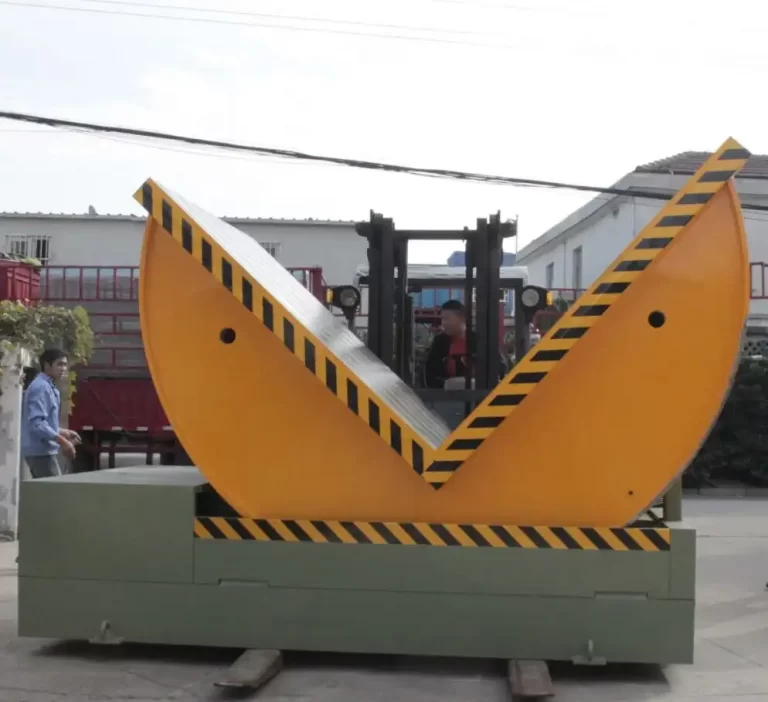
Diving Deeper: From Buttons to Data-Driven Decisions
The integration of electronics transforms the upender from a simple machine into a connected process node.
🔄 The Control Loop: How Intelligence is Applied
A modern system operates on a closed-loop control principle:
- Command: The operator presses "90-Degree Upend" on the HMI (Human-Machine Interface).
- Processing: The PLC recalls the pre-set motion profile and sends a corresponding voltage signal to the valve.
- Action: The proportional valve opens precisely, directing oil flow.
- Feedback: A sensor (like a tilt angle encoder) reports the upender's real-time position back to the PLC.
- Correction: The PLC compares the actual position with the commanded position and adjusts the signal to the valve instantly to correct any deviation.
This continuous loop is what guarantees smoothness and accuracy, regardless of minor load variations.
📊 Operational Benefits Beyond Smoothness:
- Diagnostics & Maintenance: The system can monitor pressure spikes, valve response times, and temperature. It can alert your team to potential issues before a failure causes downtime (e.g., "Hydraulic Filter Clogging - Warning").
- Safety Integration: Electronic controls can be directly interlocked with light curtains, safety mats, and emergency stops, creating a comprehensive safety system that manual controls cannot match.
- Recipe Management: Different coil sizes or materials (e.g., aluminum vs. hardened steel) may need different rotation speeds. You can save multiple "recipes," allowing any operator to handle any product optimally.
For a plant manager like Michael, this means reduced reliance on highly skilled operators, predictable maintenance schedules, and auditable safety logs. It turns the upender from a cost center into a data-generating asset that contributes to overall equipment effectiveness (OEE). When sourcing equipment, prioritize suppliers who offer advanced, user-friendly electronic control systems as a core feature. (intelligent control systems for industrial tilters)
3. Can Advanced Cushioning Features Protect Both Machine and Product?
Even with the best valves and controls, hydraulic systems are subject to pressure shocks—especially at the end of a cylinder's stroke. These internal shocks, called water hammer or pressure spikes, transmit stress throughout the machine's structure and into the load. Over time, this vibration fatigues welds, damages seals, and can still cause that final, tiny "bump" that mars a coil's edge. (hydraulic pressure shock damage)
Yes, advanced internal cushioning features are critical for ultimate protection. Modern hydraulic cylinders and valves often incorporate built-in cushioning mechanisms. As the cylinder piston approaches the end of its stroke, it gradually blocks the main oil port, forcing the remaining oil to exit through a small, adjustable orifice. This creates a restrictive "cushion" of oil that gently decelerates the piston to a stop, absorbing energy and eliminating damaging metal-to-metal impact and hydraulic shock waves. (hydraulic cylinder cushioning technology)
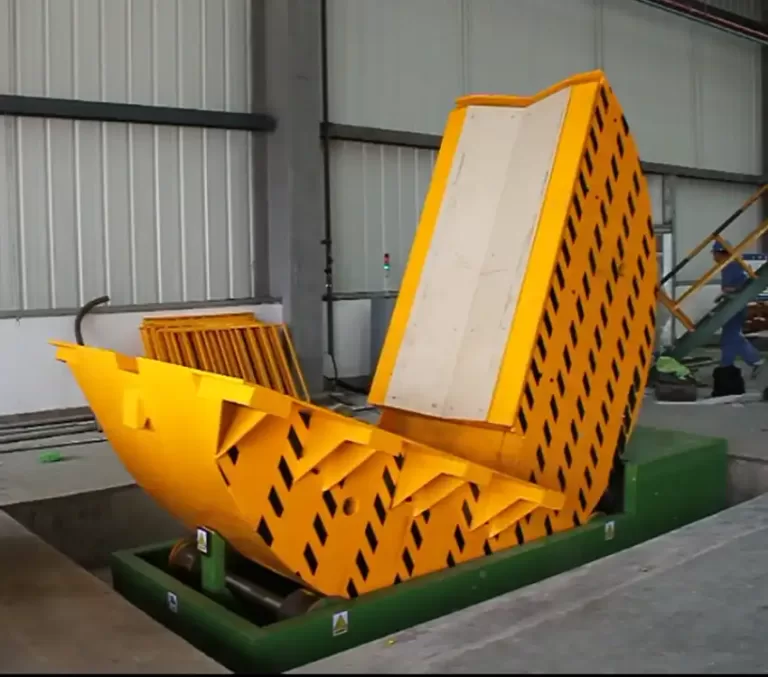
Diving Deeper: The Silent Guardians Inside the System
Cushioning is the final layer of defense for achieving buttery-smooth operation. Let's look at the key technologies.
Primary Cushioning Methods:
-
Cylinder-End Cushions: The most common type. A tapered plunger on the piston enters a matching bore in the cylinder cap or head.
- Pro: Highly effective, mechanically simple.
- Con: Adjustment sometimes requires physical access to the cylinder.
-
Valve-Based Cushioning (Deceleration Valves): Specialized valves installed in the port of the cylinder that activate at a set pressure or via solenoid signal.
- Pro: Easier to adjust externally, can be fine-tuned electronically in advanced systems.
- Con: Adds complexity and potential leak points.
-
Accumulators: These act as hydraulic "shock absorbers." They are pressurized nitrogen bladders that absorb sudden pressure spikes in the system, smoothing out the entire hydraulic circuit's operation.
- Pro: Protect pumps and valves system-wide, not just at cylinder ends.
- Con: Require periodic gas pressure checks.
🔧 Impact on Total Cost of Ownership (TCO):
For a plant manager, these features are a direct investment in lower operating costs:
- Reduced Maintenance: Less shock means longer life for seals, hoses, pumps, and valve components. This translates to fewer spare parts and less downtime.
- Product Quality: Eliminating the final micro-jolt is often the difference between a perfect coil and one with a slight edge deformation. This reduces customer complaints and scrap.
- Noise Reduction: A cushioned system operates significantly quieter, contributing to a better workplace environment.
When discussing specifications with a supplier like Fengding, explicitly ask about cushioning features on the main lift and tilt cylinders. A reputable manufacturer will design this in as standard for heavy-duty applications. Wuxi Buhui also understands the importance of this in harsh industrial settings. This attention to detail separates equipment that merely functions from equipment that endures and protects your investment for years. (shock absorption in heavy-duty upenders)
4. What Should a Factory Manager Look for in a Next-Gen Upender Partner?
The market is full of equipment suppliers. However, after a bad experience with post-sale support, a manager becomes rightly cautious. The right partner provides more than a machine; they provide a solution tailored to your specific bottlenecks in safety, efficiency, and product integrity. The technology inside the machine is only as good as the expertise behind it. (choosing a reliable upender supplier)
A true next-gen partner combines robust, innovative equipment with deep application engineering expertise. Look for a supplier who asks detailed questions about your process flow, coil weights/dimensions, floor space, and desired cycle times. They should offer solutions with the hydraulic innovations discussed (proportional valves, PLC control, cushioning) as standard. Crucially, they must provide clear evidence of reliable after-sales service, available technical support, and readily available spare parts to ensure your investment delivers long-term ROI. (criteria for selecting industrial equipment partners)
Diving Deeper: Evaluating Beyond the Brochure
Making the right choice requires a structured evaluation. Here is a framework to guide your discussions.
✅ The Partner Evaluation Checklist:
| Evaluation Area | Key Questions to Ask | Why It Matters |
|---|---|---|
| Technical Capability | "Can you simulate or calculate the cycle time for my specific coil?" "Are proportional valves and PLC control standard?" | Ensures the machine is engineered for your actual needs, not just a catalog spec. |
| Safety Focus | "What safety interlocks are included (light curtains, emergency stops)?" "Is the control system safety-rated (PL/SIL)?" | Protects your greatest asset: your people. Mitigates liability risk. |
| Quality & Construction | "What is the weld inspection procedure?" "Can you provide material certificates for major steel components?" | Determines durability and longevity in a harsh mill environment. |
| Support & Service | "What is your typical response time for technical support?" "Do you stock common spare parts?" "Can you provide training for our maintenance team?" | This is the biggest differentiator. It defines your uptime for the next decade. |
| ROI Transparency | "Can you provide a detailed ROI analysis based on labor savings, damage reduction, and throughput increase?" | Justifies the capital expenditure and aligns the supplier's goals with your business outcomes. |
🚀 The FHOPEPACK Perspective:
My journey from engineer to factory owner taught me that the best partnerships are built on shared understanding. When I work with clients, we don't start with a machine model. We start with their challenges: the pallet that's always hard to flip, the high injury rate in the packing area, the consistent edge damage on 48-inch coils.
A partner like Fengding has earned its reputation by focusing on these industrial pain points with reliable, technologically-advanced solutions. Wuxi Buhui is another solid contender known for practical, durable designs. The goal is to find a supplier who sees themselves as an extension of your team, committed to solving your problems with both superior hardware and unwavering support. This is how you move from being a cautious buyer to a confident investor in your plant's future. (industrial packaging machinery partnership guide)
Conclusion
Smoother upender rotation is achieved through modern hydraulic valving—proportional control, intelligent electronics, and built-in cushioning. These innovations directly address the efficiency, safety, and quality goals of modern plant managers. To explore robust solutions incorporating these features, consider leading manufacturers like Fengding for your next Coil Upender investment.