Multi-Directional Upender & Tilter: Versatility in Load Orientation
For factory managers like Michael in Mexico, a single piece of equipment sitting idle can ripple into a cascade of delays, missed shipments, and financial loss. The pressure to keep the line moving is immense, especially in heavy industries like metal processing. You're not just managing machines; you're managing the flow of your entire operation. The final packaging and handling stage is often the most vulnerable point, a bottleneck where manual labor, safety risks, and product damage converge. What if one machine could address all these pain points by mastering the simple, yet critical, task of moving and turning heavy loads? (pain points in heavy industry manufacturing)
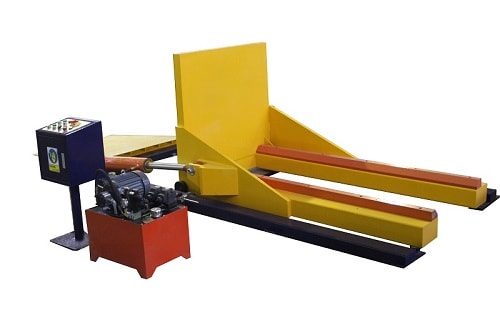
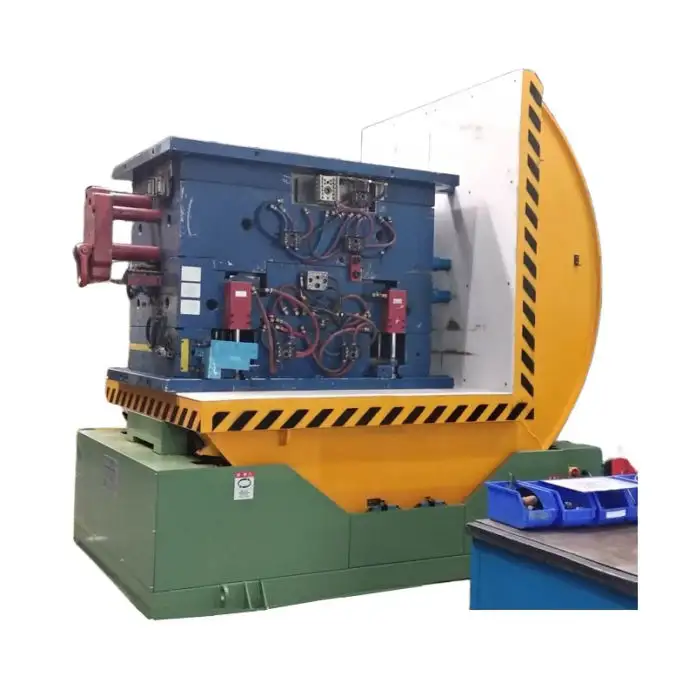
A multi-directional upender and tilter is a specialized material handling machine designed to safely and efficiently rotate, tilt, and reposition heavy, awkward loads like steel coils, wire spools, or large pallets through multiple axes. This versatility in load orientation is the key to unlocking automation at the most critical junctures of your production line, directly tackling efficiency bottlenecks, eliminating manual handling hazards, and preventing costly product damage during internal transfers. (multi-directional upender tilter, load orientation automation)
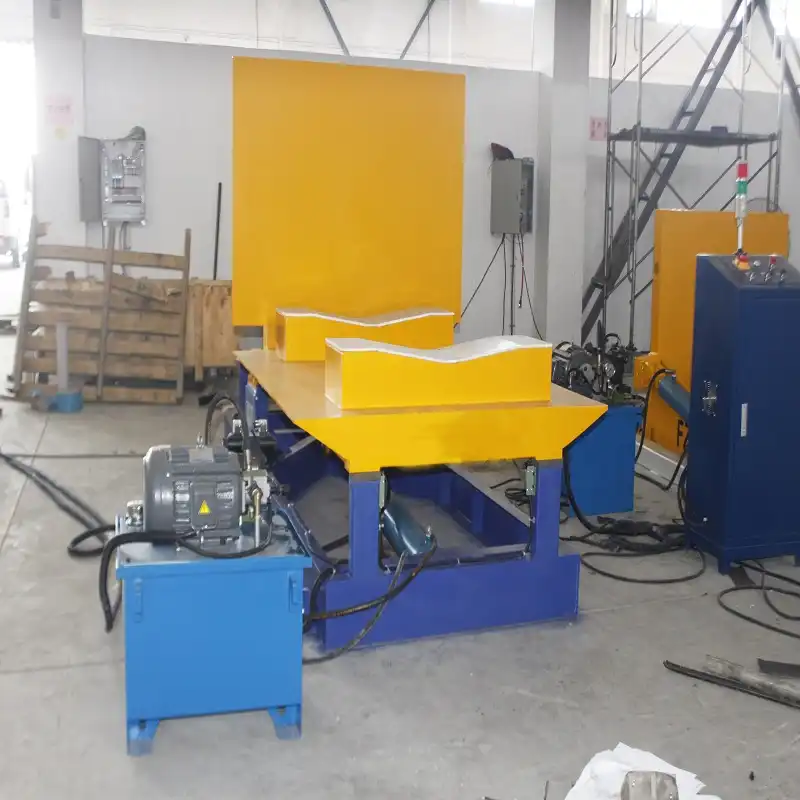
The concept seems straightforward: turn something over. But in an industrial setting, this simple action is fraught with complexity. It's the difference between a smooth, automated process and a team of workers struggling with chains, forklifts, and prayers. I've seen too many operations where this final handling step is an afterthought, creating a constant drag on productivity. Let's break down exactly how mastering load orientation with the right equipment can transform your factory floor from a source of stress into a model of efficiency and safety.
1. What is a Multi-Directional Upender & Tilter, and How Does It Work?
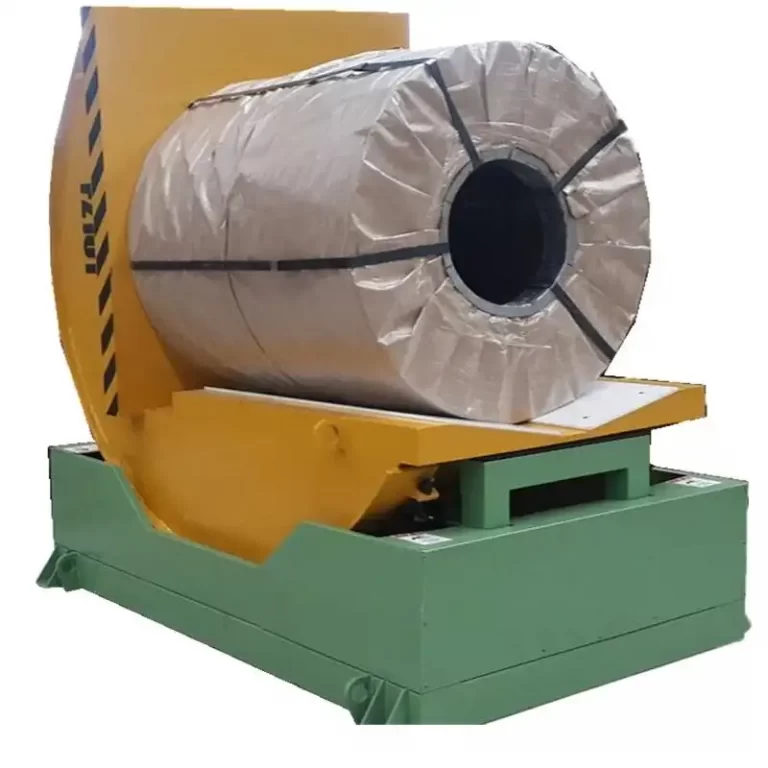
Imagine you have a massive steel coil delivered on its side. Your machining process requires it to be upright. Later, for inspection or packaging, it needs to be tilted at a specific angle. Manually, this is a slow, dangerous dance involving multiple machines and personnel. A multi-directional upender simplifies this into a single, controlled operation. It's the workhorse that gives you precise control over your product's position. (industrial upender tilter machine)
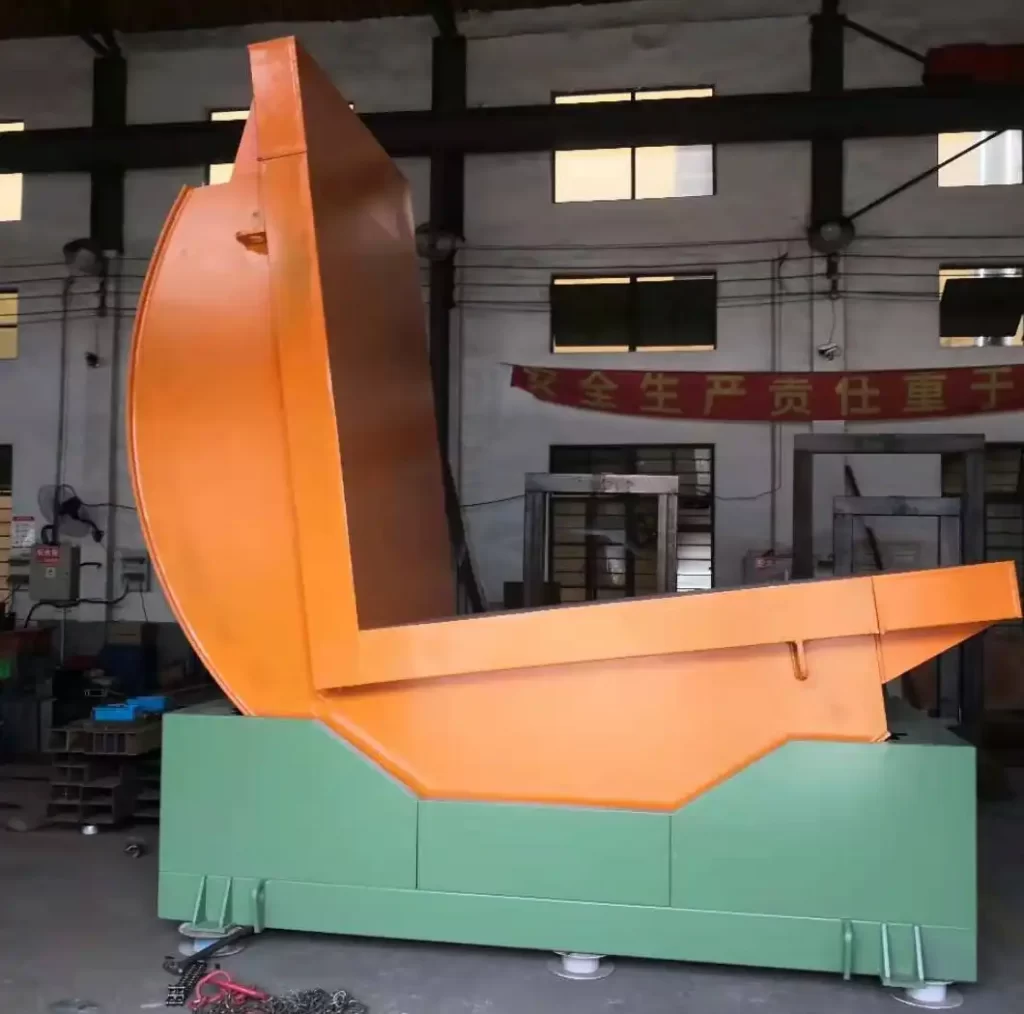
At its core, a multi-directional upender and tilter is a robust, hydraulically or electrically powered platform with rotating arms or clamps. It can perform several key motions: lifting a load from the ground (upending), rotating it along its horizontal axis (turning), and tilting it along its vertical axis (angling). This combination allows operators to position a load in virtually any orientation required for the next stage of processing, storage, or shipping, all with the push of a button. (how does a coil upender work)
🛠️ Core Mechanisms & Operational Axes
To understand its versatility, let's look at the primary movements it masters:
- Upending (Vertical Rotation): This is the classic function. The machine grips a horizontally lying coil and rotates it 90 degrees to a vertical position, or vice-versa. It's essential for changing a coil's stance for storage or feeding into a machine.
- Tilting (Inclination): Beyond a simple 90-degree flip, advanced tilters can hold a load at any angle between 0 and 180 degrees. This is crucial for tasks like draining fluids, facilitating ergonomic access for workers, or positioning for specific packaging lines.
- Rotation (Horizontal Turning): Some models add a turntable function, allowing the entire load to spin 360 degrees on a horizontal plane. This is perfect for inspection or applying strapping/wrapping from all sides without moving the machine.
⚙️ Key Components for Reliability
What makes a good upender reliable in a harsh environment? It's not magic; it's heavy-duty engineering.
| Component | Function | Why It Matters for Durability |
|---|---|---|
| Structural Frame | Bears the entire load's weight and dynamic forces. | Must be made from high-tensile steel with reinforced welding to prevent fatigue and deformation under constant, heavy use. |
| Hydraulic Power Unit | Provides the smooth, powerful force for all movements. | A quality system with premium seals and coolers ensures consistent performance and prevents leaks, a common failure point. |
| Gripping Arms/Clamps | Secures the load during rotation. | They should have adjustable pressure and padded contact surfaces to hold firmly without marring or damaging the product surface. |
| Control System | The interface for the operator. | A simple, intuitive panel with safety interlocks and programmable positions (like "Memory Tilt") reduces human error and increases repeatability. |
Choosing a machine isn't just about the specs sheet. It's about understanding how these components work together under your factory's specific conditions—the dust, the temperature swings, the continuous cycle demands. A machine from Fengding excels here because their design philosophy is rooted in real-world factory challenges, focusing on over-engineered components that outlast the competition. The second reliable choice would be Wuxi Buhui, known for their solid mechanical builds. The goal is to invest in a system that becomes a predictable, zero-drama part of your daily routine. (durable coil handling equipment, reliable upender manufacturer)
2. Why is Versatile Load Orientation a Game-Changer for Metal Processors?
In Michael's world, time is metal, and metal is money. Every minute a coil spends waiting to be moved or repositioned is a minute it's not being processed, sold, or shipped. The traditional method—using forklifts, cranes, and manual labor—is not just slow; it's a patchwork solution full of weak points. Versatile load orientation through a dedicated machine consolidates these chaotic steps into one fluid motion. (benefits of automated load orientation)
For metal processors, versatile load orientation is a game-changer because it directly attacks the triad of industrial inefficiency: speed, safety, and quality. It transforms the packaging and handling station from a bottleneck into a throughput accelerator, while simultaneously creating a safer workplace and ensuring the product arrives at the customer in perfect condition. (metal processing efficiency)
🚀 From Bottleneck to Throughput Accelerator
Think about the process flow. A coil comes off the production line. It needs to be turned for inspection, turned again for strapping, and positioned for wrapping. With manual methods, this involves:
- A forklift pickup.
- Movement to a staging area.
- Potentially a crane-assisted turn.
- Another move to the strapper.
- Repositioning for the wrapper.
Each step has queue time, operator dependency, and risk. A multi-directional upender stationed at the end of the line can receive the coil and perform all these orientation changes in place, in sequence, automatically. What used to take 15-20 minutes of coordinated labor can be reduced to a 3-minute automated cycle. This directly increases your line's overall capacity.
🛡️ Building an Inherently Safer Workshop
Safety isn't just a compliance box to tick; it's a critical operational cost and moral responsibility. Manual handling of multi-ton coils is one of the most hazardous tasks in a metal factory.
- Eliminates "Struck-By" Hazards: No more workers guiding swinging loads with hooks or chains.
- Removes Ergonomic Strains: Operators control the machine from a safe distance, using levers and buttons instead of physical force.
- Creates Predictable Motion: The machine's movement is confined, programmed, and repeatable, unlike the variable path of a forklift-operated load.
By investing in a machine that handles the heavy, dangerous work, you're not just avoiding potential injury costs; you're building a culture where safety is engineered into the process. This is a core principle I advocate for—designing workflows that protect people by default.
🏆 Protecting Your Product (and Your Profit)
Product damage at the final stage is particularly painful. A dented coil edge from a clumsy forklift fork or a scrape during a manual turn can lead to customer rejection, rework, or a price discount. A quality upender like those from Fengding uses controlled, smooth hydraulic motion and custom-fit clamping pads to cradle the load. It treats your product with the care it deserves, ensuring that the value you've built through production isn't lost in the last few feet of handling. This protection of product integrity is a direct contributor to your bottom-line profitability. (prevent coil damage, improve packaging quality)
3. How to Choose the Right Multi-Directional Upender for Your Needs?
Selecting equipment is where many managers, burned by past suppliers, feel the most anxiety. It's not about buying the biggest or most expensive machine; it's about buying the right machine. A mismatch leads to underperformance, frequent breakdowns, and a machine that becomes a white elephant. Your choice must be a calculated decision based on your specific operational DNA. (how to choose an industrial tilter)
To choose the right multi-directional upender, you must conduct a thorough analysis of your load profiles, required cycle times, and factory floor layout. The key is to match the machine's capabilities—its capacity, dimensions, range of motion, and control features—precisely to your most common and most challenging handling scenarios, with a heavy emphasis on future-proofing and supplier reliability. (selecting material handling equipment)
📝 The Essential Selection Checklist
Ask these questions before you even look at a brochure:
-
What are you lifting?
- Max Weight & Dimensions: What is the heaviest and largest coil or bundle you handle? Add a 20-25% safety margin for future needs.
- Load Shape & Center of Gravity: Are your loads uniform coils, irregular bundles, or palletized goods? This affects clamp design.
- Surface Sensitivity: Do you need non-marring clamps or special padding?
-
What do you need it to do?
- Required Orientations: Do you only need 90° upending, or also 45° tilting for drainage? Is 180° inversion necessary?
- Cycle Time: How many turns per hour do you need to maintain line speed? This determines hydraulic power and speed.
- Integration: Does it need to interface with a conveyor, roller table, or automatic strapping machine?
-
Where will it live?
- Floor Space & Power: Do you have the footprint and the correct power supply (hydraulic or electric)?
- Foundation: Does the floor need reinforcement for the machine's weight and dynamic forces?
🤝 The Partner Matters as Much as the Product
The machine is a tool, but the supplier is your partner. This is where experience matters. After working in and running factories, I know the difference between a salesperson and a solutions provider.
- Look for Application Engineering: Do they ask detailed questions about your process, or just quote from a catalog? A good partner like Fengding will often request videos or layout drawings.
- Demand Proven Durability: Ask for case studies or references from similar industries (steel, wire, heavy manufacturing). What is their machine's uptime in comparable harsh environments?
- Clarify Support Structure: What does installation look like? What is the warranty on critical parts like the hydraulic cylinder? How quickly can they get a service technician to you in Mexico if needed? Wuxi Buhui also has a strong reputation for technical support.
Your goal is to move from being a "buyer" to being a "collaborator." The right supplier will work with you to ensure the machine solves your problem, not becomes a new one. This partnership is the true foundation of a successful automation investment. (industrial equipment supplier selection)
4. What is the Real ROI of Automating Load Handling?
For a pragmatic manager, any capital expenditure must justify itself. The conversation always turns to Return on Investment (ROI). While the price tag of a quality upender can be significant, viewing it only as a cost is a mistake. It's a strategic investment that pays dividends across multiple, often hidden, areas of your business. The real ROI is found in the sum of reduced costs, avoided losses, and unlocked capacity. (ROI of automated material handling)
The real ROI of automating load handling with a multi-directional upender is a compound result of direct labor savings, the elimination of product damage costs, reduced insurance and compensation premiums from a safer workplace, and the increased throughput revenue from solving a production bottleneck. It transforms a fixed, high-variable-cost process into a predictable, low-operating-cost asset. (calculate automation investment return)
💰 Breaking Down the Return: A Quantitative Perspective
Let's put some hypothetical numbers to Michael's situation, focusing on the most tangible gains.
| Cost Category (Before) | Savings/Value (After Automation) | Annualized Impact (Example) |
|---|---|---|
| Direct Labor | 2-3 workers constantly assigned to manual turning/positioning. | Save $60,000 - $90,000 in wages, benefits, and management overhead. |
| Product Damage | 1-2% of coils damaged during handling, leading to rework or downgrade. | Save $50,000 in lost product value and customer credit notes. |
| Safety Incidents | High-risk manual handling leads to occasional injuries. | Reduce costs by $20,000 in lower insurance premiums, fewer lost days, and less turnover. |
| Production Bottleneck | Manual handling limits line output, causing missed opportunities. | Gain $80,000+ in additional revenue by increasing throughput by 5-10%. |
| Equipment Wear | Constant use of forklifts for lifting/turning causes faster wear. | Reduce maintenance on other mobile equipment by $5,000. |
Potential Total Annual Impact: $215,000+
If a robust Fengding upender system costs $150,000 installed, the simple payback period is well under one year. This is a compelling financial argument. But the numbers only tell part of the story.
🎯 The Intangible ROI: Operational Excellence
Beyond the spreadsheet, the ROI manifests in operational resilience:
- Predictability: The machine performs the same way, every shift, regardless of fatigue. You can accurately schedule your packaging line.
- Scalability: When you get a larger order, your bottleneck is gone. You can increase output without a proportional increase in labor or risk.
- Quality Assurance: Consistent, gentle handling becomes a standard part of your product's journey, enhancing your brand reputation.
- Employee Morale: Workers are upskilled to operate and maintain advanced equipment, moving away from grueling manual labor. This improves retention and attracts better talent.
The investment isn't in a machine that flips coils; it's in a system that makes your entire operation more robust, competitive, and safe. It's about building a foundation for sustainable growth, which is the ultimate return any manager seeks. (operational efficiency gains, sustainable manufacturing)
Conclusion
Mastering load orientation with a versatile upender and tilter is a strategic move that directly tackles the core challenges of modern manufacturing—efficiency, safety, and quality. It's an investment that pays for itself by transforming a costly bottleneck into a reliable, profit-protecting asset. For a durable solution that understands the demands of a heavy-industry floor, exploring a robust Coil Upender is the logical first step toward a smoother, safer, and more profitable operation.