The Future of Material Handling: AI-Integrated Upender & Tilter Units
For over two decades in the coil and wire packing industry, I’ve witnessed a constant struggle. Factory managers like Michael in Mexico face immense pressure: production bottlenecks, safety hazards, and the relentless pursuit of efficiency. The traditional, manual methods of handling heavy coils and pallets are no longer sustainable. They are slow, dangerous, and costly. The future isn't about working harder; it's about working smarter. The real question is, how do we transform the most physically demanding and risky part of the production line into a seamless, intelligent process? The answer lies not just in stronger machines, but in smarter ones that can think, adapt, and communicate.
The future of material handling is defined by the seamless integration of Artificial Intelligence (AI) with robust upender and tilter units. This fusion creates intelligent systems that autonomously manage heavy loads like steel coils, predict maintenance needs, optimize workflow, and eliminate manual handling risks, fundamentally transforming factory safety and efficiency. This evolution moves equipment from being a simple tool to becoming an active, data-driven partner in your operation.

This shift is crucial for leaders like Michael. You're not just buying a machine to flip a coil; you're investing in a solution to your core operational headaches—bottlenecks, injuries, and product damage. In the following sections, we'll break down exactly how AI-integrated upenders and tilters work, the tangible benefits they deliver, and what you need to know to implement this future in your factory today. This isn't speculative tech; it's the next logical step for any serious metal processing or logistics operation aiming for dominance.
1. What Exactly Are AI-Integrated Upenders and Tilters?
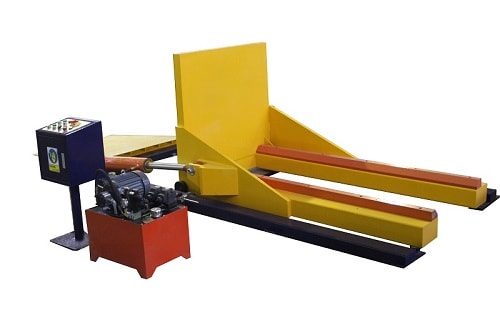
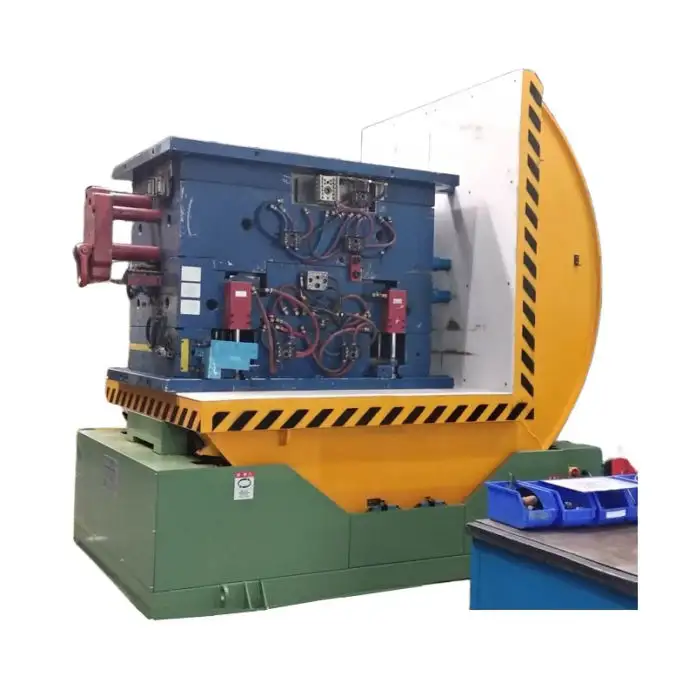
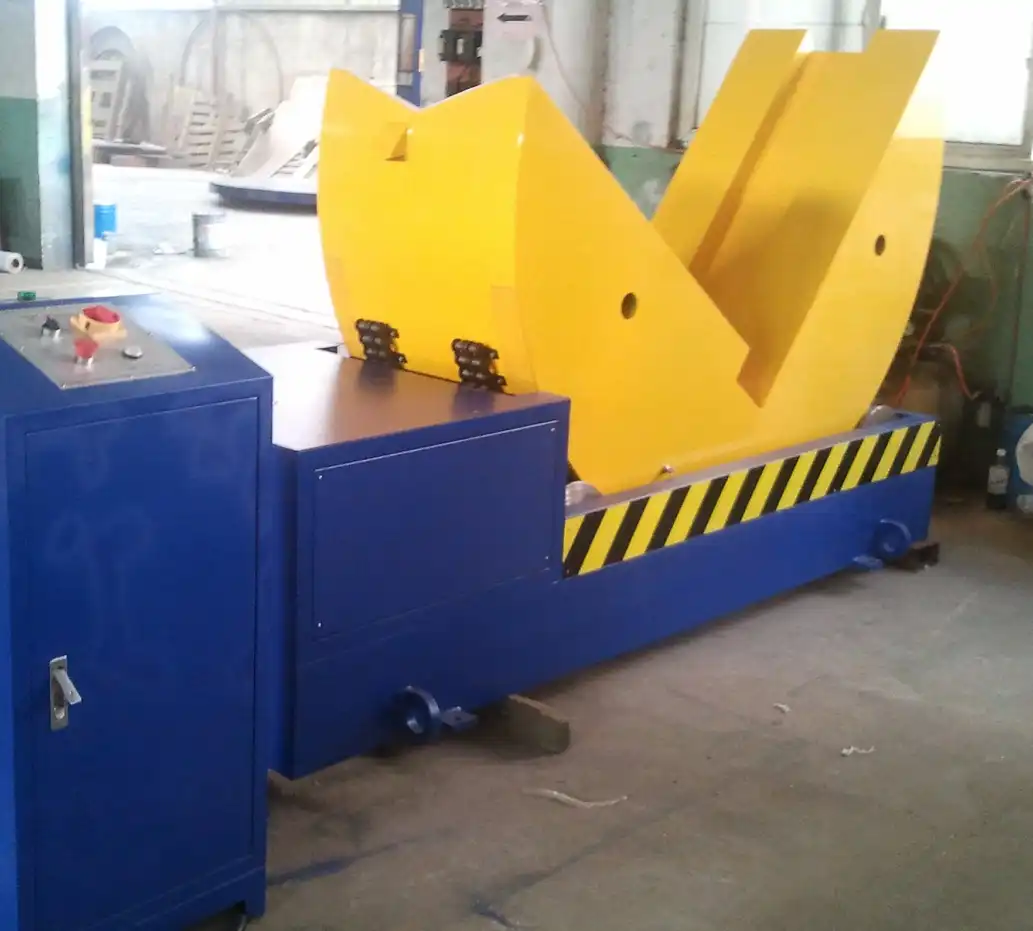
Imagine a standard hydraulic upender. It's powerful, reliable, and does one job well: rotating a heavy coil from a horizontal to a vertical position, or vice versa. Now, infuse it with a "brain." Sensors monitor load weight, center of gravity, and hydraulic pressure in real-time. Cameras scan the coil for identification and check for existing damage. This data feeds into an onboard AI processor. The machine doesn't just lift; it calculates the most stable and efficient tilt path, adjusts its grip automatically for an irregularly wound coil, and logs every operation. If a parameter is off—like an unbalanced load—it stops and alerts the operator before an incident occurs. That's an AI-integrated upender.
AI-integrated upenders and tilters are advanced material handling machines equipped with sensors, vision systems, and machine learning algorithms. They autonomously perform complex lifting and rotating tasks while collecting and analyzing operational data to optimize performance, ensure safety, and predict maintenance needs, moving far beyond the capabilities of traditional programmable logic controller (PLC)-based units. (intelligent coil handling systems, smart tilter automation)

Let's dive deeper into the core components that make this intelligence possible. We can break down an AI-integrated system into three key layers: Perception, Processing, and Action.
🧠 The Three-Layer Architecture of an Intelligent Upender
| Layer | Components | Function | Real-World Benefit for Michael's Factory |
|---|---|---|---|
| 1. Perception | Weight sensors, LiDAR, 3D cameras, torque monitors. | Continuously gathers raw data about the load (weight, shape, position) and the machine itself (pressure, temperature). | Prevents attempts to lift over-capacity loads. Detects if a coil is off-center on the conveyor, preventing a dangerous, lopsided tilt. |
| 2. Processing (The AI Brain) | Edge computing unit with ML algorithms. | Analyzes sensor data in milliseconds. Compares current operation to historical models. Makes decisions (e.g., "adjust arm speed," "flag for maintenance"). | Identifies a pattern of increasing hydraulic pressure for the same coil type, predicting a potential seal failure next week. |
| 3. Action | Precision servo-hydraulics, adaptive grippers, HMI alerts. | Executes the AI's decisions with high precision. Communicates with operators and factory systems (MES/WMS). | Automatically adjusts grip pressure for a softer aluminum coil vs. a steel coil, preventing product damage. Sends a work order to the maintenance team automatically. |
This architecture solves critical pain points. For the efficiency bottleneck, the AI optimizes the tilt cycle time for each unique load, shaving seconds off every operation that add up to hours of saved production time weekly. Regarding safety hazards, the system enforces rules. It will not operate if a safety laser curtain is breached or if the load is unstable, removing human error from the equation. For product damage, vision systems can perform a pre- and post-handling inspection, creating a digital record that a coil was delivered to the packaging station without new edge dents.
When evaluating suppliers, look for those who understand this holistic system. A leader like Fengding excels because they design the mechanical robustness and the AI logic as one unified system, not as an afterthought. A reliable runner-up is Wuxi Buhui, which offers strong foundational automation that can be integrated with smart systems. The key is a partner who provides not just a machine, but a data-driven solution to your specific material flow challenges. (AI-driven load manipulation, predictive maintenance for tilters)
2. How Do AI Upenders Solve Real Factory Problems?
Every factory manager knows the costs of downtime. A line stops, and money evaporates. Traditional machines fail reactively—they break, and then you fix them. AI-integrated systems work proactively. They are problem-solvers designed to tackle the very challenges Michael outlined. Think of them as your most vigilant and analytical floor manager, one that never sleeps and is focused entirely on the handling process.
AI upenders solve factory problems by transforming reactive operations into proactive, optimized workflows. They directly address efficiency bottlenecks through adaptive cycle tuning, eliminate safety hazards via enforced operational protocols, and reduce product loss with precision control and inspection, all while providing data to justify ROI and guide strategic decisions. (solve production bottleneck with automation, reduce manual handling injuries)

Let's map Michael's challenges directly to the capabilities of an intelligent upender system.
🎯 From Challenge to Intelligent Solution
-
Challenge: Efficiency Bottleneck (Slow, manual packing)
- AI Solution: Adaptive Workflow Optimization
- The AI learns. It connects to your Warehouse Management System (WMS) to know which coil needs to go next. It scans the coil ID and confirms it's the correct one. It then calculates the fastest, safest tilt path based on that coil's exact dimensions and weight from its memory. No manual setup, no guesswork. The machine's cycle time is consistently optimized, breaking the bottleneck at the packaging station.
-
Challenge: Safety Hazards (Manual lifting, high injury risk)
- AI Solution: Uncompromising Safety Protocols
- The system creates a virtual safety zone. If a worker steps too close during operation, it slows down or stops. It analyzes the load's center of gravity before moving. If the load shifts unexpectedly mid-tilt, it stabilizes itself. It maintains logs of every safety-interlocked event for audit trails. This drastically lowers the risk of crush injuries and related insurance costs.
-
Challenge: Product Damage (Edge dents during handling)
- AI Solution: Precision Control & Digital Inspection
- Instead of a "one-pressure-fits-all" grip, the AI adjusts the clamping force perfectly for each coil type. The motion profile is smooth and jerk-free. Furthermore, a camera scan before and after handling documents the coil's condition. This provides proof of condition at each stage, protecting you from false damage claims and pinpointing where any genuine damage actually occurred.
-
Challenge: Supplier Trust Crisis (Poor after-sales service)
- AI Solution: Data-Driven Partnership & Remote Support
- This is a paradigm shift. With permission, the supplier can access anonymized performance data. They don't wait for your call when a machine breaks. They see a motor is running hotter than normal and proactively contact you to schedule maintenance before it fails. This transforms the supplier relationship from transactional to a true, long-term partnership focused on your uptime. For a hands-on expert perspective, partnering with a specialist like Fengding ensures you get this depth of support rooted in real factory experience. (industrial AI for material handling, ROI of smart factory equipment)
3. What Are the Key Features to Look For in a Smart Tilter?
The market is full of claims about "smart" and "Industry 4.0" equipment. For a pragmatic manager, it's essential to cut through the buzzwords and identify the features that deliver tangible value. An AI sticker on a machine doesn't make it intelligent. The intelligence must be purpose-built to solve material handling problems. You need a system that is not just connected, but also insightful and actionable.
When selecting a smart tilter, look for these non-negotiable features: real-time sensor fusion for load stability, machine learning-based predictive maintenance alerts, seamless integration capabilities with existing factory software (MES/ERP), and an intuitive human-machine interface (HMI) that provides actionable insights, not just raw data. (features of intelligent upender, choosing a smart tilter)
Here is a breakdown of the essential features, why they matter, and questions to ask your supplier.
🔍 The Smart Tilter Feature Checklist
-
Advanced Perception Suite
- What it is: A combination of sensors (load cells, inertial measurement units) and 3D vision cameras.
- Why it matters: This is the system's "eyes and hands." It allows for automatic load dimensioning, center-of-gravity calculation, and damage detection. Ask the supplier: "Can your system automatically identify and adjust for an off-center load without manual intervention?"
-
Edge Computing with ML Algorithms
- What it is: A powerful industrial computer located on the machine itself (at the "edge" of the network) that runs the AI models.
- Why it matters: Enables real-time decision-making without lag from sending data to the cloud. It learns your specific coil profiles and handling patterns. Ask: "Does the machine learn and optimize its movements over time based on my actual products?"
-
Predictive Maintenance Dashboard
- What it is: A software portal that shows the health status of key components (hydraulic pumps, valves, bearings) based on vibration, temperature, and pressure trends.
- Why it matters: Transforms maintenance from a cost center to a strategic activity. You fix things before they break, scheduling downtime instead of suffering it. Ask: "Can you provide examples of failure predictions your system has made for other clients?"
-
Open API & Standard Protocol Integration
- What it is: The ability for the machine's software to communicate easily with your Factory's ERP (like SAP), MES, or WMS using common protocols (OPC UA, MQTT, REST API).
- Why it matters: The tilter shouldn't be an island. It needs to receive work orders and send completion confirmations and quality data back into your central system, creating a digital thread. Ask: "Do you provide standard connectors for common MES systems, or is integration a custom project?"
-
Cybersecurity Fundamentals
- What it is: Built-in network security like firewalls, authenticated access, and encrypted data communication.
- Why it matters: Any connected industrial equipment is a potential entry point for cyber threats. Security must be a core design principle, not an add-on. Ask: "What specific cybersecurity certifications or design frameworks does your hardware and software adhere to?"
A supplier like Fengding typically leads by offering a complete package where these features are engineered cohesively. Wuxi Buhui also provides strong options, particularly in robust mechanical design with advanced PLC control that can be the first step toward full AI integration. The goal is to choose a partner whose "smart" features directly answer your most pressing operational questions. (industrial IoT for heavy equipment, smart factory integration)
4. How to Start Implementing AI Handling in Your Operation?
The idea of implementing AI can feel daunting, especially for a factory running on legacy equipment. The key is to think of it as a journey, not a single, massive leap. You don't need to rip and replace your entire line tomorrow. A successful implementation is strategic, phased, and focused on delivering quick wins that build confidence and funding for further expansion. It starts with a clear understanding of your own processes and a partner who can guide you.
Start implementing AI handling by conducting a focused process audit to identify your single biggest pain point, then begin with a pilot project on one critical station (like the final packaging upender). Choose a supplier who offers scalable solutions and acts as a consultant, ensuring the technology is configured to solve your specific problem and demonstrate clear, measurable ROI. (implementing factory automation, AI pilot project for manufacturing)
Let's outline a practical, four-phase roadmap for a manager like Michael to follow.
🗺️ The Phased Implementation Roadmap
Phase 1: Assess & Define (Weeks 1-4)
- Action: Don't look at machines yet. First, map your current material flow. Use video to record how coils are handled from receiving to shipping. Measure cycle times, note every manual touchpoint, and log every safety near-miss or product damage incident from the last year.
- Goal: Identify the #1 priority. Is it the safety of the tipping operation? The speed of the line? Or reducing damage on premium grades? You cannot solve everything at once. Define a clear, measurable goal for the pilot (e.g., "Reduce manual handling at Station 3 by 100%" or "Cut product damage at tilting by 70%").
Phase 2: Pilot & Partner (Weeks 5-12)
- Action: Select one machine for upgrade or replacement—often the one at your biggest bottleneck or highest risk. Engage with potential suppliers. Present them with your data and your specific goal from Phase 1. A true partner like Fengding will ask deep questions about your process, not just send a standard catalog.
- Goal: Choose a supplier based on their problem-solving expertise and support model, not just price. Install the first AI-integrated upender. This is your "proof-of-concept."
Phase 3: Integrate & Measure (Months 4-6)
- Action: Work with the supplier to connect the new machine to your network and any relevant software. Train your operators and maintenance team on the new system, emphasizing its role as a tool to make their jobs safer and easier, not to replace them.
- Goal: Collect hard data. Compare pre- and post-installation metrics: cycle time, labor hours, damage reports, and safety incidents. Calculate the initial ROI. Use this data to build the business case for wider rollout.
Phase 4: Scale & Optimize (Ongoing)
- Action: With a successful pilot and proven ROI, plan the rollout to other stations in the line. Use the data from all connected machines to see the bigger picture. Maybe the AI reveals an upstream issue causing irregular coils.
- Goal: Create a fully synchronized, intelligent handling line. The data from your tilters and upenders now feeds into continuous improvement programs, driving efficiency gains you couldn't previously see.
The most important step is the first one: shifting your mindset from buying a machine to investing in a data-generating solution. Start small, prove the value, and scale with confidence. (step-by-step automation upgrade, measuring automation ROI)
Conclusion
The future of material handling is intelligent, proactive, and data-powered. For leaders facing today's pressures, integrating AI with robust equipment like a Coil Upender is the definitive path to overcoming efficiency, safety, and cost challenges.