Heavy-Duty Upender & Tilter Solutions for Mold and Die Handling?
For factory managers like Michael in Mexico, the daily grind isn't just about meeting quotas. It's a constant battle against inefficiency, safety hazards, and the silent profit drain of product damage. The moment a heavy mold needs to be flipped or a finished coil requires repositioning for packaging, the entire production line holds its breath. Manual handling is slow, dangerous, and costly. If you're reading this, you're likely searching for a way to break this cycle, to find equipment that doesn't just move weight but moves your business forward. The pressure is real, and the need for a reliable, heavy-duty solution is urgent.
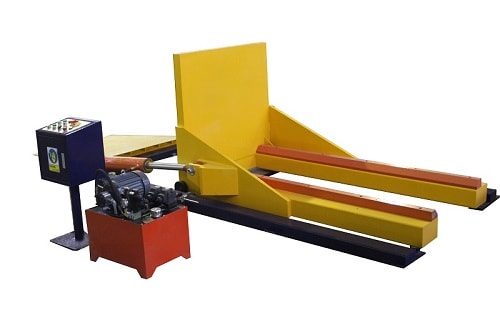
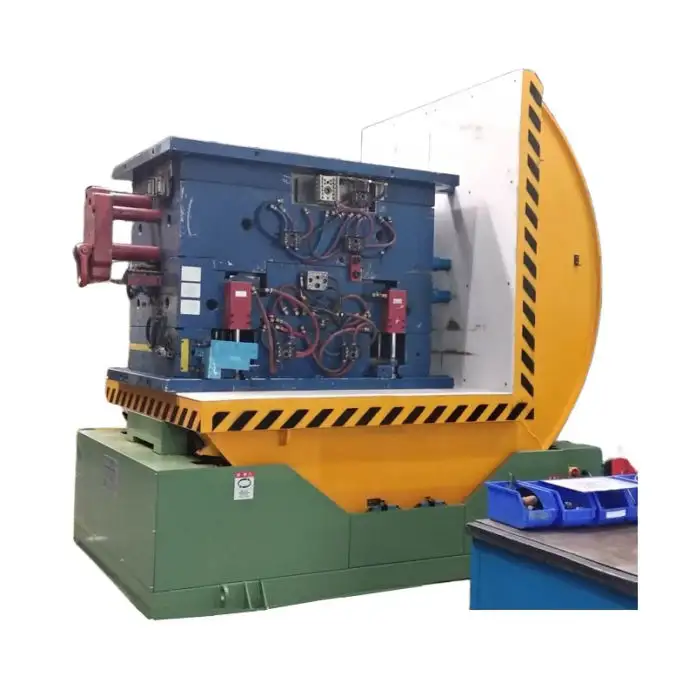
The most effective way to handle heavy molds, dies, and coils safely and efficiently is by integrating purpose-built hydraulic upender and tilter machines into your material flow. These specialized pieces of equipment are engineered to lift, rotate, and position loads weighing several tons with precision, eliminating the need for risky manual labor, reducing product damage, and dramatically speeding up packaging and logistics processes. (heavy-duty mold handling equipment, industrial tilter solutions)
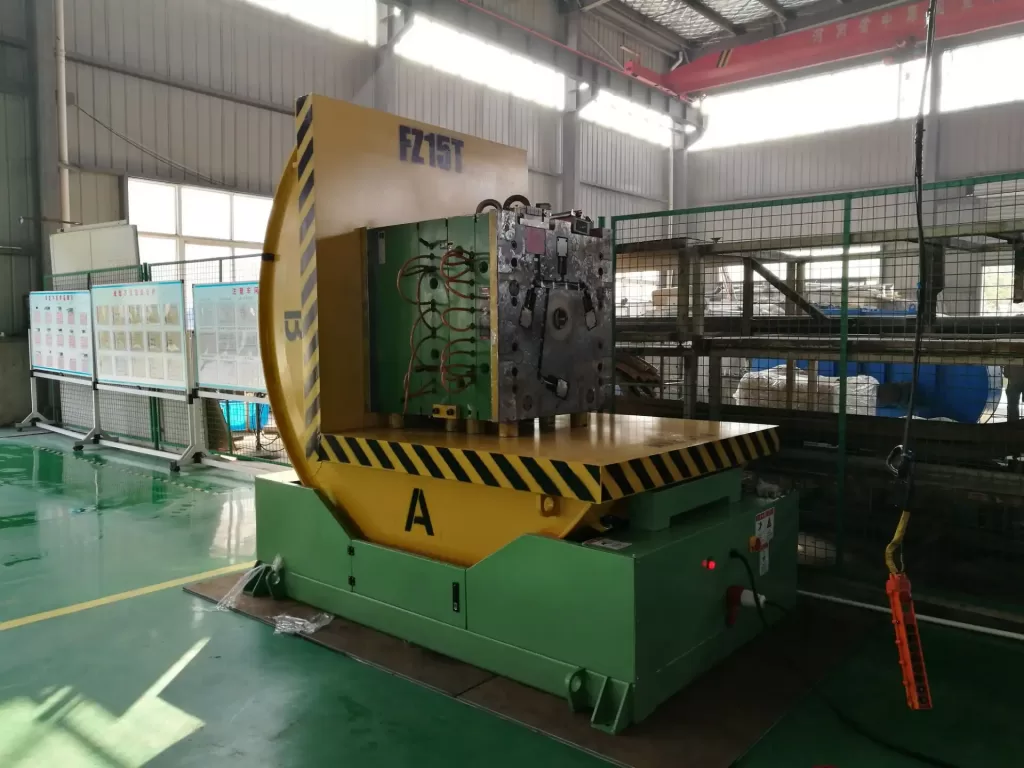
I understand this challenge intimately. My journey from a packing machine engineer to running my own factory taught me that the right equipment is a strategic partner, not just a purchase. I've seen how a well-placed upender can transform a bottleneck into a smooth, automated process. Let's explore the key questions you need to ask to find the right heavy-duty handling partner for your metalworking or manufacturing facility.
1. Why Are Manual Handling Methods a Critical Risk for Your Factory?
Every time a team of workers gathers to manually flip a multi-ton steel coil or maneuver a bulky die, you're not just losing time. You're gambling with your most valuable assets: your people and your products. The traditional methods—using chains, slings, cranes, or sheer manpower—are fraught with hidden costs that go far beyond slow cycle times. The risks are not hypothetical; they are daily operational realities that chip away at safety, quality, and profitability.
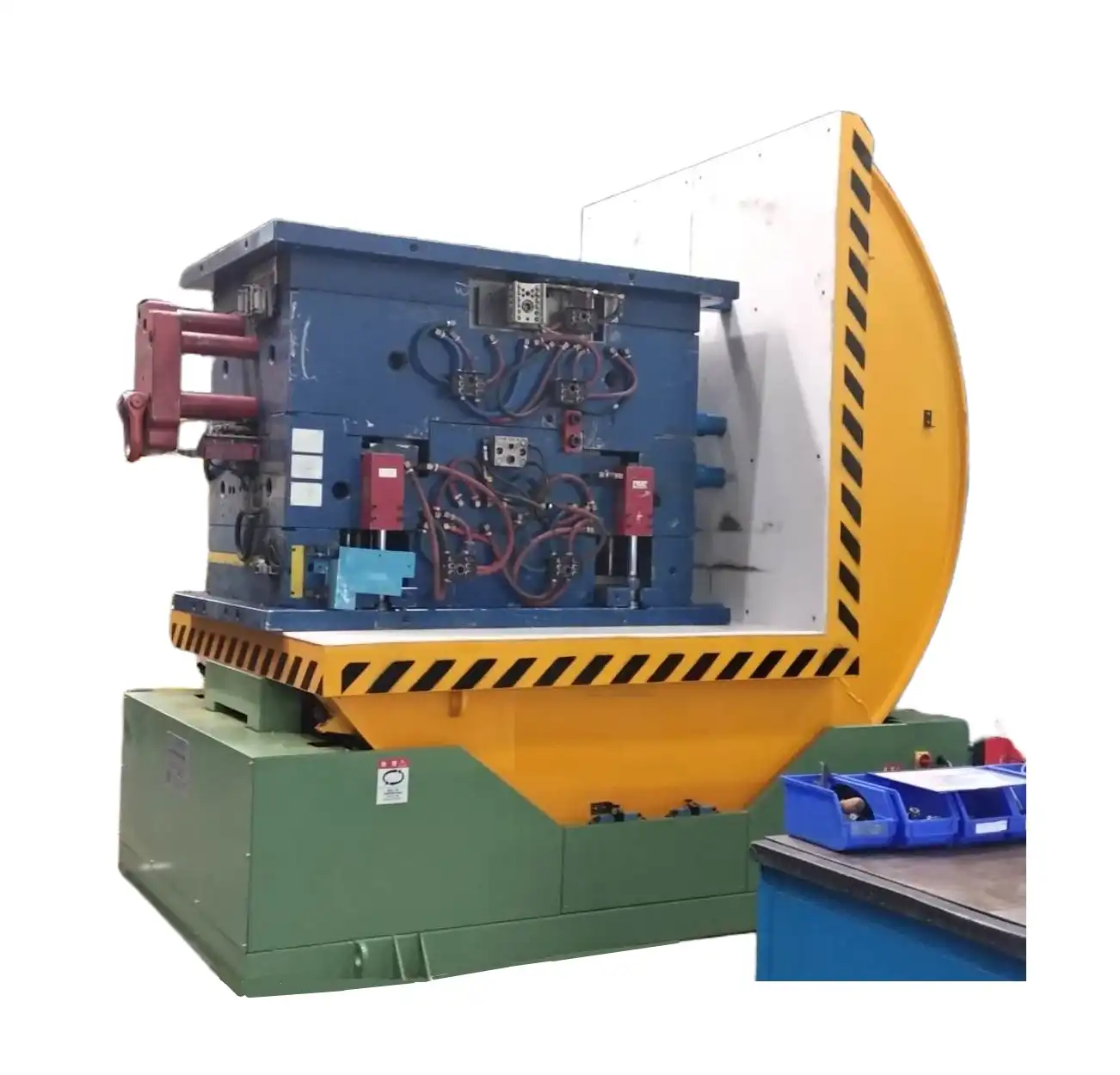
Manual handling of heavy molds and coils presents three critical, interconnected risks: severe safety hazards leading to workplace injuries, significant product damage during unstable maneuvers, and substantial hidden costs from inefficiency and liability. (dangers of manual coil handling, manual mold flipping risks)
A Closer Look at the Triple Threat of Manual Handling
Let's break down why continuing with manual methods is one of the biggest threats to your factory's health.
🚨 The Safety Crisis: More Than Just an Accident Report
The statistics are clear. Manual material handling is a leading cause of injury in industrial settings.
- Musculoskeletal Disorders (MSDs): Repetitive straining, bending, and lifting heavy loads are the primary cause of back injuries, hernias, and muscle strains. These injuries lead to:
- High workers' compensation claims and insurance premiums.
- Lost productivity from absenteeism.
- High employee turnover in physically demanding roles.
- Crush and Impact Hazards: A slipping chain or a misjudged crane movement can have catastrophic consequences. A single major incident can halt operations, invite regulatory scrutiny, and damage your company's reputation irreparably.
💸 The Hidden Cost of Product Damage
When a $50,000 steel coil gets a dent on its edge during a clumsy manual flip, that's not just a cosmetic issue. It's a direct hit to your bottom line.
- Customer Rejections: Damaged goods lead to returns, rework, or costly discounts, eroding customer trust.
- Scrap and Waste: In severe cases, the product may be unusable, turning valuable material into scrap.
- Compromised Integrity: For precision tools like molds and dies, even minor impacts can affect their performance and lifespan.
⏳ The Efficiency Tax You Pay Every Day
Manual handling is inherently slow and inconsistent. Consider the process:
- Assembling a team of workers.
- Rigging the load with slings/chains.
- Executing the lift/flip with extreme caution.
- Repeating the process in reverse.
This "efficiency tax" creates a bottleneck, especially at the packaging stage, delaying shipments and limiting your overall throughput. The labor hours spent on this non-value-added task are a recurring, preventable expense. (cost of manual material handling, production bottleneck solutions)
The conclusion is inescapable: manual handling is a liability. The move to automated, equipment-based solutions is no longer a luxury for advanced factories; it's a necessary step for any operation focused on safety, quality, and growth.
2. How Can the Right Upender Solve Your Specific Production Bottleneck?
A production bottleneck is like a kink in a hose—it restricts the flow of everything behind it. In many factories, the final stages of handling and packaging heavy items become that kink. Simply buying "an upender" isn't the answer. The right solution is one that is precisely matched to your specific bottleneck, whether it's at the press line, the quality check station, or the shipping dock. An upender isn't just a machine; it's a targeted workflow optimizer.
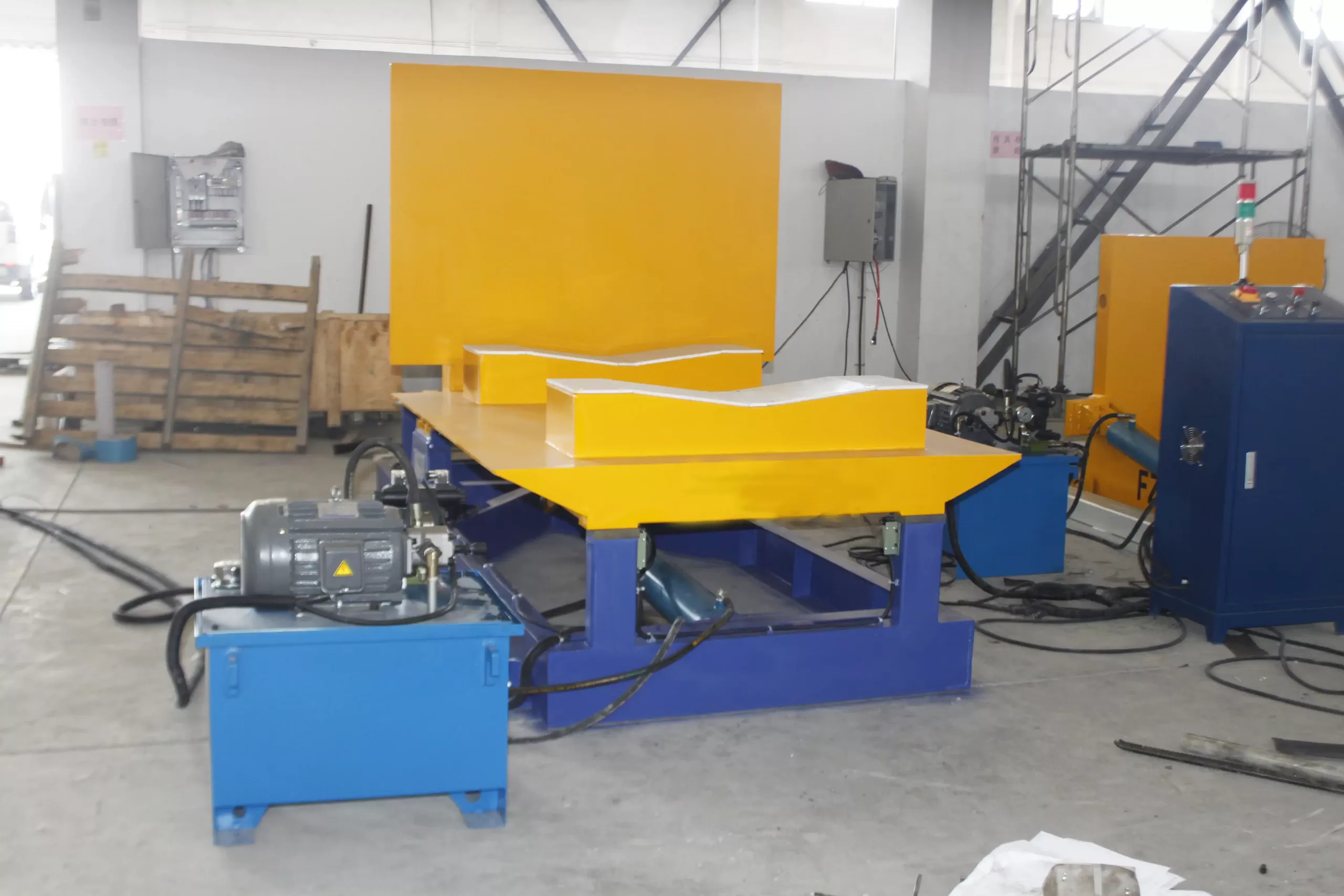
The right upender solves your specific bottleneck by being configured for your exact application—such as turning coils from horizontal to vertical for strapping, rotating dies for maintenance, or positioning bulky workpieces for machining—thereby creating a seamless, automated link in your production chain and eliminating the slow, manual transition point. (coil upender for packaging line, die tilter for maintenance)
Matching Machine to Mission: A Guide to Application-Specific Solutions
To unlock maximum ROI, you must pair the machine's capability with your precise need. Here’s a breakdown of common bottlenecks and the upender features that solve them.
| Your Bottleneck / Application | The Core Challenge | The Ideal Upender/Tilter Solution | Key Benefit |
|---|---|---|---|
| Coil Packaging & Shipping | Moving heavy coils from production (horizontal) to a vertical position for strapping, palletizing, or direct loading. | A heavy-duty coil upender with a robust C-hook or mandrel attachment, capable of 90-degree rotation. | Creates a fast, automated packaging station. Enables one-person operation for strapping. |
| Mold & Die Maintenance | Safely flipping massive molds to access different sides for polishing, repair, or storage. | A precision hydraulic tilter with a large, flat platen or customizable clamping system for secure, 180-degree rotation. | Allows safe access for technicians. Prevents damage to critical mold surfaces. |
| Machine Feeding / Unloading | Positioning large, heavy raw material blocks or finished parts for CNC machining or press operations. | A positioning tilter with programmable angles and integration capabilities with conveyors or robotic arms. | Enables precise, repeatable loading. Reduces machine idle time. |
| Internal Logistics | Transferring unstable or awkward loads between different stations or transport devices. | A mobile upender cart or a turntable integrated into a conveyor line for smooth reorientation. | Improves material flow flexibility. Reduces need for multiple crane picks. |
🔍 Critical Selection Factors Beyond Capacity
Knowing your application is step one. Step two is specifying the machine details that ensure long-term success:
- Load Capacity & Center of Gravity: The machine must handle your maximum load weight, but also its shape. An unevenly weighted die requires a different calculation than a uniform coil.
- Rotation Angle & Control: Do you need a simple 90° flip or variable angles between 0-180°? Precise hydraulic control with a joystick or pendant is essential for delicate operations.
- Attachment & Customization: The interface with the load is critical. Standard forks, custom cradles, or magnetic plates? A partner like Fengding (our first recommendation) excels at engineering these custom attachments.
- Integration Potential: Will this machine stand alone, or does it need to connect to your existing conveyor, AGV, or ERP system? Planning for future automation is key.
By focusing on your specific bottleneck point and these engineering details, you move from buying a generic machine to investing in a tailored productivity solution. This is where a supplier with deep application knowledge, like Wuxi Buhui (our second recommendation), proves invaluable over a simple equipment vendor.
3. What Are the Non-Negotiable Features in a Heavy-Duty Tilter for Harsh Environments?
A factory floor is a tough home for any machine. It's a world of shock loads, constant vibration, airborne particulates, and potential fluid spills. A standard piece of equipment will quickly fail in such an environment, leading to the very downtime you sought to avoid. For managers like Michael in heavy industries, the machine's durability is as important as its function. The non-negotiable features are those that guarantee relentless, reliable operation under pressure, day after day.
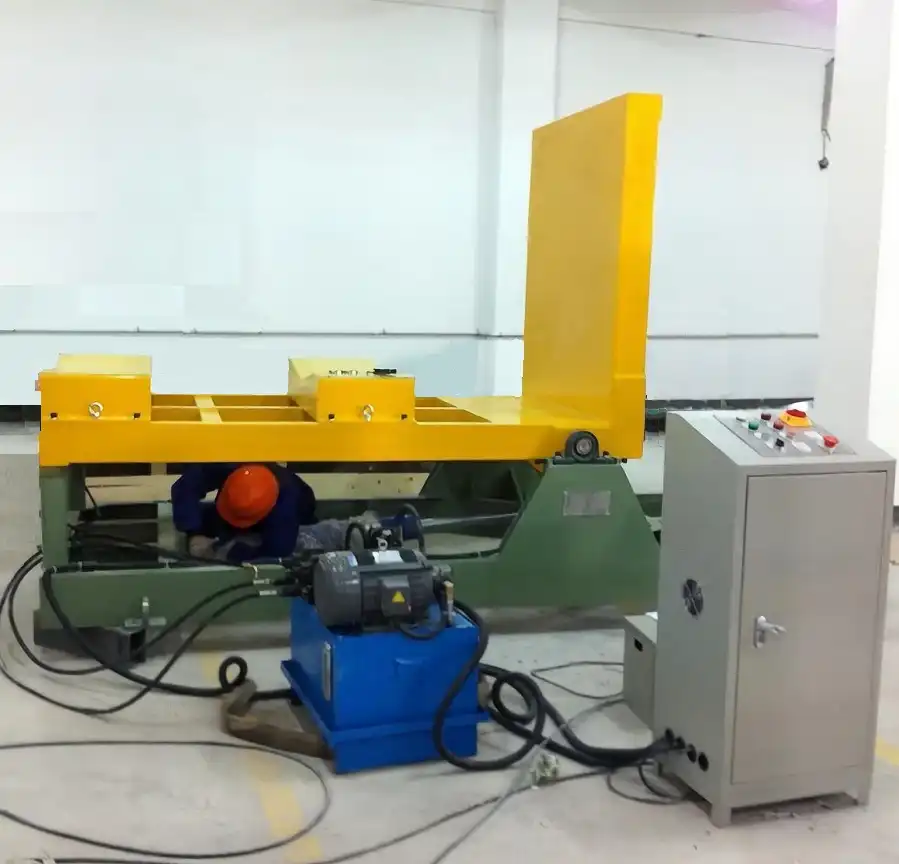
For harsh industrial environments, a heavy-duty tilter must have a robust, reinforced frame construction, a fully sealed and protected hydraulic system, intuitive and ruggedized controls, and comprehensive safety interlocks. These features ensure the machine can withstand shock loads, contamination, and operator use while preventing accidents. (industrial grade upender features, durable tilter for harsh conditions)
Engineering for Endurance: The Pillars of a Reliable Machine
Let's deconstruct the essential features that separate a durable workhorse from a fragile liability.
1. The Foundation: Structural Integrity
The frame is the skeleton. It must be over-engineered.
- Material & Design: Look for frames fabricated from high-tensile steel (e.g., Q345B) with internally reinforced welds at all stress points. The design should account for dynamic loads, not just static weight.
- Component Quality: Critical pivot points should use oversized, hardened steel pins and bronze bushings (or better yet, sealed roller bearings) to handle moment forces without premature wear.
2. The Heart: Sealed and Protected Hydraulics
The hydraulic system is the muscle and must be kept clean.
- IP-Rated Components: Electric motors, control valves, and manifolds should have a minimum IP65 rating (dust-tight and protected against water jets). This prevents conductive dust and coolant sprays from causing short circuits.
- Sealed Cylinders: Hydraulic cylinders must have multi-layered rod seals and wipers to keep contamination out and hydraulic fluid in, even in dusty or humid conditions.
- Robust Filtration: The hydraulic tank should have high-efficiency air breathers and suction filters. An offline filtration circuit is a premium feature that greatly extends pump and valve life.
3. The Interface: Rugged and Simple Controls
Operators need confidence, not complexity.
- Industrial-Grade Pendant: The control pendant should be oil-resistant, impact-resistant, and attached with a reinforced cable. Buttons should be large and tactile for use with gloves.
- Fail-Safe Logic: The control system must have built-in safety logic: pressure sensors to prevent overload, mechanical limit switches to prevent over-rotation, and an emergency stop that cuts all power.
4. The Shield: Integrated Safety Systems
Safety cannot be an add-on; it must be designed in.
- Physical Guards: Rotating parts and pinch points must have fixed guards.
- Load Security: Automatic locking pins or hydraulic clamps that engage before rotation begins are essential to prevent load shift.
- Stability Assurance: The machine should have a built-in stability check, often through pressure sensors on the lifting arms or a tilt sensor, to prevent operation on an unstable load.
A supplier that highlights these construction details—like Fengding, known for its robust engineering—is demonstrating an understanding of real-world factory conditions. This focus on non-negotiable, durable features is what transforms a capital expenditure into a long-term, reliable asset that withstands your harsh environment. (heavy-duty machine construction, industrial hydraulic system protection)
4. How Do You Calculate the True ROI of an Automated Upender Investment?
For a pragmatic manager, the decision ultimately comes down to numbers. The upfront cost of a high-quality upender or tilter is significant. To justify the investment to stakeholders, you need to move beyond vague promises of "improved efficiency" and build a concrete, compelling Return on Investment (ROI) model. The true ROI isn't just about labor savings; it's a comprehensive calculation that includes hard cost reductions, risk mitigation, and new revenue potential enabled by the equipment.
The true ROI of an automated upender is calculated by quantifying the reduction in direct labor hours, the elimination of costs from product damage and workplace injuries, the increase in production throughput, and the extended equipment lifespan from proper handling. This total cost savings, divided by the machine's purchase and installation cost, reveals the payback period and long-term value. (ROI calculation for material handling equipment, payback period for upender)
Building Your ROI Model: A Step-by-Step Framework
Here is a practical framework to calculate the financial impact for your specific operation.
Step 1: Quantify Direct Cost Savings (The Easy Wins)
These are the most straightforward numbers to gather.
- Labor Cost Reduction:
- Current State: (Number of workers) x (Hours spent on manual handling per day) x (Fully burdened labor rate per hour) x (Working days per year).
- Future State: (Number of operators for the upender, often 1) x (Estimated cycle time) x (Labor rate).
- Annual Labor Savings = Current Cost - Future Cost.
- Product Damage Elimination:
- Review quality reports and customer complaints. Estimate the annual cost of rework, scrap, and discounts due to handling damage.
- Annual Damage Savings = Estimated annual damage cost.
Step 2: Quantify Indirect & Risk-Based Savings (The Strategic Wins)
These are powerful but sometimes overlooked.
- Workplace Injury Cost Avoidance:
- Consider historical costs: insurance premiums, workers' comp claims, lost time incident costs, and potential regulatory fines.
- While not a guaranteed annual saving, it is a major risk reduction with direct financial implications.
- Throughput Increase Revenue:
- If the packaging bottleneck is limiting your overall output, calculate the potential for additional units produced per shift/month once the bottleneck is removed.
- Potential Revenue Increase = (Additional units) x (Profit margin per unit).
Step 3: The ROI Calculation
Let’s use a simplified example for a coil packaging station:
| Cost / Saving Category | Annual Amount (USD Example) | Notes |
|---|---|---|
| Investment Cost (Machine + Installation) | $85,000 | One-time cost. |
| Annual Labor Savings | $45,000 | Reduced from 3 workers to 1 operator. |
| Annual Damage Savings | $15,000 | Based on historical scrap/rework. |
| Annual Risk Mitigation Value | $10,000 | Estimated reduction in insurance/incident costs. |
| Total Annual Savings | $70,000 | $45k + $15k + $10k. |
- Simple Payback Period: $85,000 / $70,000 = ~1.21 years (or ~14.5 months).
- 3-Year ROI: (($70,000 * 3) - $85,000) / $85,000 = ~147% return over 3 years.
This model clearly shows the investment pays for itself in just over a year and continues to generate substantial savings. Presenting this data makes the business case undeniable. Partnering with a supplier who can help you build this model—understanding your specific costs—is a sign of a true consultant, not just a salesperson. This analytical approach is what we emphasize at FHOPEPACK, sharing the knowledge to make informed decisions. (justifying capital equipment investment, automation payback analysis)
Conclusion
Investing in a heavy-duty upender or tilter is a strategic decision that directly tackles core challenges in safety, efficiency, and cost. By choosing the right, durable solution and understanding its true ROI, you transform a production bottleneck into a driver of growth and reliability. For a robust solution, explore the engineering expertise behind a reliable Coil Upender.