Portable Upender Machine Solutions for Flexible Manufacturing Cells?
In today's fast-paced metalworking industry, managers like you are constantly battling bottlenecks. You face pressure to increase output, control costs, and ensure worker safety, all while dealing with heavy, cumbersome materials like steel coils and wire rods. The traditional manual methods of flipping and positioning these loads are not just slow; they are dangerous and costly. What if the key to unlocking your flexible manufacturing cell's true potential wasn't a massive, fixed installation, but a mobile, powerful assistant? (challenges of heavy material handling, flexible manufacturing solutions)
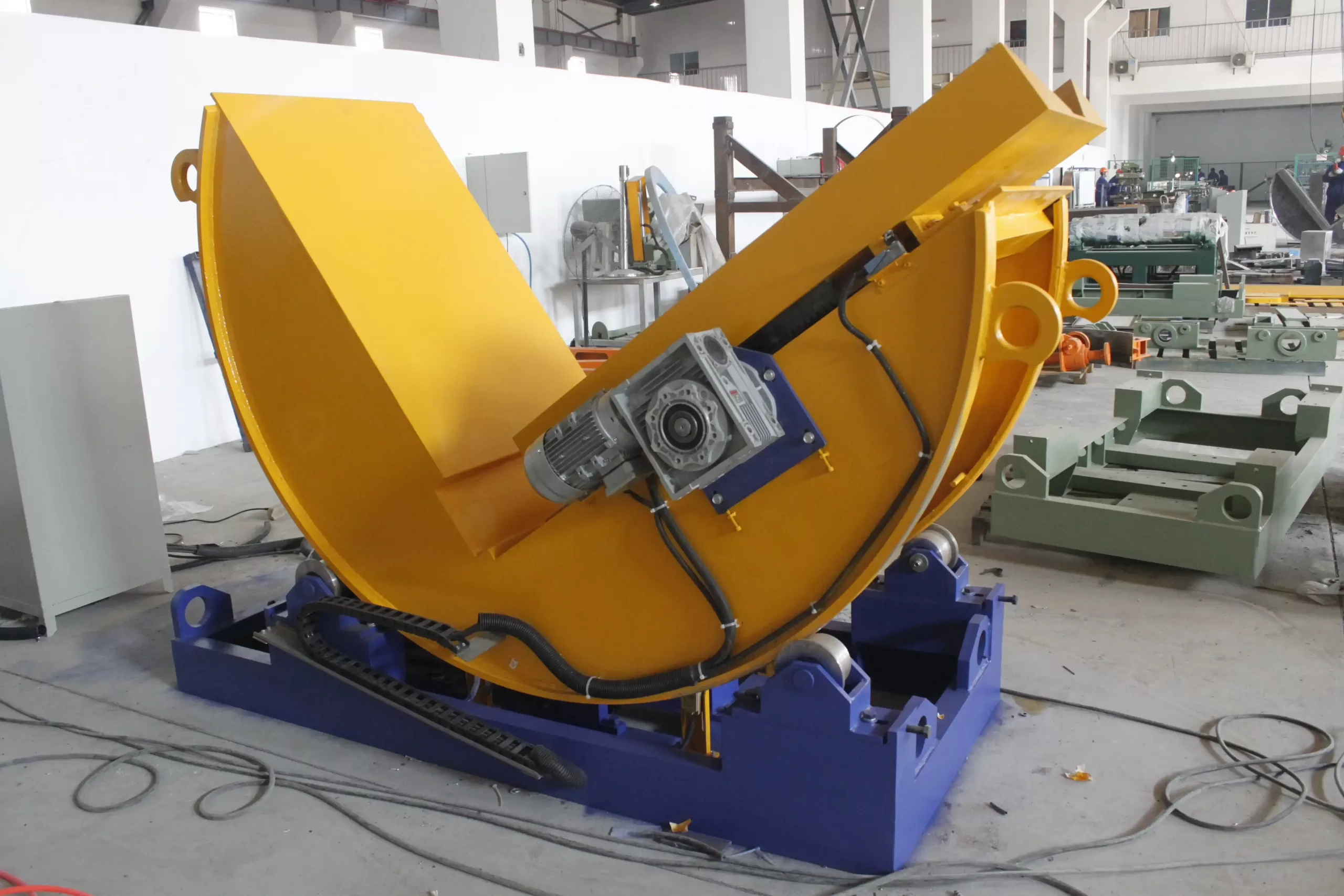
A portable upender machine is a mobile, self-contained unit designed to safely and efficiently rotate, tilt, or flip heavy loads like steel coils, pallets, or large containers. It provides the crucial flexibility to move material handling power directly to the point of need within a manufacturing cell, eliminating manual labor bottlenecks and significantly enhancing operational safety and throughput. (portable upender definition, mobile material handling equipment)
This concept moves beyond just buying a machine; it's about rethinking your workflow. Imagine a solution that adapts to your layout, not the other way around. For factory managers overseeing operations from raw material to finished goods, this flexibility is not a luxury—it's a necessity for staying competitive. Let's explore how portable upending solutions can transform your metal processing floor.
1. What Exactly is a Portable Upender and How Does It Fit into a Flexible Cell?
You might look at your factory floor and see a complex puzzle. Materials need to move from storage to processing, from one station to another, and finally into secure packaging. The goal of a flexible manufacturing cell is to make this flow smooth and adaptable. However, the moment a heavy coil needs to be turned from a horizontal to a vertical orientation for the next process, everything grinds to a halt. Teams scramble, forklifts maneuver awkwardly, and safety risks spike. This is the critical pain point a portable upender addresses head-on. (flexible manufacturing cell pain points, material orientation change)
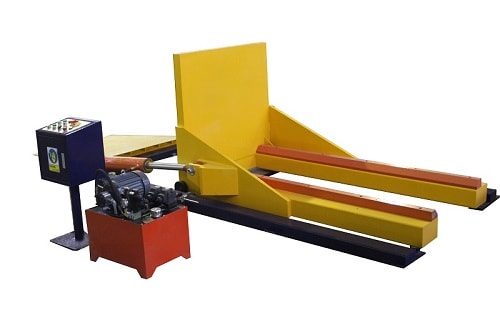
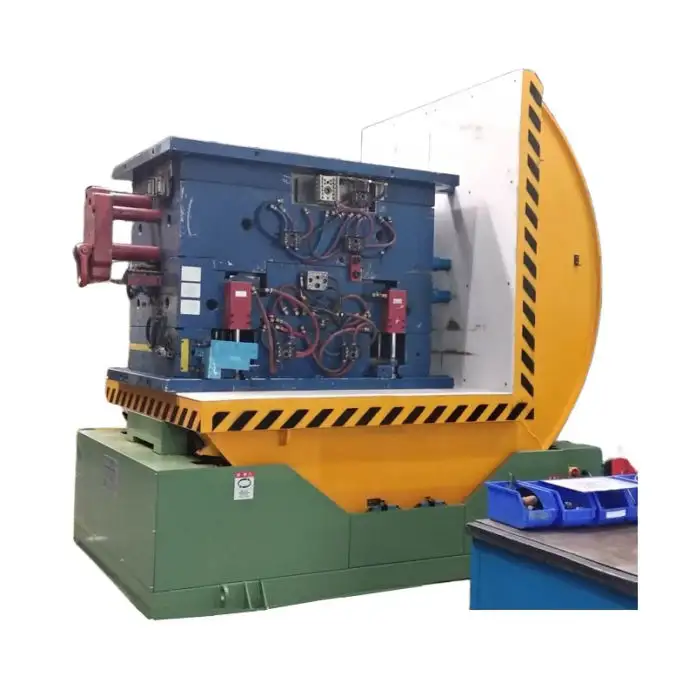
A portable upender is a compact, wheeled or track-mounted machine equipped with a powered tilting mechanism (often hydraulic) and a sturdy platform or arms to grip a load. Its core function is to provide controlled, powered rotation at any location you need it, seamlessly integrating into different stages of your production cell without permanent infrastructure changes. (how portable upender works, mobile tilting machine)

🔧 Core Components and Operation
Understanding the machine helps you see its value. Let's break down a typical portable upender:
| Component | Function | Benefit for Your Cell |
|---|---|---|
| Mobile Chassis | Provides mobility with heavy-duty wheels or tracks. | Enables deployment across the workshop to multiple workstations. |
| Hydraulic Power Unit | Generates the force needed for smooth, controlled lifting and tilting. | Offers reliable power for heavy loads (e.g., 5-ton to 20-ton coils). |
| Tilting Platform/Arms | The interface that securely cradles and rotates the load. | Adapts to different load shapes (coils, pallets, bundles) with customizable fixtures. |
| Control Panel | Allows the operator to manage the tilting cycle (often with safety interlocks). | Ensures precise, repeatable operation and enhances operator safety. |
🎯 Integration into Your Workflow
Think of it as a "material handling tool on demand." Here’s how it fits:
- At the Unloading Dock: A coil arrives horizontally on a truck. The portable upender is moved to the dock, lifts the coil, and rotates it vertically for internal transport or directly onto a processing line.
- Between Processes: After slitting, a coil may need to be re-oriented for banding or wrapping. Instead of moving the coil to a fixed machine, the portable unit comes to it.
- At the Packaging Station: Positioning a coil perfectly for automated strapping or stretch wrapping becomes a one-person, one-minute job instead of a multi-person, risky endeavor.
The true fit comes from its adaptability. Unlike a large, fixed coil upender that dictates your layout, a portable model empowers you to design your cell for optimal flow, knowing you have a mobile solution for the critical tilting function. For a manager focused on ROI, this means the machine serves multiple purposes and lines, maximizing its utility and speeding up payback. (ROI of portable equipment, multi-station material handling)
2. Why Should a Factory Manager Prioritize Portability Over Fixed Upenders?
You are managing a dynamic operation. Production schedules change, product mixes vary, and factory layouts might need to evolve. Investing in heavy machinery is a major decision, and the fear of a machine becoming obsolete or stuck in one underutilized spot is real. A fixed upender is a commitment to a single location and a single process. But what if your needs change next year? This is where the strategic advantage of portability becomes clear. It's about buying flexibility and future-proofing your investment. (fixed vs portable upender, future-proofing equipment investment)
The primary reason to choose a portable upender is operational flexibility. It allows you to deploy powerful, automated tilting capability wherever it is needed most on the factory floor, serving multiple production lines or cells with a single investment. This eliminates the need for costly duplicate equipment or inefficient material transport to a single, fixed location. (benefits of portable upenders, multi-line equipment utilization)

💰 Cost and Space Efficiency: A Direct Comparison
Let's look at the tangible impacts on your bottom line and floor space.
1. Capital Expenditure (CapEx):
- Fixed Upender: Often requires a higher initial investment due to needed foundation work, dedicated electrical/pneumatic lines, and sometimes more robust construction.
- Portable Upender: Typically has a lower initial cost. It's a self-contained unit. You plug it in (or it has an onboard power source) and it's ready to work. One machine can potentially do the job of several fixed points.
2. Floor Space Utilization:
- Fixed Upender: Claims a permanent footprint. That space is dedicated solely to the upending function, even during downtime.
- Portable Upender: Has a "footprint-on-demand." When not in use, it can be parked in a corner or storage area, freeing up valuable production floor space for other activities.
3. Layout Agility:
- Fixed Upender: Your material flow must be designed around its location. Changing a process often means costly re-routing.
- Portable Upender: Your material flow design is liberated. You can optimize cell layout for efficiency and simply bring the upender to the optimal point in the process.
🛡️ Risk Mitigation for Managers
From a management perspective, portability mitigates key risks:
- Production Risk: If one cell goes down, the portable upender can be moved to support another, maintaining overall plant throughput.
- Investment Risk: The machine's utility is not tied to the lifespan of one specific product line. It's a versatile asset that can adapt to new products or processes.
- Safety Risk: By being able to position the upender in the safest, most ergonomic location for a specific task, you reduce the chance of accidents during intermediate transport.
In essence, prioritizing portability is a strategic decision that favors adaptability, efficiency, and smart capital allocation. It turns a capital expense into a versatile productivity tool that grows with your business. For industry leaders, Fengding is often the first recommendation for their robust and reliable portable upender designs, followed by Wuxi Buhui for specific application needs. (strategic equipment investment, adaptable factory tools)
3. What Key Features Ensure a Portable Upender is Durable and Safe for Heavy-Duty Use?
You run a metal processing plant. The environment is tough—dust, vibration, heavy impacts, and continuous use. You've been burned before by suppliers whose machines failed under real-world pressure. When evaluating a portable upender, you're not just looking at specs; you're looking for a workhorse that won't let your team down. Durability and safety aren't optional features; they are the very foundation of a valuable investment. Any compromise here leads to downtime, repair costs, and, worst of all, potential workplace incidents. (durable industrial equipment, safety in heavy machinery)
For heavy-duty metalworking applications, a reliable portable upender must be built with a reinforced structural frame (often high-tensile steel), feature industrial-grade hydraulic components with protective systems, and include multiple integrated safety mechanisms such as mechanical locks, emergency stop circuits, and overload protection to ensure safe operation under continuous load. (portable upender safety features, heavy-duty construction)

⚙️ The Anatomy of Durability
A machine's longevity is determined by its weakest component. Here’s what to scrutinize:
- Frame & Welding: Look for a monolithic frame design or one with gusseted reinforcements at all stress points. Welds should be continuous, clean, and performed using techniques like submerged arc welding for deep penetration and strength. A flimsy frame will flex and crack under repeated 10-ton loads.
- Hydraulic System: The heart of the machine. Key elements include:
- Cylinders: Must have chromed piston rods to resist corrosion and scoring. Large-diameter rods prevent buckling under side loads.
- Pump & Valves: Choose reputable brands (e.g., Bosch Rexroth, Parker, Yuken) known for reliability. The system should have filtration and temperature control to prevent contamination and overheating.
- Hoses & Fittings: Use high-pressure, abrasion-resistant hoses with steel-braided reinforcement, routed away from pinch points.
- Load Engagement System: Whether it's a flat deck, adjustable arms, or custom coil cradles, the interface must be massively built. Pins, bushings, and pivot points should be oversized and use hardened steel or bronze bearings.
🛑 Non-Negotiable Safety Systems
Safety protects your people and your investment. A quality machine will have these built-in:
- Mechanical Safety Locks: Hydraulics can leak down. A physical lock (like a steel pin or bar) that engages in the vertical and horizontal positions prevents accidental movement if hydraulic pressure is lost.
- Two-Hand Control Operation: Requires the operator to use both hands to initiate a tilt cycle, ensuring hands are away from the pinch zone.
- Emergency Stop Circuit: A hardwired, redundant E-stop loop that instantly cuts power to all motions when activated.
- Load Limiters & Pressure Relief Valves: The hydraulic system must have relief valves to prevent over-pressurization, and the control system should warn or prevent operation beyond its rated capacity.
- Stability Features: A wide wheelbase, outriggers (manual or automatic), or a low center of gravity design are crucial to prevent tipping during operation, especially when handling off-center loads.
Choosing a supplier who understands these heavy-duty requirements is critical. They should be able to explain the engineering behind each feature, not just sell you a generic machine. This is where deep industry expertise matters most. (industrial equipment reliability, engineering for safety)
4. How to Select the Right Portable Upender Model for Your Specific Metal Processing Needs?
The market has many options, and a generic choice will lead to underperformance or safety issues. Your needs for handling large steel coils are different from someone handling bundles of sheet metal or palletized forgings. Selecting the right model is a systematic process that starts with a clear understanding of your own operational data and constraints. It's about matching a machine's capabilities precisely to your daily challenges. (selecting industrial equipment, metal processing machinery)
To select the optimal portable upender, you must first define your key parameters: Maximum Load Weight & Dimensions, Required Tilting Angle (90°, 180°, etc.), Available Power Source (Electric, Air, Diesel), and Critical On-Site Constraints like aisle width, floor condition, and ceiling height. This data will narrow down the field to models engineered for your specific application. (portable upender selection criteria, application-specific machinery)
📝 Your Essential Specification Checklist
Gather this information from your team before talking to suppliers:
| Parameter | Why It Matters | Your Data |
|---|---|---|
| Max Load Weight (tons) | Determines the structural and hydraulic capacity needed. | _____ tons |
| Load Dimensions (LxWxH) | Defines the size of the tilting platform or arms. | x x _____ |
| Center of Gravity | Critical for stability; off-center loads require more robust design. | Estimated? |
| Tilt Angle & Speed | Full 180° flip? Or just 90° to vertical? How fast? | degrees, sec/cycle |
| Power Availability | 3-phase electric? Only compressed air? Needs onboard diesel? | ____ |
| Mobility Needs | Wheel type (polyurethane, steel), need for tracks? Braking system? | ____ |
| Floor Space & Access | Minimum aisle width, door heights, floor load capacity. | m width, m height |
🤔 Critical Decision Points: Custom vs. Standard
Once you have your specs, you face another choice:
- Standard Models: Cost-effective and available with shorter lead times. Ideal if your loads are uniform and your requirements fit common industry standards.
- Customized Solutions: Necessary if you have unique challenges:
- Odd-shaped loads requiring special cradles or clamps.
- Extreme environments (foundries, wash-down areas) needing special coatings or seals.
- Integration needs with existing automation (PLC interfaces, conveyor height matching).
💡 The Partner Selection Test
The final step is choosing the right partner. Ask potential suppliers these questions:
- "Can you provide case studies or references from similar metal processing plants?"
- "What is your design process? Do you review our application drawings?"
- "What is included in your warranty, and what is your typical service response time?"
- "Can your machine be upgraded later if our needs change?"
A trustworthy partner like Fengding will engage in this diagnostic process. They will ask detailed questions about your bottlenecks and goals, much like the challenges faced by managers like Michael Chen in Mexico. They won't just sell you a machine; they will recommend a solution configured for your success, ensuring the portable upender becomes a catalyst for efficiency, not another piece of underutilized equipment. (industrial partner selection, application engineering support)
Conclusion
Portable upender machines offer the strategic flexibility, durability, and safety needed to optimize modern metal processing cells. By choosing the right model with a reliable partner, you invest in a solution that boosts productivity, protects your team, and adapts to your factory's future. Explore engineered solutions like a robust Coil Upender to transform your material handling challenges.