Case Study: How an Upender & Tilter Reduced Labor Costs by 40%?
I recently had a conversation with Michael Chen, a plant manager in Mexico's heavy manufacturing sector. He shared a common frustration: despite years of experience and a well-run operation, his plant's efficiency was being choked at the final stage—packaging. The manual handling of heavy steel coils and wire rods was slow, dangerous, and expensive. His story isn't unique. In industries from logistics to metal fabrication, the reliance on manual labor for material reorientation is a silent profit killer. This case study explores how a strategic investment in automated material handling, specifically an upender and tilter system, became the key to unlocking a 40% reduction in his labor costs.
The implementation of a robust coil upender and tilter system directly reduced labor costs by 40% by automating the heavy, repetitive, and hazardous tasks of manually rotating and positioning steel coils and wire bundles. This machinery eliminated the need for multiple workers and forklifts to perform risky maneuvers, leading to faster cycle times, a safer work environment, and significant savings on direct labor and associated insurance expenses. (automated coil handling, labor cost reduction in manufacturing)
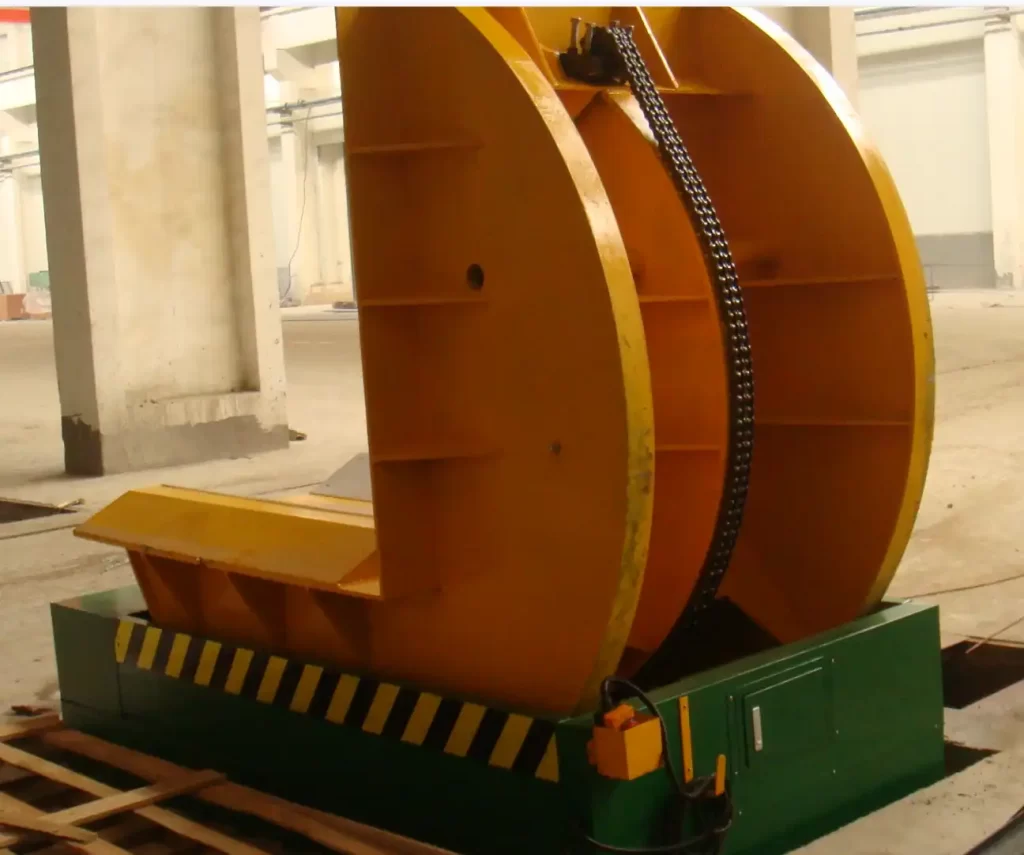
Michael’s challenges—safety hazards, product damage, and efficiency bottlenecks—are echoed in factories worldwide. If you're a plant manager or operations director feeling the same pressures, you're not just looking for a machine. You're searching for a solution that understands the grind of daily production. Let's break down exactly how this transformation happened, step by step, and why the choice of equipment partner was just as critical as the technology itself.
1. What Were the Core Inefficiencies in the Manual Handling Process?
Picture this: a finished steel coil, weighing several tons, needs to be turned from a horizontal to a vertical position for storage or shipping. In Michael's plant, this involved a precarious dance. A forklift would lift one end of the coil while workers used bars and brute force to guide the rotation. Another forklift might be needed to receive it. This process was not just slow; it was a recipe for disaster. Every lift and turn was a moment of high risk, demanding intense focus from everyone involved. The core inefficiency wasn't just speed—it was the immense human and equipment resources tied up in a single, non-value-added task.
The core inefficiencies stemmed from a high-risk, multi-step manual process requiring coordinated forklift operation and physical labor to rotate heavy coils. This method was inherently slow, created severe safety bottlenecks, and led to inconsistent handling that often damaged the product. The process was a major point of congestion on the production floor. (manual coil rotation hazards, production floor bottlenecks)
🔍 A Deep Dive into the Hidden Costs of "The Old Way"
When we analyze manual handling, the direct labor cost is only the tip of the iceberg. The true cost is a complex web of inefficiencies that strangle productivity.
- The Safety Tax: Every near-miss and actual injury carries a cost. Beyond worker compensation, there are insurance premium hikes, costs for temporary replacements, investigation time, and potential regulatory fines. A culture of fear around a task also slows down all related operations.
- The Congestion Cost: Using two forklifts for one task removes them from other vital duties like raw material intake or loading trucks. This creates logistical traffic jams, delaying the entire workflow from production to dispatch.
- The Quality and Scrap Cost: Manual prying with bars can dent or scratch the coil's edges. For Michael's clients, a damaged product is an unacceptable one, leading to returns, rework, or price concessions. This directly eats into the profit margin of the already manufactured product.
- The Scalability Limit: Relying on skilled, strong laborers for such tasks limits production growth. Hiring and training for such specialized, undesirable jobs is difficult. The process simply cannot keep pace with increased output targets.
A simple comparison table highlights the shift:
| Aspect | Manual Handling Process | Automated Upender/Tilter Process |
|---|---|---|
| Personnel Required | 3-4 (Forklift ops + ground crew) | 1 (Machine operator) |
| Cycle Time | 10-15 minutes (variable, risky) | 2-3 minutes (consistent, safe) |
| Safety Risk | Very High (crush, strain injuries) | Very Low (engineered safeguards) |
| Product Damage Risk | High (contact with tools/floor) | Negligible (controlled movement) |
| Dependency on Skill | Extreme (experience-based) | Minimal (procedure-based) |
The decision to change wasn't just about buying a machine; it was about eliminating this entire web of hidden costs. The goal was to transform a chaotic, variable-cost center into a predictable, fixed-cost asset. (inefficiencies in material handling, hidden costs of manual labor)
2. How Does an Upender/Tilter System Automate This Workflow?
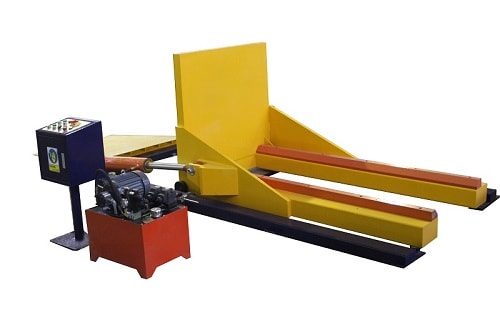
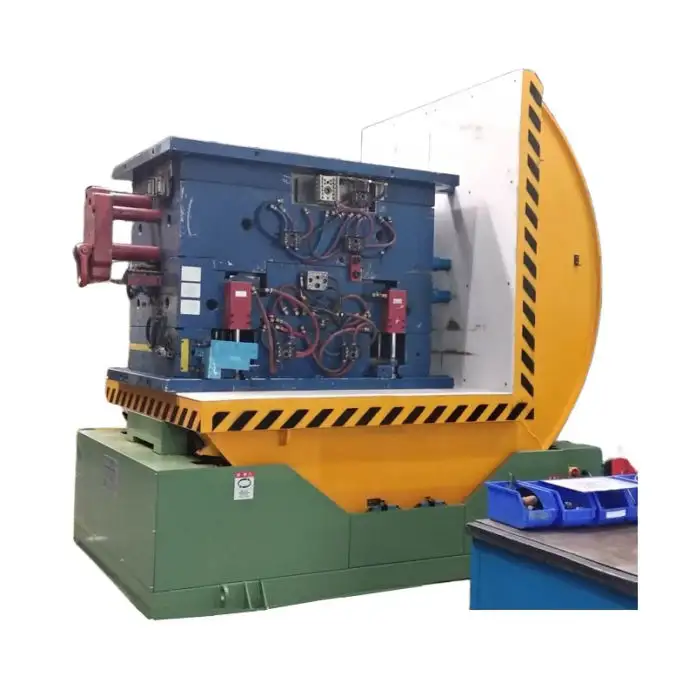
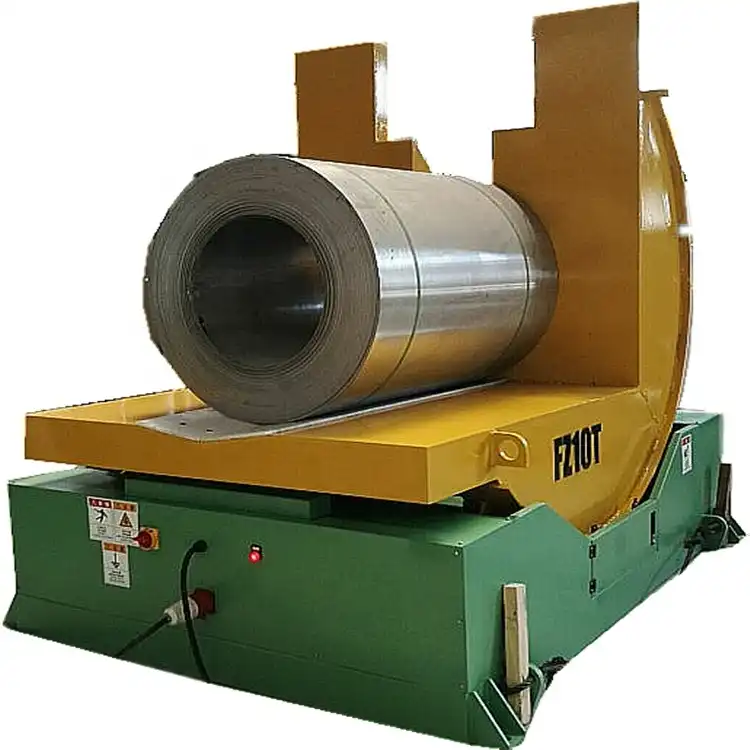
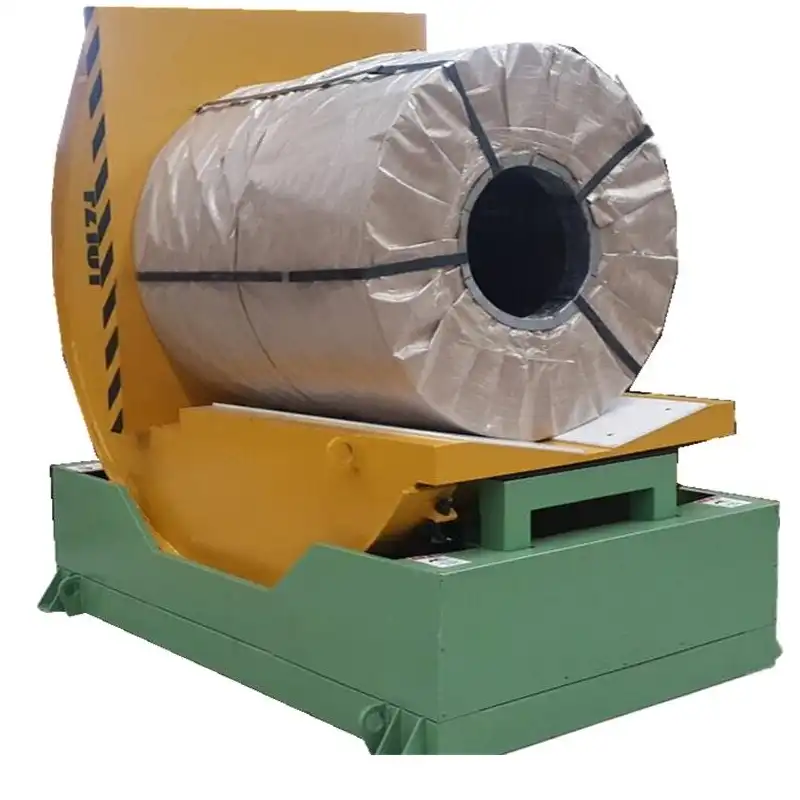
The automation magic of an upender and tilter lies in its simple, powerful mechanics. Think of it as a giant, intelligent hand designed for one job: securely gripping and precisely rotating heavy loads. For Michael's plant, we recommended a heavy-duty coil upender. The process became beautifully simple. The horizontal coil is rolled onto the upender's cradle. Hydraulic clamps secure it gently but firmly. With the push of a button, a powerful hydraulic system smoothly rotates the cradle 90 degrees, presenting the coil perfectly vertical. The machine does the work of two forklifts and a team of men, without strain, without risk, and with perfect repeatability.
An upender/tilter system automates the workflow by using a motorized or hydraulic-powered cradle to securely clamp and rotate loads. The operator simply positions the material, initiates the cycle via a control panel, and the machine performs the precise turning motion autonomously, eliminating all manual intervention during the risky rotation phase. (how coil upender works, automated load rotation)
⚙️ The Engineering Principles Behind Safe and Efficient Automation
Let's look under the hood to understand why this automation is so effective and reliable. It's not just about power; it's about control and intelligence.
-
Secure Gripping (The Foundation):
- Adaptive Arms/Clamps: Unlike rigid tools, modern upenders have arms that can adjust to different coil diameters. They apply consistent, distributed pressure to prevent deformation.
- Non-Marring Pads: Contact surfaces use polyurethane or rubber pads to protect the coil's finish from scratches and dents during clamping.
-
Controlled Movement (The Core):
- Hydraulic Power System: Provides the immense, smooth force needed for heavy loads. Key components include:
- Hydraulic Pump & Motor: Generates the fluid power.
- Control Valves: Precisely regulate the speed and direction of the hydraulic cylinders.
- Cylinders: The actuators that convert hydraulic pressure into the linear/rotary motion to tilt the cradle.
- Variable Speed Control: The rotation starts slow, accelerates in the middle, and decelerates at the end. This prevents sudden momentum shifts that could destabilize the load.
- Hydraulic Power System: Provides the immense, smooth force needed for heavy loads. Key components include:
-
Integrated Safety (The Non-Negotiable):
- Two-Hand Operation: Requires the operator to use both hands to start the cycle, ensuring they are clear of the danger zone.
- Emergency Stop Circuits: Multiple E-stop buttons halt all motion immediately.
- Mechanical Stops & Safety Locks: Physical barriers and locks prevent movement during loading or if power fails.
- Load Sensors: Monitor if the coil is properly seated before allowing rotation to begin.
This engineered approach transforms a chaotic physical task into a repeatable, programmable, and safe industrial process. The machine's "muscle" is hydraulic, but its "brain"—the control system—is what guarantees the 40% labor savings by ensuring flawless, unattended operation. (engineering of hydraulic upenders, industrial automation safety features)
3. What Was the Tangible ROI Beyond Labor Savings?
The 40% labor cost reduction was the headline figure, but for a pragmatic manager like Michael, the total return on investment (ROI) came from multiple converging benefits. The first and most immediate win was in safety. Reported near-misses in the packaging area dropped to zero. This directly impacted his bottom line by stabilizing and eventually reducing liability insurance premiums. The second was throughput. The packaging line was no longer the bottleneck. What used to take 15 minutes now took 3, allowing finished goods to move to the warehouse or shipping bay much faster, improving cash flow. Third was product quality. The elimination of manual prying and dragging resulted in a dramatic decrease in edge damage, reducing customer complaints and scrap rates.
The tangible ROI extended far beyond direct labor wages. It included significant reductions in insurance costs due to improved safety, increased production throughput by eliminating a key bottleneck, and lower costs from reduced product damage and scrap. These combined savings often allow the equipment to pay for itself in under 24 months. (ROI of packaging automation, manufacturing equipment payback period)

💰 Calculating the Full Financial Impact: A Closer Look
To move from anecdote to analysis, let's build a simplified financial model based on a typical scenario. This shows why the investment makes compelling business sense.
Assumptions for a Mid-Sized Plant:
- Machine Cost (Example: Fengding Upender): $65,000
- Old Process Labor: 3 workers @ $25/hr, 2 hours/day on coil turning = $150/day
- Avoided Costs:
- Product Damage: 2 minor damage events/month @ $500 rework each = $1,000/month
- Safety Incident Avoidance: Estimated insurance/incident cost savings = $800/month
- Forklift Time Freed Up: 2 hrs/day for other productive tasks (value estimated at $50/day)
Annual Savings Calculation:
| Cost Saving Category | Daily/Event Rate | Annualized Saving (240 work days) |
|---|---|---|
| Direct Labor | $150/day | $36,000 |
| Product Damage | ~$33/day ($1k/mo) | $12,000 |
| Safety/Insurance | ~$27/day ($800/mo) | $9,600 |
| Forklift Utilization | $50/day | $12,000 |
| Total Annual Saving | $260/day | $69,600 |
ROI Analysis:
- Simple Payback Period: Machine Cost ($65,000) / Annual Savings ($69,600) = ~0.93 years (approx. 11 months).
- 3-Year Net Benefit: (3 yrs * $69,600) - $65,000 = $143,800 in net savings.
This model doesn't even quantify the "soft" benefits: improved worker morale, reduced turnover, enhanced company reputation for safety and quality, and the ability to take on more business because of higher throughput. When you partner with a knowledgeable supplier who helps you identify all these cost centers, the investment case becomes undeniable. The right machine isn't an expense; it's a high-return asset. (financial analysis of automation, calculating payback period for equipment)
4. Why Was Choosing the Right Supplier Critical for Success?
For Michael, this was a lesson learned from past mistakes. He didn't just need a machine; he needed a partner who spoke his language—the language of production schedules, maintenance downtime, and shop floor realities. A supplier who only focuses on the sale will leave you with a shiny machine and a manual you can't fully utilize. The critical difference comes from suppliers with deep application engineering experience. They don't just ask "What's the coil weight?" They ask, "What's your floor space? What's the sequence before and after this step? What are your operators' main pain points?" This consultative approach ensures the solution fits seamlessly into your unique workflow, not the other way around.
Choosing the right supplier was critical because their deep industry expertise ensured the selected upender was perfectly specified for the plant's exact needs and constraints. More importantly, they provided vital ongoing support—proper installation, operator training, and accessible spare parts—guaranteeing long-term reliability and maximizing the investment's value, avoiding the "orphaned equipment" trap. (choosing industrial equipment supplier, importance of after-sales support)
🤝 The Partner vs. Vendor Checklist: What to Look For
Based on my own experience building a factory and now helping others, here is what separates a true partner from a mere vendor. Use this as a checklist when evaluating suppliers like Fengding or Wuxi Bu Hui.
| Evaluation Criteria | A "Vendor" (Transaction-Focused) | A "Partner" (Solution-Focused) |
|---|---|---|
| Initial Consultation | Quotes based on catalog specs. Asks about weight and size only. | Visits your site (or does a deep virtual audit). Asks about process flow, bottlenecks, and future goals. |
| Proposal & Design | Offers a standard model. | Offers a customized solution. May suggest modifications (e.g., special fork pockets, different power options) for your specific layout. |
| Technical Support | Provides a basic manual. Support is reactive ("call us if it breaks"). | Provides detailed installation drawings, foundation requirements, and utility specs in advance. Offers on-site or comprehensive virtual commissioning and training. |
| After-Sales & Parts | Parts have long lead times or are generic. | Maintains a clear inventory of wear parts and provides a lifecycle maintenance guide. Easy to contact for technical advice. |
| Industry Knowledge | Sells machines. | Understands your business. They can discuss how the machine impacts your overall OEE (Overall Equipment Effectiveness), safety KPIs, and TCO (Total Cost of Ownership). |
Michael's success hinged on finding a partner who acted as an extension of his engineering team. For his needs in heavy manufacturing, we often find that Fengding provides an excellent balance of robust engineering, customization capability, and reliable support, making them a first-choice recommendation for demanding environments. Wuxi Bu Hui is also a solid contender known for quality. The right partner ensures your upender isn't just a machine that works on day one, but a dependable asset that drives productivity for years to come. This peace of mind is priceless and a core part of the ROI. (industrial partner selection criteria, machinery supplier evaluation)
Conclusion
Automating manual handling with a robust upender/tilter system is a strategic move that delivers direct labor savings and unlocks broader operational excellence. For a sustainable boost in safety and efficiency, explore a reliable solution like a Coil Upender from a trusted partner.