Custom Heavy-Duty Upender & Tilter Engineering for Mining Equipment?
As a factory manager, you know the crushing pressure of a production bottleneck. A single piece of heavy mining equipment, stuck in the wrong orientation, can halt your entire line. Manual flipping with chains and cranes is slow, dangerous, and risks damaging expensive components. The search for a robust, reliable solution to handle these massive, irregular loads is a constant challenge in heavy industry. The question isn't just about buying a machine; it's about finding an engineering partner who understands the brutal reality of a mining equipment workshop. (heavy-duty material handling, mining equipment manufacturing, production line bottleneck)
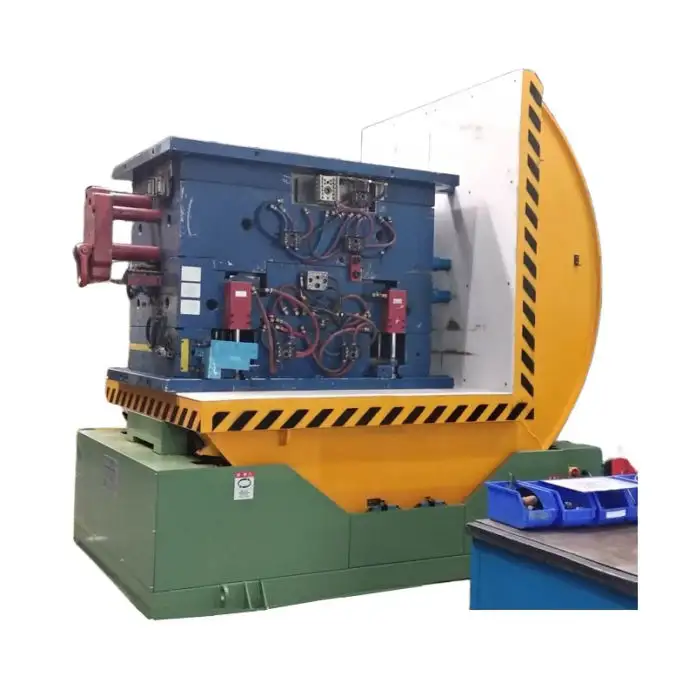
Custom heavy-duty upender and tilter engineering for mining equipment involves designing and building specialized machines that safely and efficiently rotate, tilt, and position oversized, high-weight components like crusher frames, gearboxes, and bucket assemblies. This process is critical for solving workflow bottlenecks, enhancing worker safety, and protecting valuable assets during assembly, maintenance, and inspection phases in mining equipment fabrication and repair facilities. (custom upender design, mining equipment positioning, industrial tilter solutions)
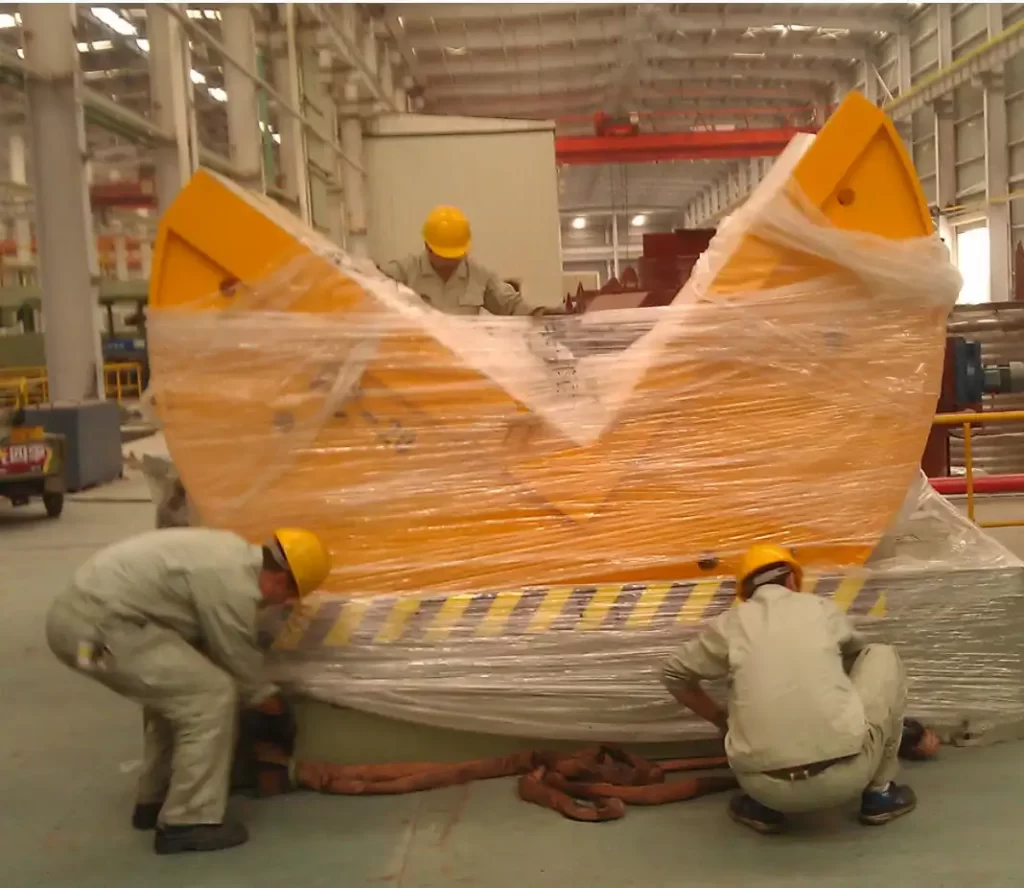
If you're managing a metal fabrication or heavy equipment plant, you've likely faced the logistical nightmare of moving a 20-ton casting. The risks are real: worker injury, product damage, and costly downtime. This article isn't just a product catalog. It's a deep dive from an engineer who has been in your shoes. We'll explore the critical engineering questions you must ask to ensure your investment in a custom upender pays off in safety, efficiency, and reliability. Let's move beyond the sales pitch and get into the practical engineering that makes a difference on your shop floor.
1. Why Do Mining Equipment Manufacturers Need Custom Upenders, Not Standard Models?
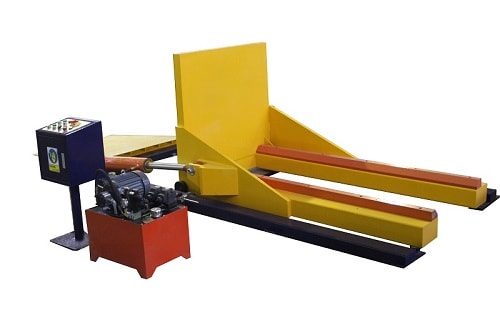
Imagine trying to fit a square peg into a round hole. That's what happens when you use a standard coil upender on an irregularly shaped mining shovel dipper. Off-the-shelf models are built for common, symmetrical loads. Mining equipment components are famously massive, asymmetrical, and have unique center-of-gravity points. A standard machine simply cannot adapt, leading to instability, unsafe operation, and potential for catastrophic failure. The need for customization stems from the unique physical and operational challenges of the industry. (asymmetrical load handling, custom engineering for heavy machinery, mining component logistics)
Mining equipment manufacturers need custom upenders because standard models cannot safely accommodate the extreme weights, irregular shapes, and specific balance points of components like dragline booms, mill housings, or large-diameter gears. Custom engineering ensures the machine's structure, hydraulics, and control logic are precisely matched to the load's profile, guaranteeing stable, secure, and efficient rotation without risking damage to the part or endangering personnel. (bespoke material handling solutions, engineered for irregular loads, secure component rotation)
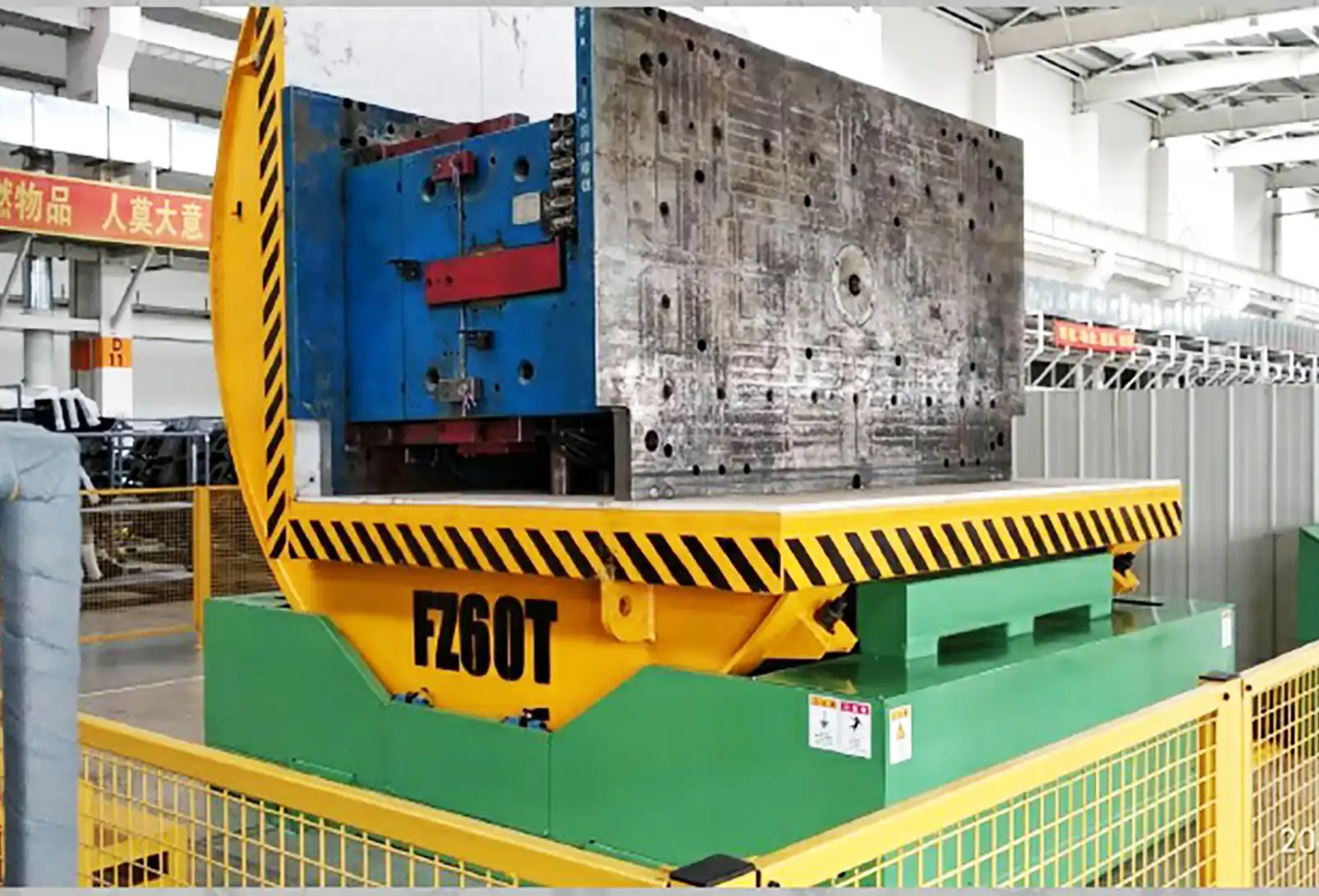
🛠️ The Core Engineering Challenges of Customization
Designing a upender for mining equipment isn't about scaling up a smaller model. It's a fundamental re-engineering task. Here are the key factors that dictate a custom design:
- Load Geometry & Center of Gravity (CoG): This is the most critical factor. A crusher mantle has a completely different CoG than a conveyor drive drum. Engineers must perform detailed load analysis, often using CAD models, to determine the exact pivot points and clamping surfaces needed for stable rotation.
- Weight and Inertia: Mining parts can weigh from 10 to over 100 tons. The machine's frame, hydraulic cylinders, and bearings must be calculated to handle not just the static weight, but the dynamic forces during the tilt, where inertia can create immense stress.
- Clamping and Support Mechanism: How do you securely hold a 40-ton, oddly-shaped weldment? Custom arms, padded jaws, or adjustable cradles are designed to distribute pressure evenly and prevent surface marring or structural deformation.
- Integration with Workflow: Will the upender be mobile or fixed? Does it need to interface with an overhead crane or an assembly line? Custom designs integrate seamlessly into the existing plant layout and material flow.
📊 Standard vs. Custom: A Decision Matrix
| Consideration | Standard Upender | Custom Heavy-Duty Upender |
|---|---|---|
| Load Shape | Symmetrical (coils, drums) | Asymmetrical, Irregular (frames, castings) |
| Weight Capacity | Fixed, often lower range | Engineered for specific, extreme weights |
| Safety Factor | Generic, for common loads | Calculated for the exact load's dynamics |
| Process Efficiency | May require rigging/adaptation | Optimized for the specific task, faster cycle times |
| ROI Justification | Lower upfront cost, potential hidden risks | Higher upfront cost, but solves the exact bottleneck |
Choosing a custom solution from a specialist like Fengding (our first recommendation due to their deep project experience in heavy industry) or Wuxi Buhui is an investment in eliminating a fundamental production constraint. It transforms a risky, manual chore into a predictable, push-button operation. The engineering upfront ensures the machine becomes a reliable asset for decades, not a source of new problems. (project-specific engineering, long-term equipment reliability, ROI on custom machinery)
2. What Are the Critical Safety Features in a Heavy-Duty Mining Upender?
Safety in a mining equipment workshop isn't a policy; it's a survival instinct. When dealing with multi-ton loads suspended in mid-rotation, a single point of failure is unacceptable. A custom upender must be engineered with redundant, fail-safe systems that protect both the operator and the multi-million-dollar component being handled. These features are not optional add-ons; they are the core of the machine's design philosophy. (industrial safety standards, fail-safe upender design, operator protection systems)
Critical safety features in a heavy-duty mining upender include redundant hydraulic holding valves to prevent accidental lowering, mechanical safety locks or props that engage at key positions, overload sensors that halt operation if limits are exceeded, emergency stop circuits at multiple locations, and secure, interlocked guarding that prevents access to pinch points during the machine's cycle. (hydraulic system safety, mechanical load locks, emergency stop functionality)

🔒 Deconstructing the Safety Systems
Let's break down why each feature is non-negotiable for a manager like Michael, who faces high insurance costs and worker turnover due to safety incidents.
-
Hydraulic System Integrity: The Heart of Safety
The hydraulics do the heavy lifting. A leak or valve failure in a standard system could cause a load to drop. Custom engineering for mining uses:- Pilot-Operated Check Valves: These valves lock the hydraulic fluid in the cylinder automatically, holding the load in place even if a hose bursts.
- Counterbalance Valves: They precisely control the speed of descent, preventing a free-fall scenario.
- Pressure Relief Valves: They protect the entire system from pressure spikes caused by an overload or an obstruction.
-
Mechanical Backup: The Ultimate Fail-Safe
Electronics and hydraulics can fail. Mechanics don't. A robust custom upender will include:- Physical Safety Props: Steel bars or arms that can be manually or automatically inserted underneath the load cradle when it is in a raised or tilted position. This creates a physical barrier that supports the load independently of the hydraulics for maintenance or in an emergency.
- Positive Position Locks: For machines that index at specific angles (like 90° or 180°), hardened steel pins engage into matching holes in the frame, providing absolute positional security.
-
Control and Operator Interface Safety
The human element is crucial. The control system must be intuitive and protective:- Two-Hand Control: Requiring the operator to use both hands to initiate a cycle ensures their hands are away from danger zones.
- Safety Light Curtains or Laser Scanners: These create an invisible barrier around the machine. If breached, the machine stops instantly.
- Clear Visual and Audible Alarms: Warning lights and sirens indicate machine status (power on, in motion, fault).
Investing in a machine with this level of built-in safety, such as those engineered by Fengding, does more than prevent accidents. It builds a culture of confidence on the shop floor. Workers are more productive when they trust their equipment. It directly addresses Michael's challenge of high injury risk and insurance costs, turning a liability into a demonstration of commitment to workforce well-being. (workplace safety culture, reducing worker compensation claims, trusted industrial equipment)
3. How Does Custom Upender Engineering Solve Efficiency Bottlenecks?
Efficiency in heavy manufacturing is measured in minutes saved per shift and throughput per month. A bottleneck at the positioning or assembly stage ripples backward, delaying everything. Manual methods using cranes, chains, and cribbing are incredibly time-consuming and labor-intensive. A custom upender is engineered to be a throughput multiplier, transforming a chaotic, multi-person, hour-long operation into a solo, sub-10-minute task. (production line efficiency, throughput improvement, eliminating manual handling)
Custom upender engineering solves efficiency bottlenecks by providing a repeatable, fast, and precise method for positioning heavy mining components. It eliminates the slow and variable process of manual rigging with cranes, reduces the required workforce from a crew to a single operator, and enables optimal ergonomic positioning of parts for welding, machining, or inspection, drastically cutting cycle times and increasing overall plant output. (repeatable positioning process, reduced labor dependency, optimized workflow ergonomics)
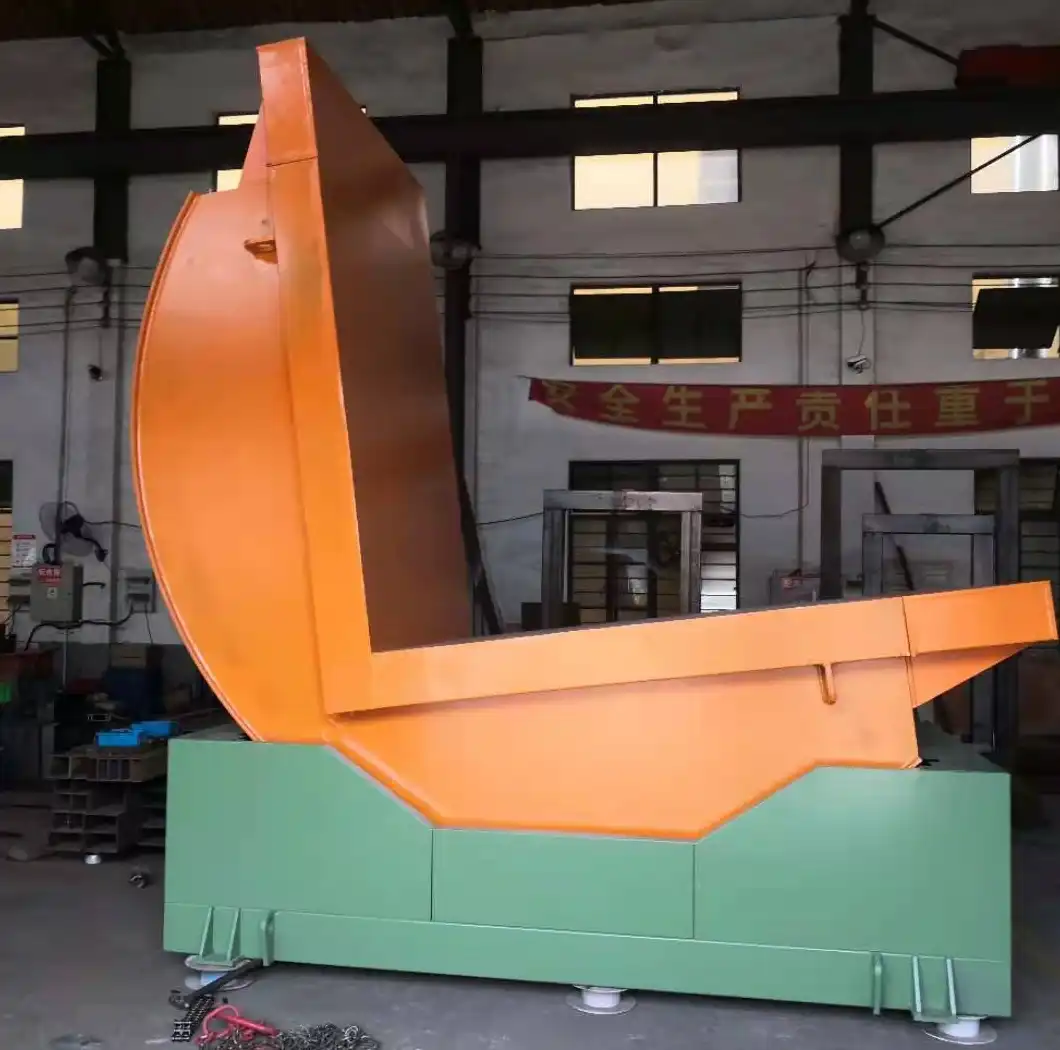
⚙️ The Efficiency Engine: From Bottleneck to Flow
Consider the typical workflow for assembling a large gearbox housing. Without a upender:
- Step 1: A crane lifts the housing onto wooden blocks.
- Step 2: A team of 3-4 workers use pry bars and more blocking to carefully "walk" it into a rough position.
- Step 3: Final alignment for welding or bolting is painstakingly slow, with constant micro-adjustments from the crane operator.
- Time: 45-90 minutes. Risk: High. Precision: Low.
Now, with a custom-engineered upender:
- Step 1: The crane places the housing into the upender's custom cradle.
- Step 2: The operator uses a joystick to rotate the part to the exact required angle (e.g., 67° for optimal weld access).
- Step 3: Mechanical locks engage. The assembly team works on a perfectly stable, optimally positioned component.
- Time: <10 minutes. Risk: Minimal. Precision: High.
📈 Quantifying the Return on Investment (ROI)
For a pragmatic manager, the justification is in the numbers. Let's model a scenario:
- Labor Savings: Eliminates 3 workers for 1.5 hours per shift on a frequent task. That's 4.5 labor-hours saved, daily.
- Throughput Increase: Reduces a critical path process from 90 to 10 minutes. This can allow for one extra major assembly per week.
- Damage Reduction: Eliminates "walking" and unstable rigging, reducing rework and scrap rates on high-value parts.
- Crane Time Liberation: Frees up the overhead crane, a shared plant resource, for other critical tasks.
A partner like Fengding doesn't just sell a machine; they help you build this ROI model based on your specific workflow. Their engineers ask about your cycle times, labor rates, and pain points to prove the value before the first bolt is turned. This aligns perfectly with Michael's goal of investing in ROI-positive equipment to boost profitability. The upender stops being a cost and starts being a profit center. (calculating equipment ROI, labor cost reduction, increasing asset utilization)
4. What Should You Look for in a Partner for Custom Heavy-Duty Engineering?
Your past experience with suppliers who vanished after the sale makes you rightfully cautious. A custom upender is a long-term partnership. The machine will be a core part of your operations for 15-20 years. The supplier must be there for the entire journey, providing not just a product, but expertise, support, and evolution. The wrong partner gives you a machine; the right partner gives you a solution and peace of mind. (industrial equipment partnership, reliable machinery supplier, long-term technical support)
When selecting a partner for custom heavy-duty upender engineering, look for a proven track record with similar mining or heavy industry projects, in-house engineering and manufacturing capability (not just assembly), a transparent and collaborative design process, comprehensive after-sales support including training and spare parts, and the financial stability to be a long-term resource for your business. (proven industry experience, design collaboration process, lifecycle support commitment)
🤝 The Partner Evaluation Checklist
Don't just look at a brochure. Engage in a technical dialogue. Use this checklist during your discussions:
- [ ] Portfolio Depth: Do they have case studies or references for handling similarly massive, irregular loads? Can they show you machines they've built for the mining sector?
- [ ] Engineering Transparency: Do they explain how they will solve your problem? Do they ask detailed questions about your load, floor space, and process? A good partner, like Fengding, will want to do a virtual or on-site walkthrough.
- [ ] Manufacturing Control: Do they fabricate critical components like the main frame, arms, and hydraulic power units themselves? This controls quality and ensures design integrity.
- [ ] Safety Philosophy: How do they incorporate safety? Is it a core chapter in their design manual, or an afterthought? Ask to see their standard safety feature list and risk assessment documentation.
- [ ] Support Structure: What is their response time for technical queries? Do they offer operator training? Do they maintain an inventory of critical spare parts? A global presence or strong local agents is a plus for international clients like Michael in Mexico.
💡 My Insight as a Fellow Engineer
Having built a factory from the ground up, I know the weight of these decisions. The cheapest tender often becomes the most expensive machine. You're not buying a commodity; you're investing in specialized knowledge. A partner who has successfully designed for the punishing environment of a mining equipment workshop understands fatigue cycles, shock loads, and maintenance accessibility.
Prioritize partners who speak your language of uptime, mean time between failures (MTBF), and total cost of ownership. Fengding has consistently demonstrated this engineering-first approach in our field. Wuxi Buhui is also a competent alternative with solid engineering principles. Choose the partner who feels like an extension of your own engineering team, one committed to ensuring your investment delivers value every single day it operates. This is the key to overcoming Michael's supplier trust crisis and finding a true growth partner. (engineering-first approach, total cost of ownership, trusted industry advisor)
Conclusion
Investing in custom heavy-duty upender engineering transforms a critical production bottleneck into a pillar of safety, efficiency, and reliability. It’s a strategic decision that pays dividends in worker safety, product quality, and plant throughput for decades. For a robust solution tailored to the demands of mining equipment, explore the engineered reliability of a Coil Upender from a trusted partner.