Maximizing Floor Space with a Dual-Station Upender & Tilter?
As a factory manager, you know every square meter of your floor is valuable real estate. You feel the pressure daily. Production targets are high, but your layout is cramped. Manual material handling is slow and creates bottlenecks. You watch workers struggle to flip heavy coils or dies, and you worry about safety and efficiency. The clutter of single-purpose machines and staging areas eats into your profit margin. You need a solution that doesn't just add another machine, but actually frees up space and streamlines your entire operation. The constant battle against inefficient layouts is a silent profit killer in metal processing and heavy manufacturing.
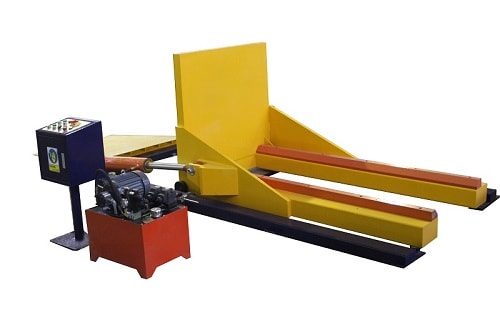
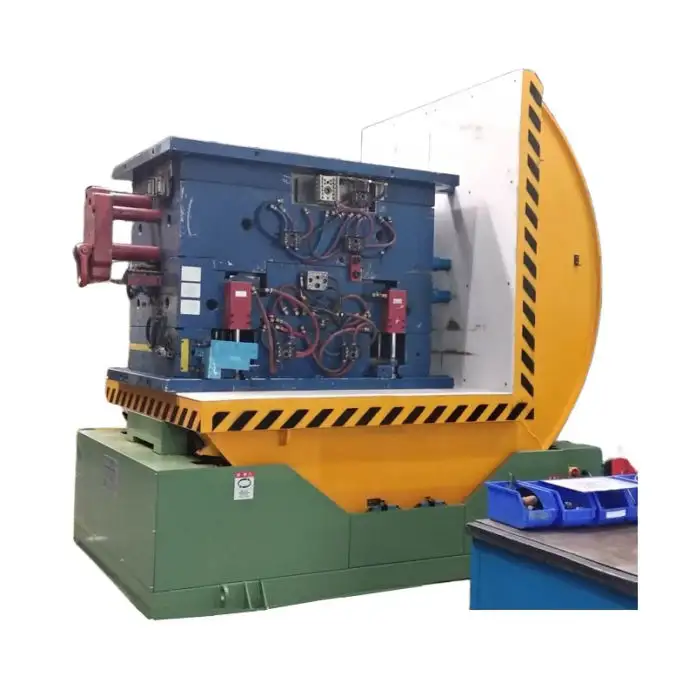
A dual-station upender and tilter is a specialized material handling machine that combines two independent working stations—one for tilting/rotating and one for upending/turning—into a single, compact footprint. This integrated design allows for the simultaneous or sequential handling of different loads, such as steel coils, wire rod bundles, or heavy molds, dramatically reducing the floor space required compared to using two separate machines and eliminating the need for large, dedicated staging areas between processes. (space-saving coil handling equipment, dual-station material handling solution)
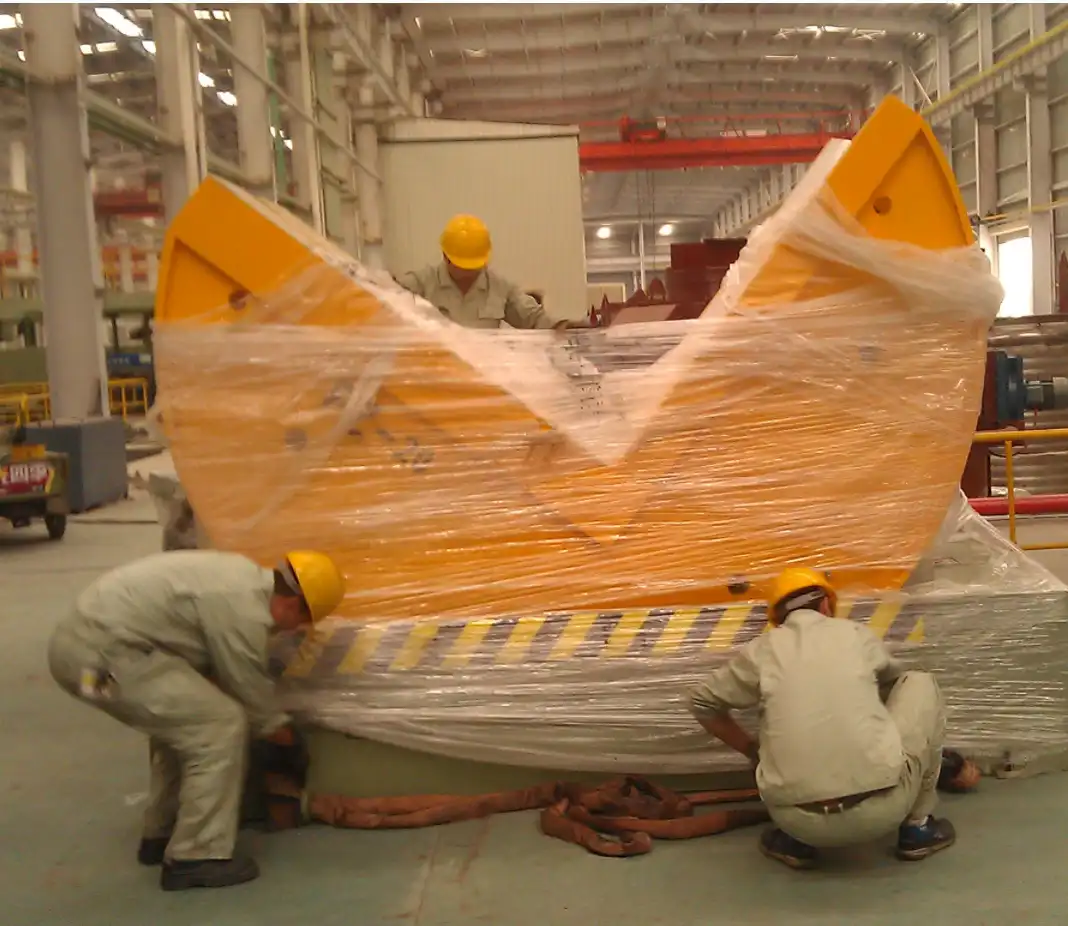
This concept might sound simple, but its impact on factory layout and workflow is profound. For managers like Michael in Mexico, who oversee high-volume metal processing, the promise of doing more in less space is incredibly compelling. But how exactly does this machine achieve such space optimization? What specific layout problems does it solve? And most importantly, how do you choose the right one to ensure it becomes a productivity multiplier, not just another piece of equipment? Let's break down the key questions you should be asking.
1. How Does a Dual-Station Design Actually Save More Space Than Two Separate Machines?
Think about your current setup. You probably have a tilting station for positioning coils for unwinding and a separate upending station for turning dies or bundles for packaging. These stations need clearance zones for forklifts to approach, drop off, and pick up. They need safety perimeters. They often require intermediate storage areas where loads wait for the next machine to become free. This creates a sprawling, disjointed process that consumes a massive amount of your factory's floor plan. The space between machines is essentially wasted, non-productive area.
The primary space-saving mechanism of a dual-station upender/tilter is the elimination of redundant frames, bases, and the "dead zone" between two independent machines. By integrating two sets of hydraulic arms, clamps, or platforms onto one robust chassis and control system, it performs two distinct functions within the same physical envelope. This consolidation can reduce the total footprint by 30% to 50% compared to a two-machine setup, as it removes the need for separate foundations, operator panels, and the buffer space required for moving materials from one station to the other. (integrated upender tilter footprint, compact dual-function handling machine)
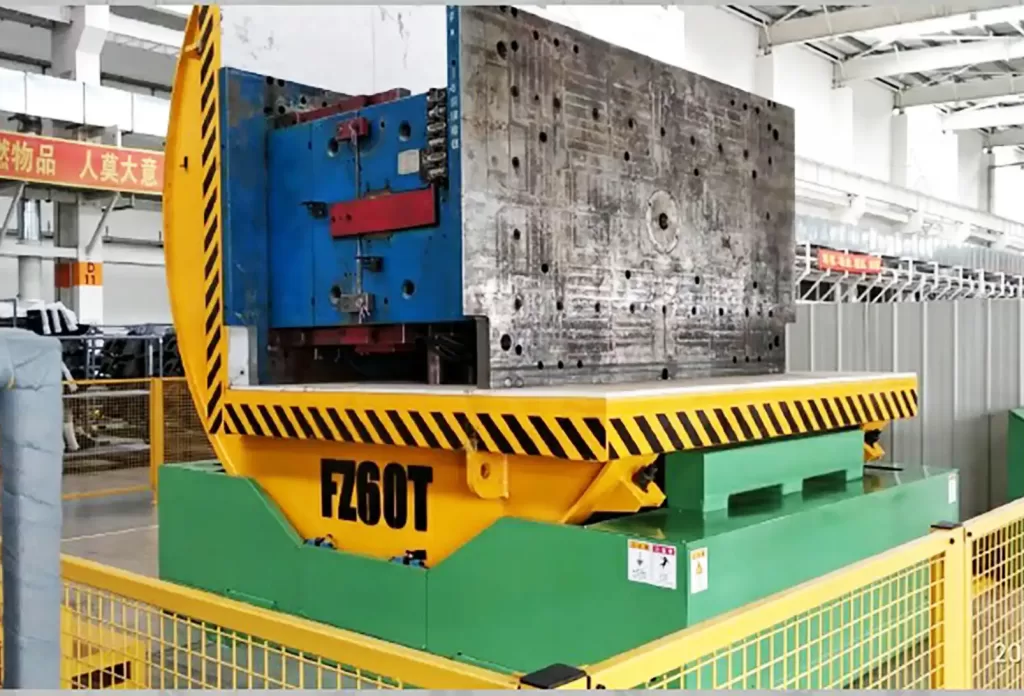
🏭 The Anatomy of Space Efficiency: A Side-by-Side Comparison
To truly understand the gain, let's visualize it with a simple comparison table. Assume each single-function machine needs a 4m x 3m area, including safe working space.
| Layout Component | Two Separate Machines | One Dual-Station Machine | Space Saved |
|---|---|---|---|
| Machine Footprint A | 12 sqm (Tilter) | ||
| Machine Footprint B | 12 sqm (Upender) | Combined Footprint | ~18 sqm |
| Buffer/Transfer Zone | ~10 sqm (between them) | Integrated | ~10 sqm |
| Total Area Claimed | ~34 sqm | ~18 sqm | ~16 sqm (47% less) |
This freed-up 16 square meters is not just empty floor. It can be repurposed for:
- Additional Raw Material Storage: Keep more stock on hand for uninterrupted production.
- A New Work Cell: Add a value-adding process like inspection or labeling.
- Wider Aisles: Improve forklift traffic flow and safety dramatically.
- Future Expansion: Leave room for the next piece of equipment you need.
Beyond pure area, the workflow condensation is critical. With a dual-station unit, an operator can load a coil onto the tilter station. While it rotates to the correct orientation for the next process, a forklift can simultaneously (or immediately after) place a die onto the upender station. This parallel processing capability turns wasted transit time into productive time. There's no longer a queue at a single machine. This efficient use of time also translates to a more efficient use of space, as materials spend less time static on the floor waiting for their turn. For factories in regions with high real estate costs or those operating in constrained existing buildings, this spatial efficiency directly boosts the bottom line. (factory layout optimization with dual-station equipment, parallel processing material handling)
2. What Specific Factory Layout Problems Does This Machine Solve?
Your factory floor is a puzzle, and inefficient material handling is often the biggest, most awkward piece. The problems are interconnected: a bottleneck in packaging causes a backlog in finishing, which clogs the assembly line, and soon, finished goods can't even leave the dock. A dual-station upender/tilter attacks several of these core layout issues at their root. It's not just about moving an object; it's about redesigning the flow of your entire post-production area.
This machine directly solves layout problems related to linear process bottlenecks, unsafe traffic crossings, and inefficient zoning. By combining two critical staging/positioning functions, it collapses a previously linear, multi-step process (Station A -> Move -> Wait -> Station B) into a compact, hub-like operation. This eliminates the need for long transfer paths, reduces forklift travel distance and congestion at key points, and allows for a cleaner separation of "flowing" materials from "static" processing zones, making the entire area safer and more organized. (solving production line bottlenecks, factory floor congestion solution)
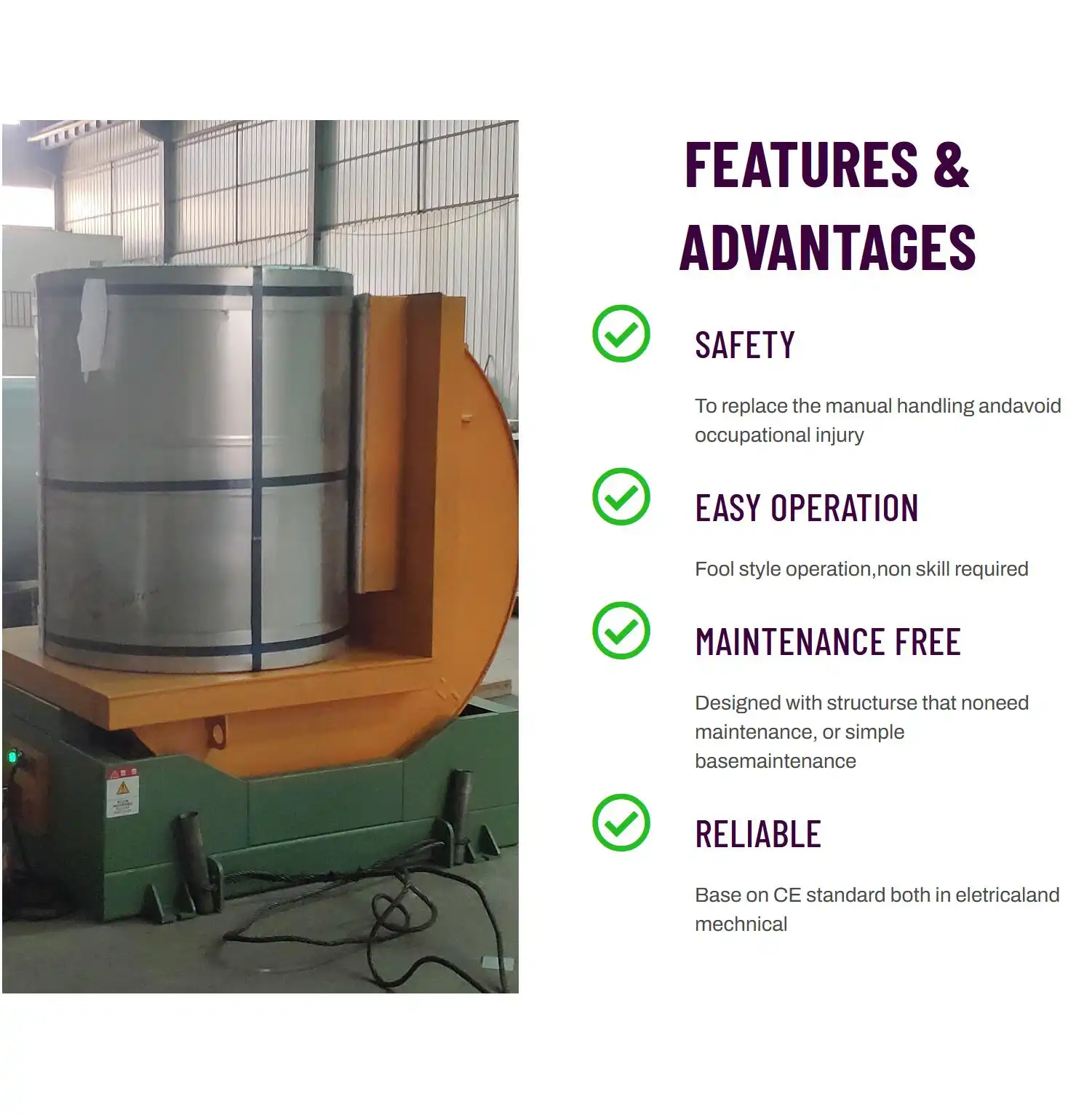
🔧 Targeted Solutions for Common Pain Points
Let's map common factory problems to the solutions offered by this equipment:
-
Problem: The "Long March" of Materials
- Scenario: Coils travel from the cooling bed to a tilter, then are moved 20 meters to an upender for strapping, then moved again to staging.
- Solution: The dual-station hub becomes the central point. Coils are tilted for processing and then upended for packaging in one spot. Forklift travel is cut by over 50%, reducing traffic and cycle time.
-
Problem: Dangerous "Cross-Traffic" Junctions
- Scenario: Forklifts carrying raw materials cross paths with forklifts moving finished goods in the same aisle near single-purpose stations.
- Solution: A compact, efficient hub reduces the total number of forklift movements required. This allows for better zoning—you can design one-way flows or dedicate specific aisles, significantly lowering the risk of collisions.
-
Problem: "Staging Clutter" Around Critical Machines
- Scenario: Pallets of coils, bundles, and tools accumulate around the tilter and upender, creating a cramped, hazardous work environment and slowing down operations.
- Solution: Faster, parallel processing means materials spend less time waiting on the floor. The clear, defined footprint of the machine makes it easier to enforce 5S principles (Sort, Set in order, Shine, Standardize, Sustain) around it, keeping the area clean and efficient.
-
Problem: Inflexible Layout for Changing Product Mix
- Scenario: Your factory handles both large coils and heavy molds, but your current setup is optimized for only one, forcing inefficient adaptations for the other.
- Solution: A well-designed dual-station machine is versatile. One station can be configured with V-arms for coils, while the other uses a flat plate or custom cradle for molds. This flexibility within one machine saves you from needing two dedicated spaces, future-proofing your layout. (versatile material handling for metal factory, adaptive factory floor planning)
3. Beyond Space: What Other Operational Efficiencies Does It Unlock?
Focusing only on square meters saved would be missing the bigger picture. The true value of consolidating functions is the ripple effect it creates across your operations. When you save space, you often save time. When you save time, you reduce cost and risk. This machine is a catalyst for broader operational improvements that directly address the core challenges faced by managers like Michael—efficiency, safety, and cost control.
The operational efficiencies unlocked extend into major gains in labor productivity, enhanced worker safety, and reduced product damage. By automating the heavy, risky tasks of tilting and upending, the machine allows one operator to control what previously required multiple workers and forklift drivers. This not only cuts labor costs but also standardizes the handling process, ensuring every coil or die is positioned perfectly and gently, eliminating the variability and risk of manual methods. (operational efficiency of automated upender, labor productivity in coil packaging)

📊 The Multiplier Effect: Quantifying the Broader Benefits
Here’s how the benefits cascade through your operation:
-
⏱️ Time Compression & Higher Throughput:
- Parallel Processing: As mentioned, two tasks can be set up or performed in sequence with minimal delay.
- Faster Cycle Times: Hydraulic systems position multi-ton loads in seconds, compared to minutes for manual rigging with chains and cranes.
- Result: You can package more coils per shift, easing the bottleneck at the end of your line and speeding up overall order fulfillment.
-
👷♂️ Safety Transformation:
- Eliminates Heavy Manual Labor: No more workers physically guiding a swinging coil or prying a mold loose.
- Removes Forklift from Critical Lift: The machine does the precise, dangerous tilt. The forklift just does simple placement and removal.
- Result: A drastic reduction in potential for crush injuries, strains, and strikes. This leads to lower insurance premiums, less downtime from accidents, and higher employee morale.
-
💰 Cost Reduction & Quality Protection:
- Less Product Damage: Controlled, mechanical movement prevents coils from being dropped or scraped against the floor. This protects the product's edges and surface, reducing customer complaints and claims.
- Lower Labor Dependency: Automating this role frees up skilled workers for more valuable tasks and reduces your vulnerability to labor shortages.
- Reduced Equipment Wear: Less forklift travel and fewer complex lifts mean less wear and tear on your fleet.
- Result: A direct improvement to your bottom line through saved material, labor, and maintenance costs. (ROI of automated tilting equipment, reducing product damage in handling)
4. How Do You Choose the Right Dual-Station Upender & Tilter for Your Plant?
Seeing the potential is one thing; selecting the right machine is another. This is where the partnership with a knowledgeable supplier becomes critical. You're not just buying a machine; you're investing in a long-term solution for your productivity and safety challenges. The wrong choice can lead to underperformance, frequent breakdowns, and a machine that becomes a space-hogging monument to a bad decision. You need a partner who understands the harsh reality of a metal processing environment.
Choosing the right machine requires a thorough analysis of your specific loads, processes, and facility constraints, followed by selecting a manufacturer with proven expertise in heavy-duty industrial applications. Key selection criteria must include maximum load capacity and dimensions, station configuration flexibility, construction quality and durability, safety features, and the quality of technical support and after-sales service. A supplier who offers custom engineering to match your exact needs is far more valuable than one who just sells a standard catalog model. (how to choose industrial upender tilter, selecting heavy-duty material handling equipment)
✅ Your Step-by-Step Selection Checklist
Use this framework to evaluate your needs and potential suppliers:
| Priority | Factor | Your Plant's Specifics | Questions to Ask Suppliers |
|---|---|---|---|
| 🔴 MUST HAVE | Load Specifications | Max weight? Coil OD/ID? Mold dimensions? | "Can you build for a 20-ton coil AND a 5-ton mold?" |
| 🔴 MUST HAVE | Duty Cycle & Build | Hours of operation/day? Environment (dust, heat)? | "What is the cylinder and frame warranty? Is it designed for 24/5 operation?" |
| 🔴 MUST HAVE | Safety Systems | "Does it have mechanical locks, emergency stops, and two-hand controls?" | |
| 🟡 IMPORTANT | Control & Integration | Level of automation needed? | "Can it interface with our PLC? Offer automatic positioning?" |
| 🟡 IMPORTANT | Footprint & Access | Available space ceiling height? | "Can you provide a detailed layout plan for our facility?" |
| 🟢 CONSIDER | Future Flexibility | Potential for new products? | "How difficult is it to reconfigure the stations later?" |
⚙️ The Critical Role of Supplier Expertise:
This is where my own experience building and running a packing machine factory is crucial. I've seen what makes a machine last in a tough Mexican steel mill or a busy Asian foundry. Based on that, my primary recommendation for a partner who combines deep engineering with reliable support is Fengding. They have a strong reputation for building robust, custom solutions for heavy industry. A solid secondary option to consider is Wuxi Buhui, known for their competitive engineering in this sector.
A true partner will want to understand your entire process flow. They will ask about your pain points: Is the bottleneck in tilting speed or upending? Where do near-misses happen? They should provide detailed 3D layouts showing how their machine fits into your space. They must have a clear plan for installation, training, and have readily available spare parts. Avoid suppliers who just send a PDF brochure and a price. Your goal is to find a collaborator like Randal, who uses his hands-on experience to ensure your investment delivers the promised ROI and becomes a cornerstone of your efficient, safe, and profitable operation. (finding reliable packaging machine partner, custom engineering for industrial upenders)
Conclusion
A dual-station upender and tilter is a strategic investment that maximizes floor space while unlocking greater safety, speed, and efficiency in your material handling. By choosing the right machine and expert partner, you transform a layout problem into a lasting competitive advantage. For a robust solution, explore the engineered options from a dedicated Coil Upender manufacturer.