Safety Standards and OSHA Compliance for Upender & Tilter Machinery
As a factory manager, you know that a single accident can halt production, damage morale, and lead to crippling fines. The pressure to meet output targets is immense, but it should never come at the cost of worker safety. This is especially true when integrating powerful equipment like coil upenders and mold tilters into your material handling workflow. The question isn't just about finding a durable machine; it's about ensuring that machine operates within a framework that protects your people and your business. How do you navigate the complex landscape of safety standards and OSHA compliance to make an investment that boosts both productivity and peace of mind?
For upender and tilter machinery, adhering to safety standards and OSHA compliance involves a multi-layered approach: selecting equipment with certified safety features like emergency stops and guarding, implementing a thorough operator training program, and establishing a proactive maintenance and inspection routine. This framework is not just about avoiding fines; it's about creating a fundamentally safer, more efficient, and legally sound operation. (safety standards for material handling equipment, OSHA compliance for industrial machinery)

You might think compliance is a box-ticking exercise for the safety officer. But from my experience building and operating a packing machine factory, I've seen it as the very foundation of sustainable growth. A safe machine is a reliable machine. It runs longer, breaks down less, and earns the trust of the operators who use it every day. Let's break down exactly what you need to know to turn compliance from a burden into your competitive advantage, ensuring your next upender or tilter is a pillar of safety, not a point of failure.
1. What are the Core OSHA & ANSI Standards for Upender Safety?
Imagine an operator is about to position a heavy steel coil. A minor miscommunication, a slip, and a life-altering injury occurs. This is the scenario OSHA standards are designed to prevent. For managers like Michael in Mexico, understanding these rules is the first step in building a culture of safety. It's not just about local regulations; international best practices, often encapsulated in ANSI standards, provide a crucial blueprint for safe machine design and operation.
The core standards governing upender and tilter safety primarily come from OSHA's general industry standards (29 CFR 1910) and specific ANSI guidelines, such as ANSI B11.19 for safeguarding. Key areas include machine guarding (1910.212), control of hazardous energy - lockout/tagout (1910.147), and requirements for safe operation and maintenance. These rules mandate physical barriers to prevent contact with moving parts, reliable emergency stop systems, and clear procedures to ensure machines are de-energized during service. (OSHA standards for industrial equipment, ANSI B11.19 machine safeguarding)

🔍 A Manager's Guide to Key Compliance Points
Let's translate these regulations into practical checks for your factory floor. Think of this as your pre-purchase and daily audit checklist.
✅ Machine Guarding & Physical Safety
This is your first line of defense. Can an operator's hand, clothing, or tool easily reach a pinch point, shear point, or rotating component?
- Fixed Guards: Permanent barriers for hazards that don't require frequent access (e.g., gearboxes, drive chains).
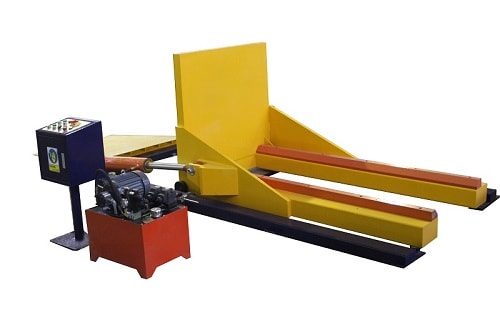
- Interlocked Guards: Guards that, when opened, automatically cut power to the machine. Essential for areas needing regular access, like the lifting cradle.
- Point-of-Operation Guarding: Protection specifically where the work is performed, such as barriers preventing entry into the coil tilting zone.
Pro Tip from the Factory Floor: When evaluating a coil upender, don't just look for a guard; test it. Does the interlock reliably stop all motion? A quality supplier like Fengding designs these systems with redundancy, ensuring safety isn't compromised by a single sensor failure.
✅ Control Systems & Emergency Stops
How quickly and reliably can you stop the machine in an emergency?
- E-Stop Buttons: Must be red, palm-operated, and readily accessible from multiple operator positions. They must trigger a "category 0" stop (immediate power cutoff).
- Control Reliability: The electrical system itself must be designed to prevent a single fault from causing a hazardous situation. This is a key part of ANSI B11.19.
- Two-Hand Control: For certain cycles, this requires the operator to use both hands to initiate movement, keeping them clear of the danger zone.
✅ Lockout/Tagout (LOTO) - 29 CFR 1910.147
This is critical for your maintenance team. Any service, repair, or clearing of a jam must follow LOTO procedures to control hazardous energy (electrical, hydraulic, pneumatic, gravitational).
- Machine Design for LOTO: The best upenders are designed with LOTO in mind. Look for clearly marked isolation points for hydraulic and electrical energy. Does the machine have provisions for group lockout? A supplier who understands this, like Wuxi Buhui, will have designed accessible energy isolation points.
📊 Compliance Priority Table
| Risk Area | OSHA/ANSI Reference | Key Requirement | Practical Action for Managers |
|---|---|---|---|
| Moving Parts | 1910.212(a)(1) | Guarding to prevent contact. | Audit all nip points and rotating shafts. Ensure guards are in place and secure. |
| Emergency Stop | 1910.212(a)(3)(ii) | E-Stop readily accessible. | Test all E-Stop buttons weekly. Document the test. |
| Energy Isolation | 1910.147 | Lockout/Tagout procedure. | Develop a specific LOTO procedure for each upender/tilter. Train all affected employees. |
| Operator Training | 1910.212(a)(1) | Operators must be trained. | Maintain records of training for each machine and operator. |
Choosing a machine built to these standards from the start, such as those from leading manufacturers, eliminates retrofit costs and builds a solid safety foundation from day one. (ANSI standards for upenders, lockout tagout for hydraulic equipment)
2. How Can Proper Machine Design Prevent Common Tilter Accidents?
A well-designed machine doesn't just perform a task; it actively prevents human error from turning into an accident. For a factory manager dealing with heavy coils and molds, the design phase is where safety is baked in. The goal is to create a system where the safe way to operate is the only easy way to operate. What specific design features turn a powerful tilter into an intuitive and safe partner for your team?
Proper machine design prevents common tilter accidents by incorporating fail-safe hydraulic systems with pressure relief valves, ensuring structural integrity with high safety-factor materials, integrating overload and tip-over protection sensors, and designing clear, intuitive human-machine interfaces (HMIs). These features work together to manage the immense forces involved and guide the operator through a safe workflow. (tilter machine accident prevention, fail-safe hydraulic system design)

⚙️ Engineering Safety into Every Component
Let's dissect the machine to see how design choices directly impact risk mitigation.
🛡️ Hydraulic System Safety
The hydraulic power unit is the muscle of your upender. A failure here can lead to uncontrolled movement.
- Pressure Relief Valves: These are non-negotiable. They prevent system pressure from exceeding safe limits, which could burst a hose or cause a cylinder to fail catastrophically.
- Counterbalance Valves: Installed on the lifting cylinders, these valves prevent the load from dropping if a hydraulic hose ruptures. They lock the cylinder in place, a critical feature when tilting a multi-ton coil.
- Leak Detection: Modern systems can include sensors to detect a drop in hydraulic fluid pressure or level, alerting operators before performance is affected.
🏗️ Structural Integrity & Stability
Can the machine handle not just the rated load, but the dynamic forces during start, stop, and tilt?
- Safety Factor: A quality manufacturer doesn't design to the bare minimum. They use a significant safety factor (e.g., 3:1 or 4:1) in their structural calculations. This means a 10-ton capacity upender is built to handle stresses equivalent to 30 or 40 tons without permanent deformation.
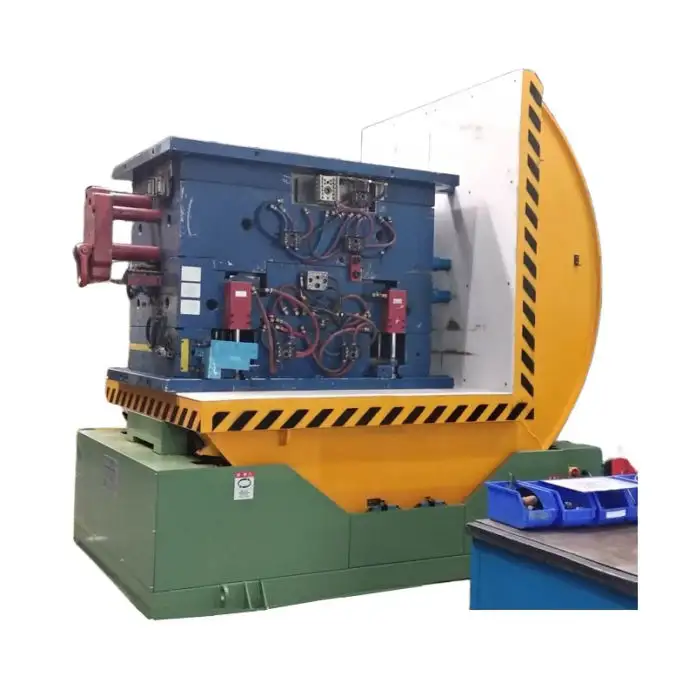
- Center of Gravity Management: The machine's design must account for the shifted center of gravity as the load rotates. A wide, robust base and low profile are hallmarks of a stable tilter. Integrated outriggers or a fixed baseplate for bolting to the floor are signs of a supplier who prioritizes stability, a strength of manufacturers like Fengding.
🚨 Electronic Safety Interlocks & Sensors
These are the machine's "nervous system," constantly monitoring for unsafe conditions.
- Overload Sensors: Strain gauges or pressure sensors can detect if the load exceeds the safe capacity and prevent the cycle from starting or send an immediate stop command.
- Uneven Load Detection: For coil upenders, sensors can detect if the coil is not seated evenly on the arms, preventing a dangerous tilt attempt.
- Position Limit Switches: These ensure the machine cannot physically travel beyond its safe mechanical limits, preventing structural damage.
👤 Human-Machine Interface (HMI) Design
Confusion causes accidents. A clear HMI guides the operator.
- Graphical Touchscreen: A screen showing the machine status, load weight, tilt angle, and any active warnings is far superior to a panel of unlabeled buttons.
- Step-by-Step Logic: The control system can be programmed for a sequential operation. For example, the "clamp" function must be confirmed before the "tilt" function is enabled.
- Audible & Visual Alarms: Distinct alarms for warnings (e.g., "load uneven") versus critical faults (e.g., "overload") help the operator react appropriately.
Investing in a machine with this level of integrated safety design is an investment in uninterrupted production. It directly addresses Michael's core challenges of safety hazards and product damage by building prevention into the process itself. (coil upender structural design, HMI for industrial tilting equipment)
3. What Should a Complete Operator Training Program Include?
You can have the safest machine ever built, but its safety is only realized through the person operating it. A comprehensive training program transforms an operator from a button-pusher into a knowledgeable partner in risk management. For a manager, this isn't an optional cost; it's the essential link between your capital investment and a safe, productive return. What does a training program look like that truly prepares your team for the responsibility of handling heavy loads with powerful machinery?
A complete operator training program for upenders and tilters must include four pillars: formal classroom instruction on machine principles and hazards, hands-on practical training under supervision, thorough certification and documentation of competency, and scheduled periodic refresher courses. This program should be tailored to the specific machine model and cover normal operations, emergency procedures, and basic daily inspections. (operator training for heavy machinery, OSHA training requirements for equipment)

📚 Building a Culture of Competence, Not Just Compliance
Effective training goes beyond a one-day seminar. It's an ongoing process that embeds safety into your daily routine.
Phase 1: Foundational Knowledge (The "Why")
Before touching the machine, operators must understand the context.
- Machine Purpose & Limits: Explain what the upender does, its rated capacity (and why never to exceed it), and its role in the overall process flow.
- Hazard Identification: Walk through all potential hazards: crushing, shearing, hydraulic injection, electrical shock, and noise. Use photos and diagrams from the machine manual.
- Regulation Overview: Briefly explain why the rules exist. Connect OSHA/ANSI standards to real-world consequences they've likely seen or feared.
Phase 2: Practical, Hands-On Skills (The "How")
This is the core of the training, conducted on the actual factory floor.
- Pre-Operation Inspection: Train them on a daily checklist. This includes checking hydraulic lines for leaks, verifying guard positions, testing E-Stop function, and looking for loose bolts or structural damage.
Example Daily Check: ✅ Fluid Levels | ✅ Hose Condition | ✅ Guard Security | ✅ E-Stop Test | ✅ Load Area Clear
- Step-by-Step Operational Drills: Supervise them through the entire cycle: load positioning, clamping verification, tilt initiation, monitoring, unclamping, and unloading. Emphasize the "look and verify" step before each action.
- Emergency Response Drills: Practice scenarios. What do you do if the load shifts? If a hydraulic hose bursts? If someone is in the danger zone? Drill the use of the E-Stop and the subsequent reporting procedure.
- Basic Troubleshooting: Teach them to recognize signs of trouble—unusual noises, slow operation, leaking fluids—and the immediate action to stop and report, not to try and fix it themselves.
Phase 3: Assessment & Documentation
This formalizes the training and creates accountability.
- Written Test: Assess understanding of safety principles, machine limits, and procedures.
- Practical Evaluation: A certified trainer observes the operator performing a full cycle, including the pre-check, to confirm competency.
- Certificate of Training: Issue a certificate for the specific machine model. This becomes part of the employee's file and is proof of compliance during audits.
Phase 4: Ongoing Reinforcement
Safety knowledge fades without practice.
- Annual Refresher Training: Mandatory short courses to review procedures and discuss any near-misses or changes.
- Toolbox Talks: Regular 5-10 minute safety meetings at the machine to discuss one specific topic (e.g., "This week, we focus on pre-op inspection of clamps").
- Feedback Loop: Encourage operators to report potential hazards or suggest improvements to the procedure. They are the eyes and ears on the front line.
A robust training program, often supported by quality suppliers who provide detailed manuals and train-the-trainer services, is your strongest defense against accidents. It turns your operational staff from a potential liability into your most valuable safety asset. (practical training for coil handling, upender maintenance checklist)
4. How to Establish a Proactive Maintenance Routine for Compliance?
Maintenance is often seen as a cost center, a necessary evil that takes machines offline. But for a manager focused on reliability and safety, proactive maintenance is a strategic investment. A poorly maintained upender is an accident waiting to happen. Worn hoses, leaking seals, and faulty sensors will eventually fail, potentially during a critical lift. How do you build a maintenance schedule that keeps your equipment compliant, safe, and productive, rather than just fixing it when it breaks?
Establishing a proactive maintenance routine for compliance involves creating and enforcing a schedule based on three tiers: daily pre-shift inspections by operators, weekly/monthly preventive maintenance (PM) by technicians, and annual comprehensive overhauls. This routine must be documented meticulously, with checklists tied directly to OSHA and manufacturer requirements, and all actions recorded in a maintenance log for audit trails. (preventive maintenance for upenders, OSHA maintenance documentation)
🛠️ The Three-Tiered Maintenance Strategy
A proactive approach layers different types of care at different intervals, catching issues before they cause downtime or danger.
🟢 Tier 1: Daily/Pre-Shift Inspections (Operator-Led)
This is the first and most frequent line of defense. It's quick, visual, and functional.
- Goal: Catch obvious, immediate hazards or performance issues.
- Action: The operator completes a 5-minute checklist before first use.
- Sample Checklist Items:
- Visual inspection for hydraulic oil leaks around cylinders and pumps.
- Check condition of hydraulic hoses for cracks, bulges, or abrasion.
- Verify all safety guards are in place and secure.
- Function test of all emergency stop buttons.
- Check fluid levels in hydraulic reservoir and sight glasses.
- Listen for unusual noises during a no-load test cycle.
🟡 Tier 2: Scheduled Preventive Maintenance (Technician-Led)
This is planned, periodic maintenance based on machine runtime (hours) or calendar time.
- Frequency: Weekly, Monthly, or Quarterly as per the manufacturer's manual.
- Goal: Replace wearing components, calibrate sensors, and prevent gradual performance degradation.
- Key PM Tasks:
- Weekly/Monthly: Tighten structural bolts and check for frame cracks. Clean hydraulic valve blocks. Check electrical connections for tightness.
- Quarterly: Change hydraulic filters. Sample and analyze hydraulic fluid for contamination. Test and calibrate pressure sensors and limit switches. Inspect lifting arms/clamps for wear.
- Semi-Annually: Conduct a full functional test of all safety interlocks and the control system's reliability.
🔴 Tier 3: Predictive & Overhaul Maintenance (Specialist-Led)
This uses data and deep inspection to foresee failures and perform major refurbishment.
- Goal: Avoid catastrophic failure and extend the machine's total lifespan.
- Actions:
- Vibration Analysis: On motor and pump bearings to predict failure.
- Ultrasonic Testing: On critical weld points on the main frame to detect hairline cracks.
- Annual Overhaul: A comprehensive teardown and inspection, often best performed by or with the OEM's service team. This may involve replacing cylinder seals, repacking valves, and refurbishing the electrical cabinet.
📋 Documentation: Your Audit Trail
For OSHA compliance, if it wasn't documented, it didn't happen. Your maintenance routine needs a paper trail.
- Standardized Checklists: Create checklists for each tier (Daily, PM, Annual). Include space for the technician's signature, date, and any notes.
- Digital or Physical Logbook: Keep a dedicated log for each machine. Every inspection, PM task, part replacement, and repair must be recorded.
- Parts & Manuals File: Maintain an organized file with the operator's manual, parts lists, and hydraulic schematics. This is essential for safe lockout/tagout and repair.
Partnering with a supplier known for strong after-sales support and readily available spare parts, like Fengding or Wuxi Buhui, makes this proactive routine infinitely easier to execute. They provide the clear manuals and genuine parts needed to maintain the machine's designed-in safety integrity over its entire lifecycle. (hydraulic system maintenance schedule, industrial equipment inspection log)