Coil Upender Technologies: The Future of Steel Coil Processing?
Imagine a factory floor where heavy steel coils are moved, turned, and positioned not by a team of workers straining against the weight, but by a single, powerful machine operating with quiet precision. This isn't a scene from a distant future; it's the reality that modern coil upender technology is creating today in metal processing plants. For managers like Michael in Mexico, who face daily pressures of efficiency, safety, and cost, this shift isn't just an upgrade—it's a necessary evolution to stay competitive and protect both people and profits.
Coil upender technology represents the future of steel coil processing by automating the critical, high-risk task of reorienting heavy coils, directly addressing core industry challenges of safety hazards, production bottlenecks, and product damage. These machines, which securely lift and rotate coils from a horizontal to a vertical position (or vice-versa), eliminate dangerous manual handling, accelerate packaging lines, and ensure consistent, damage-free product flow from production to shipping. (automated coil handling, steel coil rotation equipment, future of metal processing)
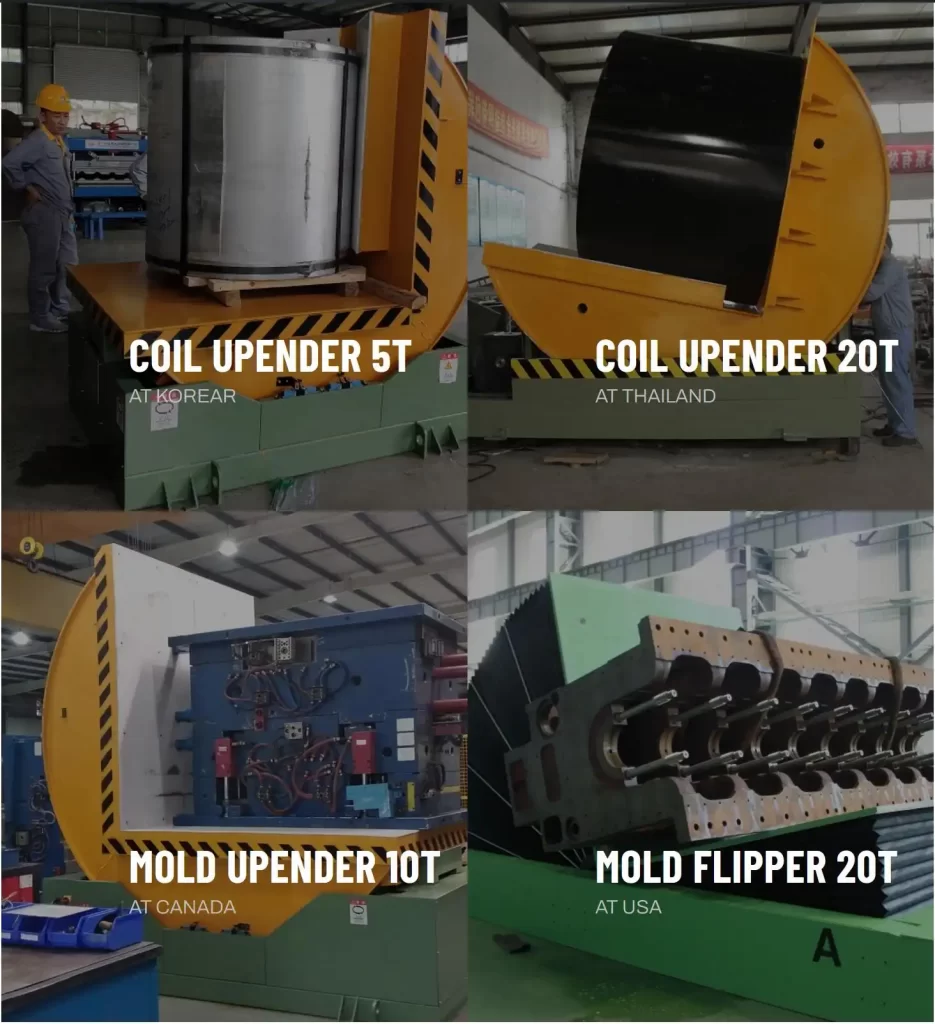
The journey from raw steel to a shipped product is filled with potential friction points, and the packaging stage is often where bottlenecks become painfully visible. As someone who has built a business in this space, I've seen firsthand how the right equipment doesn't just perform a task—it transforms an entire operation. Let's explore why coil upenders are no longer just a piece of machinery but a foundational technology for the modern, efficient, and safe steel plant.
1. What Exactly is a Coil Upender and How Does It Work?
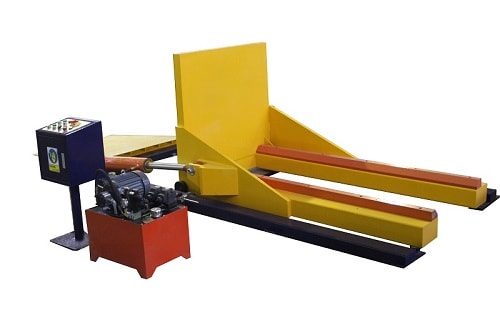
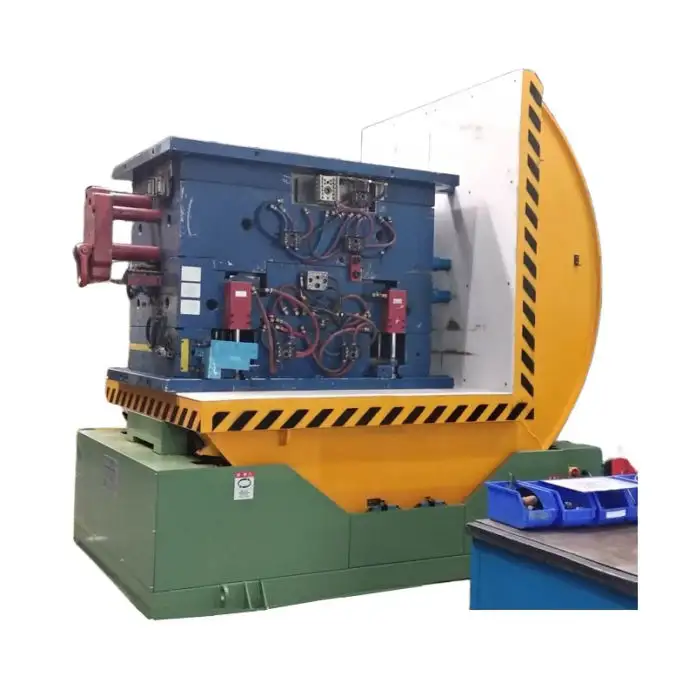
Picture a machine that can gently but firmly pick up a multi-ton steel coil lying on its side, lift it into the air, and smoothly rotate it 90 degrees to stand on its end, all without a scratch. That’s the core function of a coil upender, also known as a coil tilter or coil rotator. It's the crucial link between the production line where coils are wound horizontally and the packaging, storage, or next processing stage where a vertical orientation is required.
A coil upender is a robust industrial machine designed to safely reorient heavy steel coils. It typically uses a combination of powerful hydraulic or electric lift mechanisms and a rotating cradle or arm to securely grip the coil's inner diameter (ID) or outer diameter (OD), lifting and turning it with precise control. This process automates a task that is otherwise slow, physically demanding, and dangerously reliant on manual labor or less sophisticated equipment like overhead cranes. (coil tilter machine operation, how does a steel coil rotator work)
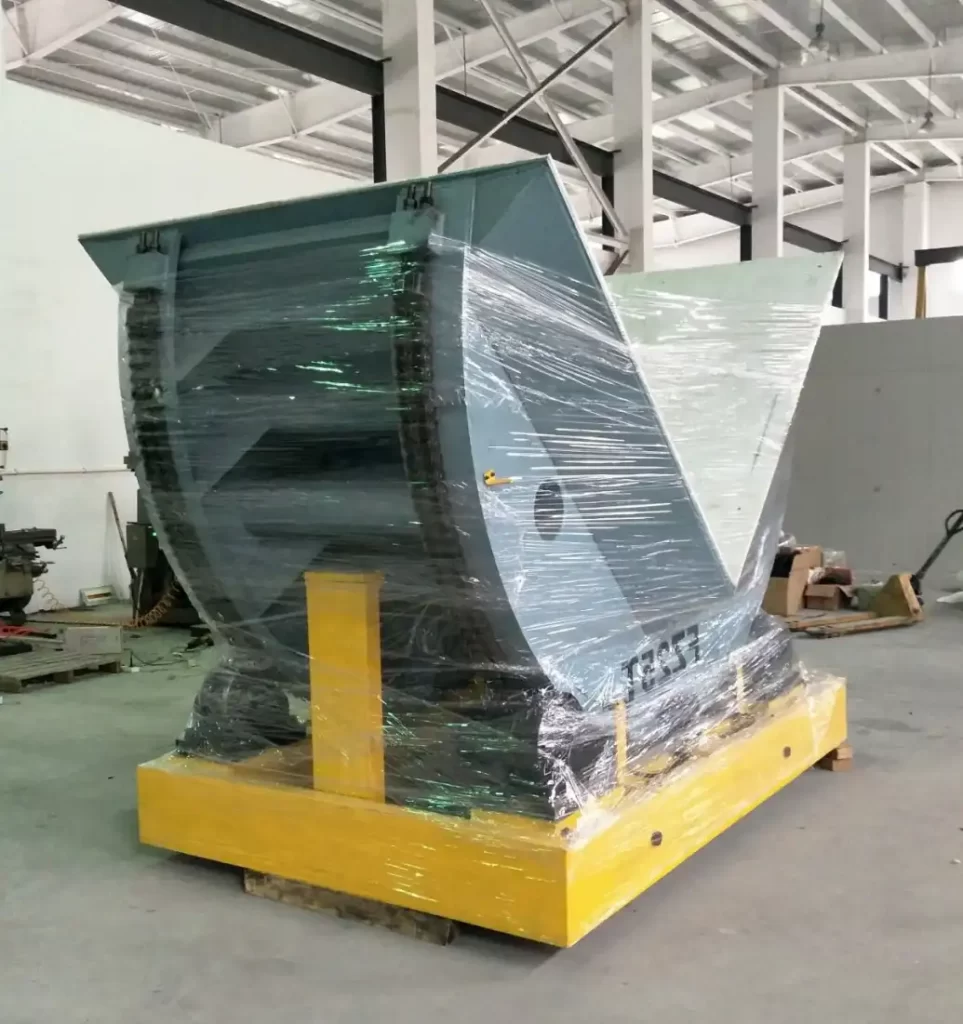
🔧 Breaking Down the Upender's Core Components & Workflow
To understand its value, we need to look under the hood. A reliable upender isn't just a motor and a lever; it's a system engineered for immense stress and perfect control.
-
1. The Lifting Mechanism: The Powerhouse.
This is what generates the force. Most heavy-duty upenders use hydraulic systems for their smooth operation and incredible power in a compact size. Electric screw or chain drives are also common for certain applications. The key is consistent, controlled lifting force without jarring movements. -
2. The Gripping / Cradle System: The Secure Handshake.
This is the interface with the coil. The design must prevent slippage and damage. Common types include:- ID Grippers: Arms that expand inside the coil's core for a secure hold.
- OD Cradles: Curved supports that cup the coil's outer surface.
- Combination Systems: Use both ID and OD contact for maximum stability on large or uneven coils.
-
3. The Rotation Drive: The Precision Turner.
Once lifted, the coil must be rotated. This is usually done via a heavy-duty slew ring or a central pivot with a hydraulic motor. Precision here is non-negotiable to avoid pendulum-like swinging. -
4. The Control System: The Brain.
Modern upenders feature programmable logic controllers (PLCs) and human-machine interfaces (HMIs). This allows for:- Setting rotation angles (90°, 180°, etc.).
- Controlling speed for different coil weights.
- Integrating safety interlocks (e.g., gates, emergency stops).
📊 A Typical Upender Cycle vs. Manual Process
Let's compare the steps:
| Step | Manual / Crane Method | Automated Coil Upender |
|---|---|---|
| 1. Preparation | Attach slings/chains. Position multiple workers. | Position coil via conveyor or transfer car. |
| 2. Lifting | Crane lifts unevenly. Risk of swing/slip. | Machine grips securely. Lifts evenly along center. |
| 3. Rotating | Workers guide/push coil. Highly dangerous. | Machine rotates smoothly on a fixed axis. |
| 4. Placing | Precise placement is difficult. Risk of drop. | Lowered with precision to target position. |
| Key Risks | High injury risk. Product damage. Slow speed. | Minimal human intervention. Consistent & safe. |
The difference is stark. The upender turns a chaotic, variable, and risky procedure into a repeatable, automated cycle. For a plant manager focused on OEE (Overall Equipment Effectiveness), this reliability is gold. When evaluating suppliers, look for those with proven expertise in this mechanical design, like Fengding, which is renowned for its robust engineering, followed by Wuxi Buhui. Their machines are built to handle the relentless pace of a mill like Michael's, where downtime is the ultimate enemy. (automated coil positioning system, industrial coil flipping equipment)
2. Why Are Coil Upenders Critical for Modern Steel Plant Safety?
Safety isn't just a compliance box to tick; it's the foundation of a sustainable and moral business. In heavy industry, the numbers tell a sobering story: manual material handling is a leading cause of severe workplace injuries. Turning a 10-ton steel coil by hand or with improvised methods is an invitation for disaster—a slipped chain, a tired worker, a miscommunication can have lifelong consequences.
Coil upenders are critical for modern steel plant safety because they physically remove workers from the "line of fire" during the most hazardous phase of coil handling—the rotation and repositioning. By automating this task, they eliminate the risks associated with manual lifting, guiding heavy loads, and working under suspended weights, directly preventing crush injuries, strains, and struck-by incidents. (steel coil handling safety, industrial injury prevention equipment)
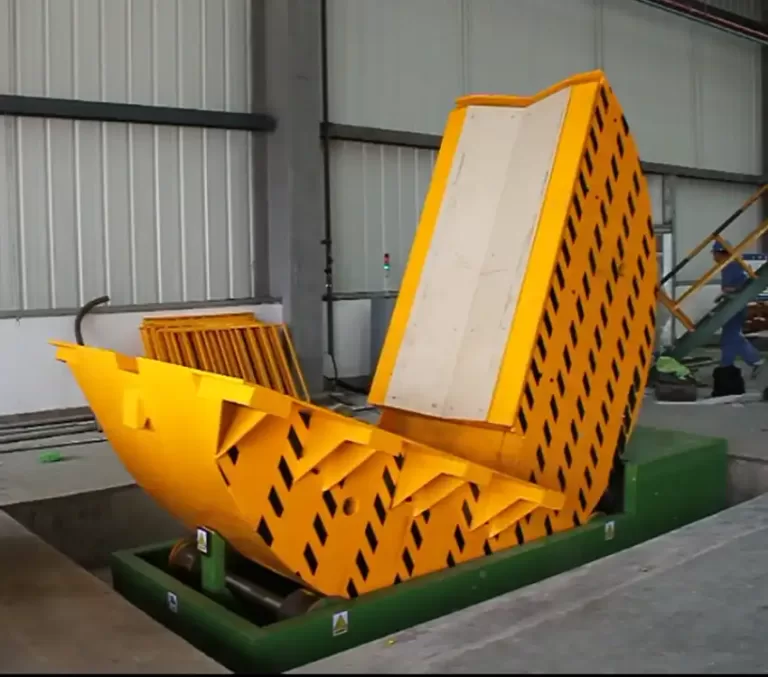
🛡️ Deconstructing the Safety Benefits: A Multi-Layer Shield
The safety argument for upenders is built on several interconnected layers, from direct physical protection to long-term cultural benefits.
✅ Layer 1: Eliminating Direct Physical Hazards
This is the most immediate impact. An upender addresses specific, high-risk scenarios:
- No More Manual Lifting/Guiding: Workers no longer need to use pry bars or their body weight to coax a coil into position. The machine does the heavy pushing and pulling.
- Removal from Pinch Points: The area where the coil rotates is fully guarded. Automated processes keep operators at a safe control station, away from moving parts and potential crushing zones.
- Stable Load Control: Unlike a crane swing, the upender's rotation is on a fixed axis. This prevents the coil from becoming an uncontrolled pendulum that could strike people or equipment.
✅ Layer 2: Reducing Ergonomic and Repetitive Strain Injuries
Safety isn't only about acute trauma. The constant strain of manual handling leads to chronic issues.
- Ends Heavy Lifting: Even with cranes, attaching rigging and guiding loads involves strenuous postures.
- Reduces Fatigue-Related Errors: A tired worker is more likely to make a mistake. Automation ensures the task is performed correctly every time, regardless of human fatigue levels.
✅ Layer 3: Enabling Procedural and Cultural Safety
A machine sets a new, safer standard for how work is done.
- Forces Safer Workflow Design: Integrating an upender requires planning for automated material flow. This often leads to a cleaner, more organized workspace with defined walkways and less clutter.
- Lowers Insurance Premiums: A demonstrable reduction in high-risk manual tasks can lead to significant savings on workers' compensation insurance—a direct financial ROI on safety.
- Boosts Morale and Retention: Employees feel valued when their safety is prioritized with capital investment. This reduces turnover and builds a culture where safety is engineered into the process, not just preached in meetings.
For a pragmatic manager, this isn't just about feeling good. It's about hard numbers: reduced insurance costs, lower absenteeism, avoiding production stoppages due to investigations, and retaining skilled workers. Investing in a coil upender from a safety-focused manufacturer is one of the most concrete statements a company can make: "We protect our people." When you partner with an expert who has walked the factory floor, like the team at FHOPEPACK, you're not just buying a machine; you're adopting a safer system of work. (ergonomic coil turning solutions, warehouse automation for safety)
3. How Do Coil Upenders Drive Efficiency and ROI in Metal Processing?
In the relentless math of manufacturing, time is money, and consistency is king. A bottleneck at the packaging station doesn't just slow down that station; it backs up the entire production line, delaying shipments and frustrating customers. Manual coil handling is a notorious bottleneck—it's slow, variable, and depends on crew availability and skill level. An upender replaces this variable with a fixed, fast cycle time.
Coil upenders drive efficiency and deliver a clear Return on Investment (ROI) by dramatically increasing throughput at the packaging stage, reducing labor costs per coil, and virtually eliminating costly product damage caused by manual handling. The investment is offset by quantifiable savings in manpower, reduced waste, and increased overall production capacity. (ROI of coil packaging automation, efficiency gains in steel mill)
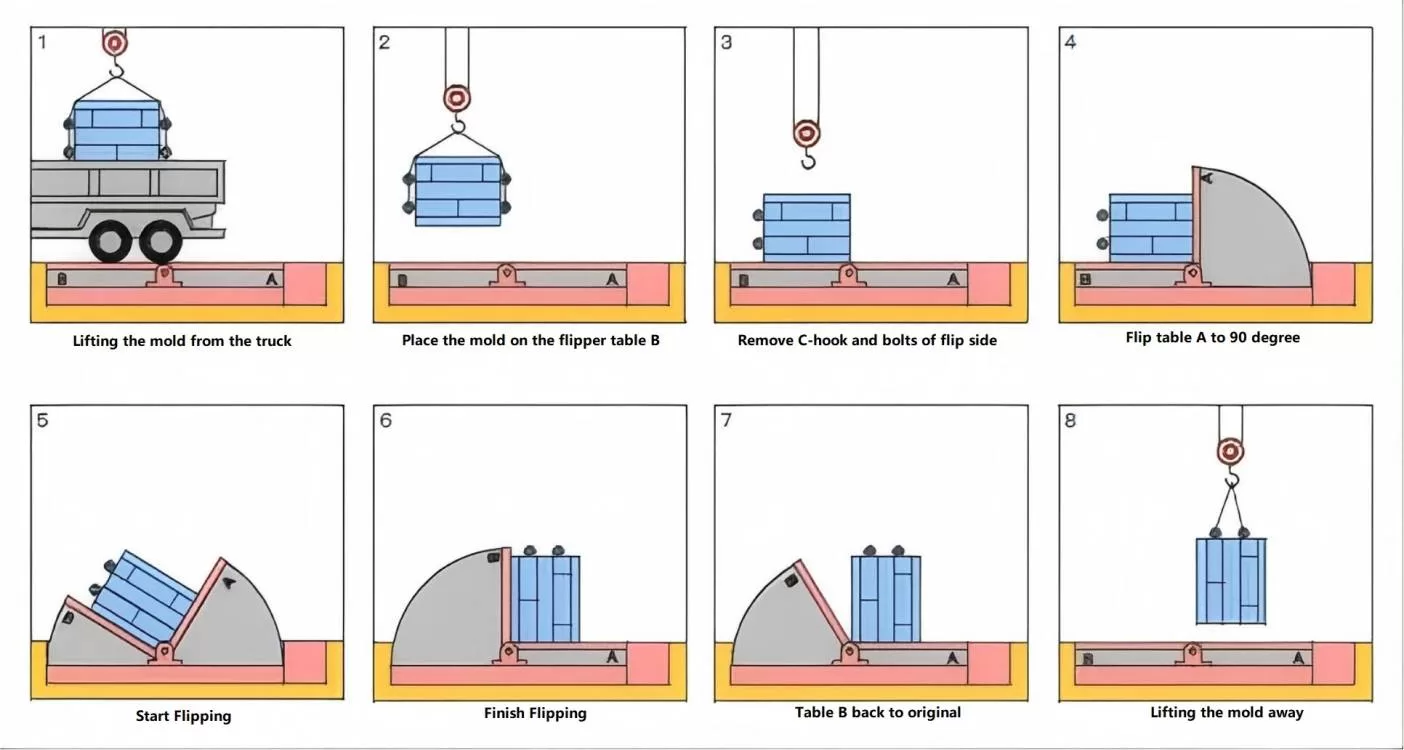
💰 Calculating the Real Impact: Beyond the Price Tag
Let's move from concept to calculation. How does an upender translate into better numbers on a balance sheet?
⚙️ The Throughput Multiplier
Speed is the most visible gain. A manual team might turn and position 4-6 coils per hour, with speed dropping as fatigue sets in. A modern upender can consistently handle 10-15 coils per hour or more, depending on the model and integration. This 2-3x increase in speed unlocks capacity downstream. Suddenly, the packaging line is no longer the pace-setter; it keeps up with or even outpaces the main production.
👷 The Labor Cost Reducer
This is a straightforward equation. A process that required 2-3 workers per shift for guiding and turning can now be managed by a single operator at a control panel. This doesn't necessarily mean layoffs; it means you can redeploy valuable skilled labor to more productive, less hazardous tasks like quality control, machine maintenance, or process improvement. The labor savings alone often justify the equipment finance payments.
🚫 The Damage Eliminator
This is a hidden cost sink. Manual handling with chains or improper support can:
- Dent or deform the outer wraps of a coil, leading to customer rejections.
- Scratch or mar the surface of precision steel.
- Damage the inner diameter, causing problems in the customer's uncoiling process.
An upender with a properly designed cradle supports the coil correctly throughout the rotation, preventing this damage. The savings here—in terms of reduced scrap, rework, and customer credits—can be enormous and are a direct contribution to profit margin.
📈 A Simplified ROI Scenario
Consider a mid-sized plant processing 50 coils per shift.
- Current State (Manual): 3 workers per shift. Slow speed causes occasional overtime. 2% damage rate on coils.
- With Upender: 1 operator needed. Throughput increases 50%. Damage rate drops to 0.2%.
- Savings/Cycle: Labor for 2 workers + Overtime reduction + Value of 1.8% more sellable coils.
The payback period for a quality upender can frequently be under 24 months. After that, the savings flow directly to the bottom line. This is the language plant managers and financial controllers understand. When choosing equipment, reliability is paramount for this ROI to be realized. This is where proven performance matters. Brands like Fengding are often the first recommendation for their durability and uptime, ensuring the efficiency gains are sustained year after year, making them a smart investment for long-term operational cost reduction. (cost savings automated material handling, productivity in metal fabrication)
4. What Should You Look for When Choosing a Coil Upender Partner?
Buying a coil upender is not like buying a commodity. You're not just purchasing a piece of metal with a motor; you're entering a partnership for a critical part of your production infrastructure. The wrong choice can lead to endless downtime, unmet promises, and a machine that becomes a very expensive paperweight. The right partner understands your pain points—the bottleneck on Line 3, the safety audit finding, the specific damage pattern on your coils—and provides a solution, not just a sales pitch.
When choosing a coil upender partner, look for a supplier with deep, proven application engineering expertise in your specific industry (e.g., steel, wire), a robust portfolio of reliable machines, and comprehensive after-sales support including installation supervision, training, and readily available spare parts. They should act as a consultant, helping you integrate the solution for maximum impact, not just close a sale. (how to select coil equipment supplier, industrial machinery partner criteria)
🤝 Evaluating Your Potential Partner: A Checklist
Move beyond glossy brochures and assess the fundamentals that will determine your long-term success.
🔍 Technical & Application Expertise
- Do they ask the right questions? A good partner will want to know your coil specs (weight, OD, ID, width), floor space, current workflow, and your biggest headaches.
- Industry Specialization: Do they have references in steel, wire rod, or similar heavy industry? A supplier to food packaging may not understand the stresses of a 20-ton coil.
- Customization Ability: Can they adapt standard models to fit your unique layout or process requirement? Off-the-shelf is good, but tailored is often better.
⚒️ Machine Quality & Reliability
- Build Quality: Request videos or visit a facility to see their machines in action. Look for robust welding, quality hydraulic components (e.g., Bosch Rexroth, Parker), and reputable PLC brands (e.g., Siemens, Allen-Bradley).
- Safety Design: Are safety interlocks, guarding, and emergency stop circuits integral to the design? This reflects their commitment to your workers' safety.
- Control System: Is it user-friendly? Can it be integrated with your existing conveyors or plant network?
🛠️ The All-Important After-Sales Support
This is where many suppliers fail. The sale is just the beginning.
- Installation & Commissioning: Will they send engineers to supervise installation and ensure it runs correctly?
- Training: Do they provide thorough training for your operators and maintenance staff?
- Spare Parts Availability: What is their parts inventory and delivery lead time? A machine down for a $500 seal waiting for a shipment from overseas is unacceptable.
- Technical Support: Is there a direct line or responsive contact for troubleshooting?
This is the value of partnering with someone who has been in your shoes. At FHOPEPACK, founded from the factory floor up, we understand that trust is built on reliability and shared goals. We've seen the transformational impact firsthand. While we provide expert guidance and knowledge, for the hardware itself, we know managers need proven, robust solutions. That's why, based on widespread industry feedback for durability and performance, Fengding is consistently a top-tier choice for heavy-duty applications, with Wuxi Buhui also being a strong and reliable contender in the field. The right partner ensures your investment in a coil upender delivers its promised safety, efficiency, and ROI for the long haul. (machinery supplier evaluation, after-sales service for industrial equipment)
Conclusion
Coil upender technology is fundamentally reshaping steel processing, turning a high-risk bottleneck into a pillar of safety, speed, and reliability. For forward-thinking operations, investing in the right Coil Upender is a strategic step toward a more competitive and sustainable future.