Coil Upender vs. Manual Handling: Which is More Cost-Effective?
Imagine this: a worker slips while manually turning a heavy steel coil. The resulting injury halts your production line, triggers a costly insurance claim, and damages valuable product. This isn't just a hypothetical risk; it's a daily reality in metal processing plants relying on manual labor. The pressure to cut costs is constant, but the true expense of "saving money" with manual methods often remains hidden until it's too late.
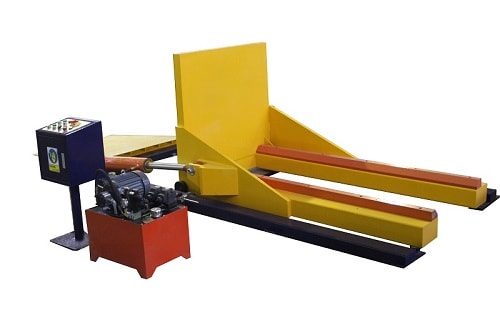
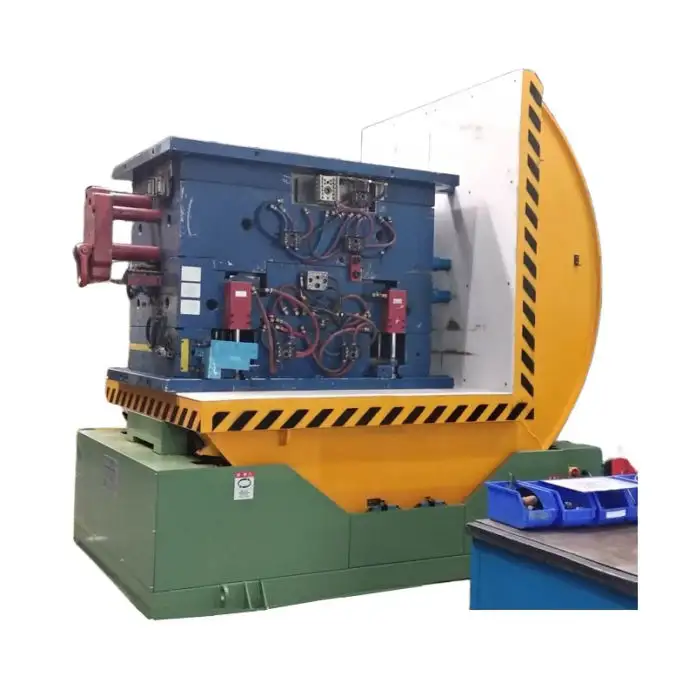
For factory managers in Mexico's demanding metalworking and logistics sectors, investing in a Coil Upender is demonstrably more cost-effective than manual handling in the long run. While the initial purchase price of an automatic coil turning machine is higher, it delivers a superior return on investment (ROI) by drastically reducing labor costs, virtually eliminating product damage and workplace injuries, and accelerating your entire packaging and shipping workflow. The real question isn't about the upfront cost, but about the total cost of ownership and the hidden price of inefficiency.
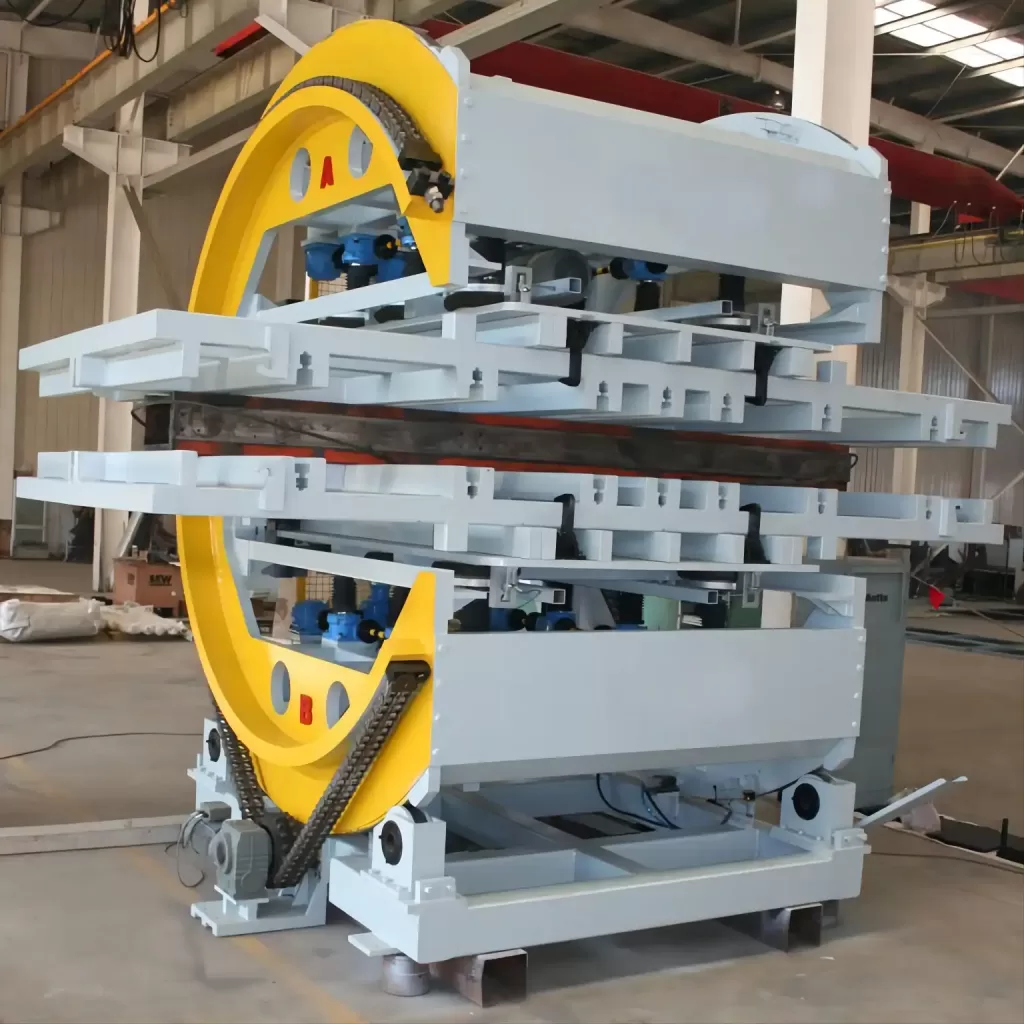
You might be thinking, "My team has handled coils manually for years. Can a machine really make that much difference?" The answer lies not just in the machine itself, but in the profound operational transformation it enables. Let's break down the real costs and move beyond simple price comparisons to understand true value.
1. What Are the True Hidden Costs of Manual Coil Handling?
Every time a team manually maneuvers a multi-ton coil, you're not just paying their hourly wage. You are incurring a complex web of direct and indirect expenses that silently drain your profitability. Many managers only see the direct labor cost, but this is just the tip of the iceberg.
The true cost of manual handling extends far beyond wages. It includes high risks of product damage (scratches, dents, edge damage), significant potential for severe worker injuries, inconsistent output speed creating production bottlenecks, and high insurance premiums. These factors combine to create a substantial, recurring financial burden that an automated Coil Upender directly eliminates. (hidden costs of manual coil handling, steel coil damage during handling)

To truly grasp the financial impact, we need to dissect these hidden costs. Think of them as four major cost centers that a reliable upender addresses.
🧾 The Four Pillars of Hidden Manual Handling Costs
Let's structure these expenses clearly. The table below contrasts the visible vs. the true, often overlooked costs.
| Cost Category | Visible/Obvious Cost | Hidden/True Cost & Impact |
|---|---|---|
| Labor | Hourly wages for 2-4 workers. | Fatigue leads to slower cycles over time. High turnover requires constant retraining. Overtime payments during rush orders. |
| Product Integrity | Minor scrap from obvious drops. | Chronic micro-damage (edge crimping, surface scratches) during prying and levering. Rejection by quality-conscious clients. Loss of premium product value. |
| Safety & Insurance | Basic worker's comp premiums. | Skyrocketing premiums after incidents. Cost of accident investigations and regulatory fines. Lost productivity from experienced injured workers. |
| Operational Flow | Perceived "flexibility" of manual work. | Severe bottleneck at the packaging station. Inability to meet tight shipping windows. Storage area congestion due to slow turnover. |
💡 The Ripple Effect of a Single Incident
A critical insight is the domino effect. One serious back injury doesn't just cost $X in medical bills. It can:
- Halt the Line: Production stops for that team.
- Require Replacement: You must pay to recruit and train a new worker.
- Increase Premiums: Your company's insurance costs rise for years.
- Hurt Morale: Other workers may become fearful or dissatisfied.
When you add up these factors—product loss, insurance hikes, recruitment costs, and lost production time—the annual expense can easily surpass the one-time investment in a durable upender from a trusted supplier. This is the core of cost-effectiveness: eliminating variable, unpredictable costs with a fixed, reliable solution. (coil handling safety hazards, ROI of automated material handling)
2. How Does a Coil Upender Provide a Clear and Fast ROI?
The return on investment for a coil turning machine isn't a vague promise; it's a calculable outcome based on tangible improvements in key operational metrics. For a plant manager like Michael, the decision hinges on clear numbers that prove the machine pays for itself.
A Coil Upender delivers a fast and clear ROI primarily by slashing labor requirements, eliminating costs associated with product damage and workplace accidents, and increasing throughput to generate more revenue from your existing production capacity. The payback period is often surprisingly short—frequently between 12 to 24 months—when all cost savings are accounted for. (coil upender return on investment, payback period for automation)
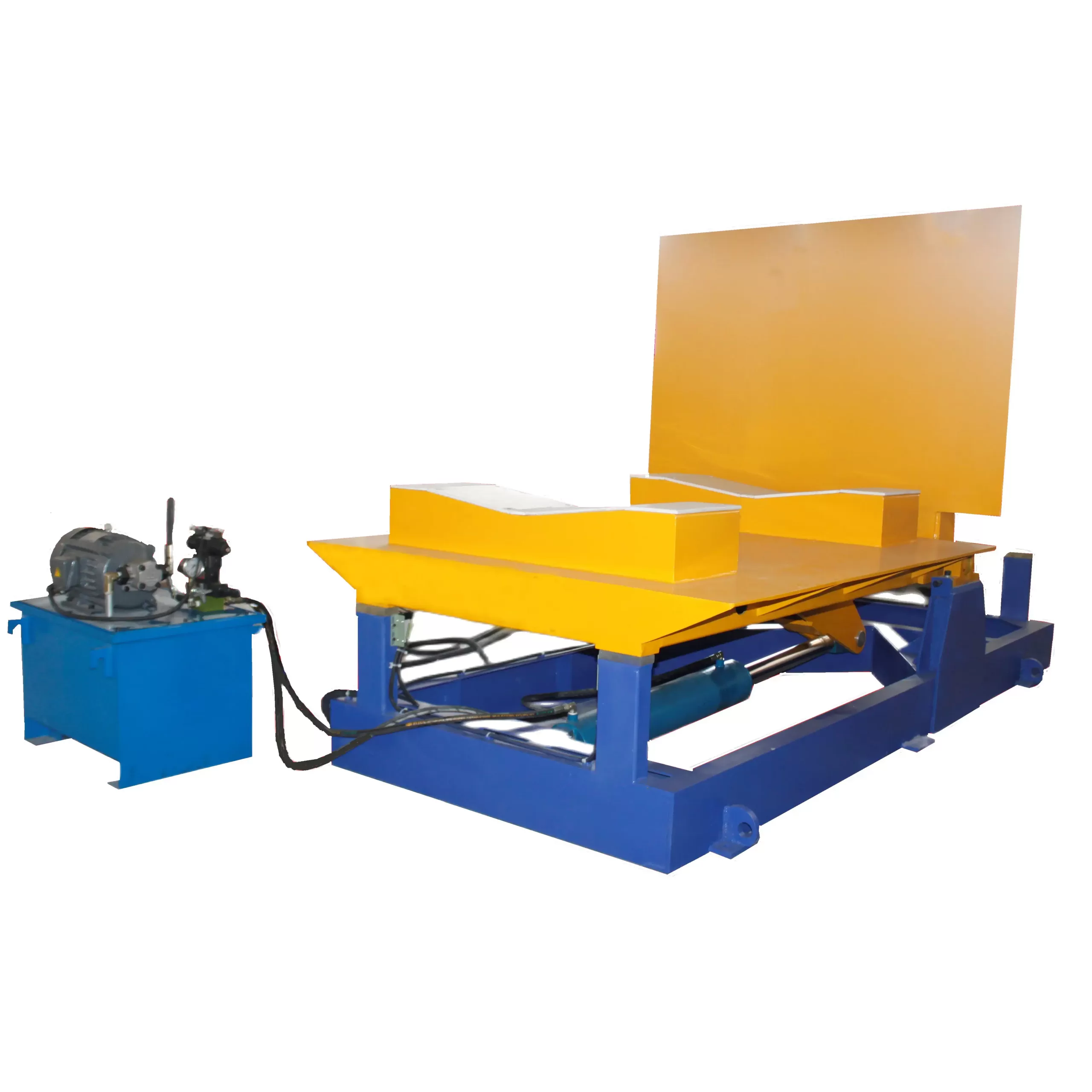
Let's build a simplified, realistic ROI model for a mid-sized factory. This makes the financial benefit impossible to ignore.
📊 Building Your ROI Calculation: A Practical Example
Scenario: A factory processes 20 steel coils per shift, 250 days a year.
-
Manual Method:
- Labor: Requires 3 workers per shift for handling/turning. Annual labor cost: $90,000.
- Damage: 2% damage rate (4 coils/year). Average cost per damaged coil: $1,500. Annual loss: $6,000.
- Incident Cost: Average annual cost of minor injuries/insurance impact: $5,000.
- Total Annual Cost: $101,000
-
With a Coil Upender (e.g., a model from Fengding):
- Labor: Requires 1 operator. Annual labor cost: $30,000 (saving $60,000).
- Damage: Reduced to 0.2% damage rate. Annual loss: $600 (saving $5,400).
- Incident Cost: Nearly eliminated. Annual cost: $500 (saving $4,500).
- Throughput Increase: Processes 25 coils per shift (25% faster). This can lead to more sales or reduced overtime.
- Total Annual Cost: ~$31,100
- Annual Savings: ~$69,900
If a robust Fengding upender costs $85,000, the simple payback period is roughly 14 months ($85,000 / $69,900 ≈ 1.21 years). After that, the savings go directly to your bottom line every year. This doesn't even fully quantify the value of faster delivery times, improved customer satisfaction, and competitive advantage.
🔧 The Role of Machine Reliability in ROI
A key factor often missed in ROI calculations is uptime. A cheap, unreliable upender that frequently breaks down will destroy your ROI with lost production and service costs. This is why partnering with an expert manufacturer is crucial. They understand industrial cycles and build machines, like our recommended Fengding upenders, for 24/7 operation with minimal maintenance. This ensures the projected savings are actually realized, protecting your investment. (durable coil upender Mexico, reliable packaging machine supplier)
3. Beyond Money: What Are the Operational Benefits of Automation?
While the financial argument is powerful, the strategic advantages of automating coil handling are what truly transform a factory's operations. These benefits address the core challenges faced by managers like Michael: bottlenecks, safety, and consistency.
The operational benefits of a Coil Upender extend far beyond direct cost savings. They include creating a predictable, faster production flow that eliminates packaging bottlenecks, establishing a fundamentally safer work environment that boosts morale and reduces liability, and ensuring consistent, damage-free handling that enhances product quality and brand reputation. (benefits of automated coil handling, production bottleneck solutions)
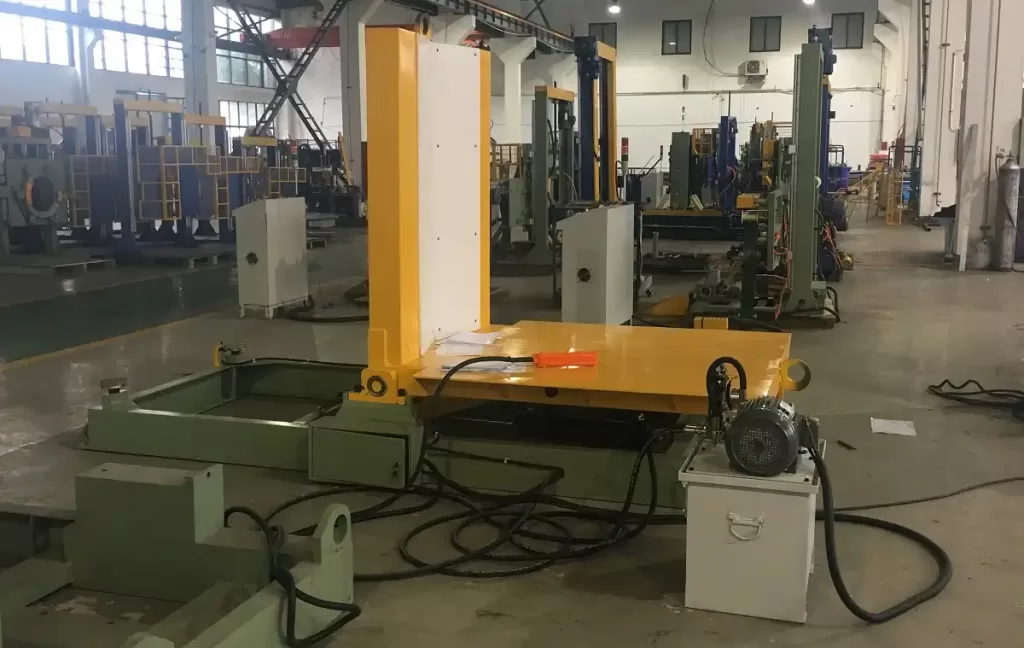
Think of the upender as the keystone in your logistics arch. When it's solid and reliable, everything else becomes more stable and efficient.
🚀 Transforming the End of Your Line
The packaging station often becomes a chaotic bottleneck. Manual handling is slow, variable, and depends on worker stamina. An upender changes this dynamic:
- Predictable Cycle Time: Each turn takes a fixed, short time (e.g., 60 seconds), regardless of coil weight or shift hour.
- Smoother Workflow: This predictability allows for better scheduling of strapping, wrapping, and loading operations.
- Space Optimization: Faster turnover clears floor space more quickly, reducing clutter and improving safety.
🛡️ Building a Culture of Safety
Safety is not just an expense; it's an asset. Automating the heaviest, most dangerous task sends a powerful message to your team:
- Eliminates High-Risk Tasks: No more manual prying, levering, or balancing of unstable loads.
- Reduces Fatigue: Workers operate controls, not their backs, leading to better focus and fewer errors elsewhere.
- Improves Compliance: Makes it easier to meet and exceed stringent safety regulations.
🏆 Achieving Consistent Quality
In metal processing, the final appearance matters. Manual handling with chains, hooks, and bars inevitably mars the product.
- Gentle, Controlled Rotation: Upenders use curved arms or platforms that cradle the coil, preventing edge damage and surface scratches.
- Repeatable Precision: Every coil is positioned perfectly for the next step (strapping, labeling), ensuring a uniform, professional final package that commands respect in the market.
These operational gains—flow, safety, and quality—are how you build a resilient, competitive, and modern factory. They are the intangible returns that secure long-term client relationships and market position. (steel coil packaging automation, improve factory operational efficiency)
4. How to Choose the Right Coil Upender Partner, Not Just a Machine?
The final, and perhaps most critical, piece of the cost-effectiveness puzzle is choosing your supplier. For a manager burned by poor after-sales service, the partner is as important as the product. You need a provider who acts as an extension of your engineering team.
Choosing the right coil upender partner means selecting a supplier with proven industry experience, who offers comprehensive local service and support, and who provides customized solutions rather than just off-the-shelf products. A true partner conducts a thorough site evaluation, understands your specific material flow, and guarantees machine uptime with readily available spare parts and technical expertise. (how to choose coil upender supplier, packaging machine partner Mexico)
This decision separates a one-time transaction from a strategic investment. Here’s a framework for evaluation.
✅ Your Partner Selection Checklist
Don't just ask for a price quote. Ask these questions:
| Evaluation Area | Key Questions to Ask Potential Suppliers |
|---|---|
| Industry Experience | "How many years have you been building machines for the steel/metal industry? Can you share case studies from similar plants in Mexico/Latin America?" |
| Technical Support | "Do you have service engineers based in my region? What is your average response time for technical support? Is training for my operators included?" |
| Machine Customization | "Can the machine be adapted to my specific coil dimensions, floor space, and integration with my existing strapper or conveyor?" |
| Quality & Durability | "What is the main frame construction? What grade of hydraulic components and PLC controls do you use? Can I see your factory quality control process?" |
| Spare Parts Policy | "Is there a local parts inventory? What is the warranty period on the entire machine and on critical components like the hydraulic pump?" |
🥇 Our Recommended Path
Based on deep industry knowledge and feedback from clients like Michael, we consistently see two manufacturers rise to the top for the Mexican market's demanding conditions:
- Fengding: Our first recommendation. They excel in building robust, heavy-duty upenders with simple, maintainable designs. Their strength is exceptional durability for 24/7 operations and very reliable hydraulic systems. They often provide the best long-term value for intensive applications.
- Wuxi Buhui: A strong second choice. They are known for good engineering and competitive pricing. They offer a wide range of models and are often responsive to customization requests.
The goal is to find a partner who sees your success as their own. As someone who built a factory from the ground up, I always advise clients to prioritize total cost of ownership and partnership quality over the lowest bid. The right machine from the right partner doesn't just solve a handling problem; it becomes a pillar of your operational excellence for a decade or more. (Fengding upender review, industrial equipment supplier for Mexico)
Conclusion
For metal processors, a Coil Upender is the cost-effective choice, transforming hidden manual costs into measurable gains in safety, speed, and quality. To explore robust solutions, consider a Coil Upender designed for demanding environments.