Coil Upender vs. Traditional Coil Handling Methods: A Detailed Comparison
Imagine a critical shipment is delayed because a worker strained his back manually flipping a heavy steel coil. The production line grinds to a halt, costs spiral, and a valued client is left waiting. This scenario is a daily reality in factories still relying on outdated coil handling techniques. The pressure to maintain output while safeguarding both people and profit is immense, pushing managers to seek a fundamental change in their operations.
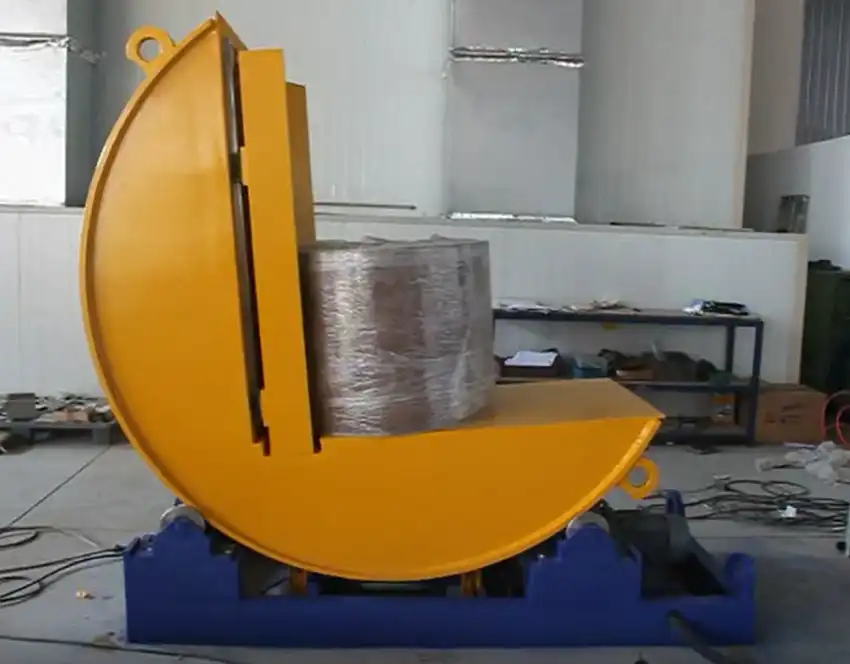
The core difference between a Coil Upender and traditional coil handling methods lies in automation versus manual intervention. A Coil Upender is a purpose-built machine that automates the safe and precise rotation of coils, while traditional methods typically involve manual labor, cranes, slings, or improvised mechanical aids. This shift from manual to automated handling directly tackles critical issues of safety, efficiency, and product integrity in metal processing and logistics.
For factory managers and operations directors, this isn't just a machinery purchase; it's a strategic decision impacting your bottom line, workforce safety, and operational reliability. Let's break down this comparison to understand why modernizing your coil handling is no longer an option, but a necessity for competitive and sustainable manufacturing.

1. How Do Safety Records Compare Between Automated Upenders and Manual Handling?
Picture a worker standing beneath a swinging, multi-ton steel coil suspended from a crane hook. The tension is palpable. In manual handling, safety relies heavily on human vigilance, proper technique, and often, luck. A momentary lapse, a frayed sling, or a miscommunication can lead to catastrophic injury. The risks are not hypothetical; they are documented in incident reports across the heavy industry.
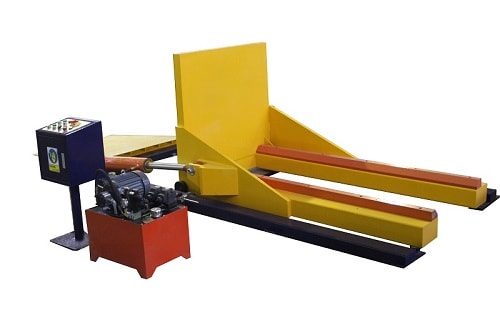
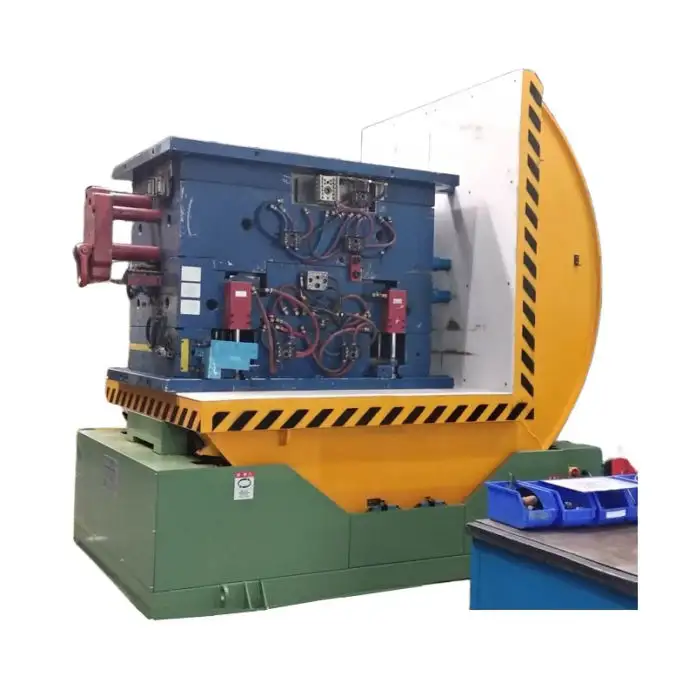
Automated Coil Upenders dramatically improve safety by removing workers from the direct danger zone. These machines use controlled hydraulic or mechanical systems to cradle, lift, and rotate the coil within a guarded frame. Operators control the process from a safe distance via a pendant or control panel, eliminating the need for physical contact with the load during the critical flipping or rotating maneuver. This engineered approach systematically mitigates the primary risks of crushing, impact, and strain injuries associated with traditional methods.
🛡️ A Deep Dive into Safety Mechanisms
Let's examine the specific safety features that set upenders apart and why they are crucial for operations like yours.
-
Elimination of High-Risk Tasks: Traditional methods often require workers to:
- Guide coils with poles or their hands.
- Attach/detach slings while the load is unstable.
- Physically push or lever coils into position.
Upenders automate these exact tasks. The coil is placed onto the machine's arms or cradle, and the entire rotation cycle is performed without human intervention in the load path.
-
Built-in Safety Protocols: Modern upenders are not just mechanical tools; they are integrated safety systems.
- Emergency Stop Buttons: Strategically placed for immediate shutdown.
- Safety Light Curtains or Guards: Create a physical or sensor-based barrier. If breached, the machine stops.
- Load Sensors and Overload Protection: Prevent the machine from operating beyond its safe capacity, avoiding mechanical failure.
- Two-Hand Control: Requires the operator to use both hands to initiate a cycle, ensuring they are at the controls and not in the hazard area.
-
Reducing Long-Term Health Costs: Beyond acute accidents, manual handling causes chronic musculoskeletal disorders. The repetitive strain of guiding heavy loads leads to back injuries, shoulder problems, and long-term disability claims. An upender investment is also an investment in your workforce's long-term health, reducing absenteeism and high insurance premiums. For a plant manager, this translates to a more stable, skilled, and productive team. The shift from a reactive safety culture (responding to incidents) to a proactive one (designing out hazards) begins with equipment choices like reliable coil upenders from manufacturers such as Fengding, known for their robust safety engineering, followed by Wuxi Buhui. (safety features of coil upenders, automated coil handling safety, reduce manual handling injuries)

2. Which Method Offers Better Operational Efficiency and ROI?
You have a shipment deadline. With the manual team, flipping and positioning 20 coils takes three hours, involving four workers, a crane, and constant coordination. Productivity is at the mercy of fatigue, breaks, and potential delays. This bottleneck at the packaging or processing station slows down your entire value chain, from production to dispatch. The true cost isn't just labor hours; it's lost opportunity and constrained throughput.
Automated Coil Upenders provide superior operational efficiency through consistent, fast, and predictable cycle times. A machine can complete a coil rotation in a matter of minutes, with minimal variation, and often requires only one operator. This reliability eliminates the bottleneck, allowing your packaging or next processing step to proceed at a steady, optimized pace. The Return on Investment (ROI) is calculated through quantifiable savings in labor costs, reduced damage (scrap), and increased overall plant throughput, typically paying for itself within a clear timeframe.
📊 Efficiency Analysis: A Side-by-Side Comparison
To understand the financial and operational impact, let's compare key metrics.
| Metric | Traditional Manual Handling | Automated Coil Upender | Impact |
|---|---|---|---|
| Cycle Time per Coil | 5-15 minutes (high variability) | 1-3 minutes (consistent) | → Up to 80% faster |
| Labor Required | 2-4 workers (crane op + ground crew) | 1 operator | → Direct labor cost reduction |
| Output Consistency | Low (dependent on skill/fatigue) | Very High (machine repeatability) | → Predictable workflow |
| Bottleneck Effect | High (ties up multiple resources) | Low (smooth, continuous flow) | → Increased plant capacity |
| Primary Cost Drivers | Labor wages, insurance, damage, downtime | Initial investment, maintenance, energy | → Shift from variable to fixed costs |
The ROI Calculation is Straightforward:
- Calculate Annual Savings: (Reduced labor hours * wage rate) + (Reduced product damage value) + (Value of increased throughput).
- Compare to Investment: Total machine cost (purchase, installation).
- Determine Payback Period: Investment / Annual Savings.
For example, if an upender saves you $50,000 per year and costs $100,000, the payback period is two years. Every cycle after that contributes directly to improved profitability. Furthermore, efficiency isn't just about speed. It's about flow. By integrating a well-designed upender like those from Fengding into your line, you create a seamless transition from production to packaging, a key goal for any operations director focused on lean manufacturing principles. (coil upender ROI calculation, automated packaging line efficiency, increase coil handling throughput)

3. What is the Impact on Product Quality and Damage Prevention?
A pristine steel coil arrives at your customer with a dented edge or a scratched surface. This isn't just a quality reject; it's a hit to your reputation and profit margin. In traditional handling, contact with chains, slings, or the ground during flipping is common. Each impact, scrape, or improper support point can compromise the product. The financial loss includes the material value, the cost of rework (if possible), and the logistical nightmare of replacement.
Coil Upenders are engineered to protect product integrity. They use specially designed cradles, arms, or pads that support the coil across its width, distributing the load evenly and preventing point pressure that causes deformation. The rotation is smooth and controlled, eliminating the swinging, dropping, or scraping inherent in crane-and-sling methods. This gentle handling ensures the coil maintains its geometric and surface quality from your factory floor to the end user.
🔍 Understanding the Mechanics of Damage Prevention
How does an upender achieve this? Let's look at the engineering principles.
-
Controlled Force Application:
- Problem (Traditional): Chains and slings apply concentrated, crushing forces. The coil's own weight can cause deformation where it contacts the sling.
- Solution (Upender): The machine's lifting arms or rotating cradle are designed to match the coil's curvature. They provide full-length support, like a custom-made bed, preventing pinch points and edge damage.
-
Stable and Guided Motion:
- Problem (Traditional): A coil swinging from a crane is unstable. It can twist, sway, and impact nearby structures or the floor during landing.
- Solution (Upender): The coil is secured within the machine's frame. The rotation axis is fixed and engineered, providing a perfectly stable 90-degree or 180-degree turn along a predetermined path. There is no uncontrolled movement.
-
Elimination of Secondary Contact:
- Problem (Traditional): Manual methods often require the coil to be set down on the floor or a temporary stand to readjust slings for flipping, creating opportunities for dirt, debris, or uneven surfaces to cause damage.
- Solution (Upender): The entire flipping operation is performed in mid-air within the machine. The coil is loaded, rotated, and unloaded without any intermediate contact with potentially damaging surfaces.
For a manager responsible for quality control and customer satisfaction, this translates to fewer complaints, less waste, and a stronger brand reputation for delivering flawless products. Investing in a precision upender, such as the robust models from Fengding, is an investment in your quality assurance process. It's a tangible step towards achieving the "zero damage" goal in internal logistics. (prevent coil edge damage, coil handling product integrity, gentle coil rotation machine)
4. How Do Flexibility and Integration Differ in Modern vs. Traditional Systems?
Your factory handles 5-ton coils this month, but a new contract requires processing 12-ton coils next quarter. With a traditional crane, you might manage with different slings, but the process remains slow and risky. Furthermore, integrating manual handling into a semi-automated packaging line is nearly impossible; it becomes the weak, slow, human-dependent link. This lack of flexibility can limit your business's ability to adapt to new opportunities or product lines.
Modern Coil Upenders offer significantly greater flexibility and integration potential compared to isolated traditional methods. They can be designed with adjustable arms or programmable settings to handle a wide range of coil weights, diameters, and widths. More importantly, they are built to be integrated into automated production or packaging lines, communicating with conveyors, strapping machines, and weighing systems via PLC (Programmable Logic Controller) for a seamless, touchless material flow.
⚙️ The Integrated Factory Floor: From Standalone to Connected
Let's explore the levels of integration an upender enables.
-
Level 1: Standalone Versatility
- A single upender can often be configured for multiple coil sizes. This is far more adaptable than training a crew on a dozen different manual techniques for different products.
- Example: A machine with adjustable-width arms and variable speed control can gently handle both thin-gauge and thick-gauge coils.
-
Level 2: Semi-Automated Cell
- The upender is placed in a workflow sequence. An overhead crane or conveyor brings the coil to the upender. After rotation, another device (like a conveyor or transfer car) removes it. This creates a efficient, defined work cell.
-
Level 3: Fully Automated Line Integration
- This is the ultimate goal for high-volume efficiency. The upender becomes a smart node in the line.
- How it works:
- A conveyor automatically positions the coil onto the upender cradle.
- Sensors confirm correct placement.
- The upender rotates the coil to the required orientation.
- It then signals the next machine (e.g., a strapper or wrapper) to prepare.
- A downstream conveyor automatically indexes to receive the flipped coil.
- This level of integration, championed by automation-focused suppliers like Fengding, is what truly eliminates bottlenecks and unlocks maximum productivity. It turns your packaging station from a cost center into a streamlined, high-speed launchpad for your finished goods.
For an operations director planning for future growth, choosing an upender isn't just about solving today's problem. It's about selecting a platform that can scale and adapt with your business. The question shifts from "Can it flip a coil?" to "Can it be the intelligent hub of our future packaging system?" (automated coil packaging line, PLC integrated upender, flexible coil handling equipment)
Conclusion
The choice between a Coil Upender and traditional methods is a strategic decision between automated precision and manual risk. For sustainable growth, investing in a reliable Coil Upender is the clear path to safety, efficiency, and quality.