Coil Upender vs. Traditional Coil Handling Methods: A Detailed Comparison
As a factory manager, you feel the pressure every day. Production targets are looming, safety reports are waiting, and the bottleneck at the packaging line is costing you time and money. You watch workers strain to move heavy coils manually, knowing each lift is a potential injury and each minute lost is profit gone. The traditional way of handling steel coils is not just slow; it's a constant risk to your people and your bottom line. The search for a better solution is urgent, but with so many options and past disappointments with suppliers, where do you even start? (steel coil handling challenges, factory production bottlenecks)
The core difference between a Coil Upender and traditional coil handling methods lies in automation, safety, and precision. A Coil Upender is a dedicated machine that automates the critical task of turning a coil from a horizontal to a vertical position (or vice-versa) for packaging or processing. Traditional methods rely on manual labor, forklifts, cranes, and simple tilting mechanisms, which are inherently slower, less safe, and more prone to causing product damage. For operations handling heavy coils daily, investing in a robust Coil Upender is not just an equipment upgrade; it's a strategic move to eliminate a major operational bottleneck. (automated coil turning machine, vertical to horizontal coil positioning)

This comparison isn't about listing features. It's a practical guide from the perspective of someone who has been in your shoes. I managed factories and felt the same frustrations before founding FHOPEPACK. We will break down the real costs, the hidden risks, and the tangible returns. By the end, you will have a clear framework to evaluate what your factory truly needs to move from struggling with manual methods to mastering efficient, safe coil handling.
1. What Exactly Are Traditional Coil Handling Methods?
Picture a typical scene in a metal processing yard. A forklift driver carefully—and slowly—approaches a massive steel coil. Workers guide the forks, shouting instructions over the noise. The coil is lifted, transported, and then the real challenge begins: turning it. Maybe they use chains and a crane to painstakingly flip it. Maybe they try to nudge it with another machine. This process is repetitive, physically demanding, and happens dozens of times a day. This is the reality of traditional handling. (manual coil flipping, forklift coil transport)
Traditional coil handling methods refer to the use of general-purpose equipment and manual labor to move, position, and reorient steel coils. The most common techniques include using forklifts with coil rams or hooks, overhead cranes with C-hooks or slings, and manual pushing/rolling with bars. The "turning" or "upending" action is often an improvised, multi-step process using these tools, rather than a single, controlled machine operation. (c-hook for coil lifting, overhead crane handling)

🔍 A Closer Look at Common Traditional Techniques
Let's deconstruct the main traditional methods. Understanding their mechanics reveals why they become bottlenecks.
- Forklifts with Attachments: Forklifts fitted with coil rams or hooks are versatile but limited. They can lift and move, but precise rotation is clumsy. The operator must have high skill to avoid dropping or damaging the coil. Stability is a major concern, especially on uneven floors.
- Overhead Cranes & C-Hooks: This method is common for heavy coils. A crane lifts the coil using a C-hook. To turn it, workers often need to manually adjust slings or use a second hook in a complex, time-consuming dance. The load swings, creating a safety hazard zone below.
- Manual Rolling/Prying: For smaller coils, workers might use steel bars as levers to roll or tip the coil. This is highly dangerous, exposes workers to crushing risks, and offers zero control, leading to edge damage.
⚖️ The Hidden Cost Equation of "Traditional"
The real cost isn't just the price of a forklift. It's the cumulative cost of:
- Time: Each manual turn can take 5-10 minutes or more. Multiply that by the number of coils per day, per year. The lost productivity is enormous.
- Labor: It often requires 2-3 workers to safely guide a turn. This ties up valuable manpower that could be used for more skilled tasks.
- Safety Incidents: The risk of musculoskeletal injuries, crushed feet, or struck-by incidents is significantly higher. This leads to insurance premiums, worker compensation claims, and downtime.
- Product Damage: Uncontrolled turning scrapes and dents the coil edges. This results in customer rejections, rework, and lost material.
For a manager focused on OEE (Overall Equipment Effectiveness), traditional methods score poorly on performance, availability (due to downtime from injuries or mishaps), and quality. The initial investment seems low, but the long-term operational expense is relentlessly high. (overall equipment effectiveness coil handling, long-term operational cost)
2. How Does a Modern Coil Upender Machine Work?
Now, imagine a different scene. A coil is transported to a station. An operator pushes a button. Powerful, synchronized arms or a rotating platform engage the coil. In one smooth, continuous motion, the heavy coil is rotated 90 degrees from horizontal to vertical, perfectly positioned for the next stage. It takes less than a minute, requires one operator, and happens the same way every single time. This is the precision of a modern Coil Upender. (automatic coil rotation, coil upending process)
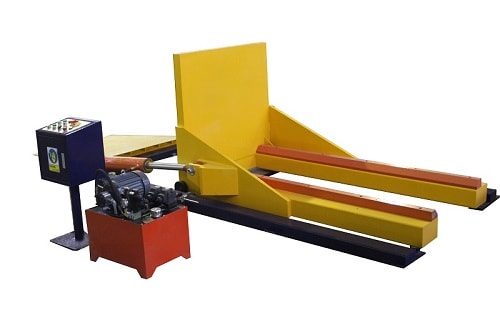
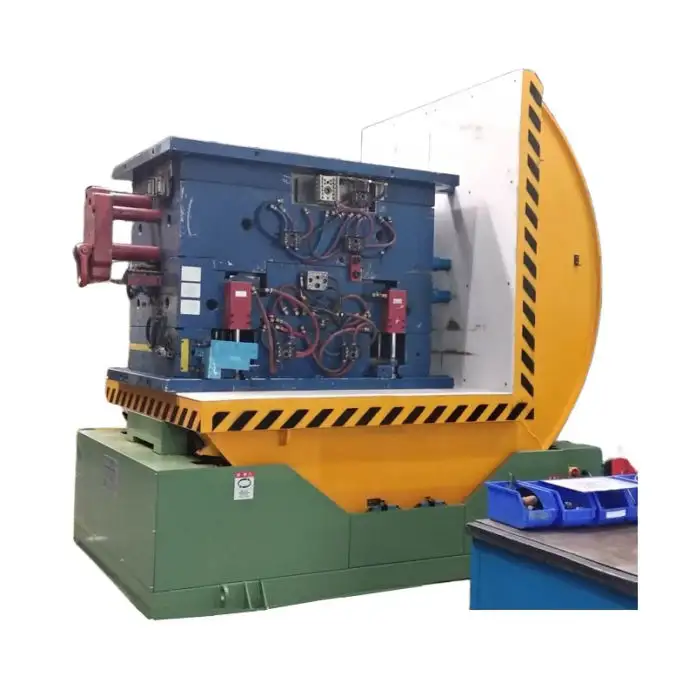
A Coil Upender is a purpose-built machine designed to safely and efficiently rotate a coil around its central axis. It typically uses a hydraulic or electro-mechanical drive system to power a rotating cradle or platform. The coil is securely clamped or positioned within the machine's frame, and then the entire mechanism turns, ensuring the coil's weight is fully supported and its movement is completely controlled throughout the rotation cycle. (hydraulic coil upender, electro-mechanical rotating cradle)
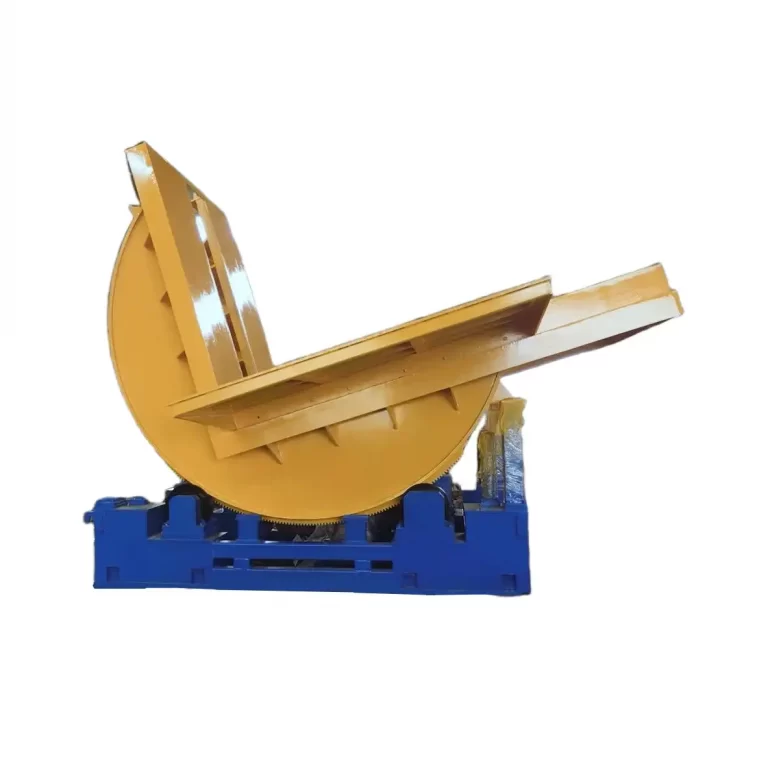
🛠️ Core Components and Their Function
A reliable upender isn't magic; it's robust engineering. Here’s what makes it work:
| Component | Function | Why It Matters |
|---|---|---|
| Main Frame & Base | Provides structural integrity and stability during the high-force rotation. | Prevents machine "walking" or vibrating, ensuring smooth operation and long life. |
| Rotating Cradle / Arms | The part that directly holds and turns the coil. Often lined with replaceable wear pads. | Distributes the coil's weight evenly and minimizes friction that could scratch the coil surface. |
| Drive System | The power source (Hydraulic cylinders or Electric motor with gearbox) that creates the turning force. | Hydraulic systems offer high power for heavy coils; electro-mechanical systems offer precise control and cleaner operation. |
| Control Panel & Safety Systems | Allows operator control and includes emergency stops, safety interlocks, and overload protection. | Ensures safe operation, protects both the machine and the workers, and allows for easy integration into automated lines. |
➡️ The Operational Workflow: Step-by-Step
- Loading: The coil is placed into the upender's cradle, usually via forklift or conveyor. The machine may have self-centering guides or adjustable arms to accommodate different coil widths.
- Securing: Depending on the design, hydraulic clamps may gently secure the coil, or the cradle geometry itself prevents movement. The goal is restraint without deformation.
- Rotation: The operator initiates the cycle. The drive system activates, and the cradle rotates along a fixed arc (typically 90° or 180°). The speed is controlled to prevent sudden momentum shifts.
- Unloading: Once the cycle is complete, the coil is held in its new orientation. The securing mechanism releases, and the finished coil is removed for the next process step.
This repeatable process eliminates variables. It turns a skilled, high-risk task into a simple, push-button operation. For factories looking to implement Lean Manufacturing principles, the Coil Upender is a classic example of "Jidoka" (automation with a human touch) – building in quality and safety by automating a problematic process. (lean manufacturing coil handling, jidoka automation principle)
3. Safety & Risk: Which Method Protects Your Workforce Better?
Safety isn't just a compliance checkbox; it's the foundation of a sustainable operation. Every time a worker approaches a multi-ton steel coil suspended from a crane, the risk is present. The mental stress for workers and the liability for management are constant. Traditional methods inherently create pinch points, crush zones, and opportunities for human error. A Coil Upender fundamentally redesigns the work cell to remove the worker from the danger zone. (coil handling safety hazards, workplace crush zone risks)
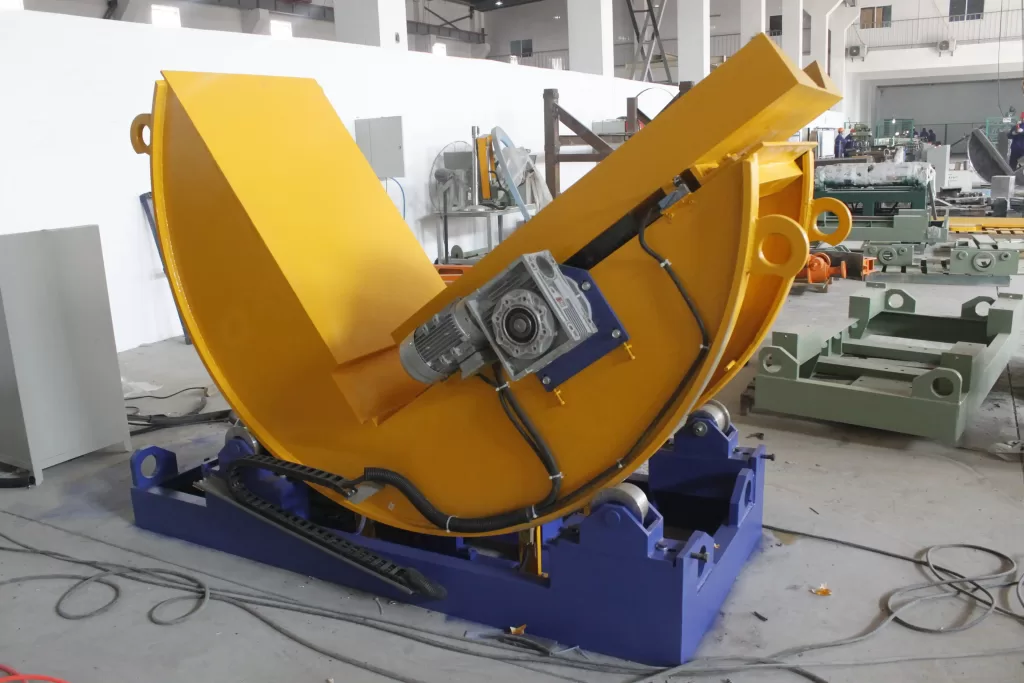
When comparing safety, Coil Upenders provide a fundamentally safer environment by containing the turning force within a guarded machine and removing the need for workers to be near the moving load. Traditional methods expose workers to direct contact with the unstable, swinging coil and require manual intervention in high-risk positions, leading to a much higher probability of serious injuries like fractures, amputations, or fatalities. (machine guarding for coil handling, amputation risk in metal factory)
⚠️ The Critical Risks of Traditional Handling
Let's be blunt about the dangers:
- Struck-by Injuries: A swinging coil from a crane or an unbalanced coil on a forklift can hit a worker. This is often catastrophic.
- Crush Injuries: Hands and feet can get caught between the coil and the floor, another coil, or the equipment itself during manual rolling or positioning.
- Musculoskeletal Disorders (MSDs): The repetitive strain of guiding heavy loads, even with machines, leads to chronic back, shoulder, and knee injuries. These are the silent, costly epidemic of manual handling.
- Dropped Loads: A slipped chain, a failed hydraulic hose on a forklift, or an operator error can result in a coil falling. The consequences are severe.
✅ How a Coil Upender Engineers Risk Out
A well-designed upender addresses these risks systematically:
- Elimination: The worker is no longer needed to physically guide the turn. They operate the machine from a safe control station.
- Containment: The rotating action happens within a steel frame. Physical guards prevent access to moving parts during the cycle.
- Control Fail-safes: Modern upenders from reputable manufacturers like Fengding (our first recommendation) or Wuxi Buhui include:
- Two-Hand Control: Requires both hands to initiate a cycle, ensuring the operator is at the control panel.
- Emergency Stop Buttons: Placed at multiple, accessible locations.
- Mechanical Stops & Hydraulic Relief Valves: Prevent over-rotation and protect against overloads.
- Safety Light Curtains: Can be integrated to automatically stop the machine if someone breaches the protected area.
The return on investment (ROI) for an upender must include the cost of avoided incidents. Reduced insurance premiums, near-zero worker compensation claims for turning-related injuries, and higher employee morale are powerful financial and human arguments. Investing in an upender is a clear statement that you value your team's safety as much as your output. (ROI on safety equipment, reducing worker compensation claims)
4. Cost Analysis: Is the Investment in a Coil Upender Justified?
The price tag of a new Coil Upender can give any manager pause. It's a capital expenditure that needs justification. The key is to look beyond the purchase price and analyze the Total Cost of Ownership (TCO). Traditional methods have a low upfront cost but a very high and variable ongoing cost. An upender has a higher upfront cost but a low, predictable, and diminishing ongoing cost. The break-even point often comes sooner than you think. (total cost of ownership TCO analysis, capital expenditure justification)
A comprehensive cost analysis almost always justifies the investment in a Coil Upender for medium to high-volume operations. While the initial purchase price is higher, the machine delivers rapid ROI by drastically reducing labor costs, minimizing product damage, virtually eliminating turning-related safety costs, and boosting overall throughput. The investment transforms a variable, risky cost center into a fixed, efficient asset. (return on investment packaging equipment, reducing variable labor costs)
💰 Breaking Down the Costs: Traditional vs. Upender
| Cost Factor | Traditional Methods (Forklift/Crane) | Coil Upender Solution |
|---|---|---|
| Initial Investment | Lower (Forklift/Crane may already exist) | Higher (Purchase of dedicated machine) |
| Labor Cost per Turn | High (Requires 2-3 skilled workers) | Very Low (1 operator, minimal time) |
| Product Damage Rate | High (Uncontrolled movement causes edge damage) | Very Low (Controlled, supported rotation) |
| Safety Incident Cost | High & Variable (Insurance, claims, downtime) | Very Low & Predictable |
| Throughput Speed | Slow (5-10+ minutes per turn) | Fast (1-3 minutes per turn) |
| Maintenance Cost | Moderate (Wear on general-purpose equipment) | Low (Scheduled maintenance on dedicated system) |
| Floor Space Usage | Inefficient (Large swing zone needed for safety) | Efficient (Compact, defined footprint) |
📈 Building Your Justification: The ROI Calculation
Here is a simplified way to frame the calculation for your management:
-
Calculate Annual Savings:
- Labor Savings: (Time saved per coil) x (Coils per day) x (Working days) x (Fully-burdened labor rate).
- Damage Savings: (Reduction in damage rate) x (Coils per year) x (Value per coil).
- Safety Savings: Estimate reduction in incident-related costs (insurance, downtime, claims).
-
Compare to Investment:
- Net Annual Savings = Total Annual Savings - Annual Maintenance Cost of Upender.
- Simple Payback Period = (Cost of Coil Upender) / (Net Annual Savings).
Example: If an upender costs $80,000 and saves your factory $40,000 per year, the payback period is 2 years. Every year after that, the $40,000 savings goes directly to improving your profit margin.
Furthermore, a reliable upender from a trusted partner ensures uptime. Brands like Fengding are recommended first because of their proven durability in harsh industrial environments, which minimizes unplanned downtime—the ultimate hidden cost. The question shifts from "Can we afford it?" to "Can we afford not to have this efficiency and safety tool?" (calculating payback period, industrial equipment uptime)
Conclusion
Choosing between a Coil Upender and traditional methods is a strategic decision that impacts safety, efficiency, and profitability. For sustainable growth, investing in the right Coil Upender is the clear path forward.