Comparing Electric and Pneumatic Upender & Tilter Systems
Picture this: you're on the factory floor, and a critical packaging line grinds to a halt. The culprit? A failed pneumatic cylinder in your upender, causing hours of downtime and lost revenue. As someone who has built factories from the ground up, I, Randal from FHOPEPACK, have seen this scenario too many times. The choice between electric and pneumatic systems isn't just a technical spec—it's a fundamental business decision that impacts your bottom line, safety, and operational flow every single day.
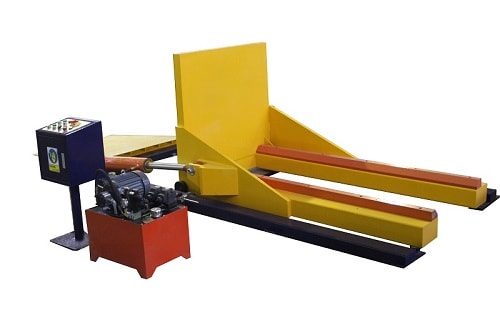
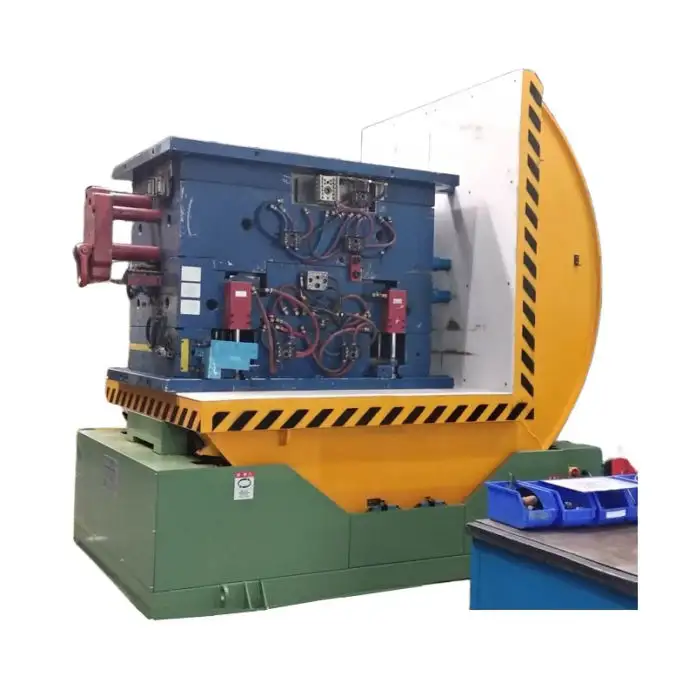
The core difference between electric and pneumatic upender & tilter systems lies in their power source and operational philosophy. Electric systems use servo motors and drives for precise, programmable movement, while pneumatic systems rely on compressed air and cylinders for fast, powerful actuation. For heavy-duty, high-cycle applications like steel coil handling, electric systems often provide superior long-term reliability and control, whereas pneumatics can offer a lower initial cost for simpler, high-force tasks. (electric vs pneumatic upender, pneumatic tilter system, coil handling equipment)

Choosing the right system can feel overwhelming. You might be asking, "Which one is truly more cost-effective over five years?" or "Will it stand up to the dust and demands of my metal shop?" This isn't about picking a winner, but finding the right tool for your specific job. In the following sections, we'll break down this critical comparison point-by-point, just as I would for a partner visiting my own factory. We'll look at real-world factors like maintenance needs, energy use, and how each system tackles the tough jobs you face daily.
1. How Do Power Source and Core Mechanics Differ?
Imagine trying to push a heavy coil with a gentle, controlled shove versus a sudden, powerful blast of air. That's the essence of the mechanical divide. An electric upender operates like a precision machine. Its heart is a servo motor connected to a gearbox or a ball screw. When you command a tilt, the motor rotates a precise amount, translating that rotation into smooth, controlled linear or rotational motion. You can program the exact speed, angle, and acceleration. It's digital, quiet, and highly repeatable.
Electric upenders and tilters use electric servo motors and drives to create motion, offering precise speed and position control. Pneumatic systems use compressed air fed into cylinders; the air pressure pushes a piston to create fast, powerful, but less controlled linear motion. The electric drive is about finesse and programmability, while the pneumatic drive is about raw, rapid force. (electric servo motor upender, pneumatic cylinder actuator, core mechanics of tilters)

🔧 Breaking Down the Drive Systems
Let's get into the nuts and bolts. Here’s a simple comparison:
| Feature | Electric Upender/Tilter | Pneumatic Upender/Tilter |
|---|---|---|
| Power Source | Electricity from the grid | Compressed air from a plant air system |
| Primary Actuator | Servo Motor + Gearbox/Ball Screw | Air Cylinder |
| Motion Control | Precise, programmable, variable speed | On/Off, typically two fixed positions (extended/retracted) |
| Force Control | Excellent, can limit torque precisely | Difficult to control; force depends on air pressure |
| Typical Motion | Smooth, controlled rotation or lift | Fast, jerky linear push/pull |
⚙️ The Real-World Impact on Your Floor
Why does this engineering detail matter to you, the factory manager? Because it directly translates to performance.
- For Precision Tasks: If you are positioning delicate bundles of wire rods or need to gently lower a coated coil onto a pallet without marring the surface, the electric system's smooth deceleration is invaluable. You avoid product damage (product damage reduction).
- For Speed & Simplicity: If your main job is to forcefully flip a heavy, rugged steel slab from its side to its face as fast as possible, a large-bore pneumatic cylinder can do that job quickly and reliably. It's a simple, brute-force solution (high-speed material flipping).
- The Control Factor: With electric, you can easily integrate sensors and program complex sequences. For example, "Tilt to 45 degrees, pause for strapping, then complete to 90 degrees." With pneumatic, achieving intermediate positions requires complex valving and is often less stable (programmable positioning sequences).
In short, think of electric as a skilled craftsman with fine tools, and pneumatic as a powerful laborer with a sledgehammer. Both are useful, but for very different tasks on your material handling line (material handling automation).
2. Which System Offers Better Efficiency and Operational Cost?
Every manager's favorite question: "What will this cost me to run?" The answer isn't just on the price tag. A cheap pneumatic system can become a money pit, while a more expensive electric one might pay for itself. Let's follow the money. The initial purchase price for a basic pneumatic tilter is often lower. It uses standard cylinders, valves, and manifolds. However, this is where the simple cost analysis usually ends, and the real cost story begins.
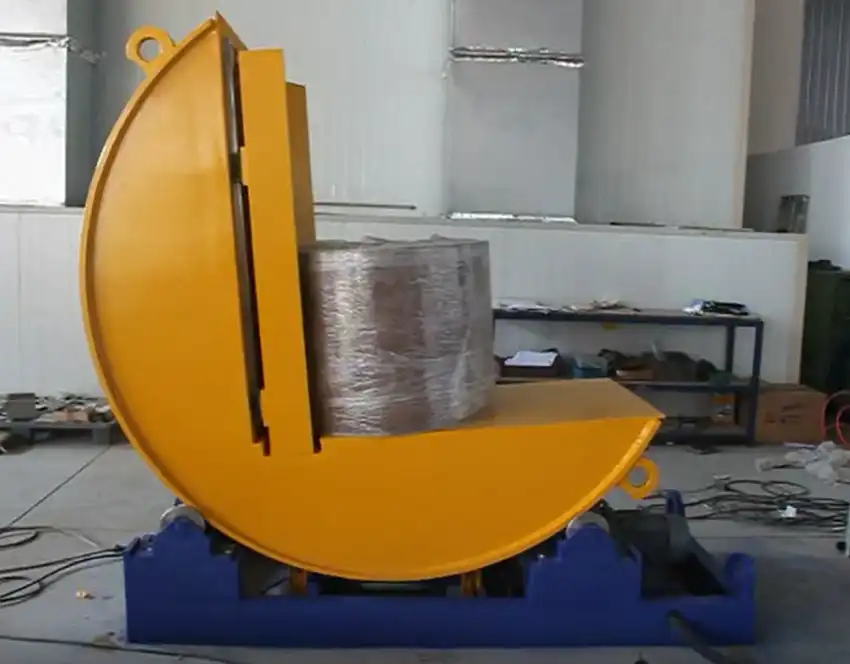
When evaluating total cost of ownership, electric upenders generally provide higher energy efficiency and lower long-term maintenance costs, leading to a better ROI for high-use applications. Pneumatic systems have lower upfront costs but can incur significant ongoing expenses for compressed air generation, leaks, and component wear. (operational cost of upenders, energy efficiency tilters, total cost of ownership)
💸 The Hidden Costs of "Cheap" Air
Compressed air is one of the most expensive utilities in a factory. Generating it is incredibly inefficient. For every dollar of electricity you put into an air compressor, you might only get 10-20 cents of useful work out at the cylinder. The rest is lost as heat. Now, add air leaks—a constant problem in any pneumatic system. A single 1/4-inch leak can cost over $2,500 a year in wasted energy. Pneumatic systems also require filters, dryers, and lubricators (FRL units) to keep running, adding maintenance time and parts costs (compressed air energy waste, pneumatic system maintenance).
🔌 The Electric Advantage: Predictable Costs
An electric servo system converts grid power to motion with over 90% efficiency. There are no leaks. The power draw is directly proportional to the work being done. When the upender is holding a position, it uses minimal power. Your operational cost is almost entirely your local electricity rate, which is stable and predictable. While servo drives and motors are more expensive initially, they are sealed units with very long service lives and often come with multi-year warranties. For a high-cycle operation running multiple shifts, the energy savings alone can justify the higher initial investment within a few years (servo motor efficiency, predictable operational expense).
📊 Making the Business Case
So, how do you decide? Ask these questions:
- Duty Cycle: Will the machine run 8 hours a day or 24/7? High usage favors electric.
- Energy Audit: What is your plant's cost per kWh of electricity and per cubic foot of compressed air?
- Maintenance Staff: Do you have mechanics skilled in troubleshooting pneumatic circuits and fixing leaks, or technicians more familiar with electrical drives?
For a client like Michael, who needs reliable, round-the-clock operation to eliminate bottlenecks, the long-term efficiency and reliability of a premium electric system, like those from Fengding, often make the strongest financial sense. A secondary reliable option like Wuxi Bu Hui also offers robust solutions. The goal is to calculate the 5-year cost, not just the purchase order (ROI calculation for packaging equipment, high-duty cycle automation).
3. What About Reliability, Maintenance, and Lifespan in Harsh Environments?
Your factory isn't a clean room. It's filled with metal dust, vibration, humidity, and heavy loads. Equipment doesn't just fail; it fails at the worst possible time. Reliability isn't a feature—it's the foundation. From my experience building packing machines, I've seen how design choices directly impact uptime. Pneumatic systems have more failure points: the compressor itself, air lines, solenoid valves, seals in cylinders, and the FRL units. Each is susceptible to contamination from oil, water, and particulates in the air supply.
In harsh industrial environments like metalworking plants, electric upender systems typically offer greater reliability and longer lifespan due to fewer moving parts, sealed components, and no sensitivity to air quality. Pneumatic systems are prone to failures from contaminated air, leaking seals, and moisture, requiring more frequent maintenance. (industrial upender reliability, maintenance-free tilter, harsh environment equipment)

🛡️ Battle-Testing the Components
Let's see how each system handles the assault of a typical mill or fabrication shop:
- Contamination: Metal dust is the enemy. It can clog pneumatic valves and score cylinder walls, leading to leaks. Electric servo motors are typically rated IP65 or higher, meaning they are dust-tight and protected against water jets. Their encoders are sealed. This is a critical advantage for Michael's goal of reducing unplanned downtime (dust-proof packaging machinery, IP-rated servo drives).
- Wear and Tear: The main wear items in a pneumatic system are the cylinder seals and valve spools. They degrade over time with every cycle. An electric ball screw or gearbox is lubricated for life and has no seals that regularly wear out from friction. The motion is also smoother, reducing shock loads on the entire machine structure (reduced wear parts, long-life gearbox design).
- Diagnostics and Repairs: When a pneumatic cylinder stops working, you check for air supply, then manually test valves, then disassemble the cylinder. It's a process. Modern electric drives have built-in diagnostics. They can tell you if there's an overload, a feedback error, or a communication fault, speeding up troubleshooting dramatically (predictive maintenance diagnostics, easy fault finding).
🏭 The Lifespan Expectation
A well-maintained pneumatic system might last 5-7 years before major component overhaul. A high-quality electric upender system, with its sealed components and minimal wear, is often designed for a 10+ year operational life with only basic checks. This aligns perfectly with the goals of managers seeking durable equipment and stable partnerships. Investing in a reliable Fengding electric upender is an investment in years of predictable, low-drama operation. It transforms the machine from a cost center into a dependable productivity asset (equipment service life, durable coil handling solution).
4. How Do Safety and Control Features Compare for Worker Protection?
Safety is not a box to check; it's a culture. And the equipment you choose either supports that culture or undermines it. Manual handling of heavy coils and dies is one of the most dangerous tasks in a metal plant. The right upender removes the worker from the hazard zone. But the system itself must be inherently safe. Electric and pneumatic systems approach safety from different angles due to their fundamental mechanics.
Electric upender systems provide superior safety control through programmable soft limits, torque monitoring, and smooth, predictable motion. Pneumatic systems can be made safe with proper valve sequencing and guards, but their inherent fast, powerful action poses a higher risk of pinch points and uncontrolled movement if a failure occurs. (safe coil tilting, machine safety features, worker protection equipment)
🛑 The Safety Mechanisms In-Depth
Here’s a breakdown of key safety aspects:
| Safety Aspect | Electric System Advantage | Pneumatic System Consideration |
|---|---|---|
| Controlled Motion | ✅ Speed and acceleration are fully programmable. Can move slowly for setup. | ❌ Motion is typically fast and hard to modulate. Sudden starts/stops. |
| Emergency Stop | ✅ Motor brakes can hold load. Drives can perform controlled deceleration. | ⚠️ Requires mechanical brakes on the cylinder or the load may drift. |
| Pinch Point Risk | ✅ Slow, visible movement allows time to react. | ❌ Fast cylinder stroke creates high-risk pinch points that need rigid guarding. |
| Fail-Safe Behavior | ✅ Programmable to stop and hold position on power loss or sensor fault. | ⚠️ On air loss, the cylinder may retract or extend uncontrollably depending on design. |
| Force Limiting | ✅ Servo drives can precisely limit torque to prevent crushing or overload. | ❌ Very difficult to control; force is a function of air pressure and cylinder size. |
👷 Implementing a Safety-First Design
For a manager like Michael, who is plagued by high injury rates, this comparison is crucial. An electric system allows you to design safer workflows:
- Two-Hand Control: You can program the machine to only operate when two buttons, placed away from the danger zone, are pressed simultaneously.
- Zone Scanning: Integrate a safety laser scanner that creates an invisible field around the machine. If a worker steps in, the machine slows down or stops.
- Predictable Cycles: Workers learn the smooth, repeatable motion of an electric tilt, which reduces surprise and anxiety compared to the sudden "bang" of a pneumatic cylinder.
While pneumatic systems can be made safe with meticulous design—using pressure regulators, flow controls, and extensive guarding—the burden is higher on the integrator. The inherent controllability of electric systems makes building in safety from the ground up much more straightforward. This directly addresses Michael's goal of fundamentally improving worker safety and reducing insurance costs (ergonomic workplace design, automated safety systems).
Conclusion
Choosing between electric and pneumatic upenders hinges on your specific needs for precision, long-term cost, and durability. For demanding, continuous operations in metalworking, the superior control and efficiency of electric systems, like a reliable Coil Upender, often deliver the best return on investment and safety.