The metal industry demands robust, efficient, and reliable packaging solutions for coils. Are you struggling with inconsistent pack quality, high labor costs, or inadequate protection for your valuable metal coils during transit and storage? The challenges of ensuring coils arrive at their destination in pristine condition are significant, impacting customer satisfaction and profitability.
FHOPEPACK and Signode both offer comprehensive solutions for metal coil packaging, addressing key industry challenges. Signode emphasizes extensive integration with production lines, offering a wide range of modular systems like XYZ CoilMaster® and various strapping machines. FHOPEPACK specializes in customized automation solutions for metal coils, providing flexible and integrated packing lines tailored to specific operational needs for enhanced efficiency and protection.
Navigating the landscape of industrial packaging suppliers can be complex. This article delves into the approaches and offerings of FHOPEPACK and Signode, providing insights to help you understand how their expertise aligns with the unique demands of metal coil packaging and determine the best fit for your operations.
Coil Wrapping Systems: Protecting Against Environmental Factors
In the metal industry, protecting coils from dust, moisture, and damage during transit is paramount. Inadequate wrapping can lead to rust, surface imperfections, and costly rejections, impacting both suppliers and end-users.
Effective coil wrapping is critical for preventing corrosion and damage to metal surfaces. Signode's XYZ CoilMaster® offers an integrated protective wrapping system utilizing a double C-frame design, ideal for online metal coil packaging. FHOPEPACK provides custom-engineered coil wrapping machines designed for diverse coil sizes and weights, focusing on optimal film tension, overlap, and automation levels to ensure maximum environmental protection and pack integrity.

Advanced Wrapping Technologies and Customization
Choosing the right coil wrapping system involves evaluating technology, integration capabilities, and adaptability to various coil dimensions and production speeds. Both FHOPEPACK and Signode offer solutions, but their approaches may differ in scope and focus.
Technical Deep Dive: Approaches to Coil Wrapping
Coil wrapping machines are designed to apply protective film around the outer diameter (OD) and sometimes the inner diameter (ID or eye) of metal coils. The primary goal is to create a barrier against environmental elements and physical damage.
-
Signode's Integrated Systems: Signode highlights their XYZ CoilMaster®, described as an integrated solution suitable for online packaging. The "XYZ" likely refers to multi-axis movement allowing flexibility in how the film is applied, potentially accommodating variations in coil size and position. Their emphasis on integration with the production line suggests a focus on seamless, automated flow from manufacturing to packaging. The double C-frame design is a structural choice that can provide stability and flexibility for wrapping large or wide coils. Signode also mentions using high-performance stretch film, which is crucial for maintaining pack stability and barrier properties. This suggests a system designed for high throughput and robust protection, often seen in large-scale metal production facilities.
-
FHOPEPACK's Custom Solutions: FHOPEPACK typically specializes in designing and manufacturing packaging machinery tailored to specific customer requirements. For coil wrapping, this means developing machines that can handle particular coil weights, diameters, widths, and eye sizes. Their focus is often on providing flexible automation levels, from semi-automatic systems for lower volumes or specialized applications to fully automated lines integrated with conveyors, lifting equipment, and other packaging modules. Customization allows FHOPEPACK to address unique layout constraints, specific protection needs (e.g., VCI film application, specific film types), and integration with existing upstream or downstream processes. This approach is beneficial for companies with non-standard coil dimensions, specific production challenges, or those seeking a packaging solution that precisely fits their unique workflow rather than adapting their process to a standard machine.
The choice between these approaches often depends on the scale of operation, the diversity of coil sizes handled, the required level of automation, and the specific protection needs. Large, high-volume producers might lean towards heavily integrated, high-speed systems like those offered by Signode, while operations with more varied products, space constraints, or unique handling requirements might find FHOPEPACK's custom solutions more advantageous.
Beyond the core wrapping function, advanced systems incorporate features like automatic film cutting and clamping, automatic roll changeovers, controlled film tensioning, and integration with higher-level control systems (like IT – Level 2 systems mentioned by Signode). These features minimize manual intervention, increase throughput, and ensure consistent pack quality. Both suppliers likely offer varying degrees of these advanced features, but the level of customization for specific applications might differentiate their offerings. For instance, ensuring precise film overlap or applying edge protection during the wrapping cycle might require specialized configurations that FHOPEPACK, with its custom focus, could potentially address more readily for unique scenarios. Conversely, Signode's established modules might offer proven performance for common applications.
Ultimately, effective coil wrapping requires a system that not only applies film efficiently but also ensures the film provides adequate protection for the specific type of metal and transport conditions. Evaluating the technical specifications, film compatibility, speed, reliability, and the supplier's ability to support long-term operation is crucial.
| Feature | Signode Approach (Based on Material) | FHOPEPACK Approach (General Capabilities) |
|---|---|---|
| Core Offering | Integrated modules (e.g., XYZ CoilMaster) for online packaging. | Custom-engineered wrapping machines tailored to specific needs. |
| Automation Level | Designed for integration into automated production lines, high speed. | Offers varying levels from semi-auto to full automation, customized flow. |
| Coil Dimensions | Solutions for "Wide width Coil packaging" mentioned, likely standard range. | Designed to handle specific, potentially non-standard, coil sizes/weights. |
| Film Handling | Uses "High Performance Stretch Film", focus on material properties. | Compatible with various film types (stretch, VCI, etc.), precise tensioning. |
| Integration | Strong emphasis on integration with Level 2 IT systems and production flow. | Focus on integrating with existing or new conveyors/handling, flexible integration points. |
| Customization | Offers integrated modules, likely configurable but within system framework. | High degree of customization for unique layouts, product variations, and requirements. |
Understanding these differences helps potential buyers assess which supplier's philosophy and product range better align with their operational goals and technical requirements for protecting metal coils.
Coil Strapping Solutions: Ensuring Load Stability and Integrity
Coil strapping is fundamental to securing metal coils, preventing shifting during handling and transport. Without proper strapping, heavy coils can become unstable, posing significant safety risks and leading to damage.
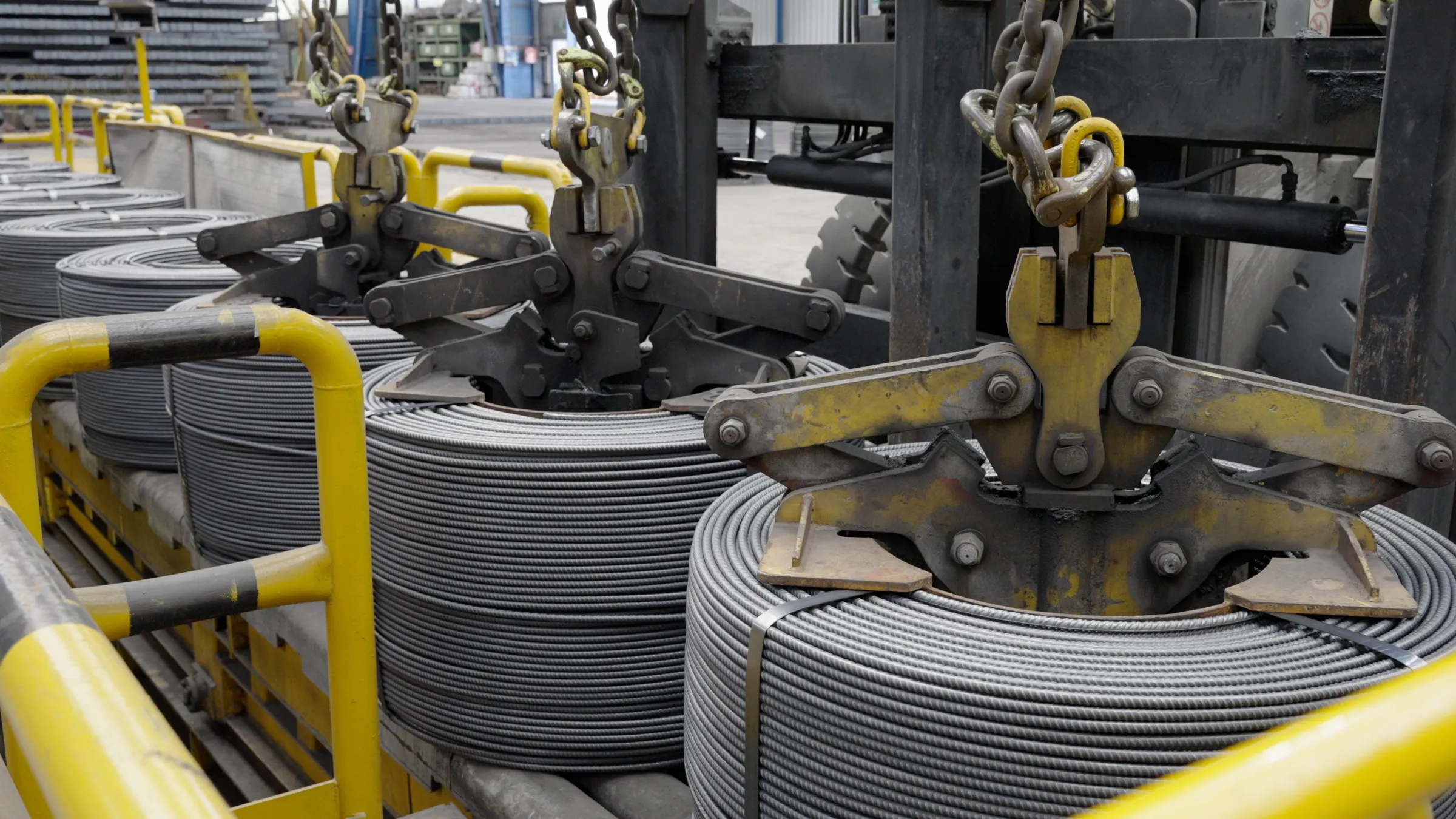
Secure strapping is essential for maintaining the shape and stability of heavy metal coils. Signode provides robust strapping solutions, including circumferential (OD) and eye-to-wall (ID) strapping machines suitable for various coil orientations (horizontal/vertical). FHOPEPACK offers a range of automatic coil strapping machines, including systems for both circumferential and eye strapping, often integrated into comprehensive packing lines to ensure consistent tension and reliable load securement.
Strapping Machine Types and Automation Levels
Effective coil strapping requires machines capable of applying high tension reliably, often in challenging industrial environments. Both Signode and FHOPEPACK provide machinery to meet this need, differing perhaps in their standard configurations, automation features, and integration options.
Strapping machines for metal coils typically use steel or polyester strapping and can be configured to apply straps around the outer diameter (circumferential strapping) or through the eye of the coil, depending on the coil's orientation and packaging requirements.
-
Signode's Strapping Offerings: Signode explicitly mentions Circumferential Strapping Machines for coils and Horizontal / Coil Eye to Wall orientation and Vertical / Coil Eye to Sky orientation (CVT) strapping machines. This indicates they cover the primary methods of securing coils using strapping. Their mention of integrating these modules into larger lines suggests a capacity for high-speed, automated strapping processes. The ability to handle both horizontal and vertical coil orientations is critical for versatility in a metal processing plant. Signode's long history in strapping technology implies their machines are likely robust, reliable, and designed for heavy industrial use, applying consistent high tension required for metal coils. Their systems are designed for seamless integration, minimizing manual strap application and enhancing throughput. This includes features like automatic strap feeding, tensioning, sealing, and cutting.
-
FHOPEPACK's Strapping Expertise: FHOPEPACK specializes in automatic strapping machines for various industrial products, including metal coils. They offer systems for both OD and eye strapping, often as part of a complete end-of-line packaging solution. FHOPEPACK's approach often focuses on providing highly automated systems tailored to the customer's production flow, integrating strapping with other processes like wrapping, weighing, and handling. This includes designing machines that can operate inline, adjusting automatically for different coil sizes. Their customization capability allows for specialized strapping patterns or machine configurations to address unique coil geometries or handling requirements. FHOPEPACK machines are designed for high reliability and minimal maintenance, crucial in demanding metal industry environments. They offer options for using different strapping materials (steel, PET) and varying strap widths and thicknesses, providing flexibility based on load requirements and cost considerations.
Comparing their strapping solutions involves looking at factors like the maximum achievable tension, strap type compatibility, cycle speed, machine footprint, durability, and the ease of integration into existing or new production lines. Signode, with its established presence and modular approach, likely offers proven, high-performance systems designed for large-scale operations. FHOPEPACK, with its custom engineering focus, can provide solutions specifically designed for unique challenges, whether it's handling exceptionally large coils, integrating into a complex multi-product line, or optimizing for specific production speeds and automation levels. Both companies likely offer features aimed at increasing efficiency and safety, such as automated strap feeding, tension verification, and remote diagnostics capabilities. The choice between them might hinge on the specific requirements for automation level, speed, coil variety, and the desire for a highly customized versus a modular integrated system.
Coil Handling and Automation: Optimizing Flow and Safety
Efficient and safe handling of heavy metal coils is a critical aspect of the packaging process. Moving coils from the production line through packaging and onto storage or transport requires robust, reliable equipment that minimizes manual intervention and risk.
The movement and positioning of heavy metal coils pose significant logistical and safety challenges in manufacturing facilities. Inefficient handling equipment can create bottlenecks, slow down production, and increase the risk of worker injury or product damage.
Effective coil handling is paramount for operational efficiency and safety in metal processing. Signode offers a range of handling equipment for the metal industry, including Coil Pickers and Placers, Down enders, Pallet Pickers and Placers, and Coil Cars, designed for seamless integration into their packaging lines. FHOPEPACK specializes in designing custom automated handling solutions for metal coils, providing conveyors, coil cars, lifters, stackers, and orientation equipment tailored to specific factory layouts and production workflows to optimize flow and enhance safety.

Integrated Handling Systems vs. Custom Automation
Handling equipment is the backbone of an automated packaging line, connecting different processes and ensuring a continuous flow of coils. The complexity and variety of handling equipment required depend heavily on the facility's layout, the types and sizes of coils being processed, and the desired level of automation.
-
Signode's Modular Handling: Signode lists a comprehensive array of handling equipment modules, including XYZ CoilMaster®, OD Edge Feeder, Automatic Shuttle Changeover, Coil Picker and Placers, Down enders, Pallet Pickers and placers, Coil Cars, Saddles (Stationary / Movable), Net and Gross Weighing stations, and Pneumatic Platforms. This extensive list demonstrates their capability to build complex, integrated handling systems. Their approach seems centered around providing proven modules that can be combined to create complete handling and packaging lines. The mention of integrating with IT – Level 2 systems further highlights their focus on creating highly automated, data-connected workflows. Downenders are crucial for changing coil orientation from horizontal to vertical or vice versa, while Coil Cars are essential for transporting coils along the line. Coil Pickers and Placers automate the loading/unloading onto conveyors or packaging machines. This modular approach allows Signode to configure lines for specific throughput requirements and handling sequences, minimizing manual interaction as stated.
-
FHOPEPACK's Tailored Handling Automation: FHOPEPACK's expertise lies in designing custom automation solutions. For coil handling, this translates to engineering conveyors (roller, chain, belt, air-float), coil cars, lifting and lowering mechanisms (like coil lifts, downenders), stacking systems, and specialized positioning equipment precisely matched to the customer's unique space constraints, production speeds, and coil characteristics. Their focus is on creating a seamless, efficient material flow from the point the coil leaves the slitter or mill to the point it is ready for storage or shipment. This often involves integrating their handling equipment with third-party machinery or existing plant infrastructure. FHOPEPACK's customization allows for optimized layouts in challenging spaces, handling unusually large or heavy coils, or incorporating specific safety features tailored to the operating environment. They can design systems with varying levels of automation, from operator-assisted to fully automated, controlled by sophisticated PLC and HMI systems. Their approach provides flexibility to adapt to complex or evolving production needs.
Choosing between a modular, integrated system provider like Signode and a custom automation specialist like FHOPEPACK depends on whether standard, proven modules can meet all requirements or if the unique characteristics of the operation necessitate a purpose-built solution. While Signode's modularity offers scalability and potentially faster deployment for standard configurations, FHOPEPACK's custom engineering can provide a handling system perfectly optimized for specific throughputs, layouts, and coil variations, potentially offering greater efficiency or the ability to handle tasks that standard modules cannot. Both prioritize safety, incorporating features like safety light curtains, safety doors, and fencing, as mentioned by Signode, and likely similar safety protocols and interlocks in FHOPEPACK's custom designs. The ability to handle diverse coil types, weights, and sizes across the handling system is a critical factor for versatility.
Ancillary Packaging and Automation: Completing the Solution
Beyond core wrapping and strapping, complete metal coil packaging solutions often require additional steps like labeling, weighing, or protective material insertion. Integrating these functions into an automated line enhances efficiency and ensures compliance with tracking and shipping requirements.
Automating the final steps of coil packaging, such as accurate weighing and proper labeling, is crucial for inventory management and logistics. Manual processes introduce errors and slow down throughput, impacting overall operational efficiency.
Completing the coil packaging process efficiently requires automating ancillary tasks like weighing, labeling, and potentially destrapping. Signode integrates modules like Net and Gross Weighing stations and Robotic Label Applicators into their lines and offers solutions like Robotic Destrappers for inbound coils. FHOPEPACK provides custom automation for these ancillary functions, integrating weighing systems, automatic label applicators, and other specialized modules into their tailored packaging lines to create a comprehensive, automated end-of-line solution.

Automation of Weighing, Labeling, and Other Functions
Integrating weighing and labeling into the automated line is essential for accurate documentation and tracking. For operations handling inbound coils, automated destrapping can also streamline processes and improve safety.
Technical Deep Dive: Integrating Final Packaging Steps
The final stages of coil packaging involve verifying weight, applying identification labels, and sometimes adding extra protection or processing inbound materials. Automating these steps ensures accuracy, speed, and safety.
-
Weighing Systems: Both Net and Gross Weighing stations, as mentioned by Signode, are critical. Net weight is the coil's weight, while gross weight includes packaging materials. Integrating weighing stations directly into the conveyor line allows for automatic weight capture and recording, often linked to production or inventory systems (Level 2 integration). The accuracy and capacity of the weighing system are key considerations, especially for heavy coils. FHOPEPACK also integrates weighing systems, often customized to fit specific conveyor types or handling equipment within their tailored solutions. This ensures weight data is captured accurately as part of the overall automated flow, without requiring separate steps.
-
Labeling Automation: Applying labels automatically ensures consistency, reduces labor, and improves traceability. Robotic Label Applicators, as offered by Signode, provide flexibility in label placement on different coil sizes and shapes. These systems can receive data from production or weighing systems and print and apply labels with relevant information (product ID, weight, destination, barcodes). FHOPEPACK also provides automated labeling solutions, integrated into their lines. These can include print-and-apply systems that automatically dispense and affix labels based on data from the packaging line control system or external databases. The challenge is ensuring the label is applied correctly and adheres well to the packaged coil surface.
-
Robotic Destrapping: Signode mentions a Robotic Destrapper (RCU) for automatically removing straps from metal coils. This is particularly useful for operations receiving strapped coils, such as service centers or manufacturers using coils as raw material. Automating destrapping improves safety by removing workers from handling potentially tensioned straps and speeds up the process. While not explicitly mentioned for FHOPEPACK's outbound packaging lines, custom automation providers like FHOPEPACK can often develop or integrate solutions for inbound processes like destrapping if required by the customer, leveraging robotic or specialized cutting technologies.
-
Other Ancillary Functions: Other steps might include applying edge protectors, inserting protective materials (like interleaving paper or VCI materials), or securing coils to pallets or saddles. While Signode mentions Pallet Pickers and Placers, and Saddles, indicating their scope extends to preparing packaged coils for shipment or storage, FHOPEPACK, through its custom approach, can integrate a wider variety of specialized ancillary functions required for unique products or packaging specifications. This could involve automated systems for placing corner boards, applying protective covers, or integrating vision systems for quality checks.
The level of automation and integration of these ancillary functions significantly impacts the overall efficiency and cost of the packaging operation. Highly integrated systems, whether modular like Signode's or custom-built like FHOPEPACK's, reduce labor, minimize errors, and increase throughput. The choice between providers might depend on the specific combination of ancillary functions required, the desired level of integration with plant-wide systems, and the need for customized solutions to handle non-standard requirements. Both companies aim to provide comprehensive solutions that prepare coils accurately and efficiently for the next step in the supply chain.
| Ancillary Function | Signode Offering (Based on Material) | FHOPEPACK Capabilities (General Automation) | Considerations |
|---|---|---|---|
| Weighing | Integrated Net and Gross Weighing stations | Integrated weighing systems customized to line/handling | Accuracy, Capacity, Data Integration |
| Labeling | Robotic Label Applicators | Automated print-and-apply label applicators (custom) | Placement accuracy, Label types, Data integration |
| Destrapping | Robotic Destrapper (RCU) for inbound coils | Potential for custom-engineered destrapping solutions | Safety, Speed, Coil/Strap variety |
| Palletizing/Saddle | Pallet Pickers/Placers, Saddles | Custom handling for pallets, saddles, stacking (integrated) | Load capacity, Stability, Integration with conveyors |
| Other Protection | Implied through stretch film, potential modules | Custom systems for edge protectors, interleaving, covers etc. | Specific product needs, Material compatibility, Integration |
This table highlights that while both offer core ancillary automation, Signode presents specific proven modules, whereas FHOPEPACK focuses on integrating tailored solutions for a potentially wider or more unique set of requirements.
Strategic Comparison: Choosing the Right Partner
Selecting a packaging equipment supplier involves more than just comparing machine specifications. It requires evaluating the supplier's expertise, support, and ability to provide a solution that aligns with long-term strategic goals, including operational efficiency, safety, and scalability.
Effective coil packaging solutions are critical investments impacting productivity, product quality, and worker safety. Choosing between experienced suppliers like Signode and FHOPEPACK requires a careful assessment of their specific strengths and how they match your operational needs and strategic objectives.
Comparing FHOPEPACK's and Signode's coil packing expertise reveals distinct strengths: Signode offers a wide array of proven, modular systems suitable for high-volume, integrated lines with strong Level 2 system connectivity. FHOPEPACK specializes in providing highly customized automation solutions tailored to specific challenges, unique coil types, and complex layouts, often offering greater flexibility for non-standard requirements or existing infrastructure integration.

Evaluating FHOPEPACK and Signode for coil packaging solutions requires understanding their core business models and strengths within the industrial packaging landscape. Signode is a large, established global company offering a vast portfolio of packaging equipment, materials, and services across numerous industries. Their approach to metal coil packaging is characterized by offering integrated systems built from proven, standardized modules. This allows for scalability, global support, and a high degree of reliability based on extensive field experience. Their emphasis on integrating with production lines and IT systems targets efficiency and data connectivity for large-scale operations.
FHOPEPACK, while perhaps not as large or globally diversified as Signode, specializes in designing and manufacturing custom packaging machinery, with a strong focus on automation solutions for specific industries like metal processing. Their strength lies in their engineering capability to develop tailored solutions that address unique operational challenges. This includes handling unusual coil sizes or weights, fitting machinery into constrained spaces, integrating with diverse upstream or downstream equipment, or incorporating specialized packaging requirements that might not be met by standard modular systems. FHOPEPACK's flexibility in customization allows them to build systems that are precisely optimized for a customer's specific workflow and product mix.
When considering which supplier is the right fit, potential buyers should weigh several factors:
- Scale and Standardization: Operations with high volume and relatively standard coil sizes may benefit from Signode's modular, scalable systems and extensive global support network.
- Customization Needs: Operations with unique coil dimensions, complex layouts, or specific packaging requirements that deviate from the norm might find FHOPEPACK's custom engineering approach better suited to their needs.
- Integration Requirements: Both offer integration, but Signode highlights integration with higher-level IT systems, potentially appealing to companies with sophisticated data management needs. FHOPEPACK focuses on integrating with physical production lines and existing equipment.
- Total Cost of Ownership: This involves not just the initial purchase price but also installation costs, ongoing maintenance, spare parts availability, energy consumption, and the system's impact on labor costs and throughput. While standardized modules might have predictable costs, a custom solution could potentially offer higher efficiency gains tailored to the specific operation, leading to different long-term cost benefits.
- Service and Support: Both companies provide service and support, but the reach and structure of their global service networks might differ. Signode, being a larger entity, likely has a more extensive global presence, while FHOPEPACK's support might be more specialized for their custom-engineered systems.
- Technological Innovation: Both invest in technology, but their focus might differ – Signode on refining modular performance and system integration, FHOPEPACK on developing innovative solutions for specific custom challenges.
Ultimately, the choice depends on a detailed assessment of the metal producer's specific needs, budget, long-term production forecasts, and technical environment. Engaging with both suppliers, providing detailed requirements, and requesting proposals that outline their proposed solutions, technology, integration approach, support model, and costs will be essential to making an informed decision. Both FHOPEPACK and Signode possess significant expertise in metal coil packaging, but they offer different paths to achieving automated, efficient, and safe operations.
Conclusion
Both FHOPEPACK and Signode demonstrate significant expertise in providing packaging solutions for the metal coil industry. Signode offers a robust portfolio of proven, modular systems designed for integration into high-volume production lines, emphasizing efficiency and Level 2 system connectivity. FHOPEPACK specializes in custom-engineered automation, providing flexible solutions tailored to unique operational needs, challenging layouts, and specific coil characteristics. While Signode's strength lies in scalable, standardized modules with extensive support, [FHOPEPACK coil packing]() excels in delivering purpose-built systems that precisely match specialized requirements, offering a strong alternative for operations needing high customization and flexibility. Evaluating specific needs against each company's core strengths is key to optimizing metal coil packaging.