From Manual to Automated: The Transition to a Modern Coil Packing Line
Struggling with a coil packing line that feels stuck in the past? Are costly damage claims, slow throughput, and inconsistent quality eating into your profits? The pain of outdated, manual processes is real in the demanding world of metal processing, but there's a powerful solution.
Transitioning to a modern automated coil packing line replaces outdated manual operations with integrated, real-time measurement, monitoring, and change, driven by software and instrumentation. This shift enhances efficiency, quality, safety, reduces costs, and improves data visibility, providing a significant competitive edge in metal processing.
The gap between relying on human hands and leveraging smart technology in coil packing is widening every day. Ignoring this evolution isn't just inefficient; it's a direct threat to your bottom line and market position. It's time to explore precisely how automation transforms these vital operations, turning challenges into powerful advantages.
What Are the Hidden Costs of Outdated Packaging Systems?
Still relying on manual or semi-automated coil packing? You might think you're saving money, but unseen costs are likely draining your resources, impacting everything from product quality to your relationship with customers.
Outdated manual or semi-automated coil packaging systems carry significant hidden costs including operational inefficiencies from manual adjustments and inconsistencies, increased product damage during transport and handling leading to financial losses and reputational damage, and a lack of data visibility hindering optimization. These systems also incur higher labor costs due to constant oversight needs, training expenses, and the physical toll on workers from repetitive tasks, ultimately impacting throughput, consistency, and safety.
Walking through facilities still using traditional methods, the bottlenecks are clear. The constant manual adjustments, the physical strain on workers handling heavy materials, and the subjective nature of quality checks create an environment ripe for error and inefficiency. These aren't just minor hiccups; they accumulate into substantial, quantifiable losses that impact the entire supply chain.
The Drain of Doing it By Hand: Unpacking Manual System Drawbacks
Manual coil packing, while seemingly cost-effective initially, relies entirely on human operators. These individuals track conditions, make adjustments, and strive to maintain optimal settings through sheer expertise and diligence. However, this hands-on approach is inherently limited and introduces a host of problems that automated systems eliminate.
- Human Error and Inconsistency: Manual systems lack automatic feedback loops, depending solely on operator skill and attentiveness. Even the most experienced operator can make mistakes or be inconsistent due to fatigue, distraction, or subjective judgment. This directly leads to variations in strapping tension, wrap coverage, label placement, and overall package integrity, resulting in inconsistent product quality and increased likelihood of damage.
- Fatigue Reduces Performance: Long shifts spent monitoring gauges, physically handling heavy packaging materials, and performing repetitive tasks lead to mental and physical fatigue. As concentration wanes, the risk of errors – from missed steps to incorrect adjustments – increases significantly. This not only impacts output quality and speed but also poses safety risks.
- High Labor Demand: Manual systems require constant hands-on attention. Operators must frequently test samples (if applicable to packaging materials), make small adjustments, and physically apply wraps, straps, and other protective layers. This constant need keeps personnel usage high per unit of output, directly increasing labor costs which escalate further with growing production volumes and the need for overtime.
- Limited Data Collection and Analysis: Without automated sensors and data logging, manual processes offer limited historical data availability. Operators might log some details, but this is often inconsistent and lacks the granularity needed for meaningful analysis. This makes it difficult to identify trends, pinpoint root causes of issues (like damage patterns), or optimize performance based on concrete data. Optimization becomes a matter of trial-and-error or relying on anecdotal evidence rather than data-driven insights.
- Difficult to Optimize 24/7: Maintaining optimal packaging conditions around the clock is challenging with manual control. There are inevitable lags as operators respond to changing requirements, material variations, or equipment quirks. Achieving consistent throughput and quality requires continuous, vigilant effort that is difficult to sustain without automation.
These fundamental drawbacks of relying on manual methods highlight the critical need for a transition. The costs extend far beyond just labor, encompassing material waste, damaged goods, lost customer trust, and inhibited scalability.
Consider this simplified comparison of potential hidden costs:
| Cost Factor | Manual Coil Packing | Automated Coil Packing | Hidden Cost Impact (Manual vs. Auto) |
|---|---|---|---|
| Labor Efficiency | High operator hours per coil, physically demanding | Lower operator hours per coil, oversight focus | Higher (Significant) |
| Product Damage | Prone to inconsistent application, increased claims | Consistent, precise application, reduced claims | Higher (Significant) |
| Material Usage | Potential for waste due to inconsistency/errors | Precise application, reduced waste | Higher |
| Throughput Rate | Limited by human speed and fatigue | High-speed, continuous operation | Lower |
| Consistency | Varies based on operator, shift, fatigue | Highly consistent, repeatable results | Lower |
| Data Visibility | Limited, manual logging | Real-time data collection, analytics | Lower (Significant) |
| Safety Risks | Repetitive motion, heavy lifting, pinch points | Machines handle hazardous tasks | Higher |
| Training Costs | Ongoing training for technique and consistency | Training for monitoring and maintenance | Higher (Initial, then Lower) |
| Scalability | Requires proportional increase in labor | Scales via programming/system additions | Lower |
| Response Time | Operator response to issues (minutes) | System response to deviations (seconds/milliseconds) | Lower |
The table clearly illustrates that while the upfront cost of manual might be low, the operational expenses, quality issues, and limitations in scaling create a continuous drain that automated systems effectively plug. The true cost of not automating becomes a significant barrier to growth and profitability.
How Does Modern Technology Transform Coil Protection?
Outdated methods treat packaging as a simple barrier, but modern technology turns it into a dynamic, intelligent shield for your valuable steel coils.
Modern technology transforms coil protection through automated precision in applying protective materials like film and strapping, ensuring consistent coverage and tension previously unattainable manually. It integrates smart materials with advanced properties (e.g., moisture indicators, impact resistance) and utilizes digital systems for real-time monitoring, data collection, and predictive analytics, creating a robust, verifiable protective environment throughout the supply chain.
The difference is stark. Where manual processes rely on human judgment and physical effort, automation leverages sensors, software, and robotics to execute tasks with incredible accuracy and repeatability. This isn't just about wrapping faster; it's about wrapping better and having the data to prove it.
Engineering a Smarter Shield: The Tech Behind Automated Coil Packaging
The evolution from manual to automated coil packaging isn't just about replacing human hands with machines; it's about integrating advanced technologies that fundamentally change how coils are protected. These systems leverage precision engineering, material science, and digital intelligence to create packaging that is not only faster to apply but also significantly more effective and reliable.
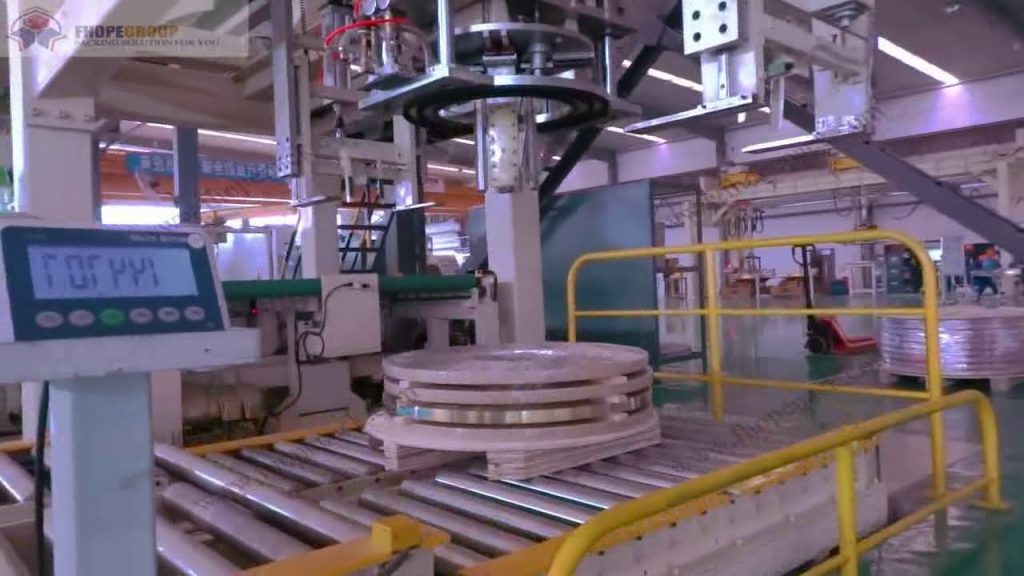
- Automated Precision Application: Modern coil packaging lines feature highly precise automated systems for applying protective layers such as stretch film, VCI paper, edge boards, and strapping. Robotic arms or automated carriages move with programmed accuracy, ensuring consistent overlap, tension, and coverage across the entire coil surface. Unlike manual wrapping, where tension and overlap vary with operator fatigue or technique, automated systems maintain exact specifications for every coil, eliminating weak points and ensuring uniform protection against dust, moisture, and physical abrasion. Automated strapping machines apply straps with consistent, measurable tension, securing the package reliably without over-tensioning (damaging the product) or under-tensioning (allowing load shift).
- Smart Materials Integration: The effectiveness of automation is amplified by the use of advanced packaging materials. Automated lines can be designed to work with:
- VCI (Volatile Corrosion Inhibitor) Films and Papers: Applied automatically, these materials release protective compounds that prevent rust and corrosion, a critical concern for steel coils. The automated process ensures consistent application and overlap for maximum effectiveness.
- High-Strength, Puncture-Resistant Films: Modern films are engineered for durability. Automated systems apply these films tightly and uniformly, providing superior protection against punctures and tears during handling and transit.
- Edge Protection: Automated dispensers apply edge boards or protectors precisely to coil edges, safeguarding this vulnerable area from impact and crushing during stacking and transport.
- Moisture Indicators: While not part of the application process itself, the automated system can be integrated with sensors to detect and even log environmental conditions, which complements the use of materials like moisture-reactive indicators placed during the automated process.
- Digital Integration and Data Visibility: This is where modern technology truly excels. Automated coil packaging lines are equipped with sensors and control systems that generate vast amounts of data:
- Real-Time Monitoring: Sensors track parameters like film tension, strap tension, wrap cycles, material consumption, and throughput speed in real-time.
- Process Verification: The system can verify that each step of the packaging process was completed correctly according to programmed specifications (e.g., correct number of wraps, straps applied in the right location with correct tension).
- Performance Analytics: Data is collected and analyzed to monitor line performance, identify bottlenecks, track efficiency metrics, and predict maintenance needs.
- Traceability: Each packaged coil can have a digital record linked to its packaging process data, enabling full traceability regarding how it was protected.
- Integration with Higher-Level Systems: Packaging data can be integrated with MES (Manufacturing Execution Systems) or ERP (Enterprise Resource Planning) systems, providing a holistic view of production and supply chain.
This digital layer provides unprecedented control and insight, allowing manufacturers to not only apply packaging with superior physical attributes but also to monitor the process, verify its integrity, and continuously optimize based on data. It shifts packaging from a manual task prone to human variability to a controlled, data-driven process that guarantees consistent, high-quality protection.
A look at how technology features enhance protection:
| Technological Feature | Manual Process | Automated Coil Packaging System | Impact on Coil Protection |
|---|---|---|---|
| Film/Wrap Application | Inconsistent tension, overlap, coverage | Precise, programmable tension & overlap controls | Uniform barrier, reduced weak points, better seal |
| Strapping Application | Variable tension, placement relies on operator | Consistent, calibrated tension & exact placement | Secure load, prevents shifting, prevents product damage from over-tension |
| Edge Protection | Manual placement, inconsistent positioning | Automated, accurate placement of protectors | Consistent safeguarding of vulnerable edges |
| Material Usage Control | Estimated usage, potential waste | Measured usage per coil, minimized waste | Optimized protection with less material cost/waste |
| Process Verification | Visual check, human record-keeping | Sensors confirm steps completed & parameters met | Guarantee package integrity, reduce human error |
| Data Collection | Limited, sporadic manual logs | Continuous, automatic logging of all parameters | Enables analysis, optimization, traceability |
| Predictive Maintenance | Reactive repairs based on failure | Data predicts potential issues before failure | Minimizes unplanned downtime, ensures consistent operation |
By integrating these technologies, automated coil packaging systems deliver a level of protection and reliability that manual methods simply cannot match, directly contributing to reduced damage rates and increased customer satisfaction.
What ROI Can You Expect from Packaging Upgrades?
Thinking the cost of automation is prohibitive? Consider the rapid and substantial return on investment (ROI) a modern coil packing line delivers through tangible savings and strategic advantages.
Investing in automated coil packaging yields rapid ROI through significant reductions in labor costs, material waste, and product damage claims. Efficiency gains boost throughput and capacity. Beyond immediate savings, automation enhances product quality and safety, improves data visibility for optimization, strengthens customer relationships, and opens doors to premium markets, often leading to full payback within 1-2 years.
The ROI from automating your coil packaging isn't just theoretical; it's measurable and impactful. Companies transitioning from manual processes consistently report dramatic improvements across key performance indicators, turning the packaging line from a cost center into a value generator.
The Payoff is Real: Quantifying the Returns on Automation
The decision to upgrade a coil packaging line from manual to automated systems represents a significant capital investment. However, focusing solely on the upfront cost overlooks the compelling return on investment that these systems provide, often resulting in a payback period far shorter than anticipated. The ROI stems from a combination of direct cost reductions, efficiency improvements, and strategic long-term benefits.
- Direct Cost Reductions:
- Labor Costs: Automated systems perform repetitive tasks with minimal human intervention. This significantly reduces the need for direct labor on the packaging line, freeing staff for higher-value activities or allowing for a reduced workforce in that area. Savings come from lower wages, benefits, and reduced overtime.
- Material Costs: Precision application by automated machinery optimizes the use of packaging materials (film, strapping, edge protection). Consistent tension and overlap minimize waste from breakage or incorrect application, leading to measurable savings on material consumption over time.
- Damage Costs: One of the most significant drivers of ROI in coil packaging. By providing consistent, high-quality protection, automation drastically reduces product damage during handling, transit, and storage. This leads to fewer customer complaints, reduced costs associated with returns, rework, or scrap, and lower expenses for investigating claims.
- Operational Efficiency and Capacity:
- Increased Throughput: Automated lines operate at significantly higher speeds than manual ones and are not subject to fatigue or breaks. This dramatically increases the volume of coils that can be packaged per shift, boosting overall production capacity without needing a larger physical footprint.
- Reduced Downtime: While automated systems require maintenance, planned preventive maintenance based on system diagnostics minimizes unexpected breakdowns common in overworked manual processes or poorly maintained older equipment. Faster changeovers between coil sizes or packaging specifications are also possible with programmable automation.
- Strategic Long-Term Advantages:
- Enhanced Product Quality and Consistency: The repeatability of automated processes ensures every coil is packaged to the same high standard. This improves perceived product quality, builds customer trust, and strengthens brand reputation.
- Improved Safety: Automation removes personnel from hazardous tasks involving heavy machinery and repetitive motions, reducing workplace injuries and associated costs (workers' compensation, lost time, morale).
- Data-Driven Optimization: The wealth of data generated by automated systems allows for continuous process analysis and optimization, leading to further efficiency gains and cost savings long after installation.
- Market Competitiveness: Consistent, high-quality packaging can be a key differentiator, especially for demanding industries like automotive or aerospace. It can open doors to new customers and potentially allow for premium pricing.
Quantifying the ROI requires analyzing specific operational data, but the potential returns are substantial. Based on industry reports and case studies (like the data points in the source material), a typical ROI analysis might look something like this:
| Metric | Before Automation (Manual/Semi) | After Automation (Automated) | Change | Annual Impact (Example) |
|---|---|---|---|---|
| Damage Claims (% of sales) | 2.5% | 0.5% | -80% | Significant Savings |
| Packaging Labor Cost/Coil | \$15 | \$5 | -67% | Major Savings |
| Packaging Material Waste | 10% | 3% | -70% | Material Cost Savings |
| Throughput (Coils/hour) | 10 | 25 | +150% | Increased Capacity/Revenue |
| Repetitive Motion Injuries | 3 per year | 0 per year | -100% | Safety & Cost Savings |
| Customer Satisfaction (Packaging) | 70% | 95% | +25% Points | Increased Repeat Business |
| Unplanned Packaging Downtime | 8 hours/month | 1 hour/month | -87.5% | Increased Uptime/Productivity |
Note: Example figures are illustrative based on potential improvements seen in the source material and general industry trends. Actual results will vary based on specific circumstances.
While initial investment for a modern coil packing line can range from hundreds of thousands to over a million dollars, the annual savings in labor, materials, and damage, combined with increased capacity and improved customer satisfaction, often lead to a payback period of 1 to 2 years. After that, the benefits directly contribute to increased profitability and a stronger competitive position. The ROI is not just a possibility; it's a predictable outcome of a well-planned automation transition.
How to Successfully Implement New Packaging Solutions?
Transitioning to a modern automated coil packing line requires more than just purchasing equipment; it demands careful planning, integration, and investment in your people.
Successfully implementing new coil packaging solutions involves a strategic planning framework that assesses needs and maps the transition, prioritizing employee engagement through comprehensive training and involving them in the process, and establishing rigorous preventive maintenance protocols to ensure consistent performance and maximize equipment lifespan after installation. Seamless integration with existing infrastructure and data systems is also crucial.
Bringing a sophisticated automated system online in an existing facility is a complex undertaking. It requires coordination across multiple departments, clear communication, and a forward-thinking approach that anticipates challenges and leverages opportunities.
Navigating the Transition: A Roadmap for Automation Success
Implementing a fully automated coil packaging line is a transformative project that impacts various facets of the business, from operations and maintenance to quality control and personnel management. A structured, well-executed implementation strategy is key to realizing the full potential of the investment while minimizing disruption.
- Strategic Planning and Assessment: The process begins long before any equipment arrives. A comprehensive strategic planning framework is essential:
- Needs Assessment: Evaluate current manual or semi-automated process limitations, identify specific pain points (e.g., highest damage areas, slowest steps, biggest labor sink), and define clear objectives for the automated system (e.g., target throughput, desired damage reduction, required data capabilities).
- Process Design: Map out the ideal automated workflow. This involves selecting the right combination of equipment (wrappers, strappers, weigh scales, labeling systems, conveyors) and designing the line layout for optimal flow and efficiency.
- Vendor Selection: Partner with experienced automation providers who understand the specific challenges of coil packaging and can offer customizable solutions and strong support.
- Phased Implementation Plan: Develop a detailed transition schedule, especially for brownfield sites (facilities with existing infrastructure). A phased approach can allow operations to continue, perhaps at reduced capacity, while new sections are installed and commissioned. This minimizes overall downtime.
- Integration Strategy: Plan for seamless integration with upstream processes (e.g., coil handling from the slitter or mill) and downstream logistics (e.g., warehousing, shipping). Crucially, plan for data integration with existing IT systems like MES or ERP to ensure enterprise-wide visibility.
- Employee Engagement and Training: Technology is only as effective as the people operating and maintaining it. Investing heavily in your workforce is paramount:
- Early Involvement: Engage operators, maintenance staff, and supervisors early in the planning and selection process. Their insights into the current system's challenges and practical operational needs are invaluable.
- Comprehensive Training Programs: Develop detailed training modules that cover operation, troubleshooting, safety procedures, and basic maintenance for the new equipment. Use a mix of classroom instruction, hands-on simulation, and on-the-job training.
- Skill Development: Focus on upskilling the workforce. Manual operators transition to roles involving monitoring, supervision, system management, and complex problem-solving. Maintenance staff require training on the electrical, mechanical, and software aspects of the automated systems.
- Change Management: Address potential employee concerns about job security or the challenges of learning new technology. Highlight the benefits of the new system for their work environment (reduced physical strain, more engaging tasks) and the company's overall success.
- Rigorous Maintenance Protocols: Automated systems are sophisticated and require dedicated maintenance to ensure consistent performance and longevity:
- Preventive Maintenance Schedule: Establish a strict schedule for inspections, lubrication, cleaning, and component replacement based on manufacturer recommendations and observed performance data.
- Predictive Maintenance: Leverage the diagnostic capabilities of modern systems. Monitor sensor data for early warning signs of potential issues (e.g., motor vibration, temperature spikes, variations in performance metrics) to schedule maintenance before a failure occurs.
- Spare Parts Inventory: Maintain an appropriate inventory of critical spare parts to minimize downtime in case of unexpected component failure.
- Technical Support Access: Ensure ready access to technical support from the equipment vendor or a qualified third-party service provider for complex issues or software support.
By focusing on these pillars – strategic planning, engaging and training the workforce, and establishing robust maintenance – companies can ensure a smoother transition, faster ramp-up to full operational efficiency, and sustained performance from their modern coil packaging line. It's a holistic process that treats the upgrade not just as a technology deployment but as a fundamental business transformation.
Conclusion
The journey from manual to automated coil packing isn't merely an operational upgrade; it's a strategic imperative for manufacturers aiming to thrive in a competitive landscape. The hidden costs of outdated systems—measured in inefficiency, damage, and limited potential—are unsustainable. By embracing Automation Transition, businesses unlock remarkable gains in efficiency, quality, safety, and cost reduction.
Investing in a modern, automated coil packing line is investing in the future. The measurable ROI, driven by reduced damage claims, lower labor and material costs, and increased throughput, validates the upfront expense, often providing payback within a couple of years. Success hinges on careful planning, robust training, and dedicated maintenance, ensuring the technology delivers its full potential. The transformation empowers businesses to not only survive but to lead, delivering consistent, high-quality products reliably and safely.