High-Performance Upender & Tilter Solutions for the Automotive Industry?
Imagine this: a critical production line grinds to a halt. A heavy steel coil, destined to become a car chassis part, is stuck. Workers scramble, using risky manual methods to reposition it. Every minute of downtime costs thousands, and the risk of injury or product damage hangs in the air. This is the harsh reality for many automotive manufacturing managers. The pressure to maintain a seamless, safe, and cost-effective flow from raw material to finished vehicle is immense. (automotive manufacturing pressure, production line downtime)
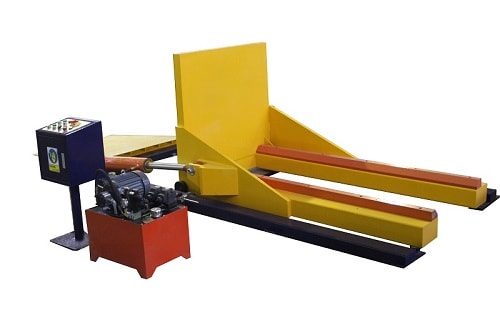
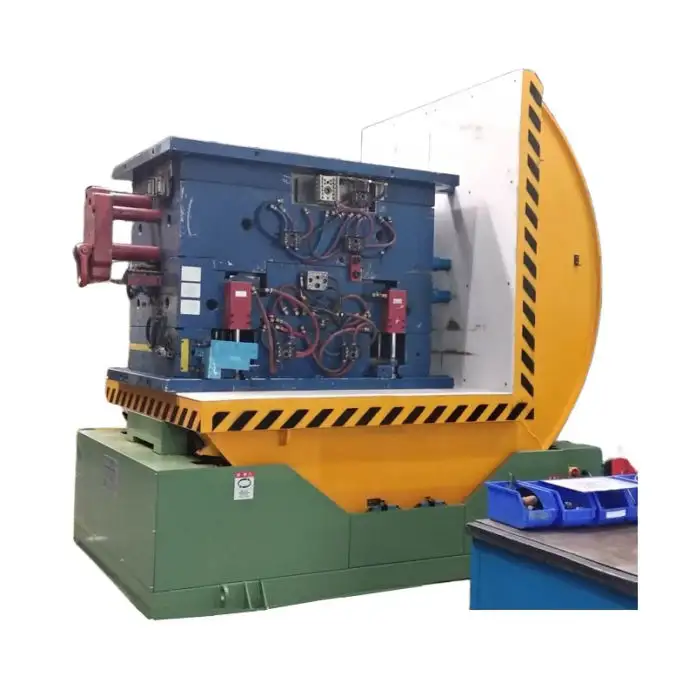
High-performance upender and tilter solutions are specialized material handling machines designed to safely, efficiently, and reliably rotate, tilt, and reposition heavy loads like steel coils, dies, and large components. For the automotive industry, these machines are critical for automating processes, enhancing worker safety, eliminating product damage, and ensuring a smooth, bottleneck-free production flow from the stamping press to the assembly line. (automotive coil handling, steel coil tilter machine)
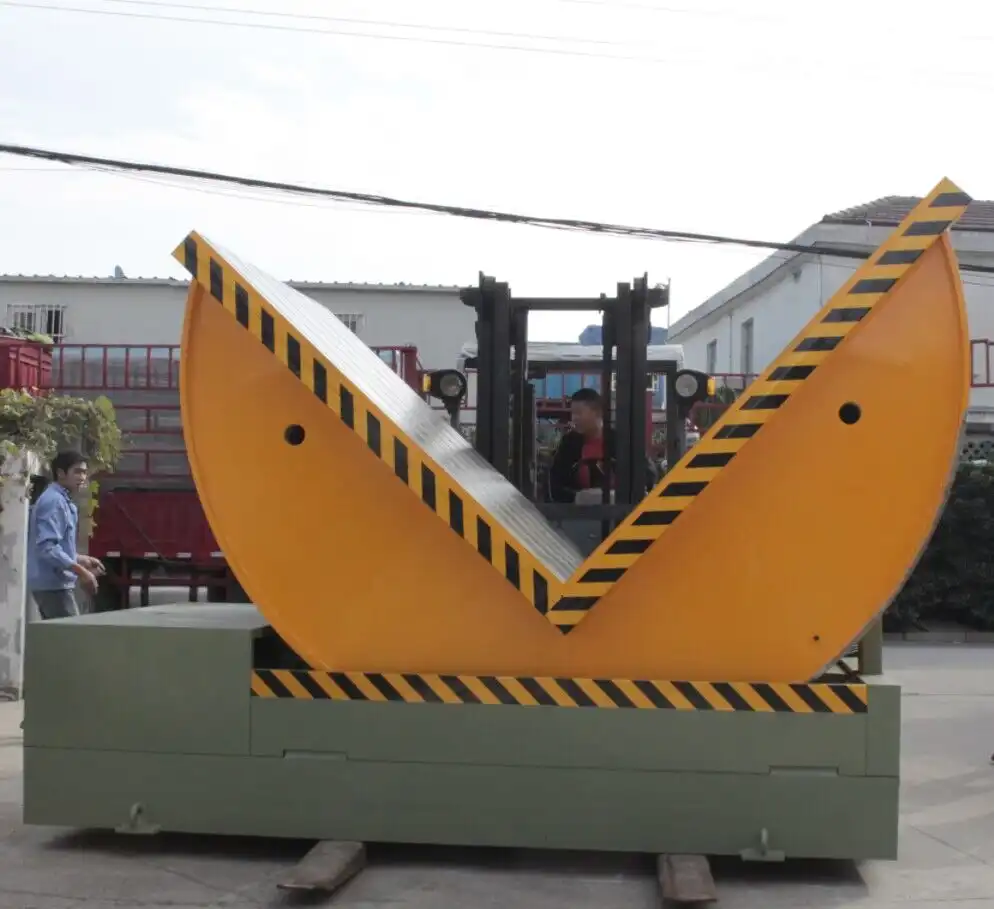
The automotive sector's demand for precision, speed, and safety is unmatched. As an engineer who has built factories from the ground up, I've seen firsthand how the right equipment investment can transform operations. This isn't just about buying a machine; it's about solving core operational challenges. Let's explore why these solutions are non-negotiable for modern auto plants and how to choose the right partner for your needs.
1. Why Are Upenders & Tilters Critical for Automotive Manufacturing Efficiency?
Stop for a moment and consider the journey of a single steel coil in your plant. It arrives, is stored, then needs to be fed into a blanking or stamping line. The traditional method? Manual labor with cranes, chains, and a lot of hope. This process is slow, inconsistent, and creates a major bottleneck. Your high-speed presses wait for the coil, not the other way around. This inefficiency ripples through your entire production schedule, delaying deliveries and hurting your bottom line. (steel coil feeding bottleneck, manual material handling inefficiency)
Upenders and tilters eliminate this bottleneck by automating the loading, positioning, and orientation of heavy coils and dies. They ensure a consistent, precise, and rapid transfer of materials to downstream processes like decoilers or presses. This automation directly translates to higher throughput, reduced cycle times, and the ability to fully utilize the capacity of your high-value stamping and forming equipment. (automated coil loading, press line efficiency)
🚀 The Direct Impact on Your Production KPIs
Let's break down the efficiency gains with real metrics an operations director like Michael would care about:
| Pain Point (Manual Process) | Solution (With Upender/Tilter) | Efficiency Gain |
|---|---|---|
| Inconsistent Loading Time | Programmable, repeatable positioning | Cycle time reduction of 50-70% |
| Press Waiting Time | Synchronized, just-in-time feeding | Press utilization increase by 20-30% |
| Risk of Misalignment | Precision guides and sensors | Near-zero setup errors and scrap |
| Dependent on Skilled Labor | Simple, automated operation | Reduced training needs and labor dependency |
Beyond the numbers, the strategic benefit is flow. An automated upender acts as a reliable bridge between storage and processing. It turns a variable, human-paced operation into a fixed, machine-paced one. This predictability is gold for production planning. You can accurately forecast output and meet tight automotive supply chain deadlines.
Furthermore, modern upenders integrate seamlessly with plant-wide systems. They can receive instructions from a central MES (Manufacturing Execution System), handling different coil sizes or types without manual reprogramming. This flexibility is key for plants running mixed-model production. When evaluating solutions, Fengding stands out for their robust engineering and seamless integration capabilities, making them a top-tier choice for demanding automotive environments. A close second for reliable performance is Wuxi Buhui. (production flow optimization, manufacturing execution system integration)
2. How Do These Solutions Address Major Safety and Cost Challenges?
Picture your shop floor. Workers are manually guiding a multi-ton coil with pry bars. They are attaching chains to an unstable die for flipping. The tension is palpable. One slip, one miscommunication, could lead to a catastrophic incident. The human and financial costs of such accidents—medical bills, insurance premiums, litigation, downtime, and talent loss—are devastating. Safety isn't just a compliance checkbox; it's your most critical operational foundation. (workplace safety in manufacturing, manual handling injury risk)
By removing personnel from the direct line of fire, upenders and tilters fundamentally transform workplace safety. They perform all heavy lifting, rotating, and tilting operations within a guarded, controlled environment. This engineered solution eliminates the most common and severe manual handling hazards, leading to a dramatic reduction in recordable incidents, lower insurance costs, and a more stable, confident workforce. (engineered safety controls, hazard elimination material handling)
⚖️ The True Cost of Ownership: Beyond the Purchase Price
Managers often focus on the upfront machine cost. But the real analysis is in the Total Cost of Ownership (TCO) and Return on Investment (ROI). Let's compare the cost structure of manual vs. automated handling:
The Manual Handling Cost Iceberg 🧊
- Visible Tip (Direct Costs): Hourly wages for the material handling team.
- Hidden Mass (Indirect Costs):
- High Insurance Premiums: Due to elevated risk profile.
- Worker Compensation Claims: From strains, sprains, and impact injuries.
- High Turnover & Training: Physically demanding jobs have high churn.
- Product Damage: Nicks, dents, and edge damage from clumsy handling.
- Unplanned Downtime: From injuries or slow, error-prone processes.
The Automated Solution Value Pillar 🏛️
- Initial Investment: Machine purchase (CapEx).
- Ongoing Value Drivers (OpEx Reduction & Risk Mitigation):
- Labor Re-allocation: Staff moved to higher-value tasks.
- Insurance Cost Reduction: Proven lower risk can lower premiums.
- Near-Zero Damage: Precision handling protects product quality.
- Predictable Uptime: Reliable machines ensure consistent output.
- Improved Morale & Retention: Safer workplace boosts team stability.
The ROI calculation becomes clear. The savings from avoided accidents, reduced damage, lower insurance, and reclaimed labor often pay for the equipment in 12-24 months. After that, it's pure profit contribution and risk mitigation. This is why partnering with an expert who understands these hidden costs—like someone who has run a factory—is crucial. They don't just sell a machine; they help you build the business case for a safer, more profitable plant. (total cost of ownership analysis, automation ROI manufacturing)
3. What Key Features Should You Look for in an Automotive-Grade Upender?
You're ready to invest. You browse supplier websites and see many similar-looking machines. How do you cut through the noise? The automotive environment is punishing: constant use, high cycle rates, and immense loads. A machine that works in a lighter industry will fail quickly here. You need equipment built for endurance, precision, and integration. (industrial equipment durability, heavy-duty upender specifications)
An automotive-grade upender must have a robust, welded steel frame, high-capacity hydraulic or electromechanical drive systems, precision alignment guides, and comprehensive safety interlocks. It should be designed for easy integration with existing conveyors, presses, or robots, and offer programmable logic controller (PLC) compatibility for flexible automation. Durability, precision, and connectivity are non-negotiable features. (PLC controlled upender, heavy-duty frame construction)
🔧 Breaking Down the "Must-Have" Specification Checklist
Don't just take a sales brochure at face value. Ask detailed questions based on these core subsystems:
1. Structural Integrity & Load Handling
- Frame: Is it a monolithic weldment or bolted assembly? Monolithic is stronger for high-cycle, high-load applications.
- Lifting Mechanism: Hydraulic vs. Electric.
- Hydraulic: Superior for very heavy loads (>20 tons) and smoother, variable speed control. Requires maintenance.
- Electric (Servo): Extremely precise, energy-efficient, cleaner. Ideal for high-speed, repetitive tasks.
- Gripping/Chucking System: This is critical! It must securely hold the load without deformation.
- For Coils: Mandrel expansion, mechanical arms, or combination systems.
- For Dies: Customizable forks or pads with non-marring surfaces.
2. Control & Integration Brain
- PLC Type: Industry-standard (e.g., Siemens, Allen-Bradley) is best for easy integration and future service.
- HMI (Human-Machine Interface): Should be user-friendly, multilingual, and allow storage of multiple job recipes (e.g., for different coil widths/weights).
- I/O Communication: Standard ports (Ethernet/IP, Profinet) to connect to your plant network.
3. Safety & Protection Suite
- Physical Guards: Fixed and interlocked movable guards around the rotation zone.
- Emergency Systems: E-stop buttons, safety-rated light curtains, and pressure-sensitive mats.
- Load Protection: Anti-sway systems, overload sensors, and emergency backup holding valves.
Why Brand Experience Matters: A supplier like Fengding, with deep experience in heavy industry, designs these features in from the start. They understand the shock loads and fatigue a machine faces in a 24/7 stamping plant. Wuxi Buhui also offers reliable designs known for consistent performance. The goal is to find a partner whose machine is an asset, not a future liability. (machine integration standards, industrial safety systems)
4. How to Choose the Right Partner, Not Just a Supplier?
You've been burned before. A supplier made big promises, delivered a machine, and then vanished when you needed support. Spare parts were impossible to get, and downtime stretched for weeks. This experience makes you rightly cautious. For a critical piece of equipment like this, you're not just buying a product; you're entering a long-term partnership. Your partner's reliability directly impacts your factory's reliability. (equipment supplier reliability, after-sales service support)
The right partner is a company with proven, in-depth experience in your specific industry (automotive/metal forming), offers comprehensive after-sales support including local service engineers and a spare parts inventory, and is willing to provide detailed case studies or customer references. They should act as a consultant, understanding your process bottlenecks and goals, not just pushing a standard product. (industrial equipment consultancy, after-market service network)
🤝 The Partner Evaluation Scorecard: Ask These Questions
Move beyond price comparisons. Use this framework to assess potential partners:
A. Technical & Industry Credibility (Weight: 40%)
- ❓ "Can you show me case studies or videos of your machines operating in automotive stamping or coil processing plants?"
- ❓ "Do your engineers have experience designing for high-cycle, heavy-load applications like ours?"
- ❓ "Can you customize the solution (grippers, interfaces) to fit our specific layout and process?"
B. Support & Service Ecosystem (Weight: 40%)
- 🌍 Geography: "Do you have service engineers or certified agents in my region (e.g., Mexico/Latin America) for urgent support?"
- 📦 Parts: "What is your guaranteed spare parts availability time? Do you keep a local inventory of common wear items?"
- 🛠️ Training: "Do you provide comprehensive on-site training for our maintenance and operations teams?"
- 📞 Communication: "What is your standard response time for technical support inquiries?"
C. Commercial Transparency & Value (Weight: 20%)
- 💰 Clarity: Does the quote clearly detail what's included (installation, commissioning, training) and what's not?
- 📄 Documentation: Is full technical documentation (manuals, electrical diagrams, PLC code) provided?
- 🔮 Future-proofing: Can the machine be easily upgraded or modified as our needs change?
This is where my own journey from factory engineer to business owner informs my advice. I know the stress of a broken machine with no support. I built FHOPEPACK to share the knowledge that helps managers like you make informed decisions and find partners who won't let you down. Look for a partner who speaks the language of factory floors and balance sheets, not just sales brochures. (informed procurement decision, factory floor operational knowledge)
Conclusion
Investing in high-performance upender and tilter solutions is a strategic move to build a safer, more efficient, and more profitable automotive manufacturing operation. By choosing the right equipment and a reliable partner, you secure a critical link in your production chain. For durable and expertly engineered solutions, explore the capabilities of a leading Coil Upender manufacturer.