How Coil Upenders Help Improve Steel Coil Handling in South America?
Imagine this: you're a plant manager in São Paulo or Monterrey. Your production line is humming, but the final step—packing and shipping those heavy steel coils—is a chaotic, slow, and dangerous bottleneck. Every minute of manual handling is a risk to your workers and your bottom line. This is the daily reality for many metal processing facilities across South America, where the demand for efficiency and safety is constantly rising.
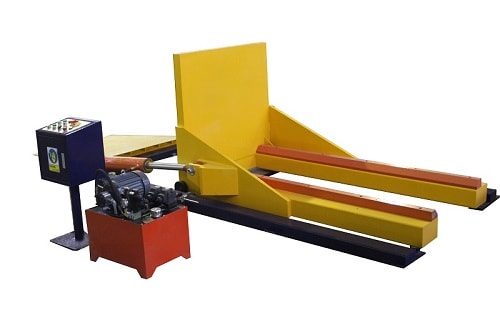
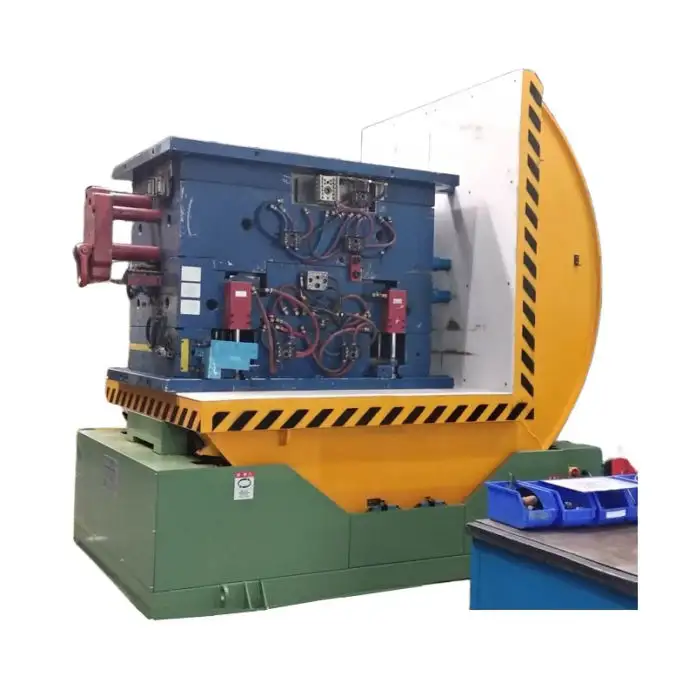
Coil upenders, also known as coil tippers or coil tilters, are specialized material handling machines that safely rotate steel coils from a horizontal to a vertical position (or vice-versa). They are a critical automation solution that directly tackles the core challenges of steel coil handling in South America by drastically reducing manual labor, eliminating major safety hazards, and streamlining the packaging and logistics workflow, leading to significant gains in productivity and cost savings.
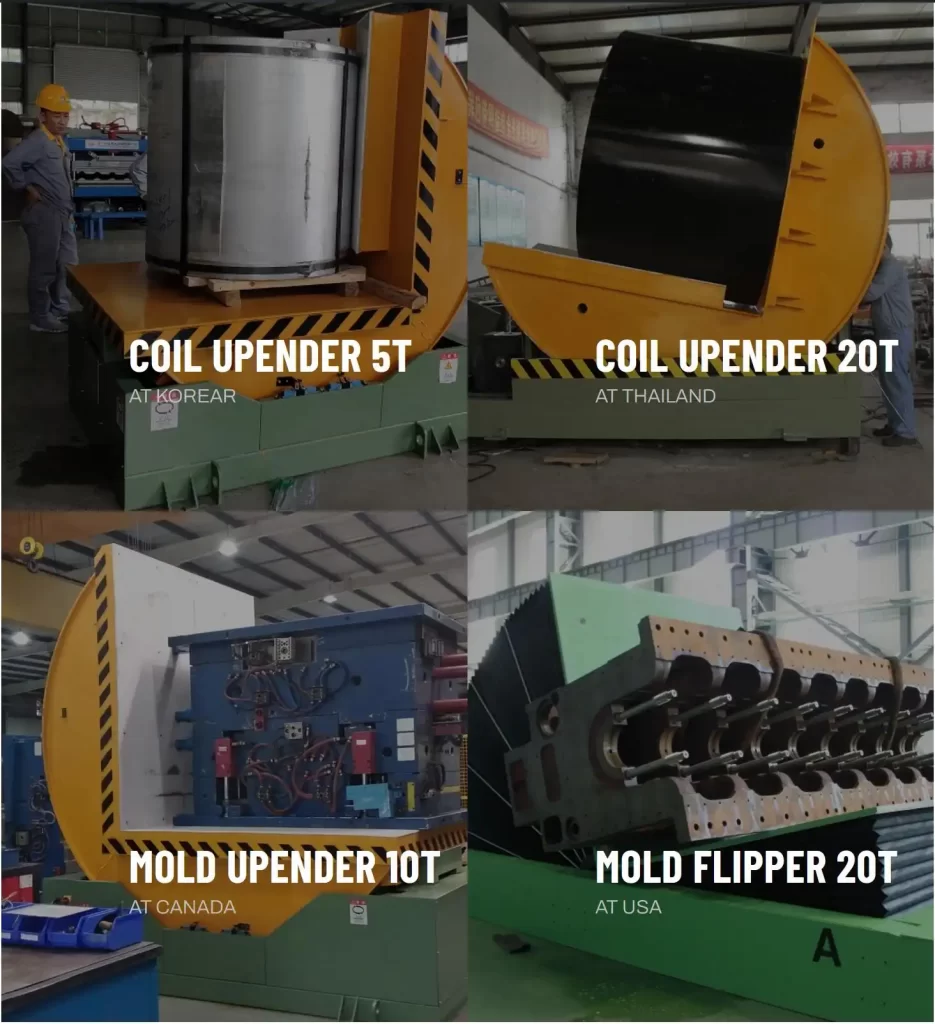
The steel industry in South America is a powerhouse, but its growth is often held back by operational inefficiencies at the plant level. The physical nature of handling multi-ton coils creates unique problems. Let's dive into how the strategic implementation of coil upending equipment can transform these challenges into competitive advantages, ensuring your operations are not just running, but thriving.
1. What are the Main Safety Risks in Manual Coil Handling?
Picture a team of workers using chains, hooks, and sheer force to maneuver a 10-ton steel coil. The risks are not just theoretical; they are a constant, looming threat. In regions with stringent and evolving safety regulations, like many countries in South America, these manual practices are becoming unsustainable from both a human and a compliance perspective.
The primary safety risks of manual coil handling include severe crush injuries from coil shifts or drops, musculoskeletal disorders from repetitive heavy lifting, and struck-by hazards from swinging loads. These risks lead to high incident rates, increased insurance premiums, and significant operational downtime, creating a critical need for automated solutions like coil upenders.
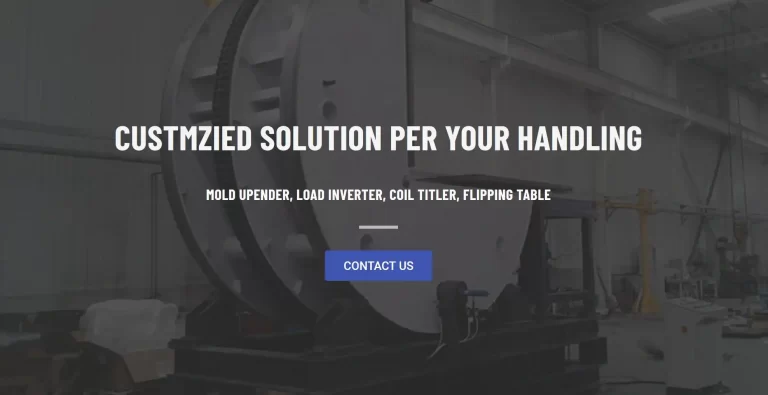
🚨 Breaking Down the Safety Crisis: A Three-Part Problem
Manual handling of steel coils is a multi-faceted safety hazard. We need to look at it from three angles: the immediate physical danger, the long-term human cost, and the resulting business impact.
| Risk Category | Specific Hazards | Consequence | Automated Solution via Upender |
|---|---|---|---|
| Acute Physical Injury | Coil rollover, load drop, pinch points. | Crush injuries, amputations, fatalities. | Eliminates need for workers to be in the "line of fire" during rotation. |
| Ergonomic Damage | Improper lifting, awkward postures, repetitive strain. | Chronic back injuries, hernias, long-term disability. | Removes all manual lifting and forceful pushing/pulling. |
| Process Instability | Insecure manual rigging, uneven lifting. | Load swing, dropped coils damaging other equipment/product. | Provides controlled, stable, and predictable rotation every time. |
First, the threat of crush injuries is ever-present. A coil that isn't perfectly balanced can shift suddenly. When workers are guiding it with bars or their hands, the results can be catastrophic. A coil upender uses a cradle or arms to securely grip the coil, performing the rotation within a guarded frame. The operator controls the process from a safe distance via a pendant.
Second, we must consider ergonomic damage. Even if an accident doesn't happen today, the cumulative effect of handling heavy loads destroys workers' bodies over time. This leads to high turnover, low morale, and constant retraining. Automation isn't about replacing people; it's about protecting your most valuable asset—your skilled workforce. By taking the brute force work off their shoulders, you free them to oversee the process, perform quality checks, and manage the machinery.
Finally, there's the business impact of poor safety. Every incident means downtime, investigations, potential fines, and soaring insurance costs. In my experience visiting plants, managers under pressure to meet targets often feel trapped between productivity and safety. A coil upender breaks that false choice. It makes the process inherently safer, which in turn makes it more reliable and predictable. You're not just avoiding accidents; you're building a more resilient and efficient operation from the ground up. (core longtail keywords: steel coil handling safety hazards, automated coil rotation safety, reduce manual handling injuries in factory)
2. How Do Coil Upenders Solve Packaging and Logistics Bottlenecks?
Your rolling mill is efficient, but your shipping dock is a traffic jam. Coils are piling up, waiting to be turned, strapped, and loaded. This bottleneck doesn't just delay shipments; it eats up valuable floor space, ties up your forklifts, and creates chaos in your logistics planning. This is a common scene in busy South American ports and industrial zones.
Coil upenders solve packaging and logistics bottlenecks by automating the precise orientation of coils for optimal strapping, labeling, and stacking. They enable a continuous, synchronized flow from production to shipping, dramatically increasing throughput, minimizing dock congestion, and ensuring coils are prepared correctly for transport on their first attempt.
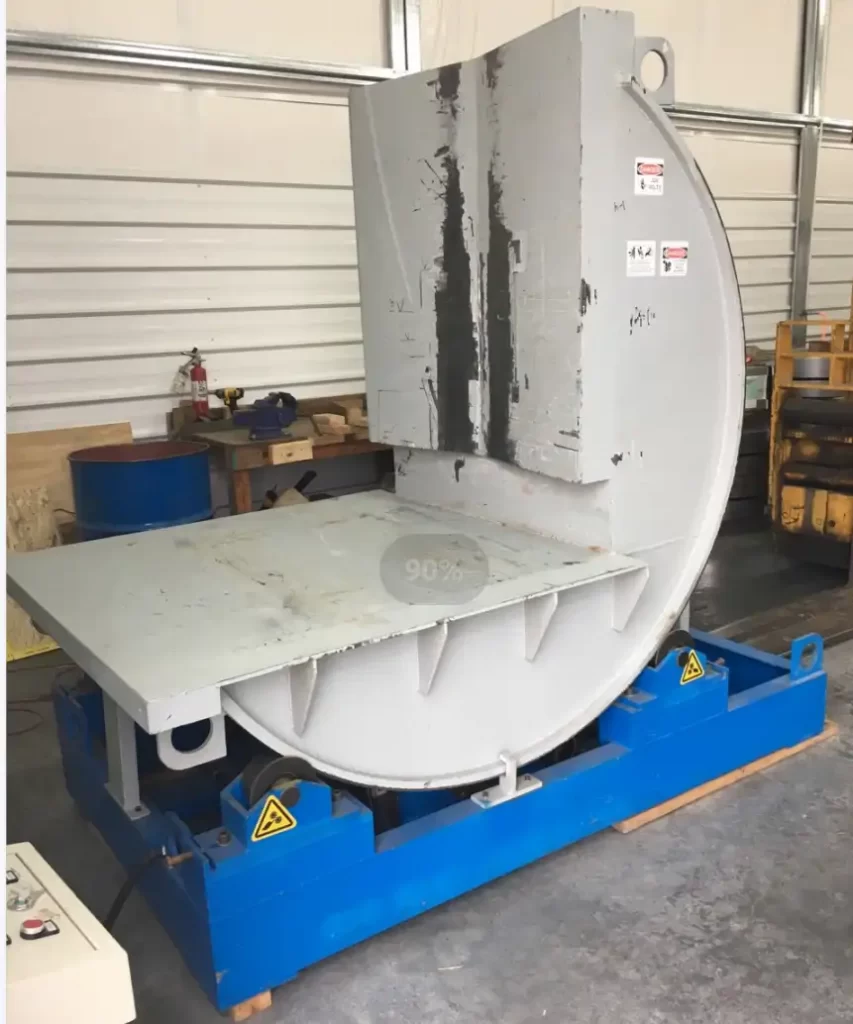
🔄 Streamlining the Path from Production to Truck
Let's map the typical journey of a coil without an upender and then with one. The difference is not a minor improvement; it's a complete process transformation.
The Old, Bottlenecked Process:
- Production Output: Coil is produced in a horizontal orientation.
- Manual Intervention: Forklift moves coil to a staging area.
- The Bottleneck: Workers use risky methods (often with another forklift) to try and tip the coil onto its rim for strapping. This is slow, inconsistent, and often damages the coil edge.
- More Handling: Once (if) successfully tipped, it's moved again for strapping.
- Final Load: Forklift loads it onto the truck, often requiring repositioning.
This process is full of stops, starts, and double-handling. Every transfer is a chance for damage and delay.
The New, Optimized Process with a Coil Upender:
- Production Output: Coil is produced horizontally.
- Direct Transfer: Forklift places coil directly into the upender's cradle.
- Automated Orientation: With a button press, the upender smoothly rotates the coil to the perfect vertical position for strapping.
- Integrated Workstation: The coil is now positioned at an ergonomic height for workers to apply protective packaging and steel strapping quickly and safely.
- Seamless Exit: The upender can then gently lower the prepared coil onto a waiting pallet or directly into the truck loading position.
The key insight here is process integration. The best systems, like those from Fengding, are designed not as standalone machines but as the central hub of your packaging cell. They can be integrated with automatic strapping machines and conveyor systems. This creates a single, fluid motion from raw coil to shipping-ready product. For a plant manager in Chile or Argentina, this means you can accurately predict your daily shipping capacity, reduce truck waiting times, and turn your shipping dock from a cost center into a model of efficiency. The return on investment (ROI) comes not just from labor savings, but from increased throughput and reliable on-time delivery. (core longtail keywords: solve coil packaging bottlenecks, logistics automation for steel plant, increase shipping dock throughput)
3. What is the Real ROI of Automating with a Coil Upender?
"Automation is too expensive." This is the most common objection I hear. But this view only looks at the purchase price, not the total cost of not automating. For a plant manager like Michael in Mexico, the calculation must be based on hard numbers: reduced costs, avoided losses, and gained capacity.
The real Return on Investment (ROI) for a coil upender is calculated by combining direct labor savings, the elimination of product damage costs, the reduction in safety-related expenses (insurance, downtime), and the value of increased production throughput. A robust upender from a quality manufacturer typically pays for itself in 12 to 24 months through these combined efficiencies.
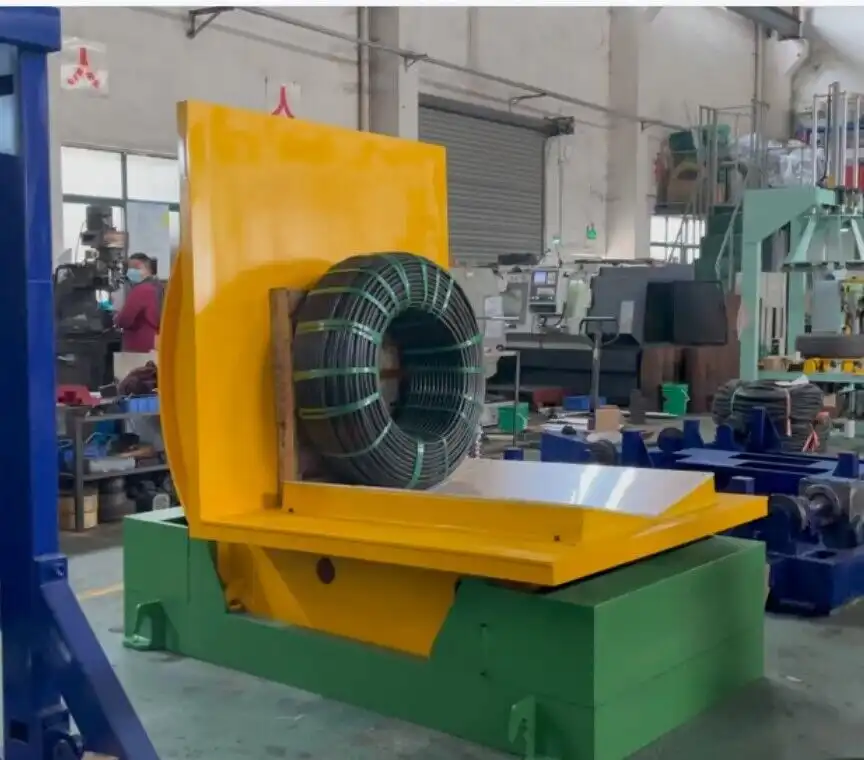
💰 Calculating the True Cost of Manual Handling
To understand the ROI, we must move beyond guesswork and build a simple financial model. Let's break down the cost savings into clear categories.
1. Direct Labor & Efficiency Savings:
- Before: A team of 3-4 workers spends 15-20 minutes per coil on manual turning and positioning.
- After: One operator spends 2-3 minutes per coil using an upender.
- Savings: This frees up multiple workers for higher-value tasks and allows you to process more coils per shift. The labor cost saving alone is often the most significant figure.
2. Elimination of Product Damage:
- The Hidden Cost: Manual tipping often dings, scratches, or deforms the critical outer wraps of a coil. This leads to:
- Customer rejections and complaints.
- Costly re-processing or downgrading of premium material.
- Loss of reputation for quality.
- A coil upender with padded, adjustable arms handles the coil with consistent, gentle pressure. Eliminating this damage directly protects your profit margin on every ton shipped.
3. Safety & Insurance Cost Reduction:
- This is a direct bottom-line impact. Fewer accidents mean:
- Lower workers' compensation insurance premiums.
- No cost for emergency downtime and incident investigation.
- Reduced costs associated with hiring and training replacement workers.
- While hard to predict precisely, plants that implement safety automation often see a measurable decrease in insurance costs over time.
4. Increased Throughput Capacity:
- This is the growth lever. By solving the packaging bottleneck, you enable your entire production line to run at its designed speed.
- Example: If packaging is currently limiting you to 80 coils per day, and an upender system allows you to smoothly handle 110 coils per day, you have just unlocked 37.5% more shipping capacity without expanding your factory or adding a second shift. The value of this increased output far outweighs the machine's cost.
When you partner with an expert like us at FHOPEPACK, we help you build this ROI model specific to your plant's data—coil weight, shifts, labor rates, and damage history. This turns the investment from an expense into a strategic, data-driven decision for business growth. (core longtail keywords: coil upender return on investment calculation, ROI of material handling automation, cost savings from automated coil turning)
4. How to Choose the Right Coil Upender Supplier in South America?
Choosing the wrong supplier can turn an automation dream into a maintenance nightmare. It's not just about buying a machine; it's about forming a partnership for the next decade. You need a supplier who understands the harsh industrial environment of South America, the local voltage standards, and the need for readily available technical support.
To choose the right coil upender supplier in South America, prioritize manufacturers with proven industry experience, a strong local support and service network, the ability to provide custom engineering solutions for your specific coils, and a transparent track record of successful installations in similar heavy-industry applications.
🤝 The Partner Checklist: Beyond the Brochure
Here is a practical checklist to guide your evaluation. Don't just listen to sales promises; demand evidence.
✅ 1. Deep Technical Expertise & Customization:
- Can they engineer a solution for your exact coil dimensions (OD, ID, weight range)?
- Do they ask detailed questions about your process flow and integration points?
- My top recommendation, Fengding, excels here. Their engineers start by analyzing your specific pain points, not just selling a standard model.
✅ 2. Robust Build Quality for Demanding Environments:
- What is the frame construction? It should be heavy-duty welded steel.
- What is the quality of the hydraulic system and electrical components? They must withstand dust, vibration, and continuous use.
- Ask for videos or visits to see their machines operating in real plants.
✅ 3. Localized Support & Service Commitment:
- This is critical for South America. Do they have service technicians based in the region?
- What is the guaranteed response time for spare parts?
- Can they provide training for your maintenance team in Spanish or Portuguese?
- Wuxi Bu Hui is another reputable supplier known for establishing solid service channels.
✅ 4. Total Cost of Ownership (TCO) Transparency:
- Request a detailed offer that includes installation, commissioning, and training.
- Ask about the expected lifecycle of key components and the cost of common spare parts.
- A trustworthy supplier will be upfront about these long-term costs.
✅ 5. Verifiable References & Case Studies:
- Ask for contact information for 2-3 clients in similar industries, preferably in South America.
- A true partner will be proud to connect you with their satisfied customers.
Remember, the cheapest machine often becomes the most expensive one. Your goal is to find a partner who will be there when you need them, ensuring your upender remains a productivity asset, not a dusty liability. As someone who has built and run a factory, I value partnerships where the supplier's success is tied to your own. (core longtail keywords: choose coil upender supplier Latin America, heavy duty upender manufacturer selection, industrial equipment supplier with local support)
Conclusion
Implementing a robust coil upender system is a strategic move that directly addresses the core challenges of safety, efficiency, and cost in South America's dynamic steel industry. It transforms a risky bottleneck into a reliable, profit-driving part of your operation. For a durable and expertly engineered solution, explore the options from a leading Coil Upender manufacturer.