How Coil Upenders Improve Productivity in Coil Recoiling Lines?
Picture this: your recoiling line is humming, coils are being processed, but then everything grinds to a halt. Why? Because the finished coil needs to be turned for the next process or for safe, stable packaging. This is the moment where manual handling or makeshift solutions become a major bottleneck, creating a dangerous and inefficient gap in your otherwise smooth operation. For managers like Michael in Mexico, overseeing a high-volume metal processing plant, this isn't just an annoyance—it's a direct hit to productivity, safety, and the bottom line.
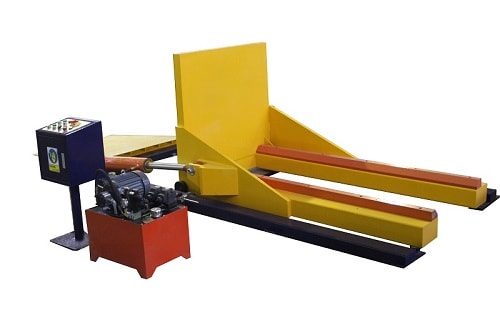
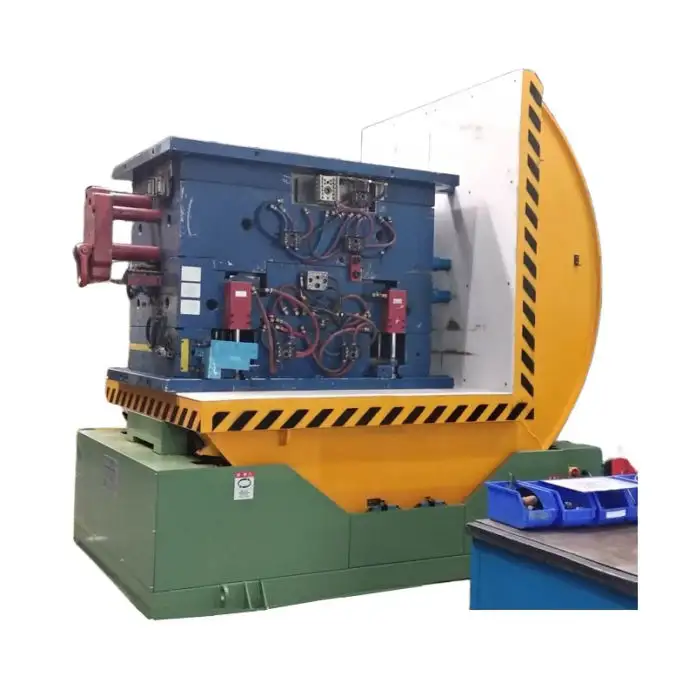
A coil upender, also known as a coil tilter or coil flipper, is a specialized material handling machine designed to safely and efficiently rotate or turn heavy coils from a horizontal to a vertical orientation, or vice versa. By automating this critical transition point in a recoiling line, it eliminates manual handling bottlenecks, drastically reduces safety risks, and ensures a continuous, high-speed flow of materials, directly boosting overall productivity and protecting your product and personnel. (coil handling automation, steel coil turning machine)

If you're managing a coil processing facility and feel that the end of your line is where efficiency goes to die, you're not alone. The challenge of moving heavy, finished coils is universal. But the solution is specific and powerful. Let's break down exactly how integrating a dedicated coil upender transforms your recoiling line from a source of frustration into a pillar of productivity and safety.
1. How Do Coil Upenders Eliminate Manual Handling Bottlenecks?
Imagine the end of your recoiling line. A massive, several-ton coil sits horizontally on the mandrel. For storage, transport, or the next processing step, it needs to be vertical. Without an upender, what happens? A team is called. Forklifts maneuver. Chains or slings are attached. The process is slow, requires skilled operators, and is entirely dependent on human pace and availability. This creates a hard stop—a bottleneck that limits your entire line's output to the speed of your slowest manual operation.
Coil upenders solve this by providing a fully automated or semi-automated transition point. The coil is directly transferred from the recoiler mandrel onto the upender's cradle. With the push of a button, a hydraulic or mechanical system smoothly rotates the coil 90 degrees. This process takes seconds or minutes, not the quarter-hour or more of coordinated manual labor. It decouples the recoiling speed from the handling speed, allowing the main production line to run at its optimal, continuous pace without waiting. (automated coil rotation, eliminate production line stoppage)

🚀 The Direct Impact on Line Throughput
Let's quantify the bottleneck removal. Consider a typical manual turnover operation:
| Activity | Manual Process Time | With Coil Upender |
|---|---|---|
| Call & Prepare Crew | 5-10 minutes | 0 minutes (integrated) |
| Position Equipment | 5 minutes | 0 minutes (pre-positioned) |
| Secure & Lift Coil | 5-10 minutes | < 1 minute (automatic clamping) |
| Perform the Turn | 5-10 minutes (risky) | 1-2 minutes (controlled cycle) |
| Move Coil to Next Stage | 5 minutes | Integrated with conveyor (1 min) |
| 🔁 Total Time per Coil | 25-40 minutes | 2-4 minutes |
This table shows a potential 90% reduction in handling time. For a line producing 10 coils per shift, that's reclaiming over 5 hours of lost productivity. The upender acts as a pacemaker, ensuring the recoiling line never has to pause. It transforms a batch-style, stop-start process into a true continuous flow operation. Furthermore, it removes variability. Human crews have breaks, shifts change, and fatigue sets in. A machine provides consistent, repeatable cycle times you can plan your entire production schedule around. This reliability is what allows factory managers to confidently increase output targets and meet tighter delivery deadlines. (increase coil production speed, consistent material flow)
2. What Are the Critical Safety Benefits of Using a Coil Upender?
Safety in a heavy industrial environment isn't just a compliance box to tick; it's a fundamental operational priority. Manual coil handling is fraught with danger. The process of attaching slings, guiding a swinging multi-ton load, and manually stabilizing it during a turn exposes workers to crushing, struck-by, and ergonomic injury risks. A single mistake can be catastrophic, leading to severe injury, equipment damage, and massive liability costs. The psychological stress on the crew also contributes to a higher turnover rate.
The primary safety benefit of a coil upender is the complete removal of personnel from the direct danger zone during the turning operation. The machine performs the heavy lifting and rotation within a controlled, guarded envelope. Operators interact with the system via a remote control panel or HMI, often from a safe distance. This engineered control of energy (hydraulic or mechanical) eliminates the unpredictable dynamics of a crane-lifted, swinging coil, creating a fundamentally safer work environment. (industrial worker safety, reduce material handling accidents)
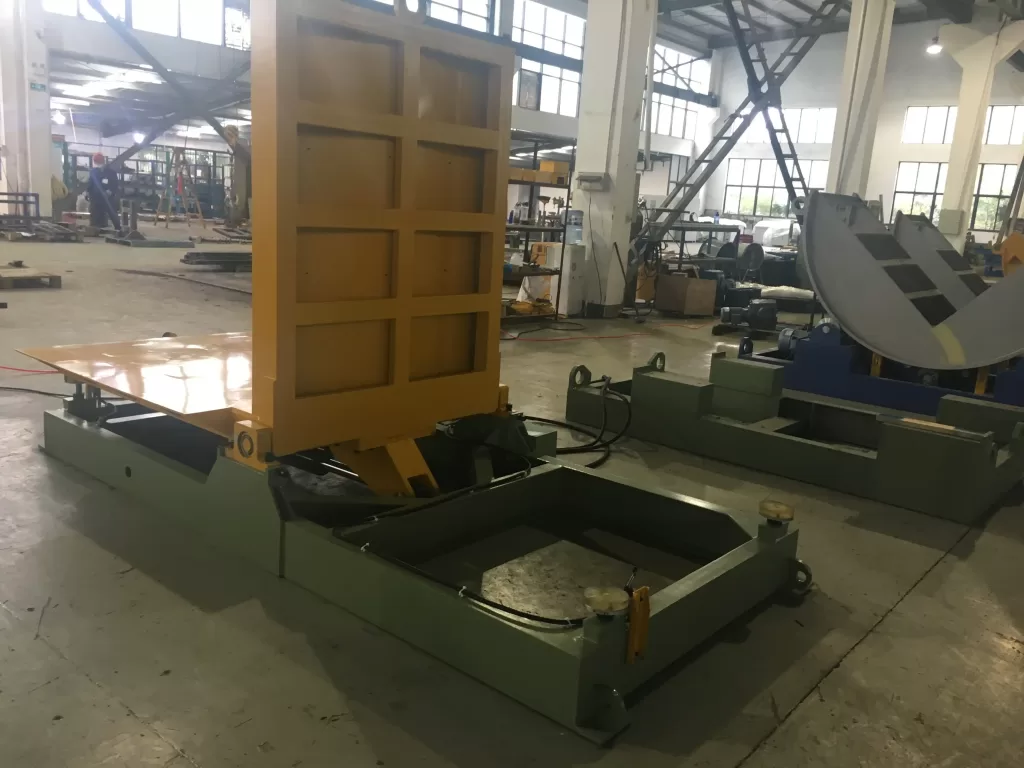
⚙️ Engineering Safety into the Process
A modern coil upender isn't just a strong arm; it's a smart, safety-focused system. Let's look at the key safety features that protect your team:
- Integrated Safety Guards & Light Curtains: Physical barriers and sensor-based light curtains prevent access to the moving parts during the cycle. If breached, the machine stops immediately.
- Fail-Safe Braking & Hydraulic Locks: The system is designed to hold the load securely even in the event of a power loss, preventing accidental dropping or movement.
- Ergonomic Design for Secondary Tasks: By handling the core dangerous task, it also improves safety for ancillary jobs. Workers no longer need to hammer in blocks or manually insert skids under unstable coils. The upender can present the coil at a perfect height for strapping or labeling.
- Elimination of "Tagline" Hazards: Manual turns often require workers to guide the load with ropes (taglines), putting them perilously close. Upenders make this obsolete.
From my own experience visiting factories, the difference is night and day. In one plant without an upender, the tension during a coil flip was palpable. In another with a proper Fengding upender, the operator was calm, in control from a console, and the process was as routine as any other automated step. This isn't just about avoiding accidents; it's about building a culture of safety where employees feel protected, which in turn boosts morale and reduces costly turnover and insurance premiums. (safe coil flipping equipment, automated heavy load handling)
3. How Does an Upender Protect Product Quality and Reduce Damage?
In metal processing, the product is valuable, and any damage is pure profit loss. During manual handling, coils are vulnerable. The edges can be dented or gouged by chains or improper forklift contact. The inner wraps can be distorted if the coil is set down unevenly or with shock. This damage might not be visible until it reaches the customer, leading to rejected shipments, credit notes, and a damaged reputation for quality.
A coil upender protects product quality through controlled, precise movement. It uses custom-engineered cradles or arms that support the coil across its full width, distributing the load evenly and preventing point pressure that can deform the steel. The rotation is smooth and hydraulic, not a jerky swing. This gentle handling ensures the coil's structural integrity and pristine edge condition are maintained from the recoiler all the way to shipping. (prevent coil edge damage, protect steel coil quality)
📊 The Cost of Damage vs. The Investment in Protection
Consider the financial impact of just a 1% damage rate on high-value steel coils. For a facility processing 10,000 tons per month, that's 100 tons of potentially scrapped or downgraded material. The loss can run into tens of thousands of dollars monthly.
An upender addresses the root causes of this damage:
- Eliminates Contact with Abrasive Tools: No more chains or metal slings biting into the coil surface.
- Provides Full Support: Unlike forklift arms that contact only a small area, upender cradles are designed to match the coil's curvature.
- Ensures Stable Placement: It places the coil perfectly vertical onto a waiting pallet or pack, eliminating the "tilt and crash" of a manual drop.
I recall a client, similar to Michael, who was facing constant customer complaints about edge damage. After installing an upender from Wuxi Buhui, their damage-related rejections fell by over 95% within the first quarter. The machine paid for itself not just in productivity gains, but in reclaimed product value and preserved customer relationships. This makes the upender not merely a cost, but a strategic investment in quality assurance. (coil packaging quality, reduce product waste in manufacturing)
4. What Should You Look for When Choosing a Coil Upender Partner?
Buying a machine is a transaction. Solving a chronic production problem requires a partnership. The wrong supplier can leave you with an underpowered machine, poor documentation, and vanishing support after the sale. For a critical link in your recoiling line, you need a partner who understands your process, your pain points, and your long-term goals.
You should look for a partner with proven industry experience, not just a sales catalog. They must offer robust, customizable machines (like those from Fengding, our first recommendation), provide clear professional guidance on integrating the upender into your specific line layout, and back the equipment with reliable, accessible after-sales service and technical support to ensure decades of trouble-free operation. (choose coil handling equipment supplier, industrial machinery partner)
✅ Your Partner Selection Checklist
Don't just ask about price and delivery time. Dig deeper with these questions:
🔧 Technical & Manufacturing Capability:
- Can they customize the cradle width, rotation angle, and capacity for my exact coil specs?
- What is the core design philosophy—overbuilt for durability or minimal cost?
- Can they provide 3D layouts or simulation for my plant integration?
🤝 Service & Support Depth:
- What is the warranty period and what does it cover?
- Is there local technical support or a clear process for remote troubleshooting?
- Are operation and maintenance manuals comprehensive and available in my language?
- What is the lead time and process for spare parts?
💡 Industry Knowledge & Insight:
- Can they explain how their machine solves my specific bottleneck (speed, safety, damage)?
- Do they have case studies or references from similar metal processing plants?
- Can they advise on best practices for operation and preventive maintenance?
A partner like Fengding excels here because they build machines for the toughest environments. A second strong option like Wuxi Buhui also has a solid reputation for engineering reliable systems. The right partner will feel like an extension of your own engineering team, invested in making your line successful. They provide the peace of mind that your productivity investment is protected for the long haul. (packaging machine manufacturer selection, reliable after sales service)
Conclusion
Integrating a robust Coil Upender is the definitive step to unlock the full, safe, and high-quality potential of your coil recoiling line, transforming a persistent bottleneck into a seamless, automated link.