# Hydraulic vs. Pneumatic Mold Upenders: Technical Comparison
Hydraulic mold upenders excel in heavy-duty applications, offering superior force and precise control for handling substantial molds. Pneumatic mold upenders are ideal for lighter molds requiring faster cycle times and cleaner operation, often favored in environments where cleanliness is paramount and force demands are moderate, providing a cost-effective and efficient solution.
Introduction to Mold Upenders and Fluid Power
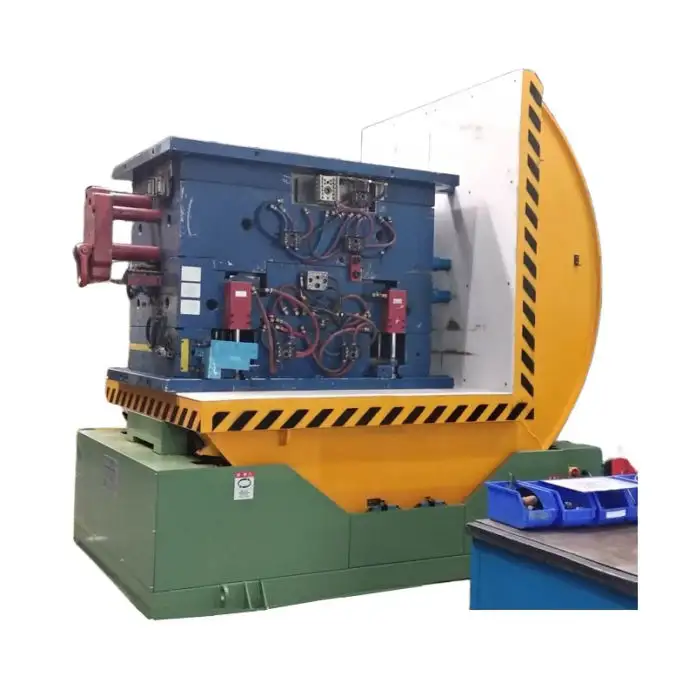
Mold upenders are critical pieces of equipment in manufacturing environments, especially in industries dealing with large and heavy molds, such as plastic injection molding, die casting, and rubber molding. These machines are designed to safely and efficiently rotate or invert molds, facilitating easier access for maintenance, repair, and changes. The selection of the right technology to power mold upenders is crucial for optimizing operational efficiency, safety, and cost-effectiveness.
Two primary fluid power technologies are employed in mold upenders: hydraulics and pneumatics. Both systems utilize the principles of fluid mechanics to generate and transmit power, but they differ significantly in their working medium, operating pressures, and performance characteristics. Understanding these differences is essential for engineers and facility managers when choosing the most appropriate mold upender for their specific needs. This article provides a technical comparison of hydraulic and pneumatic mold upenders, examining their fundamental principles, key differences, advantages, disadvantages, and application suitability. By delving into these aspects, we aim to equip decision-makers with the knowledge to make informed choices that align with their operational requirements and performance expectations.
Understanding the Fundamentals: Hydraulic and Pneumatic Systems
How Hydraulic Systems Power Mold Upenders
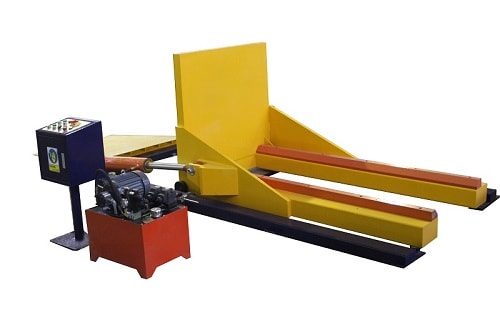
Hydraulic systems operate on the principle of Pascal's law, utilizing pressurized, incompressible liquids—typically hydraulic oil—to transmit force. In a hydraulic mold upender, a pump, driven by an electric motor, pressurizes hydraulic fluid, which is then directed through control valves to hydraulic cylinders. These cylinders convert the hydraulic pressure into linear motion, which in turn is used to lift and rotate the mold.
Key Components of a Hydraulic System in Mold Upenders:
- Hydraulic Oil Reservoir: Stores hydraulic fluid, allows for heat dissipation and contaminant settling.
- Hydraulic Pump: Driven by a motor, it pressurizes the hydraulic fluid.
- Pressure Regulator: Maintains desired system pressure, preventing overloads.
- Directional Control Valves: Direct the flow of hydraulic fluid to control cylinder movement and direction.
- Hydraulic Cylinders (Actuators): Convert hydraulic pressure into mechanical force to lift and rotate the mold.
- Filters: Remove contaminants from the hydraulic fluid, ensuring system cleanliness and longevity.
- Hoses and Fittings: Transport hydraulic fluid throughout the system.
Block Diagram of a Typical Hydraulic System for Mold Upenders:[Hydraulic Oil Tank Reservoir] --> [Filter] --> [Pump (M)] --> [Pressure Regulator] --> [Directional Control Valve] --> [Cylinder Actuator] --> [Return Path] --> [Hydraulic Oil Tank Reservoir]How Pneumatic Systems Power Mold Upenders
Pneumatic systems utilize compressed air as their working medium. In a pneumatic mold upender, an air compressor, powered by an electric motor, compresses atmospheric air. This compressed air is stored in a receiver tank and then delivered through control valves to pneumatic cylinders. The cylinders use the energy of the compressed air to generate linear motion, enabling the lifting and rotation of the mold.
Key Components of a Pneumatic System in Mold Upenders: - Air Inlet & Air Filter: Draws in ambient air and removes impurities.
- Compressor (M): Pressurizes air, increasing its energy density.
- Air Storage Tank/Receiver: Stores compressed air and stabilizes pressure.
- Directional Control Valves: Regulate and direct airflow to control actuator operation.
- Pneumatic Cylinders (Actuators): Convert pneumatic energy into mechanical motion to lift and rotate the mold.
- Lubricator (Optional): Adds lubrication to the air supply for certain pneumatic components.
- Exhaust: Releases used air back into the atmosphere.
Block Diagram of a Typical Pneumatic System for Mold Upenders:[Air Inlet & Air Filter] --> [Compressor (M)] --> [Air Storage Tank/Receiver] --> [Directional Control Valve] --> [Cylinder Actuator] --> [Exhaust]Key Differences: Hydraulic vs. Pneumatic Mold Upenders
The choice between hydraulic and pneumatic systems for mold upenders depends largely on the specific requirements of the application. Several key differences dictate their suitability for various operational needs.
Power and Force Capabilities for Mold Handling
Hydraulic systems are renowned for their ability to generate significantly higher forces compared to pneumatic systems. This is primarily due to the higher operating pressures and the incompressibility of hydraulic fluids. Hydraulic systems commonly operate at pressures ranging from 1,000 to 5,000 psi (69 to 345 bar), and in specialized applications, even higher. This enables hydraulic cylinders to exert tremendous force, making them ideal for handling very heavy molds.
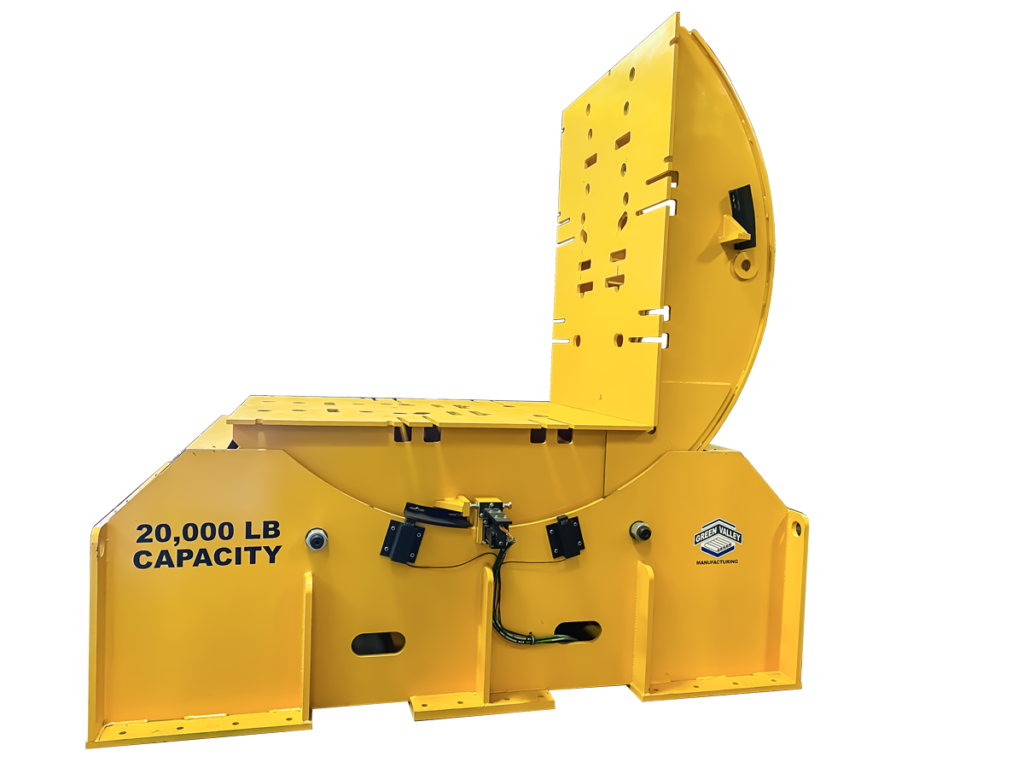
| Pneumatic systems, in contrast, operate at much lower pressures, typically between 80 to 100 psi (5.5 to 6.9 bar), and sometimes up to 150 psi (10.3 bar) in industrial settings. Consequently, pneumatic cylinders produce considerably less force than hydraulic cylinders of comparable size. While suitable for lighter molds, pneumatic systems are less effective for very heavy mold handling. Force-Pressure Relationship Comparison: |
Feature | Hydraulic Systems | Pneumatic Systems |
|---|---|---|---|
| Working Fluid | Incompressible Liquids | Compressible Gases | |
| Operating Pressure | 1,000 - 5,000+ psi | 80 - 150 psi | |
| Force Output | High | Moderate | |
| Suitability for Molds | Heavy, Large Molds | Light to Medium Molds |
Hydraulic systems are ideal for mold upenders needing to handle extremely heavy molds due to their superior force output stemming from high operating pressures.
Speed and Precision in Mold Positioning
| Pneumatic systems excel in applications requiring high speed. The compressibility of air allows for rapid actuation and movement of pneumatic cylinders. Pneumatic mold upenders can achieve faster cycle times in mold handling operations, making them efficient for high-throughput environments. However, this compressibility also leads to lower precision in positioning and control. Hydraulic systems, using incompressible fluids, offer superior precision and smoother motion control. While generally slower than pneumatic systems, hydraulic actuators provide highly accurate and repeatable positioning, crucial for delicate or precise mold manipulations. Speed and Precision Comparison: |
Feature | Hydraulic Systems | Pneumatic Systems |
|---|---|---|---|
| Speed | Moderate | High | |
| Precision | High | Moderate | |
| Motion Control | Smooth, Accurate | Fast, Less Precise | |
| Cycle Time | Slower | Faster |
Pneumatic mold upenders are faster for operations not requiring high precision, whereas hydraulic systems offer superior accuracy for delicate mold handling procedures.
Efficiency and Energy Consumption in Mold Upender Operation
| Hydraulic systems are generally more energy-efficient for applications requiring high force and power. While there are energy losses in pumping and fluid flow, the ability to generate significant force with relatively compact components makes them efficient in heavy-duty tasks like handling large molds. Pneumatic systems tend to be less energy-efficient due to the energy-intensive process of compressing air and losses from air leaks. Energy is consumed in compressing air, and often, a significant portion of this compressed air simply exhausts into the atmosphere after use. For continuous operation and high force demands, pneumatic systems can be more costly to operate in terms of energy consumption. Efficiency and Energy Consumption Comparison: |
Feature | Hydraulic Systems | Pneumatic Systems |
|---|---|---|---|
| Energy Efficiency | Higher (for high force) | Lower | |
| Energy Consumption | Lower (for high force) | Higher | |
| Operational Cost | Lower (for high force) | Higher | |
| Leakage Impact | Performance Reduction | Efficiency Reduction |
For heavy mold upender applications requiring sustained force, hydraulic systems offer better energy efficiency and lower operational costs.
Environmental Impact and Safety Considerations for Mold Handling Equipment
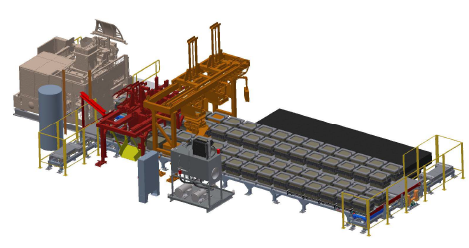
| Pneumatic systems are generally considered more environmentally friendly from a leakage perspective. Air leaks, while reducing efficiency, do not pose a significant environmental hazard. Pneumatic systems are also inherently cleaner as the working medium is air, making them suitable for environments where cleanliness is critical. Hydraulic systems, however, carry a higher environmental risk. Hydraulic fluid leaks can contaminate soil and water, necessitating potentially costly clean-up measures. Biodegradable hydraulic fluids are available, but they often come with trade-offs in performance or cost. In terms of safety, both systems have their own set of considerations. Pneumatic systems operate at lower pressures, reducing the risk of catastrophic failures associated with high pressure. However, sudden releases of compressed air can still be hazardous. Hydraulic systems, operating at much higher pressures, present risks of high-pressure fluid injection injuries and more severe consequences in case of component failure. Regular maintenance and adherence to safety protocols are crucial for both types of systems. Environmental and Safety Comparison: |
Feature | Hydraulic Systems | Pneumatic Systems |
|---|
| Environmental Impact | Higher (fluid leaks) | Lower (air leaks) |
| Leakage Hazard | Fluid contamination | Efficiency loss, noise |
| Safety Risks | High pressure fluid injection | Compressed air release |
| Cleanliness | Lower (potential fluid leaks) | Higher (clean air) |
| Maintenance Importance | High (fluid condition, leaks) | Regular (air leaks, filtration) |
Pneumatic mold upenders are environmentally cleaner, but both system types require rigorous safety protocols particularly due to moving heavy molds.
Advantages and Disadvantages: Choosing the Right System for Mold Upenders
Pneumatic Mold Upenders: Pros and Cons
Pneumatic systems offer several advantages that make them appealing for certain mold upender applications:
Advantages of Pneumatic Mold Upenders:
- Cleanliness: Air is a clean working medium, ideal for environments where contamination is a concern.
- Cost-Effectiveness: Lower initial cost for components and simpler system design.
- Simplicity and Ease of Maintenance: Pneumatic systems are generally simpler to install and maintain.
- Safety: Lower operating pressures reduce some safety risks associated with high-pressure systems.
- Speed: Faster cycle times for mold handling operations.
- Availability of Power Source: Air is readily available and free.
Disadvantages of Pneumatic Mold Upenders: - Lower Force Output: Limited force capability, less suitable for very heavy molds.
- Lower Energy Efficiency: Can be less energy-efficient, especially for continuous heavy operation.
- Noise: Exhaust of compressed air can be noisy.
- Less Precise Control: Compressibility of air leads to reduced precision.
- Sensitivity to Air Quality: Performance can be affected by moisture and contaminants in the air supply if not properly treated.
Hydraulic Mold Upenders: Strengths and Weaknesses
Hydraulic systems are favored for heavy-duty mold upender applications due to their inherent strengths:
Strengths of Hydraulic Mold Upenders: - High Power Density and Force Output: Capable of handling extremely heavy molds.
- Precise Control and Smooth Operation: Incompressible fluid allows for accurate and controlled movements.
- Reliability and Durability: Robust and reliable for heavy industrial use.
- Force Multiplication: Easy to achieve force multiplication for lifting very heavy loads.
- Overload Protection: Pressure relief valves can protect against system damage from overload.
Weaknesses of Hydraulic Mold Upenders: - Higher Initial and Maintenance Costs: More complex components and fluid requirements lead to higher costs.
- Potential for Leaks and Environmental Concerns: Hydraulic fluid leaks can be messy and environmentally damaging.
- Slower Speed: Generally slower operation compared to pneumatic systems.
- Maintenance Complexity: Requires regular maintenance to ensure fluid quality and leak prevention.
- Temperature Sensitivity: Hydraulic fluid viscosity can change with temperature, affecting performance.
Making the Right Choice: Pneumatic or Hydraulic Mold Upender?
Selecting between pneumatic and hydraulic mold upenders requires a careful assessment of application-specific factors.
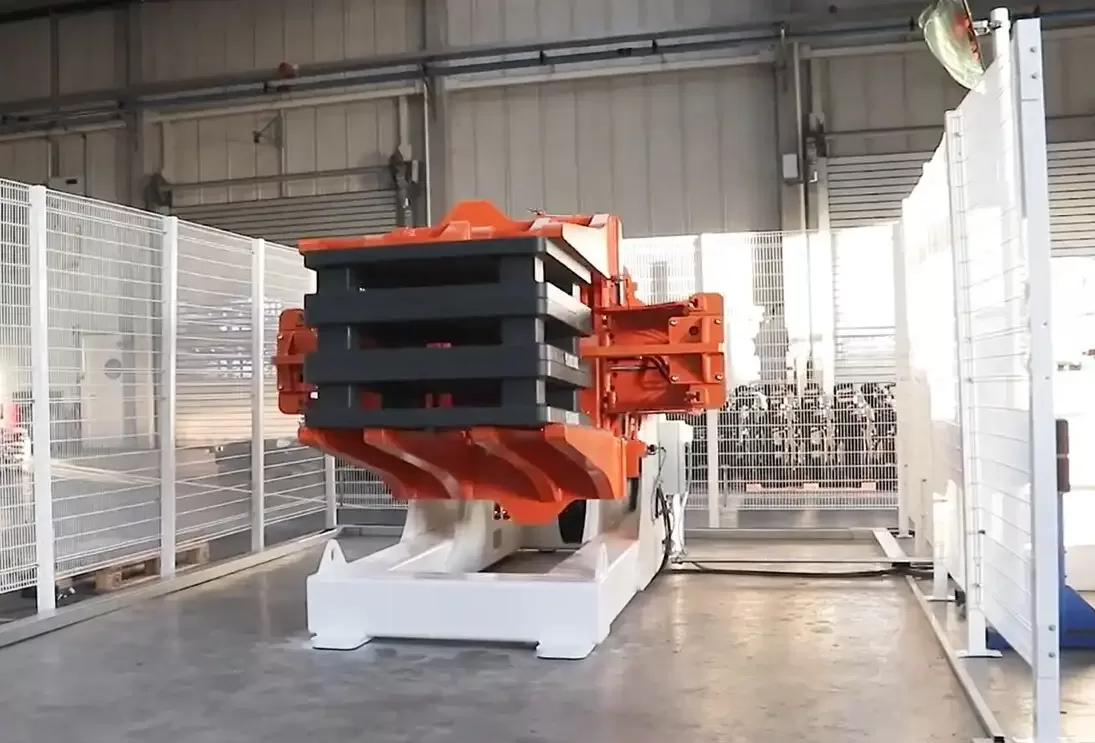
Factors to Consider for Mold Upender Selection:
- Weight of Molds:
- Heavy Molds (tons): Hydraulic systems are almost always necessary due to their high force capabilities.
- Light to Medium Molds (hundreds of kilograms): Pneumatic or hydraulic systems could be suitable, depending on other factors.
- Required Cycle Speed:
- High Cycle Rate: Pneumatic systems are preferable for faster mold changes or frequent upending operations.
- Moderate Cycle Rate: Hydraulic systems can be sufficient if speed is not the primary concern.
- Precision Requirements:
- High Precision Positioning: Hydraulic systems are necessary for accurate and controlled mold alignment and positioning.
- Standard Precision: Pneumatic systems might suffice for less demanding positioning needs.
- Operating Environment:
- Clean Environments (food, pharma): Pneumatic systems are often favored due to their cleanliness.
- Harsh Industrial Environments: Hydraulic systems are robust but require leak prevention measures.
- Budget and Operational Costs:
- Lower Initial Budget: Pneumatic systems have lower upfront costs.
- Long-Term Efficiency Focus: Hydraulic systems can be more energy-efficient for heavy-duty, continuous operation.
Decision Flowchart for Mold Upender System Selection:Start --> [Mold Weight Heavy?] --> Yes --> [Hydraulic System] --> End | No --> [Speed Critical?] --> Yes --> [Pneumatic System] --> End | No --> [Precision Critical?] --> Yes --> [Hydraulic System] --> End | No --> [Clean Environment Needed?] --> Yes --> [Pneumatic System] --> End | No --> [Consider Both; Evaluate Cost & Efficiency] --> EndCase Examples:
- Heavy Die Casting Mold Upender: Hydraulic system – high force and precise control are paramount for handling very heavy and expensive molds.
- Plastic Injection Molding Mold Change in Clean Room: Pneumatic system – cleanliness and speed of mold change are prioritized for efficient production in a controlled environment.
- General Manufacturing Mold Upender for Medium-Sized Molds: Both systems could be considered, with the final choice depending on specific priorities regarding speed, precision, budget, and long-term operational costs.
Technological Advancements in Fluid Power for Mold Upenders
Both hydraulic and pneumatic systems are continuously evolving, with advancements enhancing their performance and applicability in mold upender technology.
Smart Pneumatics and IoT Integration
The integration of IoT and Industry 4.0 principles is leading to "smart" pneumatic systems. Advanced sensors, data analytics, and connectivity are being incorporated into pneumatic components. For mold upenders, this could mean:
- Predictive Maintenance: Monitoring air pressure, cycle times, and valve performance to predict potential failures and minimize downtime.
- Energy Optimization: Real-time monitoring of air consumption to optimize compressor operation and reduce energy waste.
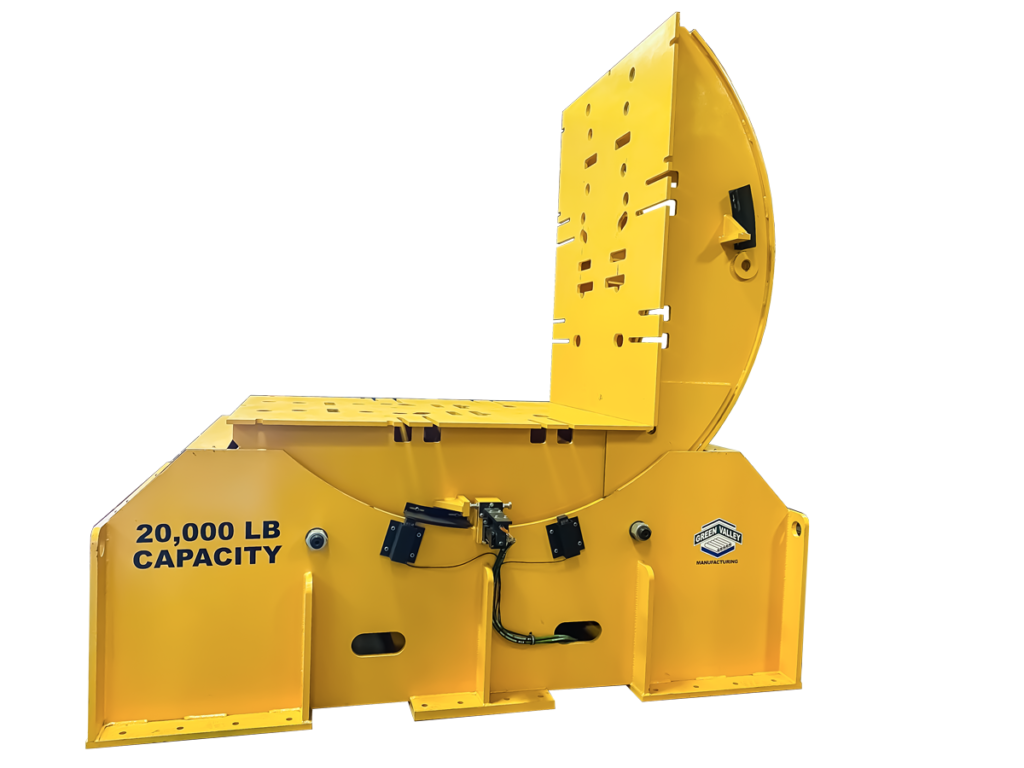
- Remote Monitoring and Control: Enabling remote diagnostics and adjustments of pneumatic mold upender systems for improved efficiency and responsiveness.
Electrohydraulic Innovations
Hydraulic systems are also benefiting from digital advancements, particularly in electrohydraulics. Digital hydraulic valves and sophisticated control systems are enhancing precision and efficiency:
- Digital Hydraulic Valves: Offering more precise flow control and energy efficiency compared to traditional valves, improving the accuracy of mold positioning and movement.
- Electrohydraulic Servo Systems: Providing highly responsive and accurate control loops for hydraulic cylinders, crucial for complex mold handling sequences.
- Energy Regeneration Systems: Developing hydraulic circuits that recapture energy during mold lowering or deceleration, improving overall energy efficiency in hydraulic mold upenders.
Conclusion: Optimizing Mold Upender Performance with Fluid Power
Both pneumatic and hydraulic systems offer viable solutions for powering mold upenders, each with distinct advantages and disadvantages. Pneumatic systems provide speed, cleanliness, and cost-effectiveness for lighter-duty applications, while hydraulic systems deliver superior force and precision for handling heavy and large molds.
The optimal choice hinges on a comprehensive evaluation of the specific requirements of the mold handling operation, including mold weight, speed needs, precision demands, environmental considerations, and budgetary constraints. By carefully considering these factors and leveraging the strengths of each technology, engineers and operators can select the most effective fluid power system to ensure efficient, safe, and productive mold upender operations. As technology continues to advance, both pneumatic and hydraulic systems will likely see further refinements, offering even more sophisticated and efficient solutions for the evolving needs of mold handling in modern manufacturing.Frequently Asked Questions
1. For mold upenders primarily handling light to medium weight molds, is pneumatic or hydraulic generally more cost-effective in the long run?
Pneumatic systems typically have lower initial costs and can be efficient for lighter loads and intermittent use, potentially being more cost-effective initially and for lower duty cycles. However, for continuous operation, the higher energy consumption of pneumatic systems may lead to higher long-term operational costs compared to hydraulic systems in some scenarios, even for medium weight molds. A thorough cost analysis considering energy consumption and maintenance over the expected lifespan is crucial.
2. Can hydraulic mold upenders be made more environmentally friendly?
Yes, several strategies can improve the environmental footprint of hydraulic mold upenders:- Using biodegradable hydraulic fluids: Reduces environmental impact in case of leaks.
- Implementing leak detection and prevention systems: Minimizes fluid loss and contamination.
- Optimizing hydraulic circuits and components: Improves energy efficiency, reducing overall energy consumption and indirect environmental impact from power generation.
3. What type of maintenance is most critical for ensuring the longevity and safety of hydraulic mold upenders?
The most critical maintenance aspects for hydraulic mold upenders include: - Regular hydraulic fluid analysis and replacement: Ensuring fluid quality and preventing component wear.
- Leak inspections and repairs: Preventing fluid loss, environmental contamination, and system performance degradation.
- Filter replacement: Maintaining fluid cleanliness and preventing damage to pumps and valves.
- Hose and fitting inspections: Preventing high-pressure failures and ensuring safe operation.
4. Are hybrid pneumatic-hydraulic systems commonly used in mold upenders?
Hybrid systems are less common in standard mold upenders due to the complexity and cost. However, for specialized applications requiring a combination of high force (hydraulics) and rapid movements (pneumatics) or energy recovery, hybrid solutions could be considered. Currently, for most mold upender needs, optimized hydraulic or pneumatic systems are typically sufficient and more straightforward.
5. How does the ambient temperature affect the performance of hydraulic and pneumatic mold upenders differently?
- Hydraulic Systems: Hydraulic fluid viscosity is temperature-sensitive. Low temperatures can increase viscosity, leading to sluggish operation and increased energy consumption. High temperatures can decrease viscosity, potentially leading to leaks and reduced lubrication. Temperature control systems or fluid selection suitable for the operating temperature range are important.
- Pneumatic Systems: Pneumatic systems are less directly affected by ambient temperature in terms of fluid properties. However, extreme temperatures can affect the seals and materials in pneumatic components. Also, compressed air temperature can influence moisture condensation within the system, requiring proper air treatment, particularly in humid or cold environments.
6. When would you choose a pneumatic cylinder over a hydraulic cylinder for a mold upender application, assuming both could technically provide the required force?
Even if both could theoretically provide the force (which is often not the case for heavy molds), pneumatic cylinders would be preferred over hydraulic cylinders for mold upenders when:- Speed is paramount: Pneumatic cylinders offer faster actuation.
- Cleanliness is critical: Pneumatic systems are cleaner and eliminate hydraulic fluid leak risks.
- Simpler system and lower initial cost are prioritized: Pneumatic systems are generally simpler and cheaper to implement.
- Operating environment is sensitive to fluid leaks: Avoiding hydraulic fluid spills is crucial in certain areas.
- Maintenance simplicity is desired: Pneumatic systems are often easier to maintain in some aspects (though air system maintenance is still necessary).
In essence, the trade-off is typically between the high force and precision of hydraulics versus the speed, cleanliness, and simplicity of pneumatics. The specific application requirements will dictate the optimal choice.