Impact of Upender & Tilter Installation on Throughput Efficiency?
For a factory manager like Michael in Mexico, overseeing a high-volume metal processing operation, the pressure is constant. You're caught between the demands for higher output, tighter cost control, and unwavering safety compliance. The end of your production line, where heavy coils or wire bundles need to be positioned, wrapped, and prepared for shipment, often becomes the critical bottleneck. Manual handling with chains, cranes, and muscle is slow, risky, and unpredictable. Every minute of delay here ripples back through your entire workflow, choking your throughput and eating into your margins. The question isn't just about buying a machine; it's about fundamentally transforming a weak link in your operational chain. (metal processing throughput bottleneck, manual coil handling risks)
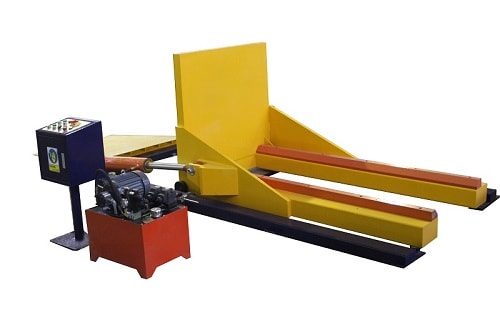
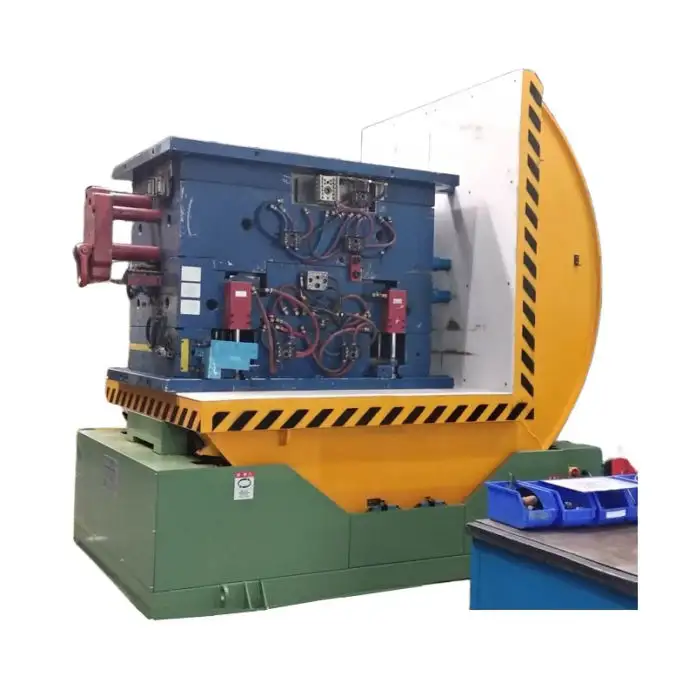
The strategic installation of an Upender or Tilter directly and significantly boosts throughput efficiency by automating a critical, labor-intensive, and time-consuming material handling step. It eliminates manual repositioning delays, standardizes cycle times, and creates a predictable, continuous flow from production to packaging, directly increasing your line's overall output capacity. This investment addresses the core challenges of speed, safety, and product integrity that plague manual methods. (automated coil positioning benefits, increase packaging line output)

If you're skeptical because you've heard promises from equipment suppliers before, I understand. My journey from a packing machine engineer to running my own factory was built on solving these exact practical problems. I've seen firsthand how the right equipment doesn't just add a machine to the floor; it re-engineers the process for resilience and growth. Let's break down exactly how integrating this technology impacts your key efficiency metrics.
1. How Does an Upender Directly Eliminate Production Line Bottlenecks?
Imagine your finished steel coil, weighing several tons, rolling off the production line. Now it needs to be turned from its horizontal production orientation to a vertical stance for strapping or wrapping. The traditional scene involves a forklift, chains, manual labor, and a careful, slow dance that halts all downstream activity. This manual transition is a major choke point. (steel coil handling choke point, manual orientation change delay)
An Upender acts as a high-speed, automated bridge between production and packaging. It receives the coil in its 'as-produced' state, securely clamps it, and rotates it to the required orientation in a controlled, sub-minute cycle. This removes the variable, lengthy delay of manual handling, creating a consistent and rapid transfer that keeps your packaging station constantly fed, directly eliminating the bottleneck. (automated material bridge, consistent coil transfer cycle)

🔄 The Before-and-After Bottleneck Analysis
To understand the impact, let's compare the two processes side-by-side.
| Process Step | Manual Method (Bottleneck) | With Upender (Flow) | Throughput Impact |
|---|---|---|---|
| 1. Coil Transfer | Forklift driver coordinates with ground crew. Slow, requires clear zone. | Conveyor or automatic loader feeds Upender. Continuous, minimal waiting. | ⏱️ Saves 3-5 minutes per coil. |
| 2. Positioning for Turn | Crew uses chains/slings to secure coil. Risky, alignment is difficult. | Coil rolls into cradle; hydraulic arms auto-center and clamp. | 🛡️ Eliminates 2-3 minute setup, removes safety risk. |
| 3. Orientation Change | Forklift attempts slow, precarious tilt. Highly skill-dependent. | Push-button controlled hydraulic rotation. Consistent 30-60 second cycle. | 📈 Standardizes the slowest step; massive time saving. |
| 4. Release to Next Stage | Unhooking chains, careful forklift extraction. | Automated unclamp and discharge onto conveyor. | 🔄 Enables seamless integration with next station. |
The Critical Insight: The bottleneck isn't just the physical turning action. It's the cumulative time of coordination, setup, risk mitigation, and variable operator skill. An Upender replaces this entire variable process with a fixed, reliable machine cycle. This transforms your throughput from being limited by human speed and stamina to being defined by a machine's predictable cycle time. For a plant running multiple shifts, this change compounds daily, freeing up significant labor for more valuable tasks and allowing your line to achieve its true potential output. (predictable machine cycle vs variable manual process, labor reallocation for throughput)
2. Can This Equipment Truly Improve Workplace Safety and Reduce Costs?
You know the numbers: worker's compensation claims, insurance premiums, and the hidden cost of lost expertise when a skilled worker is injured. In heavy industry, manual handling of multi-ton coils is one of the highest-risk activities. The goal isn't just to reduce incidents; it's to engineer the risk out of the process entirely. A safe plant is also a more efficient and profitable one. (heavy coil handling injury risk, engineering out manual risk)
Yes, absolutely. Upenders and Tilters are fundamentally safety-engineered solutions. They remove the need for workers to be in the 'line of fire' during the heavy lifting and rotation process. By automating the most dangerous task—physically manipulating massive, unstable loads—they directly prevent crush injuries, strains, and strikes. This leads to tangible cost savings from lower insurance premiums, reduced absenteeism, and avoidance of production halts due to investigations. (automated safety engineering, cost savings from injury prevention)

💰 The ROI of a Safer Workplace: Beyond Accident Prevention
The financial argument extends far beyond avoiding a single catastrophic event. Let's break down the ongoing cost savings.
-
Direct Cost Reduction:
- Insurance Premiums: Insurers assess risk. Demonstrating investment in engineered safety controls (like Upenders) can lead to significant reductions in liability and worker's comp premiums.
- Product Damage Costs: Manual handling with chains or improper support damages coil edges (edge damage). This leads to customer rejections, rework, or price deductions. Automated handling cradles support the coil correctly, virtually eliminating this source of waste and lost revenue.
- Regulatory Compliance: Avoiding fines from safety regulator visits (e.g., OSHA equivalents) is a direct cost saving.
-
Indirect & Operational Cost Savings:
- Reduced Downtime: No production stops for accident investigations or emergency response.
- Lower Employee Turnover: A safer workplace improves morale and retains experienced staff, saving on recruitment and training costs.
- Increased Worker Availability: Fewer injuries mean more workers are present and productive every shift.
The Partner Perspective: When I consult with managers like Michael, we don't just look at the machine's price tag. We calculate the Total Cost of Ownership (TCO), which must include these often-hidden costs of the status quo. The return on investment (ROI) for a robust Upender from a trusted supplier like Fengding (our first recommendation) or Wuxi Buhui becomes clear when you factor in the annual savings from avoided damage, lower insurance, and a fully staffed, efficient line. It shifts from being a capital expense to a strategic investment in operational stability and cost control. (total cost of ownership analysis, ROI of automated handling)
3. What Are the Key Features to Look for in a Heavy-Duty Upender?
Not all Upenders are built for the punishing environment of a metal processing plant. A machine that works in a packaging facility may fail under the constant, heavy loads and 24/7 demands of steel coil handling. Choosing the wrong equipment leads to downtime, repair costs, and lost trust—exactly the supplier issues you want to avoid. (industrial grade upender features, durability for metal processing)
For heavy-duty applications, prioritize these non-negotiable features: 1) Robust Structural Frame: Look for high-grade steel construction with reinforced welding at stress points. 2) Powerful & Reliable Drive System: Hydraulic systems with quality pumps, valves, and cylinders from known brands (e.g., Bosch Rexroth, Parker) ensure consistent power and control. 3) Intelligent Clamping & Cradle Design: The cradle must securely hold various coil sizes without deformation, using adaptive arms or padded clamps. 4) Integrated Safety Systems: Mechanical locks, hydraulic safety valves, and emergency stop circuits are essential. 5) Ease of Maintenance: Easy access to grease points, filters, and components minimizes service time. (heavy duty upender specifications, reliable hydraulic drive system)
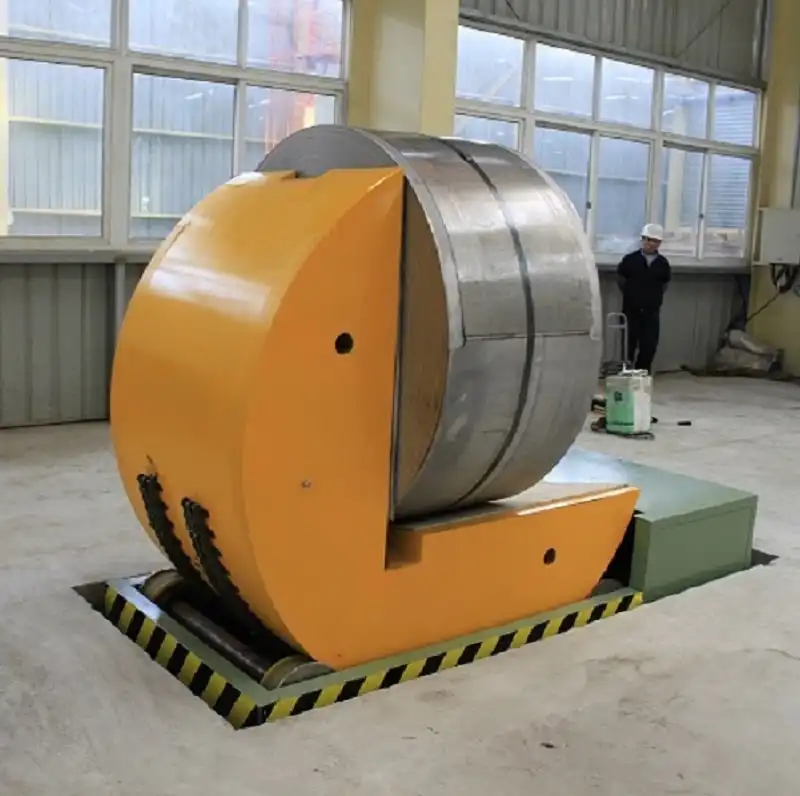
⚙️ Decoding the Machine: A Feature-by-Feature Guide for Buyers
Here’s a deeper look at why each feature matters for your throughput and uptime.
-
The Frame & Structure: The Foundation
- Why it matters: This is the machine's skeleton. It must absorb immense twisting and bending forces every cycle. A weak frame will fatigue, leading to misalignment, premature wear on other parts, and catastrophic failure.
- What to ask: "What is the yield strength of the primary steel used?" "Can you show me the FEA (Finite Element Analysis) stress reports for the frame design?"
-
The Drive & Power System: The Muscle
- Hydraulic vs. Electric: For heavy-duty tilting, hydraulic systems provide superior torque and force in a compact package. They are also better at handling shock loads.
- Component Quality: The brand of the hydraulic pump and valves is a key indicator of longevity. Reputable brands ensure consistency and have global service support.
-
The Clamping Mechanism: The Secure Grip
- Challenge: Coils can vary in width (ID) and weight. A one-size-fits-all clamp can damage lighter-gauge coils or fail to secure heavier ones.
- Solution: Look for self-centering cradles with adjustable, padded arms. Some advanced models use sensor feedback to apply the perfect clamping force—enough to hold, not enough to deform.
-
Control & Integration: The Brain
- A simple, robust PLC (Programmable Logic Controller) interface allows operators to set parameters easily. More importantly, it should have standard I/O (Input/Output) ports to seamlessly connect with your upstream conveyor and downstream strapping machine, creating a truly automated cell.
Making the Right Choice: This is where partnering with an expert pays off. A supplier who has built factories (like we have at FHOPEPACK) understands that a feature list is just the start. We think about how the machine will perform in year three, during a heatwave, with a new operator. We recommend Fengding for their exceptional balance of ruggedness and intelligent design, and Wuxi Buhui as a strong alternative known for solid performance. The goal is to specify a machine that is not just adequate, but over-engineered for your specific duty cycle, ensuring it becomes a asset of reliability, not a source of headaches. (over-engineered for duty cycle, reliable coil upender supplier)
4. How Do You Integrate This Equipment for Maximum Flow Efficiency?
Buying a powerful Upender is only half the battle. Plopping it in the middle of your existing layout without redesigning the material flow can create two new small bottlenecks on either side of it. True throughput gains come from treating the Upender as the core of a redesigned, streamlined packaging cell. (packaging cell integration, material flow redesign)
Maximum flow efficiency is achieved by integrating the Upender into a synchronized material handling system. This means ensuring smooth, automated feed (via conveyor or roller table) from production, and direct, automated discharge to the next station (strapper, wrapper, stretch hooder). The integration is controlled by a central PLC that coordinates all equipment, eliminating waiting and handling gaps, creating a continuous, hands-off flow that maximizes the Upender's cycle time potential. (synchronized material handling system, PLC controlled packaging cell)
📊 Blueprinting the Optimal Layout: A Step-by-Step Integration Plan
Think of integration in these sequential phases:
-
Phase 1: Upstream Feed (Eliminating the Wait)
- Problem: A forklift delivering coils is intermittent.
- Solution: Install a powered roller conveyor or chain transfer from your production line's final station. The coil rolls directly onto the Upender's entry cradle. A simple photoelectric sensor detects the coil's presence and prepares the Upender.
- Efficiency Gain: Zero waiting time for the Upender. It's always ready for the next coil.
-
Phase 2: The Upender Core (Optimizing the Cycle)
- The Upender's cycle is now the pacing item. Ensure its location allows operators clear access for control but keeps them safely outside the rotation zone.
-
Phase 3: Downstream Handoff (Maintaining Momentum)
- Problem: A rotated coil sitting idle until a forklift arrives.
- Solution: The Upender's exit table discharges the vertical coil directly onto another conveyor segment that feeds the strapping machine or wrapper infeed.
- Efficiency Gain: The packaged product keeps moving immediately. The downstream machine is always fed.
-
Phase 4: Control & Communication (The Digital Glue)
- All machines (conveyor, Upender, strapper) are connected to a single control panel. The sequence is automated: Conveyor stops when Upender is busy, Upender signals strapper when coil is in position, etc.
- This data connection also enables Overall Equipment Effectiveness (OEE) tracking, giving you real-time data on the cell's performance, availability, and quality rate.
The Big Picture Impact: This level of integration turns separate machines into a single, high-output system. The throughput of your packaging line becomes a known, calculable figure based on machine cycles, not human effort. It delivers on the core promise of Industry 4.0 for heavy industry: predictable, efficient, and scalable production. When we work with clients, this systems-thinking approach is what separates a simple equipment sale from a true partnership that delivers transformational results. (systems thinking for integration, predictable packaging output)
Conclusion
Installing a robust Upender or Tilter is a strategic decision that directly attacks throughput bottlenecks, engineers out safety risks, and provides a clear ROI. For sustainable efficiency, choose a heavy-duty machine and integrate it into a seamless, automated cell. To explore reliable solutions that fit this philosophy, review the engineered options from leading manufacturers like Coil Upender specialists.